



ASUS vs Dell Laptops: Which is Better for Work and Gaming?

ASUS and Dell compete across everyday laptops, premium ultraportables, business machines and high-performance gaming systems, but they take different routes to get there. ASUS offers a particularly broad mix through Vivobook, Zenbook, ExpertBook, ProArt, TUF Gaming and ROG, while Dell covers consumer computing, XPS, Dell Pro, and Alienware. This ASUS vs Dell laptops comparison looks beyond the badge at the specifications and features that actually affect your experience.
ASUS vs Dell: Key Differences at a Glance
|
Area |
ASUS |
Dell |
|
Everyday |
Vivobook |
Inspiron |
|
Premium |
Zenbook |
XPS |
|
Business |
ExpertBook |
Dell Pro |
|
Creator |
ProArt |
XPS / Dell professional systems |
|
Gaming |
TUF Gaming / ROG |
Alienware |
|
Current CPUs |
Intel Core Ultra, AMD Ryzen AI, Snapdragon |
Intel Core / Core Ultra |
|
Displays |
IPS, OLED, Mini LED, high-refresh |
IPS/LCD, OLED, high-refresh |
|
Main strength |
Range depth and specialist hardware |
Premium and business focus |
Dell's current XPS family includes 13-, 14- and 16-inch options, while ASUS spreads premium machines across several Zenbook designs, including OLED and dual-screen systems.
Which Gives You Better Everyday Performance?
Processor Choice
Processor names alone no longer tell the full story.
ASUS offers Intel Core Ultra, AMD Ryzen AI and Snapdragon-powered systems across its wider range. That gives you a choice between conventional x86 performance and Windows-on-Arm machines focused strongly on efficiency and AI features.
Dell's latest XPS laptops are centred on Intel Core Ultra Series 3. Current XPS 14 configurations extend to the Core Ultra X7 358H with Intel Arc graphics, while Dell's broader range also covers lower-powered everyday Intel processors and professional Core Ultra configurations.
AI Performance
Both brands sell Copilot+ PCs with dedicated NPUs. These processors can accelerate supported local AI tasks without placing everything on the CPU or GPU.
ASUS gives you more processor-platform choice here, particularly because Snapdragon and AMD Ryzen AI sit alongside Intel options.
If premium everyday performance is your priority, our ASUS Zenbook vs HP Envy comparison looks more closely at how the two ranges differ in performance, portability and display quality.
Which Gives You Better RAM and Storage Options?
RAM
For most buyers in 2026, 16GB RAM is the sensible minimum for a new Windows laptop. Move to 32GB if you regularly edit media, develop software, work with large datasets or run demanding applications simultaneously.
Thin premium laptops often use soldered LPDDR memory. The current XPS 14, for example, uses LPDDR5x, so you should buy enough memory initially rather than expecting a later RAM upgrade.
ASUS follows a similar approach on slim Zenbook models. Its gaming ranges are considerably more flexible: the ROG Strix G16 supports up to 64GB DDR5 and provides tool-less access for memory and storage upgrades.
Storage
A 512GB SSD is enough for office work and general study, while 1TB is more practical for games, creative software and larger personal libraries.
Gaming and professional laptops are also more likely to provide additional storage expansion than ultra-thin designs. For another specification-led comparison, see our Lenovo vs ASUS laptops guide for a closer look at memory, storage, upgradeability and current processor options.
Which Brand Gives You the Better Display?
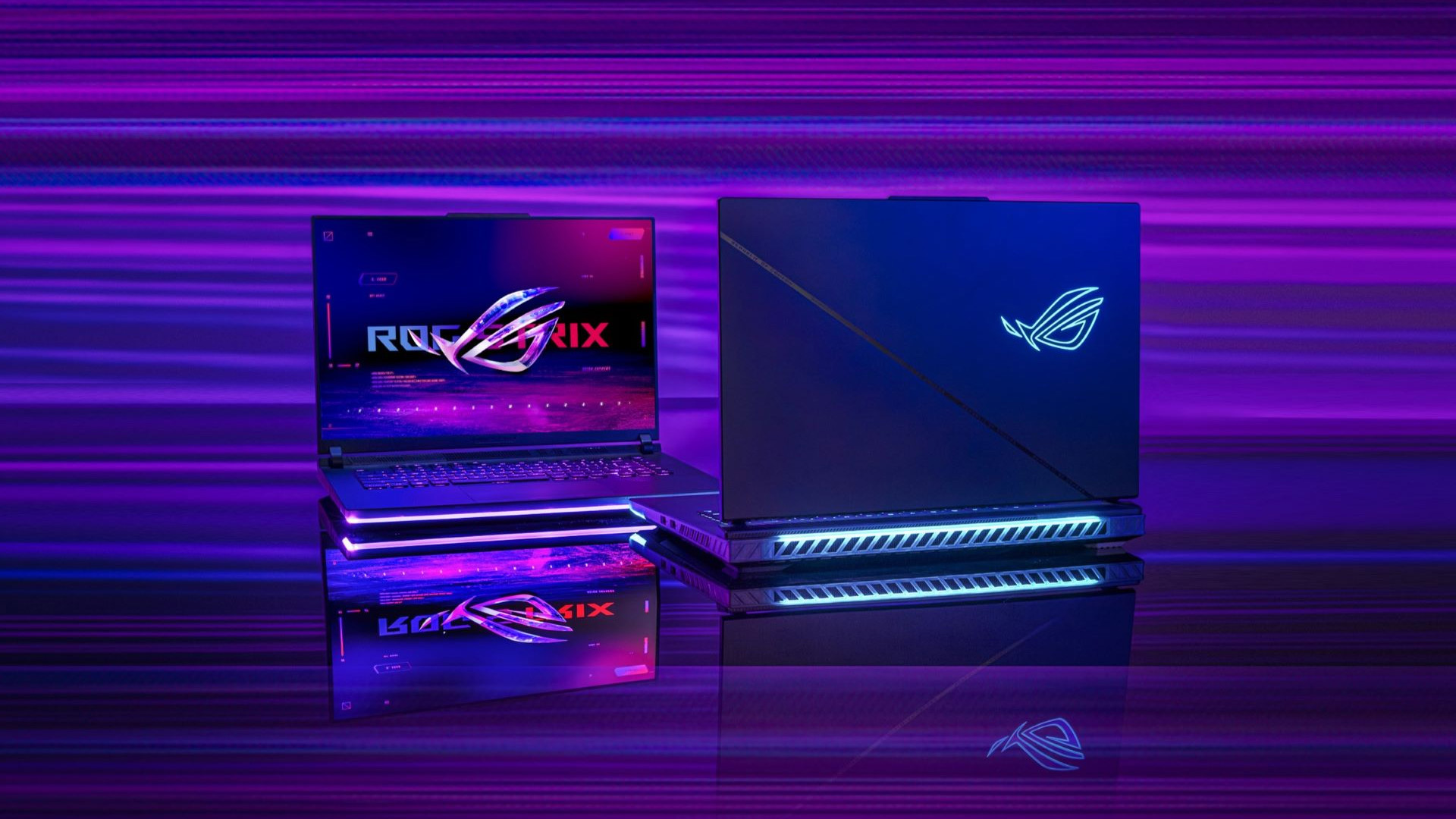
ASUS has made display technology one of its clearest differentiators. OLED appears widely across Zenbook, Vivobook and ProArt, while ROG adds fast OLED and Mini LED panels for gaming.
Current Zenbook 14 options reach 3K 120Hz OLED, while the 2026 ROG Strix G16 offers a 2.5K 240Hz Mini LED Nebula HDR display on higher configurations.
Dell is no longer restricted to conventional LCD panels, either. The latest XPS 14 offers a 2.8K OLED touchscreen, while XPS 16 has an optional 3.2K OLED display. Dell also supports variable refresh rates up to 120Hz across current premium XPS options.
Don't compare OLED branding alone. Check:
- resolution and aspect ratio
- refresh rate
- colour coverage
- brightness
- touchscreen support
- glossy or anti-glare finish
Which is Better for Portability and Battery Life?
Both manufacturers now produce genuinely lightweight premium laptops.
ASUS Zenbook A14 weighs under 1kg and combines a 70Wh-class design with Snapdragon X processors. ASUS advertises up to 32 hours of battery under its specified testing conditions, although actual mixed-use runtime will depend on workload, brightness and connectivity.
Dell's new XPS 13 also starts at around 1kg, while the XPS 14 starts at 1.36kg. Dell advertises up to 31 hours of streaming on selected current XPS configurations under its test conditions.
Manufacturer battery figures should therefore be treated as comparative indicators rather than guaranteed everyday runtime. Also consider the charger, ports and screen size. Saving 300g on the laptop may matter less if you need to carry multiple adapters.
ASUS ROG or Alienware: Which Is Better for Gaming?
ASUS ROG and TUF Gaming
ASUS divides gaming across TUF and ROG, giving you more choice between mainstream and premium performance.
The 2026 ROG Strix G16 reaches an RTX 5080 Laptop GPU at up to 175W maximum TGP, alongside Core Ultra 9 290HX Plus processors, upgradeable DDR5 RAM and high-refresh Mini LED options.
Dell Alienware
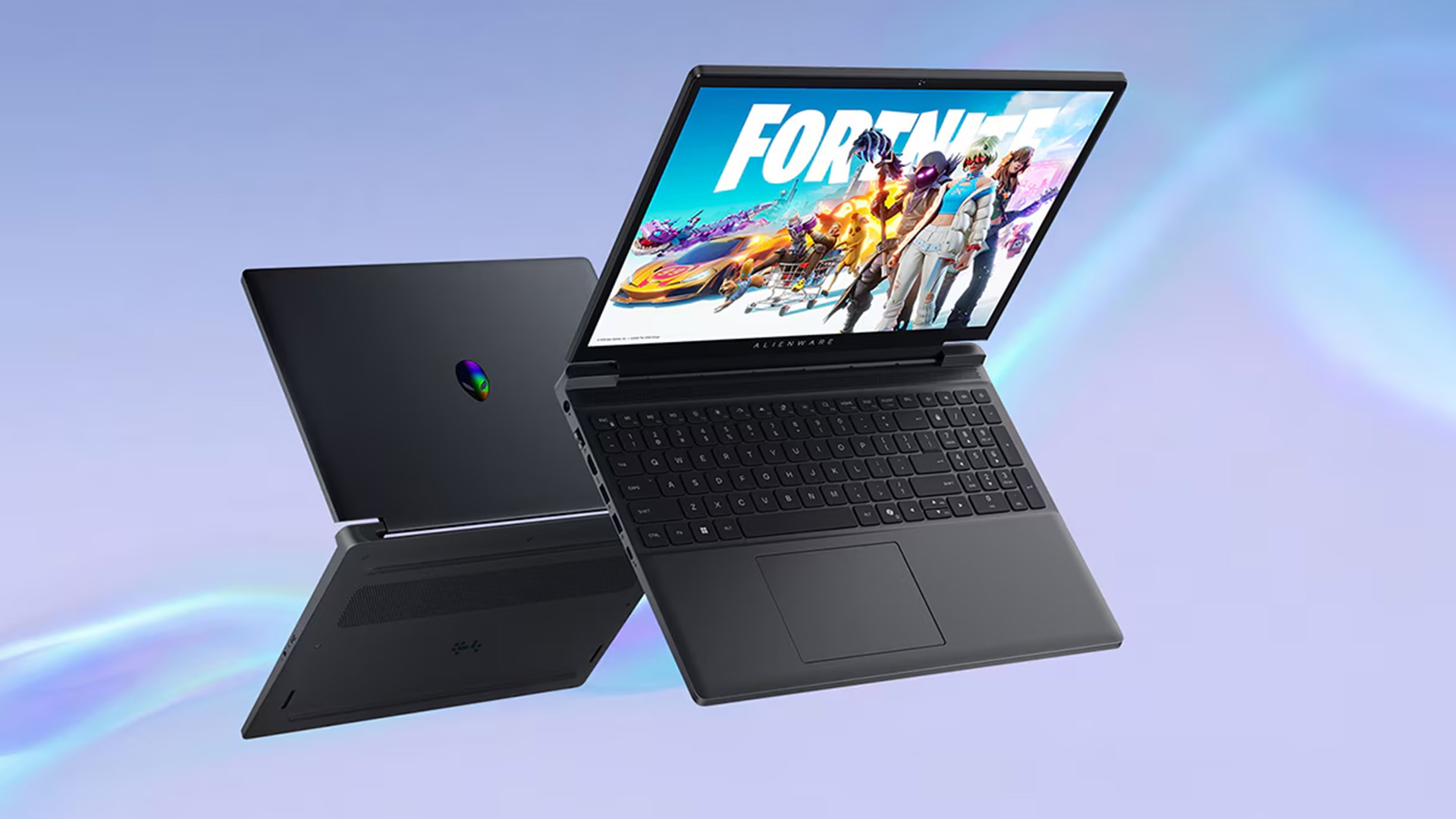
Dell focuses its dedicated gaming identity on Alienware. Current systems include the Alienware 16X Aurora and Area-51 families with RTX 50 Series laptop graphics.
The Alienware 16X Aurora supports up to RTX 5070 Ti graphics, 64GB RAM, 4TB storage and an optional 240Hz OLED display. Higher Area-51 systems push further into enthusiast performance.
For gaming, compare the GPU model, TGP, cooling design, VRAM and display resolution together. Two laptops carrying the same RTX badge can perform differently because laptop GPUs operate within different power and thermal limits.
If you are also considering other premium gaming brands, see our Razer vs ASUS ROG comparison for a closer look at GPU performance, cooling, displays and gaming-focused design.
Which is Better for Business Use?
ASUS ExpertBook
ExpertBook is ASUS's dedicated professional family. Current premium models combine business security and management features with increasingly lightweight designs.
The ExpertBook Ultra also introduces a 3K tandem OLED panel and focuses on premium mobile professional use.
Dell Pro
Dell has a deeper-established enterprise ecosystem through Dell Pro. Current Dell Pro laptops span mainstream workplace systems through lightweight premium models, with Intel Core Ultra and vPro options available.
The Dell Pro 14 Premium, for example, combines Core Ultra vPro hardware with a lightweight chassis aimed specifically at mobile professionals.
For organisations, also compare deployment support, docking, security, serviceability and warranty options rather than buying from CPU specifications alone.
Which Brand Gives You Better Value?
There is no useful brand-wide price winner because ASUS and Dell both stretch from everyday laptops to systems costing several thousand pounds.
Compare equivalent machines instead:
|
If you're considering |
Compare it with |
|
ASUS Vivobook |
Dell everyday laptops |
|
ASUS Zenbook |
Dell XPS |
|
ASUS ExpertBook |
Dell Pro |
|
ASUS ROG |
Alienware |
A laptop with a lower price is not necessarily better value. Compare CPU generation, RAM, SSD size, screen quality, GPU performance and warranty at the same budget.
Which Gives You Better Warranty and Support?
Both brands provide more than a basic manufacturer warranty.
Dell offers service upgrades through Dell Care and business-focused support packages, including onsite options on eligible configurations. The current XPS 14 configurator, for example, offers Dell Care Plus with onsite service after remote diagnosis.
ASUS Premium Care can include extended warranty, accidental-damage protection and additional service options depending on the device and region.
Check the specific warranty supplied with the laptop you're buying rather than assuming every model from the same brand receives identical cover.
For a wider brand comparison, read our ASUS Laptop Comparison Guide 2026.

ASUS or Dell: Which Should You Buy in 2026?
ASUS laptop range makes more sense if you want extensive OLED choice, unusual form factors, lightweight Zenbook options or a particularly broad gaming range. Its mix of Intel, AMD, and Snapdragon processors also gives you more freedom to prioritise performance, compatibility or efficiency.
Dell models are particularly strong if you want the premium XPS experience, a structured business machine through Dell Pro or a high-performance Alienware system.
The most reliable way to decide is to set your minimum processor, RAM, SSD, GPU, display and portability requirements first, then compare models that satisfy them.

Is ASUS or Dell better for university?
Both work well. ASUS Vivobook and Dell's mainstream laptops suit everyday study, while Zenbook and XPS offer more premium portability. Aim for at least 16GB RAM and sufficient battery life.
Is ASUS or Dell better for programming?
Either can handle programming well. Prioritise a modern multi-core processor and 16GB RAM, moving to 32GB for virtual machines, containers, large projects or heavier development tools.
Are ASUS laptops easier to upgrade than Dell laptops?
It depends on the series. ASUS gaming laptops often provide accessible RAM and storage upgrades, while thin Zenbook and XPS models commonly use soldered memory. Check the exact service specification first.
Do ASUS and Dell offer Copilot+ PCs?
Yes. Both brands sell Copilot+ PCs with compatible processors and NPUs. ASUS additionally provides greater processor-platform variety through Intel, AMD Ryzen AI and Snapdragon options.
Is ASUS ROG better than Alienware?
ROG provides a broader selection of sizes and gaming configurations, while Alienware focuses heavily on premium gaming systems. Compare GPU TGP, cooling, screen specification and price before deciding.
Which has better ports, ASUS or Dell?
ASUS often retains a wider mix of USB-C, USB-A and HDMI on selected models. Thin Dell XPS laptops prioritise USB-C and Thunderbolt, so adapters or a dock may be necessary for legacy peripherals.
| Read More: |
| ASUS vs HP Laptops: Design, Performance & Price Compared |
| Samsung vs ASUS Laptops: Which Brand Wins in 2026? |
| Is Asus ZenBook Better than HP ENVY? Best Asus Laptops |
Related Articles


Last Updated: February 11, 2026
Choosing the right desktop PC can feel a bit like picking a side in a long-running tech rivalry. HP, Dell, and Lenovo are three of the biggest names and for good reason. They all offer reliable, powerful desktops that suit everything from casual home use to hardcore business workloads and creative setups.
But when it comes to HP vs Dell vs Lenovo desktop PCs, which brand actually wins for you?
Why Compare HP, Dell, and Lenovo Desktop PCs?
HP, Dell, and Lenovo are all global heavyweights in the PC world. They each offer a wide range of desktops — from budget-friendly towers to powerful workstations and compact all-in-one PCs.
But here’s the thing:
Not all desktop PCs are built for the same kind of user.
Some are better for productivity, some for gaming, and others for long-term reliability. Understanding the differences is key before you hit “Add to Basket”.
HP Desktop PCs: Style Meets Performance
HP desktops are known for blending solid performance with modern design. If you like your
Last Updated: February 19, 2026
Are you a creative professional or a student looking for the perfect hardware? Choosing the right tools can make or break your workflow. Animation and 3D design are demanding tasks. They require power, precision, and reliability. In this guide, we explore the best laptops for animation and 3D modelling available today.
Why Your Hardware Matters for 3D Work?
Animation is not just about drawing. It involves complex calculations. When you work in software like Blender or Autodesk Maya, your computer handles millions of polygons. It also calculates lighting, physics, and textures in real-time.
If your laptop is too slow, you will face lag. Your software might crash. Most importantly, your rendering times will be incredibly long. High-performance 3D laptops solve these problems. They allow you to focus on your art instead of your technical issues.
To get the best results, you need a balance of components. This includes a fast processor (CPU), a powerful graphics card (GPU), and plenty of memory

Last Updated: September 02, 2026
The Dell XPS 13 has long been one of the most recognisable premium UltraBook for people who want strong performance without carrying a bulky machine. This Dell XPS 13 buying guide breaks down the latest specs, price expectations, design updates, battery life, performance, and practical buying advice for UK students, professionals, remote workers and business users. Whether you need a lightweight Windows laptop for lectures, client meetings, content work, or everyday multitasking, maybe the XPS 13 remains one of the most polished compact laptops in its class.
Why the Dell XPS 13 is Gaining Attention?
The latest XPS 13 continues that idea but makes the range more accessible. Dell’s newest messaging focuses on a thinner, lighter design, a more attainable entry price and a practical feature set for students and everyday users. That matters because premium laptops are no longer only for designers, executives, or high-budget professionals. Many UK buyers now want a device that can handle Microsoft
Last Updated: September 02, 2026
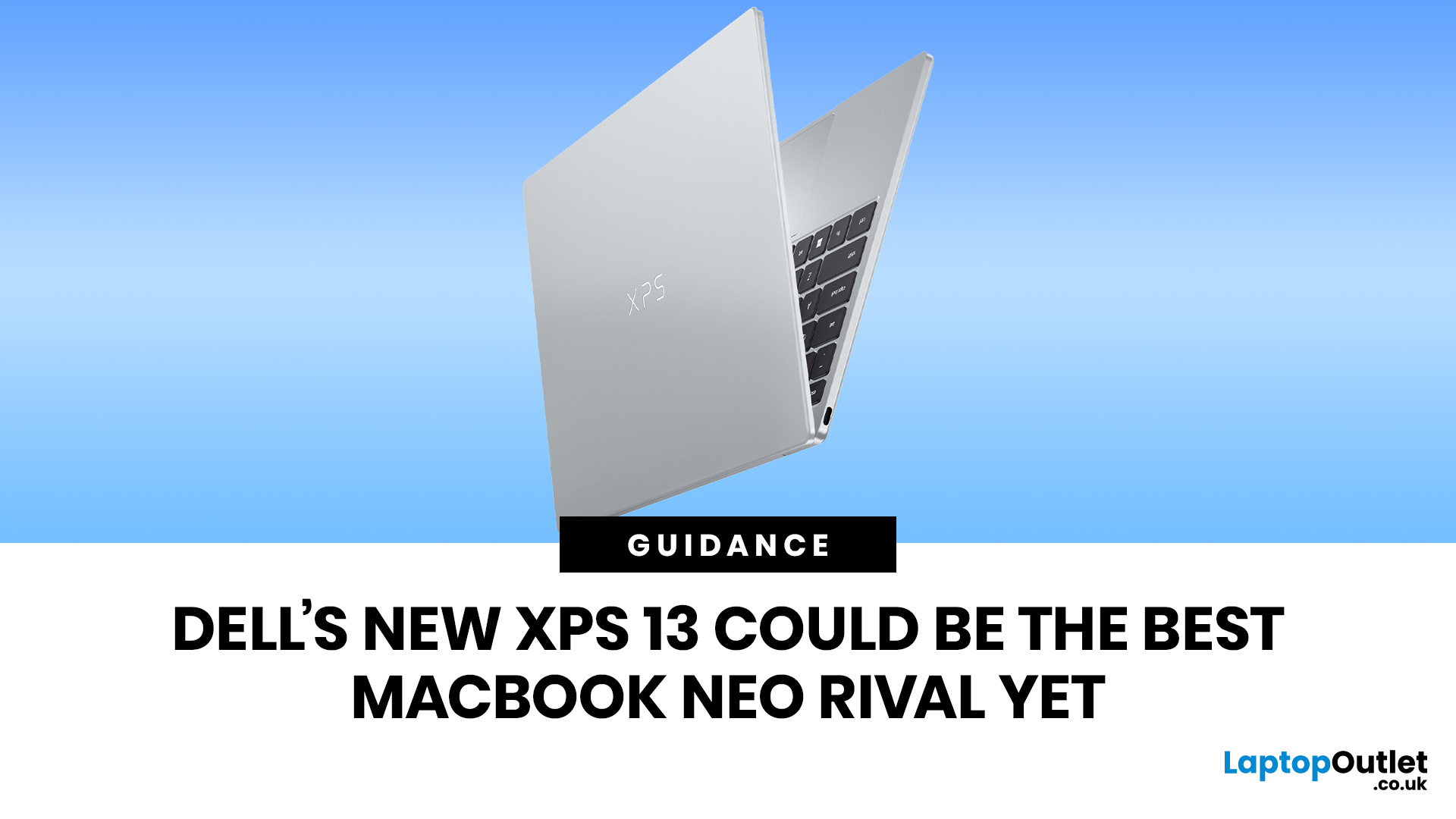
The Dell XPS 13 (2026) could become one of the best MacBook Neo alternatives so far. Starting at ~£599–£699, it undercuts the MacBook Neo's feature set with a touchscreen, backlit keyboard, and higher RAM ceiling. The MacBook Neo starts at £599 in the UK with Apple's A18 Pro chip, strong battery life, and seamless macOS.
If you live in the Windows world and want more flexibility, the XPS 13 is the stronger all-rounder. If you want a polished, simple laptop that just works within the Apple ecosystem, the Neo holds its ground. If you want a detailed comparison between Dell XPS 13 vs MacBook Neo, this guide is for you.
Why This Dell XPS 13 vs MacBook Neo Comparison Matters
The sub-£700 laptop market got interesting in 2026. Apple launched the MacBook Neo in March as its most affordable Mac ever, bringing a proper aluminium laptop to the price point normally dominated by Chromebooks and budget Windows machines. Three months later, Dell fired back with a redesigned XPS 13 that targets the Neo

Last Updated: August 05, 2026
I made almost every mistake possible when I bought my first laptop as a student. I focused on the processor name, ignored the RAM, underestimated how heavy it would feel in my backpack and had no idea what half the technical jargon meant.
Within months, I realised I had paid for features I barely used while missing the ones I actually needed. Choosing between Core i5, Core Ultra, SSD sizes and different Dell series can still feel just as confusing today.
To help you avoid the same blunder, we reviewed the best Dell laptops for students in 2026 and narrowed them down based on real student needs, including performance, mobility,
Last Updated: August 06, 2026

Last Updated: August 07, 2026
Travel exposes a laptop to crowded trains, small café tables, airport queues, limited sockets and long periods inside a backpack. A lightweight touchscreen laptop addresses these problems by combining easier portability with direct, phone-like control.
It can be quicker to tap, scroll, zoom, sign or annotate when there is little room for a mouse. The right model can also replace a separate tablet, when it has a 360-degree hinge and pen support.
However, weight alone is not enough. Battery endurance, screen visibility, keyboard comfort, charging options, durability and software compatibility all determine whether a device is genuinely suitable for journeys.
Why Does a Lightweight Touchscreen Laptop Suit Travel?
1. It Reduces the Weight You Carry All Day
A lighter computer makes a noticeable difference when it shares a backpack with a charger, phone, headphones, water bottle and travel documents. For regular commuting or cabin-only trips, the complete kit matters more than the laptop weight
Last Updated: August 11, 2026
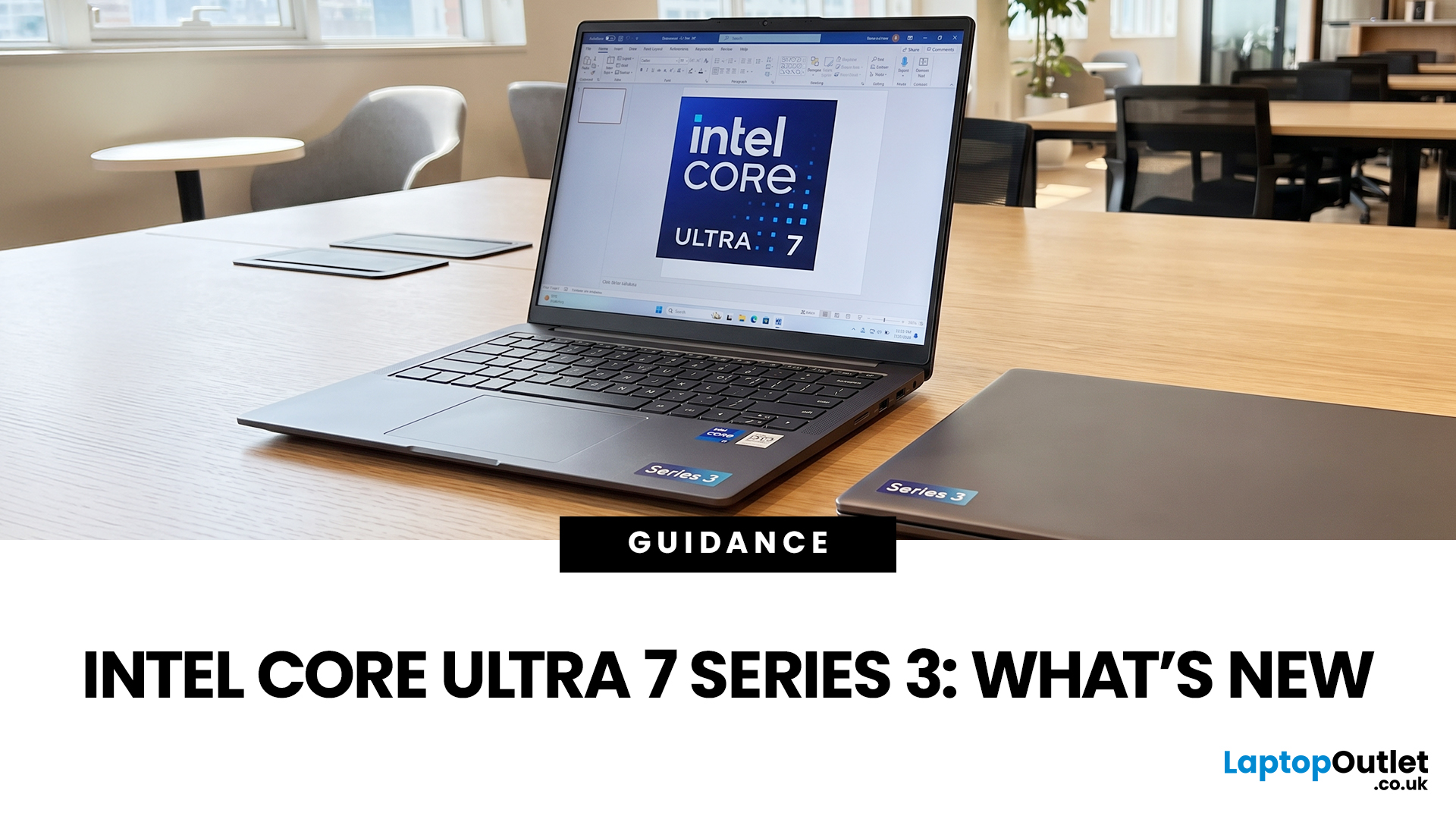
If you’re considering an Intel Core Ultra 7 Series 3 laptop in 2026, the processor name is only part of the story. Intel’s latest Core Ultra Series 3 generation brings a new architecture, Intel 18A process technology, built-in AI acceleration and updated graphics capabilities.
However, different Series 3 processors can have significantly different core and graphics configurations, so it is important to look beyond the “Core Ultra 7” label when choosing a laptop.
Series 3 is aimed at modern laptops that need to balance
Last Updated: August 17, 2026
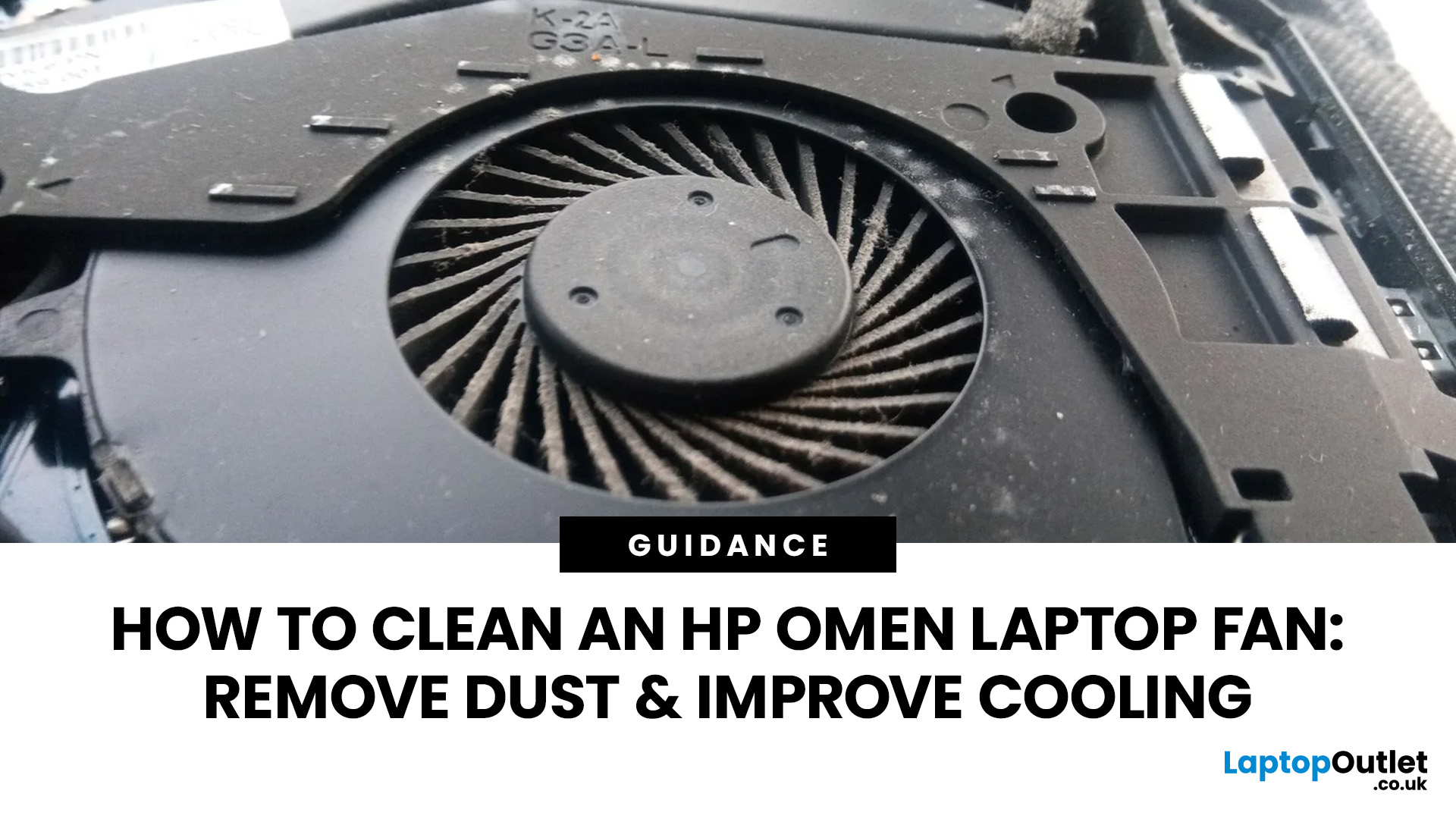
An HP OMEN laptop moves plenty of air during gaming and other demanding work. That airflow can draw dust, lint and pet hair towards its intake vents. As debris builds up, cooling may become louder, airflow can weaken and sustained performance can suffer.
The safest approach is to start with external cleaning. Only remove the bottom cover when deeper cleaning is necessary and you have checked the service instructions for your exact OMEN model. This guide covers both methods, essential safety precautions and post-cleaning checks.
Why HP OMEN Fan Cleaning Matters
Gaming laptops generate considerable heat because the processor and dedicated graphics chip can remain under heavy load for long periods. Their fans draw cooler air through the chassis and push warm air across the heatsink fins towards the exhausts.
Effective laptop fan dust removal prevents debris from reducing the space available for air to pass through. A thin layer of dust may only increase noise, while a compacted blockage can

Published: August 17, 2026
Dell laptops are built for everything from everyday study to demanding business workloads, but any device can develop faults over time. Common Dell laptop problems can involve slow performance, charging, overheating, displays, connectivity, or startup. The useful first step is not replacing parts at random, but identifying exactly what the laptop is doing. In this guide, you’ll learn how to recognise common symptoms, try safe, practical Dell laptop troubleshooting steps and decide when a repair or replacement makes practical sense.
What are the Most Common Dell Laptop Problems?
Slow Performance and System Lag
A Dell laptop may slow down because of too many startup apps, limited free storage, demanding background processes or outdated software. These Dell laptop issues often appear as slow boot times, freezing, or delayed app launches.
Battery Draining Too Quickly
Fast battery drain can result from high brightness, heavy workloads, background activity or an ageing battery. If runtime has

