




Blog Categories







September 25, 2026

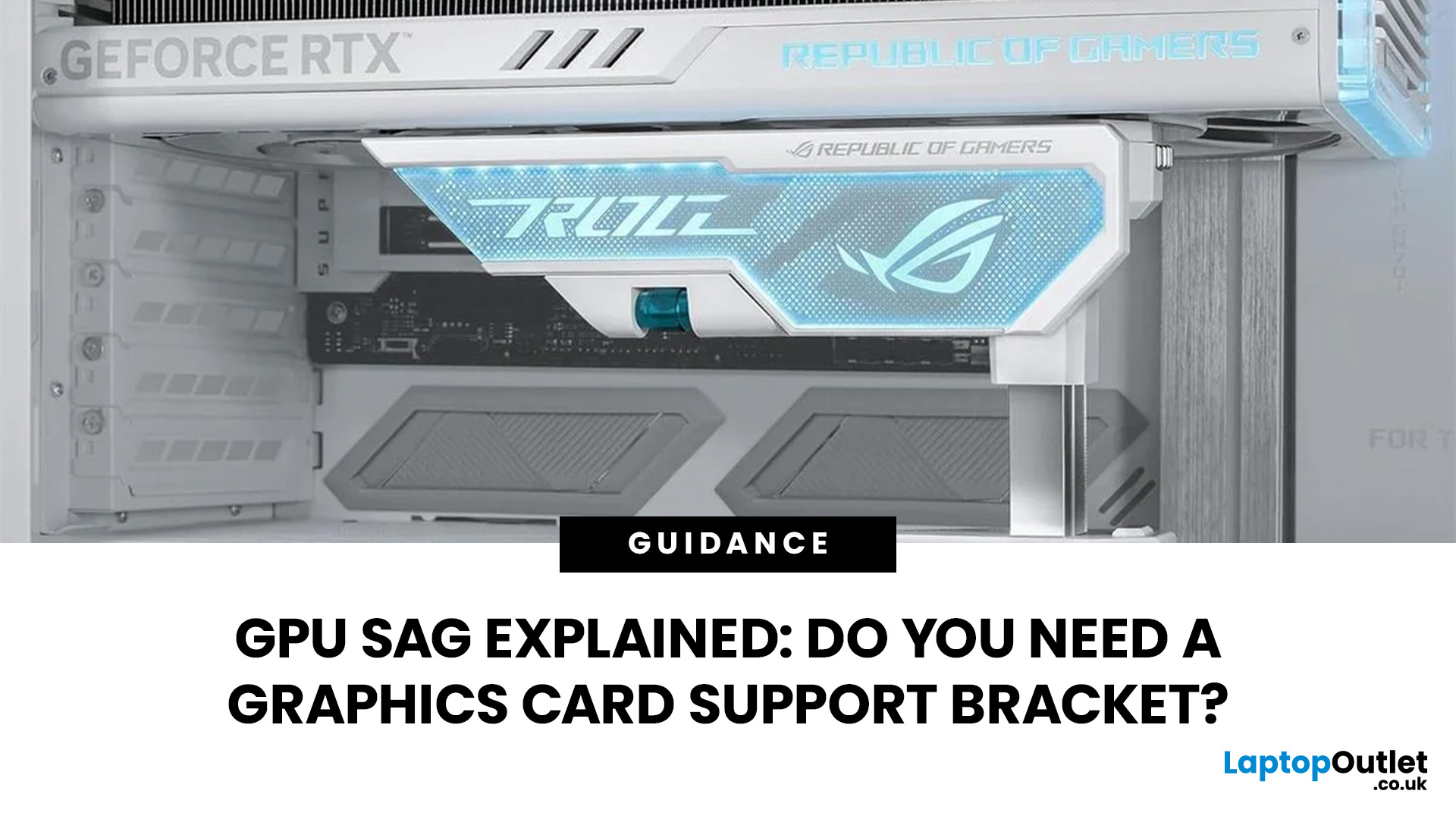
GPU sag is the downward tilt of a graphics card caused by its weight pulling on the unsupported end of the card. It is most noticeable with long, heavy GPUs using large multi-fan coolers. A slight tilt is not automatically a sign of damage, but obvious sag is worth checking rather than ignoring.
GPU sag is the downward tilt of a graphics card caused by its weight pulling on the unsupported end. A GPU support bracket is not always necessary, but it can help stabilise long or heavy graphics cards that visibly droop after correct installation. Before adding support, check the card is fully seated, securely screwed in and not being pulled by cables.
Before buying a GPU support bracket, make sure the graphics card is fully seated and properly secured to the case. If it still droops, a bracket, stand or holder can support the free end of the card without placing unnecessary upward pressure on it.
What Is GPU Sag?
GPU sag happens when one end of a horizontally mounted graphics card sits lower
September 25, 2026
September 25, 2026
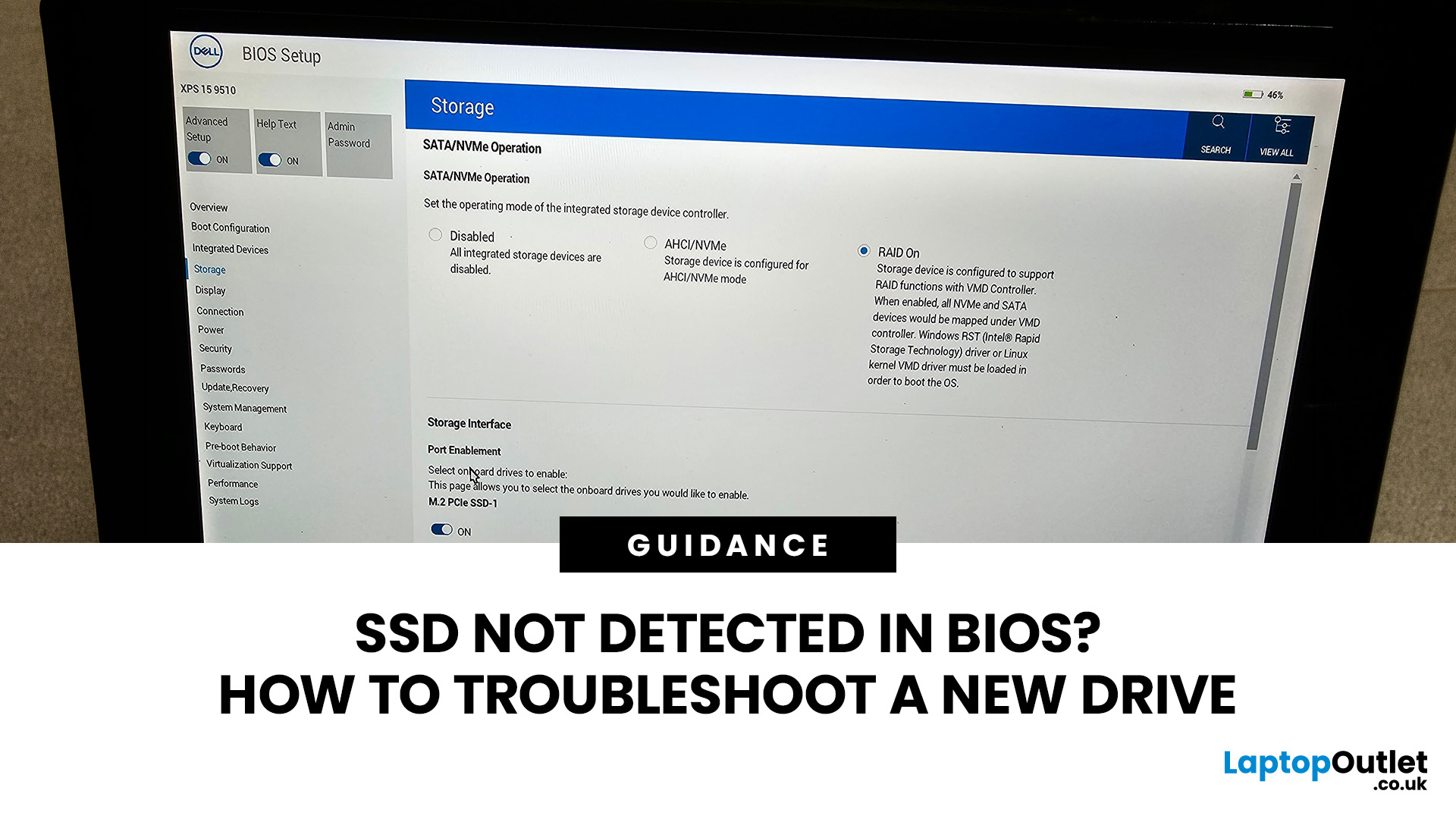
You install a new SSD, power the PC back on and expect extra storage or a faster boot drive. Instead, the drive is nowhere to be found. If your SSD is not detected in BIOS, the problem usually needs to be solved before changing anything inside Windows.
The good news is that a missing drive does not automatically mean the SSD is faulty. A loose connection, incompatible M.2 slot, disabled storage port, outdated BIOS, or incorrect storage configuration can all cause the same symptom. Here is how to work through the problem without randomly changing settings.
First, Check Where the SSD is Missing
Before opening the PC, confirm exactly where the drive disappears.
Enter your BIOS or UEFI firmware and look under sections such as Storage Information, NVMe Configuration, SATA Configuration or System Status. The exact menu varies between motherboard manufacturers. There are three different scenarios:
| What you see | What it usually means |
| SSD missing from BIOS/UEFI | Check installation, slot compatibility, |
September 24, 2026
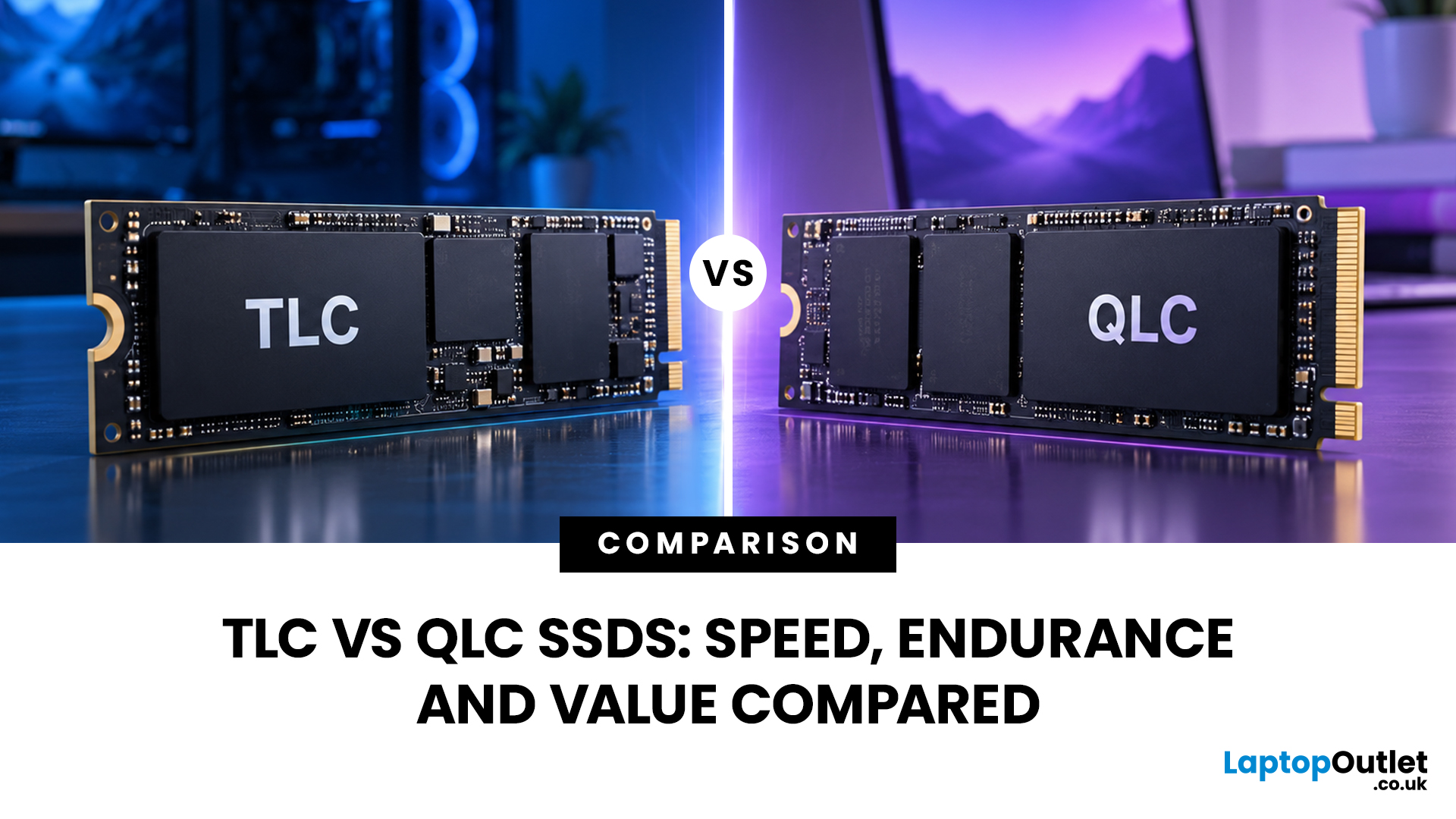
TLC SSDs store three bits of data in each NAND cell, while QLC SSDs store four. TLC generally provides higher write endurance and more consistent performance during sustained writes. QLC increases storage density, which can make larger capacities available at a lower cost per GB.
For most people, however, a TLC vs QLC SSD decision should not be based on NAND type alone. Controller design, SLC cache, firmware, capacity, interface and thermal performance can all affect how an SSD behaves in real-world use.
The right choice ultimately comes down to workload. Frequent large writes tend to favour TLC, while QLC can make sense for gaming libraries, media storage and everyday computing where capacity is more important than sustained write performance.
What TLC and QLC Mean
An SSD stores data in NAND flash, a type of non-volatile memory that retains information when your computer is switched off.
TLC and QLC are two common NAND flash types used in modern SSDs:
- TLC SSD: A triple level cell SSD stores
September 25, 2026
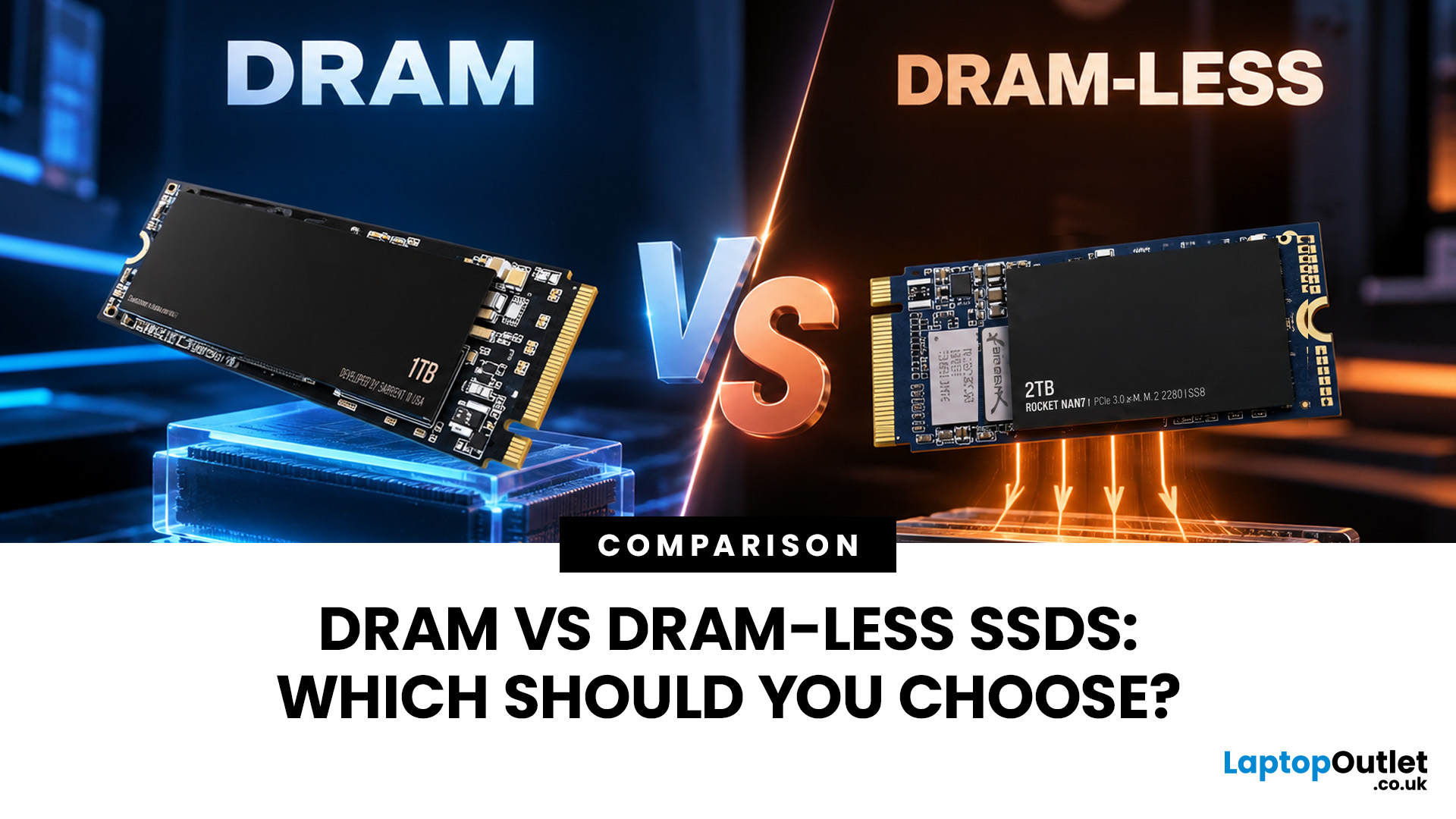
Two SSDs can both claim seriously fast read speeds while hiding one pretty important difference: one has dedicated DRAM, and the other does not.
A DRAM vs DRAM-less SSD choice depends on how you use your PC. SSDs with DRAM generally offer more consistent random performance and sustained speeds, making them better suited to heavy workloads, large file transfers and professional use. Modern DRAM-less NVMe SSDs can still perform very well by using Host Memory Buffer (HMB), making them a strong choice for gaming, Windows 11 and everyday computing.
But the DRAM vs DRAM-less SSD debate is not as simple as “DRAM good, DRAM-less bad”. Modern NVMe drives have changed the game with Host Memory Buffer, smarter controllers and better caching. So, what actually matters when choosing one? Let’s break it down.
DRAM vs DRAM-Less SSD: Quick Answer
An SSD with DRAM has dedicated memory that helps its controller quickly locate and manage data stored across the NAND flash. This can improve responsiveness and

September 23, 2026
A better sim racing experience does not always start with a new wheel, pedals, or graphics card. Many racing games use default settings designed to work across a broad range of controllers, displays and hardware, rather than being optimised for your exact driving position and setup.
Small adjustments to steering rotation, force feedback, pedal calibration, field of view, graphics, and audio can make your inputs easier to interpret and the car more consistent to control. This guide walks through some of the most overlooked settings worth checking in racing titles such as Assetto Corsa Competizione, iRacing, Gran Turismo, Forza Motorsport and EA Sports WRC. Menu names and available controls vary between games, platforms and hardware.
Before You Change Anything: Create a Repeatable Test
Before searching for the best settings for sim racing, create a repeatable way to judge whether a change has actually helped.
Choose one familiar car and circuit, then keep the weather, fuel load, tyres, and
September 22, 2026
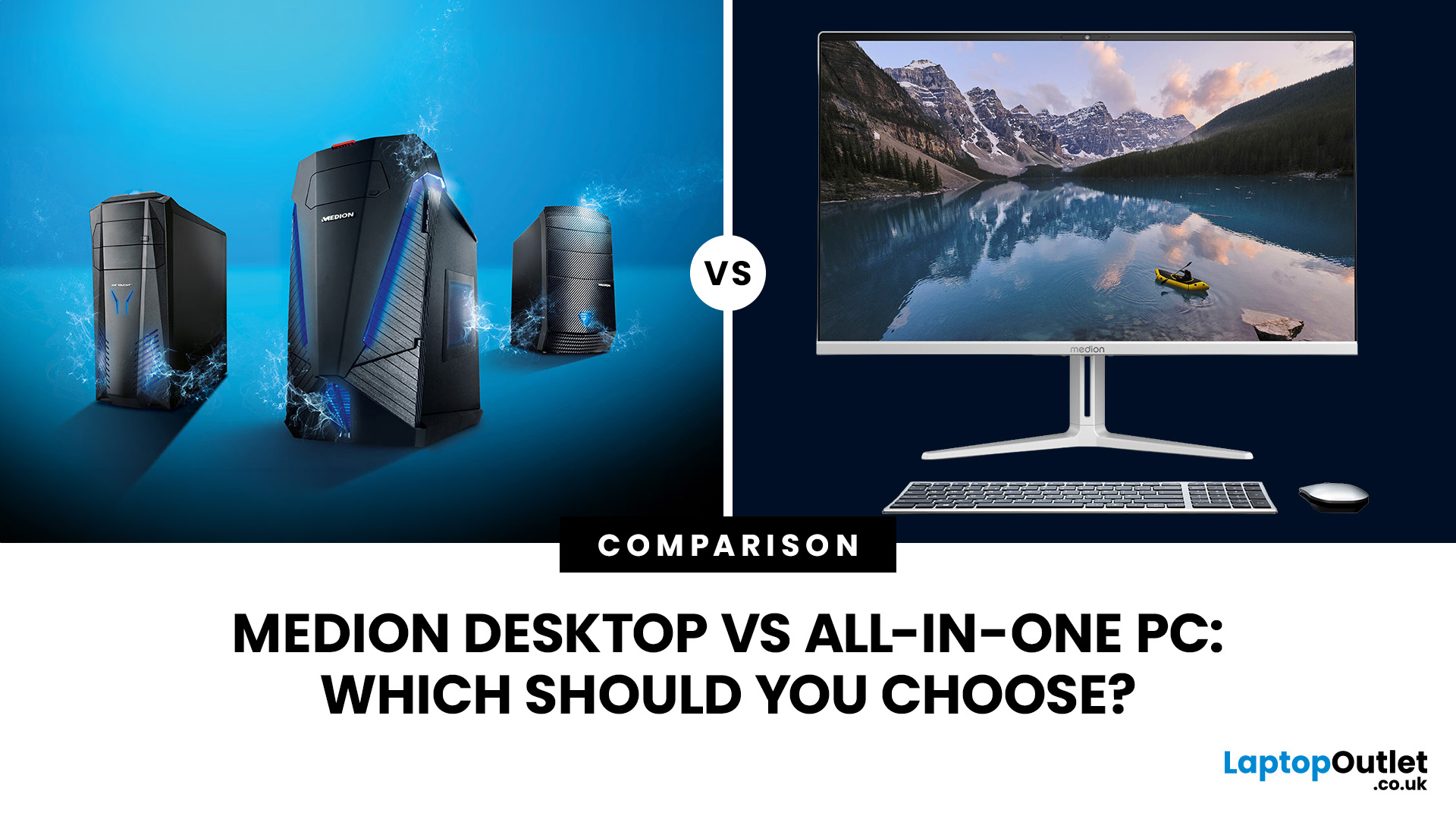
Choosing a Medion computer is not only about processor speed, RAM or storage. Form factor affects desk space, display choice, upgrades, repairs and how easily the system can adapt later.
A Medion desktop PC is usually the better choice if you want greater upgrade flexibility, more display freedom and stronger options for demanding workloads. A Medion all-in-one PC suits users who prioritise a cleaner, space-saving setup with the screen built in. The right choice depends on your performance needs, desk space, upgrade plans and the exact model specifications.
The Medion desktop vs all-in-one PC decision therefore needs more than a simple winner. Both can work well for home, office and family use, but they solve different problems. This guide compares them around real needs so you can choose the setup that fits your space and workload.
Medion Desktop vs All-in-One: The 1-Minute Take
Choose a Medion desktop PC if you want more freedom over the monitor, broader upgrade potential and greater
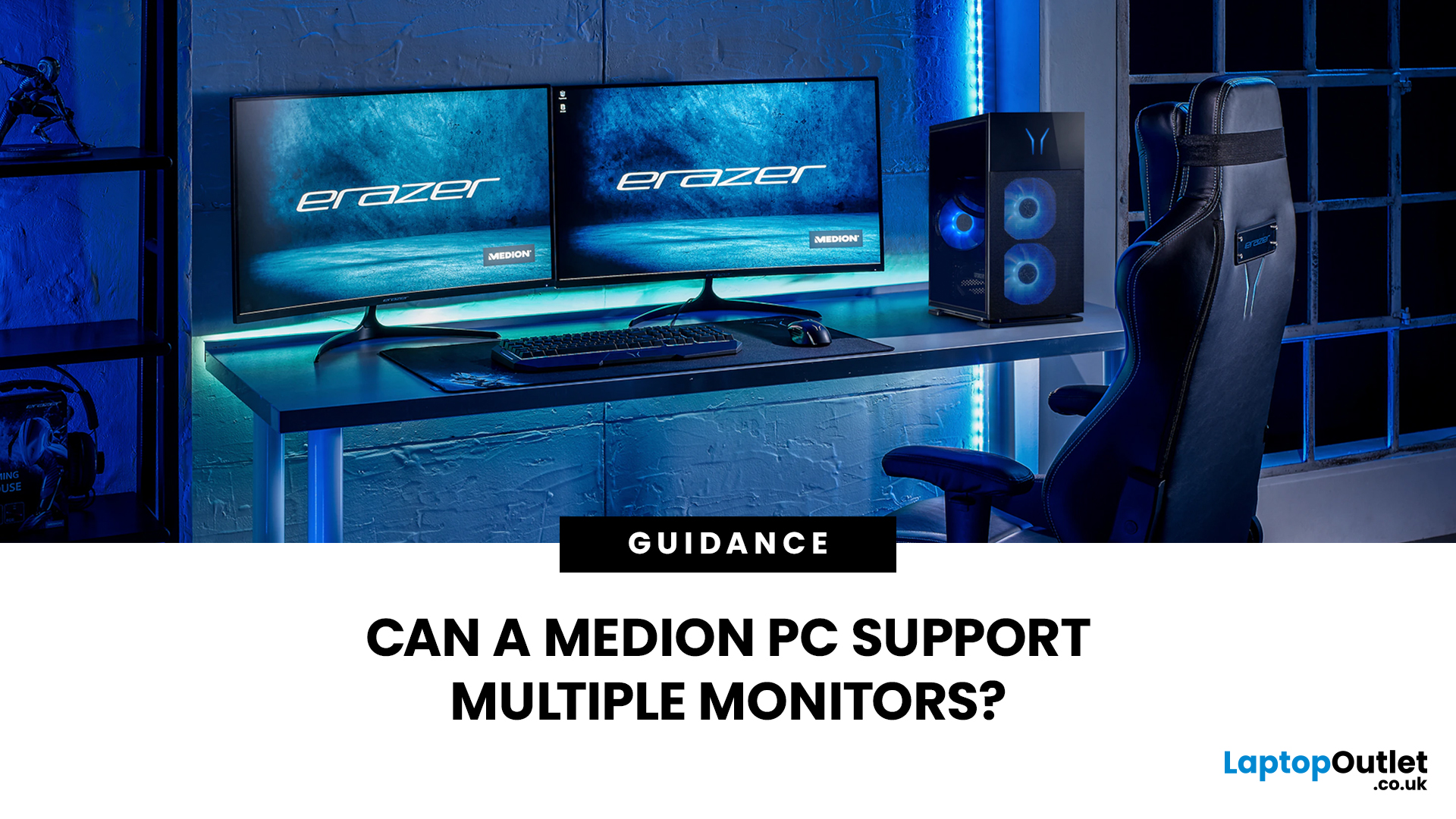 Can a Medion PC Support Multiple Monitors?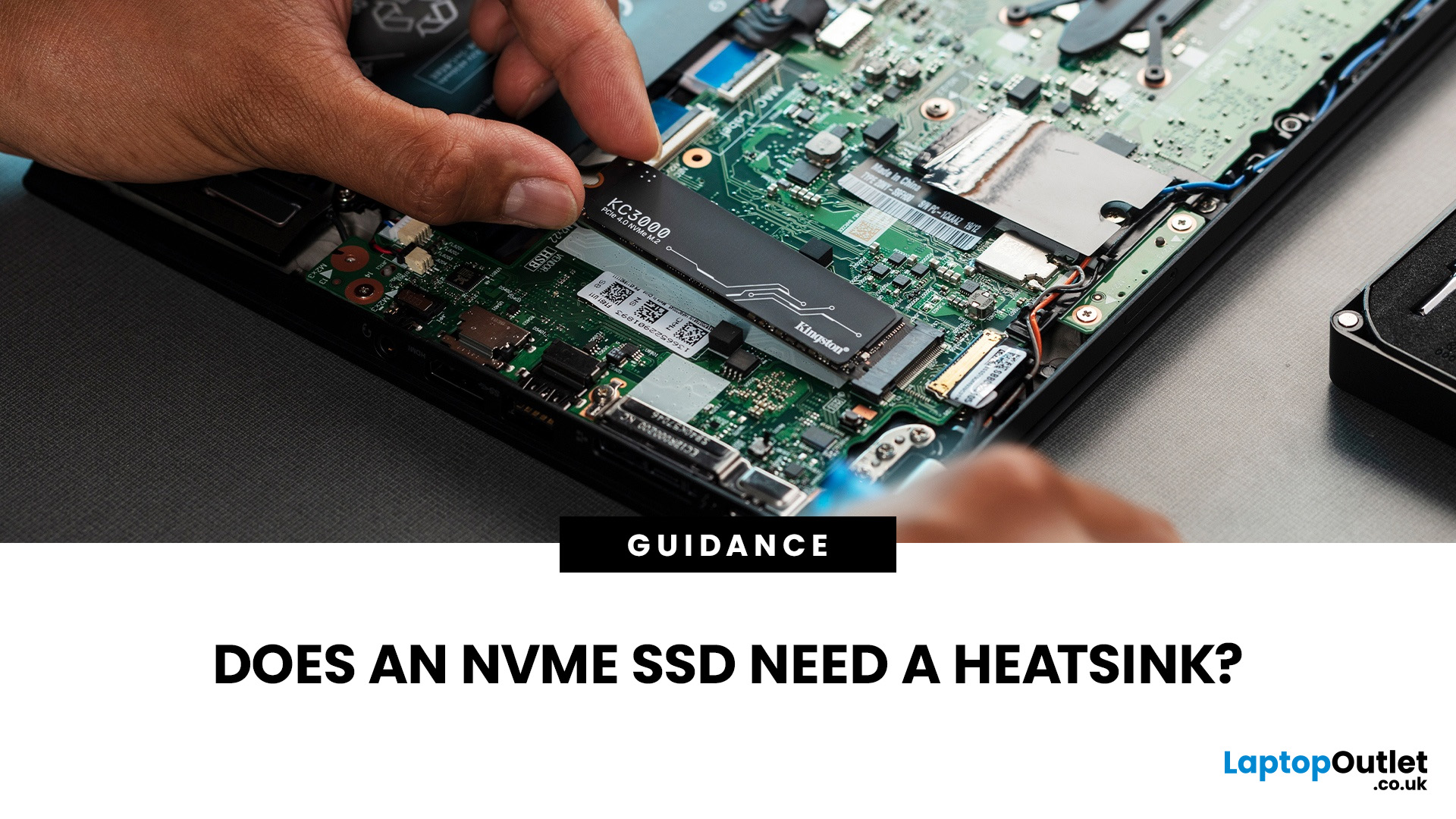
September 22, 2026
SSDs are fast. Like, really fast and tiny. And now we’re apparently supposed to worry about them getting too hot??
So… do SSDs actually need extra cooling, or are we just putting tiny heatsinks on everything because we can? It’s a fair question, especially now that modern SSDs are cramming more speed into less space and casually generating more heat while doing it.
An NVMe SSD heatsink is not essential for every drive, but it can help maintain stable performance when an SSD runs hot during sustained workloads. High-performance PCIe 4.0 and PCIe 5.0 drives are more likely to benefit from additional SSD cooling, especially if airflow is limited. If your motherboard already includes an M.2 SSD heatsink, that may be sufficient. Always check the SSD manufacturer’s temperature limits and cooling guidance before adding extra cooling.
Whether you need one depends on your SSD, workload, airflow and the cooling already available in your system. Many drives can maintain safe temperatures using normal
September 22, 2026
Buying fast DDR5 RAM is only part of getting the performance printed on the box. Your memory may initially run at a lower standard speed until you enable the appropriate performance profile in your motherboard BIOS.
That is where Intel XMP and AMD EXPO come in. Both are RAM overclocking profiles that apply tested memory frequency, timing, and voltage settings without requiring you to configure every value manually.
So, what is the difference between XMP vs EXPO, and can you use an XMP kit with AMD or EXPO memory with Intel? Here is what you need to know before choosing or configuring your RAM.
XMP vs EXPO: What is the Difference?
The simplest distinction is the platform each standard was developed for.
Intel XMP, or Extreme Memory Profile, is Intel's memory-overclocking technology. AMD EXPO, or Extended Profiles for Overclocking, was developed for DDR5 memory used with AMD Ryzen processors on the AM5 platform.
Both technologies let a compatible motherboard read preconfigured performance
September 24, 2026
September 18, 2026
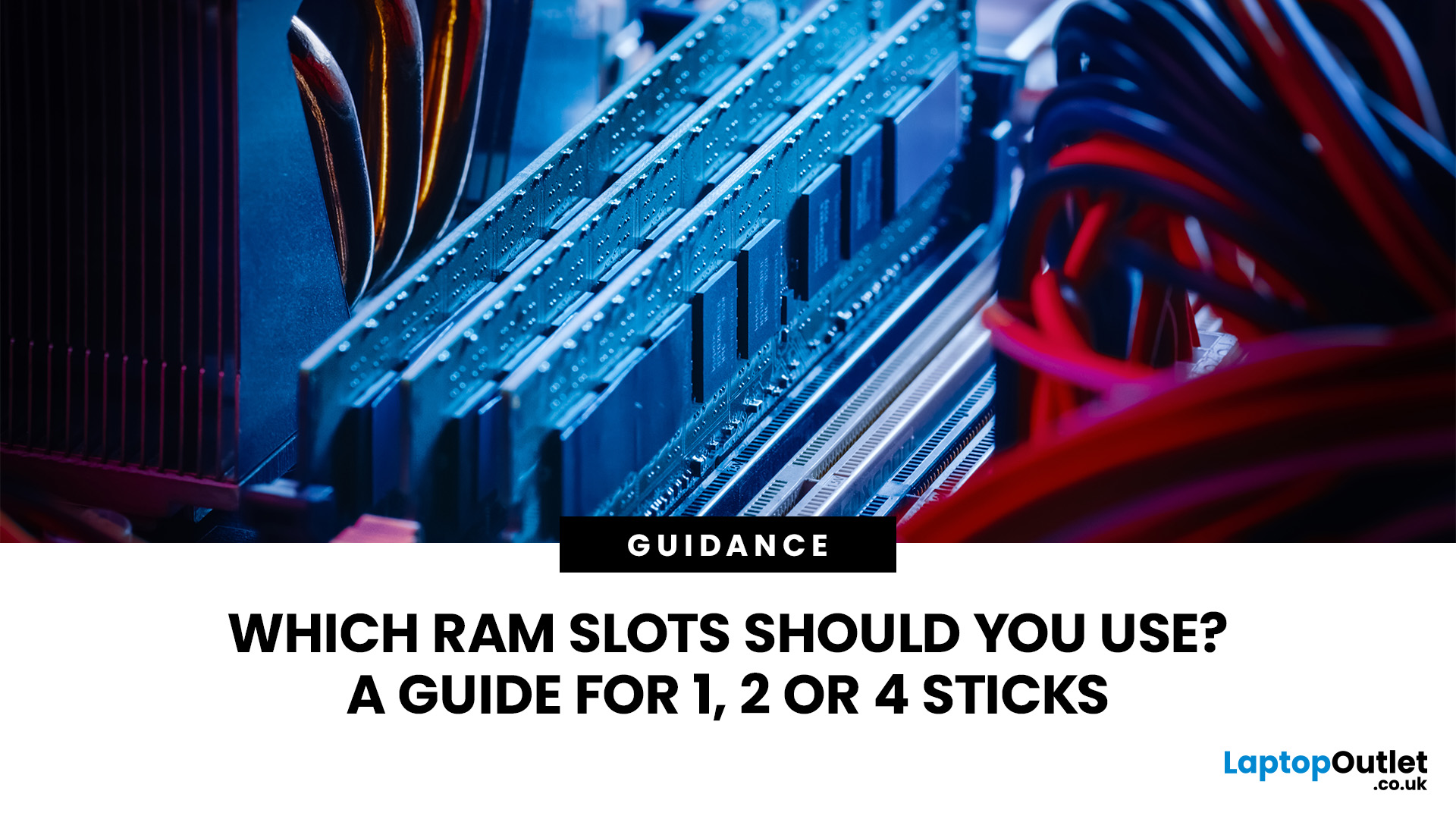
Installing RAM looks simple until you see four motherboard slots labelled A1, A2, B1 and B2. Put the memory in the wrong pair and your PC may still boot, but you might not be using the motherboard’s recommended memory configuration.
So, which RAM slots to use? On many four-slot desktop motherboards, a single stick goes in A2, while two sticks go in A2 and B2. With four compatible sticks, all four slots are populated. However, this is not a universal rule. Your motherboard manual should always take priority.
If you are upgrading capacity or building a PC, it is also worth checking that your RAM and memory modules are compatible with the motherboard before deciding where they go.
What Do A1, A2, B1 and B2 RAM Slots Mean?
Most mainstream desktop motherboards with four DIMM slots divide them between two memory channels, commonly called Channel A and Channel B.
The labels normally work like this:
| Slot | What the label usually means |
| A1 | First DIMM position on Channel A |
| A2 | Second DIMM position |