



Dual Mode vs Standard Gaming Monitors: Which One Should You Choose?
Choosing between dual-mode and standard gaming monitors is becoming a key decision for gamers seeking better speed, visuals, and flexibility. As display technology advances, players now expect sharper colour, higher refresh rates, smoother motion, and features that adapt to different gaming styles.
Dual-mode monitors add a new option by offering two performance profiles in one screen, while standard gaming monitors remain popular for their simplicity and value. So, which is right for you? This guide compares their features, performance, benefits, and real-world uses to help you choose confidently, whether you play competitive shooters or immersive story-driven games at home.
Understanding the Basics: What are Dual Mode Gaming Monitors?
Dual mode gaming monitors are a relatively new category that provide two optimised display profiles within the same screen. These modes usually include:
1. A High-Resolution Mode
This mode might support 4K displays for gamers, or QHD resolution, higher brightness, and more accurate colour reproduction. Typically geared towards:
- cinematic gaming
- creative work
- immersive open-world visuals
- media consumption
2. A High-Refresh-Rate Mode
Here the monitor may drop down to 1080p or 1440p, allowing refresh rates of 240Hz, 280Hz, 360Hz, or even higher. Designed for:
- competitive FPS gaming
- esports performance
- fast-paced action
- motion-sensitive players
The idea is simple: switch between modes depending on the game or task, instead of buying two separate monitors.
This flexibility has made dual mode displays appealing for gamers who alternate between visually rich titles and competitive shooters, and want a single monitor that adapts instantly.
For a clearer breakdown of refresh rates, response times, resolutions, and panel types, check out our full guide on gaming monitor buying tips before choosing your next display.
What are Standard Gaming Monitors?
Standard or latest gaming monitors are displays that run on a single performance profile. Depending on their type, they might prioritise:
- resolution
- refresh rate
- colour accuracy
- screen size
- gaming-centric features (G-Sync, FreeSync, HDR)
Unlike dual screen for gaming, they don't shift between a high-resolution and high refresh setting automatically; you pick one model that suits your primary gaming style.
Despite the buzz around dual mode technology, standard vs dual mode display choices still depend heavily on use-case. Many gamers do not require a dynamic setup if they focus on only one type of game. Standard gaming monitors also offer a broader price range, making them a preferred option for budget buyers.
Dual Mode vs Standard Gaming Monitors: Full Comparison
Below is a detailed look at how dual mode monitors differ from standard ones, across all major categories that matter to gamers.
1. Performance Flexibility
Dual Mode Monitors
The core strength of a dual mode monitor advantages include versatility. You benefit from:
- high refresh rates for competitive games
- high resolution for story-driven or cinematic games
- easy switching (often one-click or automatic based on GPU commands)
This gives you the equivalent of two monitors in one.
Standard Monitors
Standard gaming monitors offer:
- consistent performance
- fixed specs tailored to a specific gaming style
This is great if you only need one type of visual performance and don’t switch genres often. If you want to explore value monitors with high-quality performance, our list of Best Refurbished Monitors for Work, Gaming & Creativity is a great place to start.
2. Gaming Use-Cases
When Dual Mode Shines
Dual mode monitors are especially useful if you enjoy:
- FPS titles like CS2, VALORANT, Apex Legends
- eSports where high refresh rates matter
- open-world cinematic games like Red Dead Redemption 2, Cyberpunk 2077
- creative tasks (photo & video editing)
- mixed gameplay styles
If you want a dual mode monitor for FPS games, you get the best of both worlds: high refresh for competitive matches, and crisp visuals for exploration.
When Standard Monitors Shine
Standard displays are perfect if you:
- primarily play one type of game
- focus on casual or indie titles
- prefer a simpler plug-and-play experience
- want the best performance for a single profile (e.g., fixed 165Hz 1440p)
If you're exploring monitors with advanced features, this new class certainly deserves your attention.
3. Refresh Rate & Motion Performance
Dual Mode
- High-refresh mode often exceeds 240Hz
- Ideal for fast-action gameplay
- Crisp motion clarity when dropping resolution
Because the GPU pushes fewer pixels in performance mode, you get higher FPS without compromising smoothness.
Standard
- Offers a wide range: 75Hz, 144Hz, 165Hz, 240Hz
- Often more stable motion clarity at a single resolution
- Better for players who prefer consistency
4. Resolution & Visual Quality
Dual Mode
Switch easily between:
- 4K → 1080p
- QHD → 1080p
- 4K → QHD
This is excellent for:
- games with heavy graphical load
- creative tasks
- watching films
- detailed world-building titles
If you are unsure which combination suits your setup, our guide to choosing the right resolution and refresh rate explains how both specifications affect gaming, work and everyday use.
Standard
- If you buy a 4K monitor, you're always playing at 4K (unless manually scaling).
- If you buy a 1080p high-refresh monitor, you're always at 1080p.
- There’s no hybrid flexibility.
5. Price & Value
Dual mode monitors are newer, so they tend to cost more. You're paying for:
- dual processing profiles
- advanced chips for switching
- enhanced cooling
- high-end panels
Standard monitors:
- offer more affordability
- provide better value in specific performance categories
- have a much larger product selection
If keeping costs down is a priority, it is also worth comparing a new or refurbished monitor to see which option offers the better mix of features, condition and value for your budget.
6. Longevity & Future-Proofing
Dual mode technology is built for gamers who want:
- a single monitor that adapts to next-generation hardware
- compatibility with evolving GPU capabilities
- flexibility as game graphics improve
Standard monitors, while reliable, may become outdated sooner if they specialise too deeply in one area.
That said, high-quality standard monitors with monitors with advanced features like HDR10+, Mini-LED, and 240Hz refresh rates remain competitive.
Detailed Feature Comparison Table
|
Feature |
Dual Mode Gaming Monitors |
Standard Gaming Monitors |
|---|---|---|
|
Refresh Rate |
240–360Hz in performance mode |
144–240Hz typical |
|
Resolution Options |
Switchable (1080p, 1440p, 4K) |
Fixed |
|
Gaming Versatility |
Excellent for mixed playstyles |
Best for single-focus gamers |
|
Colour & HDR |
Often premium-grade |
Varies based on price |
|
Price Range |
Higher |
Wider range (budget to premium) |
|
Future-Proofing |
Strong |
Depends on model |
|
FPS Game Performance |
Exceptional in high-refresh mode |
Good, especially 1080p 240Hz |
|
Creative Work |
Great in high-resolution mode |
Depends on display quality |
Dual Mode Monitor for FPS Games: Does It Really Matter?
If you play:
- CS2
- Call of Duty: Warzone
- Rainbow Six Siege
- Fortnite
- VALORANT
Then yes - dual mode is a major advantage.
Why?
1. You get ultra-high refresh rates
Dropping to 1080p allows your GPU to push:
- 200FPS
- 300FPS
- even 400FPS+
(depending on your system)
2. Motion becomes crystal clear
Lower resolution + higher refresh rate = maximum tracking accuracy.
3. Reduced input lag
Competitive players benefit from faster reactions on high-refresh modes.
4. You can switch back to 4K/QHD for immersive games
No need for a second monitor.
In the debate between dual mode vs standard gaming monitors, FPS players are the group who see the biggest boost from dual mode setups. For budget-conscious gamers, this post explains how to get competitive performance from refurbished displays: Gaming on a Budget: Refurbished Monitors for Competitive Edge.
Benefits of Dual Mode Gaming Monitors
Below are the top advantages:
1. Two Technology Profiles in One
You get both:
- High resolution for immersion
- High refresh for speed
2. Saves Desk Space
No need for a dual-monitor setup.
3. Extremely Future-Proof
Capable of shifting modes as GPU power improves.
4. Perfect for Multi-Activity Users
From editing photos to playing esports titles.
5. Best for Mixed Genre Gamers
If you alternate between FPS, RPG, racing, and open-world games, nothing beats dual mode flexibility.
A dual-mode display can save desk space because you do not need two separate screens for different performance priorities. If having more screen space is the bigger priority, comparing an ultrawide or dual-monitor setup can help you decide which arrangement better suits your desk and workflow.
Benefits of Standard Gaming Monitors
One of the biggest dual mode monitor advantages is the ability to switch between visual quality and speed without replacing your setup. This makes it ideal for gamers who want competitive performance during FPS matches and sharper image quality for open-world or story-driven games. Other advantages include:
1. Cost Effective
They offer excellent value for specific performance needs.
2. Reliable & Consistent
No switching; what you see is what you get.
3. Wide Selection
Many sizes, specs, and budgets.
4. Great for Gamers with One Core Preference
If you play a single genre (FPS only or RPG only), a dedicated monitor can still outperform dual mode options at similar price points.
Worried about cost and sustainability? Learn how refurbished monitors help you save money and reduce e-waste in our guide on How to Save Money and the Environment with Refurbished Monitors.
Which Monitor Type is Best for You?
Let’s break it down by user type:
For Competitive FPS Gamers
Choose: Dual Mode Monitor
You’ll get:
- the highest refresh rates possible
- reduced lag
- rapid response
- smoother motion
This makes dual mode the superior choice for esports players.
For RPG, Story, and Cinematic Players
If immersion is your top priority, you may also want to explore ultrawide gaming monitor range options. Ultrawide screens can create a wider field of view, making racing games, RPGs, and cinematic adventures feel more expansive. Choose: Standard High-Resolution Monitor
You'll benefit from:
- consistent 4K or QHD
- strong colour accuracy
- high brightness
- deep immersion
A standard 165Hz QHD display is perfect here.
For Gamers Who Play Both Competitively and Casually
Choose: Dual Mode Monitor
Switching between modes makes it the best gaming monitor type for mixed users.
For Creative Professionals and Gamers
If you edit videos or photos and also game, a dual mode monitor is ideal because it provides:
- accurate colours
- high pixel density
- performance mode for leisure gaming
For Budget Gamers
Choose: Standard Monitor
If you want affordability without complexity, standard models offer the best value.

Final Verdict
Ultimately, choosing between dual-mode and standard gaming monitors depends on how you play and what your setup can support. Dual-mode models offer impressive flexibility, switching between sharp high-resolution visuals and ultra-fast refresh rates for competitive FPS gameplay. Standard monitors, meanwhile, remain practical, affordable, and powerful enough for most gamers.
As games, GPUs, and player expectations continue to evolve, dual-mode displays are likely to become more attractive. Whether you prefer a feature-rich dual-mode screen or a premium standard monitor, focus on your habits, hardware, and budget. The best choice is the monitor that improves performance and keeps you fully immersed always.

FAQs
Should I buy a dual-mode gaming monitor or a standard one?
Choose dual mode if you play both competitive and story-based games. Choose standard if you want great performance at a lower price.
Is a dual-mode monitor worth the extra money?
Yes, if you need both high resolution and super-fast refresh rates. Otherwise, a standard monitor is enough.
Which monitor is better for FPS games?
A dual-mode monitor is better for FPS games because it can switch to a higher refresh rate.
Are standard gaming monitors still good for gaming?
Yes. Standard monitors are reliable, affordable, and suitable for most gamers.
Who should choose a dual-mode gaming monitor?
Gamers who play fast shooters and visually rich games will benefit most from a dual-mode monitor.
Related Articles

Last Updated: September 01, 2026
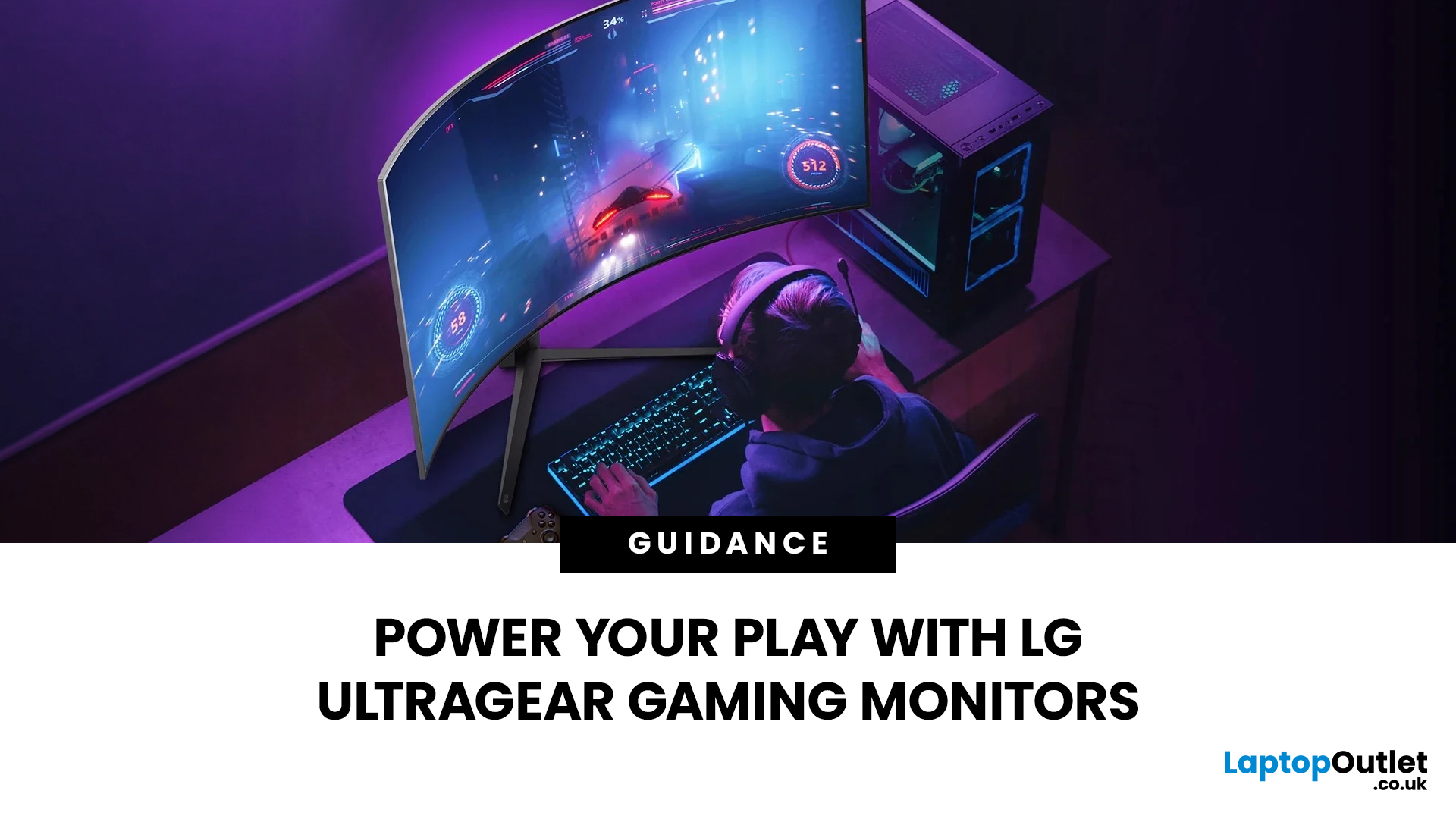
Not all gaming monitors are built the same, and the LG UltraGear range makes that very clear. Whether you're playing for fun on weekends, grinding ranked matches on a mid-range rig, or competing at a serious level, there's a specific UltraGear model that fits your needs.
This LG UltraGear guide breaks down the full lineup by player type so you can make a genuinely informed decision before spending your money.
What Makes LG UltraGear Different from Standard LG Monitors?
LG produces monitors for all sorts of uses, from office work to content creation to home cinema. UltraGear is the gaming-focused sub-brand, and it comes with a noticeably different spec sheet compared to LG's standard displays.
The core differences come down to priorities. Standard LG monitors are built around colour accuracy, ergonomics, and value for office use. UltraGear monitors are tuned for speed, responsiveness, and visual clarity under fast-moving gaming conditions.
In practical terms, this means LG UltraGear gaming
Last Updated: April 28, 2026
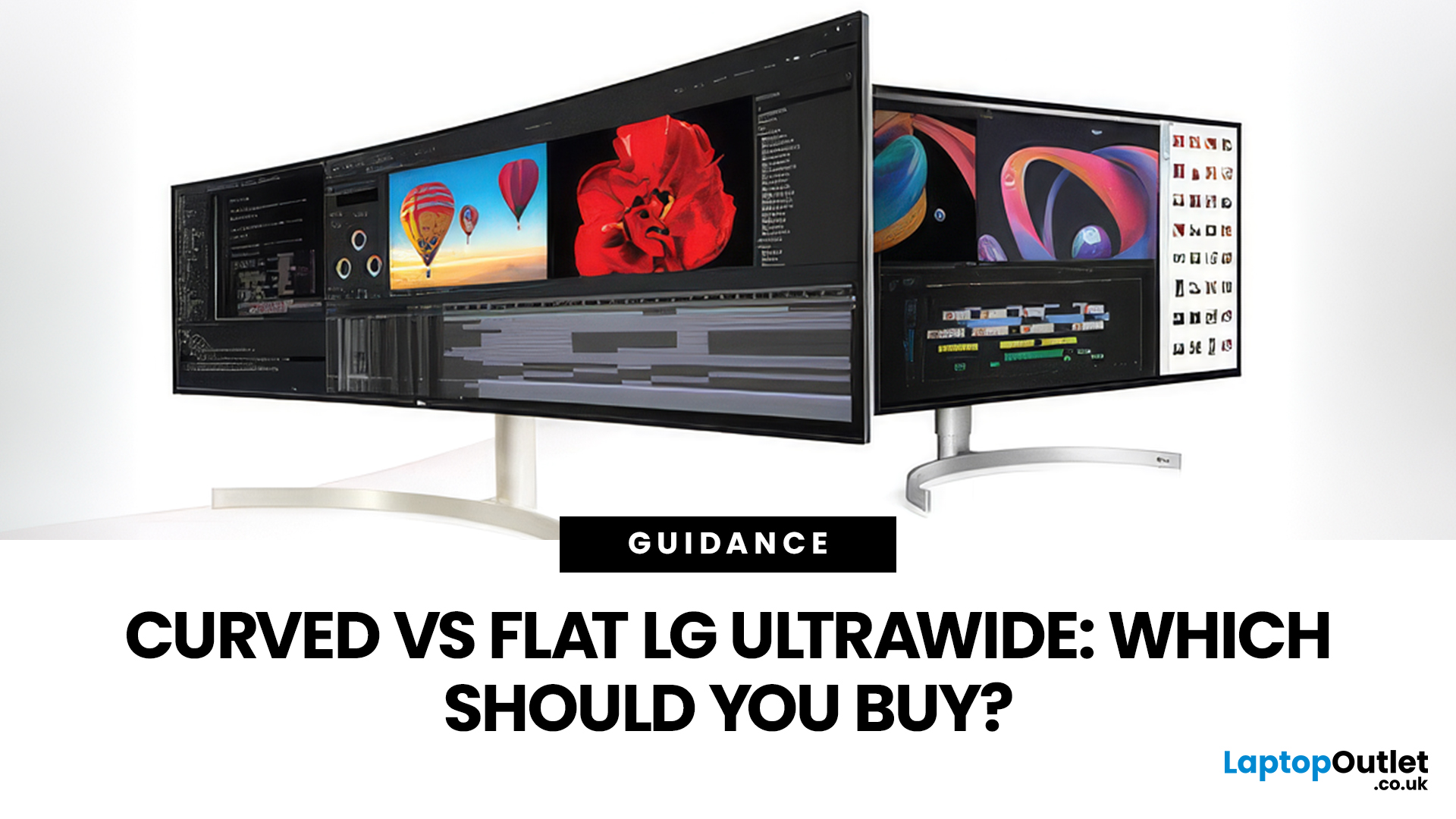
If you're choosing between a curved vs flat LG UltraWide monitor, the decision is more nuanced than it first appears. The right choice depends on what you do, how long you sit at your desk, and the kind of experience you want from your screen.
This guide breaks down every major use case side by side, with a clear verdict for each one, so you can make the right call before you spend your money.
What Makes LG UltraWide Monitors Different?
LG UltraWide monitors use a 21:9 aspect ratio, giving you roughly a third more horizontal screen space than a standard 16:9 display. That extra width is what makes the curved vs flat debate so relevant on these screens specifically.
On standard 26 to 28-inch monitors, the curve debate is largely down to personal preference. But once you hit 34 inches and beyond, the physics of how your eyes scan left-to-right starts to matter. On ultrawide displays of 34 inches or larger, the curvature brings the edges of the screen closer to you, covering more of your
Last Updated: April 14, 2026
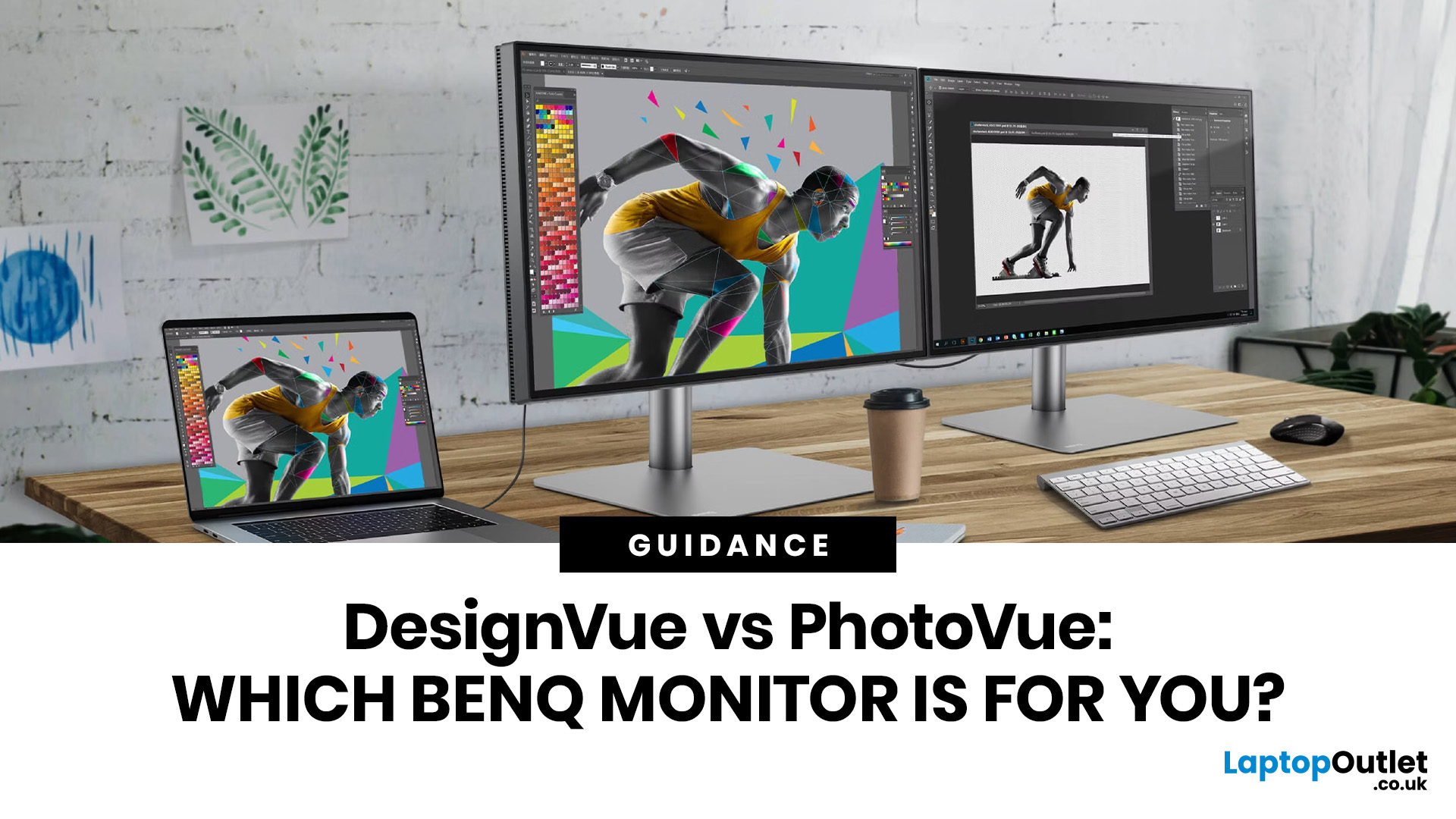
If you work with colour professionally, your monitor is your most critical piece of kit. BenQ monitors for creators are built around one principle: what you see on screen should accurately reflect what you print, publish, or deliver to a client.
Whether you are a photographer editing RAW files, a designer producing brand assets, or a video editor reviewing colour grades, accuracy matters at every stage. BenQ addresses this through two dedicated series: the DesignVue PD range and the PhotoVue SW range.
Each is engineered for a different creative discipline. This guide explains both series, covers the key specs to look for, highlights how they compare, and helps you decide which one fits your workflow best.
BenQ’s Creator Series: DesignVue & PhotoVue SW
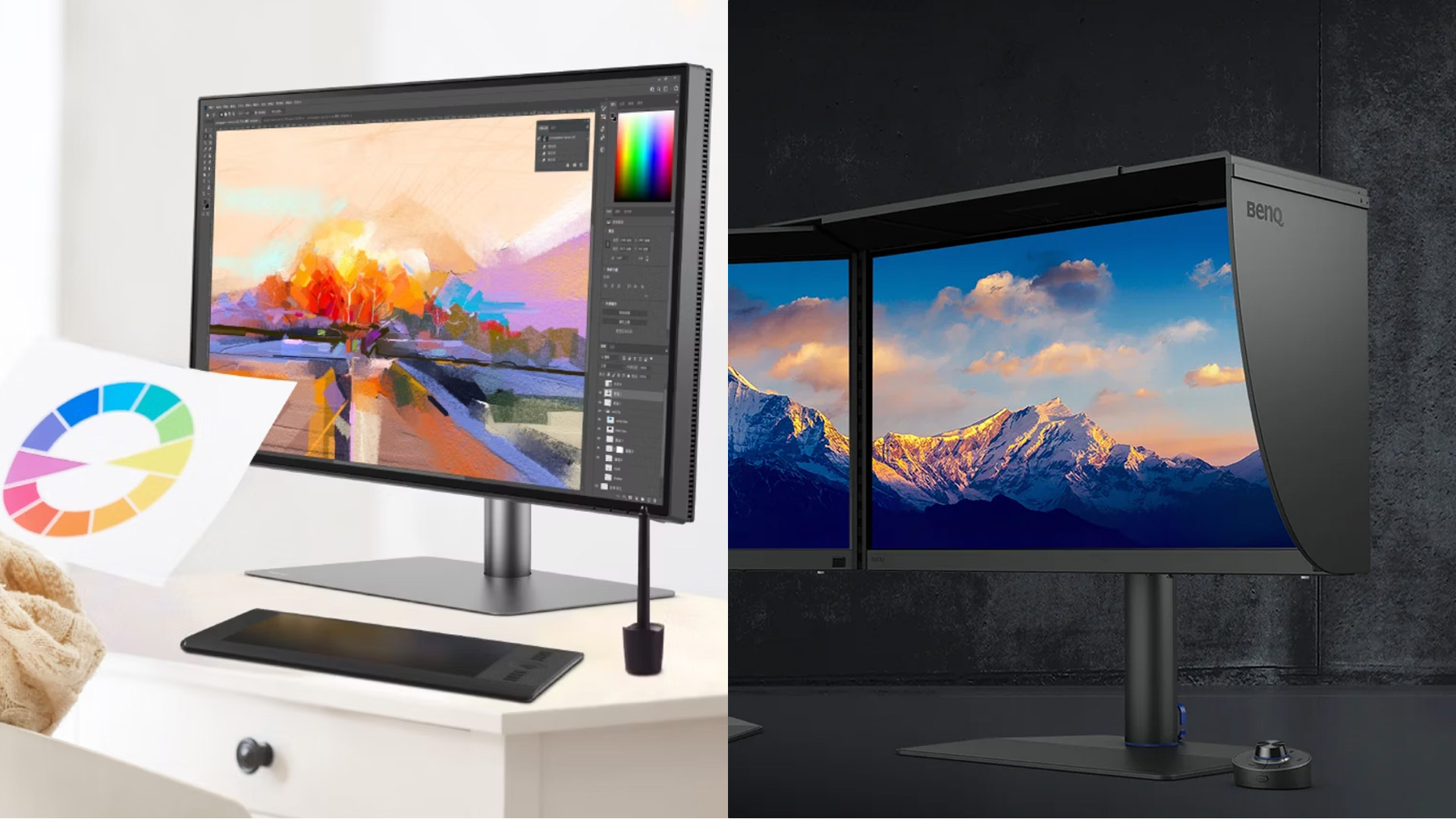
Finding the right BenQ monitors for creators starts with understanding why BenQ separates its professional range into two distinct families, each tailored to a different core workflow. Rather than one catch-all creative

Last Updated: April 14, 2026
If you want reliable colour from a BenQ creative monitor, calibration is not the final polish. It is the foundation. Whether you are editing photos, preparing work for print, designing for web, or reviewing client visuals, the goal is the same: your monitor should show colour in a way that is consistent, repeatable, and appropriate for the job in front of you.
This guide will walk you through how to calibrate a BenQ DesignVue monitor or BenQ PhotoVue monitor, when to use sRGB vs AdobeRGB on BenQ monitors, what hardware calibration changes, and how often you should recalibrate if accurate colour matters to your work.
Why BenQ Monitor Colour Calibration Matters
A high-spec monitor is only one part of colour accuracy. Out of the box, even a very good display may be too bright for print work, set to the wrong colour space for your workflow, or simply drift over time. That is where BenQ monitor colour calibration comes in.
BenQ explains that hardware calibration works by adjusting colour directly
Last Updated: April 28, 2026
Choosing the right monitor format can transform how you work. Whether you are a developer, analyst, designer, or remote professional, your display shapes your entire workflow.
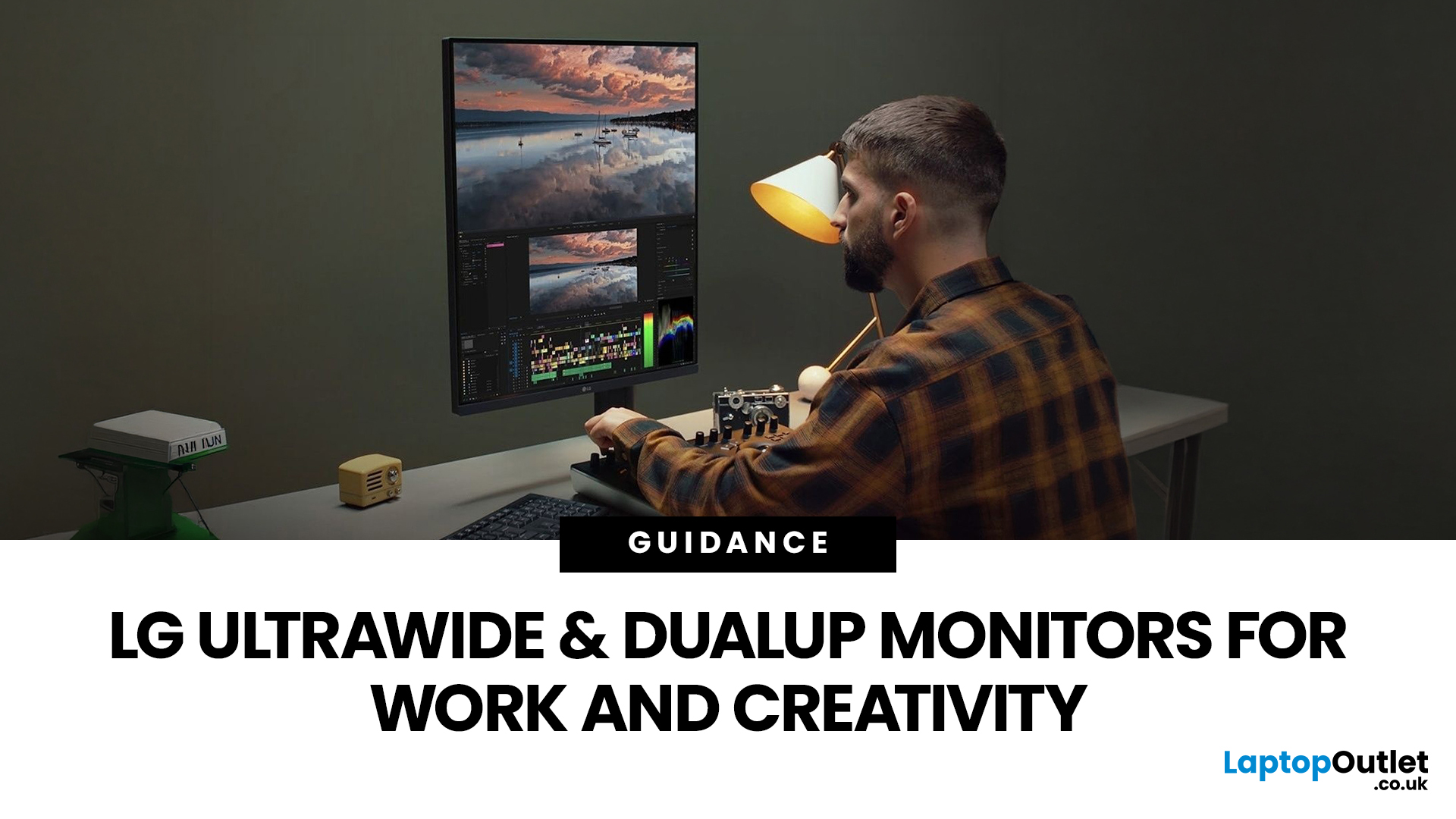
LG UltraWide and DualUp productivity monitors have become a firm favourite across the UK for professionals who need more screen space without the cable clutter of multiple setups.
This guide breaks down how each format performs for coding, content creation, dashboards, and day-to-day productivity, so you can pick the right one for your desk.
Why Screen Format Changes Everything
The shape of your display directly influences how many windows you can manage, how much you need to scroll, and whether your neck stays comfortable after a full working day. It is worth understanding the two non-standard formats LG offers before deciding which suits your setup.
LG monitors come in two distinctive formats: the horizontal 21:9 or 32:9 UltraWide and the vertical 16:18 DualUp. Both give you significantly more usable space than
Last Updated: August 28, 2026
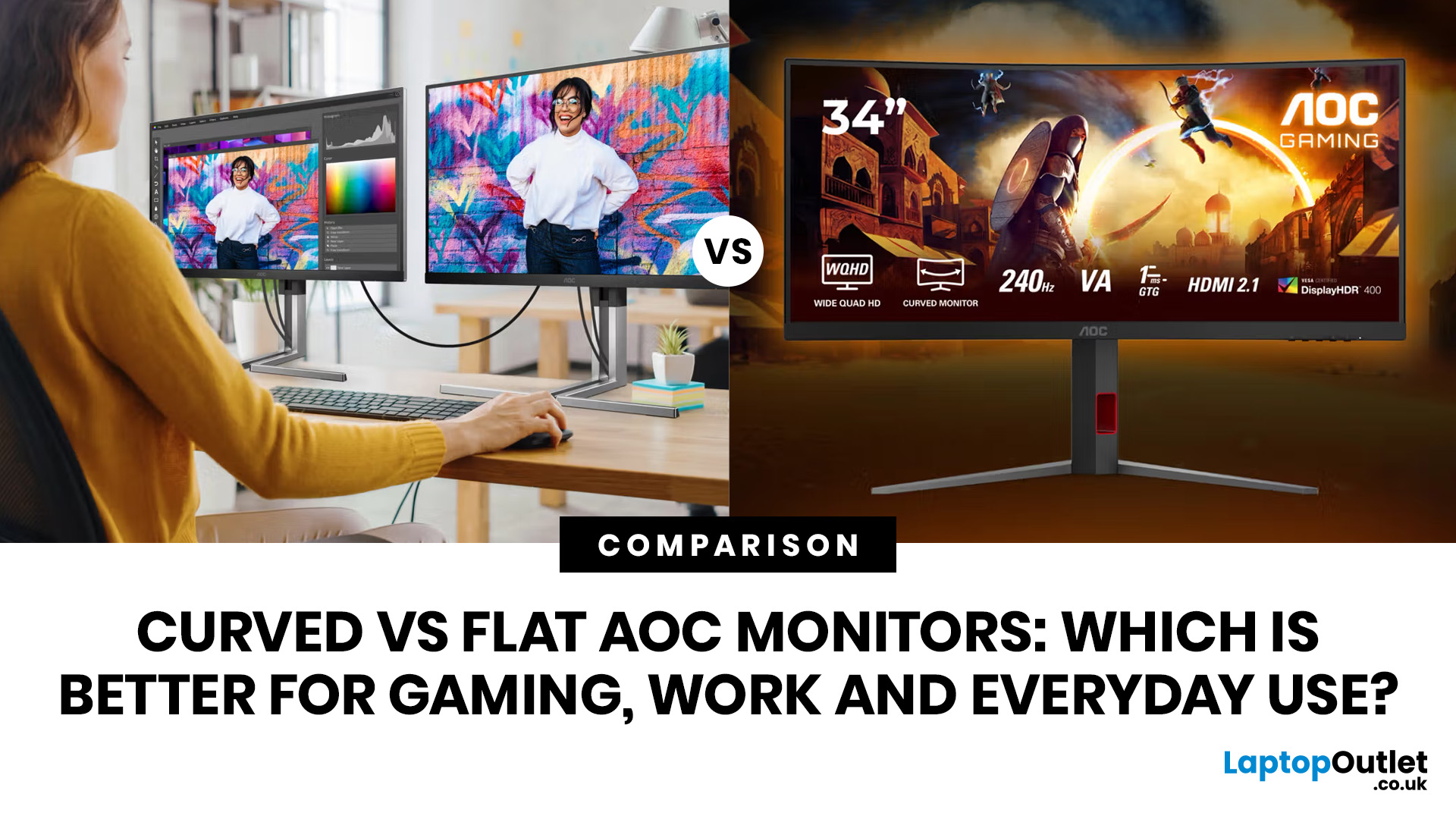
If you are comparing curved vs flat AOC monitors, the right choice depends less on trends and more on how you actually use your screen every day.
For gaming and entertainment, a curved display often feels more immersive, especially in racing games, open-world titles and films. For work, study and general day-to-day use, a flat screen is usually the more practical option because it is easier to position, easier to pair in dual-screen setups and often better suited to documents, spreadsheets and precision-focused tasks.
So, are curved monitors better? Not always. A curved model can be a great upgrade for the right person, but flat screens still make more sense for many buyers.
Here is the simplest way to think about it:
| Use case | Usually the better choice | Why |
| Immersive gaming | Curved | Feels more engaging and cinematic |
| Esports and fast competitive play | Depends | Refresh rate matters more than screen shape |
| Office work and spreadsheets | Flat | Cleaner lines, easier multi-window working |
| Study and everyday |
Published: April 27, 2026
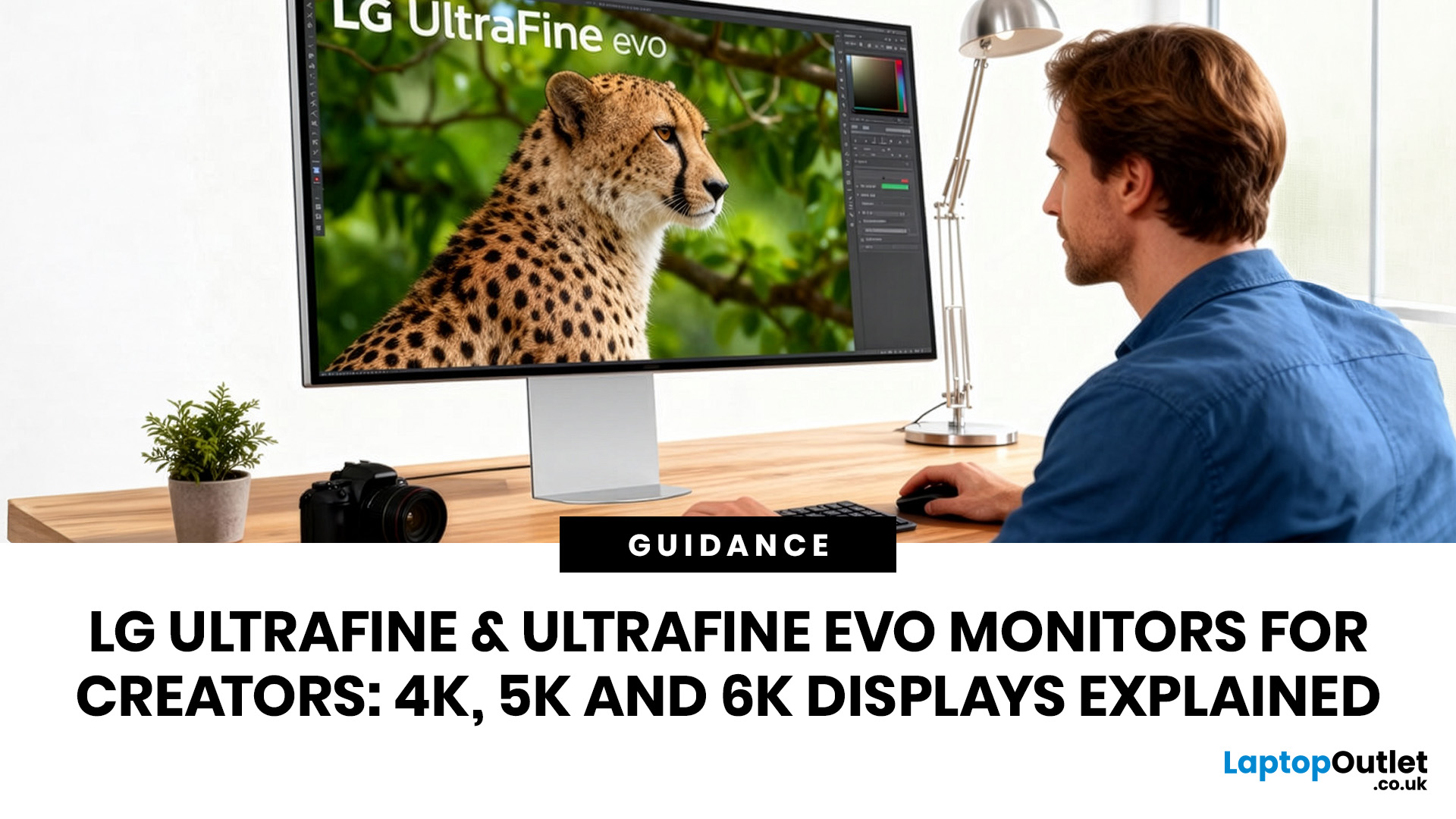
LG UltraFine monitors for creators cover three resolutions: 4K (entry-level colour accuracy), 5K (high pixel density), and 6K (the new UltraFine evo flagship). All prioritise wide colour gamut, IPS panel quality, and clean USB-C or Thunderbolt connectivity.
If you work in photo editing, video production, graphic design, or any colour-critical discipline, LG UltraFine monitors have been a trusted name for years. The right choice depends on your budget, resolution needs, and the software you rely on daily.
What Makes LG UltraFine Monitors Stand Apart for Creative Professionals?
Before going model by model, it helps to understand what the UltraFine brand actually stands for. It is a fundamentally different product category from general office or gaming displays, built around a single non-negotiable: colour and detail accuracy.
The Core Focus: Colour, Calibration, And Pixel Precision
Every UltraFine model ships with wide colour gamut coverage, typically covering 98–99% of the DCI-P3 colour
Last Updated: September 01, 2026
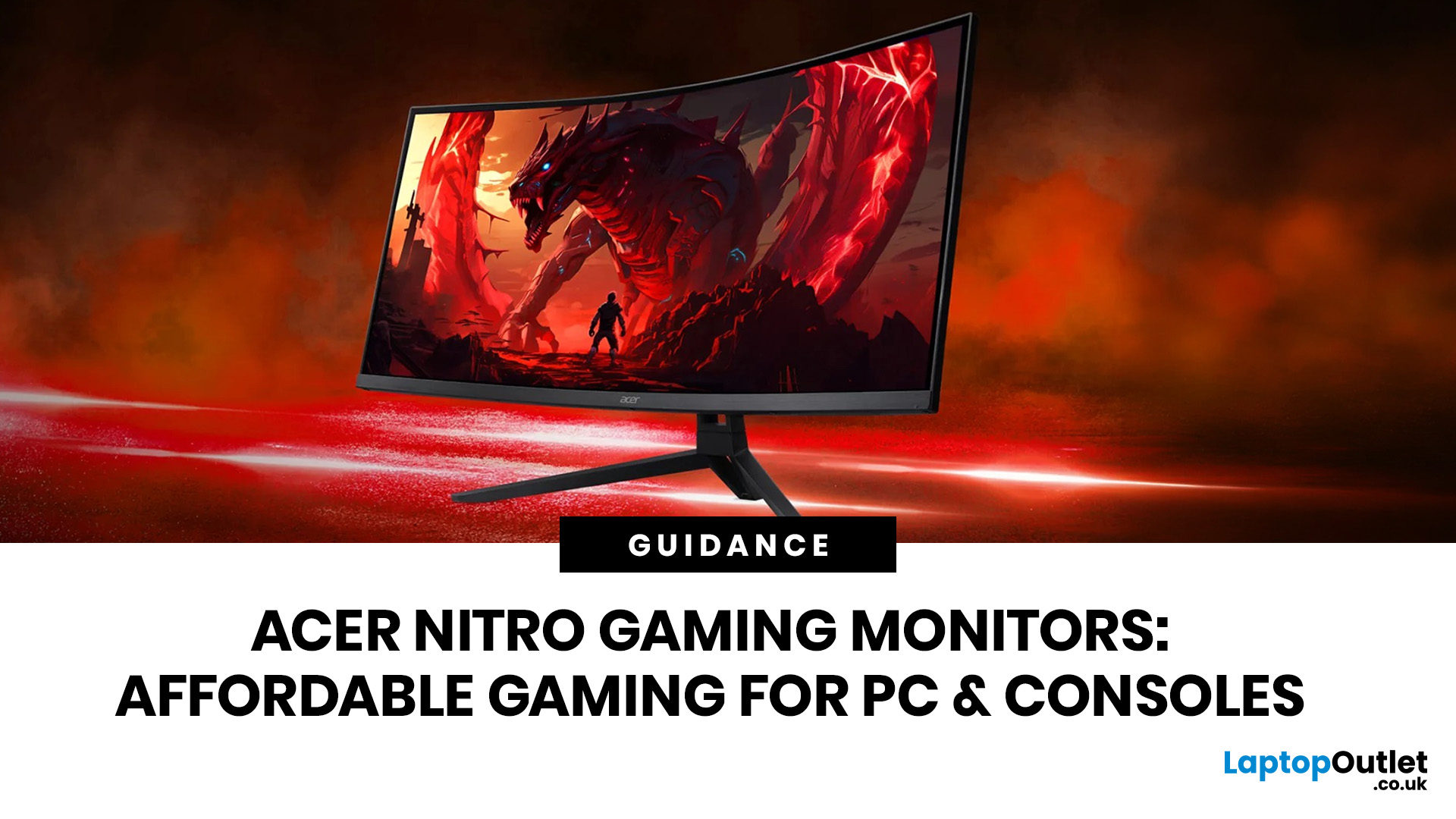
If you want smooth gameplay without jumping straight into premium OLED pricing, Acer Nitro gaming monitors are one of the easiest ranges to shortlist. Acer positions the Nitro line as a gaming family with options for fast-paced play, ultrawide immersion and richer colour, while Our Acer monitor range backs that up with Full HD, QHD, curved and ultrawide Nitro models aimed at buyers who want value, not just spec-sheet flexing.
That is exactly why Acer Nitro monitors UK shoppers keep coming back to the series. The range is broad enough to cover casual desk gaming, PS5 and Xbox setups, and entry-level PC esports, but it still stays realistic on price compared with high-end Predator and OLED alternatives. Nitro models from compact 23.8-inch Full HD panels up to 34-inch curved UWQHD displays, with refresh rates running from 120Hz to 240Hz.
Are Acer Nitro Gaming Monitors Good for Budget Gaming?
Yes. For casual gaming, console play and entry-level PC builds, Acer Nitro sits in a very practical
Last Updated: July 06, 2026
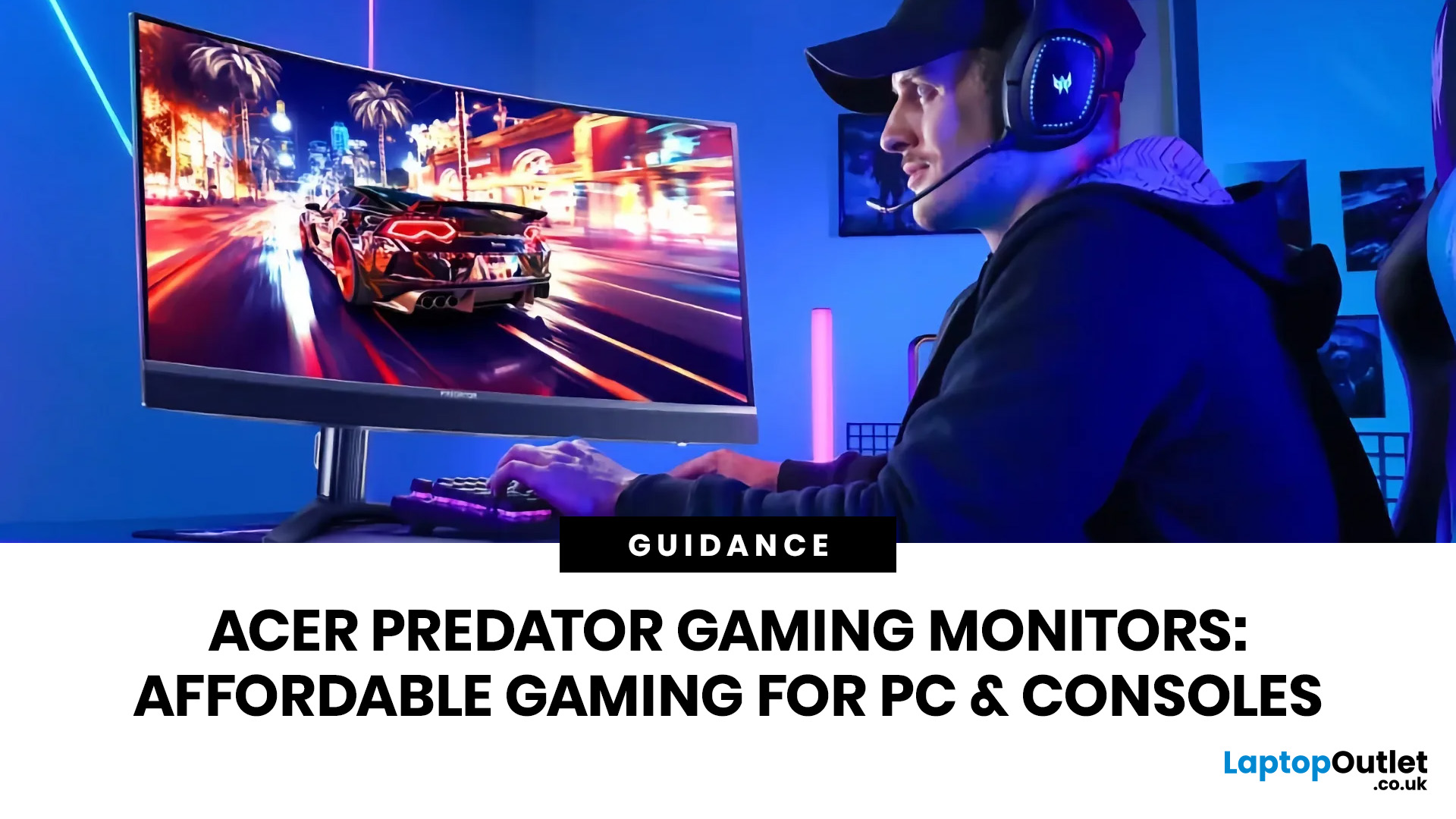
you are shopping for Acer Predator gaming monitors, you are usually not looking for a basic panel. You are looking for speed, image quality and a monitor that genuinely fits the kind of games you play. For some buyers, that means a fast 27-inch display for ranked shooters and esports titles. For others, it means a bigger 4K panel for high-detail single-player games. And for enthusiasts building the kind of setup that makes every desk photo look dramatic, it means an ultrawide or super-ultrawide screen that turns a gaming PC into the centrepiece of the room.
That is why Predator remains such an interesting range. Acer's broader monitor line covers different budgets and uses cases, but the Predator family is where Acer pushes harder on premium gaming features like OLED and QD-OLED panels, very high refresh rates, ultrawide formats and esports-level response times.
If you want the simple answer: Why choose Acer Predator monitor
Here is the short version.
- For competitive esports and fast shooters,
Last Updated: August 24, 2026
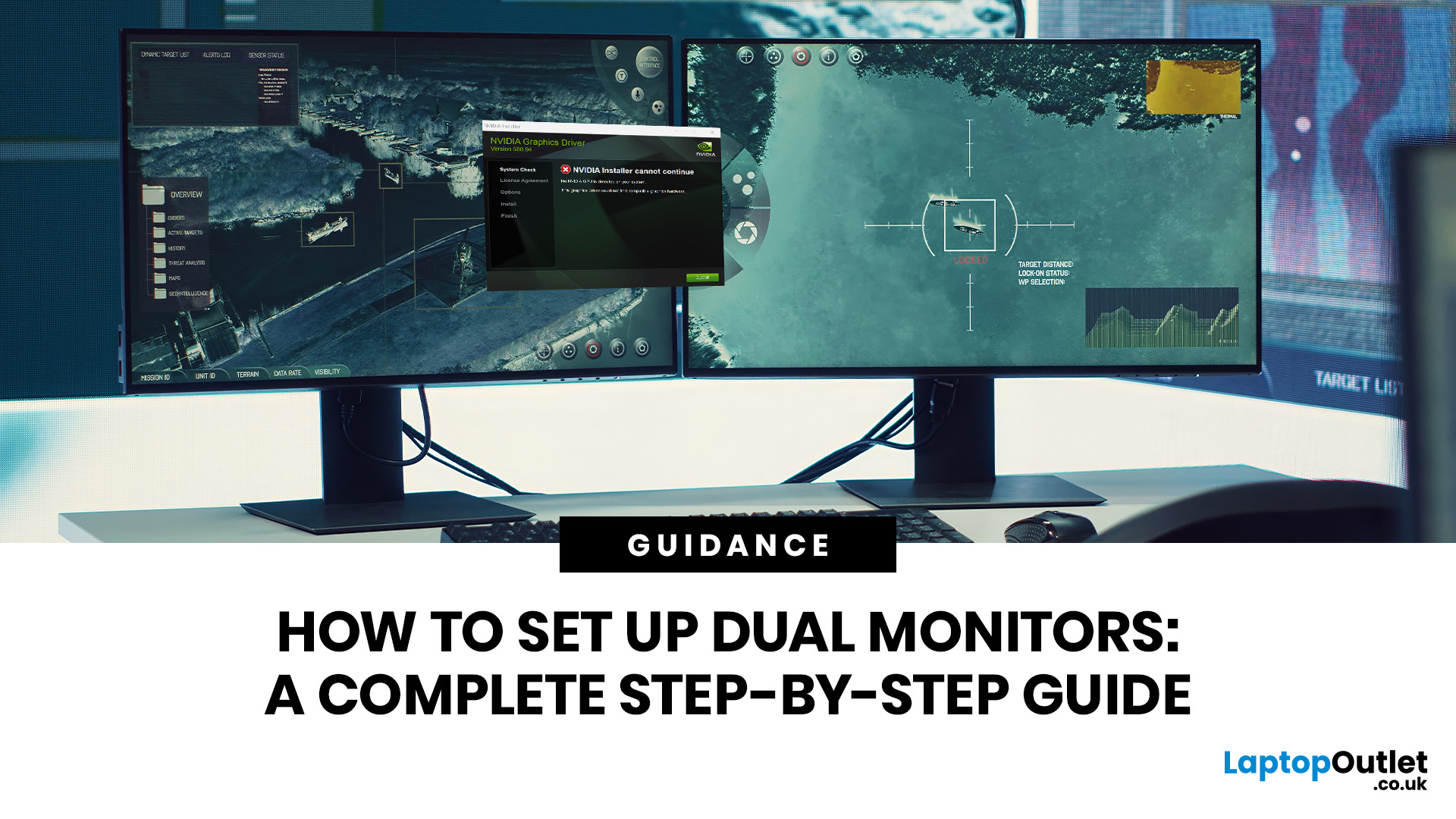
One screen is fine. Two screens? That is where your setup starts feeling seriously organised. Whether you are working from home, studying, gaming, editing, coding or just tired of switching between 27 tabs every five seconds, a dual monitor setup can make your desk feel cleaner and your workflow feel smoother.
The good news is that learning how to set up dual monitors is not as complicated as it sounds. You just need the right monitors, the correct cables or adapters, and a few display settings adjusted properly. This complete guide explains how to connect two monitors, how to set up dual monitors on Windows, how to set up dual monitors with a laptop, and how to get the best layout for work, study, gaming and everyday use.
How Do You Set Up Dual Monitors?
Here is the simple version.
To set up dual monitors, connect both screens to your laptop or desktop PC using HDMI, DisplayPort, USB-C, Thunderbolt or a compatible docking station. Then open your display settings, choose Extend these displays

