



Should You Buy a Touch Screen Monitor? A Complete Guide
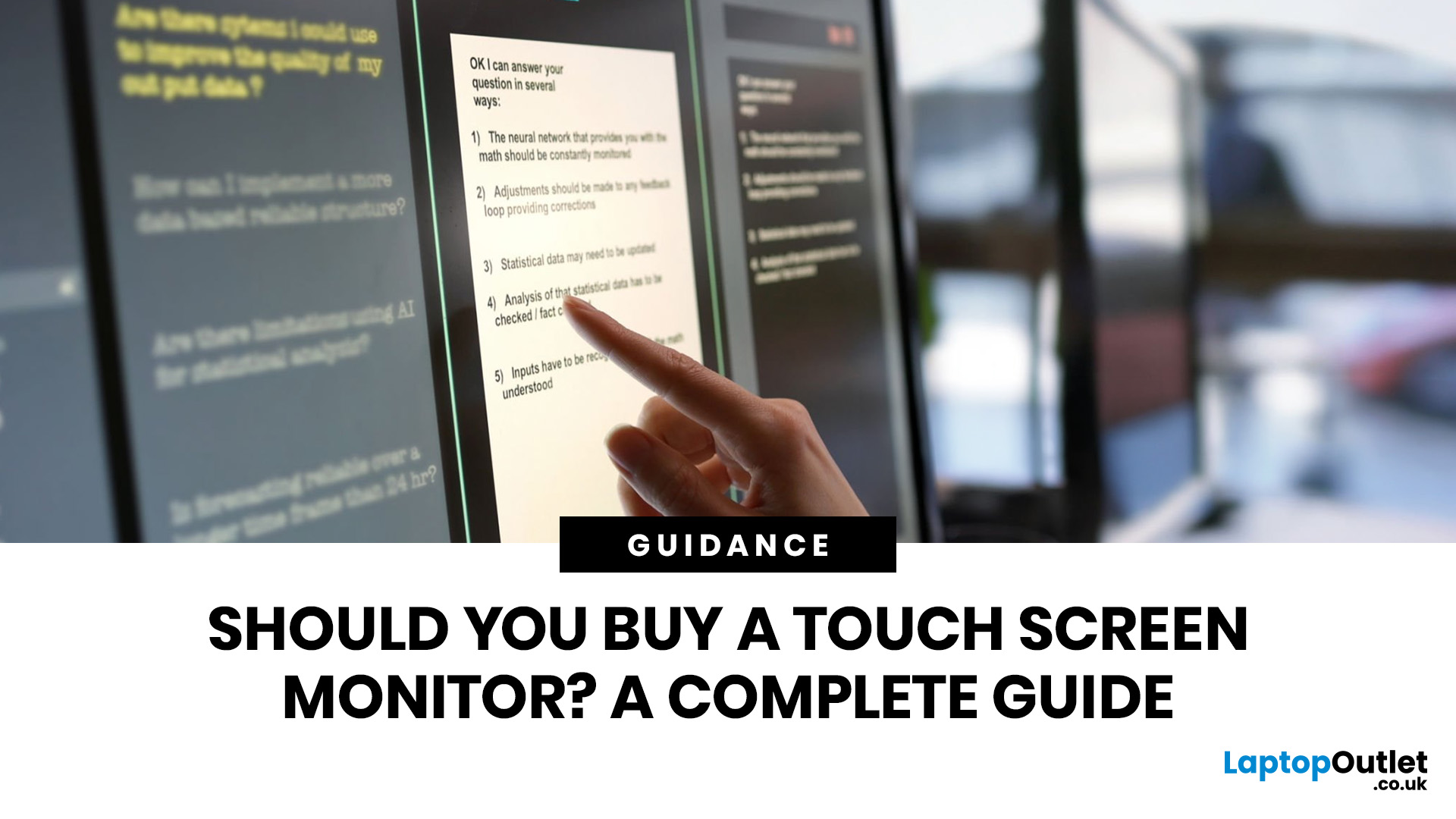
Quick Answer: Yes, touch screen monitors are worth it if you need a more interactive display for work, business, education, presentations, creative tasks or customer-facing setups. They let you tap, swipe, scroll, zoom and sometimes draw directly on the screen, which can feel much more natural than using only a mouse and keyboard.
A touch screen monitor sounds cool. You can tap apps, swipe through pages, pinch to zoom, sign documents, control presentations and interact with your PC like it is a giant tablet. Very futuristic. Very clean setup energy. But before you spend extra, it is worth asking: should I buy a touch screen monitor, or would a standard display do the job better?
The answer depends on how you use your computer. For business, education, creative work and interactive setups, touch can be genuinely useful. For spreadsheets, typing, gaming and everyday browsing, it may be more of a nice bonus than a must-have. This touch screen monitor buying guide breaks down the benefits, drawbacks, best use cases and key features to check before buying.
What is a Touch Screen Monitor?
A touch screen monitor is a display that lets you control your PC by touching the screen directly. Instead of only using a mouse, keyboard or trackpad, you can tap, swipe, scroll, drag and zoom with your fingers. A portable touch screen computer display works a bit like a large tablet connected to your PC. It still displays your normal desktop, apps and browser, but it also accepts touch input. You might use a touch screen display for PC tasks like:
- Tapping buttons and menus
- Scrolling through documents
- Zooming into images or maps
- Signing digital forms
- Marking up PDFs
- Drawing or sketching, if stylus support is included
- Navigating dashboards or business systems
Touch screen monitors are especially popular in retail, education, reception desks, training rooms and interactive workspaces.
How Does a Touch Screen Display for PC Work?
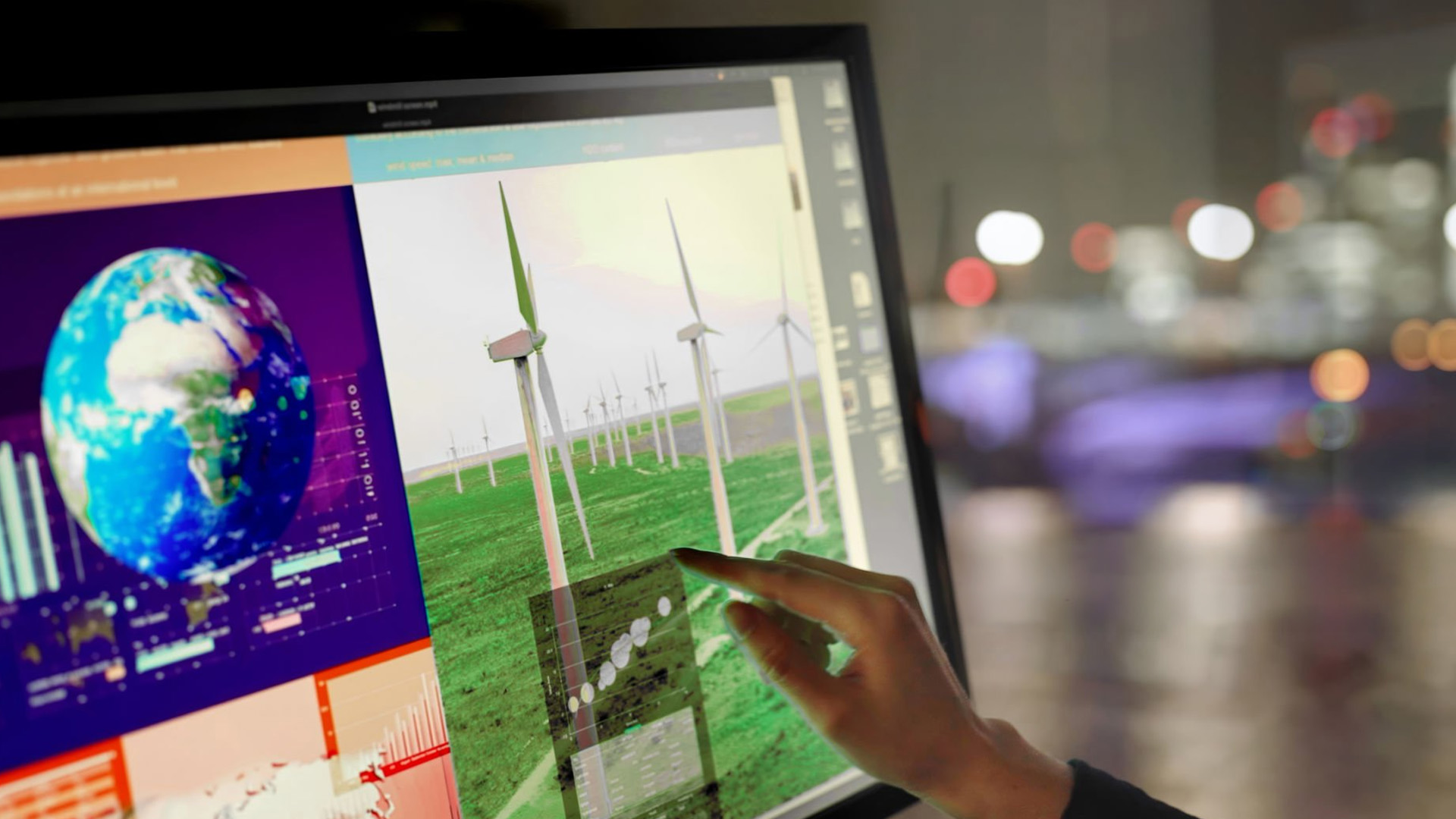
A touch screen display for PC uses a touch-sensitive panel layered over the screen. Most modern touch screens use capacitive technology, similar to smartphones and tablets. This allows the screen to detect your finger input. A touch screen monitor usually needs two connections:
|
Connection |
What It Does |
|---|---|
|
HDMI, DisplayPort or USB-C |
Sends the video signal from your PC to the monitor |
|
USB cable or USB-C touch connection |
Sends the touch input back to your PC |
This is important because touch does not always work through HDMI alone. HDMI can send the picture, but the monitor may still need USB to tell your computer where you are tapping. Most Windows PCs recognise touch screen monitors automatically once the right cables are connected. Some models also support multi-touch gestures, such as pinch-to-zoom or two-finger scrolling.
|
Laptop Outlet expert tip: Before buying, check whether the monitor needs a separate USB cable for touch input. Many people plug in HDMI and wonder why the screen displays fine but touch does not work. |
Benefits of Touch Screen Monitors
There are several benefits of touch screen monitors, especially if your work involves interaction, presentation or customer-facing tasks.
|
Benefit |
Why it Helps |
|---|---|
|
Direct interaction |
Tap, swipe and scroll naturally |
|
Faster simple controls |
Useful for apps, forms and dashboards |
|
Great for presentations |
Control slides and content by touch |
|
Useful for business |
Good for POS, kiosks and customer-facing screens |
|
Helpful for creatives |
Can support sketching, marking up and editing |
|
Good for education |
Makes lessons and training more interactive |
|
Less reliance on mouse |
Useful in compact or public setups |
One of the main advantages of touch screen monitor setups is speed. For simple tasks, touching the screen can feel quicker than moving a mouse around. This is especially true for apps with large buttons, forms, point-of-sale systems or interactive dashboards.
Touch monitors can also make presentations feel smoother. Instead of standing beside a keyboard or clicking through slides from your desk, you can control content directly on the display.
Touch Screen Monitor Pros and Cons
Before deciding whether touch is worth the extra cost, here is a balanced look at the touch monitor pros and cons.
|
Touch Screen Monitor Pros |
Touch Screen Monitor Cons |
|
More interactive than a standard monitor |
Usually costs more |
|
Great for presentations and business use |
Fingerprints and smudges build up quickly |
|
Useful for drawing, notes and mark-ups |
Not always ideal for long typing sessions |
|
Works well for POS and kiosks |
Arm fatigue can happen with heavy touch use |
|
Easy for tapping, scrolling and zooming |
Touch input may need USB setup |
|
Good for education and training |
Limited benefit for competitive gaming |
|
Can make some workflows faster |
May have fewer high-refresh gaming options |
The biggest downside is comfort. Touch is great for short interactions, but reaching forward all day can get tiring. This is sometimes called “gorilla arm”, where your arm feels tired from constantly touching a vertical screen. So, touch is best when it adds value to your workflow, not when it replaces a mouse and keyboard for every task.
Who Should Buy a Touch Screen Monitor?
A touch screen monitor makes the most sense when direct screen interaction actually improves the experience. You should consider one if you use your monitor for:
- Retail and POS systems
- Reception desks
- Restaurants and cafés
- Education and classrooms
- Presentations and training
- Interactive dashboards
- Healthcare check-in systems
- Creative mark-ups
- Touch-based business apps
- Home control or media setups
A touch screen display for PC can also be useful for people who prefer a tablet-style experience on a bigger screen.
Who Should Skip a Touch Screen Monitor?
A touch monitor may not be worth it if you:
- Mostly type documents
- Work in spreadsheets all day
- Play competitive games
- Sit far from your screen
- Want the cheapest monitor possible
- Hate cleaning fingerprints
- Rarely use touch-based apps
If you will not use the touch feature regularly, you may be better off spending your budget on resolution, size, refresh rate or panel quality.
Are Touch Screen Monitors Good for Work?
Touch screen monitors can be good for work, but it depends on the job. They are useful for:
- Signing documents
- Marking up PDFs
- Controlling presentations
- Customer-facing systems
- Touch-based dashboards
- Training sessions
- Quick navigation
- Reception or check-in areas
They are less useful for:
- Long writing tasks
- Data entry
- Email-heavy jobs
- Spreadsheet-heavy work
- Jobs where keyboard shortcuts matter more
For standard office work, a touch monitor is not always necessary.
Are Touch Screen Monitors Good for Gaming?
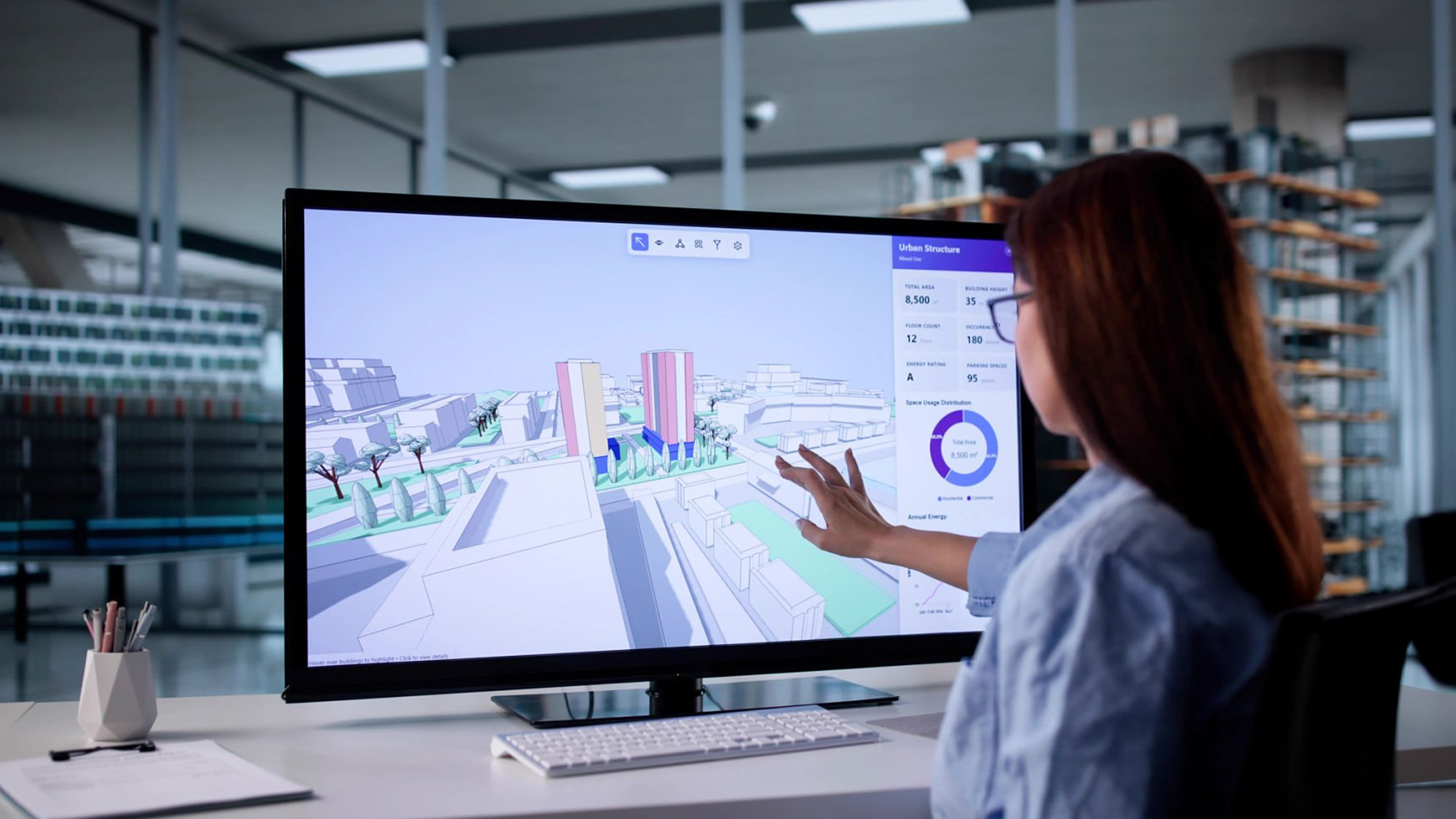
For most gamers, touch screen monitors are not the best choice. That does not mean they are bad screens. It just means touch usually does not add much to PC gaming. Most games are built around keyboard, mouse or controller input, not tapping the display. For gaming, you are usually better off prioritising:
- Refresh rate
- Response time
- Resolution
- Adaptive sync
- Panel quality
- Input lag
- Graphics performance
Touch can be fun for casual games, children’s apps or interactive experiences. But for competitive gaming, it is not the main feature to chase. The verdict? If you are asking “should I buy a touch screen monitor for gaming?”, the answer is probably no. Spend the money on gaming-focused specs instead. Furthermore, for gaming, touch input is usually less important than smooth motion, so read our monitor refresh rate guide to understand whether 60Hz, 144Hz or higher is right for you.
Touch Screen Monitor vs Standard Monitor
A touch screen monitor and a standard monitor can both work well, but they suit different needs.
|
Feature |
Touch Screen Monitor |
Standard Monitor |
|---|---|---|
|
Interaction |
Touch, swipe, tap and sometimes stylus |
Mouse and keyboard only |
|
Price |
Usually higher |
Usually better value |
|
Best for |
Business, POS, education, presentations |
Work, gaming, study, general use |
|
Cleaning |
Needs more wiping |
Fewer fingerprints |
|
Ergonomics |
Needs close reach |
Easier for long sessions |
|
Gaming |
Limited benefit |
Better options available |
|
Creative work |
Useful with stylus support |
Depends on panel and colour accuracy |
Choose a touch screen computer monitor if you need hands-on control. Choose a standard monitor if you want better value, fewer smudges and a more traditional desk setup.
Touch Screen Monitor vs Widescreen Computer Monitor
Some buyers are not really choosing between touch and no touch. They are choosing between more interaction and more screen space.
A touch screen monitor helps you control what is on screen. A widescreen monitor gives you more room to work with multiple windows. If you want more room for apps, timelines and multitasking rather than touch controls, widescreen computer monitors may be the better upgrade.
- Choose touch if you want direct control.
- Choose widescreen if you want more workspace.
Touch Screen Monitor vs LCD Monitor
LCD monitors are common, reliable and often more affordable. Many standard displays use LCD technology, and some touch monitors also use LCD panels. The difference is that touch support usually adds cost. For buyers who mainly need a reliable display for everyday tasks, affordable LCD monitors can offer better value than paying extra for touch support.
A touch screen monitor may be worth the extra money if the touch feature helps your workflow. But if you only need a screen for browsing, emails, documents or basic work, a standard LCD monitor can be the smarter buy.
What to Look for in the Best Touch Screen Monitor
The best touch screen monitor depends on how you plan to use it. A retail POS display needs different features from a creative touch monitor. Use this checklist before buying.
|
Feature |
What to Check |
Why It Matters |
|
Screen size |
22-inch, 24-inch, 27-inch or larger |
Affects comfort and desk fit |
|
Resolution |
Full HD, QHD or 4K |
Controls sharpness |
|
Touch points |
10-point multi-touch or higher |
Better gesture support |
|
Stylus support |
Active or passive stylus |
Useful for drawing and notes |
|
Panel type |
IPS, VA or LCD |
Affects colour and viewing angles |
|
Connectivity |
HDMI, DisplayPort, USB-C and USB touch cable |
Touch and video may need separate cables |
|
Stand adjustability |
Tilt, height and angle |
Improves comfort |
|
VESA mount |
Supported or not |
Useful for wall or arm mounting |
|
Brightness |
Higher brightness is better |
Helps visibility |
|
Durability |
Scratch resistance or tough glass |
Important for business or public use |
|
Laptop Outlet Expert Tip: If you will use touch often, stand adjustability matters a lot. The top monitors that can tilt back slightly will usually feel more comfortable than a fixed vertical screen. Furthermore, if you want to save desk space or create a fixed business setup, our VESA wall-mount monitor guide explains how to check mounting compatibility before you buy. |
Removable, Fixed or Portable Touch Screen Monitor?
Not every touch display is designed for the same setup.
|
Type |
Best For |
Notes |
|
Desktop touch screen monitor |
Office, business, home use |
Best for fixed setups |
|
Portable touch screen monitor |
Travel, hybrid work, laptop users |
Lightweight and flexible |
|
All-in-one touch display |
Retail and reception |
Good for customer-facing areas |
|
Stylus-friendly touch monitor |
Creatives, education, notes |
Check pen compatibility |
A desktop touch screen monitor is best if you want a permanent PC setup. A portable touch display is better if you travel, hot-desk or want a second screen for a laptop. For creative users, stylus support is key. Not all touch monitors are good for drawing, so check pen compatibility before buying.
Are Cheap or Refurbished Touch Screen Monitors Worth It?
Cheap or refurbished monitors can be worth it if you are careful. The main thing is to check the condition, warranty and whether touch input works properly. If you are shopping on a tighter budget, cheap refurbished monitors can be worth comparing, especially if you want a lower-cost display for work or study. Before buying, check:
- Warranty
- Screen condition
- Touch input functionality
- Included cables
- Stand condition
- VESA mount support
- Return policy
- Trusted retailer support
A refurbished touch screen monitor can be a smart saving, but only if the touch function, panel and ports are in good working condition.
Common Mistakes to Avoid When Buying a Touch Screen Monitor
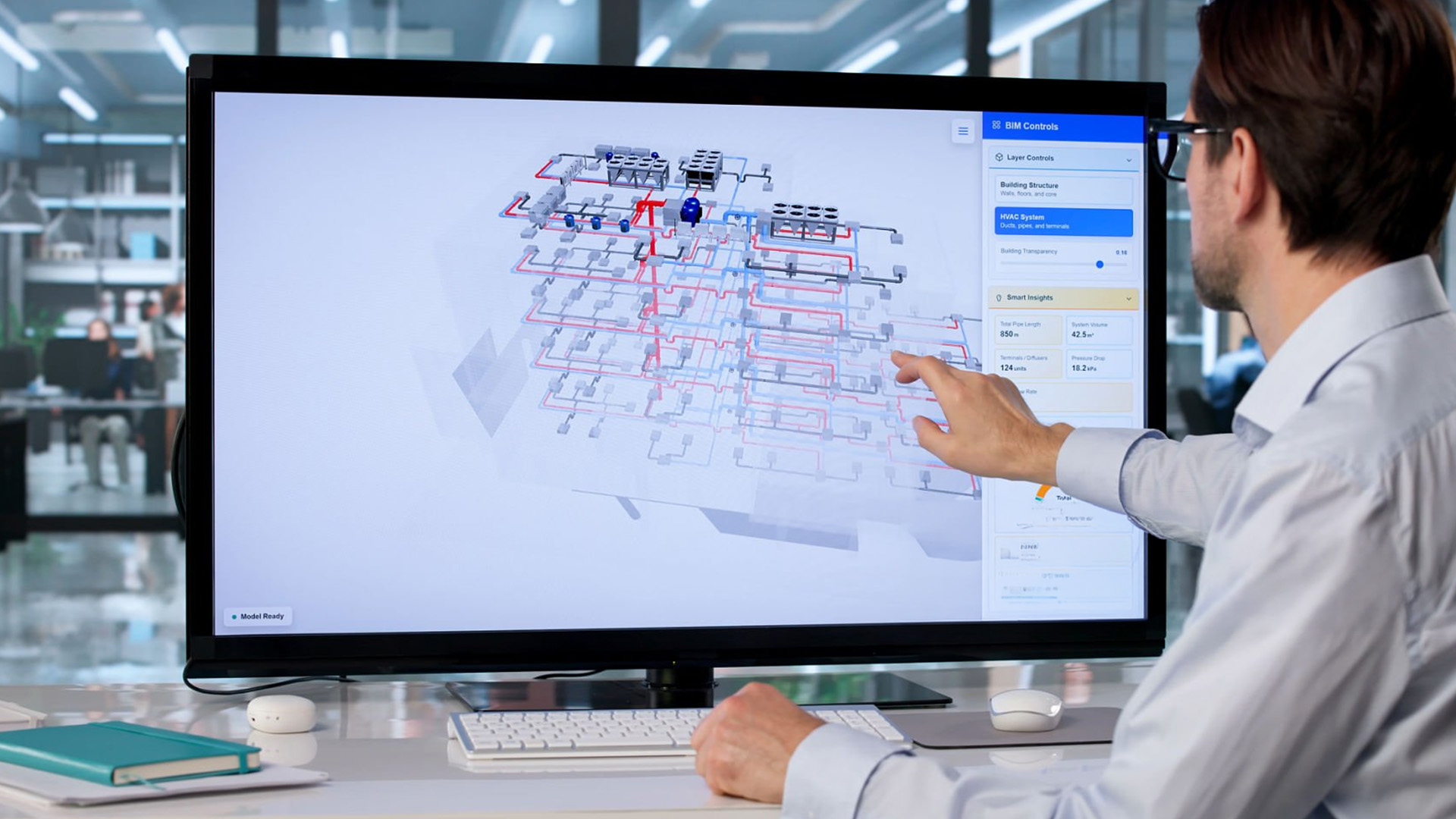
Assuming Touch Works Through HDMI Alone
Many touch screen monitors need USB for touch input. HDMI may only send the video signal.
Ignoring Ergonomics
Touch screens need to be within comfortable reach. If the screen is too far away, you probably will not use touch much.
Buying Touch for Gaming
Most gamers get more value from refresh rate, response time and resolution.
Forgetting About Smudges
Touch screens collect fingerprints. Keep a microfibre cloth nearby.
Not Checking Stylus Compatibility
Touch support does not always mean good stylus support. If you want to draw or write, check the details.
Paying Extra for Touch You Will Not Use
Touch should solve a real need. Otherwise, your money may be better spent on a larger screen, sharper resolution or better panel.

Should You Buy a Touch Screen Monitor?
A touch screen monitor is worth it if you need direct screen interaction for business, education, presentations, creative work, POS systems or customer-facing use. It is less worth it if you mainly type, game, browse or want the most screen size for your money.
|
Buy a Touch Screen Monitor If… |
Choose a Standard Monitor If… |
|
You use touch-based apps |
You mostly type or browse |
|
You need POS or customer-facing display |
You want the cheapest option |
|
You present or teach interactively |
You play competitive games |
|
You markup documents or draw |
You dislike fingerprints |
|
You want a hands-on PC display |
You sit far from your monitor |
The simple answer: touch screen monitors are worth it when touch improves your workflow. If it is just a gimmick for your setup, skip it and choose a better standard display instead.

In Case You’re Wondering...
What is a touch screen monitor?
A touch screen monitor is a display that lets you control your PC by tapping, swiping or scrolling directly on the screen.
Are touch screen monitors worth it?
Touch screen monitors are worth it for business, education, presentations, POS systems and creative work, but they are not essential for every user.
Should I buy a touch screen monitor for work?
You should buy one if touch helps your workflow, such as signing documents, presenting, marking up files or using interactive apps.
What are the benefits of touch screen monitors?
The main benefits include direct interaction, faster navigation, presentation support, business use, education use and creative flexibility.
What are the disadvantages of touch screen monitors?
They can cost more, collect fingerprints, cause arm fatigue and offer limited benefit for gaming or typing-heavy work.
Related Articles

Last Updated: April 28, 2026
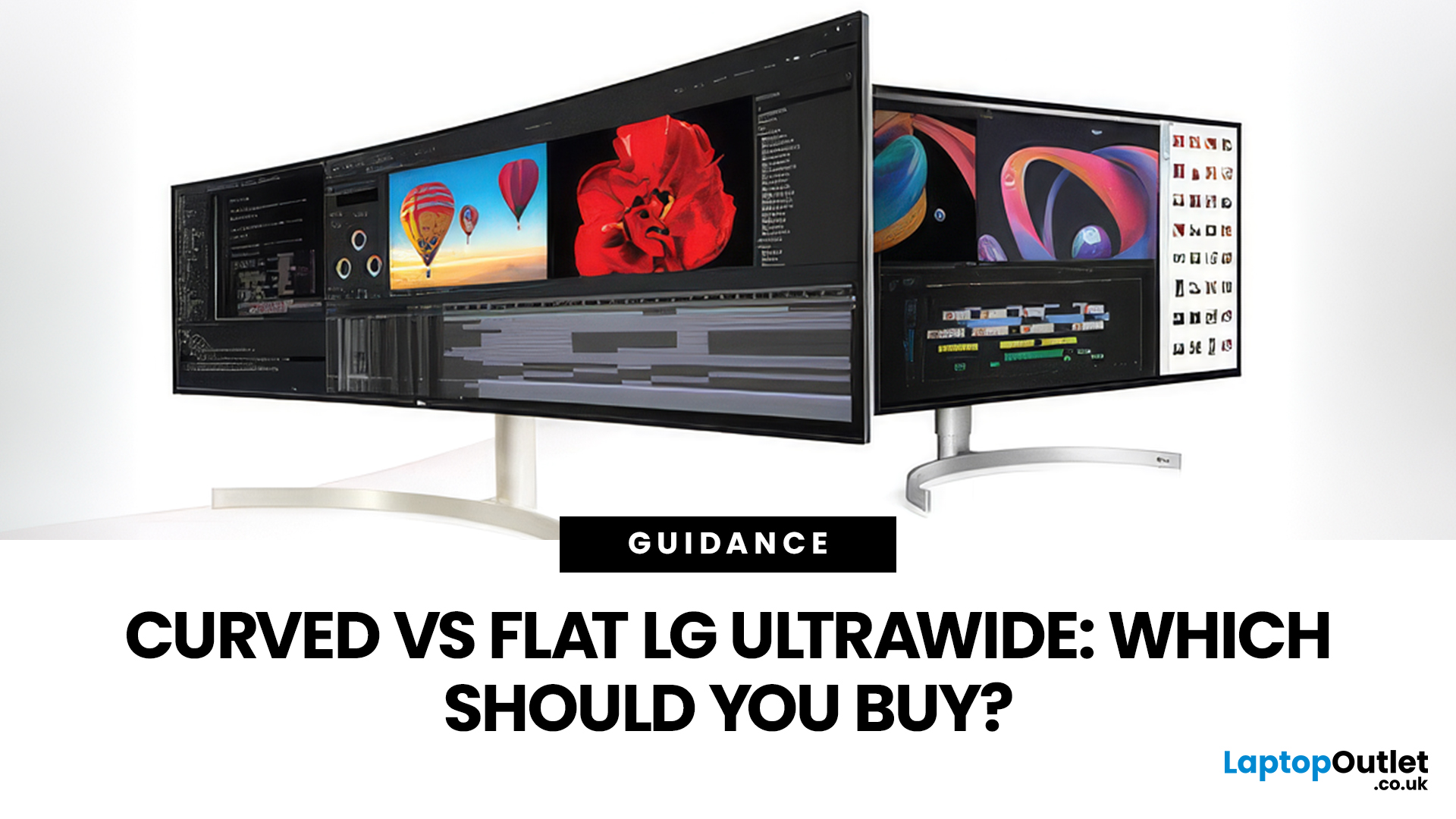
If you're choosing between a curved vs flat LG UltraWide monitor, the decision is more nuanced than it first appears. The right choice depends on what you do, how long you sit at your desk, and the kind of experience you want from your screen.
This guide breaks down every major use case side by side, with a clear verdict for each one, so you can make the right call before you spend your money.
What Makes LG UltraWide Monitors Different?
LG UltraWide monitors use a 21:9 aspect ratio, giving you roughly a third more horizontal screen space than a standard 16:9 display. That extra width is what makes the curved vs flat debate so relevant on these screens specifically.
On standard 26 to 28-inch monitors, the curve debate is largely down to personal preference. But once you hit 34 inches and beyond, the physics of how your eyes scan left-to-right starts to matter. On ultrawide displays of 34 inches or larger, the curvature brings the edges of the screen closer to you, covering more of your
Last Updated: April 14, 2026
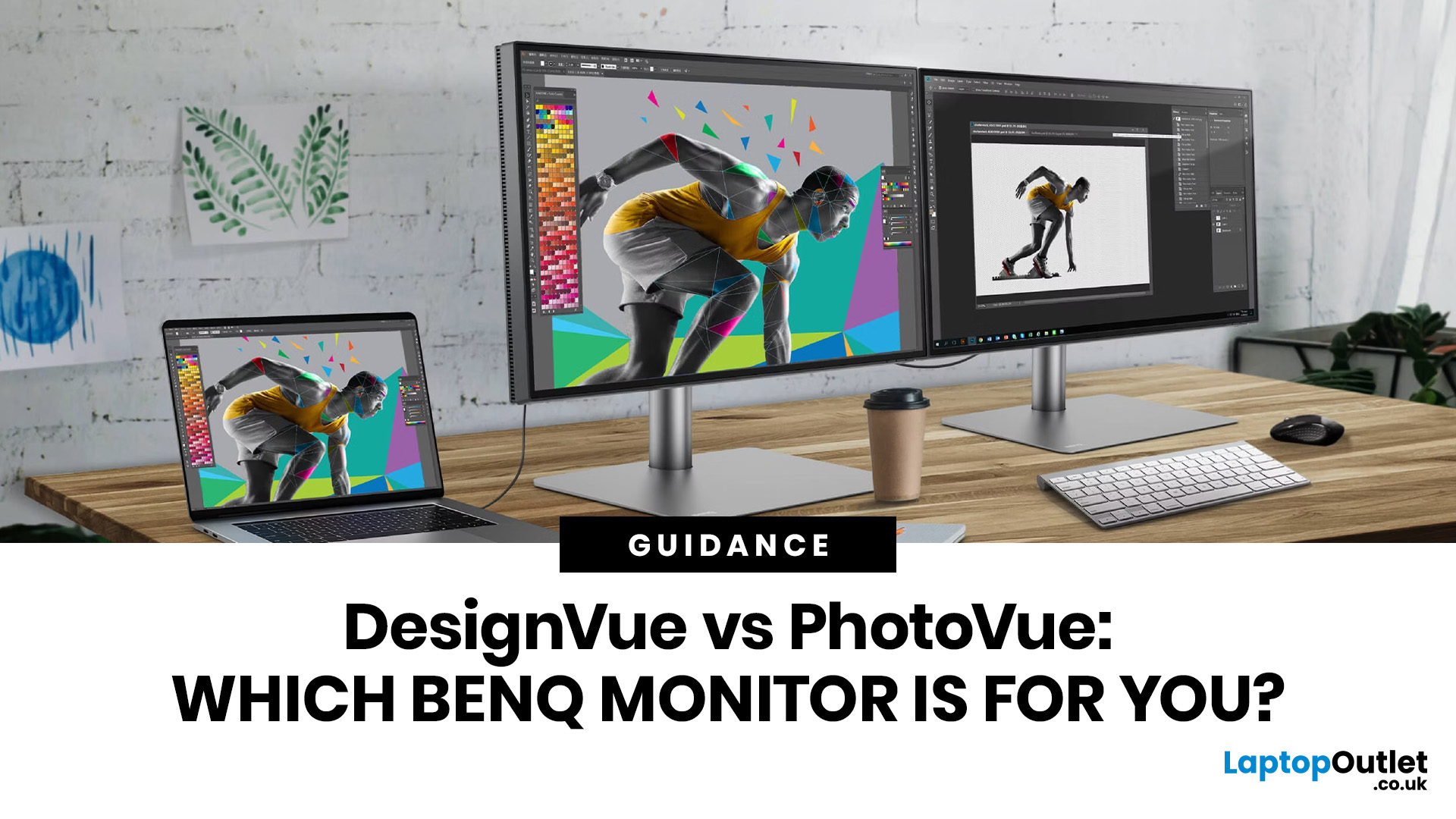
If you work with colour professionally, your monitor is your most critical piece of kit. BenQ monitors for creators are built around one principle: what you see on screen should accurately reflect what you print, publish, or deliver to a client.
Whether you are a photographer editing RAW files, a designer producing brand assets, or a video editor reviewing colour grades, accuracy matters at every stage. BenQ addresses this through two dedicated series: the DesignVue PD range and the PhotoVue SW range.
Each is engineered for a different creative discipline. This guide explains both series, covers the key specs to look for, highlights how they compare, and helps you decide which one fits your workflow best.
BenQ’s Creator Series: DesignVue & PhotoVue SW
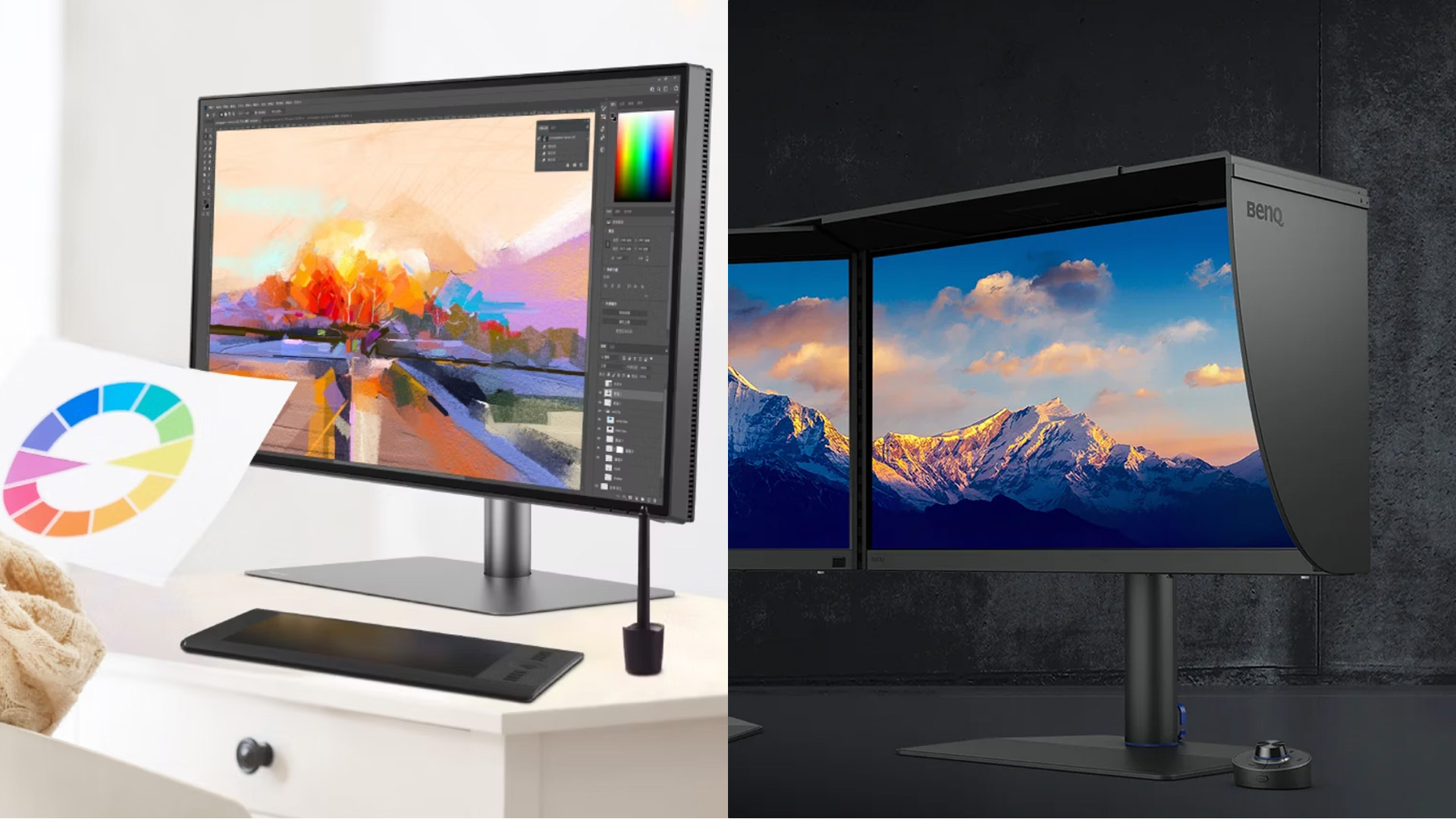
Finding the right BenQ monitors for creators starts with understanding why BenQ separates its professional range into two distinct families, each tailored to a different core workflow. Rather than one catch-all creative

Last Updated: April 14, 2026
If you want reliable colour from a BenQ creative monitor, calibration is not the final polish. It is the foundation. Whether you are editing photos, preparing work for print, designing for web, or reviewing client visuals, the goal is the same: your monitor should show colour in a way that is consistent, repeatable, and appropriate for the job in front of you.
This guide will walk you through how to calibrate a BenQ DesignVue monitor or BenQ PhotoVue monitor, when to use sRGB vs AdobeRGB on BenQ monitors, what hardware calibration changes, and how often you should recalibrate if accurate colour matters to your work.
Why BenQ Monitor Colour Calibration Matters
A high-spec monitor is only one part of colour accuracy. Out of the box, even a very good display may be too bright for print work, set to the wrong colour space for your workflow, or simply drift over time. That is where BenQ monitor colour calibration comes in.
BenQ explains that hardware calibration works by adjusting colour directly
Last Updated: April 28, 2026
Choosing the right monitor format can transform how you work. Whether you are a developer, analyst, designer, or remote professional, your display shapes your entire workflow.
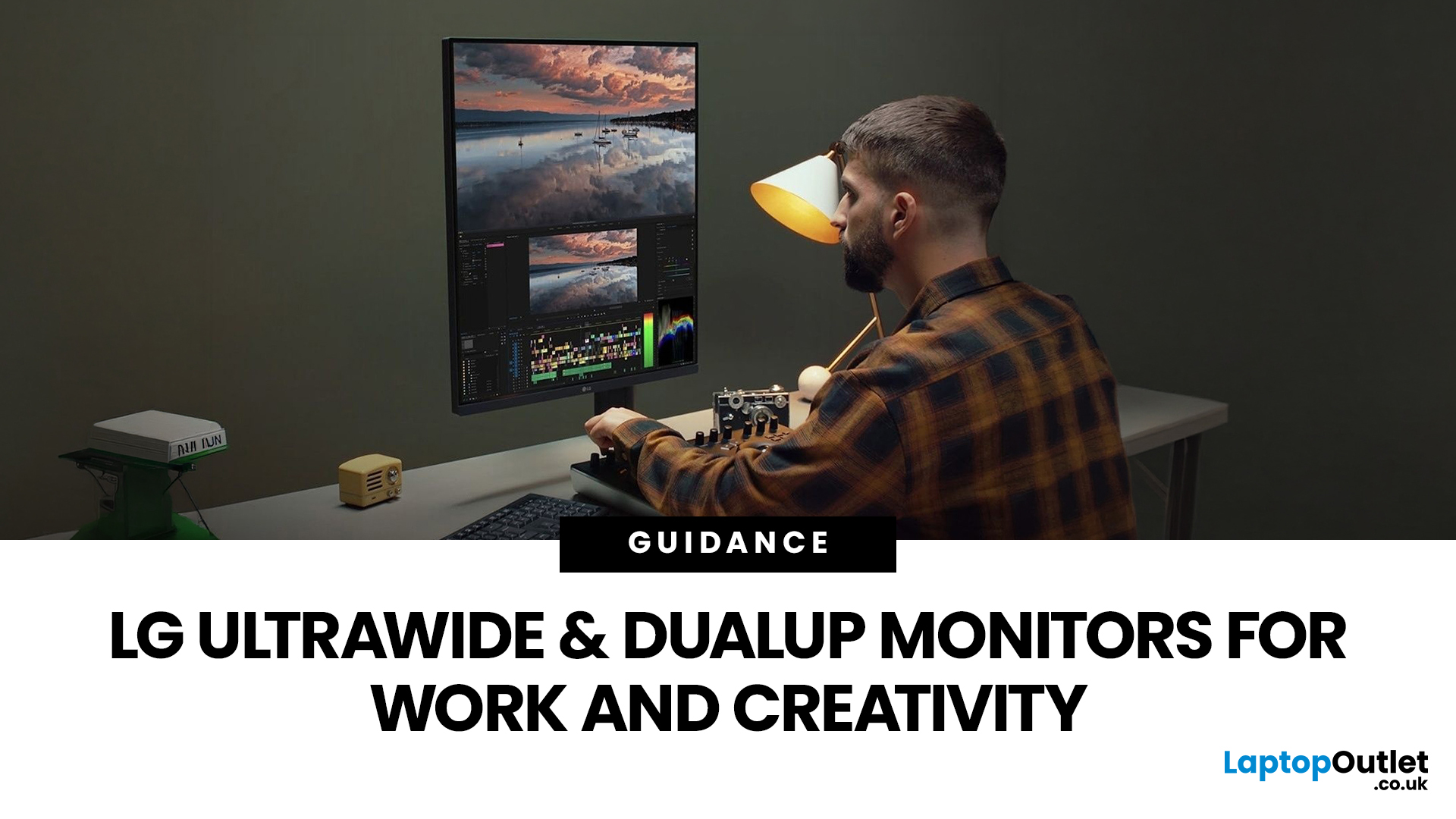
LG UltraWide and DualUp productivity monitors have become a firm favourite across the UK for professionals who need more screen space without the cable clutter of multiple setups.
This guide breaks down how each format performs for coding, content creation, dashboards, and day-to-day productivity, so you can pick the right one for your desk.
Why Screen Format Changes Everything
The shape of your display directly influences how many windows you can manage, how much you need to scroll, and whether your neck stays comfortable after a full working day. It is worth understanding the two non-standard formats LG offers before deciding which suits your setup.
LG monitors come in two distinctive formats: the horizontal 21:9 or 32:9 UltraWide and the vertical 16:18 DualUp. Both give you significantly more usable space than
Last Updated: August 28, 2026
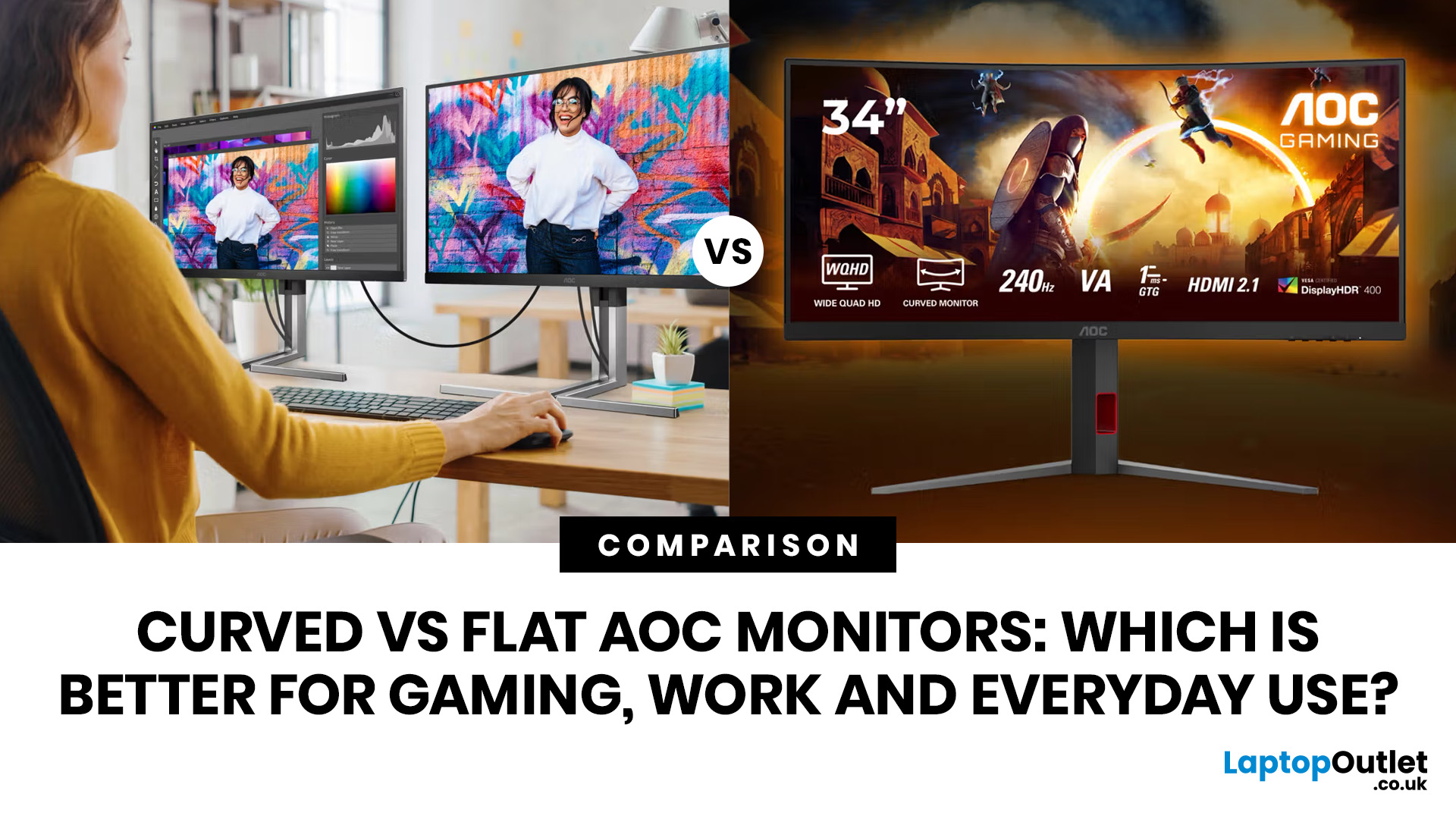
If you are comparing curved vs flat AOC monitors, the right choice depends less on trends and more on how you actually use your screen every day.
For gaming and entertainment, a curved display often feels more immersive, especially in racing games, open-world titles and films. For work, study and general day-to-day use, a flat screen is usually the more practical option because it is easier to position, easier to pair in dual-screen setups and often better suited to documents, spreadsheets and precision-focused tasks.
So, are curved monitors better? Not always. A curved model can be a great upgrade for the right person, but flat screens still make more sense for many buyers.
Here is the simplest way to think about it:
| Use case | Usually the better choice | Why |
| Immersive gaming | Curved | Feels more engaging and cinematic |
| Esports and fast competitive play | Depends | Refresh rate matters more than screen shape |
| Office work and spreadsheets | Flat | Cleaner lines, easier multi-window working |
| Study and everyday |
Published: April 27, 2026
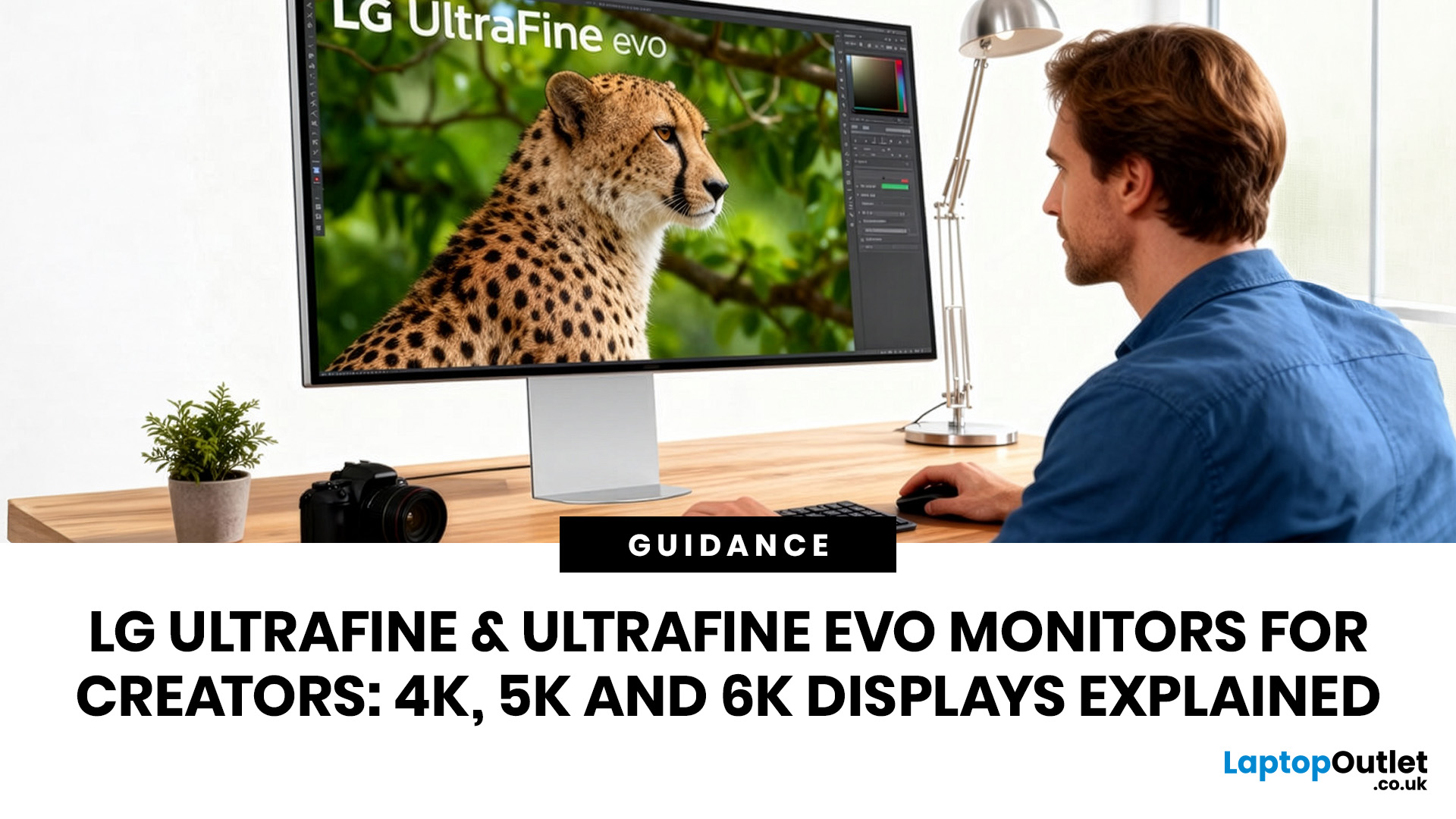
LG UltraFine monitors for creators cover three resolutions: 4K (entry-level colour accuracy), 5K (high pixel density), and 6K (the new UltraFine evo flagship). All prioritise wide colour gamut, IPS panel quality, and clean USB-C or Thunderbolt connectivity.
If you work in photo editing, video production, graphic design, or any colour-critical discipline, LG UltraFine monitors have been a trusted name for years. The right choice depends on your budget, resolution needs, and the software you rely on daily.
What Makes LG UltraFine Monitors Stand Apart for Creative Professionals?
Before going model by model, it helps to understand what the UltraFine brand actually stands for. It is a fundamentally different product category from general office or gaming displays, built around a single non-negotiable: colour and detail accuracy.
The Core Focus: Colour, Calibration, And Pixel Precision
Every UltraFine model ships with wide colour gamut coverage, typically covering 98–99% of the DCI-P3 colour
Published: April 28, 2026
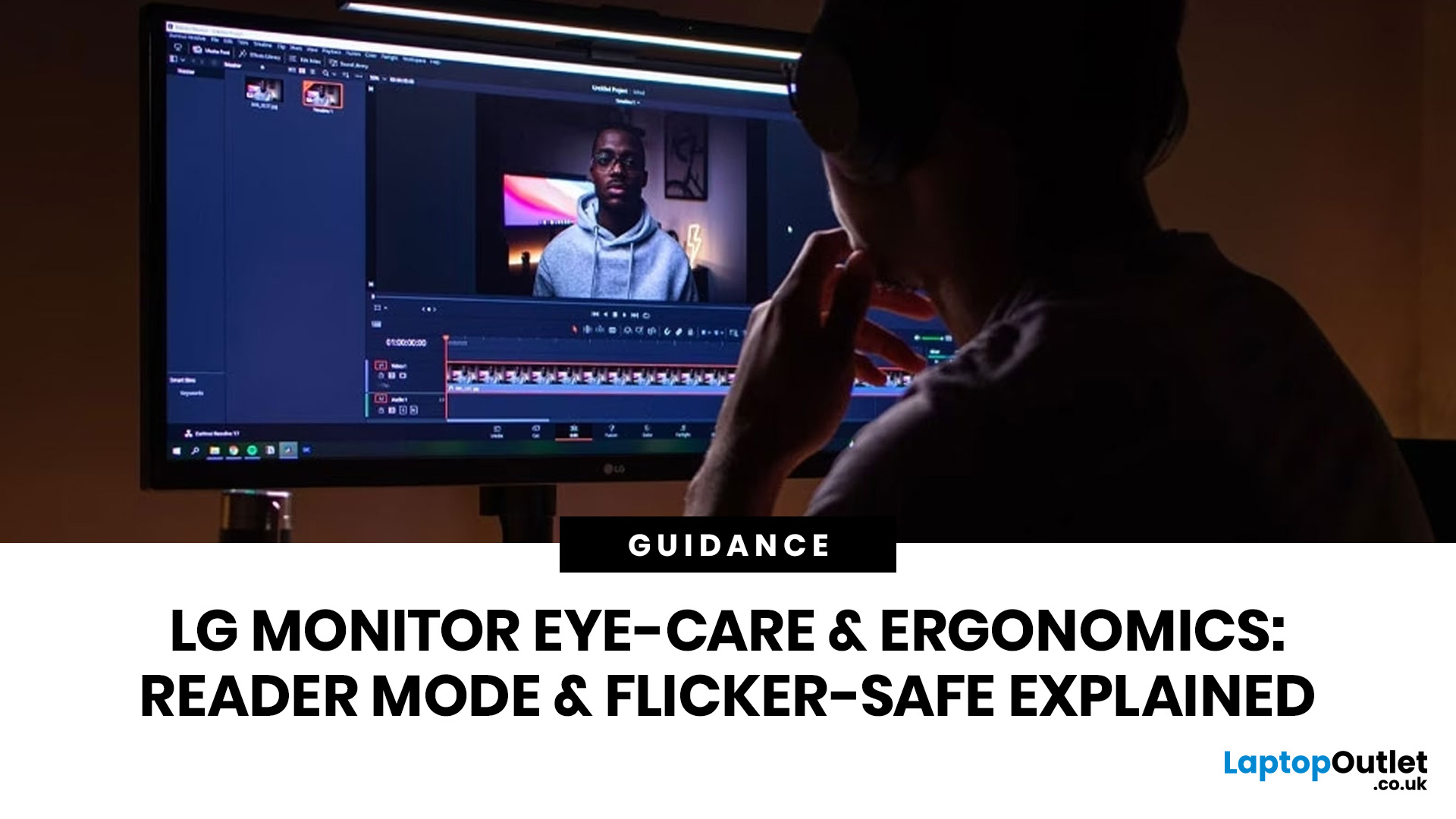
If you spend the better part of your working day staring at a screen, you already know what digital eye strain feels like. That dull ache behind your eyes, the heaviness by mid-afternoon, the headache that creeps in by the end of a long session. You are not alone in that, and it is not just "screen time." It is often a combination of poor monitor settings, bad posture, and a setup that was never properly dialled in.
The good news is that LG has put real thought into tackling these problems at the hardware and software level. This guide walks you through every LG monitor eye care feature worth knowing about, how to set your screen up properly, and which models are genuinely worth considering if comfort is a priority for you.
Why Do Eye-Care and Ergonomics Actually Matter with Modern Monitors?
You might think that modern screens are already comfortable enough out of the box. The reality is that even a high-quality monitor, poorly positioned and left on factory settings, can cause very real
Last Updated: September 01, 2026
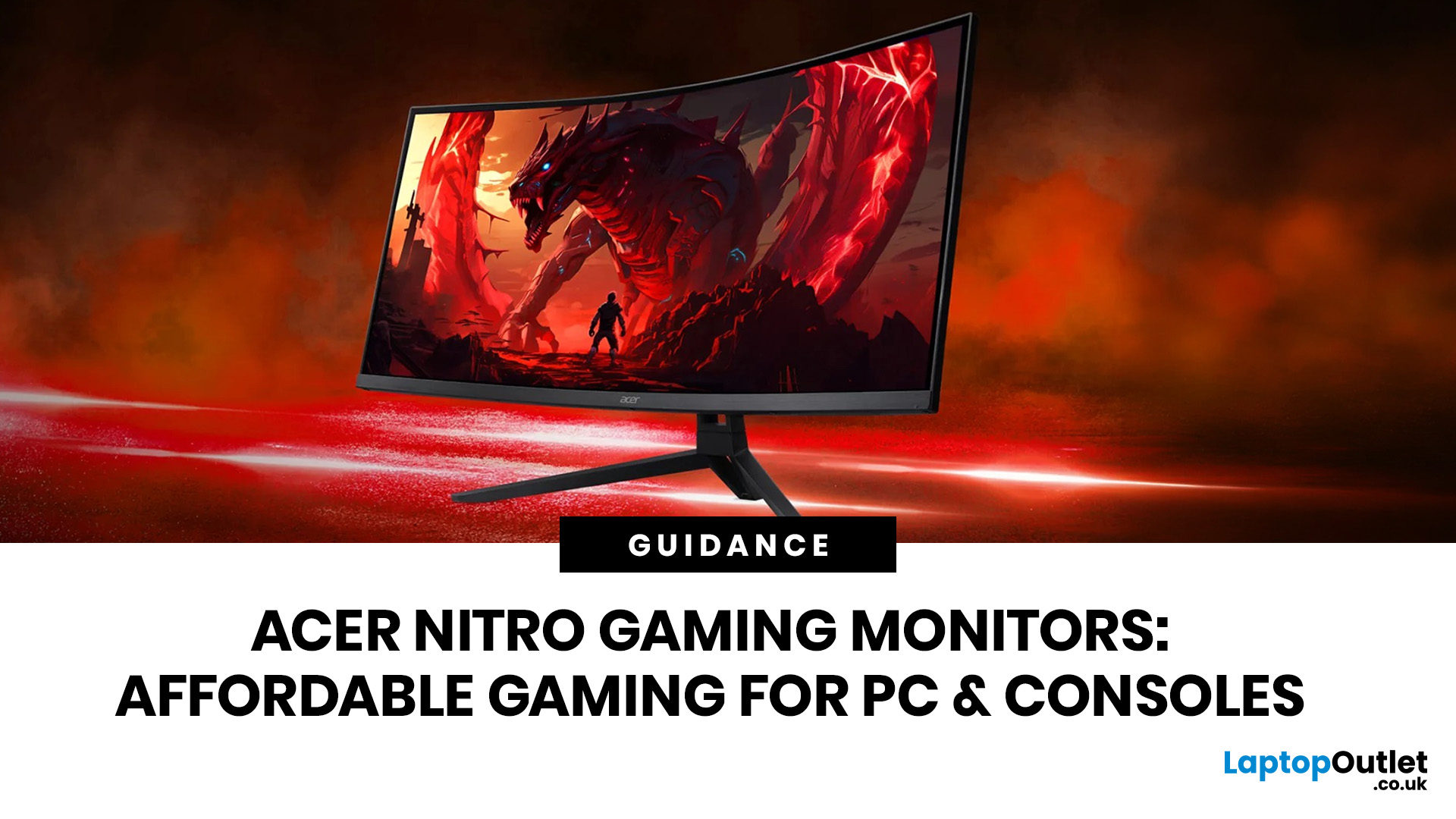
If you want smooth gameplay without jumping straight into premium OLED pricing, Acer Nitro gaming monitors are one of the easiest ranges to shortlist. Acer positions the Nitro line as a gaming family with options for fast-paced play, ultrawide immersion and richer colour, while Our Acer monitor range backs that up with Full HD, QHD, curved and ultrawide Nitro models aimed at buyers who want value, not just spec-sheet flexing.
That is exactly why Acer Nitro monitors UK shoppers keep coming back to the series. The range is broad enough to cover casual desk gaming, PS5 and Xbox setups, and entry-level PC esports, but it still stays realistic on price compared with high-end Predator and OLED alternatives. Nitro models from compact 23.8-inch Full HD panels up to 34-inch curved UWQHD displays, with refresh rates running from 120Hz to 240Hz.
Are Acer Nitro Gaming Monitors Good for Budget Gaming?
Yes. For casual gaming, console play and entry-level PC builds, Acer Nitro sits in a very practical
Last Updated: July 06, 2026
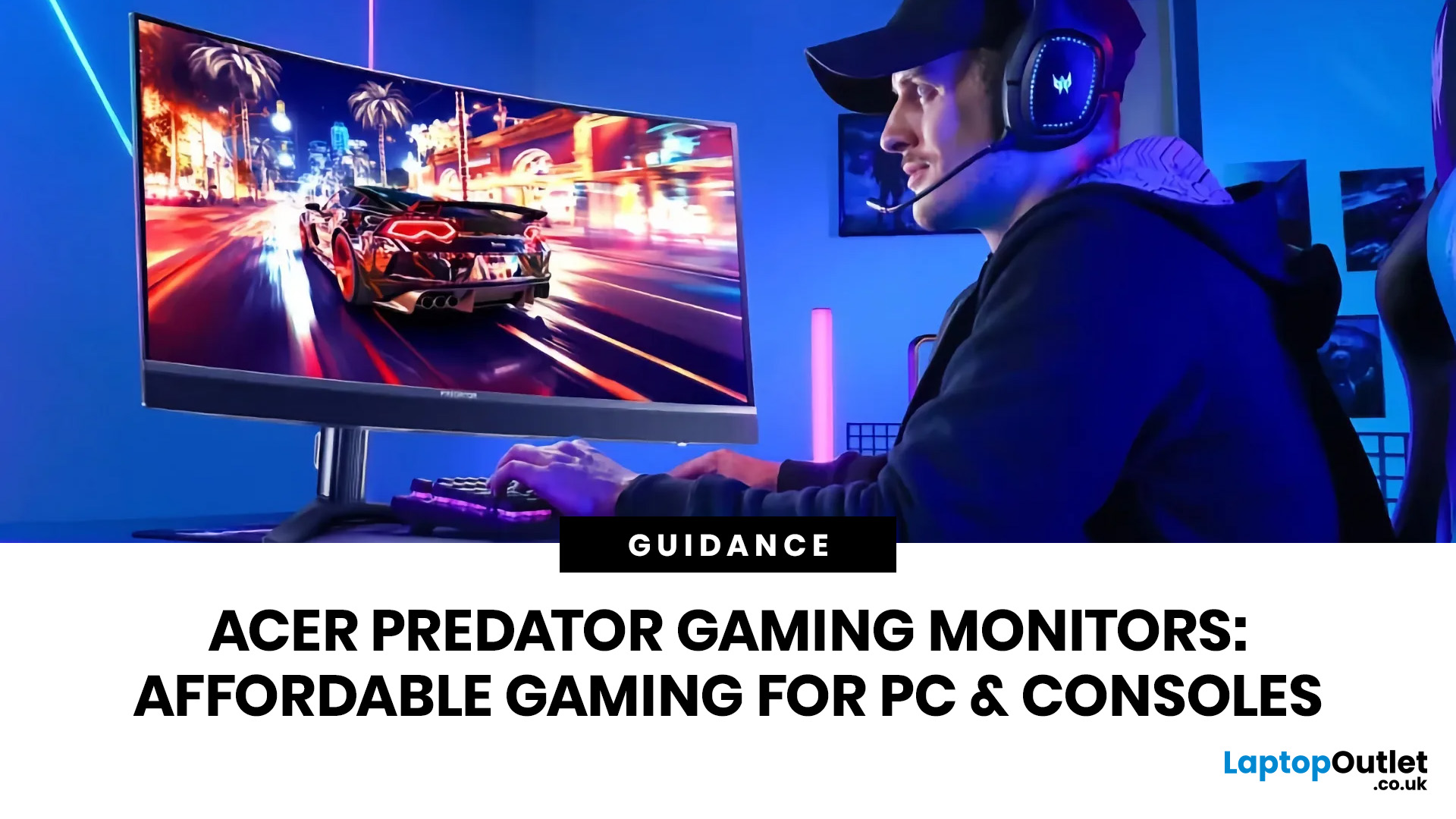
you are shopping for Acer Predator gaming monitors, you are usually not looking for a basic panel. You are looking for speed, image quality and a monitor that genuinely fits the kind of games you play. For some buyers, that means a fast 27-inch display for ranked shooters and esports titles. For others, it means a bigger 4K panel for high-detail single-player games. And for enthusiasts building the kind of setup that makes every desk photo look dramatic, it means an ultrawide or super-ultrawide screen that turns a gaming PC into the centrepiece of the room.
That is why Predator remains such an interesting range. Acer's broader monitor line covers different budgets and uses cases, but the Predator family is where Acer pushes harder on premium gaming features like OLED and QD-OLED panels, very high refresh rates, ultrawide formats and esports-level response times.
If you want the simple answer: Why choose Acer Predator monitor
Here is the short version.
- For competitive esports and fast shooters,
Last Updated: May 20, 2026
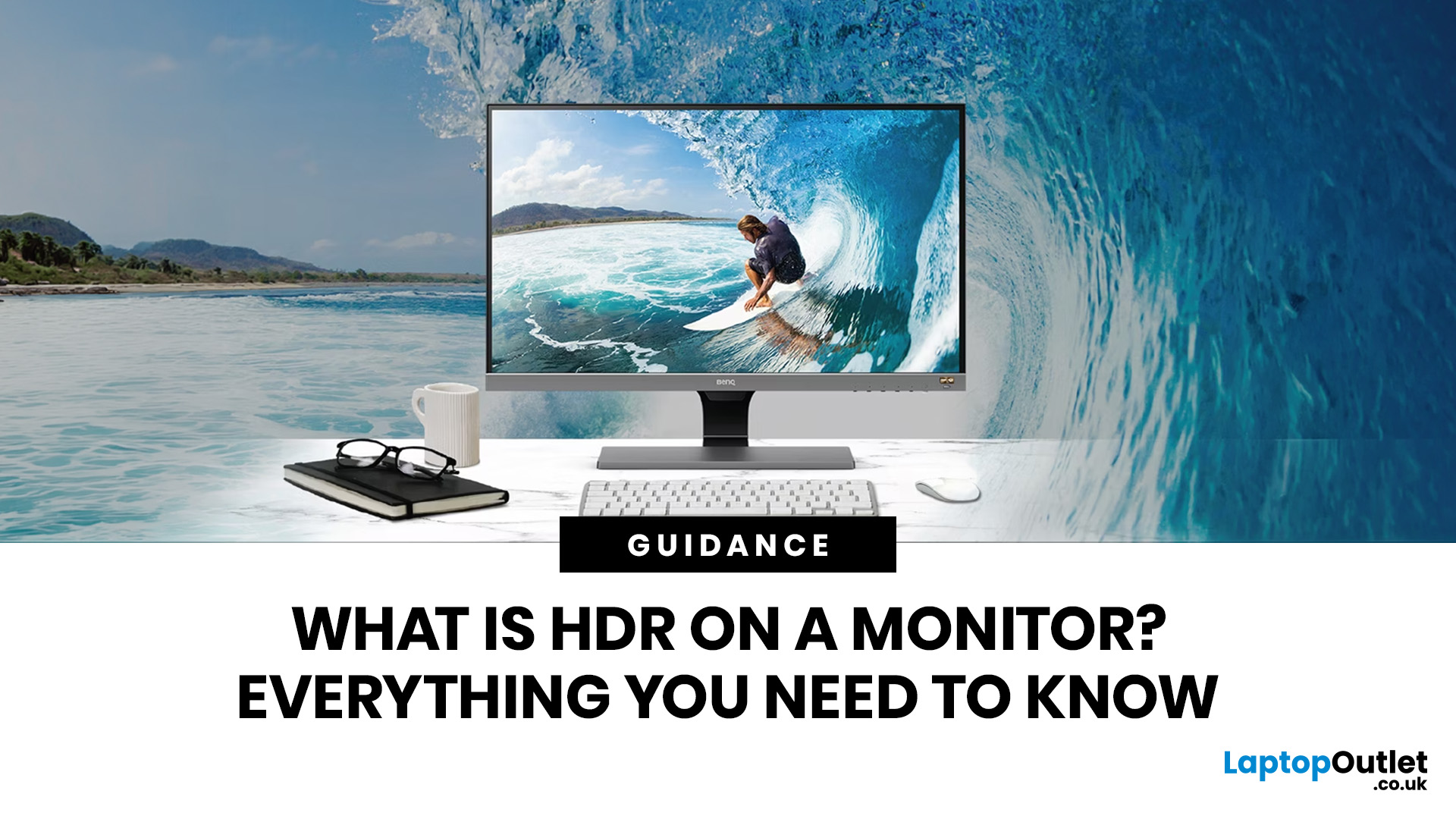
HDR is one of those monitor specs that sounds instantly premium. You see it on gaming monitors, 4K displays, creator screens, and even some budget monitors. But here’s the plot twist: not every HDR monitor gives you that “wow, this looks unreal” experience.
Some HDR displays look bright, rich and cinematic. Others technically support HDR but barely look different from standard mode. Bit awkward. So, what is HDR on a monitor, how does it work, and is HDR actually worth paying for? This complete HDR monitor explained guide breaks it all down in plain English, so you can shop smarter and avoid getting finessed by shiny spec labels.
What Does HDR Mean on a Monitor?
HDR stands for High Dynamic Range.
On a monitor, HDR is designed to show a wider range of brightness, contrast and colour than a standard SDR display. In simple terms, it helps bright areas look brighter, dark areas look deeper and colours look richer when you are watching or playing HDR-supported content.
So, when someone asks,

