



How to Set Up a Gaming Monitor: ASUS, AOC & MSI Settings Guide
Most gaming monitors ship with their best features switched off.
Buying a high refresh-rate panel doesn't automatically mean you're using it correctly - the settings menu is where the performance actually gets unlocked. This guide covers the physical setup steps that apply to every monitor, then walks through the specific settings menus for three of the most popular gaming monitor brands: ASUS, AOC, and MSI.
Physical Setup: The Same for Every Monitor
Before touching any on-screen menu, get the physical placement right. Poor positioning causes colour distortion and glare no software setting can fix.
- Height: Set the top of the screen roughly at eye level. Most gaming monitors include a height-adjustable stand; if yours has a fixed or heavy chassis, use a monitor riser instead.
- Tilt and angle: Angle the screen so you're looking at it straight-on. Off-axis viewing shifts colour accuracy and contrast on most LCD panels.
- Distance: Sit roughly an arm's length away to reduce eye strain during long sessions.
- Cable management: Route cables away from your mouse mat and keyboard space. A tangled cable can genuinely cost you a frame of input responsiveness if it snags your mouse mid-flick.
With placement sorted, move on to the on-screen display (OSD) settings for your specific brand.
Setting Up an ASUS Monitor for Gaming
Step 1: Choose a Game Visual Preset
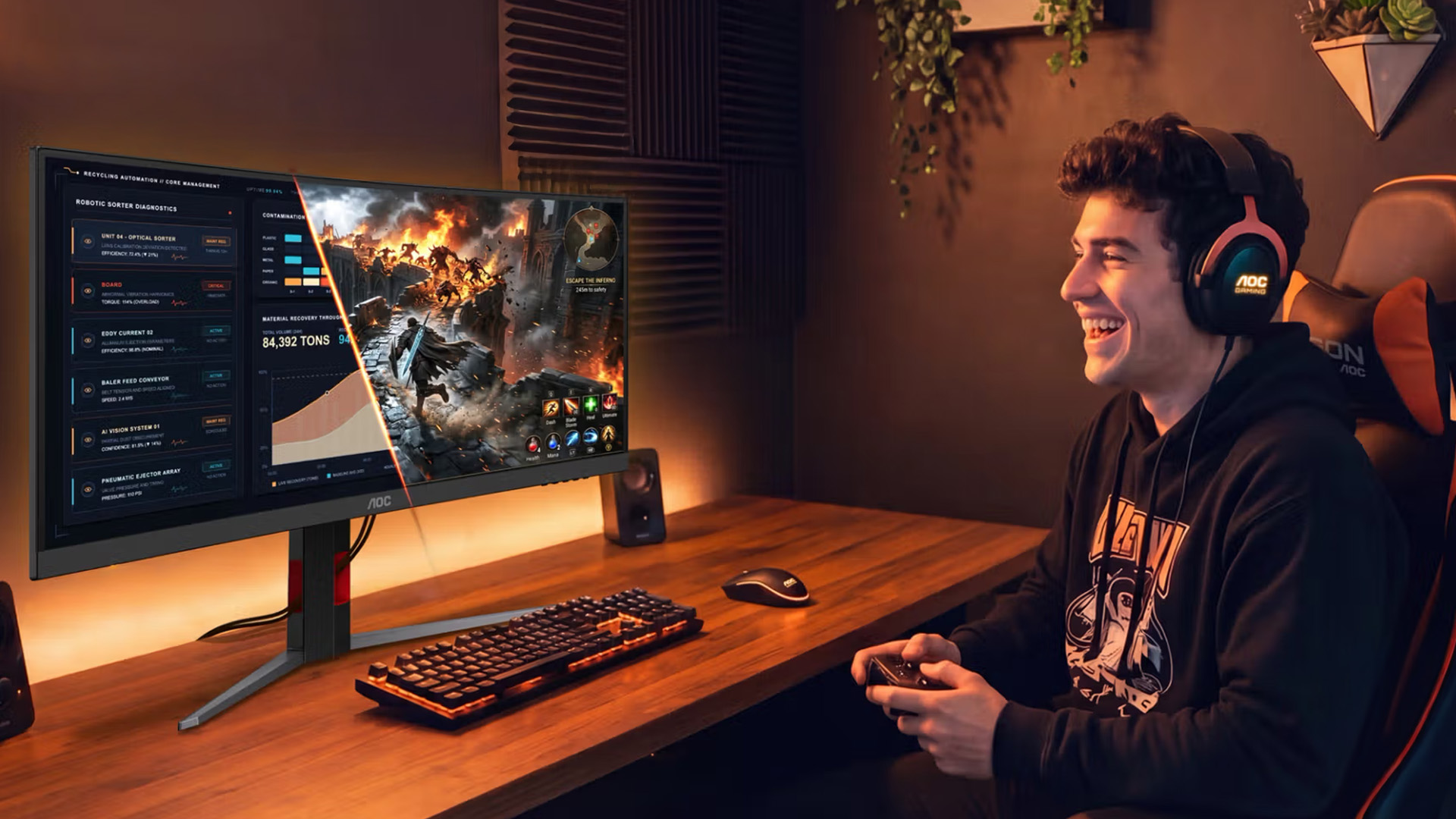
ASUS and ROG monitors group their picture presets under Game Visual in the OSD menu (accessed via the joystick or buttons on the rear or bottom bezel).
- Racing Mode - boosts colour vibrancy and gamut for punchy, saturated visuals.
- sRGB Mode - shows colours in their most accurate, unshifted form; useful for content creation and for gamers who prefer true-to-life colour.
- MOBA Mode - increases contrast on enemy health bars and unit outlines to improve visibility in team-based games.
Step 2: Adjust Brightness
Set brightness to match your room, not a fixed number. Dim rooms need lower brightness; rooms with daylight glare need it pushed higher.
Some ASUS monitors, including panels like the ROG Swift PG32UQ, include Local Dimming. This is a backlight feature that divides the screen into zones and adjusts each zone's brightness based on the content displayed in that zone - brightening bright scenes and darkening dark ones for stronger contrast. It responds to what's on screen, not to the light level in your room, so it's a contrast tool rather than an ambient-light sensor.
Step 3: Set the Refresh Rate
- Right-click the desktop and open Display Settings.
- Select Advanced display settings.
- Find Refresh rate and set it to your monitor's maximum supported value.
A higher refresh rate lowers the time between frames, which reduces perceived input lag and motion blur. It doesn't eliminate latency altogether - total system latency still depends on your GPU frame time, USB polling rate, and the game engine itself. Refresh rate is one input into overall responsiveness, not the whole equation.
Step 4: Set Overdrive (Response Time)
Overdrive speeds up how quickly pixels transition between colours, which is what reduces motion blur and ghosting (the faint trailing image behind fast-moving objects).
A lower response time is generally better for competitive gaming. However, pushing overdrive to its most aggressive or "Extreme" setting can overshoot the target colour, producing a bright halo or trail around moving objects - this is a different artefact from ghosting, and it's just as distracting. The goal is the fastest setting your specific panel can run without introducing overshoot, not simply the highest number on the slider. Test a couple of levels in a fast-paced game and pick the one with the cleanest motion.
Once these four steps are done, your top ASUS displays setup is ready for competitive play.
Setting Up an AOC Monitor for Gaming
Step 1: Configure the Core Display Settings
Right-click the desktop to access these fundamentals:
- Refresh rate: Set to the maximum your panel supports (e.g., some AOC models such as the AG274QS run up to 300Hz). Windows sometimes defaults to a lower rate after a driver update, so check this periodically.
- Response time: Set this low enough to prevent ghosting, but check for overshoot at the most aggressive setting - the same overdrive trade-off applies here as on ASUS panels. If you see bright trailing edges around fast-moving objects, drop the setting one level.
- Resolution: Always run the monitor at its native resolution (the resolution matching its physical pixel count, e.g., 2560×1440 on a QHD panel). Running below native forces the monitor to upscale, which softens image clarity and text sharpness; running above it isn't possible on a fixed-pixel LCD panel.
- Brightness and contrast: Adjust via the OSD or the quick-access buttons on the bottom bezel until dark scenes show detail without washing out bright ones.
- Colour temperature: Controls the warmth or coolness of on-screen colour. Cooler settings (bluer) are common for competitive titles; warmer settings suit long viewing sessions.
Step 2: Select a Gaming Style Preset
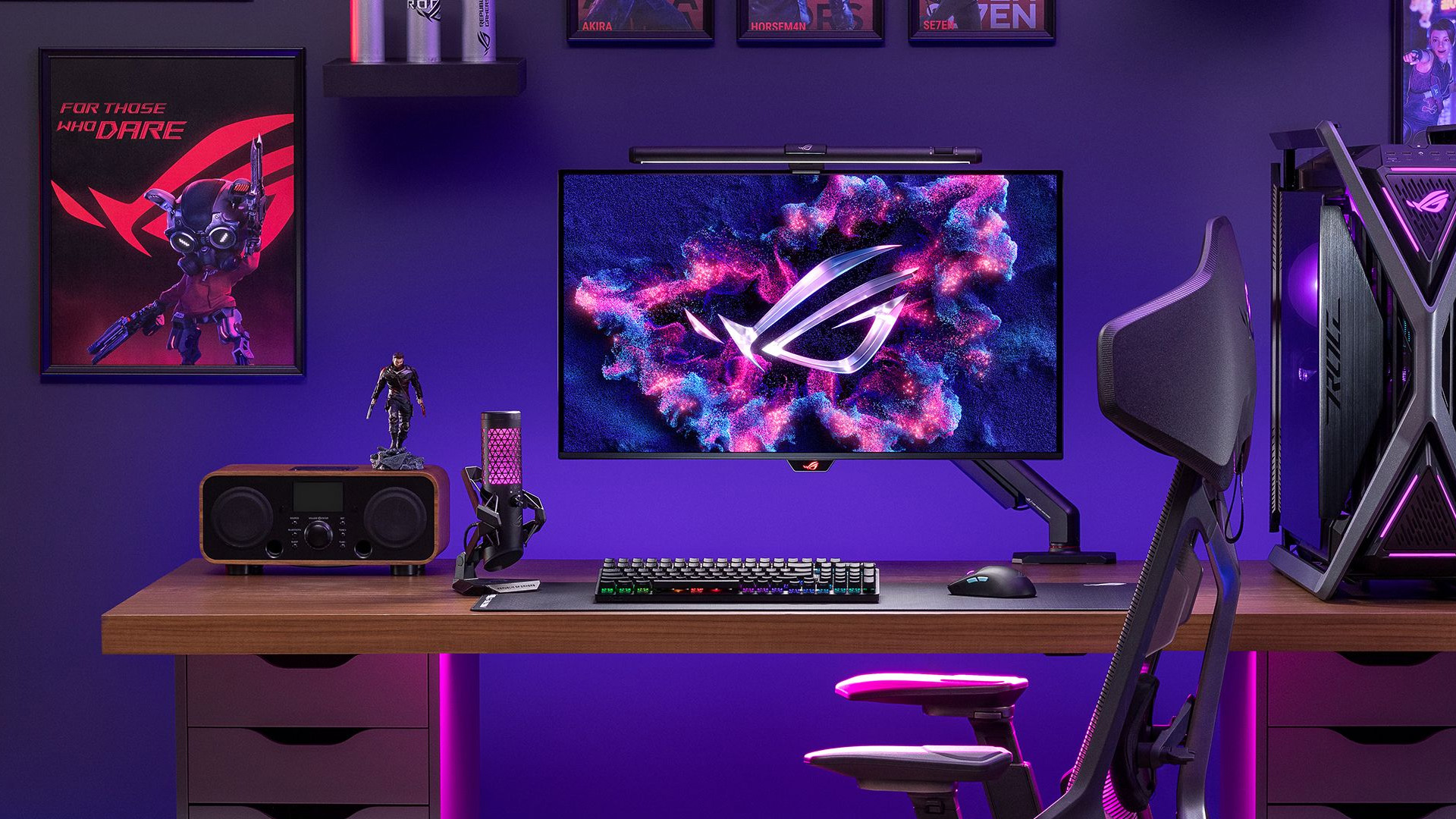
AOC monitors include genre-specific picture styles, typically: Racing, FPS, RTS, MMORPG, and general Action/Shooter presets. Each adjusts brightness, contrast, and sharpness for that genre - an FPS preset, for instance, brightens shadow detail so enemies aren't hidden in dark corners.
Step 3: Enable Low Blue Light Mode
Low Blue Light reduces blue-wavelength output to ease eye strain during long sessions, without changing your colour calibration or brightness levels. It's worth leaving on by default for extended play.
Step 4: Turn On Shadow Control (Where Available)
Found on select AOC panels such as the AGON AG254FG, Shadow Control brightens dark areas of the image specifically, improving visibility in shadowed corners of a map. Enable it under Display Settings > Shadow Control.
Step 5: Set Up Quick Switch
Quick Switch lets you save multiple OSD profiles and swap between them with a single button press - useful if you play different genres that benefit from different presets, without digging through menus mid-match.
Once configured, an affordable AOC displays setup delivers strong value for competitive and casual gaming alike.
Setting Up an MSI Monitor for Gaming
Step 1: Choose the Right Gaming Mode
MSI's OSD includes genre-based modes:
- FPS Mode - brightens shadowed areas so hidden enemies are easier to spot, and reduces on-screen clutter.
- RTS Mode - balances saturation for the green/red unit and terrain colours common in strategy titles like League of Legends or StarCraft.
Step 2: Customise Display Settings
Under Display Settings, adjust refresh rate, response time/overdrive, and colour saturation individually to taste, applying the same "lowest response time without overshoot" principle covered above.
For resolution, set the panel to its native resolution rather than the highest number in the list - on most MSI monitors the highest listed option is native, but always confirm against your model's spec sheet rather than assuming. Running a non-native resolution blurs text and UI elements because the GPU has to interpolate pixels.
- Right-click the desktop and open the NVIDIA Control Panel (or AMD Software, depending on your GPU).
- Go to Display > Change Resolution.
- Select the resolution matching your monitor's native spec - check your model's product page if you're not sure what that is.
Step 3: Consider a Colorimeter for Colour Accuracy
A colorimeter is a hardware device that measures on-screen colour output against known reference values and generates a calibration profile. It's most useful for competitive or content-creation setups where colour accuracy matters more than out-of-the-box vibrancy.
Browse the full range of MSI performance monitors to compare panels with these features built in.
Additional Settings Worth Enabling
HDR
If your monitor supports HDR (e.g., panels with HDR10 certification), it will typically auto-detect an HDR signal from a compatible game or app. Some games require HDR to be switched on manually in Windows Display Settings first - check there if auto-detection doesn't trigger.
Adaptive Sync (G-Sync / FreeSync)
Adaptive sync matches your monitor's refresh rate to your GPU's frame output in real time, which reduces screen tearing.
- NVIDIA GPUs: Right-click the desktop → NVIDIA Control Panel → enable G-Sync.
- AMD GPUs: Open AMD Software → the gear icon (Settings) → Display → enable Radeon FreeSync.
The UFO Test for Ghosting
The Blur Busters UFO Test is a free online motion-clarity test that helps you visually compare overdrive settings side by side. Run it after changing your response time setting to confirm you've picked the level with the least ghosting and the least overshoot - rather than guessing from the menu alone.

Final Thoughts
Getting a gaming monitor set up properly takes fifteen minutes and meaningfully changes how the panel performs - sharper motion, more accurate colour, and less eye strain over long sessions. Whichever brand you're running, start with native resolution and physical placement, then layer in refresh rate, overdrive, and adaptive sync. Browse our full range of top-rated displays to compare specs across ASUS, AOC, and MSI before you buy.

Still Have a Question?
Does a higher refresh rate remove input lag completely?
No. A higher refresh rate reduces the time between displayed frames, which lowers perceived input lag, but total system latency still depends on your GPU, mouse polling rate, and the game itself.
Should response time always be set to the highest number?
No. Response time should be set as low as your panel allows without causing overshoot (a bright ghosting artefact around moving objects). "Highest" and "fastest" aren't the same thing across every brand's menu labelling, so check the visual result, not just the slider position.
What resolution should I run my gaming monitor at?
Always use the monitor's native resolution - the resolution matching its physical pixel grid. Running a non-native resolution blurs image and text quality.
What does local dimming actually do?
It divides the backlight into zones and adjusts each zone's brightness based on the image content in that zone, improving contrast. It does not respond to room lighting.
Do I need a colorimeter for gaming?
Not for casual play. It's most valuable for competitive setups or content creation where precise, repeatable colour accuracy matters.
| Read More: |
| Top 3 Ultrawide Monitors for Gaming in 2026 |
| The Impressive Display Modes of MSI Gaming Monitors Explained |
| ASUS Monitors Explained: Brand Overview, Ranges & Best Uses in 2026 |
Related Articles

Last Updated: August 11, 2026
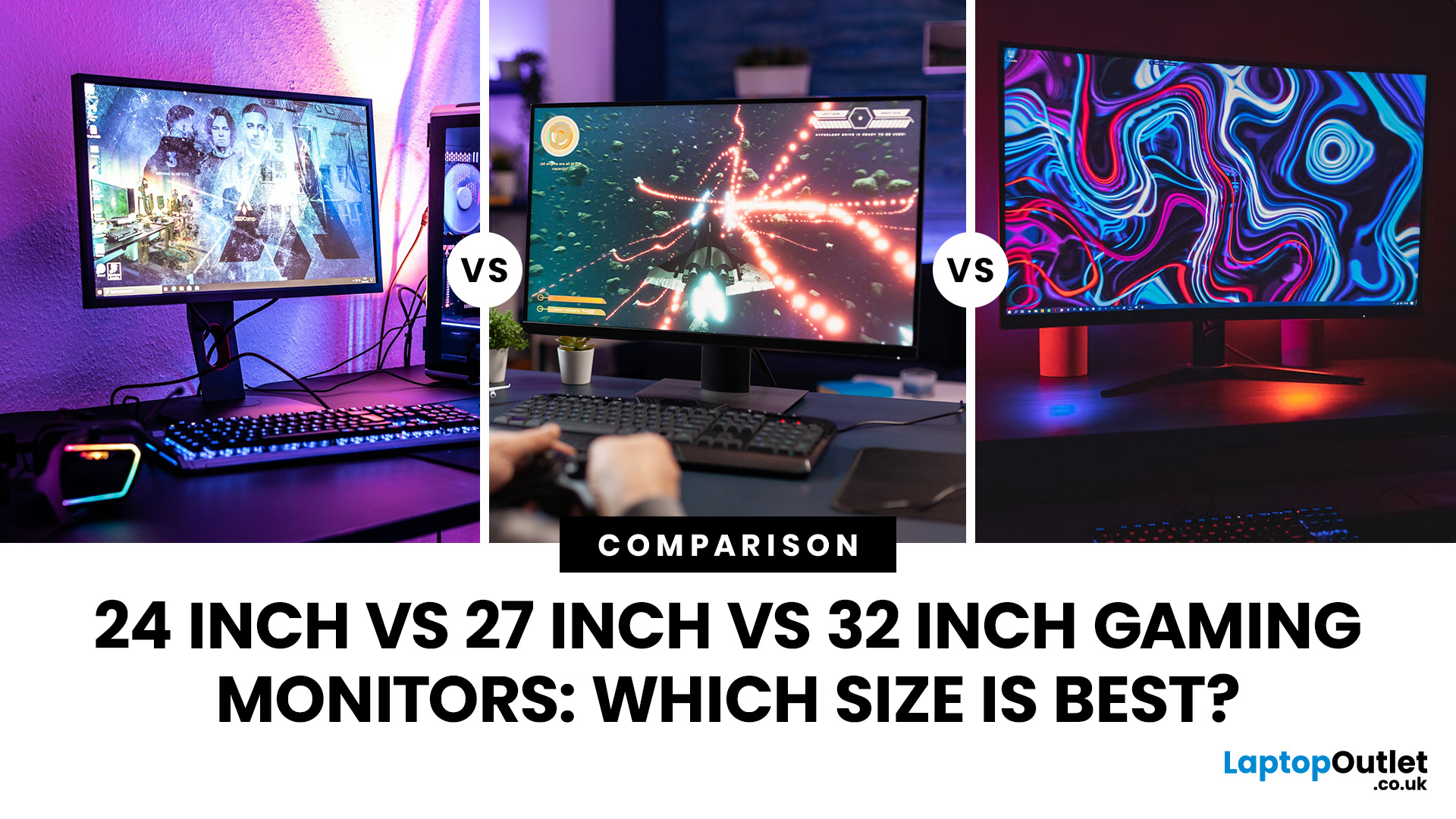
Picking the best gaming monitor size isn’t just about going big or going home. Your screen size actually changes how your games look, feel, and perform. A 24-inch setup is clutch for competitive play, a 27-inch hits that sweet spot between clarity and immersion, and a 32-inch screen? That’s where things get seriously cinematic.
Size alone isn’t the whole story. Resolution, desk space, refresh rate, and what you actually play all matter. This gaming monitor size comparison breaks down 24, 27, and 32-inch displays so you can find your perfect match.
24 Inch vs 27 Inch vs 32 Inch Gaming Monitors: Quick Comparison
The following table provides a quick overview of how the three most popular gaming monitor sizes compare.
| Feature | 24-Inch Monitor | 27-Inch Monitor | 32-Inch Monitor |
| Recommended resolution | 1920 × 1080 | 2560 × 1440 | 2560 × 1440 or 3840 × 2160 |
| Best suited to | Competitive gaming | Mixed gaming and everyday use | Immersive and cinematic gaming |
| Typical desk requirement | Small | Medium | Large |
| Graphics |
Last Updated: August 11, 2026
Last Updated: September 03, 2026
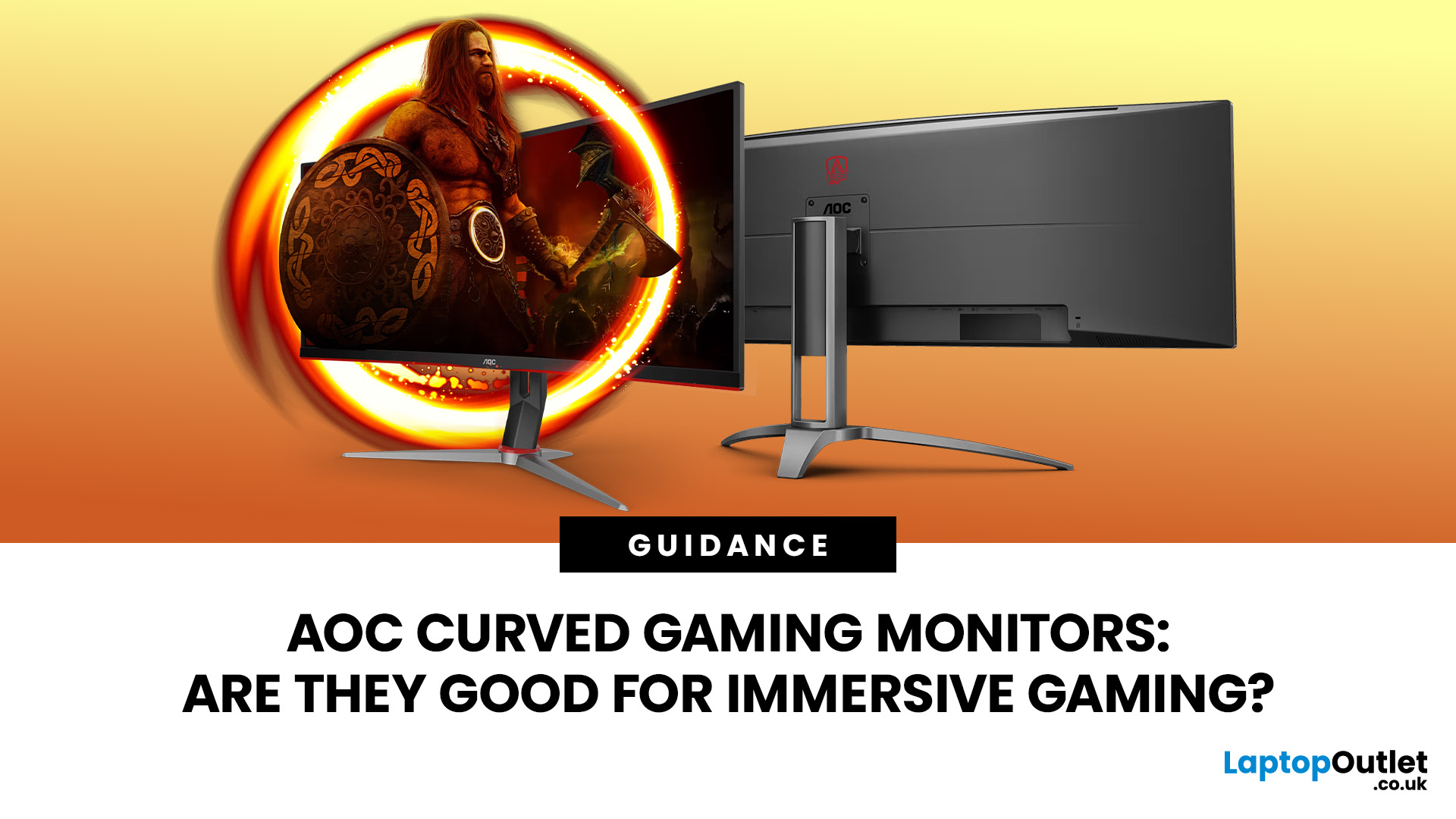
An AOC curved gaming monitor can be a strong choice for immersive gaming, especially if you play racing, simulation, RPG, open-world or cinematic single-player games. The curved screen helps draw more of the display into your natural field of view, which can make gameplay feel more engaging on larger panels. For many PC gamers, the sweet spot is a 27-inch or 32-inch high-resolution QHD monitors. For maximum immersion, an AOC 34 curved gaming monitor or another ultrawide curved gaming monitor can offer a wider, more cinematic view.
Are AOC Curved Gaming Monitors Good for Immersive Gaming?
Yes, AOC curved gaming monitors can be good for immersive gaming, but the experience depends on three things:
- Screen size
- Resolution
- Refresh rate
A curved display is most effective when the screen is large enough for the curve to matter. On a 24-inch screen, the curve may feel subtle. On a 32-inch or 34-inch screen, it becomes much more noticeable because the edges of the panel sit further into your peripheral
Published: July 27, 2026
Last Updated: September 03, 2026
Last Updated: August 11, 2026
The ASUS VG27AQM5F is a 27 inch QHD gaming monitor built primarily for competitive PC players who want a higher refresh rate without dropping to Full HD resolution. As an ASUS QHD monitor, it combines a 2560 x 1440 Fast IPS panel with a maximum 320Hz refresh rate, adaptive-sync support and ASUS ELMB Sync. This ASUS new gaming display launch is aimed at players seeking smoother competitive gameplay, although its tilt-only stand, basic HDR capability and service-only USB-C port remain important limitations.
ASUS VG27AQM5F Quick Answer
| Question | Answer |
| Best suited to | Competitive PC gamers who regularly play above 200fps and still want QHD detail |
| Main strengths | 320Hz refresh rate, Fast IPS panel, 95% DCI-P3 coverage and broad adaptive-sync support |
| Main limitations | Tilt-only stand, modest 300cd/m² brightness, basic HDR10 support and no functional USB-C display input |
| Testing status | Specification-based assessment, not a hands-on review |
| UK availability | Available through UK retail channels, but not |
Last Updated: August 13, 2026
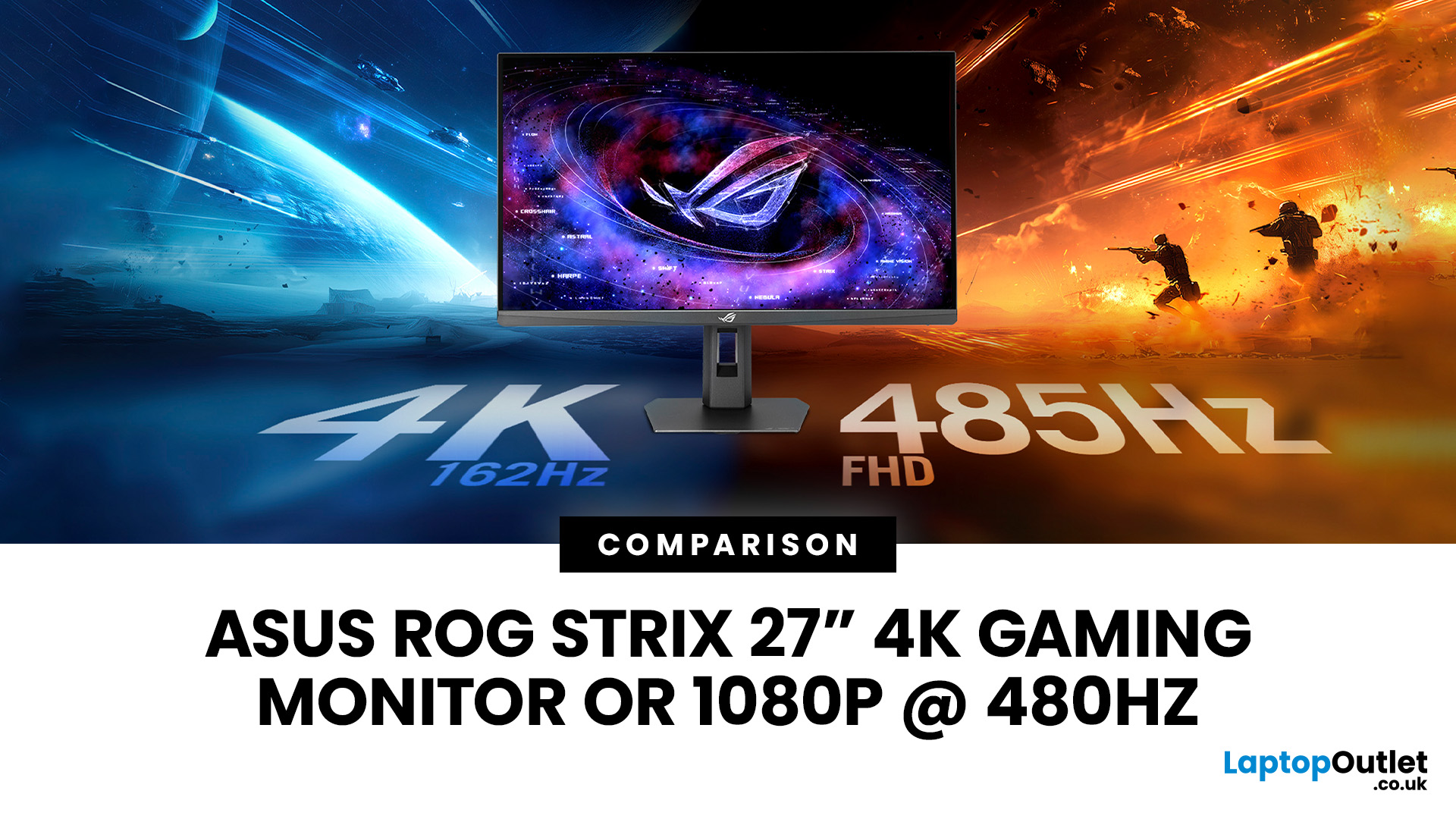
The ASUS ROG Strix XG27UCGR Gen2 is a 27 inch 4K gaming monitor that runs at up to 162Hz in 4K and switches to Full HD at 485Hz for esports. It succeeds the original XG27UCG’s 160Hz and 320Hz dual mode, adding a much faster competitive setting, Smart Pixel processing and a lower quoted minimum response time.
Most gaming monitors make you choose between resolution and refresh rate. A sharp 4K screen suits visually detailed games, while an ultra-fast Full HD display is usually better suited to competitive titles where responsiveness matters more than image detail.
The ASUS ROG Strix XG27UCGR Gen2 attempts to cover both uses. Its native mode delivers 3840 x 2160 resolution at up to 162Hz. Activating Frame Rate Boost changes the monitor to 1920 x 1080 and raises the refresh rate to 485Hz. ASUS confirms both modes for the XG27UCGR, alongside a Fast IPS panel, Smart Pixel processing and a manufacturer-rated minimum response time of 0.3ms.
ASUS ROG Strix XG27UCGR Specifications
The XG27UCGR Gen2
Last Updated: September 03, 2026
Refresh rate is one of the first specifications you will notice when shopping for a gaming monitor. A higher number promises smoother movement and faster feedback, but that does not automatically mean a 240Hz display is the right choice for your setup.
The best Lenovo monitor refresh rate depends on the games you play, the frame rates your computer can produce and whether you prioritise competitive responsiveness or sharper graphics. A casual player running cinematic games at 70 frames per second will gain little from 240Hz, while a competitive FPS player maintaining more than 200fps may notice a meaningful improvement.
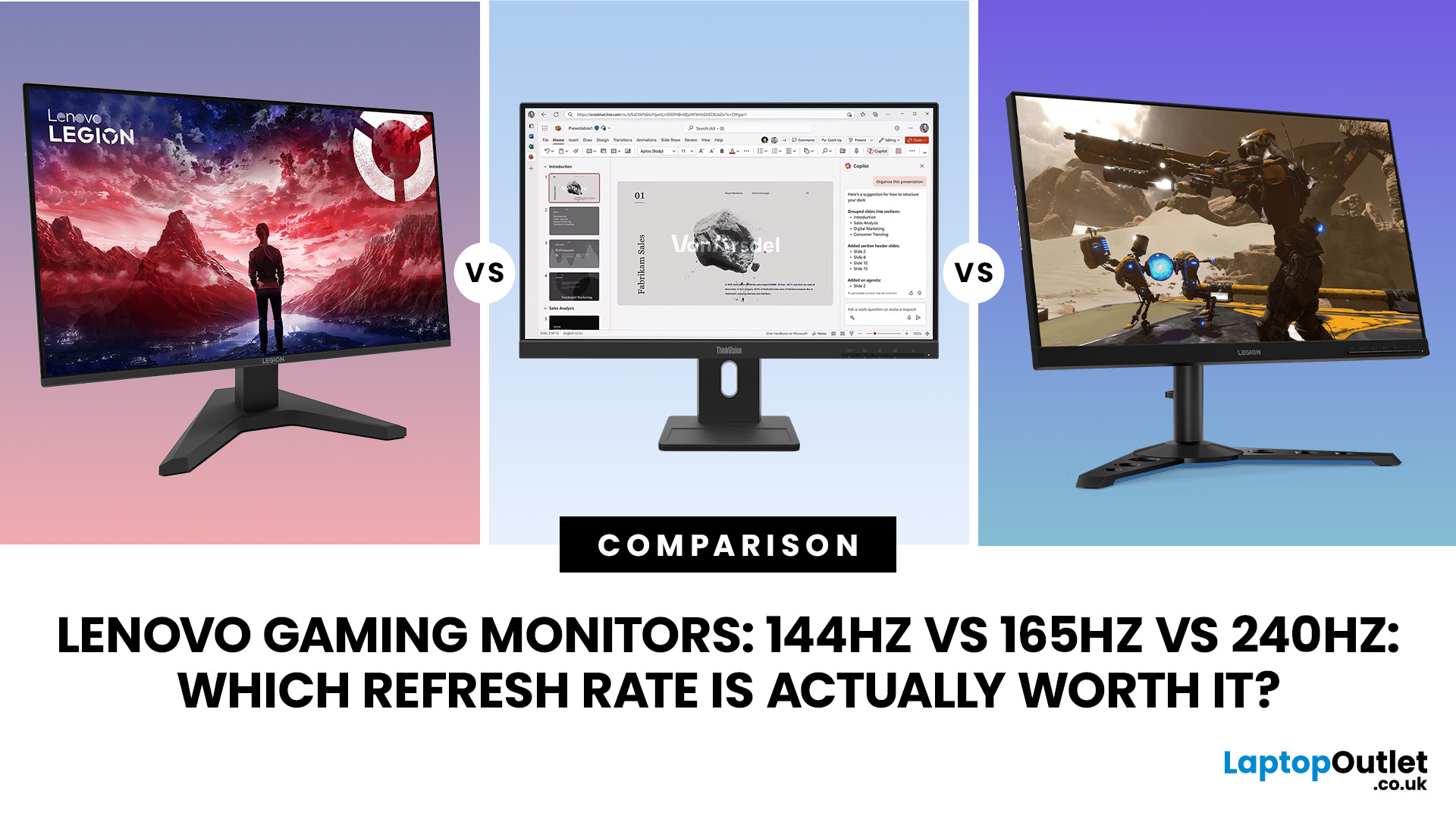
This guide compares 144Hz, 165Hz, and 240Hz Lenovo gaming monitors so you can pay for performance you will actually use.
Quick Answer: Is 144Hz, 165Hz or 240Hz Best?
For most PC gamers, 144Hz or 165Hz offers the best balance of smoothness, hardware requirements, and value. Choose 240Hz when you mainly play competitive shooters and your PC can regularly produce close to 240fps
Last Updated: August 24, 2026
Published: August 06, 2026
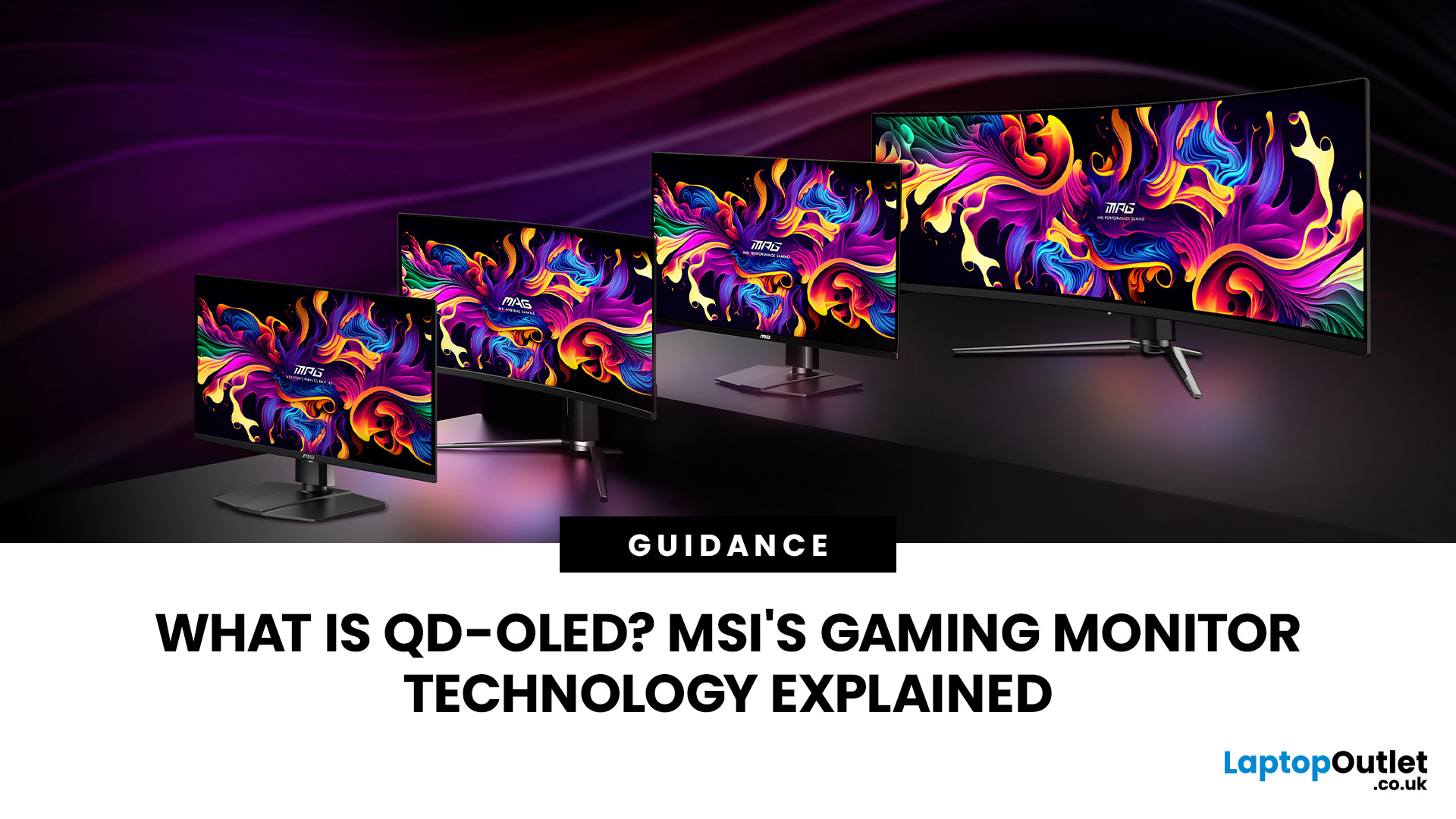
An MSI QD OLED monitor combines the individual pixel control of OLED with a quantum-dot colour conversion layer. The result is a display designed to produce deep blacks, vivid colours, fast response times, and convincing HDR performance. That sounds impressive, but specifications such as 0.03ms response times, True Black certification, and OLED Care can make choosing a monitor confusing. This guide explains how the technology works, what MSI adds and whether a QD-OLED display is right for your gaming setup.
How Does QD OLED Technology Work?
A conventional LCD monitor needs a backlight behind its pixels. Even when displaying a dark scene, some light can pass through the panel, which may make black areas appear grey. QD-OLED works differently because it is self-emissive. Its pixels generate their own light and can switch off individually when the image requires black. The process involves three main stages:
- A blue OLED layer produces the original light.
- Quantum dots convert part of that blue

