



Top 3 Ultrawide Monitors for Gaming in 2026

Ultrawide monitors are not for everyone, but for people who multitask and crave increased productivity, ultrawide monitors are the best option to go with. If you are spending half a day on the monitor or many hours each day, ultrawide monitors with immersive displays can be very beneficial. Ultra-wide monitors provide tons of space, which enables content creators, multitaskers, and gamers to increase the efficiency of their work.
If you are planning to upgrade your monitor or find a new monitor, the ultrawide monitor can be a great choice for you. You might need some time to adjust to the extra space offered by the ultra-wide monitor, but once you get used to it, there is no going back.
Difference Between Standard and Ultrawide Monitors:
The main difference between the standard and ultrawide monitors is the aspect ratios. The aspect ratio for the standard monitors is 16:9 and that of ultrawide monitors is 21:9. As the name suggests, ultrawide monitors are horizontally longer. The extra length works for people who want extra space either for gaming or creating content.
At the same time, keep in mind that an ultrawide monitor is not for everyone. There is some modern tech that unfortunately doesn’t support ultrawide monitors. So, if you need to connect Xbox Series X or PS5 to the monitors, you are better off without an ultrawide monitor. Xbox Series or PS5 doesn’t support the resolution of the ultrawide monitors.
Reasons to Choose Ultrawide Monitors:
Offers Immersive Gaming Experience:
The ultrawide monitors give the impression as if they are specifically designed for gaming. The massive display allows to see you more of the game than you would expect from it.
For the first-person shooter, the difference is going to be very noticeable. The ultrawide monitor will always help in improving the gaming performance of the users.
If you wish to make the most out of the money you are willing to spend on gaming PCs, go for an ultra-wide monitor.
Perfect for Movies
if you love to watch seasons, football matches, and movies, an ultrawide monitor is a way to go. They don’t only offer larger displays but also better viewing angles.
The movies are usually shot in the aspect ratio of 21:9. It means that you can watch them on any screen by making some little adjustments. But on an ultrawide monitor, you can watch a movie without doing any adjustments, and the same as it was shot.
Ideal for Video Editing and Photography
Mostly the ultrawide monitors are bought by the content creators and editors. The main reason is that even a dual setup cannot fulfill the requirements of the designers. For more efficiency, they prefer an ultrawide monitor.
A lot of space is required when it comes to editing, cropping, etc., and ultrawide monitors give that space without any hassle.
Also, one of the most important factors is that on dual monitors, the colours are not consistent. Colour consistency is not much of a problem if you only want web browsing but for editing, it is a very crucial factor.
Easier to Use
Ultrawide monitors are more user-friendly than dual monitor setups. They don't simply let you skip a bezel. Overall, they provide a more seamless user experience. You can also use virtual screen dividing software to organise your workspace.
Most applications are not intended to be used on two monitors at the same time. And moving programme windows from one screen to another isn't always convenient. Although software applications exist for dual-monitor setups, ultrawide monitors are simply more user-friendly out of the box.
Reasons Not to Choose Ultrawide Monitors:
Takes Up an Entire Desk
An ultrawide monitor is heavier and bigger than you will expect it to be. They are not easy to install as well.
Most people prefer screen space, but it comes with a lot of desk space as well. Also, if the weight is more, a bigger stand will be required.
Mostly, people choose to do with a dual monitor setup because of the desk space but again sometimes the work efficiency gets compromised.
Doesn’t Offer Added Height
Ultrawide monitors offer a lot of added width which can never go unnoticed. But there is not much difference when it comes to the height of the monitor.
It means that this monitor is not going to work for some people. Especially if all you want is web browsing and reading or editing documents, then an ultrawide monitor cannot be the best choice.
Doesn’t Support All Applications
Ultrawide monitors are new in the market. As for now, not every application supports ultrawide monitors. So, such applications might not work properly on ultrawide monitors.
You might face the same issue with the hardware as well. If you plug in hardware there is a chance that it will not support the high resolution offered by the ultrawide monitor. Still, they will work, but will not take up the entire space which is the whole point of getting ultrawide monitors.
High Pricing
There is a lot of price difference between a standard and an ultrawide monitor. There is a fair chance that you will spend more and get features that you might not even use. The dual monitor setup is cheaper and sometimes they offer a good refresh rate and higher resolution.
So, if you want to spend a reasonable amount of money, then go for a dual monitor setup.
Top 3 Ultrawide Monitors
Given below are the top 3 Ultrawide monitors you can buy for yourself:
1. AOC G4 CU34G4Z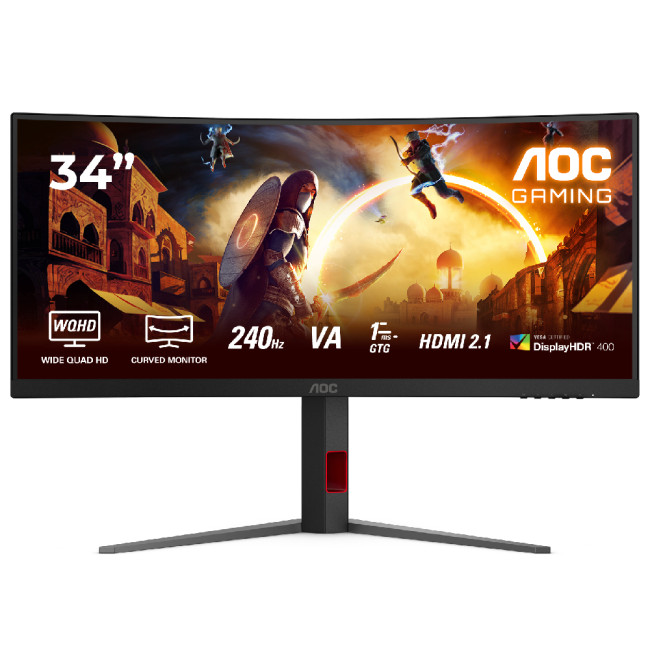
If your goal is a genuinely competitive-feeling ultrawide without giving up immersion, the AOC CU34G4Z is built exactly for that. You’re getting a 34-inch 3440×1440 (21:9) curved panel with a 240Hz ceiling, rare territory for UWQHD, so motion stays ultra-smooth in fast shooters, racers, and esports titles while still delivering the workspace benefits of ultrawide.
Standout Features
- 34" 21:9 UWQHD (3440×1440) ultrawide for a wider field of view and better multitasking
- 240Hz max refresh + 0.3ms MPRT for reduced blur (plus 1ms GtG)
- 1500R curve for more wraparound immersion
- HDR support (listed as HDR10 / HDR400 marketing depending on region) and high peak brightness (listed up to 450 cd/m² on AOC specs)
- Strong connectivity for PC + consoles: 2× HDMI 2.1, DP 1.4, plus a USB hub
- Ergonomics: height adjustment (130mm), tilt, swivel
Best Use Cases
- Competitive ultrawide gaming (Apex/Valorant/CoD, sim racing) where high refresh matters
- One-monitor work + play setups: ultrawide timeline space for editing, wide spreadsheets, side-by-side docs
- Console + PC combos, thanks to HDMI 2.1 ports
2. MSI MAG 342CQR E2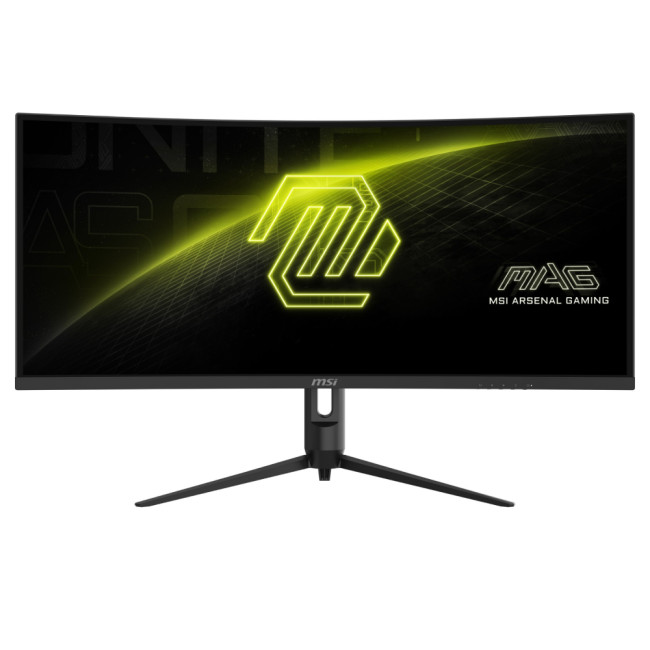
The MSI MAG 342CQR E2 is the kind of ultrawide that makes sense for most people: big, curved, sharp, fast enough for competitive play, and tuned for “do everything” setups. Its 34-inch 3440×1440 canvas is great for productivity and cinematic games, while 180Hz keeps it feeling responsive without demanding top-tier GPU horsepower like 240Hz Ultrawides often do.
Standout Features
- 34" VA ultrawide (21:9) at 3440×1440
- 180Hz refresh + 1ms MPRT response time
- 1500R curve for immersion
- AMD FreeSync Premium for tear-free gaming
- Wide gamut colour coverage listed as 95% DCI-P3 / 119% sRGB
- HDR Ready support (good for compatibility; not the same as true high-end HDR)
- Ports: 1× DP 1.4a, 2× HDMI 2.0b (note: MSI lists HDMI UWQHD capped at 100Hz)
- Ergonomics: tilt, swivel, pivot range, and height adjust up to 90mm
- Gaming aids like AI Vision and console features like HDMI-CEC “Console Mode” are part of MSI’s pitch
Best Use Cases
- Hybrid gaming + productivity: wide desktop space for work, then immersive AAA gaming at night
- Mid-to-high range GPU builds targeting smooth 1440p ultrawide without chasing 240Hz
- Content + colour-conscious users who want wide-gamut punch for media and casual creative work
3. Philips Evnia 5000 27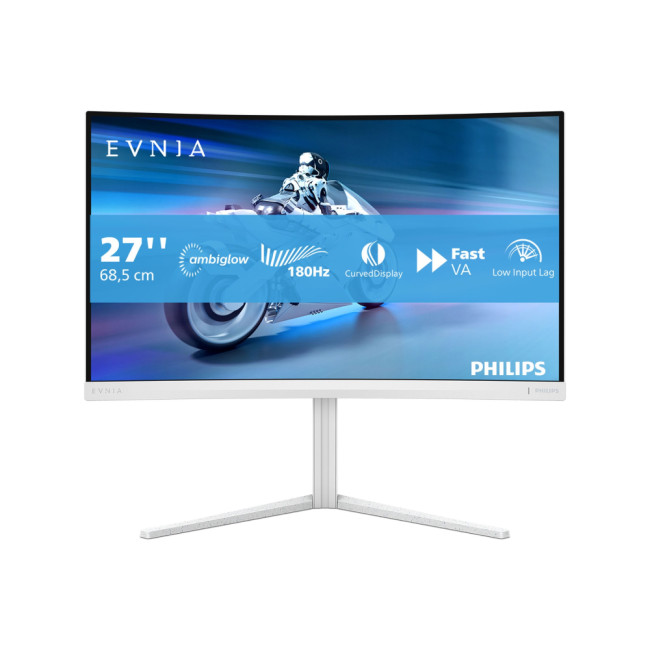
If your audience includes people who want a curved “gaming feel” but don’t have the desk space (or budget) for a 34-inch ultrawide, the Evnia 27M2C5201L is a strong compact option. It’s a 27-inch Full HD (1920×1080) curved Fast VA monitor with 180Hz refresh, FreeSync, and Philips’ gaming extras like Ambiglow, great for esports and general gaming, just without the ultrawide workspace.
Standout Features
- 27" 16:9 Full HD (1920×1080), Fast VA panel
- 180Hz refresh; low input lag emphasis
- Motion blur reduction rated 0.5ms Smart MBR, with 1ms GtG listed in specs
- 1500R curvature (listed via effective viewing area at 1500R)
- HDR10 supported
- AMD FreeSync / adaptive sync
- Connectivity: 2× HDMI 2.0, 1× DP 1.4, headphone out
- Philips flair: Ambiglow (3-sided) for reactive lighting
- Stand: tilt listed (no height adjust called out in the spec block shown)
Best Use Cases
- Competitive esports on a smaller desk (high refresh, low lag focus)
- Console + PC casual gaming where FHD high refresh is the priority
- Budget-friendly curved setup with extra “vibes” via Ambiglow

Bottom Line
Ultrawide monitors are not for everyone. If you need a display with a massively large screen, whether for gaming, advanced content creation, viewing massive spreadsheets, or comparing multiple versions of a photo or illustration, Ultrawide monitors should be your first choice.

Still Have Questions?
Is it better to have a curved monitor?
Some people simply dislike the experience of working on a curved monitor, and they may experience some edge blurring. However, for serious gamers, nothing beats the immersion provided by a curved monitor in terms of elevating your gaming experience.
Is it better to have a dual setup or an ultrawide monitor?
Dual monitor configurations use two screens side by side to allow multiple windows and applications to run at the same time. The bezel gap between the two monitors is aesthetically unappealing and can be distracting in this configuration. Inconsistencies in the image are also caused by using two different monitors. When watching movies, an ultrawide monitor provides a more cinematic experience.
Are ultrawide monitors worth it?
To get the most out of your dual or ultrawide monitor setup, think about how you use your computer. Do you want a large screen that allows you to easily see and navigate between various programmes, documents, and applications? Do you want a high-quality visual gaming experience and video entertainment? Then an ultrawide monitor could be ideal for you.
Is a 34-inch ultrawide monitor better than a normal 27-inch gaming monitor?
A 34-inch ultrawide (21:9) monitor gives you a wider screen space compared to a standard 27-inch (16:9) display. This means better immersion in racing and open-world games, plus more room for multitasking like editing, streaming, or working with multiple windows. Models like the AOC CU34G4Z and MSI MAG 342CQR E2 are ideal if you want both productivity and gaming benefits.
Do I really need 240Hz, or is 180Hz enough for gaming?
For most gamers, 180Hz is already extremely smooth and a big upgrade over 60Hz or 144Hz. A 240Hz ultrawide, like the AOC CU34G4Z, is mainly best for competitive players who want the fastest motion clarity and responsiveness. If you play a mix of AAA and esports games, 180Hz models offer a great balance between performance and value.
| Read More: |
| From Desk to Dock: Monitors That Enhance Your Workstation |
| Why Curved Monitors are a Game-Changer? |
| Are curved monitors good for competitive gaming |
Related Articles

Last Updated: December 31, 2025
Upgrading your display is one of the smartest ways to refresh your setup for the year ahead. A better monitor can make work feel smoother, games look sharper, and day-to-day browsing far more comfortable, without needing a whole new PC. The good news? You don’t have to pay full retail to get a premium panel. Choosing refurbished is a practical way to access higher specs (4K, OLED, high refresh rates, USB-C portability) for less, while keeping perfectly usable tech in circulation for longer. That’s especially true during New Year promotions, when clearance pricing and seasonal offers often collide. You’ll see everything from portable screens for hybrid work to big-format displays built for entertainment and collaborative spaces.
Classroom-Ready 4K Touch: Refurbished BenQ Education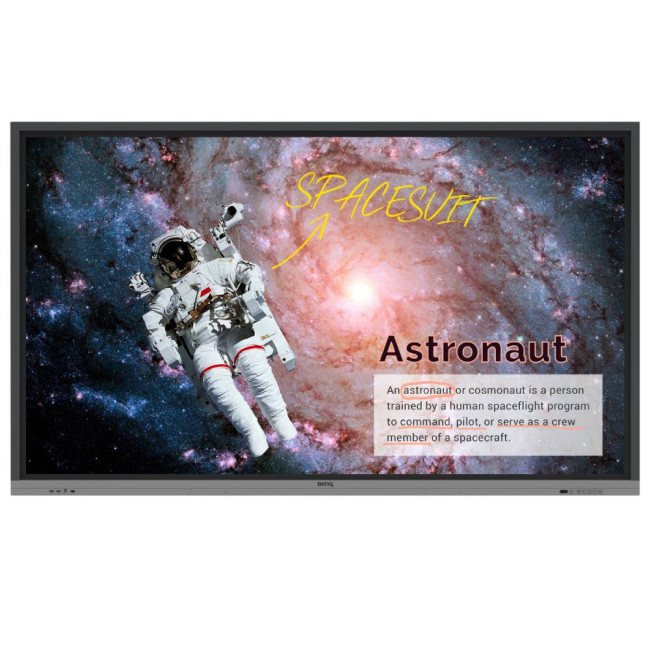
If you’re upgrading a classroom, meeting room, training space, or collaborative studio, the BenQ RE8601 is a standout. At 86 inches with 4K clarity and interactive touch, it’s built for hands-on presentations,
Last Updated: December 31, 2025
If your setup is still running on an older 60–75Hz display (or a basic office screen), 2026 is the year to change that. The jump to a modern gaming monitor can be instantly noticeable: smoother camera movement, clearer motion in fast fights, and a more responsive “feel” when you aim, flick, track, or even just pan across open-world scenery. That’s why New Year gaming monitor deals are such a popular time to upgrade, stock is refreshed, prices tend to be competitive, and you can often find the exact spec combination you’ve been waiting for without paying peak-season prices.
Laptop Outlet makes this easier because there’s a wide range of gaming monitors in one place, so you can compare size, resolution, refresh rate and panel tech without bouncing between stores. A good starting point is the main gaming monitors category (it’s perfect for filtering by what matters most). And if you’re shopping across more than just monitors, it’s also worth keeping an eye on the wider promotions to save big
Last Updated: July 10, 2026
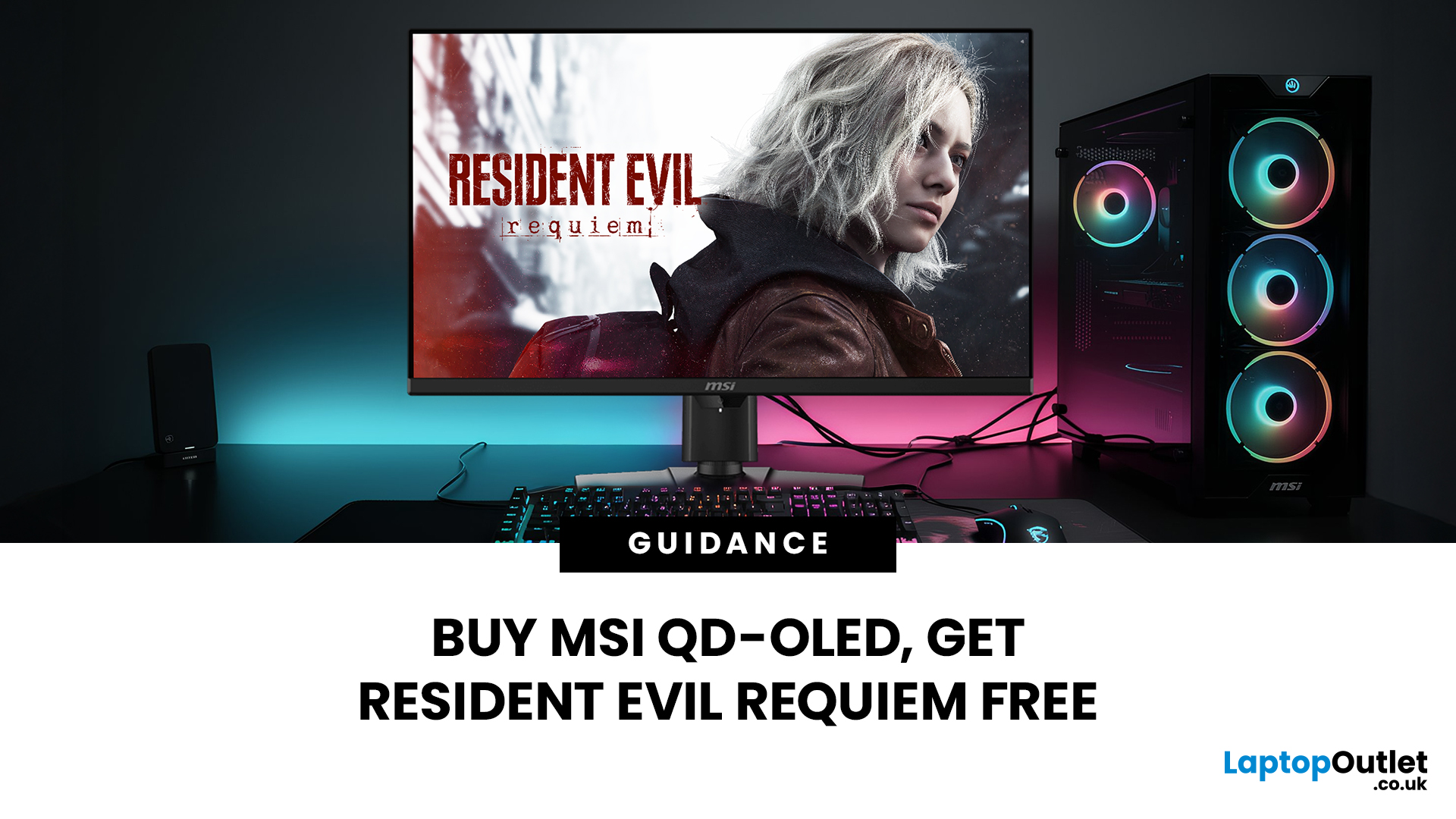
Gaming is about to get a whole lot better. If you are looking for a screen upgrade, now is the perfect time. MSI is currently offering a deal that is hard to ignore. When you buy a selected MSI QD-OLED monitor, you can get Resident Evil Requiem free.
This latest title usually costs £51.99. However, for a limited time, you can add it to your library without spending an extra penny. Combining the terrifying visuals of Resident Evil with the ground-breaking technology of QD-OLED is a match made in heaven.
In this guide, we will look at the best MSI gaming monitors included in this deal.
Why This Gaming Deal Matters
Gaming hardware is expensive. Getting a £51.99 game for free helps offset the cost of your new screen. But beyond the money, it is about the experience. MSI QD-OLED monitors are currently the pinnacle of display technology.
They offer:
- Perfect Blacks: No "halo" effect around bright objects.
- Vivid Colours: Quantum Dots provide a wider colour gamut.
- Instant Response: 0.03 ms is
Last Updated: June 15, 2026
If you run an esports arena, gaming cafe, university esports lab, or content studio, your monitor choice is not a background decision. It directly affects performance, player satisfaction, brand perception, and long-term ROI. Competitive players notice the refresh rate instantly. Streamers notice colour accuracy. Venue owners notice durability. And everyone notices screen quality.
That’s why ASUS gaming monitors have become a staple across esports stages and gaming venues in the UK. From ultra-premium ASUS ROG gaming monitors built for tournament environments to scalable ASUS TUF gaming monitor options designed for multi-station rollouts, ASUS covers every level of competitive deployment.
If you're building or upgrading a gaming business, here’s what you need to know.
Why Esports & Gaming Businesses Choose ASUS
A single hardware issue during a tournament can damage a reputation fast. ASUS has built a strong position in esports by delivering consistency under pressure.
Brand Reputation
Last Updated: March 13, 2026
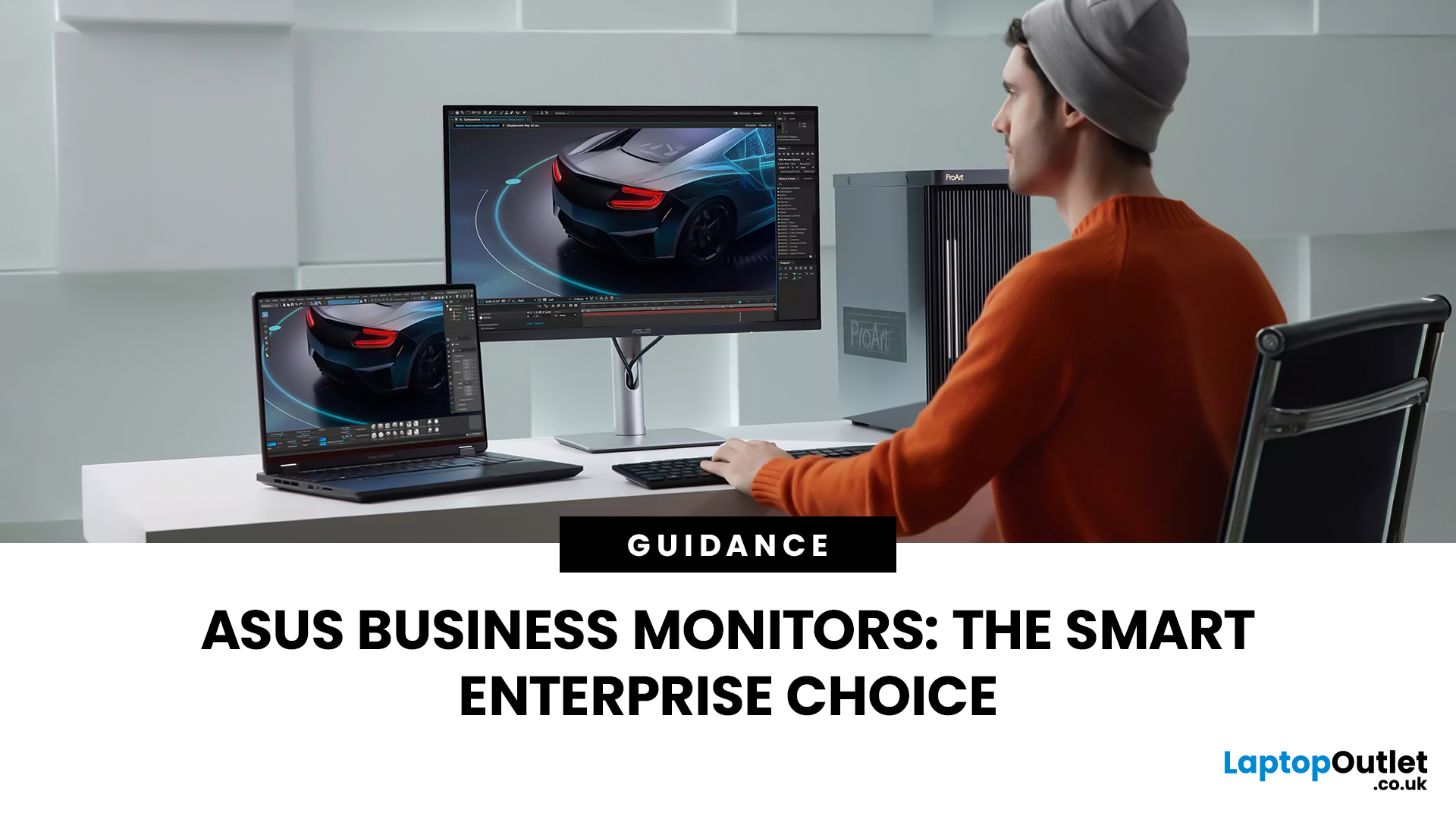
Modern workplaces are more screen-based than ever and in the UK, the average office employee now spends over 6 hours a day looking at a monitor. For businesses, that makes display choice more than just a tech detail; it’s a productivity and wellbeing decision.
The right ASUS business monitors can improve workflow efficiency, reduce eye strain, and support hybrid teams with flexible connectivity like USB-C docking. Whether you’re equipping a corporate office, a call centre, or a growing enterprise rolling out hundreds of workstations, choosing the right monitor spec matters.
In this buying framework, we’ll break down what UK organisations should prioritise, from screen size and ergonomics to ASUS Eye Care features, bulk purchasing, and the best monitor options for business use in 2026.
Why ASUS Monitors Work Well for Modern Workplaces

In today’s business environment, monitors are no longer just office accessories, they’re core productivity tools. From finance teams working across spreadsheets
Last Updated: March 13, 2026
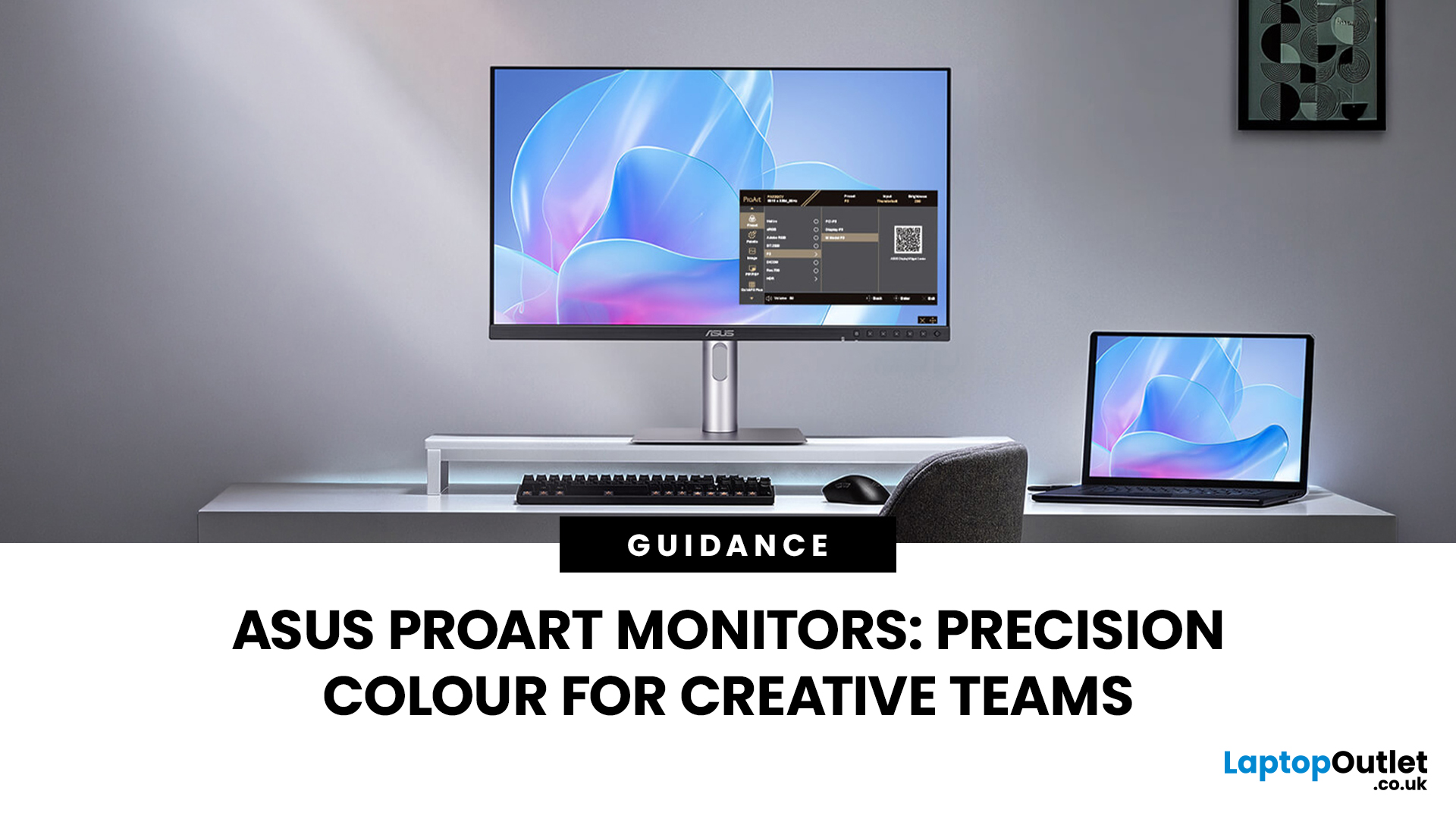
Creative work is more colour-critical than ever and studies show the average designer spends over 7 hours a day staring at a screen. That means your monitor isn’t just a display… it’s basically your studio. If colours are even slightly off, edits don’t match, prints come out wrong, and client work gets messy fast.
That’s where ASUS ProArt monitors come in. Built specifically for creators, they deliver factory-calibrated accuracy, wide colour coverage, and crisp 4K detail that makes photo editing, graphic design, and video workflows feel effortless. Whether you’re running a creative agency, an in-house design team, or a full studio setup, ProArt screens help you work with confidence, not guesswork.
Let’s break down what makes them worth it.
What Creative Teams Need from a Monitor
Not all monitors are built the same and creative teams feel that difference immediately. A standard office screen might be fine for spreadsheets, but when you’re adjusting skin tones, matching brand colours, or
Last Updated: August 28, 2026
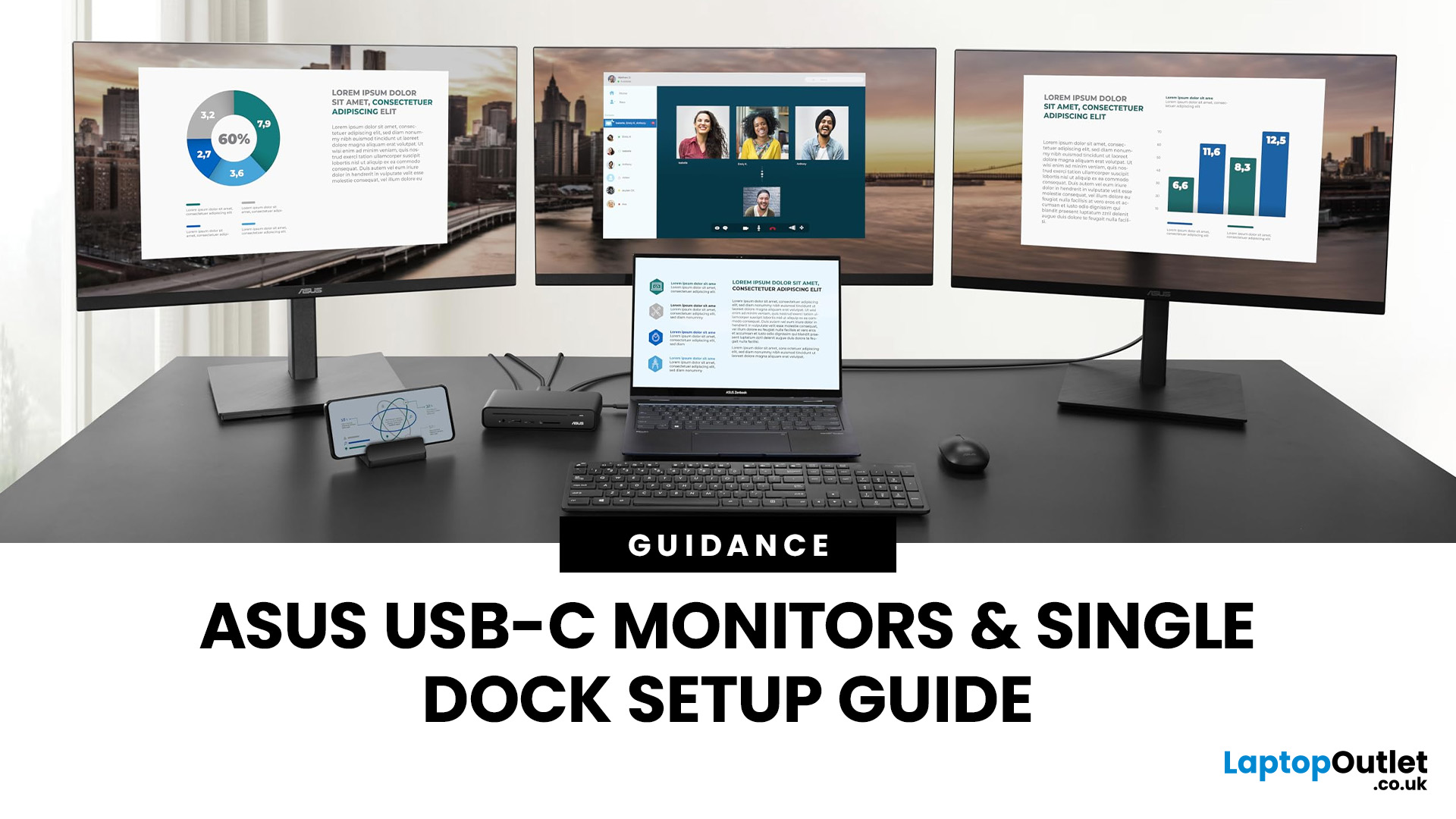
If you’re planning a desk refresh, rolling out new workstations, or managing a hot-desking environment, one question always comes up: how many ASUS USB-C monitors can you realistically run from a single dock? The short answer? It depends.
The long answer? It depends on your laptop’s GPU, the dock’s bandwidth, the monitor resolutions, and whether you’re daisy-chaining or using multiple video outputs.
In this practical IT deployment guide, we’ll break down exactly how ASUS USB-C monitors behave in real-world setups, what limits your configuration, and how to plan a reliable multi-monitor rollout without unpleasant surprises.
How USB-C Video and Power Actually Work
USB-C looks simple. One cable. Power. Video. Data. Done.
But behind that clean setup, there’s a lot happening.
USB-C monitors rely on a feature called DisplayPort Alt Mode. This allows the USB-C cable to carry video signals from your laptop’s GPU directly to the monitor. Many modern docks also use DisplayLink technology, which
Last Updated: August 11, 2026
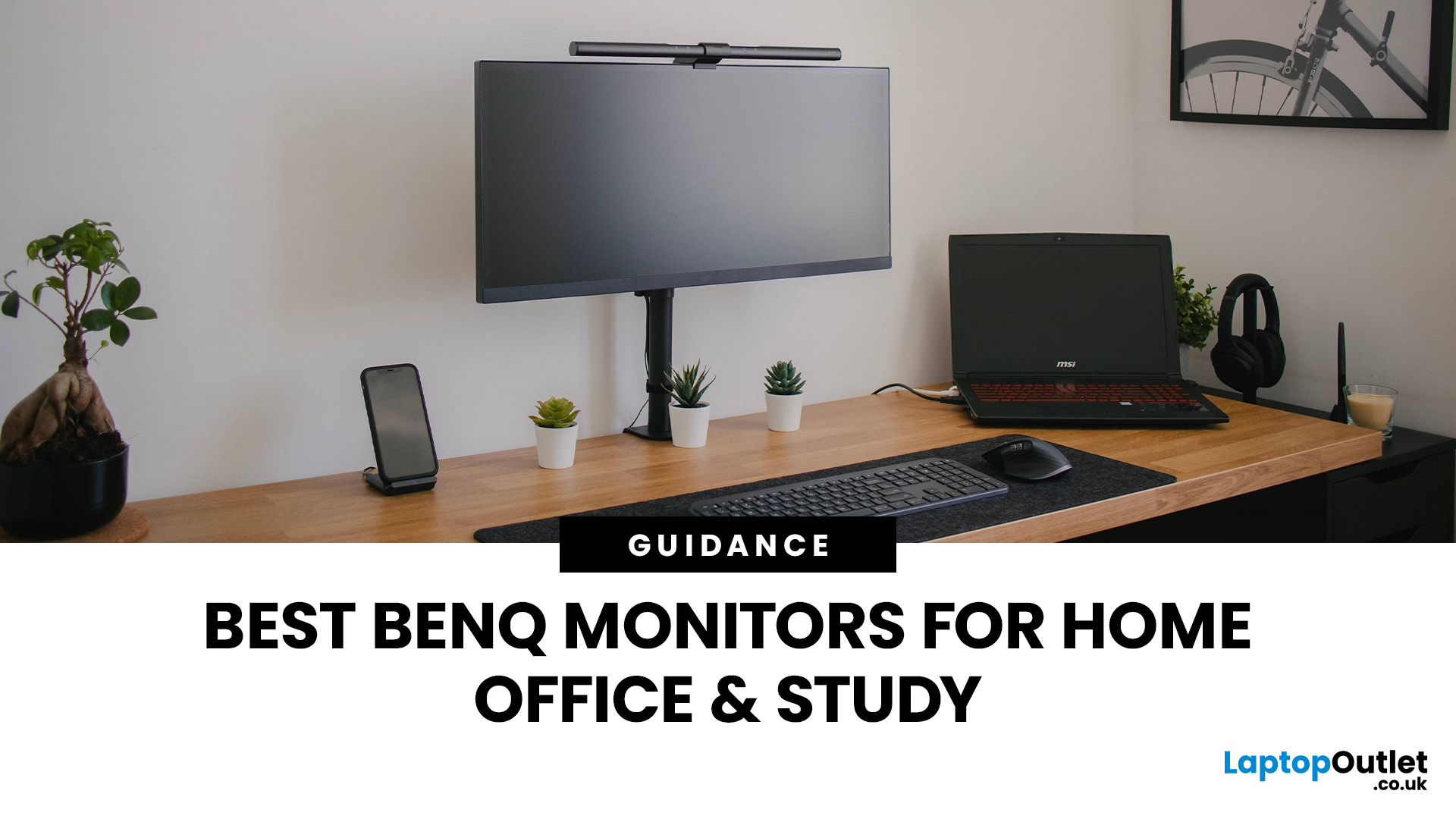
Creating a home workspace that actually makes you want to sit down and get things done starts with one key upgrade: your monitor. Whether you’re fully remote, juggling hybrid life, or deep into study mode, choosing the best BenQ monitor for home office use can seriously level up your focus, comfort and overall productivity.
Let’s be honest! Squinting at a tiny laptop screen for eight hours straight isn’t the vibe. You need space. You need clarity. You need something that doesn’t leave your eyes feeling fried by 4 pm. From compact Full HD screens that fit neatly on smaller desks to powerful 4K displays that handle heavy multitasking like a pro, there’s something for every type of workflow. So if you’re scrolling through BenQ monitors for home office and wondering which one deserves desk space, you’re in the right place.
What Makes a Good Home Office Monitor?
Not all monitors are created equal. A display designed for gaming or entertainment won’t always offer the same comfort and practical
Last Updated: April 14, 2026
If you’ve been shopping for a competitive gaming display, you’ve probably noticed that BenQ 240Hz gaming monitors are becoming the new standard for serious players. But with so many options available, the big question remains:
Is 240Hz worth it — or is 144Hz still enough?
In this guide, we’ll break down what ultra-high refresh rates change in gameplay, compare 144Hz vs 240Hz BenQ monitor performance, and help you decide whether a BenQ high refresh ZOWIE monitor or a BenQ MOBIUZ high refresh monitor is the right upgrade for you.
Quick Answer — Is 240Hz Worth it?
So, is 240Hz worth it?
For many gamers, the answer is:
- Yes, if you play competitive FPS titles and want the smoothest, fastest response possible
- Maybe, if you play a mix of casual and competitive games
- Not necessarily, if you mostly play single-player or cinematic titles
A jump from 144Hz to 240Hz delivers:
- Smoother motion
- Reduced input delay
- Clearer tracking in fast-paced shooters
That’s why high refresh BenQ gaming monitors are
Last Updated: April 14, 2026
When you spend hours each day working across spreadsheets, dashboards, documents, or lines of code, your monitor becomes more than just a screen. It becomes the centre of your workflow. The right display can make work feel smoother, reduce fatigue, and help you stay focused for longer.
That’s exactly where BenQ productivity monitors stand out. Designed with knowledge workers, developers, and multitaskers in mind, BenQ offers a range of displays built for modern professional demands. Whether you need pixel-perfect clarity, extra-wide space for multiple apps, or coding-specific features, there’s a BenQ option tailored to the way you work.
Why Productivity-Focused Monitors Matter for Knowledge Work
A standard office monitor can get the job done, but knowledge work has evolved. Today’s workflows often involve multiple applications running side by side, detailed content review, long hours of screen time, and constant context switching. That’s why choosing the right monitor is no longer just

