



Why Curved Monitors Are a Game-Changer?
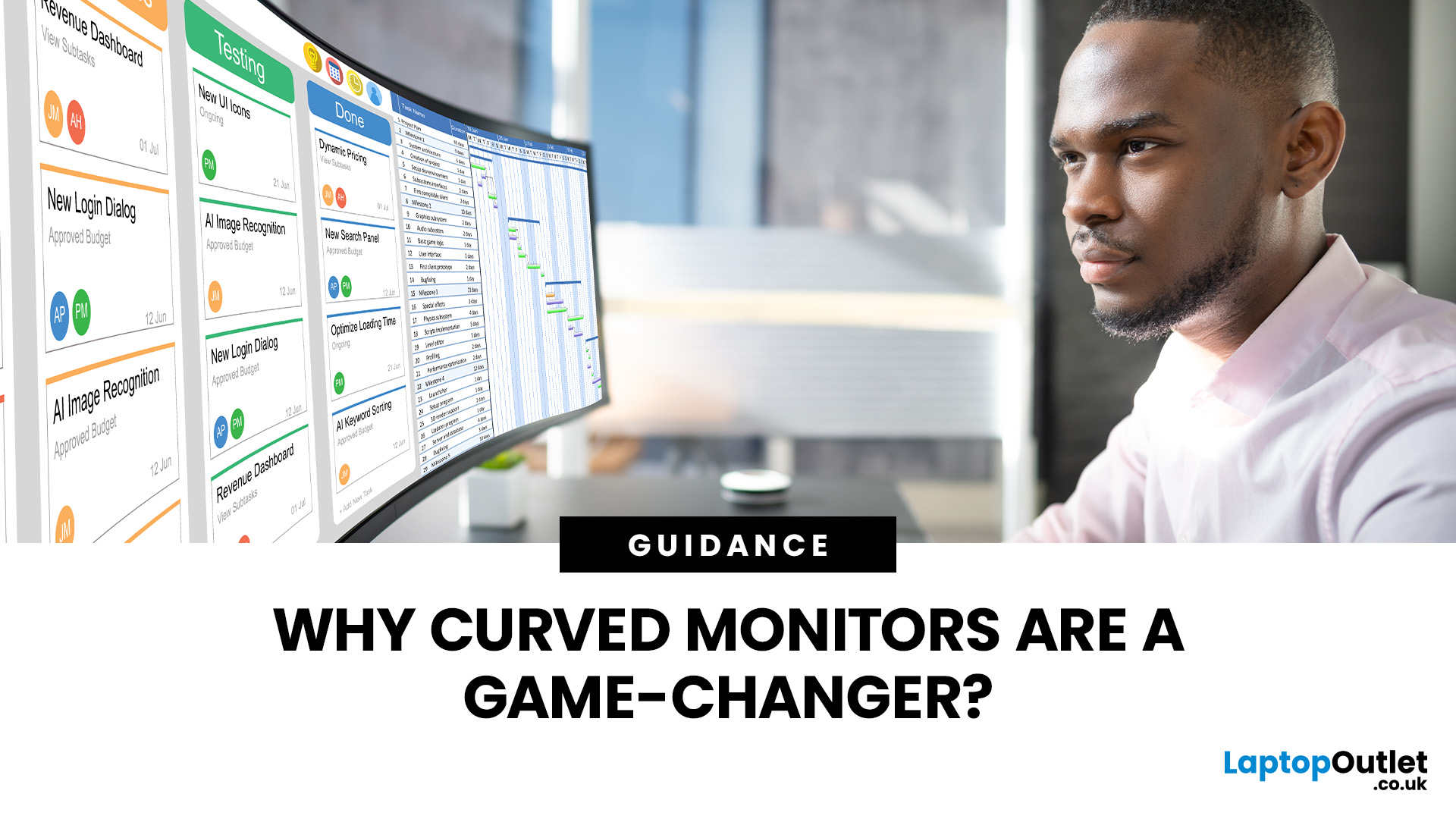
A bigger monitor gives you more room to work, watch and play, but wider flat screens can place their outer edges noticeably farther from your natural viewing position. Curved monitors address this by bringing those edges towards you, creating a more cohesive view across the screen.
That difference is useful far beyond gaming. From managing multiple work windows to editing timelines, watching films or creating a more immersive setup, the right curved monitor can make a large display feel easier and more engaging to use.
What Makes a Curved Monitor Different?
Curved computer displays change the relationship between your eyes and a wide screen. Instead of stretching straight across the desk, the edges angle gently towards your viewing position.
Monitor curvature is measured using figures such as 1000R, 1500R and 1800R. The number represents the radius of the curve in millimetres, with a lower number indicating a tighter, more pronounced curve.
|
Curvature |
How It Feels |
Often Suited To |
|
800R-1000R |
Deep, wraparound curve |
Large ultrawides, immersive entertainment, simulation and gaming |
|
1500R |
Noticeable but balanced curve |
Mixed work, entertainment and gaming |
|
1800R |
Gentler, more subtle curve |
Productivity, general home use and first-time curved-monitor users |
A deeper curve is not automatically better. A 1000R monitor can feel excellent on a large immersive screen, while a gentler 1500R or 1800R curve may feel more natural for everyday work. Screen size, viewing distance and desk depth should always be considered together.
Where Curved Monitors Make the Biggest Difference
The value of a curved screen becomes clearer as displays get larger and wider. Its main advantages come from viewing geometry, usable screen space and immersion.
Large Screens Can Feel More Natural to View
On large flat computer screens, the corners are physically farther from your eyes than the centre. Curvature brings those outer areas towards your normal seating position, making a wide desktop feel more cohesive.
This can be particularly helpful when scanning spreadsheets, dashboards, editing interfaces or several applications spread across one screen. It does not mean curved monitors prevent eye strain, but some users may find a properly positioned wide curved display more comfortable to navigate.
Ultrawide Multitasking Becomes More Practical
An ultrawide curved monitor can replace the need to constantly switch between windows or, in some cases, use separate monitors. A 21:9 display gives you room for documents, web pages, spreadsheets, timelines and communication tools side by side.
The curve matters because the far edges of that workspace remain directed towards you rather than extending farther away across the desk.
For professionals working with large spreadsheets, video timelines, code, research or multiple browser windows, this can make a curved monitor for work genuinely useful rather than simply visually different.
Entertainment Feels More Enveloping
Curvature can also improve the sense of immersion when watching films, streaming content or playing games. A wide display occupies more of your peripheral field of view, while the curve makes the image feel less like a flat rectangle sitting in front of you.
The effect becomes particularly noticeable with 21:9 screens and larger displays used from a central position.
Gaming Benefits from the Same Wide-Screen Advantages
Gaming remains an obvious use case, but it is one part of the wider picture. Racing, simulation, open-world and cinematic games can benefit from the screen extending naturally towards the player's peripheral vision.
A curved gaming monitor with a high refresh rate and Adaptive Sync can combine that immersion with smoother motion, but curvature itself does not improve frame rates or make someone a better player.
Modern Curved Displays Offer Much More Than Shape
Curved monitors in 2026 range from Full HD VA displays to high-refresh UWQHD screens and premium OLED models.
That makes it important to separate curvature from image quality. The curve determines how the screen is positioned around you, while resolution, panel technology, refresh rate, response time, HDR and colour performance determine how the image actually looks and moves.
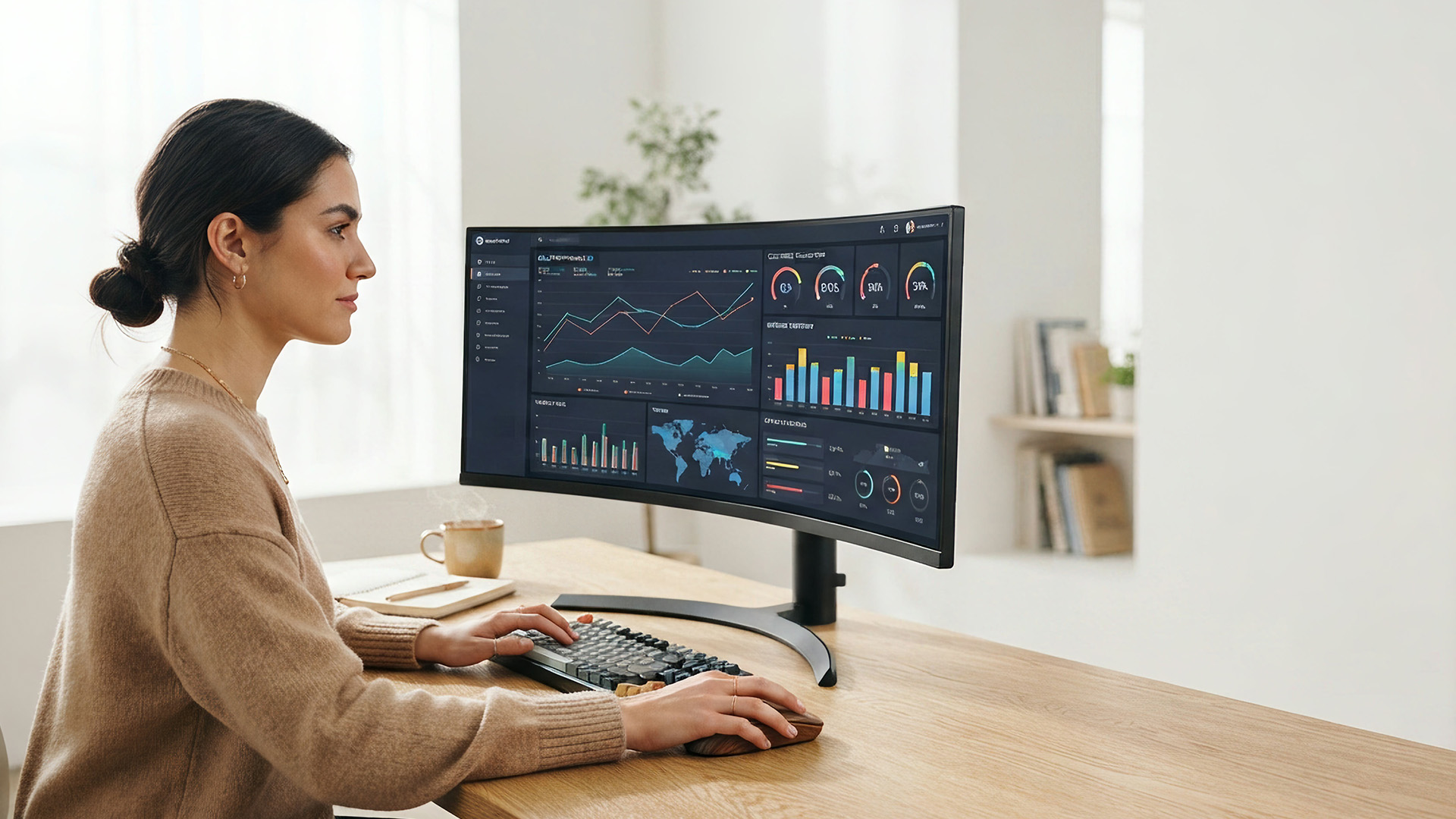
Who Benefits Most from a Curved Monitor?
Curvature is most useful when a display is wide enough to pull your attention towards its outer edges. Different users benefit for different practical reasons.
|
User |
How a Curved Monitor Can Help |
Useful Screen Format |
Features Worth Prioritising |
|
Office professionals |
Keeps multiple windows visible across one continuous workspace |
32-inch or 34-inch+ |
QHD/UWQHD resolution, ergonomic stand, USB-C |
|
Heavy multitaskers |
Makes large spreadsheets, dashboards and side-by-side apps easier to organise |
21:9 ultrawide |
High resolution, screen-splitting features, good connectivity |
|
Video editors and creators |
Provides more horizontal room for timelines, panels and previews |
34-inch+ ultrawide |
Resolution, colour performance, pixel density |
|
Home entertainment users |
Creates a more encompassing central viewing experience |
32-inch+ or 21:9 |
Strong contrast, HDR, OLED or VA panel |
|
Gamers |
Brings the edges of wider game worlds towards peripheral vision |
27-inch+ or ultrawide |
High refresh rate, fast response time, Adaptive Sync |
|
Racing and simulation users |
Helps scenery and interfaces feel more naturally positioned around the viewer |
34-inch+ ultrawide |
Deeper curvature, wide aspect ratio, high refresh rate |
|
General home users |
Combines everyday computing, media and occasional gaming on one screen |
27-inch to 32-inch |
Balanced resolution, moderate curve and useful ports |
Curvature can still be used on a smaller 24-inch or 27-inch monitor, but the practical difference tends to become more noticeable as the display grows wider.
What to Look for When Buying a Curved Monitor
A curved monitor should be judged as a complete display, not by curvature alone. Screen size, resolution, panel type, connectivity and ergonomics all shape everyday usability.
Screen Size and Aspect Ratio
Start with how much physical screen space you actually need.
A 16:9 aspect ratio works well for standard office tasks, general entertainment and gaming. A 21:9 ultrawide provides substantially more horizontal space, making it useful for multitasking, timelines and immersive media.
Larger is not always better. Make sure your desk provides enough width and depth to position the monitor comfortably.
Curvature Rating
Curvature should complement the size of the screen.
A 1500R monitor provides a noticeable curve without feeling extremely pronounced, which makes it versatile for mixed use. Tighter 1000R and 800R curves create a stronger wraparound effect and are particularly effective on large ultrawide displays.
Resolution and Pixel Density
Do not judge resolution without considering screen size.
Full HD can work well on compact screens, while QHD or WQHD offers additional detail on larger 16:9 displays. For a 34-inch ultrawide, 3440 x 1440 UWQHD provides more horizontal workspace while maintaining useful image sharpness.
Higher resolution is especially valuable when reading text, editing content or keeping several applications open simultaneously.
Panel Technology
Different panel types suit different priorities.
VA monitors are common among curved displays and typically provide strong contrast. OLED monitors offer deep blacks, excellent contrast and exceptionally fast pixel response.
IPS panels remain popular for colour consistency and wide viewing angles, particularly in productivity and creative environments, although curved IPS models are less common than VA alternatives.
Refresh Rate and Response Time
High refresh rates are most relevant to gaming, but smoother desktop motion can also make scrolling and general navigation feel more fluid.
A 180Hz or 240Hz display is valuable if your PC can produce high frame rates. For general office use, however, resolution, connectivity and ergonomics may be more important than chasing the highest refresh rate available.
Connectivity and Ergonomics
Check whether the monitor has the ports your setup needs, including HDMI, DisplayPort, USB-C, USB hubs and audio connectivity.
Height adjustment, tilt, swivel and VESA mounting are equally important. A well-specified screen can still be inconvenient if its stand cannot position it comfortably.
Budget-conscious buyers can also consider pre-owned curved monitors, provided the screen condition, panel performance, ports, stand adjustment and warranty are checked before purchase.
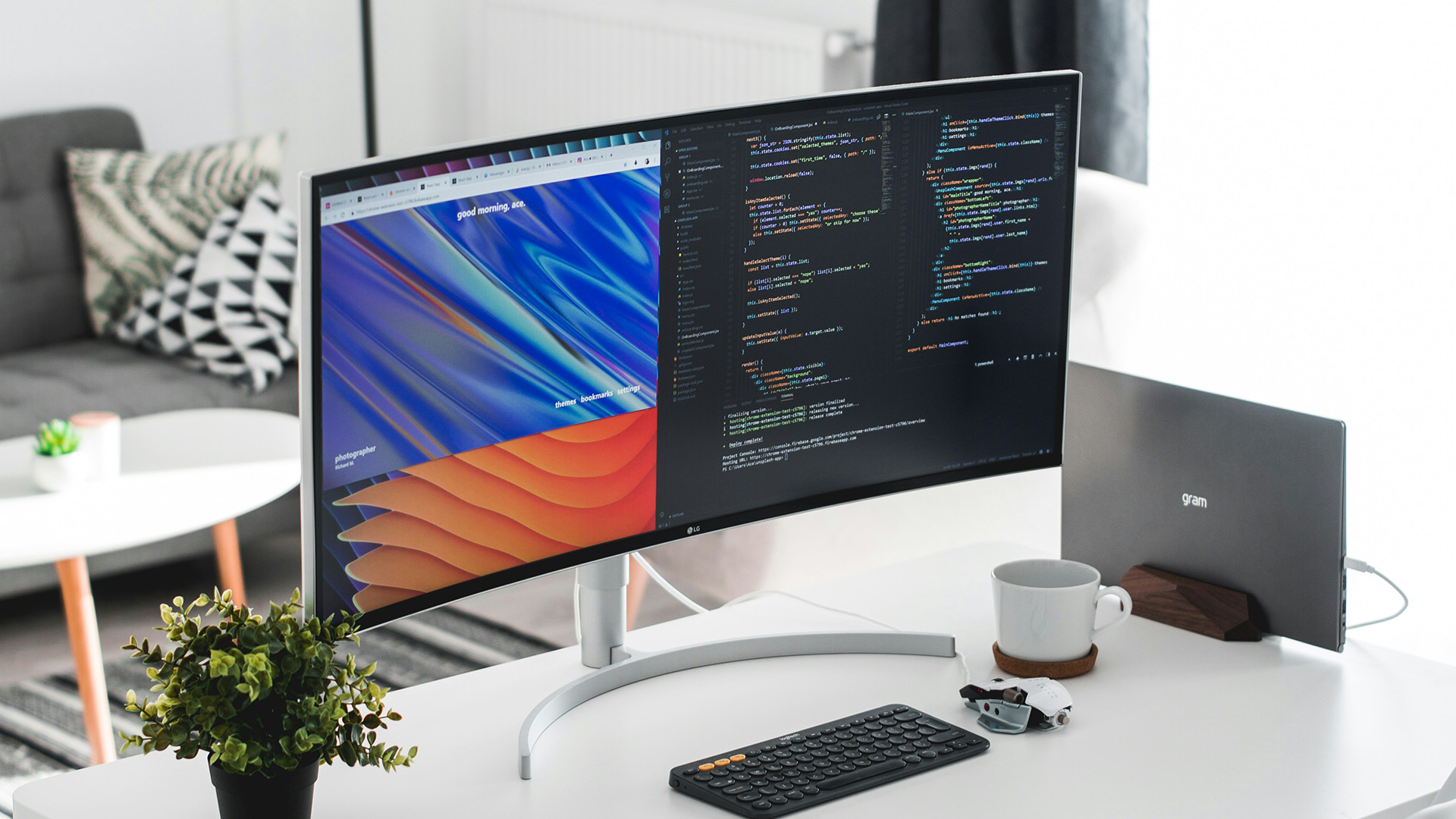
Top 6 Curved Monitors for Different Setups
The range below includes compact options for everyday use as well as larger curved displays for immersive gaming, multitasking and entertainment.
1. AOC G4 C24G42E
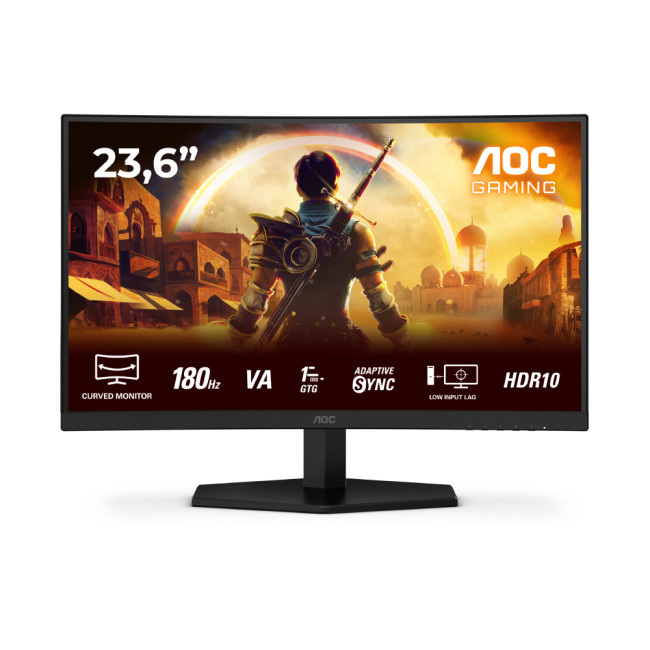
- Screen size: 23.6 inches
- Resolution: 1920 x 1080 Full HD
- Curvature: 1500R
- Panel: VA
- Refresh rate: 180Hz
The AOC G4 C24G42E is a compact way to introduce curvature to a smaller desktop. Its 23.6-inch Full HD screen works for everyday computing, streaming and general home use without demanding much desk space. The 180Hz refresh rate gives it additional appeal for gaming, while the 1500R curve provides a subtle introduction to curved displays.
2. Philips Evnia 5000 27M2C5201L
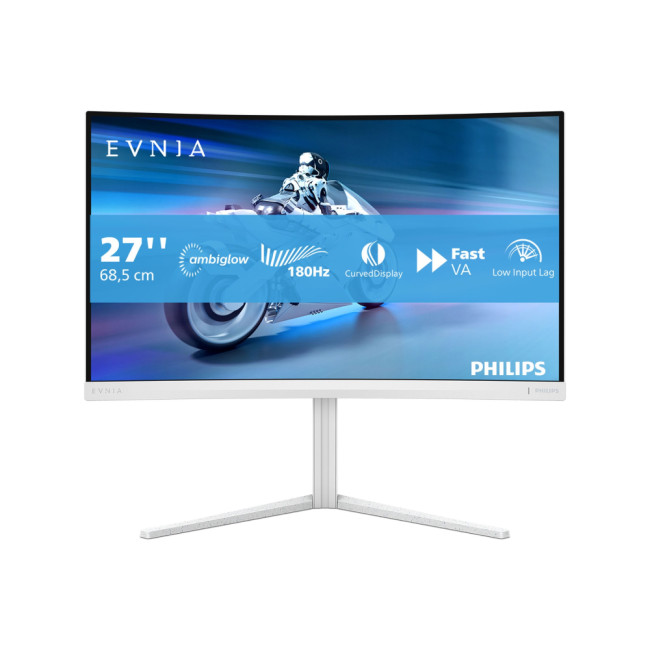
- Screen size: 27 inches
- Resolution: 1920 x 1080 Full HD
- Curvature: 1500R
- Panel: Fast VA
- Refresh rate: 180Hz
The Philips Evnia 5000 offers a larger 27-inch workspace while remaining manageable for a typical home desk. Its VA panel suits films and general entertainment thanks to strong contrast, while the 1500R curve creates a more involving central viewing experience. A 180Hz refresh rate also makes it suitable for users who mix everyday tasks with fast-paced gaming.
3. MSI MAG 321CQF E18
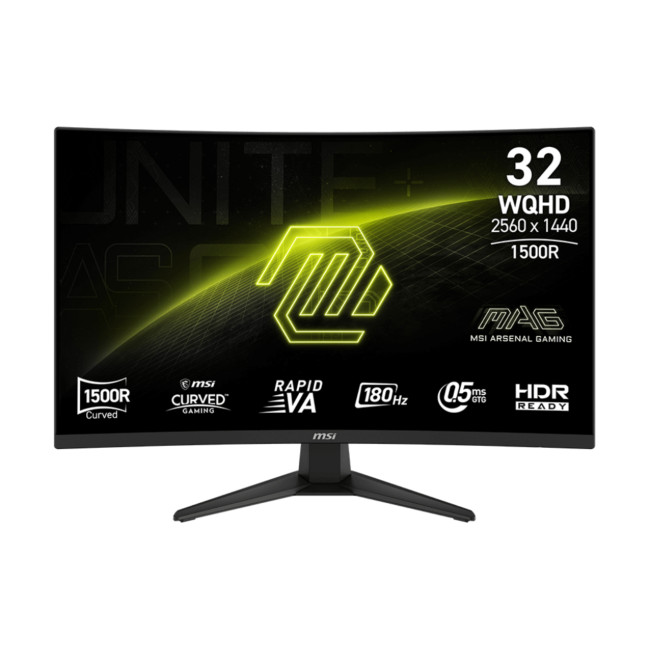
- Screen size: 31.5 inches
- Resolution: 2560 x 1440 WQHD
- Curvature: 1500R
- Panel: Rapid VA
- Refresh rate: 180Hz
The MSI MAG 321CQF E18 gives users a spacious 31.5-inch screen without moving into an ultrawide format. WQHD resolution provides more room and detail for documents, browser windows and media than Full HD, while the 1500R curve keeps the wider panel directed towards the user. Its 180Hz capability also makes it a versatile mixed-use option.
4. AOC G4 CU34G4Z
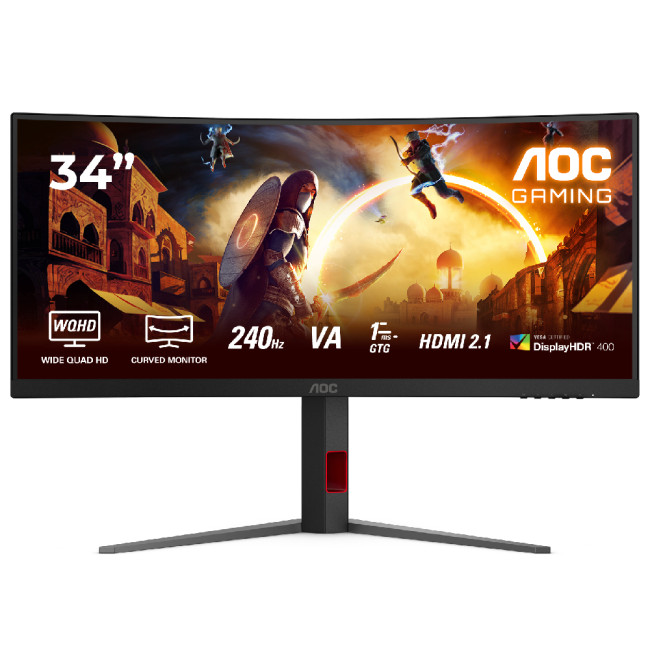
- Screen size: 34 inches
- Resolution: 3440 x 1440 UWQHD
- Curvature: 1500R
- Panel: Fast VA
- Refresh rate: 240Hz
The AOC G4 CU34G4Z makes a strong case for curvature beyond gaming. Its 34-inch 21:9 screen provides valuable room for spreadsheets, editing timelines and side-by-side applications, while the 1500R curve keeps the wide workspace focused towards the viewer. UWQHD resolution supports productive multitasking, with 240Hz performance available when gaming is also a priority.
5. LG UltraGear 39GX90SA-W
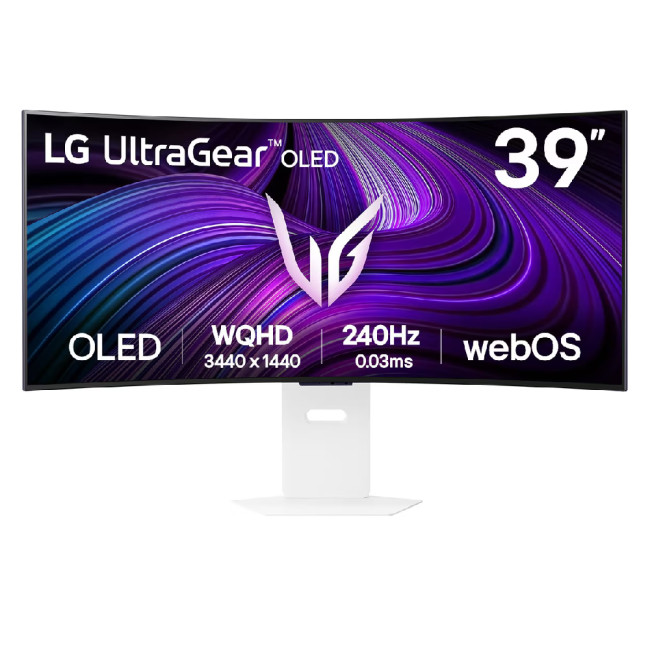
- Screen size: 39 inches
- Resolution: 3440 x 1440
- Curvature: 800R
- Panel: OLED
- Refresh rate: 240Hz
The LG UltraGear 39GX90SA-W combines a large 21:9 workspace with the contrast and response advantages of OLED. Its 39-inch screen can accommodate multiple applications, creative tools or entertainment on one continuous display. The deeper 800R curve creates a strong central viewing experience, while the 240Hz refresh rate adds substantial performance for users who also enjoy gaming.
6. LG UltraGear 45GX90SA-B
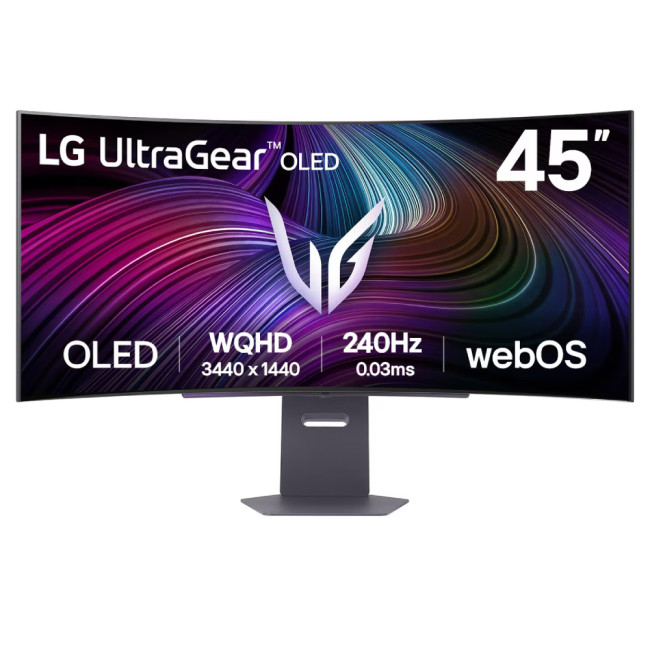
- Screen size: 45 inches
- Resolution: 3440 x 1440
- Curvature: 800R
- Panel: OLED
- Refresh rate: 240Hz
The LG UltraGear 45GX90SA-B is designed for users who want an exceptionally large and immersive desktop. Its 45-inch ultrawide OLED panel provides generous space for media, timelines and multiple windows, while the 800R curve brings the expansive screen towards a central viewing position. It also offers 240Hz performance for high-end gaming, provided your desk can accommodate its size.
Curved vs Flat Monitor: Which Is Better?
By this point, the choice becomes less about novelty and more about fit. Curved and flat monitors each make sense in different desk layouts and workflows.
|
Factor |
Curved Monitor |
Flat Monitor |
|
Usually Better For |
Large-screen viewing |
Brings outer edges towards the viewer |
|
Edges remain on one flat plane |
Curved on wider screens |
Ultrawide productivity |
|
Helps the full desktop feel more cohesive |
Outer windows can feel farther away |
Curved |
|
Multi-monitor setups |
Multiple curves can be harder to align |
Straight edges fit together easily |
|
Flat |
Shared viewing |
Strongest from a central position |
|
More flexible from different angles |
Flat |
Gaming and simulation |
|
Creates greater peripheral immersion |
More conventional presentation |
Curved for large immersive setups |
|
Precision layout work |
May require some visual adjustment |
Straight geometry feels familiar |
|
Flat for technical drawing |
Films and entertainment |
More enveloping for one central viewer |
|
Familiar for several viewers |
Depends on seating |
Desk requirements |
|
Large models can extend farther forward |
Often simpler on shallow desks |
Flat for limited space |
A curved screen becomes increasingly convincing as display width grows. A flat monitor still makes excellent sense for smaller desks, multi-screen arrangements and situations where several people regularly view the display.
What Are the Trade-Offs of Curved Monitors?
Curved monitors solve genuine wide-screen viewing problems, but they also introduce compromises. Understanding those limitations helps you avoid buying a display that fights your workspace.
- Central seating matters: Curvature works best when you sit reasonably close to the centre. Its benefits become less obvious when viewed far off-axis.
- Large models need room: A 34-inch, 39-inch or 45-inch curved display can occupy substantial desk width and depth.
- Multi-monitor layouts can be less convenient: Several curved panels are harder to align naturally than flat monitors.
- Some professional tasks still favour flat screens: Technical drawing, architectural work and other geometry-heavy tasks may feel more familiar on a conventional flat surface.
- Resolution still matters: A bigger curved screen will not look sharper simply because it is larger.
- The curve cannot compensate for weak specifications: Panel quality, ergonomics, connectivity and resolution remain more important than the shape alone.
The aim is not to buy the deepest curve available. It is to choose a display whose shape, size and specifications genuinely match how you work, watch or play.

Are Curved Monitors Worth It in 2026?
Curved monitors are worth considering when screen width makes a flat display less natural to use. Their benefits extend well beyond gaming, from managing large spreadsheets and creative timelines to enjoying films on an ultrawide screen.
The biggest gains usually appear on larger displays where the curve brings distant edges towards your viewing position. Before buying, consider screen size, resolution, curvature, panel technology, connectivity and desk space together. When those factors match your needs, a curved monitor can be a genuinely practical upgrade rather than just a visual one.

In Case You Were Wondering...
Are curved monitors worth it?
Yes, curved monitors are worth it when you use larger or ultrawide screens for multitasking, entertainment or gaming, where the curve can make viewing feel more natural.
Are curved monitors good for gaming?
Yes. Curved monitors can make gaming feel more immersive by bringing the screen edges closer to your peripheral vision, especially on larger ultrawide displays and simulators.
What does 1000R, 1500R or 1800R mean?
The number describes the monitor’s curvature radius in millimetres. A lower number means a tighter curve, so 1000R is deeper than 1500R or 1800R for desktop viewing.
What size curved monitor should i buy?
Choose size according to desk space, viewing distance and workload. Around 27 to 32 inches suits general use, while 34-inch ultrawides offer more room for multitasking and immersion.
Are curved monitors good for work?
Yes. Curved monitors can work well for productivity, especially larger ultrawide models that provide space for spreadsheets, editing timelines, browser windows and side-by-side applications on one screen.
| Read More: |
| Best Ultrawide and Curved Monitors for RTX 5080 and RTX 5070 Ti |
| Curved Monitor Backlight Bleed: Why It Happens and How to Test It |
| Are Curved 4K Gaming Monitors Worth It for Gaming? |
Related Articles

Last Updated: August 20, 2026
A monitor can shape how comfortably you work, create and play. Samsung's range covers practical Full HD screens, high-resolution ViewFinity displays, high-refresh Odyssey gaming models, curved formats and large ultrawide options. The specifications vary considerably, so the best choice depends on what you need the screen to do rather than the series name alone.
This guide compares current Samsung displays available at Laptop Outlet and explains how 4K, curved and ultrawide formats differ. It also covers the questions worth asking before you choose a model, including resolution, refresh rate, panel type, connectivity and desk space.
Best Samsung Monitors You Can Consider in 2026
| If You are searching for… | Our recommendation | Key specifications | Why it fits |
| Best Samsung 4K monitor | Samsung Odyssey G70D 27-inch | 4K UHD, IPS, 144Hz, 1ms, DisplayHDR 400 | Combines sharp detail with a high refresh rate for gaming, entertainment and mixed use |
| Best Samsung OLED gaming monitor | Samsung Odyssey G61SD 27-inch |
Last Updated: August 12, 2026
Picking a monitor for an RTX 50 Series GPU isn’t just about chasing the highest refresh rate, it’s about getting the right vibe for your setup. Think resolution, panel type and aspect ratio that actually match how you game, how powerful your RTX 5080 or RTX 5070 Ti is, and how much space you’ve got on your desk.
If you’re on an RTX 5080, a massive 49-inch 5120 × 1440 ultrawide hits different for immersive racing, sim and open-world gameplay. The RTX 5070 Ti feels right at home on a 34-inch 3440 × 1440 ultrawide, while a compact QHD curved monitor is perfect if you want smooth, high-refresh gaming on a budget.
Quick Comparison
| Best For | Monitor | Screen and Resolution | Refresh Rate | Panel | Main Strength | Consider Before Buying |
| RTX 5080 | Philips Evnia 49M2C8900 | 48.9-inch, 5120 × 1440, 32:9 | 240Hz | QD-OLED | Maximum immersion with OLED picture quality | Requires substantial desk space and strong GPU performance |
| RTX 5070 Ti | AOC G4 CU34G4Z | 34-inch, 3440 × 1440, 21:9 | 240Hz | Fast VA | Strong balance of speed, |
Last Updated: April 28, 2026
If you're choosing between a curved vs flat LG UltraWide monitor, the decision is more nuanced than it first appears. The right choice depends on what you do, how long you sit at your desk, and the kind of experience you want from your screen.
This guide breaks down every major use case side by side, with a clear verdict for each one, so you can make the right call before you spend your money.
What Makes LG UltraWide Monitors Different?
LG UltraWide monitors use a 21:9 aspect ratio, giving you roughly a third more horizontal screen space than a standard 16:9 display. That extra width is what makes the curved vs flat debate so relevant on these screens specifically.
On standard 26 to 28-inch monitors, the curve debate is largely down to personal preference. But once you hit 34 inches and beyond, the physics of how your eyes scan left-to-right starts to matter. On ultrawide displays of 34 inches or larger, the curvature brings the edges of the screen closer to you, covering more of your
Last Updated: August 28, 2026
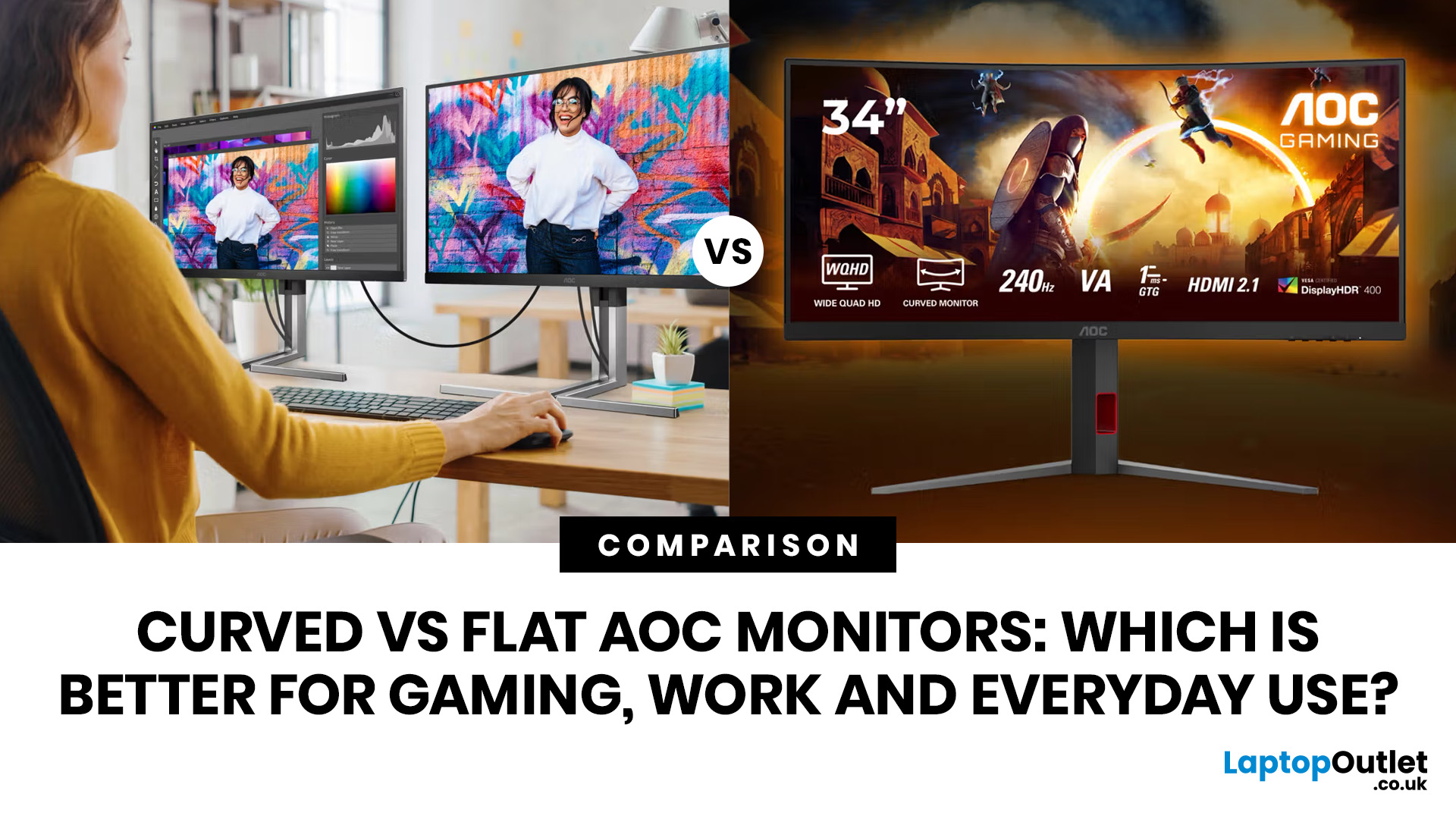
If you are comparing curved vs flat AOC monitors, the right choice depends less on trends and more on how you actually use your screen every day.
For gaming and entertainment, a curved display often feels more immersive, especially in racing games, open-world titles and films. For work, study and general day-to-day use, a flat screen is usually the more practical option because it is easier to position, easier to pair in dual-screen setups and often better suited to documents, spreadsheets and precision-focused tasks.
So, are curved monitors better? Not always. A curved model can be a great upgrade for the right person, but flat screens still make more sense for many buyers.
Here is the simplest way to think about it:
| Use case | Usually the better choice | Why |
| Immersive gaming | Curved | Feels more engaging and cinematic |
| Esports and fast competitive play | Depends | Refresh rate matters more than screen shape |
| Office work and spreadsheets | Flat | Cleaner lines, easier multi-window working |
| Study and everyday |
Last Updated: July 16, 2026
Last Updated: August 11, 2026
Last Updated: September 03, 2026
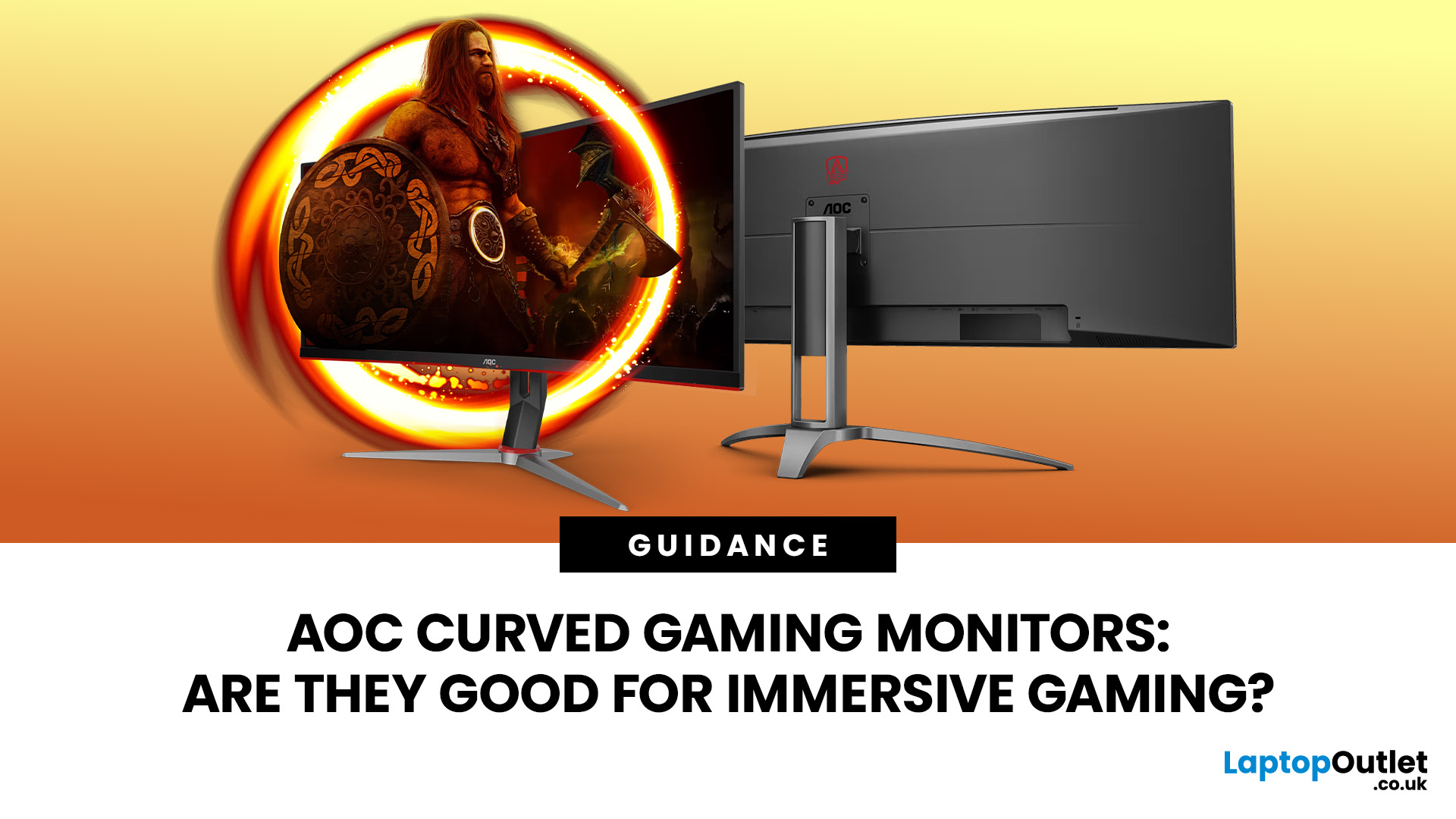
An AOC curved gaming monitor can be a strong choice for immersive gaming, especially if you play racing, simulation, RPG, open-world or cinematic single-player games. The curved screen helps draw more of the display into your natural field of view, which can make gameplay feel more engaging on larger panels. For many PC gamers, the sweet spot is a 27-inch or 32-inch high-resolution QHD monitors. For maximum immersion, an AOC 34 curved gaming monitor or another ultrawide curved gaming monitor can offer a wider, more cinematic view.
Are AOC Curved Gaming Monitors Good for Immersive Gaming?
Yes, AOC curved gaming monitors can be good for immersive gaming, but the experience depends on three things:
- Screen size
- Resolution
- Refresh rate
A curved display is most effective when the screen is large enough for the curve to matter. On a 24-inch screen, the curve may feel subtle. On a 32-inch or 34-inch screen, it becomes much more noticeable because the edges of the panel sit further into your peripheral
Published: August 19, 2026
Comparing LCD vs LED monitors? An LED monitor is an LCD that uses energy-efficient LED backlighting, while older LCDs typically use fluorescent CCFL lights.
LED-backlit models are generally slimmer, more efficient and more widely available. However, the LED label alone does not guarantee better colours, smoother gaming or greater eye comfort. Panel type, refresh rate, response time, resolution and brightness all matter too.
LCD vs LED Monitors at a Glance
The main difference between a traditional LCD monitor and an LED monitor is the backlight. A traditional LCD commonly uses CCFL tubes, while an LED monitor uses smaller light-emitting
Last Updated: August 19, 2026
IPS panels are usually the better choice for competitive gaming, wider viewing angles and mixed gaming and creative work. VA panels generally deliver deeper blacks and stronger contrast, making them attractive for immersive games in darker rooms. However, the IPS vs VA panel decision should also consider the monitor’s exact response time, refresh rate, resolution, adaptive sync, and measured performance. Read our complete guide to gaming monitor panels for a full breakdown of IPS vs VA and other display technologies.
IPS vs VA Panels: Quick Comparison
| Feature | IPS Panel | VA Panel |
| Native contrast | Usually lower | Usually higher |
| Black depth | Blacks can appear grey in dark rooms | Deeper blacks in suitable conditions |
| Viewing angles | Wider and more consistent | Narrower, with more off-centre variation |
| Fast-motion clarity | Generally cleaner | Can show dark smearing |
| Colour consistency | Usually strong across the screen | Can change more when viewed off-centre |
| Colour accuracy | Depends on the individual monitor | Depends |
Published: August 24, 2026

