



Best Big Screen Laptops 2026: Powerful Picks for Work & Gaming
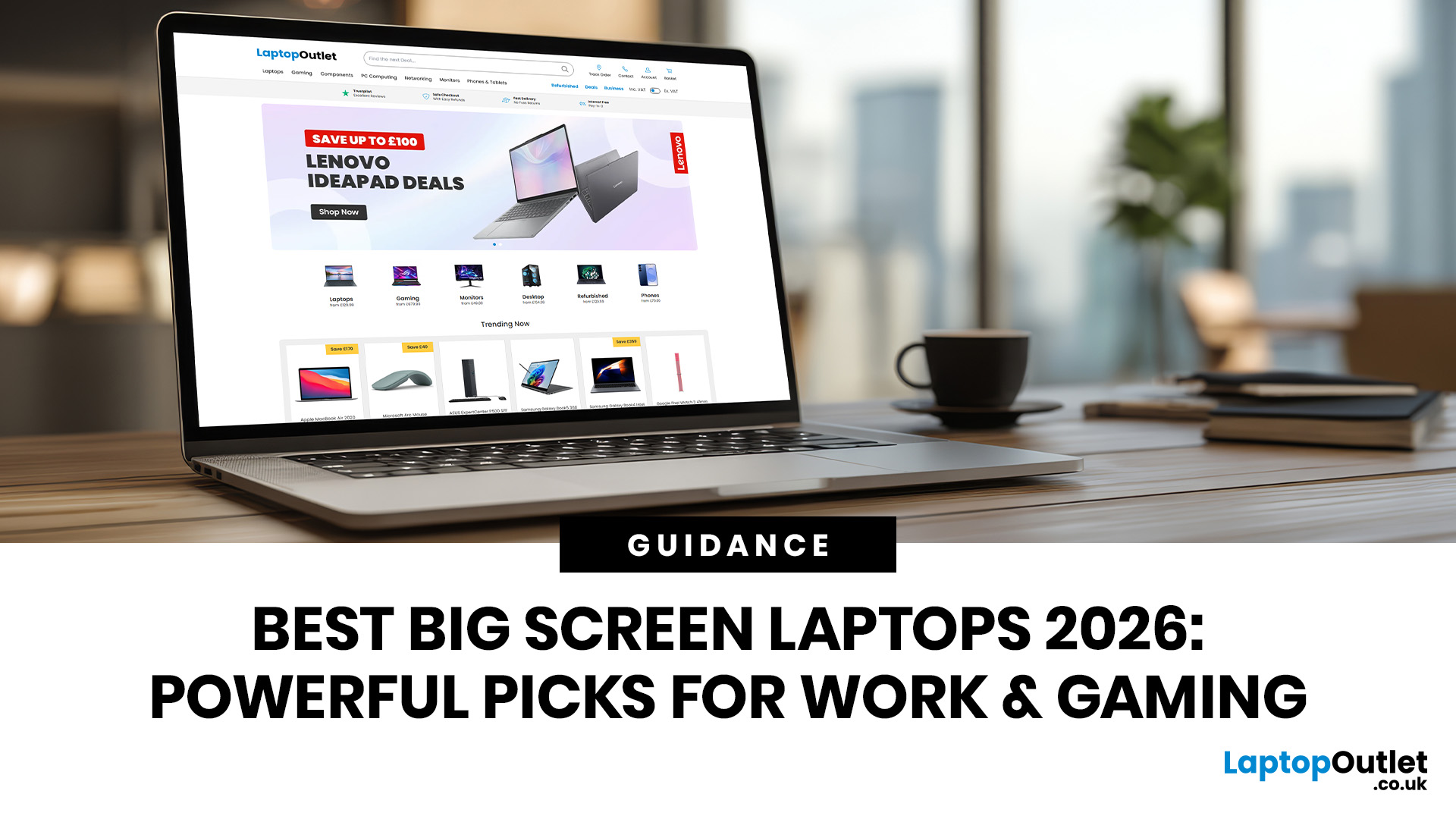
Big-screen laptops are becoming essential for UK buyers who want more workspace, stronger performance and immersive entertainment in one device. This 2026 guide compares 16-inch, 17-inch and larger laptops for work, gaming, study and creativity, helping you choose the right model for productivity, portability, battery life and long-term value today.
A larger display gives you more room for spreadsheets, timelines, browser tabs, creative apps, coding windows, and immersive games. Whether you are comparing laptops and notebooks, upgrading your work-from-home setup or searching for a capable gaming machine, large screen laptops now offer a much better balance of performance, display quality and portability than older bulky models.
Why Big Screen Laptops are More Popular Than Ever in 2026
Big-screen laptops are having a strong moment because people expect more from one device. A laptop is no longer used only for emails and web browsing. It may now need to handle video calls, AI meeting notes, large documents, streaming, gaming, editing, design work and multitasking across several apps. In 2026, several trends are pushing buyers towards larger displays:
- AI-enhanced productivity: Newer processors and software tools are designed to help with summarising, organising, image editing, coding and workflow automation.
- OLED and high-quality IPS panels: Colours, contrast and brightness have improved, making big screens better for both work and entertainment.
- High refresh rate screens: Smooth 120Hz, 144Hz, 165Hz and faster panels are increasingly common in gaming and creator laptops.
- Advanced cooling systems: Powerful big screen laptops can run high-performance CPUs and GPUs more effectively because larger chassis often allow better airflow.
- Hybrid work requirements: Many people want a laptop that can serve as both a mobile computer and a main workstation.
For shoppers who need general guidance before choosing a model, our laptop buying guide is a useful starting point.
16-Inch vs 17-Inch vs Larger Displays
Choosing between 16-inch laptops, 17-inch laptops and even larger displays depends on how often you move your machine and what you do with it.
|
LAPTOP CATEGORY |
BEST FOR |
MAIN ADVANTAGE |
CONSIDER BEFORE BUYING |
|
16-inch laptops |
Professionals, students, commuters, creators |
Strong balance of screen space and portability |
Smaller than 17-inch for gaming immersion |
|
17-inch laptops |
Remote workers, gamers, multitaskers |
More room for work, media and games |
Heavier and less bag-friendly |
|
18-inch laptops |
High-end gaming, workstation use |
Maximum mainstream laptop screen space |
Expensive and usually heavier |
|
2-in-1 large screen models |
Presenters, students, note-takers |
Flexible tablet and laptop modes |
Can be heavier in tablet use |
|
External or portable monitors |
Desk setups and travel productivity |
Adds a second screen when needed |
Requires extra carrying space |
Best Big Screen Laptops 2026 for Different Users
The best big screen laptops 2026 vary depending on your work, budget and portability needs. Instead of chasing only the biggest display, focus on the right combination of screen quality, processor, memory, storage, graphics, and battery life.
For Business Professionals
Business users should prioritise reliability, security, webcam quality, keyboard comfort and battery life. A 16-inch display is often the sweet spot because it gives extra space for presentations, reports and spreadsheets without becoming too heavy. Professionals who handle demanding workloads may want Intel Core Ultra, AMD Ryzen AI or similar modern processors with at least 16GB RAM.
For company buyers, consultants and office-based users, Laptop Outlet’s business laptops range is a sensible place to compare practical options.
For Remote Workers
Remote workers need a laptop that feels comfortable all day. A 17-inch model can be ideal if it mostly stays on a desk, especially when you want fewer accessories. Look for a bright anti-glare screen, a comfortable keyboard, strong Wi-Fi, clear microphones and enough ports for a mouse, headset or external webcam.
If you need a big screen to connect to laptop setups at home, choose a device with HDMI, USB-C DisplayPort or Thunderbolt support. That allows you to add a monitor for a true dual-screen workstation.
For Students
Students often need a balance of price, performance and portability. A 16-inch laptop can be large enough for essays, lectures, streaming and research while still fitting in a backpack. Look for solid battery life, durable build quality and at least 512GB SSD storage if you save lots of documents, media or coursework.
Computing, engineering and software students should also compare specifications against the best laptops for programming, especially if they use virtual machines, development environments or data-heavy tools.
For Content Creators
Creators should focus on display quality as much as size. A large OLED or high-resolution IPS screen can make editing photos, video and graphics more accurate and enjoyable. Look for strong colour coverage, a capable dedicated GPU, 16GB to 32GB RAM and fast SSD storage.
A laptop with big screen size can also reduce the need for a second display when editing on the move. For video timelines and design panels, 16-inch and 17-inch formats are both excellent choices. Anyone comparing creator-focused machines should also explore the best video editing laptops 2026 for more specialised advice.
For Gamers
Gamers should look for a powerful GPU, high refresh rate display, strong cooling and enough wattage to keep performance stable. A bigger chassis can help with thermals, which is why many performance gaming laptops use 16-inch, 17-inch gaming laptops, or 18-inch displays.
Best Gaming Laptop Big Screen Options
The best gaming laptop big screen options combine visual immersion with high frame rates. For competitive gaming, refresh rate matters as much as screen size. For cinematic single-player games, resolution, contrast and colour quality can be more important.
A good big-screen gaming laptop should include:
- A dedicated NVIDIA GeForce RTX or AMD Radeon GPU
- At least 16GB RAM
- A fast SSD, preferably 1TB for large game libraries
- A 144Hz or higher refresh rate display
- Efficient cooling with multiple fans or vapour chamber design
- A sturdy keyboard with good travel and responsive keys
Best Budget Big Screen Laptop Choices
The best budget big screen laptop is usually a practical 16-inch or 17-inch model with a modern processor, 8GB to 16GB RAM and SSD storage. You may not get premium OLED, a metal chassis or high-end graphics at lower prices, but you can still get a comfortable display for everyday use.
Budget buyers should prioritise:
- Full HD or better resolution
- 16GB RAM if possible
- SSD storage rather than older hard drives
- Decent keyboard and touchpad quality
- Good port selection
- Reliable battery life for daily tasks
For gaming or editing, avoid the cheapest models unless they include suitable dedicated graphics. Value-focused buyers can also consider refurbished gaming laptops, which may offer higher performance for less money when carefully chosen.
Best Lightweight Laptop with Big Screen Models
The best lightweight laptop with big screen appeal is often a slim 16-inch model. It gives you more display space than a 14-inch laptop while remaining easier to carry than most 17-inch machines.
Look for thin bezels, efficient processors, USB-C charging and lightweight materials such as aluminium or magnesium alloy. Battery life is especially important here because lightweight models may use smaller batteries to reduce weight.
Portability also depends on your accessories. A slim large-screen laptop should be paired with a protective sleeve, backpack or case. Laptop Outlet’s laptop bags and covers can help protect larger devices when commuting or travelling.
Large Screen Productivity Laptops for Work and Multitasking
Large screen productivity laptops are built for people who live in multiple windows. If you work with spreadsheets, CRM systems, dashboards, documents, browser tabs and communication apps, extra screen space can make your day feel easier.
The best large display laptops 2026 for productivity should include:
- A 16-inch or 17-inch screen with good brightness
- At least 16GB RAM for smooth multitasking
- A current-generation Intel, AMD or Apple processor
- Comfortable keyboard layout, ideally with a number pad on 17-inch models
- Strong webcam and microphones for meetings
- HDMI, USB-C or Thunderbolt for external displays
- Quiet cooling for office environments
Recommended Models for Professionals and Gamers
|
Model & product link |
Key specifications |
Main strengths |
Potential drawbacks |
Ideal for |
|
16-inch QHD+ 2560 x 1600 display, 300Hz refresh rate, Intel Core Ultra 9 275HX, 32GB RAM, 2TB SSD, NVIDIA RTX 5090, Wi-Fi 6E, Windows 11 Home. |
The strongest performance pick on the page. Excellent for high-end gaming, 3D work, AI-assisted creative workloads and demanding multitasking. The 300Hz display makes it a standout for competitive gaming. |
Premium price, 2.6kg weight and likely limited unplugged endurance under heavy gaming. It is overkill for everyday office use. |
Hardcore gamers, creators, developers, CAD users and buyers who want a desktop-replacement laptop. |
|
|
16-inch WQXGA 2560 x 1600 IPS display, AMD Ryzen AI 9 365, Copilot+ PC, 24GB RAM, 1TB SSD, NVIDIA RTX 5070 8GB, Wi-Fi 6E, Windows 11 Home. |
Strong 2026-ready option for AI-enhanced productivity, gaming and creative tasks. The 16-inch 16:10-style resolution gives more workspace than standard Full HD. |
Still expensive and weighs 2.44kg. Battery details are not specified, and it is best used plugged in for intensive gaming or rendering. |
Gamers, creators, students on performance courses, AI productivity users and hybrid workers who want power plus a premium display. |
|
|
17.3-inch Full HD IPS display, 165Hz refresh rate, Intel Core i7-13650HX, 24GB RAM, 1TB SSD, NVIDIA RTX 5050 8GB, Windows 11 Home. |
Best fit for the “17-inch big screen gaming laptop” angle. Large display, fast refresh rate, strong RAM and 1TB storage make it good for gaming and multitasking. |
Heavier at 2.9kg, and the display is Full HD rather than QHD/OLED. Less suitable for daily commuting. |
Gamers, remote workers wanting a desktop-style screen, students who game, and home users who prioritise display size. |
|
|
15.6-inch Full HD IPS display, 144Hz refresh rate, Intel Core i5-13450HX, 16GB RAM, 1TB SSD, NVIDIA RTX 5050 8GB, Windows 11 Home. |
Good value gaming alternative with dedicated RTX graphics, fast refresh rate and generous SSD storage. Useful for the “budget gaming laptop” section. |
Not a true big-screen laptop compared with 16-inch or 17-inch models. At 2.4kg, it is also not especially lightweight for a 15.6-inch machine. |
Budget-conscious gamers, students, casual creators and buyers who want gaming power without jumping to a 17-inch chassis. |
|
|
15.6-inch Full HD LCD display, Intel Core i7-1355U, 16GB RAM, 512GB SSD, Intel Iris Xe graphics, USB-C, HDMI, card reader, Bluetooth 5.2, Windows 11 Home. |
Excellent for lightweight productivity. Full metal body, 1.55kg weight, good port selection and 16GB RAM make it practical for office, study and work-from-home use. |
Integrated graphics and 60Hz display limit gaming and high-end creative work. It is 15.6-inch, so position it as a “large everyday laptop”, not a 16/17-inch model. |
Remote workers, business users, students, everyday multitaskers and buyers wanting a slim large-display laptop. |
|
|
15.6-inch Full HD LED display, Intel Core i5-1335U, 8GB RAM, 512GB SSD, Intel Iris Xe graphics, HDMI, USB-C, microSD, Windows 11 Home. |
Slim, portable and good for everyday productivity. The 512GB SSD is useful at this price level, and the 1.57kg weight supports the “lightweight laptop with big screen” angle. |
8GB RAM is less future-proof than 16GB, and integrated graphics are not ideal for gaming, rendering or heavy editing. |
Students, home workers, office users and buyers wanting a lightweight 15.6-inch productivity laptop. |
|
|
15.6-inch Full HD display, AMD Ryzen 3 7320U, 8GB RAM, 256GB SSD, AMD Radeon graphics, USB-C, HDMI, Wi-Fi, Bluetooth, Windows 11 Home. |
Strong budget pick for everyday use. Lightweight at 1.59kg, practical for students and remote workers, with a Full HD screen for documents, streaming and web browsing. |
Entry-level processor and 256GB SSD are limiting for heavier multitasking, gaming or creative workloads. |
Budget buyers, students, families, home-office users and everyday browsing/streaming. |
|
|
15.6-inch Full HD display, Intel N100 quad-core processor, 4GB RAM, 128GB SSD, Intel UHD graphics, USB-C, HDMI, Wi-Fi 6, Bluetooth 5.2, Windows 11 Home S. |
Very affordable entry-level option with a Full HD display, Wi-Fi 6 and a light 1.55kg build. Good for simple study, browsing and streaming. |
4GB RAM and 128GB SSD are restrictive. Not suitable for heavy multitasking, gaming, creative software or long-term power users. |
Basic home use, schoolwork, light browsing, email, streaming and first-laptop buyers. |

Final Thoughts
The best big screen laptops 2026 offer the perfect blend of performance, productivity and immersive viewing. Whether you need a large display for work, content creation, studying or gaming, choosing the right screen size and specifications can significantly improve your experience. For most users, 16-inch models provide the best balance of portability and workspace, while 17-inch options deliver a more desktop-like feel. Explore Laptop Outlet’s range of large-screen laptops today to find powerful, feature-rich models suited to work, study, creativity and gaming.

In Case You’re Wondering...
What are the best big screen laptops 2026 for most people?
For most buyers, the best big screen laptops 2026 are 16-inch models with modern processors, 16GB RAM, SSD storage and a bright display. They provide strong productivity benefits without becoming too heavy.
Is a 17-inch laptop too big for everyday use?
A 17-inch laptop is excellent for desk-based work, gaming and media, but it can feel large for daily commuting. Choose 17-inch if screen comfort matters more than maximum portability.
How big is my laptop screen?
Measure the visible display diagonally from one corner to the opposite corner. Do not include the bezel. You can also check your laptop’s model specifications online.
How to make big screen on laptop settings easier to read?
Increase display scaling, adjust resolution, enlarge browser zoom or use accessibility settings. To expand your workspace, connect a monitor, TV or portable display.
What is the laptop biggest screen size available in 2026?
For mainstream buyers, 18-inch is usually the largest practical laptop screen size. Anything around 20 inches is rare and generally less convenient than using an external display.
| Read More: |
| The 2026 RAM Crunch: Why AI Could Make Laptops More Expensive |
| Best Ultraportable and lightweight Lenovo Laptops in 2026 |
| Best Laptops for CAD & AutoCAD 2026 | High-Performance Picks |
Related Articles


Last Updated: July 03, 2026
For most developers, the best machine is not necessarily the most expensive one. It is the one that keeps up with your workflow, feels comfortable to use for hours at a time, and still makes sense a few years down the line.
That matters even more in 2026. Modern development work is heavier than it used to be. A typical day might include an IDE, a browser with far too many tabs open, Docker, a local database, Slack, video calls, design files, and maybe a virtual machine or AI-assisted tools running in the background. A laptop that feels fine on paper can start to struggle surprisingly quickly once real work begins.
This guide is designed for a UK audience looking for a dependable laptop for software development, whether you are a student, a junior developer, a freelancer, or a full-time engineer replacing an ageing machine. Given below are top 10 laptops for programming and coding 2026:
1. ASUS Zenbook 14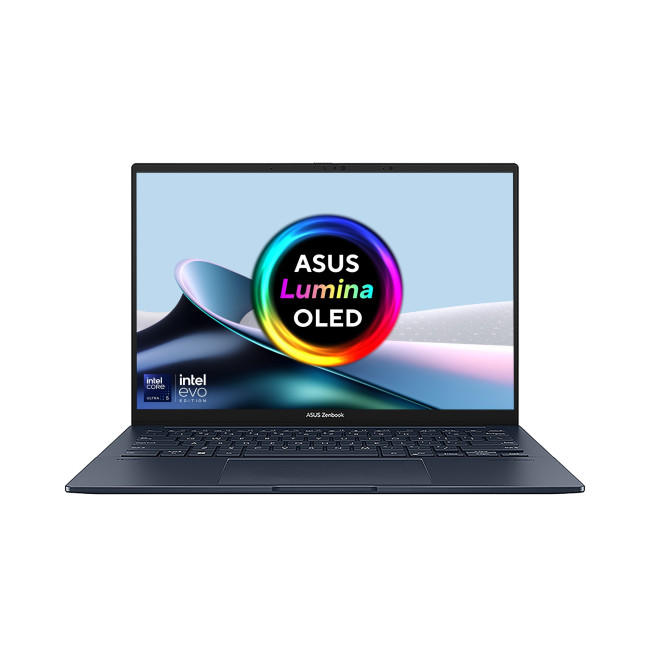
Technical Specs:
- Intel Core Ultra 5 225H 14-Core Processor
- AI Ready Laptop
Last Updated: September 24, 2026
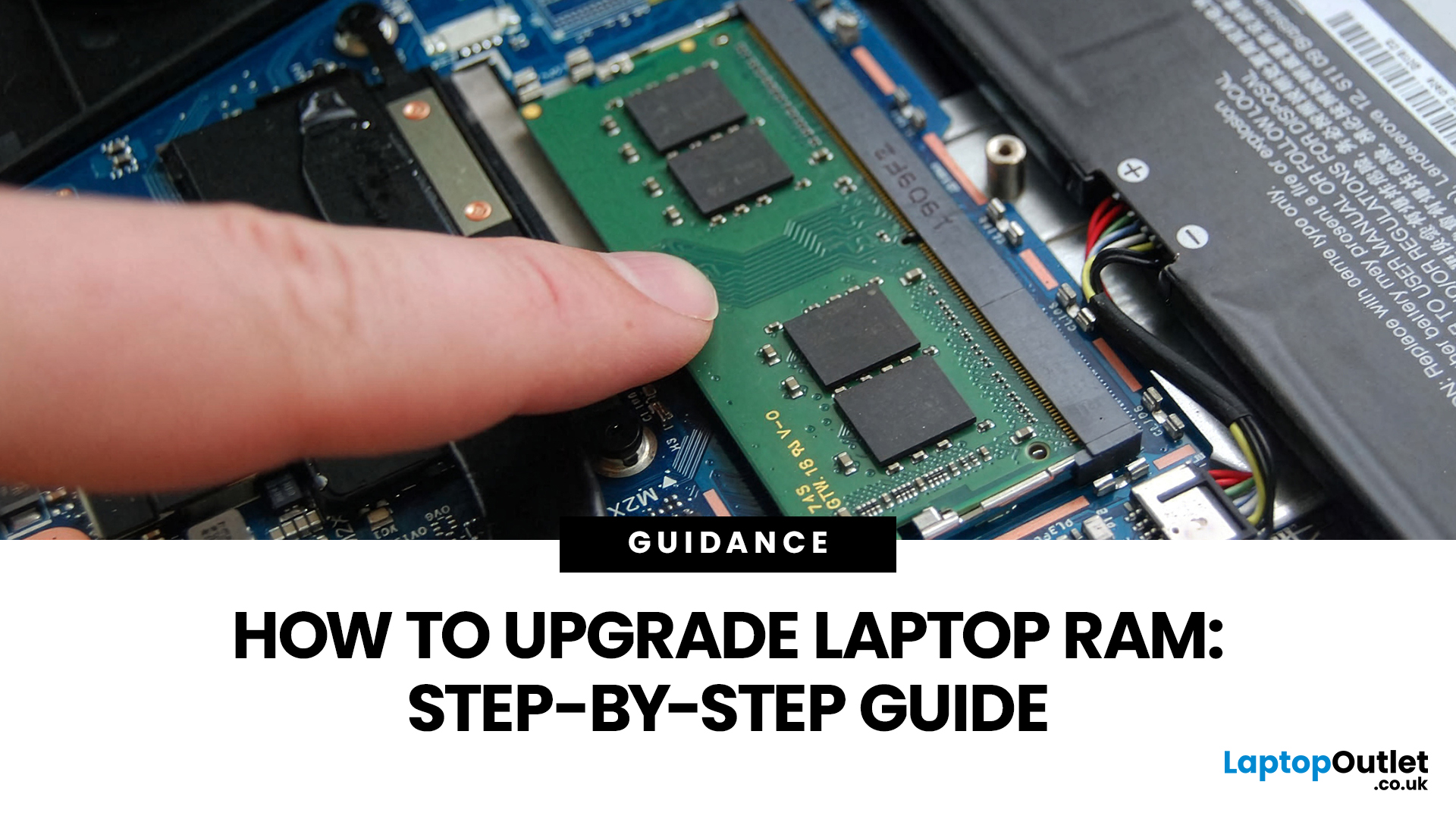
Upgrading laptop RAM is one of the simplest ways to make an older machine feel faster and more capable again, but only if the compatibility side is right from the start. That is the part many quick guides skip. Before buying anything, we always recommend checking whether the laptop has upgradeable memory, what RAM standard it uses, how much it supports, and whether upgrading means adding another module or replacing the existing setup.
To upgrade laptop RAM, first check whether your model has upgradeable SO-DIMM slots, the supported DDR generation, maximum capacity and current memory configuration. Buy compatible RAM, shut the laptop down, disconnect power, open the service panel, remove or add the module, then reassemble and boot up. Finally, confirm the new memory is recognised and test system performance for improved multitasking.
For UK shoppers, that matters because a RAM upgrade can be a much smarter option than replacing a laptop too early. If a system slows down with lots of browser
Last Updated: May 01, 2026
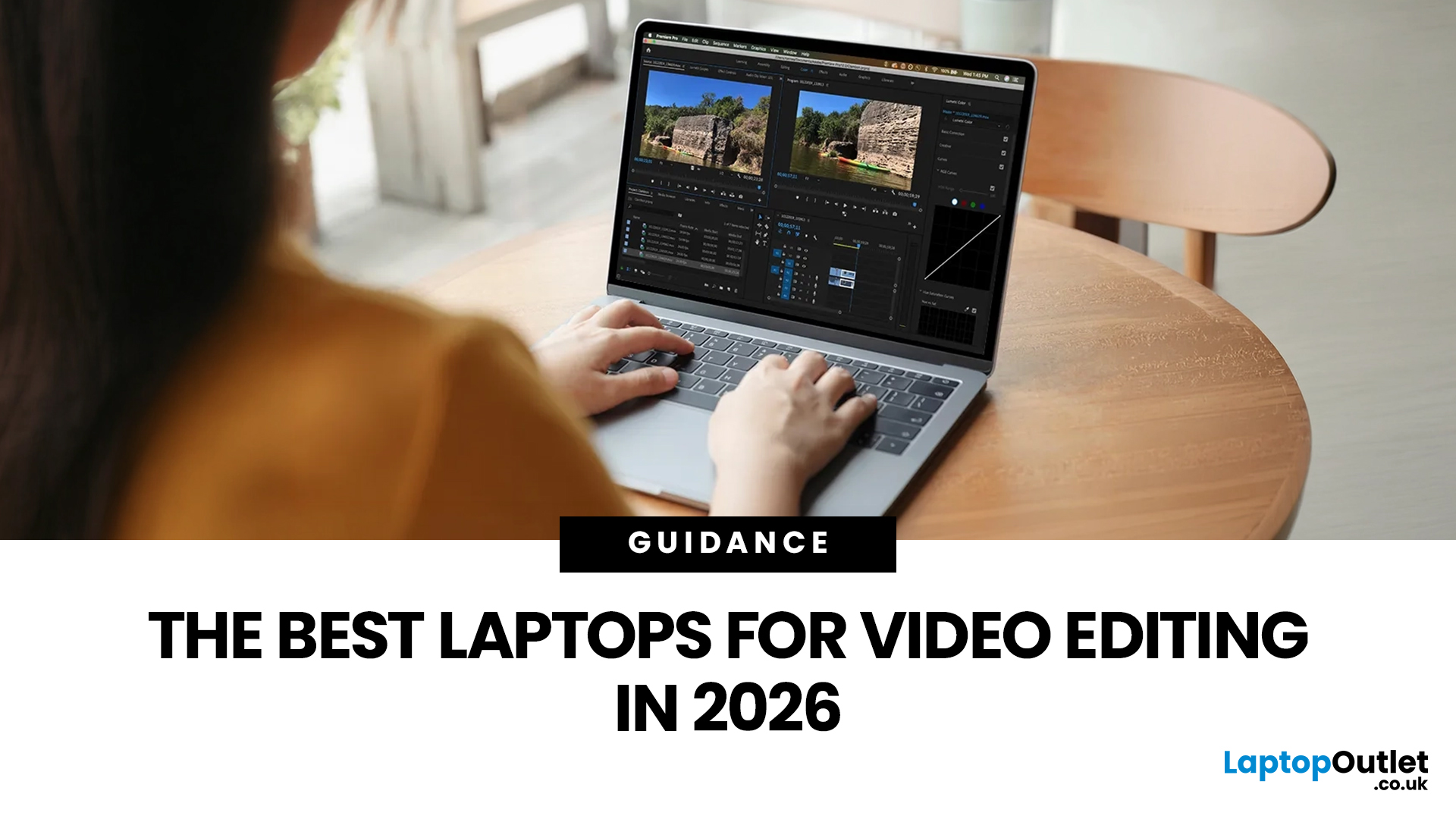
Video editing has become one of the most demanding everyday laptop workloads. Even relatively simple projects can involve high-resolution footage, multiple layers, colour work, motion graphics, audio cleanup, and export-heavy timelines. That means the best laptop for video editing is not just the one with the biggest headline spec. It is the one that fits the kind of editing you do, whether that is short-form social content, YouTube videos, client work, documentary edits, or more advanced professional production.
This guide includes mainstream creator laptops, premium ASUS ProArt models, mobile workstations, and a few higher-powered gaming machines that are relevant because video editing often benefits from the same strengths: strong sustained performance, capable graphics, fast storage, and displays built for visual work.
What Makes a Good Video Editing Laptop in 2026?
A good video editing laptop needs to do three things well:
- Handle demanding timelines smoothly,
- Stay responsive under
Last Updated: May 01, 2026
The computer that helped guide the Apollo missions worked with just 4 KB of RAM and around 72 KB of stored memory. Today, a modern laptop can burn through more than that just opening a few tabs.
That is how fast tech has moved and why an older laptop can suddenly feel frustratingly slow. Long boot times, laggy apps, and constant low-storage warnings can make even simple tasks feel harder than they should.
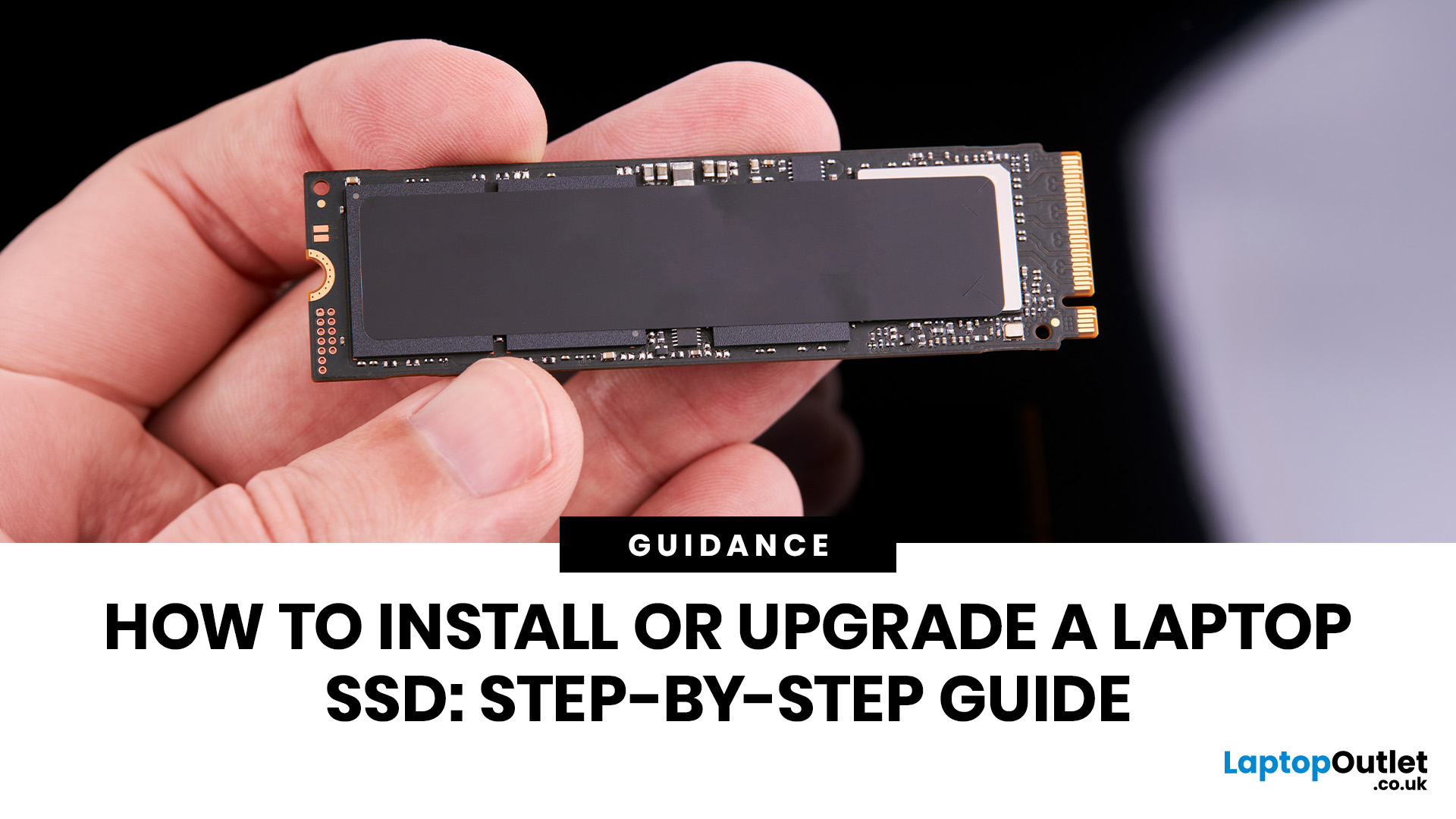
The good news is that you do not always need a brand-new machine. In many cases, upgrading your SSD is one of the easiest ways to make your laptop feel faster, smoother, and far more usable.
In this guide, we will show you how to upgrade a laptop SSD step by step, from checking compatibility to choosing the right drive and installing it properly.
Why upgrading your laptop SSD is worth it
Faster boot times, file transfers, and app loading
A slow laptop gets old fast. Long startup times, laggy apps, and endless waiting usually point to one thing: slow storage.
That is why how to upgrade
Last Updated: July 09, 2026
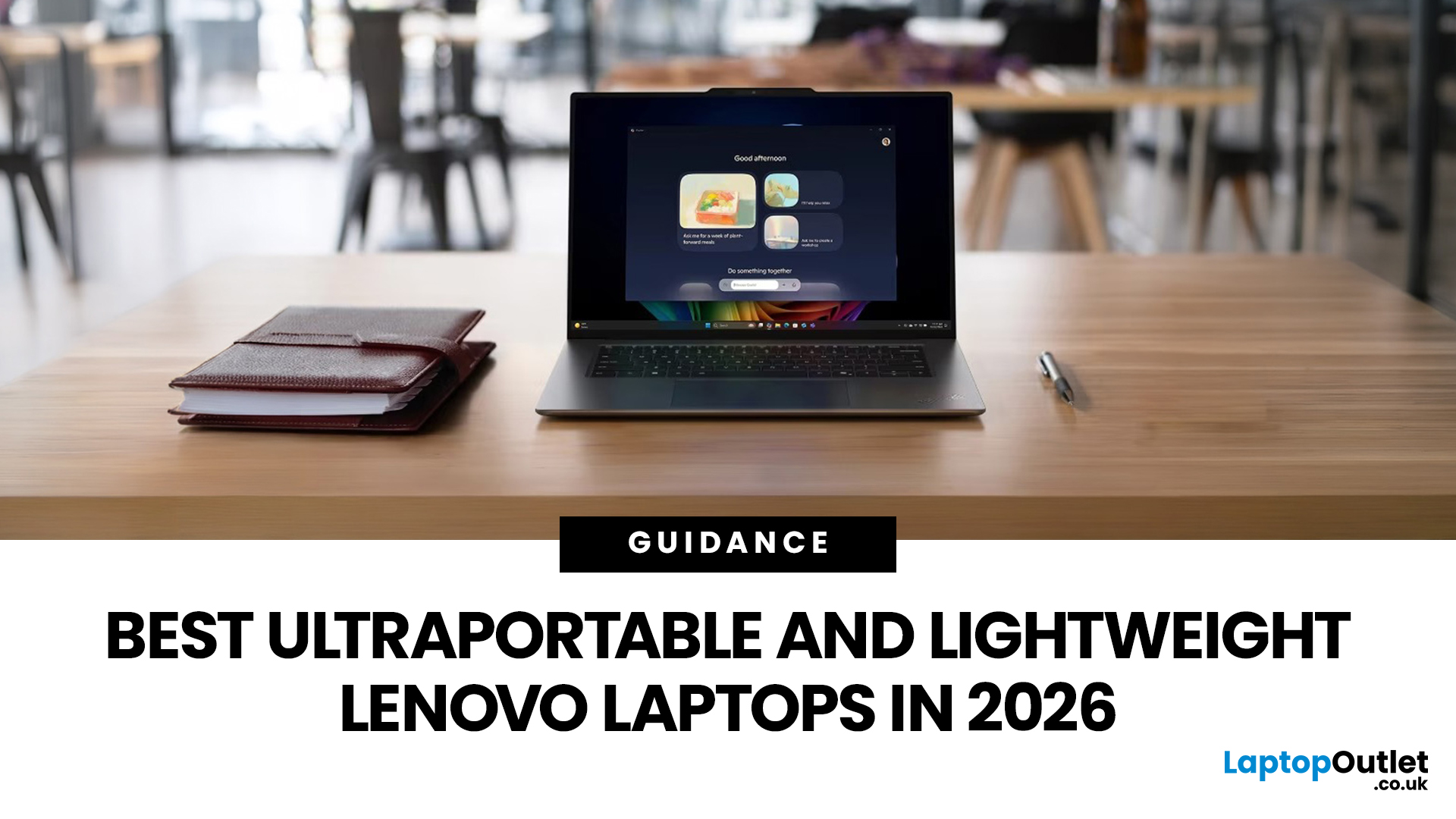
The best lightweight Lenovo laptops in 2026 are not all trying to do the same job. If we want the lightest premium 14-inch option, Lenovo’s Yoga Slim 7i Ultra Gen 11 Aura Edition stands out at 975g with a 75Wh battery. If business travel comes first, the ThinkPad X1 Carbon Gen 13 Aura Edition is still one of the strongest all-round choices thanks to its sub-1kg starting weight on some configs, proper business-grade connectivity, and classic ThinkPad focus.
That matters because buyers looking for ultraportable Lenovo laptops usually care about more than one thing at once: low carry weight, reliable battery life, enough ports to avoid living off dongles, and a screen that still feels good after a full day of work, study or travel. In this guide, we break down the best current Lenovo options for commuters, students, professionals, creators and home users, using Lenovo’s own 2026-era spec sheets first and independent reviews where they add useful trade-offs.
What Counts as a Genuinely Lightweight

Last Updated: April 29, 2026
If you want to spend less on a laptop in 2026, the smartest move is to make better buying decisions from the start. That means:
- Buy the right type of laptop for the way you actually use it
- Compare new and refurbished properly
- Avoid machines that look cheap but cost you more later through poor performance, weak battery life, or missing warranty cover.
In the UK, refurbished options can save you a lot when you buy from a reputable retailer, but you still need to check condition grading, warranty, return options, and whether the laptop is genuinely suitable for today’s Windows requirements.
That is the real cheapest way for UK shoppers to buy a laptop they can feel good about. A low headline price only counts as a good deal on laptops if the machine still fits your workload, stays supported, and does not force you into another purchase too soon. This laptop deals & savings guide helps you work that out clearly, without making the process feel more complicated than it needs to be.
Quick Money-Saving

Last Updated: September 02, 2026
Looking to sell or trade in old laptop in the UK and get the most cash for it? This guide covers everything you need to know, from checking your laptop's resale value and wiping your data safely, to choosing the right selling method and avoiding common scams. Follow these steps and you could put a healthy amount back in your pocket.
What Does "Selling vs Trading In" Actually Mean?
Before diving in, it's worth being clear about the difference. Selling your old laptop means listing it yourself and receiving payment from a buyer. Trading in means handing your device to a scheme or retailer in exchange for cash, credit, or a discount off your next purchase.
Both have real merit, and the right option depends on how much time you have, how much you want to earn, and what condition your laptop is in.
How Much Is Your Old Laptop Actually Worth?
The first question most people ask, “how much is my laptop.” The honest answer is: it depends on several factors, but there are reliable ways to estimate

Last Updated: May 01, 2026
If you are searching for teacher discount laptops UK, the good news is that there are several ways to cut the cost of a new device without compromising on performance. In the UK, teachers, lecturers, and some school staff can often access education pricing, retailer offers, refurbished savings, and category-specific deals designed for work and study. Apple’s UK education pricing is available to students, teachers and staff, while Lenovo UK also includes teachers in its education discount programme.
The key is knowing where teachers get discounts on laptops in the UK, what proof you need, and which laptop category makes the most sense for your day-to-day workload. Whether you need a lightweight machine for lesson planning, a durable device for classroom use, or a more powerful system for admin-heavy tasks, there are smart ways to save.
In this step-by-step guide, we’ll show you how to access laptop discounts for teachers in the UK, what the verification process typically looks like, and
Last Updated: May 22, 2026
A laptop usually overheats because of blocked airflow, dust, heavy apps, dried thermal paste, charging heat, or a faulty fan. To cool it down fast, place it on a hard surface, close demanding programs, clean the vents, switch to Balanced mode, and let it rest. If it keeps overheating or shutting down, it may need internal cleaning, thermal paste replacement, or repair.
Your coffee could be hot, but it doesn't work for a laptop to be honest. A little warmth is normal during gaming, charging, video calls, or heavy work, but if your laptop is overheating, slowing down, shutting off, or making loud fan noise, something needs fixing. This guide explains the fastest laptop overheating fix, why your laptop is running hot, and how to cool it down before the problem gets worse.
First, Is Your Laptop Actually Overheating?
Before you panic, it is important to know the difference between a laptop that is simply warm and a laptop that is truly overheating.
Laptops are compact machines. The processor,
Last Updated: May 22, 2026
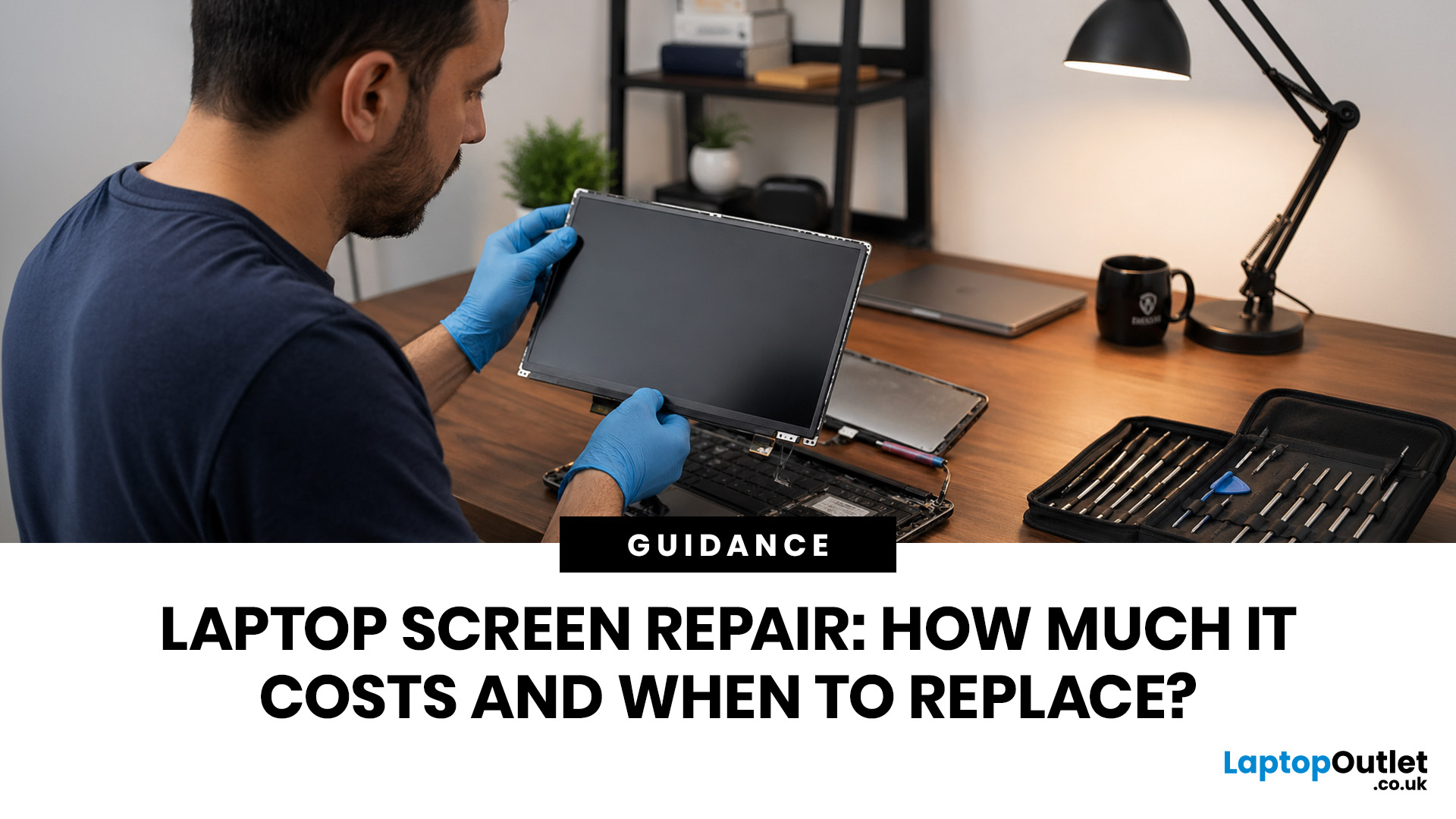
Laptop screen repair cost in the UK usually ranges from £50 to £300 for a standard 15.6-inch screen, depending on the laptop model, screen type, damage level, and labour cost. Basic LCD replacements are usually cheaper, while touchscreen, OLED, gaming laptop, and MacBook screen repairs can cost more. If your laptop is still fast and the repair costs less than half its value, fixing the screen is usually worth it. If the laptop is old, slow, or the repair is close to the price of a replacement, upgrading may be the smarter choice.
So, your laptop screen has cracked, flickered, gone black, or started showing strange lines - and now you are probably wondering one thing:
How much does laptop screen repair cost in the UK, and is it even worth fixing?
The answer depends on your laptop model, screen type, and damage level. A standard laptop screen repair or replacement in the UK usually costs around £50 to £300, while touchscreens, OLED displays, gaming laptops, and MacBooks can cost more.
This

