



Black Friday is here! Get an extra £10 off when you spend £200 with code: BF10LO. T&Cs apply*

Blog Categories





October 26, 2026

CPU TDP (thermal design power) is a starting point for understanding how much cooling a processor needs. It is not a live reading of electricity use or a guaranteed maximum wattage. AMD and Intel describe CPU power differently, and boost settings can raise consumption above the headline figure. Check processor power limits, cooler compatibility and real performance before choosing parts.

October 23, 2026
October 22, 2026
AMD Ryzen Eco Mode lowers CPU power consumption and temperatures, often without a significant drop in gaming performance. In one Ryzen 9 7950X benchmark, switching from its default 170W TDP to a 105W profile reduced multi-core performance by around 7%. A more restrictive 65W profile resulted in a 22% reduction.
October 20, 2026
October 21, 2026

October 16, 2026
October 14, 2026
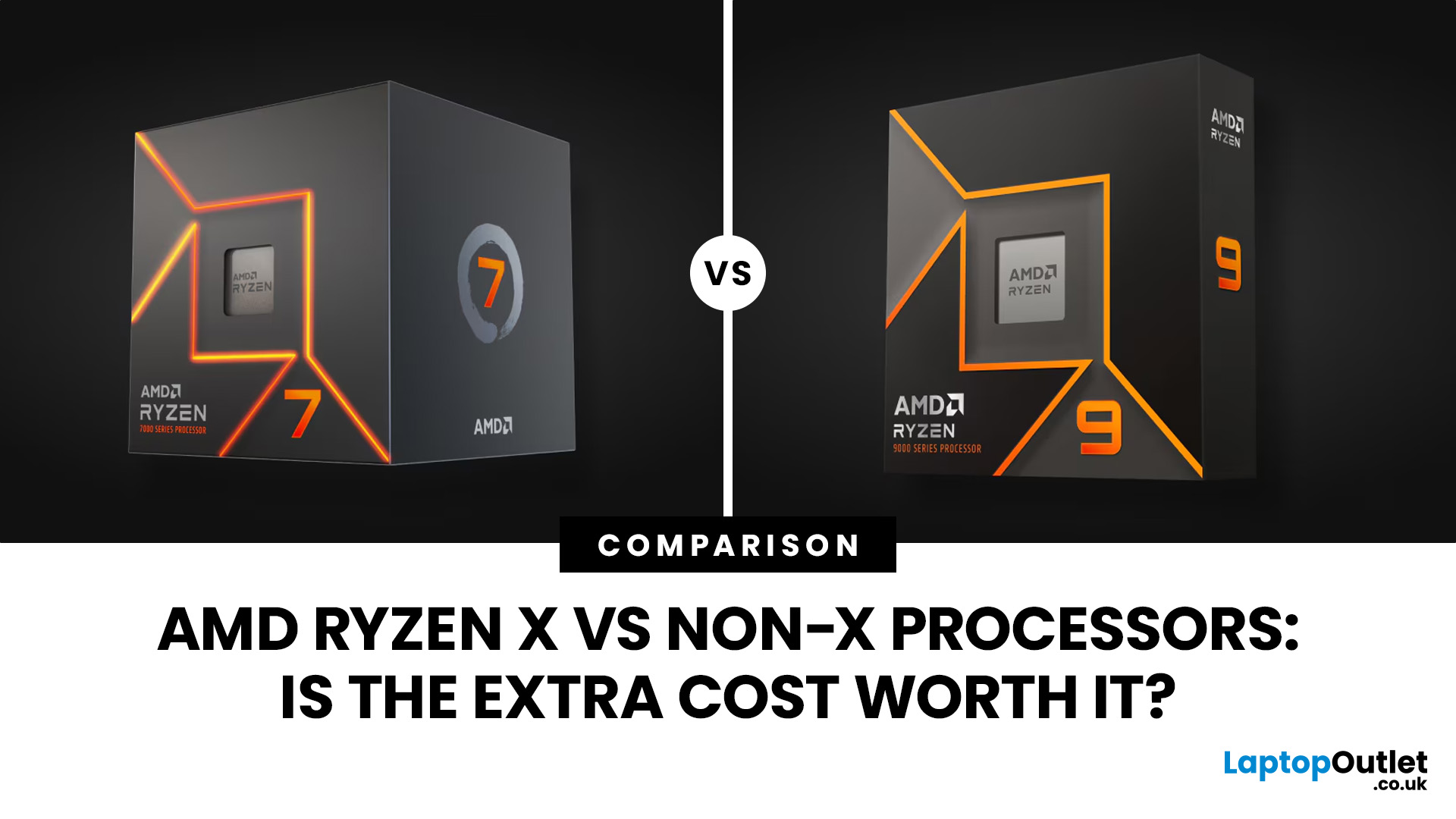
AMD Ryzen X vs non-X processors mainly differ in their factory clock speeds, power settings and, sometimes, cooling requirements. X models generally target higher performance, while non-X versions often offer better efficiency and value. However, the gaming difference can be small, and newer X processors are not necessarily more power-hungry. The better choice depends on the specific processors, prices and workload.
What Does X Mean in AMD Ryzen Processors?
The X suffix identifies a performance-oriented variant within AMD's Ryzen desktop processor range. These models typically have higher factory clock speeds than their equivalent non-X versions, although the exact differences depend on the generation.
For example, the Ryzen 5 7600X and Ryzen 5 7600 both use AMD's Zen 4 architecture, feature six cores and twelve threads, and support the AM5 platform. The X version runs at higher specified frequencies and has a higher default thermal design power (TDP).
However, the AMD Ryzen X meaning does
August 12, 2026
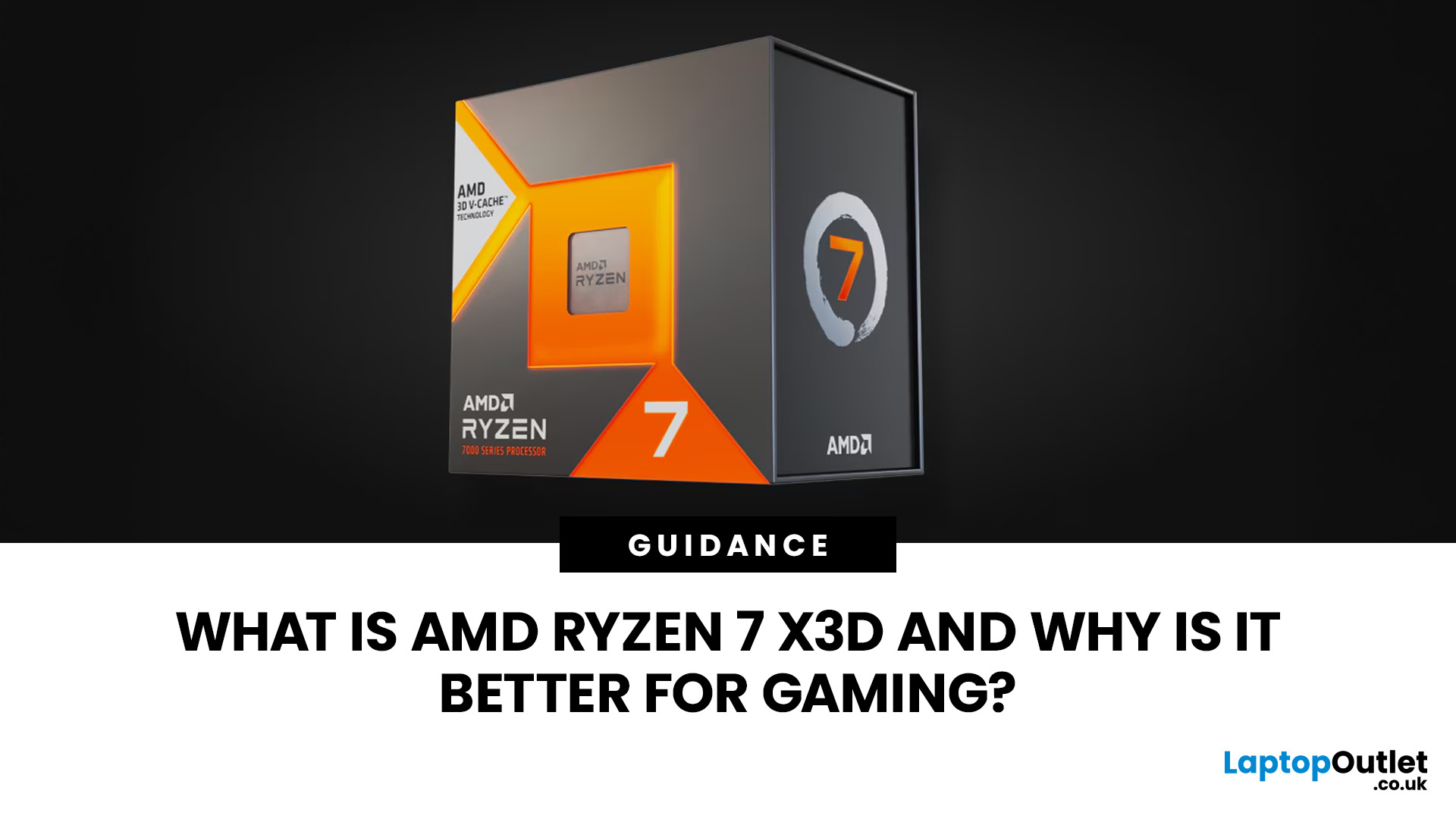
AMD Ryzen 7 X3D refers to high-performance desktop processors that combine Ryzen 7 CPU cores with AMD 3D V-Cache technology. The additional cache keeps more frequently used game data close to the processor, which can reduce delays, improve frame rates and deliver smoother frame times.
AMD Ryzen 7 X3D is a gaming-focused CPU that uses AMD 3D V-Cache to store more game data closer to the processor. This helps reduce delays and can improve FPS, 1% lows and smoothness in CPU-heavy and competitive games. The benefit is smaller at 4K or when the GPU is the main limit. Overall, it’s a strong choice for gamers wanting smoother, high-performance desktop gaming.
The benefit is usually greatest in CPU-limited games, competitive titles and high-refresh-rate systems. Results still depend on the graphics card, resolution and game engine. This guide explains how X3D works and whether it suits your setup.
What Does X3D Mean on an AMD Ryzen 7 Processor?
Ryzen 7 Describes the Performance Tier
Among AMD Ryzen

August 05, 2026
The Snapdragon X2 Elite is Qualcomm’s second-generation premium Windows processor, announced in September 2025 before appearing in laptops during 2026. It brings a redesigned CPU, stronger integrated graphics and an NPU rated at up to 85 TOPS. This review examines its specifications, verified benchmark results, software support, battery efficiency, gaming limitations and suitability for everyday work.
| Quick Verdict on Snapdragon X2 Elite |
| Best For
|

August 17, 2026
AMD RDNA 5 is the rumoured next-generation graphics architecture from AMD, expected to succeed the RDNA 4-based Radeon RX 9000 series. Based on credible leaks as of mid-2026, RDNA 5 is reportedly built on TSMC's N3P process node and is expected to introduce Neural Arrays, Radiance Cores, and GDDR7 graphics memory. Multiple OEM partners and industry sources point to a mid-to-late 2027 consumer launch window, with AMD itself yet to confirm any details publicly.
If you keep an eye on the GPU market, you will have noticed the buzz growing around AMD RDNA 5. AMD's current lineup, the Radeon RX 9000 series built on RDNA 4, has only recently settled into the market, yet the tech community is already looking ahead to what Team Red has in store next.
To be clear from the outset: AMD has not officially confirmed RDNA 5 by name, nor announced a release date or specifications for its next-generation consumer GPUs. Everything covered in this blog is based on leaks, patent filings, industry sources,
July 07, 2026
If you mainly browse, stream, study or use office apps, choose a modern balanced processor rather than paying extra for lots of cores. If you game, prioritise strong single-core performance, cache and a good dedicated GPU. If you edit video, render, compile large projects or run virtual machines, more cores and threads become much more important.
Have you ever stared at two laptop spec sheets wondering whether a higher GHz number or an extra two cores will serve you better? You are not alone. This is one of the most common questions and this guide will answer it by breaking down CPU clock speed vs cores. It will help you work out which matters more for your specific use case, whether that is gaming, video editing, office work, or coding.
What Is CPU Clock Speed?
CPU clock speed is the rate at which a processor's cores work through instructions, measured in cycles per second. In simple terms, CPU clock speed tells you how many of these cycles a core can complete every second.
How Clock
June 22, 2026
Your PC can look perfectly fine on the outside and still fail the moment it is pushed hard.
A game crashes after 20 minutes. A video export freezes at 92%. Your laptop randomly restarts during a heavy workload. Or maybe you have just upgraded your memory, changed your processor, built a new desktop, or enabled XMP/EXPO in the BIOS and want to know one thing:
Is my system actually stable?
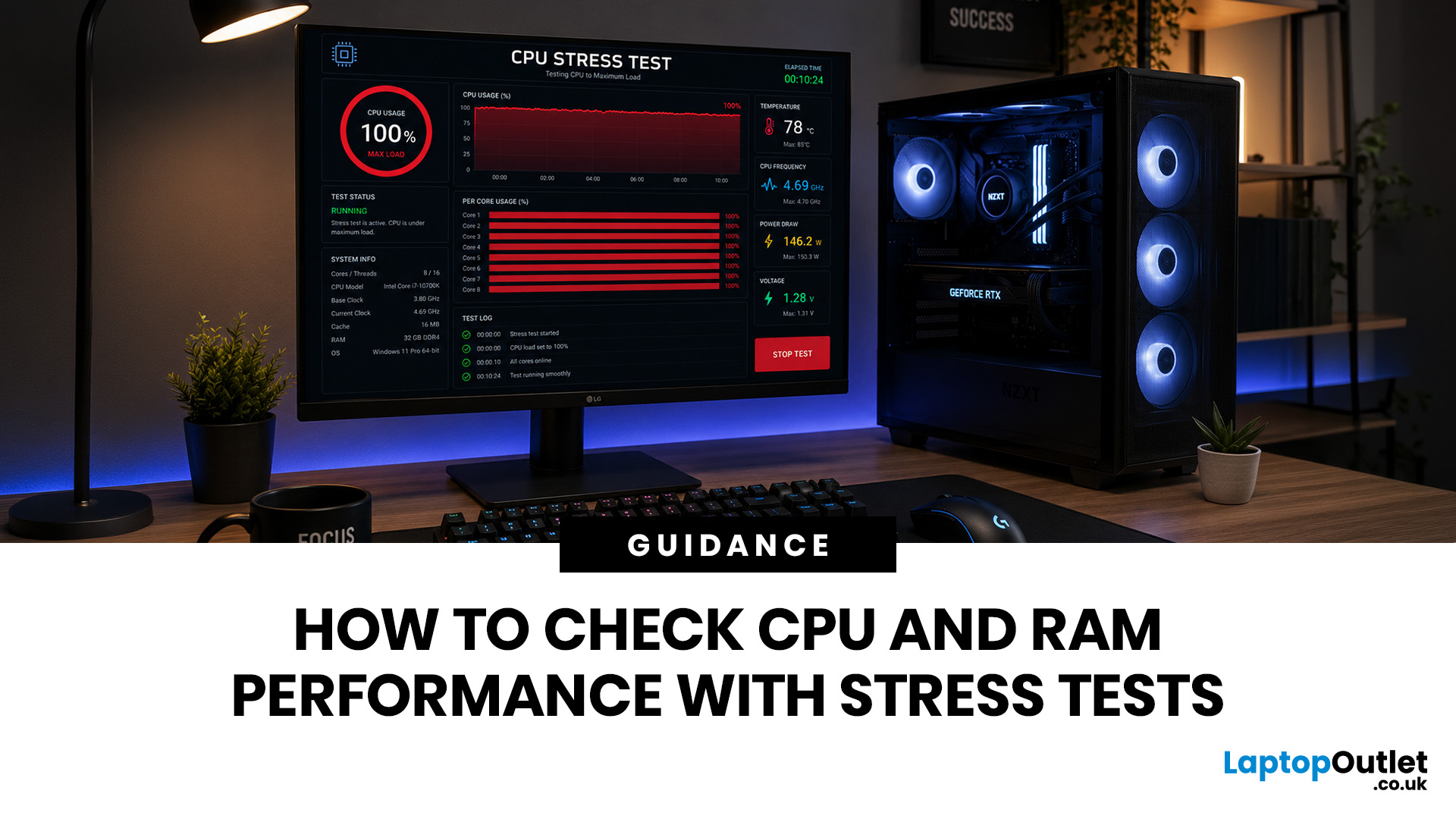
That is where a stress test CPU RAM process helps. By running a controlled CPU, RAM, or combined system stress testing session, you can find problems before they interrupt your work, gaming, editing, coding, or daily use.
In this guide, you will learn:
- What CPU and RAM stress testing