



Is 27-Inch the Perfect Monitor Size for Competitive Gaming?
Milliseconds decide wins and losses in competitive gaming, and screen size affects how fast you process what's happening on it. A 27-inch monitor size has become a popular choice because it offers more screen space than a traditional 24-inch esports display without feeling overwhelming, but is it really the ideal setup for fast-paced gameplay? The answer depends on your playstyle, viewing distance, and preferred resolution. For many players, a 27-inch 1440p monitor strikes the best balance between clarity and performance, though others still favour smaller screens for tighter control.
Why Monitor Size Matters in Competitive Gaming
Size affects how comfortably and quickly you process visual information. In competitive games, you're constantly scanning for enemies, movement, maps, cooldowns, and health bars. A larger screen makes visuals easier to see but requires more eye movement; a smaller screen is faster to scan but offers less immersion and detail. The best competitive monitors for gaming give you:
- Clear visibility without excessive head movement
- Enough sharpness to spot detail
- Comfortable viewing over long sessions
- A fast refresh rate and low input lag
- A size that suits your desk and seating distance
What are the Actual 27 Inch Screen Dimensions?
A common misconception is that a 27-inch monitor size is 27 inches wide. Monitor size is measured diagonally, corner to corner. For a standard 16:9 display:
|
Measurement |
Inches |
cm |
|
Diagonal |
27" |
68.6 |
|
Width |
23.5" |
59.7 |
|
Height |
13.2" |
33.6 |
These figures cover the screen area only, the total footprint will be slightly larger once you include the bezel and stand. A 27-inch monitor size feels most comfortable at a 60–80 cm viewing distance, so when checking desk fit, also factor in desk depth, whether you'll use a monitor arm, and space for a keyboard, mouse, and speakers.
Is 27-Inch Monitor Size Good for Competitive Gaming?
For most players, yes. Gaming monitors with 27-inch screens particularly suits anyone who mixes competitive and casual play, shooters during the week, racing games or RPGs on the weekend, since it's more flexible than a smaller, esports-only display.
It works well if:
- You play competitive FPS, battle royale, MOBAs, racing, sports, RPGs, strategy, or sim racing titles
- You want one screen for gaming and productivity
- You sit at least 60 cm from the screen
- You'd rather have some immersion alongside speed
It may feel too large if:
- You mainly play tactical shooters at a professional or near-professional level
- You sit very close to your monitor or use a shallow desk
- You're used to and prefer a compact, 24-inch tournament-style setup
1080p vs 1440p vs 4K: Which Resolution is Best?
Screen size is only half the equation; resolution affects sharpness, pixel density, and how hard your GPU has to work.
- 1080p (1920 × 1080): At 27 inches, this works out to roughly 82 pixels per inch, noticeably softer than the same resolution on a 24-inch screen. It's still a solid choice if you want lower cost, easier high-FPS performance, and less strain on your graphics card. Prioritise this if smooth esports framerates matter more to you than sharpness.
- 1440p (2560 × 1440): The sweet spot for most 27-inch monitor size buyers. It's noticeably sharper than 1080p, helpful for spotting movement and reading detail, without being as demanding as 4K, so high frame rates stay achievable. It also gives you enough screen real estate for gaming, streaming, and work or study.
- 4K (3840 × 2160): Extremely sharp and excellent for single-player games, content creation, and console gaming, but demanding on hardware. Competitive players usually prioritise frame rate over resolution, so 4K is less practical for pure esports use. Choose it if visual quality and creative work matter more to you than maximum FPS.
In addition, if your setup is used for both competitive gaming and content creation, choosing a 27 inch QHD gaming monitor can make gameplay, editing timelines and everyday multitasking feel more comfortable.
What to Look For in a 27-Inch Gaming Monitor
Refresh rate. Aim for at least 144Hz for competitive play; 165–180Hz gives a smoother all-round experience, and 240Hz+ suits serious esports players. Higher refresh rates only help if your system can actually hit those frame rates.
|
Refresh rate |
Best for |
|
75Hz |
Casual/everyday use |
|
144Hz |
Competitive gaming baseline |
|
165–180Hz |
Smooth all-round gaming |
|
240Hz+ |
Serious esports |
Players interested in premium refresh rates should explore what makes the best 27 inch gaming monitor stand out for fast-paced esports and smooth everyday gaming.
Response time. Faster grey-to-grey response reduces blur and ghosting. Check independent reviews rather than relying on an advertised "1ms" figure, since real-world performance varies between panels.
Input lag. The delay between your action and what appears on screen. Lower is better for aiming and reaction-dependent games.
Adaptive sync. AMD FreeSync or NVIDIA G-Sync support reduces tearing and stutter when your frame rate fluctuates.
Ergonomics and connectivity. Height, tilt, and swivel adjustment plus VESA mount support matter for long sessions. For ports, DisplayPort is generally the most practical choice for high refresh rates at 1440p; also check for HDMI, USB-C, and a USB hub if you need one.
Which Panel Type Matters: IPS, VA, or OLED?
Next comes the panel types when you’re using a 27-inch monitor size:
- IPS displays for gaming and work offers strong colour accuracy and wide viewing angles, making it the best all-rounder for gaming plus work or content creation. Its main weakness is contrast, which isn't as deep as VA or OLED.
- VA delivers deeper blacks and richer contrast, good for story-driven and darker games, though some VA panels show more motion smearing in dark scenes, worth checking reviews before buying.
- OLED provides excellent contrast and extremely fast pixel response, ideal for both competitive and cinematic use. Trade-offs are higher cost and a need to manage static image retention over time.
What to Choose in 27 Inches vs 24 Inches vs 32 Inches?
|
Features |
24" |
27" |
32" |
|
Best resolution |
1080p |
1440p |
1440p/4K |
|
Desk space needed |
Low |
Moderate |
High |
|
Competitive FPS suitability |
Excellent |
Very good |
Good, but large |
|
Immersion |
Moderate |
Strong |
Very strong |
Choose 24 inches for a compact, minimal-eye-movement esports setup. Choose 32 inches for maximum immersion in cinematic or single-player games, provided you have the desk space. For most players who want a balance of competitive performance, sharpness, and everyday usability, 27 inches remains the easiest size to justify.
Who Should and Shouldn't Buy a 27-Inch Monitor Size
Choose 27 inches if:
- You want more space than 24 inches without going as large as 32
- You play a mix of competitive and casual games
- You want 1440p sharpness and your PC can handle it
- You use the same monitor for gaming and work
- You have the desk depth to sit far enough back
Consider a different size if:
- You sit extremely close to the display or have a shallow desk
- You only play professional-level FPS titles and want minimal eye movement
- Your system struggles to hit good frame rates at 1440p
- You want maximum cinematic immersion (go 32-inch instead)
Choosing a Brand
Brand isn't the only factor, but ASUS, Acer, MSI, LG, Samsung, AOC, Dell, and latest BenQ monitors all have solid reputations in the gaming monitor market. Whichever you choose, weigh refresh rate, resolution, panel type, response time, ergonomics, warranty, and real-world reviews above the badge on the bezel.

Bottom Line
A 27-inch monitor size is a strong, balanced choice for competitive gaming, especially paired with 1440p and a high refresh rate. It won't be the best fit for players who want maximum immersion (go 32-inch) or the tightest, most compact esports setup (go 24-inch), but for most people who play a mix of competitive and casual titles, it's the easiest size to recommend.

FAQs
Is 27 inches a good monitor size for gaming?
Yes. It balances competitive performance and immersion well, especially at 1440p with a high refresh rate.
Is 27 inch monitor size too big for competitive gaming?
Not for most players at a normal viewing distance, though some esports pros still prefer 24 inches for minimal eye movement.
What are the dimensions of a 27-inch monitor size?
Roughly 23.5" wide × 13.2" tall (59.7 × 33.6 cm) for a standard 16:9 panel.
IPS, VA, or OLED: which should I choose?
IPS for balanced colour and versatility, VA for deeper contrast, OLED for premium contrast and speed if your budget allows.
Is 27 inches better than 24 inches?
Better for immersion and 1440p sharpness; 24 inches still wins for players who want the most compact, fastest-to-scan competitive setup.
Read More:
Should You Buy a Touch Screen Monitor? A Complete Guide
Using a TV as a PC Monitor: Pros, Cons & Setup Guide
How Dual Mode Gaming Monitors Improve FPS and Visual Quality
Related Articles

Last Updated: May 20, 2026
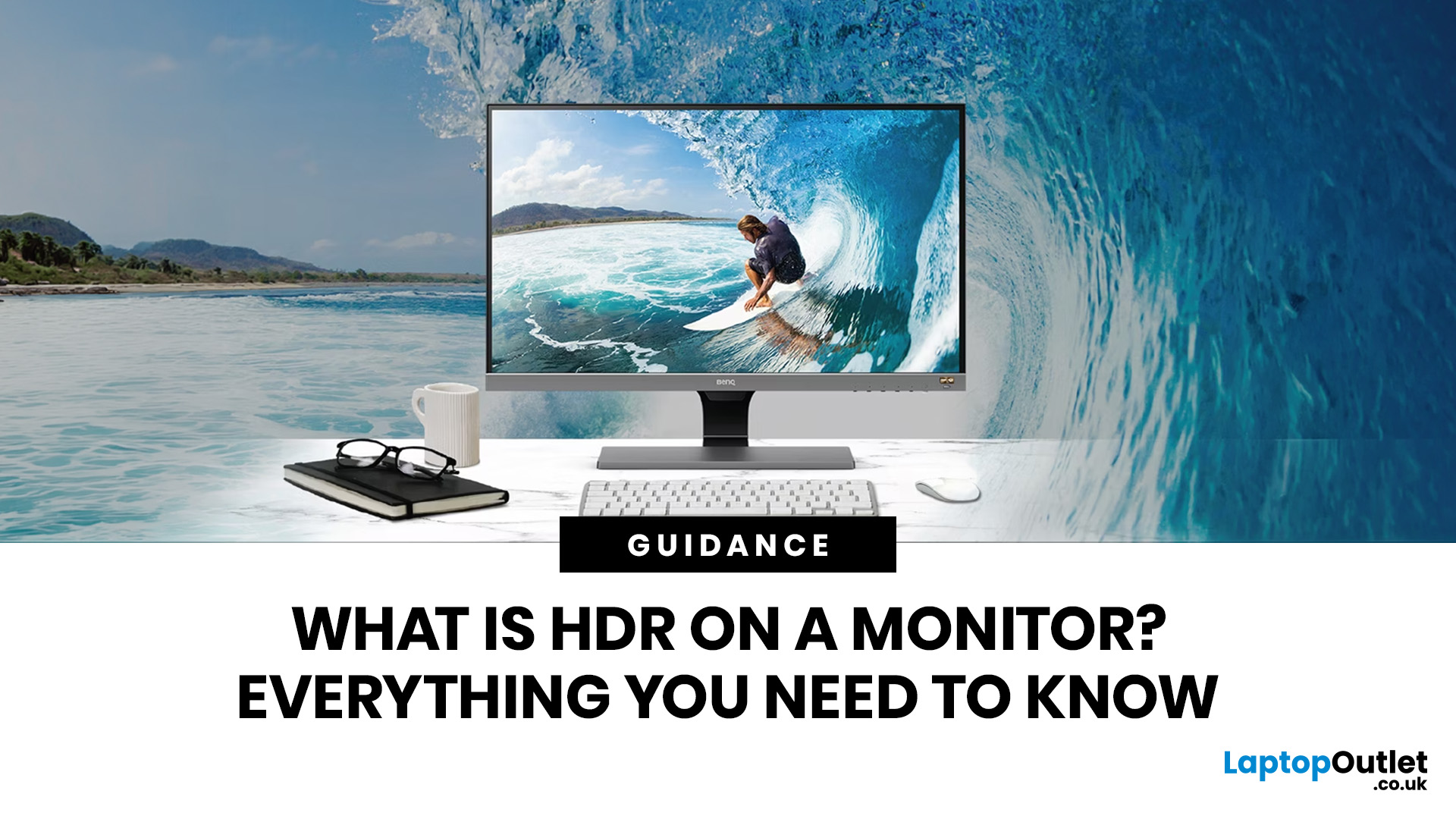
HDR is one of those monitor specs that sounds instantly premium. You see it on gaming monitors, 4K displays, creator screens, and even some budget monitors. But here’s the plot twist: not every HDR monitor gives you that “wow, this looks unreal” experience.
Some HDR displays look bright, rich and cinematic. Others technically support HDR but barely look different from standard mode. Bit awkward. So, what is HDR on a monitor, how does it work, and is HDR actually worth paying for? This complete HDR monitor explained guide breaks it all down in plain English, so you can shop smarter and avoid getting finessed by shiny spec labels.
What Does HDR Mean on a Monitor?
HDR stands for High Dynamic Range.
On a monitor, HDR is designed to show a wider range of brightness, contrast and colour than a standard SDR display. In simple terms, it helps bright areas look brighter, dark areas look deeper and colours look richer when you are watching or playing HDR-supported content.
So, when someone asks,
Last Updated: August 24, 2026
Buying a monitor should be simple. Pick a screen, plug it in, done. Except the second you start shopping, you’re hit with Full HD, QHD, 4K Ultra HD, 60Hz, 144Hz, 240Hz, IPS, VA, response time, HDMI, DisplayPort and about 47 other things that sound like they belong in a sci-fi film.
So, let’s make it easy.
This monitors & displays guide breaks down the two specs that matter most for most buyers: resolution and refresh rate. Whether you’re building a gaming setup, upgrading your home office, sorting a uni desk, editing content or just replacing an old screen that’s seen better days, this guide will help you choose the right monitor without getting finessed by big numbers.
Quick Answer: What Resolution and Refresh Rate Should You Choose?
Here’s the no-stress version.
| What You Use it For | Best Resolution | Best Refresh Rate | Best Monitor Type |
| Everyday browsing, emails and admin | Full HD | 60Hz–100Hz | Budget monitor |
| Studying or home office work | Full HD or QHD | 75Hz–120Hz | Productivity monitor |
| Multitasking |
Last Updated: August 24, 2026
One screen is fine. Two screens? That is where your setup starts feeling seriously organised. Whether you are working from home, studying, gaming, editing, coding or just tired of switching between 27 tabs every five seconds, a dual monitor setup can make your desk feel cleaner and your workflow feel smoother.
The good news is that learning how to set up dual monitors is not as complicated as it sounds. You just need the right monitors, the correct cables or adapters, and a few display settings adjusted properly. This complete guide explains how to connect two monitors, how to set up dual monitors on Windows, how to set up dual monitors with a laptop, and how to get the best layout for work, study, gaming and everyday use.
How Do You Set Up Dual Monitors?
Here is the simple version.
To set up dual monitors, connect both screens to your laptop or desktop PC using HDMI, DisplayPort, USB-C, Thunderbolt or a compatible docking station. Then open your display settings, choose Extend these displays
Last Updated: September 03, 2026
Ultrawide monitors look seriously clean on a desk. One big screen, loads of horizontal space, fewer bezels, and that “main character workstation” vibe. But are they actually useful, or are they just a pricey way to make your setup look dramatic?
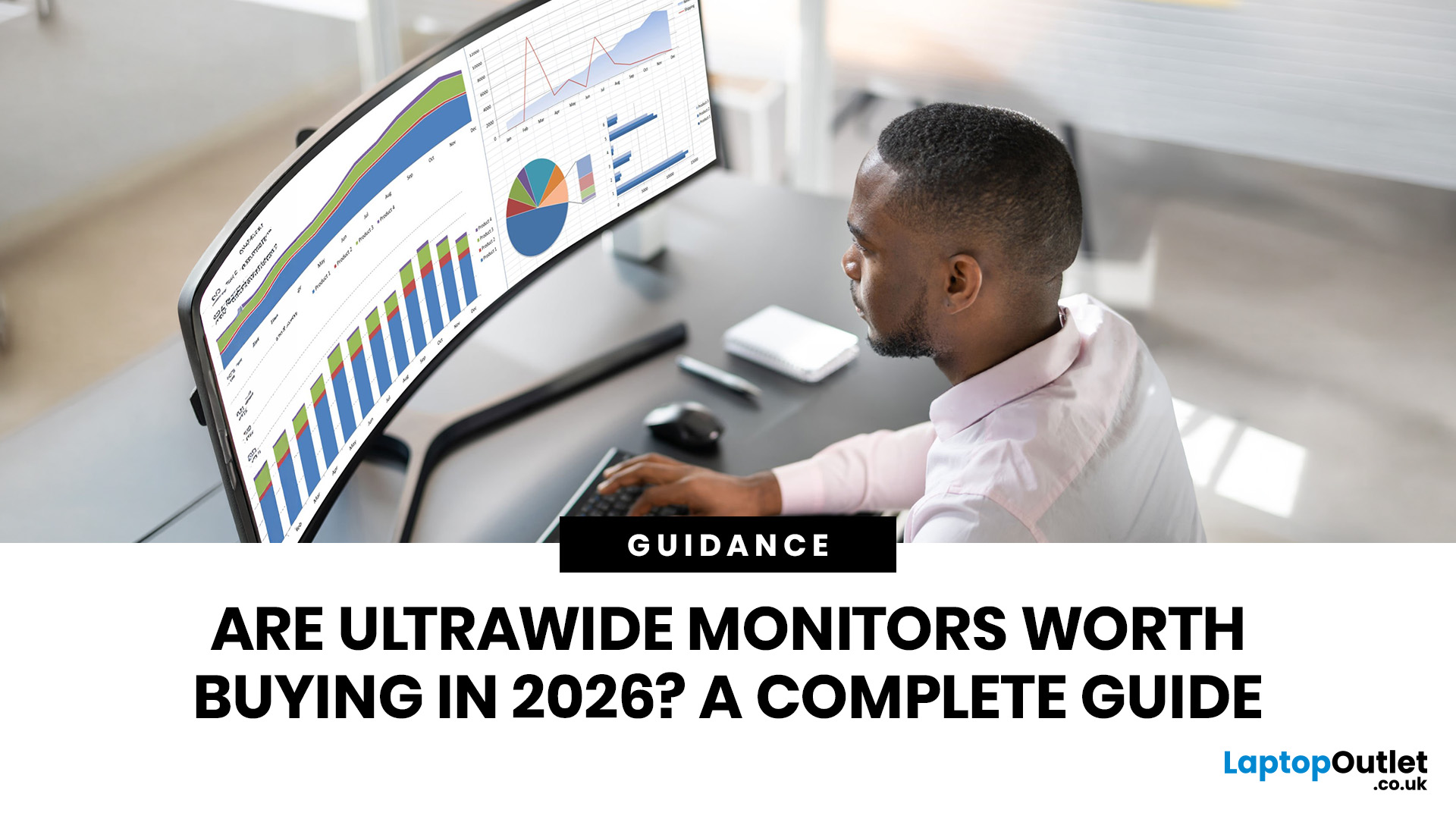
If you are asking, “is an ultrawide monitor worth it?”, the answer is: yes, for the right person. An ultrawide screen monitor can be a massive upgrade for multitasking, gaming, editing, streaming, and hybrid work. But it is not the perfect choice for everyone. This complete ultrawide monitor buying guide breaks down the benefits, drawbacks, best use cases and key specs to check before you buy.
Are Ultrawide Monitors Worth it in 2026?
Yes, ultrawide monitors are worth it in 2026 if you want more horizontal workspace, better multitasking, immersive gaming or a cleaner alternative to dual monitors. They are especially worth it for:
- Hybrid workers
- Multitaskers
- Gamers
- Video editors
- Designers
- Streamers
- Coders
- Finance and dashboard users
- Anyone who wants
Last Updated: May 20, 2026
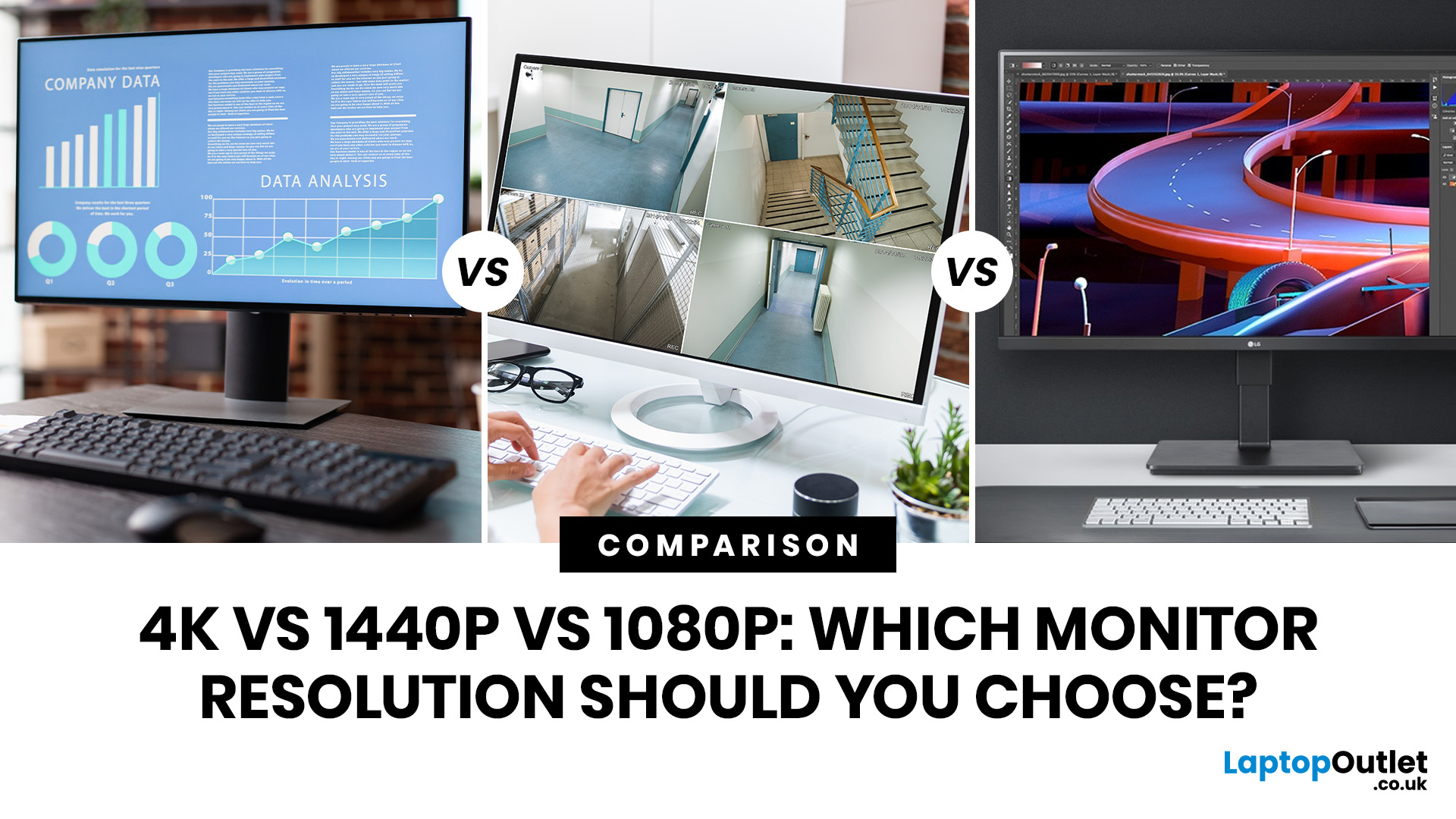
Choosing a monitor resolution should be simple, right? You pick a screen, plug it in, and get on with your day. Except the moment you start shopping, you get hit with 1080p, 1440p, QHD, 4K, Ultra HD, scaling, refresh rates and a whole lot of spec-sheet chaos.
So, which one should you actually buy?
This guide breaks down the 4K vs 1440p vs 1080p monitor debate in plain English. Whether you need a screen for gaming, work, studying, streaming, editing or a bit of everything, we’ll help you choose the right resolution without overpaying for pixels you do not need.
Quick Answer: 1080p vs 1440p vs 4K Monitor
Here’s the no-drama answer.
| User Type | Best Resolution | Why |
| Budget buyers | 1080p / Full HD | Affordable, reliable and easy to run |
| Students | 1080p or 1440p | Good value with enough clarity for study |
| Home office users | 1440p / QHD | Sharper text and better multitasking |
| Hybrid workers | 1440p or 4K | More screen space for apps and documents |
| Casual gamers | 1080p or 1440p | Good mix of smoothness, price and quality |
Last Updated: June 10, 2026
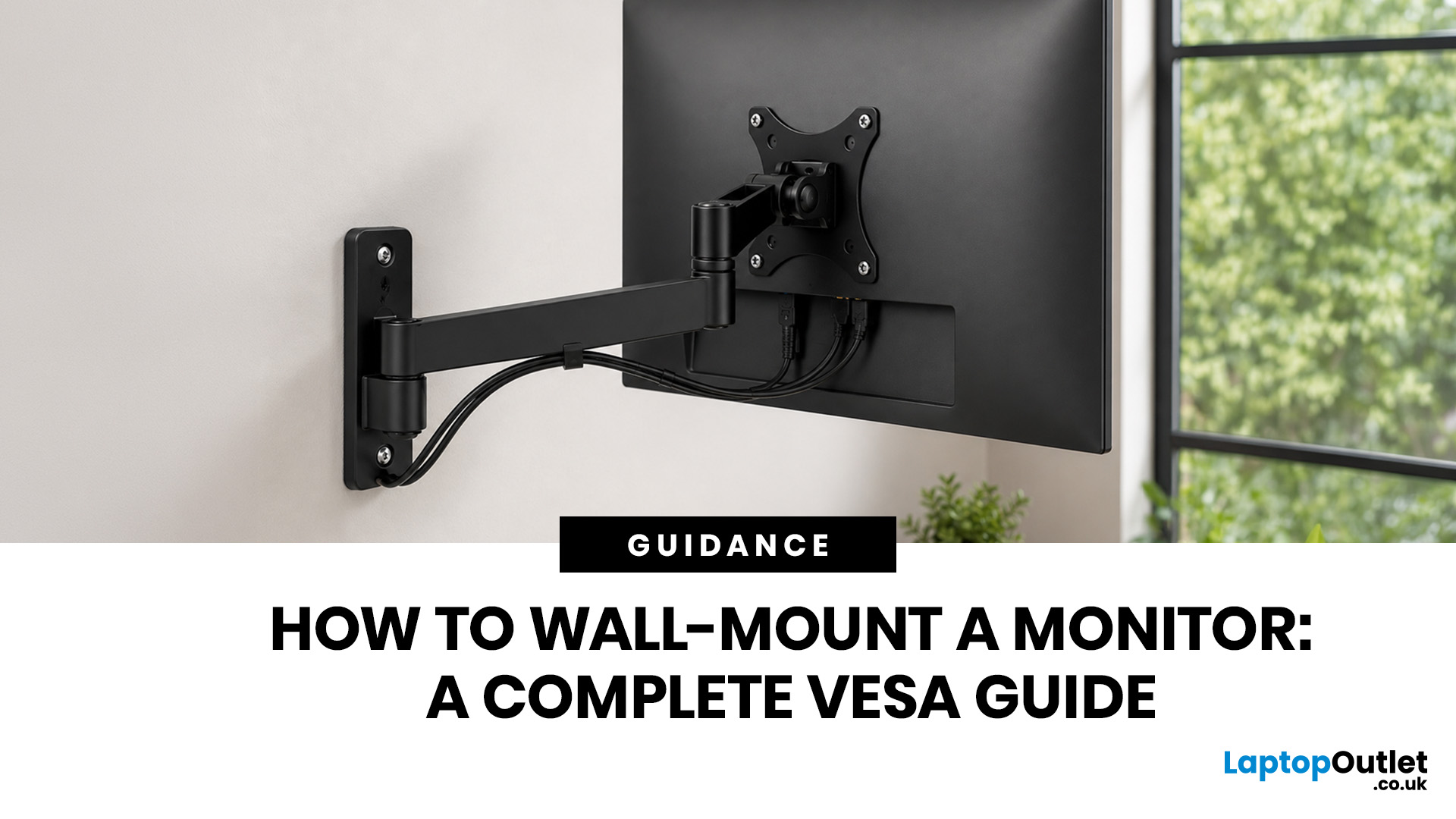
Quick Answer: Wall-mounting a monitor is worth it if you want to save desk space, improve posture and create a cleaner setup. Before you start, check that your monitor supports VESA mounting, confirm the correct VESA mounting pattern, choose a wall mount that supports your monitor’s weight, and make sure your wall can safely hold it. This VESA mount monitor guide explains what VESA mounting is, how to check compatibility, what tools you need, and how to wall mount a monitor safely step by step.
Wall-mounting a monitor can make your setup look instantly cleaner. No bulky stand. More desk space. Better cable management. A screen that actually sits at the right height instead of forcing your neck into questionable positions. Before you grab a drill and start making holes in the wall like you’re on a home renovation show, there are a few things to check. Not every monitor can be mounted, not every wall is suitable, and not every mount fits every screen.
What is VESA Mounting?
VESA mounting
Last Updated: June 10, 2026
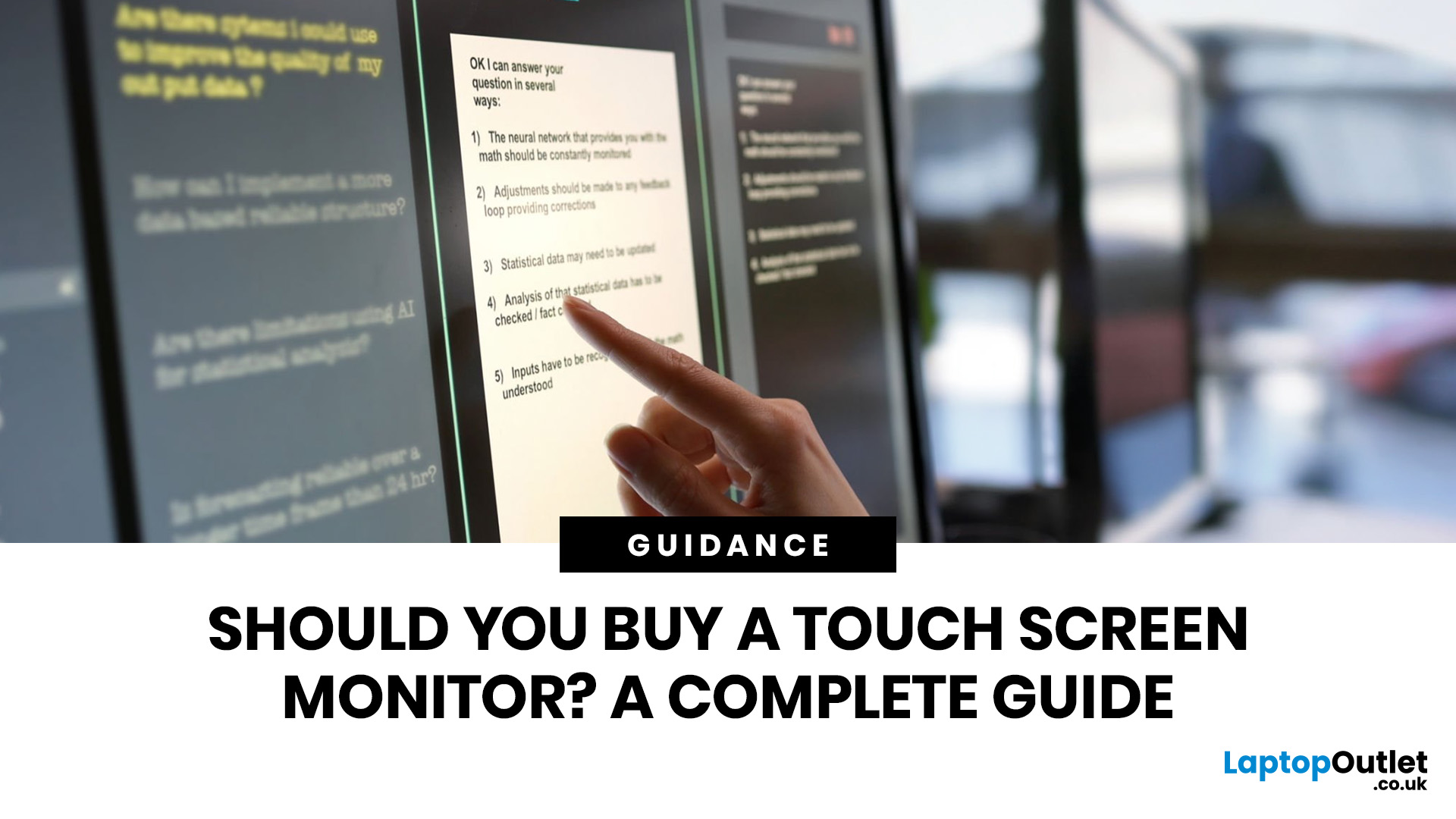
Quick Answer: Yes, touch screen monitors are worth it if you need a more interactive display for work, business, education, presentations, creative tasks or customer-facing setups. They let you tap, swipe, scroll, zoom and sometimes draw directly on the screen, which can feel much more natural than using only a mouse and keyboard.
A touch screen monitor sounds cool. You can tap apps, swipe through pages, pinch to zoom, sign documents, control presentations and interact with your PC like it is a giant tablet. Very futuristic. Very clean setup energy. But before you spend extra, it is worth asking: should I buy a touch screen monitor, or would a standard display do the job better?
The answer depends on how you use your computer. For business, education, creative work and interactive setups, touch can be genuinely useful. For spreadsheets, typing, gaming and everyday browsing, it may be more of a nice bonus than a must-have. This touch screen monitor buying guide breaks down the benefits,
Last Updated: June 10, 2026
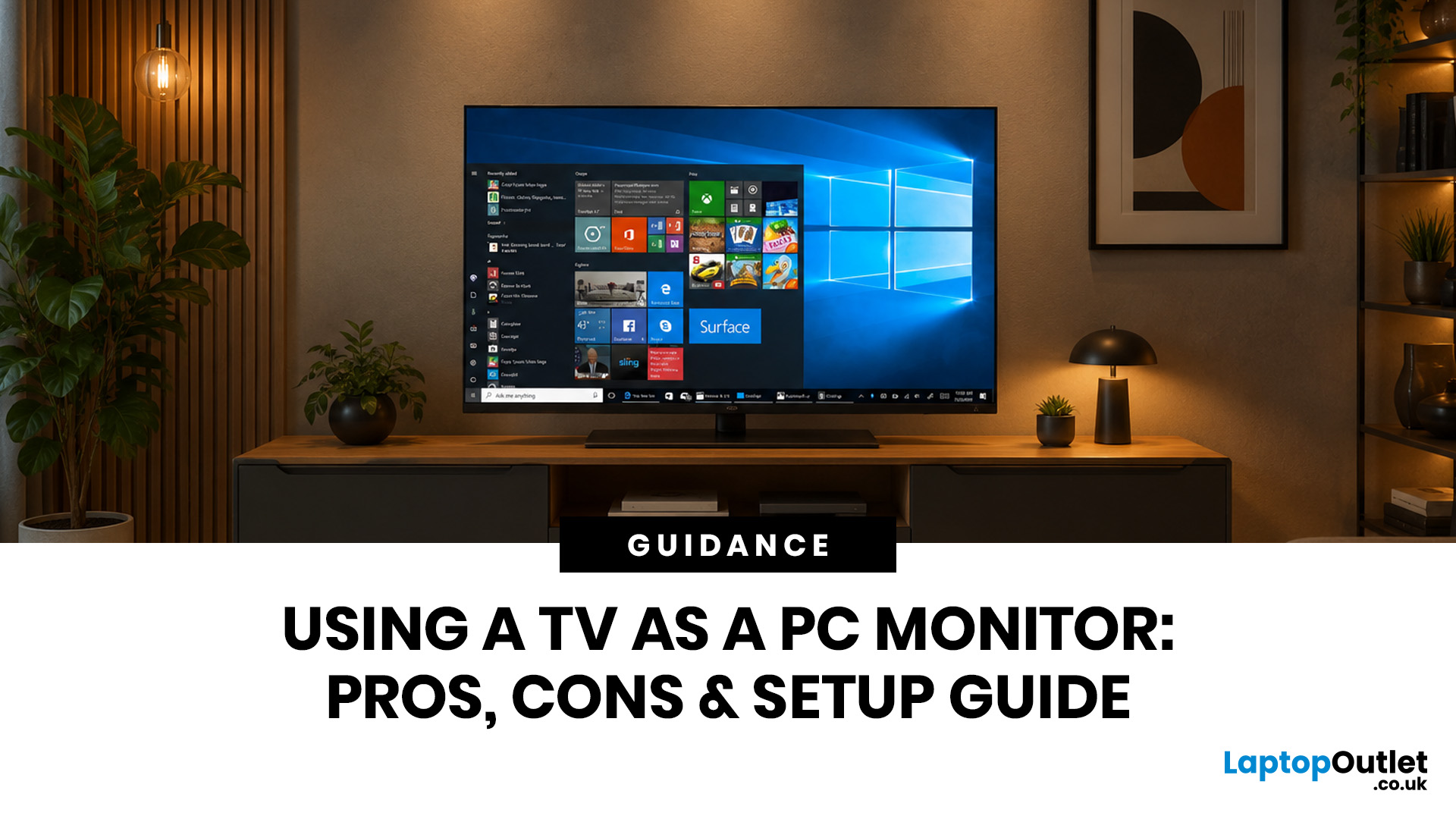
Quick Answer: Yes, you can use TV as PC monitor if your computer and TV have compatible ports, usually HDMI. It works well for films, casual gaming, presentations, sofa browsing and large-screen entertainment. However, using a TV as PC monitor is not always ideal for daily desk work because TVs can have higher input lag, lower pixel density, blurry text up close and fewer ergonomic adjustments than proper monitors. For entertainment and casual use, a TV can be a great option. For work, study, competitive gaming and sharp close-up text, a dedicated monitor is usually the better choice.
Using a big TV as your computer screen sounds like a genius move. Bigger display, built-in speakers, great for Netflix, and you may already have one sitting in the living room. Honestly, it sounds like a setup hack.
Before you plug in your PC and call it a day, there are a few things to know. A TV as computer monitor setup can work brilliantly for some people, especially for media, casual gaming and
Last Updated: October 12, 2026
Last Updated: August 25, 2026
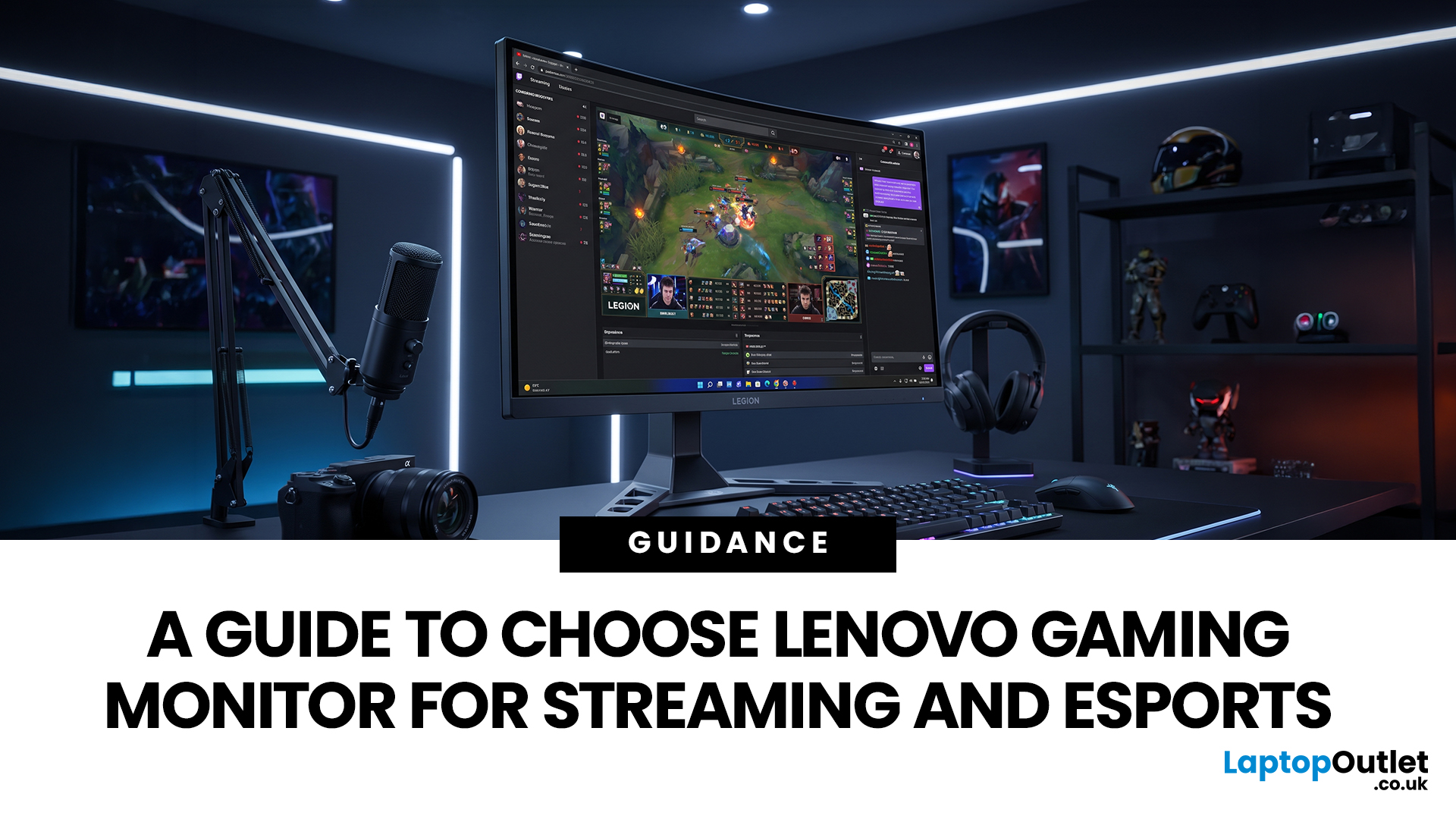
Quick answer: The best Lenovo gaming monitor for streaming and esports is the one your PC can drive consistently at its native resolution while it also handles your broadcast workflow. For many mixed-use setups, a 27-inch QHD display at 165Hz to 180Hz is the balanced choice. A 24.5-inch or 27-inch Full HD screen at 240Hz or above prioritises competitive speed, while a 34-inch UWQHD display at 165Hz to 180Hz provides more room for a single-screen streaming workspace.
Those are useful profiles, not universal rules. Your real decision depends on sustained frame rate, encoder load, game genre, desk space and whether OBS, chat and alerts live on the same display. A monitor does not encode the stream, and a 240Hz panel does not make viewers receive a 240fps broadcast. It changes the experience in front of you, which can still matter greatly during competitive play.

