



What Desktop PC Should I Buy? Guide 2026
Buying a new desktop PC can be confusing when you are faced with different processors, graphics cards, RAM capacities, storage options and form factors.
The right choice depends on what you actually need the computer to do. A PC for browsing, studying and office work does not need the same hardware as a gaming desktop or professional workstation.
This guide explains what to look for when buying a desktop PC in 2026, whether you need an affordable home computer, a productive office setup, a powerful gaming PC or a machine for creative work.
Key Factors to Consider Before Buying
Before comparing individual desktop PCs, think about:
- Your main use, such as gaming, work, study or creative applications
- Processor (CPU) performance
- Graphics (GPU) requirements
- RAM capacity
- SSD storage
- Desktop size and form factor
- Upgrade potential
- Connectivity and ports
- Operating system
- Your overall budget
For most buyers, getting a balanced specification is more important than simply choosing the fastest processor or graphics card available.
Best Desktop PCs for Every Use Case in 2026
1. Best Desktop PC for Gaming
Gaming performance depends heavily on the graphics card, so prioritise the GPU before spending heavily on a top-end processor.
Look for:
- Intel Core i5, Core i7, Core Ultra 5 or Core Ultra 7, or AMD Ryzen 5 or Ryzen 7
- NVIDIA GeForce RTX 5060 or AMD Radeon RX 9060 XT class graphics for mainstream gaming
- NVIDIA GeForce RTX 5070/5070 Ti or AMD Radeon RX 9070/9070 XT class graphics for stronger 1440p performance
- Higher-end GPUs such as the RTX 5080 or RTX 5090 for demanding 4K gaming and premium systems
- At least 16GB RAM, with 32GB preferable for higher-end gaming, streaming and heavy multitasking
- At least a 1TB SSD for a larger game library
NVIDIA's current GeForce range includes RTX 5050, 5060, 5060 Ti, 5070, 5070 Ti, 5080 and 5090 desktop GPUs, while AMD's current Radeon RX 9000 family includes options such as the RX 9060 XT, RX 9070, RX 9070 GRE and RX 9070 XT.
You do not necessarily need the latest flagship processor for gaming. A well-balanced system with a capable mid-range CPU and stronger graphics card will often make better use of your budget.

2. Best Desktop PC for Office and Productivity
Office applications, video meetings, web browsing, spreadsheets and general multitasking normally do not require a dedicated graphics card.
Look for:
- Intel Core i3, Core i5 or Core Ultra 5
- AMD Ryzen 3 or Ryzen 5
- Integrated graphics for standard office work
- 16GB RAM for comfortable everyday multitasking
- 512GB SSD as a practical starting point
- Wi-Fi, Bluetooth and enough USB/display connections for your setup
- Windows 11 Home or Pro, depending on your requirements
An 8GB system can still handle light workloads, but 16GB provides more headroom for browser tabs, Microsoft 365 applications, video calls, and multitasking.
3. Best Desktop PC for Creative Work, Editing and 3D
Video editing, 3D modelling, animation, CAD and other demanding professional applications benefit from additional CPU cores, more memory and stronger graphics.
Look for:
- Intel Core Ultra 7 or Core Ultra 9
- AMD Ryzen 7 or Ryzen 9
- AMD Ryzen Threadripper for specialist high-end workstation workloads
- A capable NVIDIA GeForce RTX or AMD Radeon RX graphics card where your software benefits from GPU acceleration
- 32GB RAM as a strong starting point
- 64GB or more for demanding 4K video, complex 3D projects or professional workloads
- 1TB or 2TB NVMe SSD storage, with additional storage where required
Intel introduced updated Core Ultra 200S Plus desktop processors in March 2026, while AMD's current desktop range includes Ryzen 9000 and Ryzen 9000X3D processors. AMD also offers Ryzen Threadripper 9000 processors for high-end desktop and workstation workloads.
Before paying for a high-end graphics card, check the recommended hardware for the creative applications you use most. Different editing, rendering and design programs can benefit from different components.
4. Best Desktop PC for Students and Home Use
For coursework, browsing, streaming, homework, shopping and general family use, there is usually little reason to pay for high-end gaming hardware.
Look for:
- Intel Core i3, Core i5 or Core Ultra 5
- AMD Ryzen 3 or Ryzen 5
- Integrated graphics
- 8GB RAM for basic use, although 16GB is preferable for longer-term use
- 512GB SSD for a good balance of capacity and everyday performance
Mini PCs and all-in-one desktops can also work well where desk space is limited. A traditional tower is a better option if future upgrades are important. If you're deciding between a compact system and a traditional desktop, compare mini PC vs tower PC designs before choosing
Intel or AMD: Which Desktop Processor Should You Choose?
Both Intel and AMD offer processors covering basic home PCs through to enthusiast gaming and professional workstations.
Intel desktop buyers may encounter traditional Core i3, i5, i7 and i9 processors alongside newer Core Ultra processors. Current Intel enthusiast desktop options include the Core Ultra 200S and updated 200S Plus families.
AMD's current desktop portfolio includes Ryzen 5, Ryzen 7 and Ryzen 9 processors from its Ryzen 9000 family, as well as Ryzen X3D processors designed with gaming performance in mind.
Rather than choosing purely by brand or model number, compare the processor with the rest of the PC and the workloads you intend to run.
NVIDIA or AMD Graphics: Which GPU Do You Need?
You do not need a dedicated graphics card for every desktop PC. Integrated graphics are normally sufficient for:
- Browsing
- Streaming
- Microsoft Office
- Emails
- Video calls
- General home and business applications
Dedicated graphics become more important for gaming, 3D applications, video production, rendering and other GPU-intensive workloads.
For current-generation systems, NVIDIA's GeForce RTX 50 Series and AMD's Radeon RX 9000 Series are the main families to consider.
Do not choose a graphics card based on the model number alone. Consider the games or applications you use, your monitor resolution and refresh rate, available video memory, system power supply and your overall budget.
How Much RAM Do You Need in 2026?
A practical guide is:
- 8GB: Basic browsing and light everyday use
- 16GB: Recommended for most home, office and mainstream gaming PCs
- 32GB: Gaming with additional multitasking, content creation and demanding productivity
- 64GB or more: Professional editing, large creative projects, virtual machines, engineering and workstation workloads
If the desktop can be upgraded later, starting with 16GB and adding more desktop RAM when required can be more economical than paying for capacity you will not use.
How Much SSD Storage Should You Buy?
An SSD should be the main drive in a modern desktop PC.
A useful starting point is:
- 256GB: Basic systems with limited local storage requirements
- 512GB: Everyday home, study and office PCs
- 1TB: Gaming, creative work and users with larger file libraries
- 2TB or more: Large game libraries, video projects and professional workloads
For many buyers, a 512GB or 1TB SSD provides a better long-term balance than a small 256GB drive.
Mac vs Windows: Which is Better?
The right operating system depends on your software, existing devices and preferred workflow.
Mac desktops can be a strong choice for users already within Apple's ecosystem and for workflows that rely on macOS applications.
Windows desktops provide a much wider range of manufacturers, form factors, gaming hardware and upgrade options.
If you are buying a new Windows desktop in 2026, choose a Windows 11-compatible system. Standard Windows 10 support ended on 14 October 2025, meaning normal technical assistance, feature updates and security updates are no longer provided for unsupported Windows 10 installations.
Pre-Built vs Custom-Built PCs
Pre-Built Desktop PCs
A pre-built PC arrives assembled and usually includes the operating system, manufacturer warranty and technical support. It is a good option if you want:
- A straightforward setup
- One warranty for the complete system
- Manufacturer support
- No component compatibility concerns
- A computer that is ready to use
Custom-Built Desktop PCs
A custom PC gives you more control over individual components and can make sense for enthusiasts who understand hardware requirements.
It allows you to prioritise particular areas such as the GPU, processor, cooling, storage or case.
However, building your own PC is not automatically cheaper. Component prices, Windows licensing, warranties and pre-built promotions can all affect overall value.
What's a Good Budget for a Desktop PC in 2026?
Desktop PC prices vary significantly depending on the processor, graphics card, memory, storage and form factor. As a practical UK starting point:
- Basic home or student PC: £400–£650
- Office and productivity PC: £600–£1,000
- Mainstream gaming PC: £800–£1,500
- High-performance gaming PC: £1,500–£3,000+
- Creative or professional workstation: £1,500–£3,500+
These should be treated as guide prices rather than strict categories. Current desktop ranges include everyday PCs around the £400–£700 level, RTX 5060 gaming systems from below £800, RTX 5070 systems above £1,500 and higher-end RTX 5080 gaming desktops approaching £3,000. Professional workstation pricing can also extend well beyond £2,000 depending on the specification.

Final Thoughts: Which Desktop PC Should You Buy in 2026?
The best desktop PC is not necessarily the one with the most powerful processor or most expensive graphics card. It is the system that gives you the right performance for what you actually do.
For everyday home and office use, prioritise a capable processor, 16GB RAM and SSD storage. For gaming, put more of your budget towards the graphics card. For editing, rendering and professional applications, look for stronger processors, additional RAM and a GPU suited to your software.
Also consider upgradeability. Traditional tower PCs generally provide more room for RAM, storage and graphics upgrades, while mini PCs and all-in-one computers often have more limited expansion options.

Still Got Questions?
What is the best desktop PC brand in 2026?
There is no single best brand for every buyer. Lenovo, HP, Dell, ASUS, Acer, Medion, and Apple all offer desktop PCs aimed at different budgets and workloads. Compare the specification, warranty, upgradeability and value of the individual PC rather than choosing by brand alone.
Is it better to buy or build a desktop PC?
A pre-built desktop is usually easier because it arrives assembled with a warranty and operating system. Building your own PC gives you greater control over components, but it is not always cheaper once component prices, software and warranties are considered.
How much RAM do I really need?
16GB is the best starting point for most buyers in 2026. Basic users can manage with 8GB, while 32GB is useful for higher-end gaming, heavy multitasking and creative applications. Professional workloads may require 64GB or more.
Can I upgrade my desktop PC later?
Many tower PCs allow upgrades to RAM, storage and graphics cards, but upgradeability depends on the motherboard, case, power supply and manufacturer design. Mini PCs and all-in-one desktops usually offer fewer upgrade options, so check before buying.
Are all-in-one desktop PCs worth it?
An all-in-one PC can be a good choice if you want a clean, space-saving setup with fewer cables. However, conventional tower PCs normally provide better upgradeability and can be more suitable for gaming or demanding professional workloads.
Is 512GB SSD enough for a desktop PC?
512GB is enough for many home, study and office users. Gamers, creators, and users with large media libraries should consider a 1TB or 2TB SSD.
Related Articles


Last Updated: February 03, 2026
Choosing a new processor used to be a simple choice between raw power and budget value. However, as we move through 2026, the landscape has shifted.
The rivalry of Intel vs AMD desktop processors has reached a fever pitch, with both "Team Blue" and "Team Red" offering incredible technology that caters to very specific types of users.
This guide breaks down everything you need to know about the current market to help you decide which brand deserves a spot in your desktop PC.
The State of the Market in 2026
As we move through 2026, both manufacturers have moved beyond simple core-count wars.
Intel has doubled down on its "Arrow Lake" and "Nova Lake" architectures, focusing heavily on integrated AI NPUs (Neural Processing Units) and a refined tiled architecture.
Meanwhile, AMD continues to dominate the enthusiast market with its Zen 5 architecture, led by the legendary 3D V-Cache technology.
Intel’s Current Strategy: The AI PC Era
Intel has successfully transitioned to its LGA 1851 socket.
Last Updated: July 20, 2026
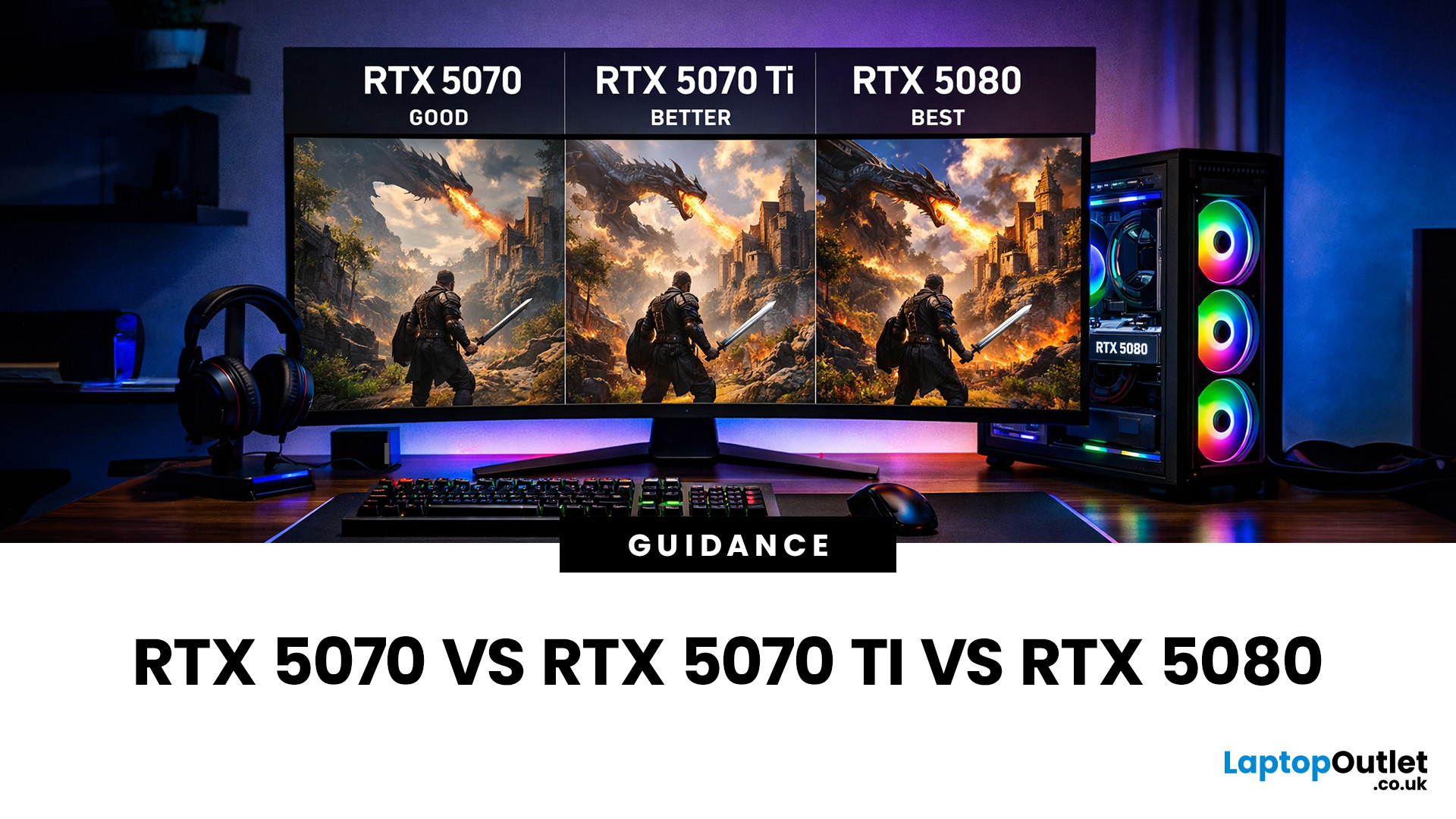
Choosing between an RTX 5070 and RTX 5080 gaming PC is one of the biggest decisions you may face when buying or upgrading a gaming desktop. Although both GPUs support NVIDIA’s latest gaming technologies, they are designed for different resolutions, performance targets, system budgets, and types of players.
In this RTX 5070 vs RTX 5080 comparison, we examine gaming performance, ray tracing, power requirements, system specifications, overall value and the right graphics card for you. We will also briefly explain where the RTX 5070 Ti fits for buyers who want more performance than the RTX 5070 without moving to a premium RTX 5080 gaming PC.
Whether you are considering an RTX 5070 prebuilt PC or planning a high-end custom desktop, this guide will help you understand the difference between RTX 5070 and 5080 gaming systems.
Understanding the RTX 50 Series Line-Up
NVIDIA’s RTX 50 series GPUs are designed to push performance further while improving efficiency and AI-powered features. Across the

Published: February 04, 2026
Your desktop PC is a key part of daily life. It handles work, gaming, and more. But how long can it last? Many users worry about desktop PC lifespan.
The good news is you can extend it to five years or beyond. With smart choices and simple habits, your setup stays reliable. This guide shares practical steps. It covers everything from processor picks to daily care.
Understanding Desktop PC Lifespan
Desktop PCs don't have a fixed expiry date. Their lifespan depends on build quality, usage, and maintenance. On average, a well-kept desktop lasts 5-8 years. But push it right, and you can hit 10 years or more. Why care? A longer desktop computer lifespan saves money and reduces waste.
Key Factors Affecting Longevity
Several elements play a role in how long your desktop endures. First, hardware quality matters most. Cheap parts wear out fast. Second, heat buildup shortens life—poor cooling is a killer. Third, software updates keep things secure and efficient. Finally, your habits, like overworking

Last Updated: February 11, 2026
Buying a desktop PC can quickly become frustrating. Endless specs, unfamiliar terms, and conflicting advice make it hard to know what really matters, and easy to waste money on the wrong setup. But here’s the solution: once you understand what desktop PC specifications actually do, choosing the right machine becomes simple. In this desktop PC specs explained guide, we break down every key component in plain English, showing you exactly what you need for work, home or gaming, and what you can safely ignore. No jargon, no guesswork, just confident buying decisions.
Processor (CPU): The Brain of Your Desktop
The processor, or CPU, is one of the most important parts of any desktop PC. It handles instructions and calculations, directly affecting how fast your system feels.
What to look for:
- Cores & Threads: More cores help with multitasking and demanding software
- Clock Speed (GHz): Higher speeds generally mean faster performance
What you actually

Last Updated: February 10, 2026
Buying a desktop PC is a big decision, especially when prices can range from a few hundred pounds to several thousand. The right choice depends not just on your budget, but on how you plan to use your PC now and in the future.
Let us help you understand exactly what you get at different price points, what specifications really matter, and how to avoid common mistakes. Whether you’re buying your first desktop or upgrading an older system, this guide will walk you through everything you need to know.
Why Choose a Desktop PC Instead of a Laptop?

Before diving into budgets, it’s worth understanding why many UK buyers still choose desktops:
- Better performance for the price
- Easier and cheaper upgrades
- Longer lifespan
- Improved cooling and sustained performance
- More connectivity options
For home offices, gaming setups, and creative work, desktops almost always offer better long-term value.
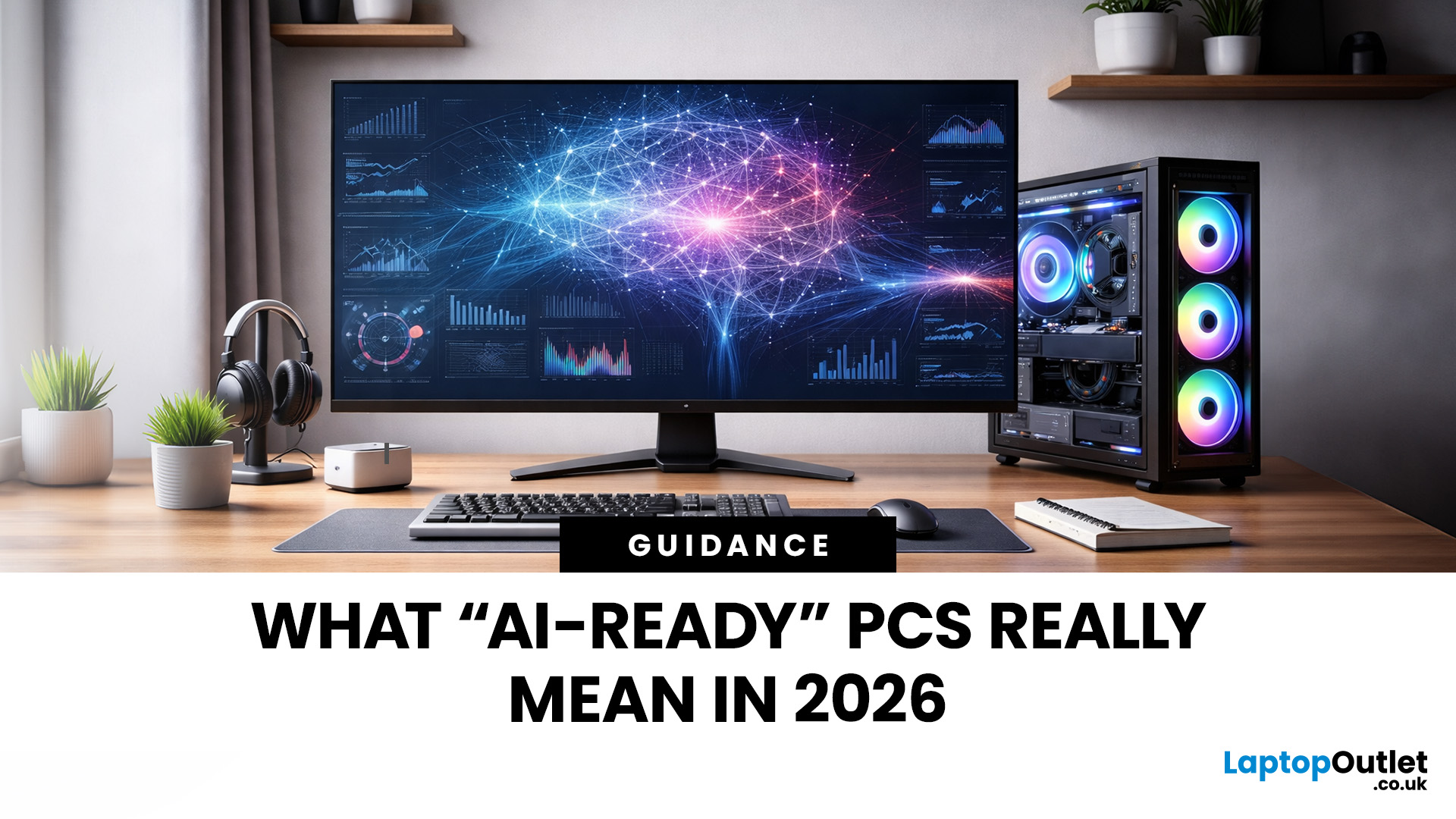
Understanding Desktop PC Specifications (Quick Primer)
If you’re not technical, these are the core components
Last Updated: May 05, 2026
Let’s call this out early: “AI-Ready” is one of those phrases that sounds important but tells you almost nothing by itself.
Every PC brand is using it. Every listing claims it. And most buyers still walk away thinking, “Cool… but what does that actually do for me?”
So instead of selling you a future fantasy, let’s talk about what AI-Ready desktops actually change in 2026, where they matter, and where they really don’t.
First: Why Everyone Is Suddenly Calling Their PCs “AI-Ready”
AI didn’t just become a software thing - it became a hardware conversation.
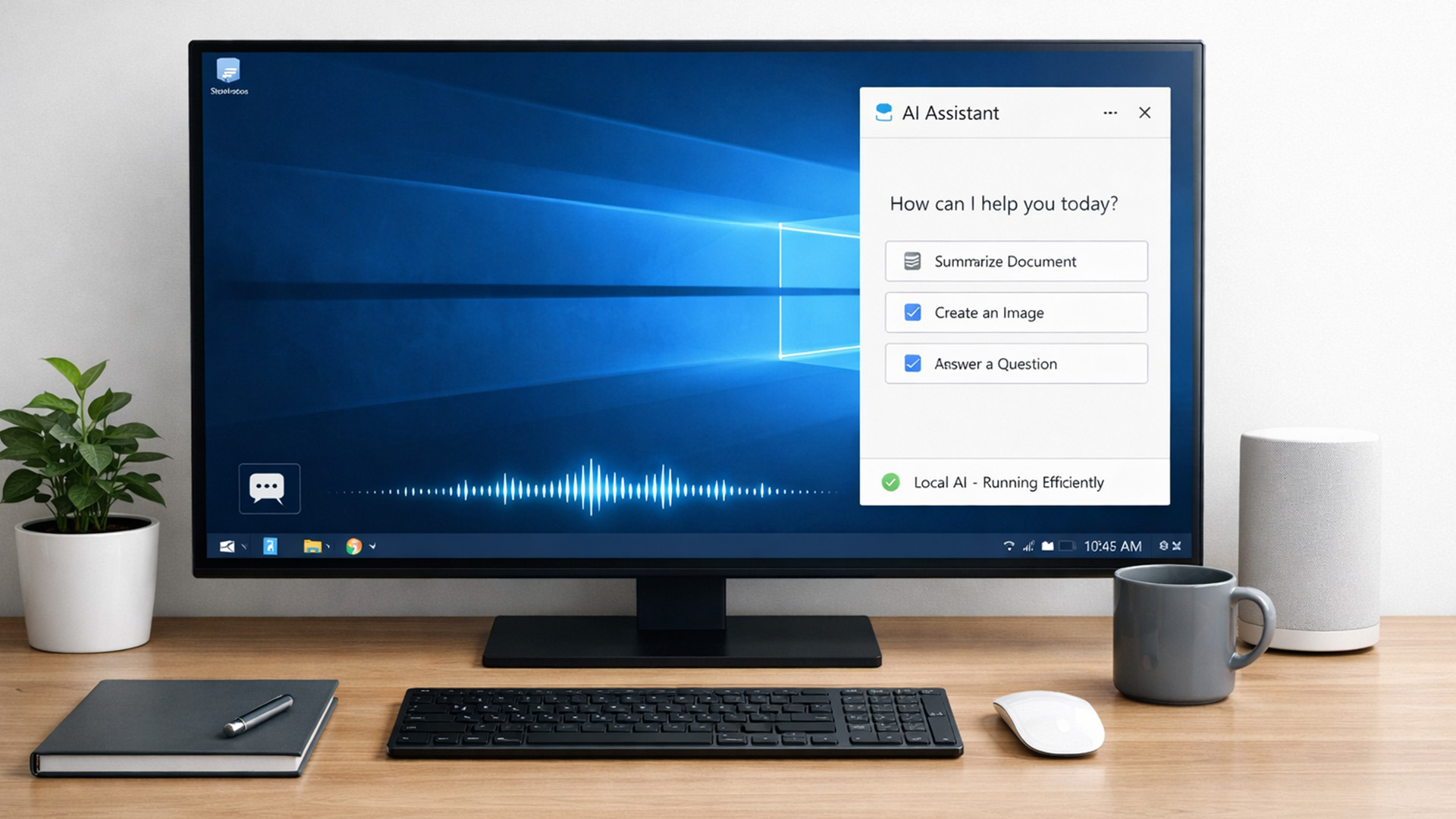
For years, AI lived in the cloud. You typed something, it went to a server, magic happened, and the result came back. Now, operating systems (especially Windows) are pushing AI features onto the device itself. That shift is what triggered the “AI-Ready” wave.
An AI-Ready desktop is basically a PC that can:
- Run certain AI tasks locally
- Do it efficiently
- Without destroying performance or power usage
That’s it. No sentience. No robot takeover.

Last Updated: February 11, 2026
Choosing the right desktop PC can feel a bit like picking a side in a long-running tech rivalry. HP, Dell, and Lenovo are three of the biggest names and for good reason. They all offer reliable, powerful desktops that suit everything from casual home use to hardcore business workloads and creative setups.
But when it comes to HP vs Dell vs Lenovo desktop PCs, which brand actually wins for you?
Why Compare HP, Dell, and Lenovo Desktop PCs?
HP, Dell, and Lenovo are all global heavyweights in the PC world. They each offer a wide range of desktops — from budget-friendly towers to powerful workstations and compact all-in-one PCs.
But here’s the thing:
Not all desktop PCs are built for the same kind of user.
Some are better for productivity, some for gaming, and others for long-term reliability. Understanding the differences is key before you hit “Add to Basket”.
HP Desktop PCs: Style Meets Performance
HP desktops are known for blending solid performance with modern design. If you like your
Published: February 09, 2026
If you have been browsing for a new PC lately, you might have noticed a bit of a price shock. Whether you are looking for a sleek all-in-one for your home office or a powerful gaming rig, the numbers on the price tags in 2026 are noticeably higher than they were just a couple of years ago.
Many UK buyers are left scratching their heads, asking the same question: why are desktop PCs expensive all of a sudden? It is a fair question. In this guide, we will break down exactly what is driving these costs and, more importantly, how you can still find incredible value.
Key Reasons Desktop PC Prices Are Rising
Understanding the "why" behind the price hike helps you time your purchase better. Here are the primary factors driving the market today.
The "AI Squeeze" on Components
The biggest culprit isn't a lack of chips, but a shift in what those chips are used for. Huge data centres are currently buying up almost 70% of the world’s advanced memory (DRAM) and storage (NAND) to power AI models.

Last Updated: September 15, 2026
If you’re asking “are refurbished desktop PCs worth it” in 2026, you’re not alone. Refurb is having a moment in the UK, partly because budgets are tight, and partly because more people want a cheaper, lower-waste way to get solid tech. At the same time, buyers are more hesitant than ever… and that hesitation is not random. A few very 2026-specific changes have raised the stakes.
This guide breaks down the real reasons people hesitate in 2026, and how Laptop Outlet reduces those risks so you can buy refurbished with genuine peace of mind - without losing out on choice or price.
What changed in 2026 that made buyers more cautious?
1) The Windows 10 “cliff edge” is now behind us
Windows 10 support ended on 14th October 2025, which means many older desktops are now in a riskier zone if they can’t upgrade cleanly.
Yes, Microsoft offers Extended Security Updates (ESU), but for consumers it’s a limited runway (through 2026) and comes with requirements that can add friction.
Why this makes refurbished
Published: March 12, 2026
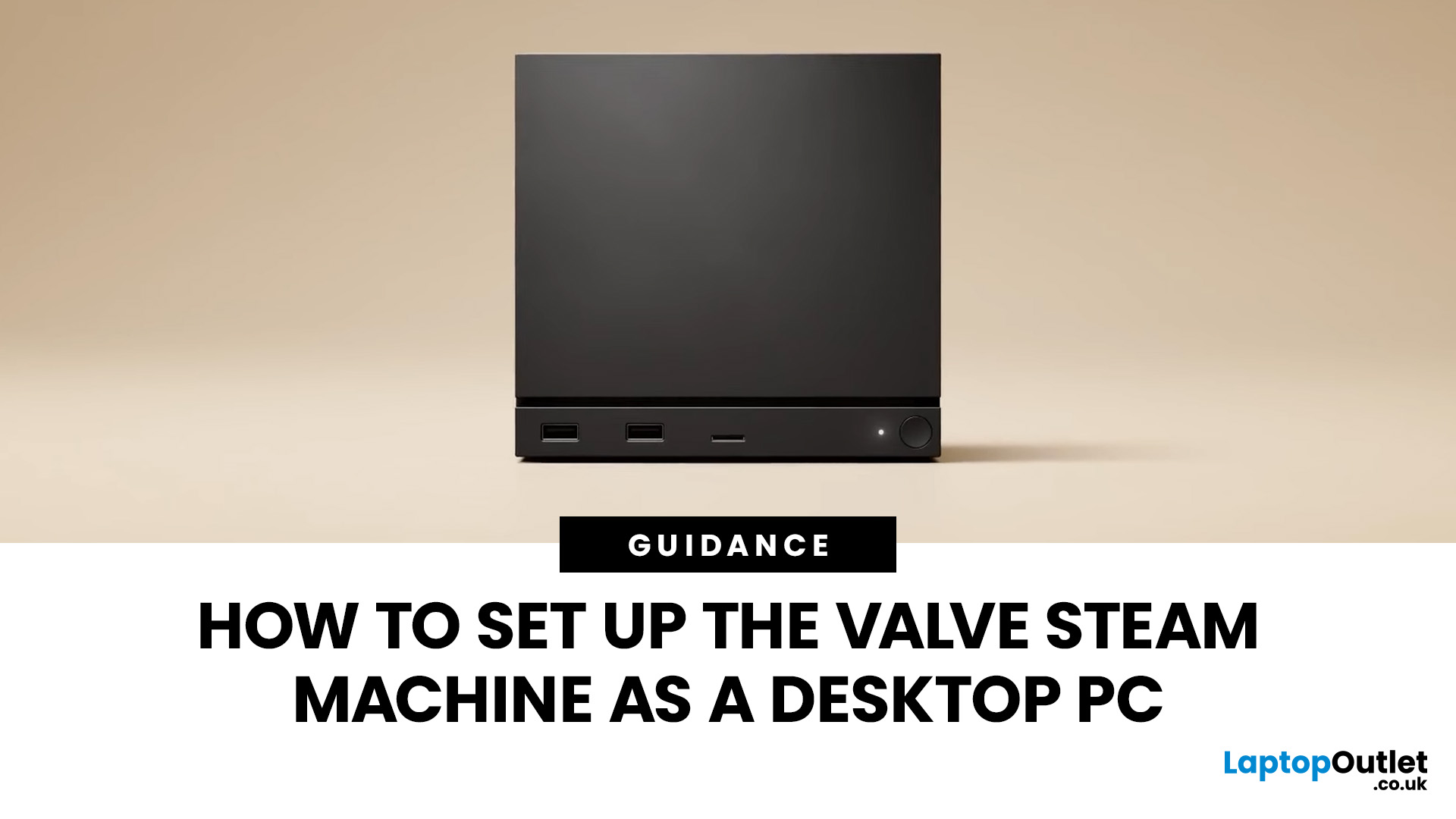
If you have an old Valve Steam Machine tucked away under the telly or on a shelf, you might be wondering whether it can still do more than launch games. The good news is that, with the right setup, it can absolutely pull double duty as a compact desktop computer for everyday use.
This guide walks you through a practical Valve Steam Machine setup for desktop use, from connecting a monitor and peripherals to accessing SteamOS desktop mode and making the system feels more like a standard PC. Whether you want a lightweight machine for web browsing, media streaming, or casual home computing, repurposing a Steam Machine can be a clever and cost-effective option.
What is a Valve Steam Machine?
A Valve Steam Machine was originally designed as a living-room gaming PC. It brought PC gaming closer to the console experience, usually running SteamOS and focusing on controller-friendly play from the sofa.
That said, the hardware inside many Steam Machines is still capable of handling basic desktop

