



What Is Chromecast, and Does It Work with a Laptop or Desktop PC?
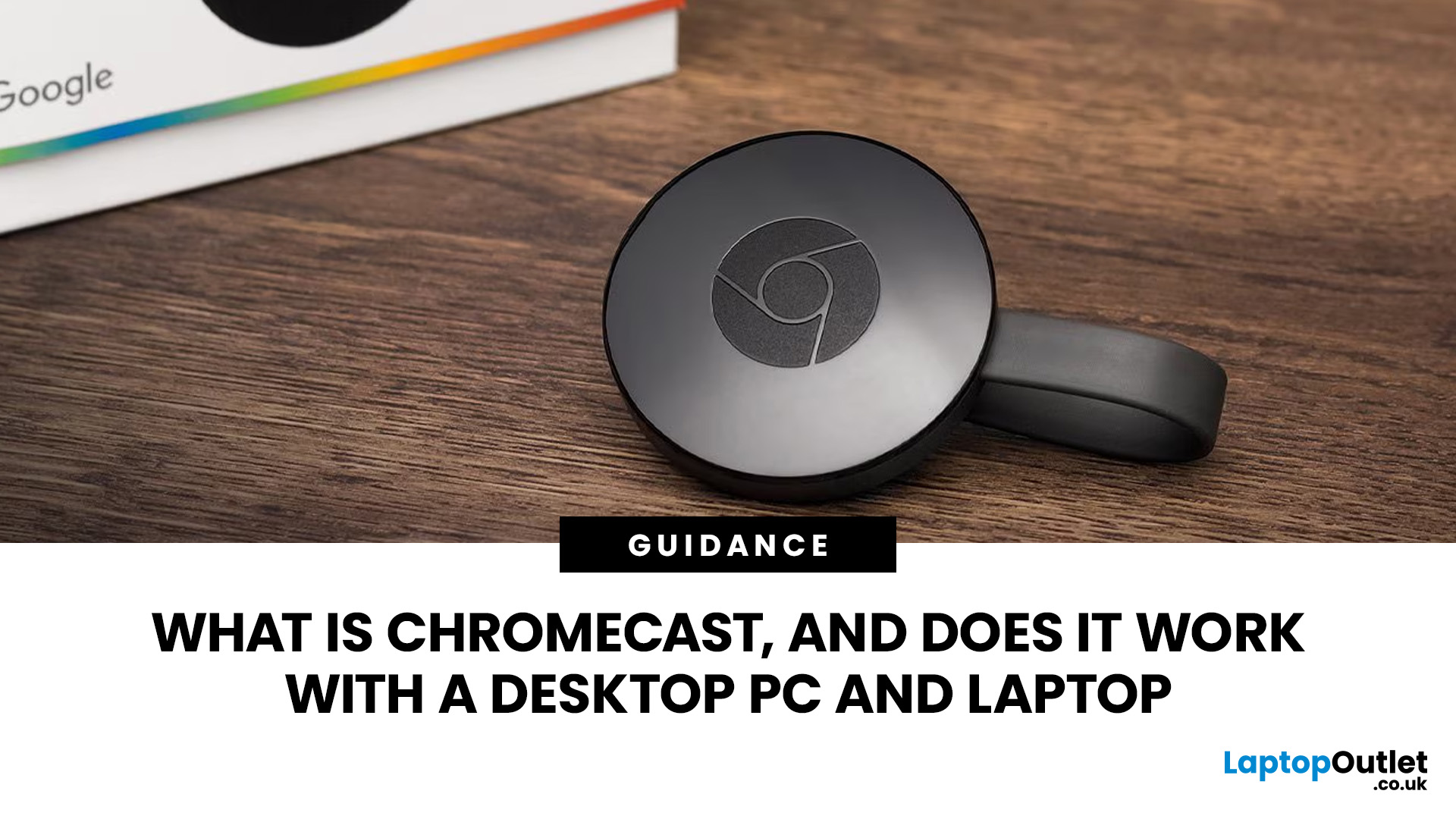
Chromecast makes it easy to show videos, websites, photos, presentations and other computer content on a larger screen. It works with compatible laptops and desktop PCs through Google Chrome and a shared network connection. The streaming device connects to a television, projector or monitor, while the computer controls what appears there.
This guide explains how that process works, what equipment you need, how to cast from Chrome and how to solve common connection problems.
What Is Chromecast?
Chromecast was the name of Google’s range of compact streaming devices. A traditional Chromecast plugs into an HDMI input on a television or other display, connects to your home network and receives content selected on a phone, tablet or computer.
The easiest way to understand it is to separate the three parts of the setup:
- The laptop or desktop PC selects and controls the content.
- The Chromecast or compatible receiver handles the cast request.
- The TV, projector or monitor displays the picture and usually plays the sound.
Chromecast is therefore not a cable between your computer and television. It is a network-connected receiver that allows the two devices to communicate without a direct video connection.
Chromecast Models and Google TV Streamer Compared
Google released several Chromecast models before replacing the product range with Google TV Streamer in 2024. The main differences are as follows:
|
Device |
Release Year |
Maximum Video Quality |
Interface |
Remote |
Main Difference |
|
Chromecast (1st generation) |
2013 |
Up to 1080p |
Casting only |
No |
Original stick-shaped Chromecast; official support has ended |
|
Chromecast (2nd generation) |
2015 |
Up to 1080p |
Casting only |
No |
Introduced the circular dongle design and improved wireless connectivity |
|
Chromecast Ultra |
2016 |
Up to 4K HDR |
Casting only |
No |
Added 4K, HDR, Dolby Vision and Ethernet connectivity through its power adaptor |
|
Chromecast (3rd generation) |
2018 |
Up to 1080p at 60 fps |
Casting only |
No |
Provided smoother Full HD playback and improved performance |
|
Chromecast with Google TV (4K) |
2020 |
Up to 4K HDR at 60 fps |
Google TV and casting |
Yes |
Added apps, an on-screen interface and a voice remote |
|
Chromecast with Google TV (HD) |
2022 |
Up to 1080p HDR at 60 fps |
Google TV and casting |
Yes |
Offered the Google TV experience for Full HD displays |
|
Google TV Streamer (4K) |
2024 |
Up to 4K HDR at 60 fps |
Google TV and casting |
Yes |
Current Google streaming device with more memory, storage and built-in Ethernet |
Does Chromecast Work with a Laptop or Desktop PC?
Yes. A Windows laptop, Windows desktop, Mac, MacBook or Chromebook can cast compatible content through Google Chrome. The computer does not need to be physically attached to Chromecast. Both devices simply need to be configured correctly and able to communicate across the local network.
|
Computer |
Can It Cast? |
Main Requirement |
|
Windows laptop or PC |
Yes |
Current Chrome browser and local network access |
|
Yes |
Chrome plus any required screen-sharing permission |
|
|
Yes |
Updated ChromeOS and network access |
The exact experience depends on what you cast. Sending content from a supported video service may allow the receiver to stream the video directly. Sharing the whole desktop requires the computer to capture, compress and transmit a continuing image of the screen, so it normally uses more processing power and can introduce more delay.
Can You Plug Chromecast into a Computer’s HDMI Port?
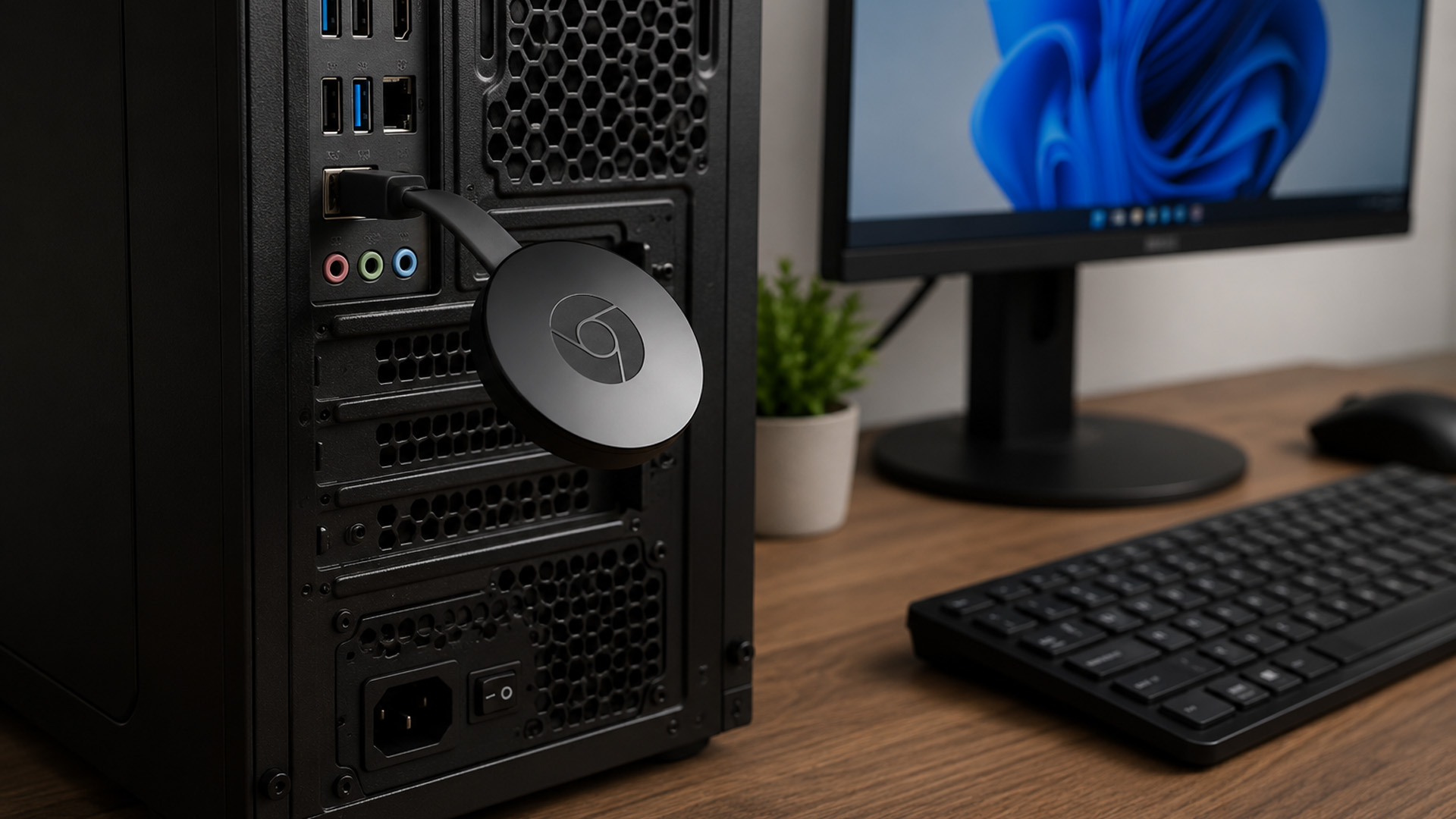
Usually not. Most laptop and desktop HDMI ports are outputs, which means they send video from the computer to another display. Chromecast also sends video through HDMI, so connecting it to another output does not provide anywhere for the picture to appear.
Instead, plug Chromecast into an HDMI input on a television, projector or monitor. The laptop or desktop then controls it over the network. In this context, connecting Chromecast to a PC normally describes a wireless network connection rather than a direct HDMI link.
What Do You Need Before Casting?
A reliable setup does not require specialist equipment, but every part must be ready before Chrome can find the receiving device.
Basic Requirements
- A working Chromecast device
- A television, projector or monitor with a suitable HDMI input
- The correct power supply for the receiving device
- A stable home network
- A current version of Google Chrome
- A phone or tablet for the initial setup of older Chromecast models
- A computer capable of playing the chosen content smoothly
The computer and receiver should be connected to the same local network. They do not always have to use the same Wi-Fi frequency band. For example, one may use 2.4 GHz and the other 5 GHz. What matters is that the router allows devices on both connections to discover and communicate with each other.
Public, hotel and guest networks often block this communication through a feature called client isolation or access-point isolation. A VPN, strict firewall or managed workplace network can cause a similar problem.
The latest laptops should handle ordinary browser casting comfortably, but network quality often matters more than computer age.
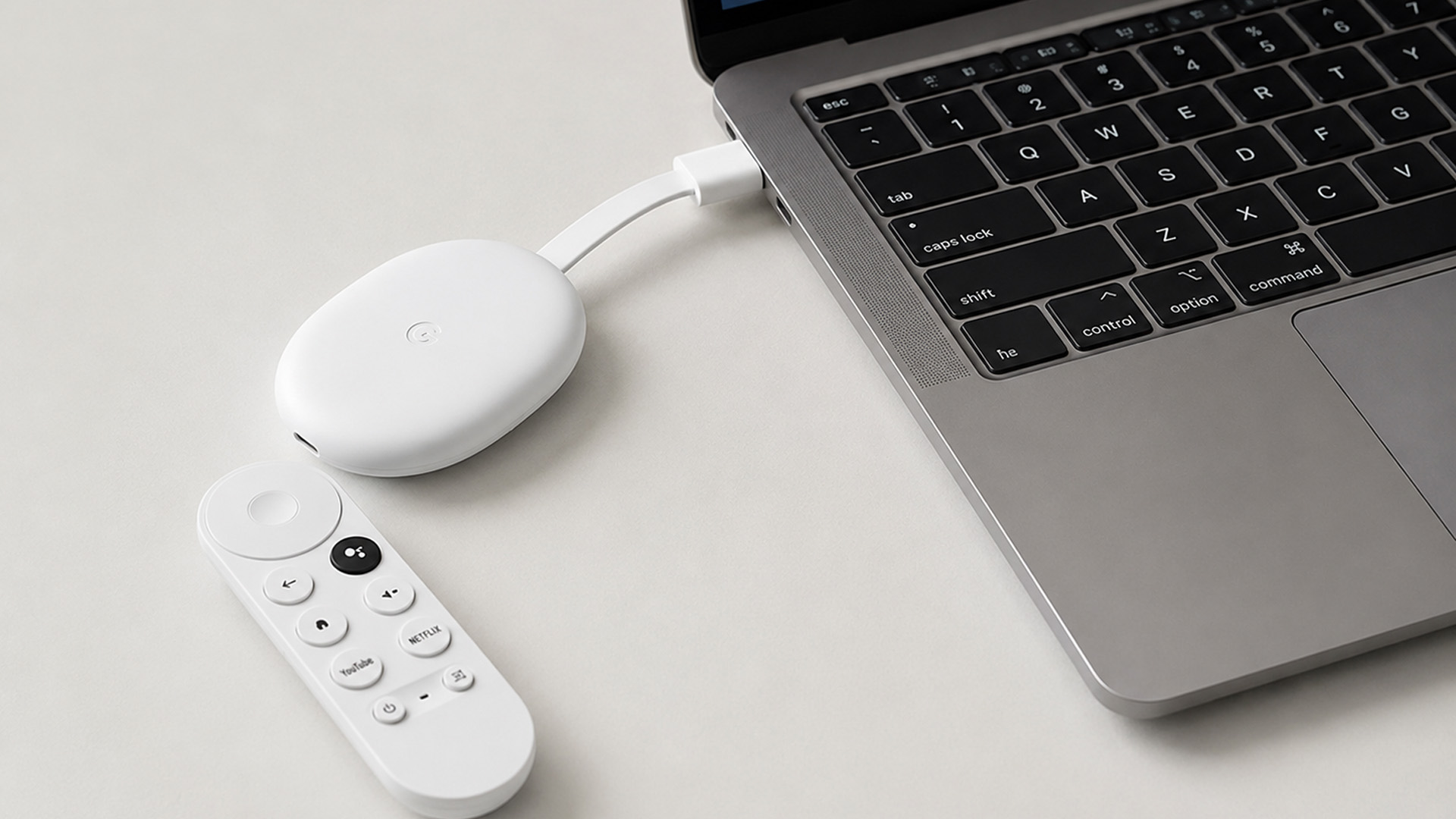
How to Set Up Chromecast for Use with a Computer
Before you connect Chromecast to PC or laptop, complete the receiver’s initial setup and confirm that it appears correctly on the television or display.
1. Connect Chromecast to the Display
- Insert Chromecast into an available HDMI input.
- Connect the recommended power cable and adaptor.
- Turn on the television, projector or monitor.
- Select the HDMI input used by Chromecast.
- Wait for the setup or home screen to appear.
Avoid relying on a low-power USB port unless the device specifically supports it. Insufficient power can cause repeated restarts, intermittent black screens or connection failures.
2. Complete the Initial Setup
Older Chromecast devices require the Google Home app on a compatible phone or tablet for initial configuration. Follow the on-screen instructions to:
- Identify the new device
- Confirm the displayed code
- Choose the room or device name
- Connect Chromecast to your home network
- Install available updates
Once setup is complete, the computer can use Chrome to discover the receiver. You do not need to repeat the mobile setup each time you cast.
3. Check the Computer and Network
Before opening the Cast menu:
- Update Chrome to the latest available version.
- Confirm that the computer is using the intended home network.
- Turn off a VPN temporarily if it prevents local-device discovery.
- Allow Chrome through the operating system firewall.
- On macOS, approve any requested screen recording or local-network permissions.
- Test the website or file locally before sending it to the larger screen.
These checks prevent most first-time connection problems.
How to Cast from Chrome
Chrome offers several casting methods. Choose the method that matches the content rather than using full-screen sharing for everything.
How to Cast a Browser Tab
Tab casting is the simplest option for websites, online lessons, web presentations, photos and browser-based media.
- Open Google Chrome.
- Open the tab you want to display.
- Select the three-dot menu in the upper-right corner.
- Choose Cast, save and share.
- Select Cast.
- Choose the required receiver from the device list.
- Confirm that the current tab is selected as the source.
Only the chosen tab appears on the larger screen. You can open another tab or application on the computer without automatically showing it to viewers.
A small Cast icon may appear in Chrome while the session is active. Select it to change the receiver or stop casting.
How to Cast the Entire Computer Screen
Use full-screen casting when you need to show software outside Chrome, move between applications or demonstrate the complete desktop.
- Open Chrome’s Cast menu.
- Select Sources or the source-selection control.
- Choose the option for casting the screen.
- Select the required desktop or display.
- Choose the receiving device.
- Approve any system permission that appears.
This method is useful for documents, business software, demonstrations and photo slideshows. However, the computer must continually capture and encode the screen before sending it across the network. That additional work creates more latency than direct media casting.
For that reason, full-screen casting is not ideal for competitive gaming, precision design work or situations where instant mouse response is essential. It is also less private because notifications and open windows may appear on the shared screen.
How to Cast a Local Video, Audio File or Photo
Chrome can open many common media files stored on the computer.
- Drag the file into an open Chrome tab.
- Press Ctrl + O on Windows and select the file.
- Press Command + O on macOS and select the file.
- Once the file opens in Chrome, cast that tab to the receiver.
File compatibility depends on the browser, operating system and media format. If a file plays without sound, shows an error or refuses to open, it may use a codec that Chrome cannot decode. Converting it to a common format may solve the problem.
How to Stop Casting
To finish the session:
- Select the active Cast icon or reopen the Cast menu.
- Choose the connected receiver.
- Select Stop casting.
Closing the tab may also stop a tab-casting session, but using the Cast control gives you a clearer confirmation that the connection has ended.
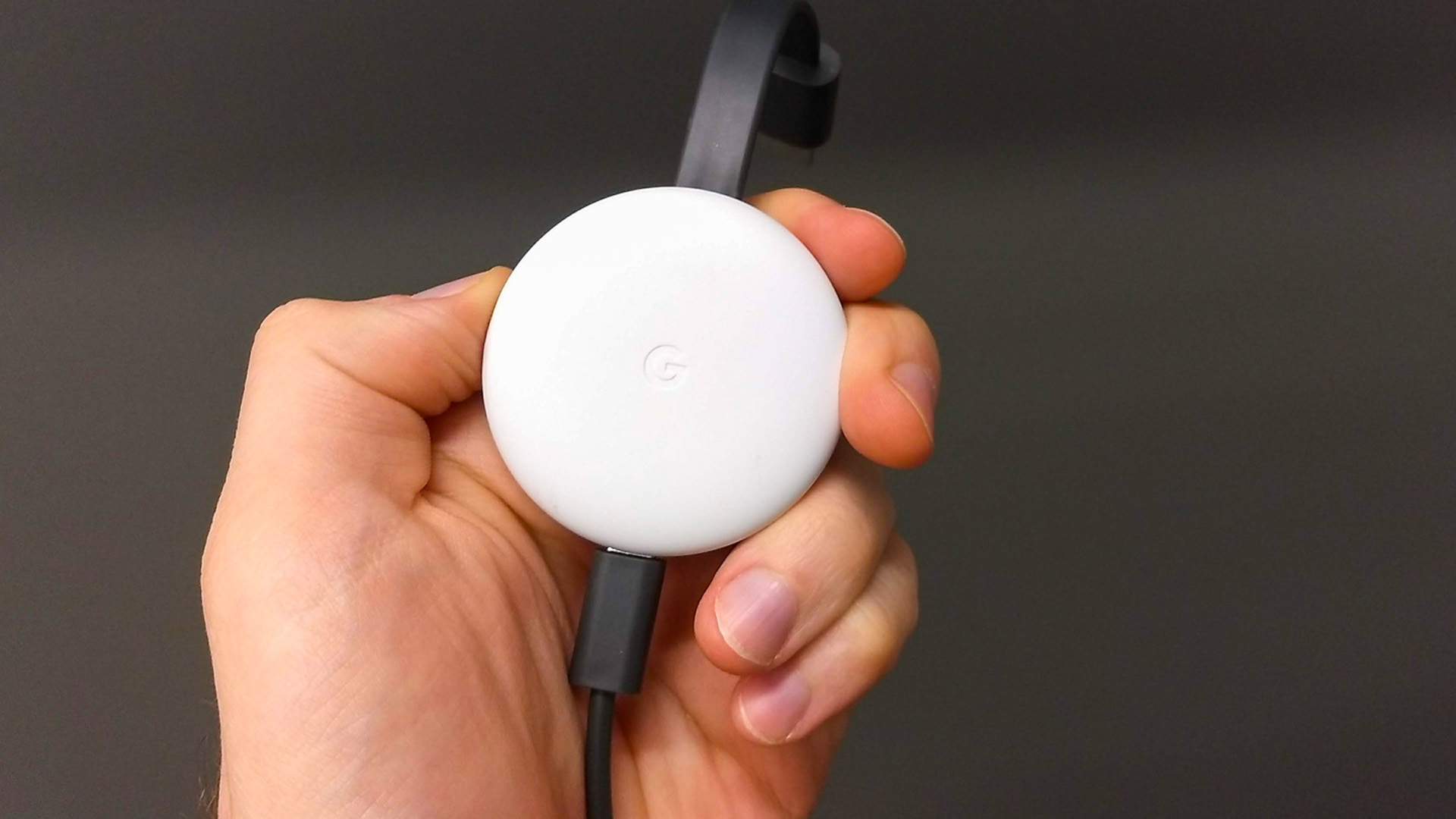
Which Casting Method Should You Use?
The best method depends on whether the receiver can play the content directly or must mirror the computer.
|
Method |
Best For |
Main Advantage |
Main Limitation |
|
Built-in Cast button |
Supported video and music services |
Receiver may stream directly for smoother playback |
Not available on every website |
|
Cast a browser tab |
Websites and browser content |
Keeps other applications private |
Limited to one tab |
|
Cast the full screen |
Software, documents and demonstrations |
Shows content outside Chrome |
More delay and less privacy |
|
Cast a local file |
Stored photos, video and audio |
Convenient for compatible files |
Format support can vary |
When a video service includes its own Cast button, use it where possible. In this mode, the computer often sends the receiver the media address and playback instructions. The receiver then retrieves the stream itself, reducing the amount of live video the computer must transmit.
Tab casting and screen mirroring are different. Tab casting captures one browser tab, while screen mirroring repeatedly sends an image of the selected desktop. Both work, but direct casting is usually more efficient for long-form video.
Can You Use Chromecast with a Computer Monitor?
A Chromecast to monitor setup works in much the same way as a connection to a television. The monitor must accept the video signal, while the receiving device needs separate power and access to the network.
Check the Video Connection
A suitable monitor should have:
- A compatible HDMI input
- A resolution supported by the receiver
- A control for choosing the correct input
- HDCP support where required by protected streaming services
- A suitable adaptor if the monitor uses DisplayPort, DVI or another connection
An adaptor may carry the picture, but not every adaptor supports audio, copy protection or the required resolution. For the simplest setup, use a direct HDMI connection whenever possible.
Plan for Sound
Many computer monitors have no built-in speakers. Others accept audio through HDMI but require the speakers to be enabled in the monitor menu.
Possible audio solutions include:
- Built-in monitor speakers
- Powered external speakers connected to the monitor
- A soundbar or audio system connected through a supported output
- Bluetooth audio where the specific streaming device supports it
If the picture appears but there is no sound, check the monitor volume, mute control and selected audio output before changing network settings.
Check Power and Display Behaviour
Some monitors enter sleep mode when they do not detect a signal immediately. Wake the monitor manually and select the correct input.
If Chromecast restarts, flashes a low-power warning or shows a black screen, connect it to the recommended mains adaptor instead of the monitor’s USB port.
Why Is Chromecast Not Appearing in Chrome?
When Chromecast not showing up is the problem, work through the connection in a fixed order. Randomly resetting settings can make diagnosis harder.
Start with the Physical Checks
Confirm that:
- The receiver is powered.
- The television or monitor is on.
- The correct HDMI input is selected.
- The Chromecast home or ambient screen is visible.
- The power cable is secure.
If no Chromecast screen appears, the problem is between the receiver and display rather than Chrome.
Check Device Discovery
Chrome normally finds casting devices through local-network discovery, which relies on multicast traffic. Routers and security software can block that traffic even when both devices have internet access.
Try these steps:
- Confirm that the computer and receiver are on the same home network.
- Restart Chrome.
- Restart the receiver.
- Restart the computer.
- Restart the router.
- Disable a VPN temporarily.
- Check whether the network is marked as private or trusted on the computer.
- Make sure the firewall permits Chrome to communicate on the local network.
Do not worry if one device uses 2.4 GHz and the other uses 5 GHz, provided the router bridges both bands normally. Problems occur when the router separates them into isolated guest networks or blocks multicast discovery.
Common Problems and Solutions
|
Problem |
Likely Cause |
What to Do |
|
Receiver never appears |
Different or isolated networks |
Reconnect both devices to the main home network |
|
Phone finds it but the PC does not |
Browser, firewall or permission issue |
Update Chrome and allow local-network access |
|
Device appears and disappears |
Weak Wi-Fi or unstable power |
Improve signal and use the correct power adaptor |
|
Connection fails on hotel Wi-Fi |
Client isolation or a login page |
Use another permitted private network |
|
One service will not cast |
Service, account or media restriction |
Try its built-in Cast button or another supported source |
|
Casting stopped after a router change |
Receiver has old network details |
Reconfigure it through the Google Home app |
How to Fix Lag or Poor Picture Quality
A cast can connect successfully and still perform badly. Common causes include weak Wi-Fi, an overloaded network, a slow source computer or full-screen mirroring.
To improve performance:
- Use a built-in Cast button instead of full-screen sharing where possible.
- Close unnecessary browser tabs and applications.
- Pause cloud backups, large downloads and software updates.
- Move the receiver and router closer together.
- Reduce interference from thick walls, crowded wireless channels and nearby electronic equipment.
- Use Ethernet if the receiving device supports a compatible wired adaptor.
- Lower the source video quality when the network cannot sustain a higher bitrate.
If sound and picture drift apart, stop the cast and reconnect. Persistent synchronisation problems may come from the media file, browser decoding or an external audio system rather than Chromecast itself.
Is Chromecast Still Worth Using in 2026?
A working Chromecast can still be useful for occasional streaming, presentations and displaying browser content. There is no need to replace it simply because Google no longer manufactures the original product line.
Replacement makes more sense when:
- The device no longer receives the support required by the services you use.
- It cannot handle the resolution or HDR format of your display.
- Wi-Fi performance is unreliable.
- You want a remote control and a full on-screen app interface.
- A newer television already has better casting support built in.
For new purchases, Google TV Streamer is the current Google-branded alternative. Chromecast with Google TV and compatible smart televisions can also accept supported cast requests from computers.

Big-Screen Casting Made Simple
Chromecast works with laptops and desktop PCs by receiving content over the local network and displaying it on a television, projector or monitor. Chrome can send a browser tab, supported file or full desktop, while direct casting from compatible services usually provides the smoothest playback. Reliable power, correct display input and unrestricted local-network discovery are the foundations of a stable setup.

A Few More Things to Know...
How to connect laptop to Chromecast?
To connect your laptop to a Chromecast, make sure both devices are on the same Wi-Fi network. Open Google Chrome, click the three-dot menu in the top-right corner, select Cast, save and share (or Cast), choose your Chromecast device, and select whether to cast a single tab or your entire desktop.
Can I connect Chromecast directly to a PC with HDMI?
Usually not. Most computer HDMI ports are video outputs rather than inputs. Chromecast should connect to the display’s HDMI input, while the PC discovers and controls it through the local network.
Why can my phone find Chromecast but my computer cannot?
Chrome may lack local-network permission, or a firewall, VPN or network profile may block discovery. Update Chrome, allow local communication and confirm that both devices use the same non-isolated home network.
Can Chromecast play content on a monitor without a computer?
Yes. Once configured, Chromecast can receive supported content from a phone, tablet or another controller. The monitor only provides the picture, so separate speakers may be required when it has no audio output.
Does casting the entire desktop reduce picture quality?
It can. Full-screen casting captures and compresses the desktop in real time, adding latency and possible quality loss. A service’s built-in Cast button usually provides smoother playback because the receiver streams the media directly.
| Read More: |
| How to Connect a Laptop to a TV |
| How to Connect Two Monitors to a Laptop? |
| How to Connect Nintendo Switch to TV? |
Related Articles


Last Updated: February 19, 2026
A new year is the perfect excuse to retire the sluggish desktop that wheezes when you open five tabs or the “gaming PC” that now struggles to hold stable FPS in modern titles. New Year desktop PC deals are one of the best windows to upgrade because prices tend to be sharper, stock gets refreshed, and you can often jump up a whole performance tier for less than you’d expect.
If you’re shopping from the UK, this is also the season where desktop PC New Year deals UK searches explode for a reason: people want a better PC for less, and they want it delivered quickly and safely. Laptop Outlet’s New Year event is built for that kind of upgrade run, tech across categories, limited-time promos, and a straightforward way to browse by what you actually need. You can start with huge savings in New Year tech sale while you compare options and decide your budget.
What counts as a “great deal” in 2026?
The best New Year desktop PC Deals don’t just mean “lowest price.” A great deal in 2026 is one where

Last Updated: January 27, 2026
Building or buying a high-end gaming PC is an exciting journey for any enthusiast. The market moves fast, and staying updated on the latest hardware is essential for the best experience.
In this gaming desktop PC breakdown, we will explore the core parts that make a machine powerful. We will look at the latest processors from AMD and Intel, the incredible graphics power of NVIDIA RTX and Radeon RX, alongside other core components.
Whether you want to play the newest AAA titles or compete in esports, understanding these parts is vital. Let us dive into the modern world of gaming PC technologies.
Understanding Gaming Desktop PCs
A gaming desktop PC is a high-performance computer designed specifically to handle demanding video games. Unlike standard PCs, these machines focus on graphical power and fast processing speeds. They use specialised parts that can handle high heat and heavy workloads.
While gaming laptops and consoles are popular, the desktop remains the "gold standard" for several

Last Updated: February 03, 2026
Choosing a new processor used to be a simple choice between raw power and budget value. However, as we move through 2026, the landscape has shifted.
The rivalry of Intel vs AMD desktop processors has reached a fever pitch, with both "Team Blue" and "Team Red" offering incredible technology that caters to very specific types of users.
This guide breaks down everything you need to know about the current market to help you decide which brand deserves a spot in your desktop PC.
The State of the Market in 2026
As we move through 2026, both manufacturers have moved beyond simple core-count wars.
Intel has doubled down on its "Arrow Lake" and "Nova Lake" architectures, focusing heavily on integrated AI NPUs (Neural Processing Units) and a refined tiled architecture.
Meanwhile, AMD continues to dominate the enthusiast market with its Zen 5 architecture, led by the legendary 3D V-Cache technology.
Intel’s Current Strategy: The AI PC Era
Intel has successfully transitioned to its LGA 1851 socket.

Published: February 04, 2026
Your desktop PC is a key part of daily life. It handles work, gaming, and more. But how long can it last? Many users worry about desktop PC lifespan.
The good news is you can extend it to five years or beyond. With smart choices and simple habits, your setup stays reliable. This guide shares practical steps. It covers everything from processor picks to daily care.
Understanding Desktop PC Lifespan
Desktop PCs don't have a fixed expiry date. Their lifespan depends on build quality, usage, and maintenance. On average, a well-kept desktop lasts 5-8 years. But push it right, and you can hit 10 years or more. Why care? A longer desktop computer lifespan saves money and reduces waste.
Key Factors Affecting Longevity
Several elements play a role in how long your desktop endures. First, hardware quality matters most. Cheap parts wear out fast. Second, heat buildup shortens life—poor cooling is a killer. Third, software updates keep things secure and efficient. Finally, your habits, like overworking

Last Updated: February 11, 2026
Buying a desktop PC can quickly become frustrating. Endless specs, unfamiliar terms, and conflicting advice make it hard to know what really matters, and easy to waste money on the wrong setup. But here’s the solution: once you understand what desktop PC specifications actually do, choosing the right machine becomes simple. In this desktop PC specs explained guide, we break down every key component in plain English, showing you exactly what you need for work, home or gaming, and what you can safely ignore. No jargon, no guesswork, just confident buying decisions.
Processor (CPU): The Brain of Your Desktop
The processor, or CPU, is one of the most important parts of any desktop PC. It handles instructions and calculations, directly affecting how fast your system feels.
What to look for:
- Cores & Threads: More cores help with multitasking and demanding software
- Clock Speed (GHz): Higher speeds generally mean faster performance
What you actually

Last Updated: February 10, 2026
Buying a desktop PC is a big decision, especially when prices can range from a few hundred pounds to several thousand. The right choice depends not just on your budget, but on how you plan to use your PC now and in the future.
Let us help you understand exactly what you get at different price points, what specifications really matter, and how to avoid common mistakes. Whether you’re buying your first desktop or upgrading an older system, this guide will walk you through everything you need to know.
Why Choose a Desktop PC Instead of a Laptop?

Before diving into budgets, it’s worth understanding why many UK buyers still choose desktops:
- Better performance for the price
- Easier and cheaper upgrades
- Longer lifespan
- Improved cooling and sustained performance
- More connectivity options
For home offices, gaming setups, and creative work, desktops almost always offer better long-term value.
Understanding Desktop PC Specifications (Quick Primer)
If you’re not technical, these are the core components
Last Updated: May 05, 2026
Let’s call this out early: “AI-Ready” is one of those phrases that sounds important but tells you almost nothing by itself.
Every PC brand is using it. Every listing claims it. And most buyers still walk away thinking, “Cool… but what does that actually do for me?”
So instead of selling you a future fantasy, let’s talk about what AI-Ready desktops actually change in 2026, where they matter, and where they really don’t.
First: Why Everyone Is Suddenly Calling Their PCs “AI-Ready”
AI didn’t just become a software thing - it became a hardware conversation.
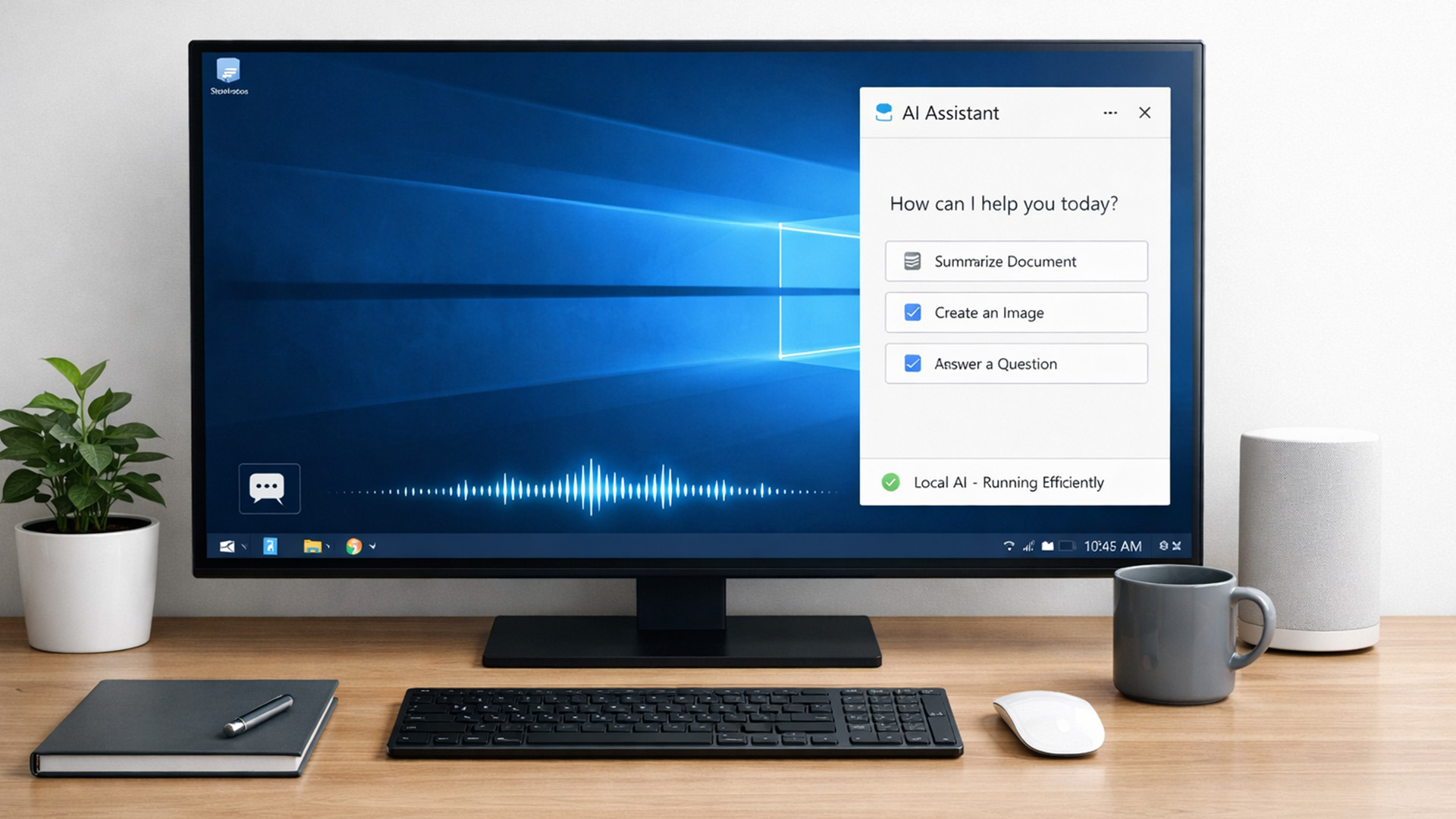
For years, AI lived in the cloud. You typed something, it went to a server, magic happened, and the result came back. Now, operating systems (especially Windows) are pushing AI features onto the device itself. That shift is what triggered the “AI-Ready” wave.
An AI-Ready desktop is basically a PC that can:
- Run certain AI tasks locally
- Do it efficiently
- Without destroying performance or power usage
That’s it. No sentience. No robot takeover.

Last Updated: February 11, 2026
Choosing the right desktop PC can feel a bit like picking a side in a long-running tech rivalry. HP, Dell, and Lenovo are three of the biggest names and for good reason. They all offer reliable, powerful desktops that suit everything from casual home use to hardcore business workloads and creative setups.
But when it comes to HP vs Dell vs Lenovo desktop PCs, which brand actually wins for you?
Why Compare HP, Dell, and Lenovo Desktop PCs?
HP, Dell, and Lenovo are all global heavyweights in the PC world. They each offer a wide range of desktops — from budget-friendly towers to powerful workstations and compact all-in-one PCs.
But here’s the thing:
Not all desktop PCs are built for the same kind of user.
Some are better for productivity, some for gaming, and others for long-term reliability. Understanding the differences is key before you hit “Add to Basket”.
HP Desktop PCs: Style Meets Performance
HP desktops are known for blending solid performance with modern design. If you like your
Published: February 09, 2026
If you have been browsing for a new PC lately, you might have noticed a bit of a price shock. Whether you are looking for a sleek all-in-one for your home office or a powerful gaming rig, the numbers on the price tags in 2026 are noticeably higher than they were just a couple of years ago.
Many UK buyers are left scratching their heads, asking the same question: why are desktop PCs expensive all of a sudden? It is a fair question. In this guide, we will break down exactly what is driving these costs and, more importantly, how you can still find incredible value.
Key Reasons Desktop PC Prices Are Rising
Understanding the "why" behind the price hike helps you time your purchase better. Here are the primary factors driving the market today.
The "AI Squeeze" on Components
The biggest culprit isn't a lack of chips, but a shift in what those chips are used for. Huge data centres are currently buying up almost 70% of the world’s advanced memory (DRAM) and storage (NAND) to power AI models.

Last Updated: September 15, 2026
If you’re asking “are refurbished desktop PCs worth it” in 2026, you’re not alone. Refurb is having a moment in the UK, partly because budgets are tight, and partly because more people want a cheaper, lower-waste way to get solid tech. At the same time, buyers are more hesitant than ever… and that hesitation is not random. A few very 2026-specific changes have raised the stakes.
This guide breaks down the real reasons people hesitate in 2026, and how Laptop Outlet reduces those risks so you can buy refurbished with genuine peace of mind - without losing out on choice or price.
What changed in 2026 that made buyers more cautious?
1) The Windows 10 “cliff edge” is now behind us
Windows 10 support ended on 14th October 2025, which means many older desktops are now in a riskier zone if they can’t upgrade cleanly.
Yes, Microsoft offers Extended Security Updates (ESU), but for consumers it’s a limited runway (through 2026) and comes with requirements that can add friction.
Why this makes refurbished

