



What are the key features to look for when choosing an HP monitor?
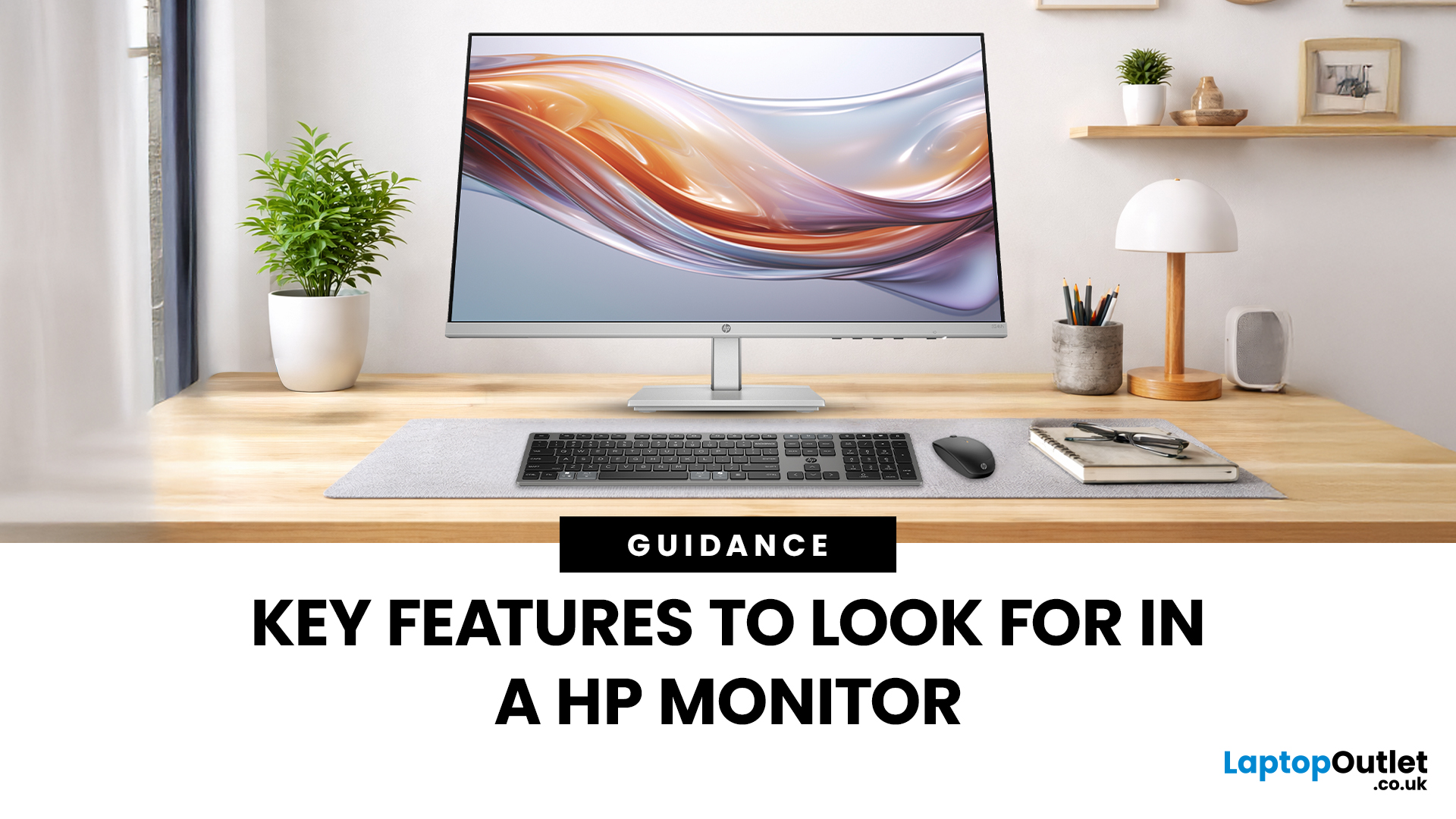
Choosing the best HP gaming monitor is not simply about buying the screen with the highest resolution or fastest refresh rate. The right display depends on the games you play, the graphics performance of your PC or console, your desk space and how much you value image quality versus competitive speed.
HP's gaming range covers everything from compact Full HD displays for fast-paced play to high-refresh QHD monitors, curved ultrawide screens and premium 4K OLED models. Current HP UK options extend from 144Hz-class displays to QHD OLED models reaching 500Hz, so gamers now have considerably more choice than the older 60Hz to 240Hz range suggested in the previous guide.
If you are planning a new gaming setup or upgrading an older HP monitor, understanding the specifications that actually affect gameplay will help you spend your budget where it matters.
What Makes a Good HP Gaming Monitor?
A good HP gaming monitor balances resolution, refresh rate, response time, panel quality and adaptive sync rather than prioritising one specification in isolation.
Competitive players usually benefit more from high frame rates and fast motion handling. Story-driven, simulation and open-world gamers may place greater value on resolution, contrast and screen size. Someone using the same display for gaming, work and content creation will often need a more balanced combination of sharpness, colour quality and connectivity.
Before looking at individual models, decide what you want your monitor to do most often. You can then compare the latest gaming monitors from HP using specifications that are relevant to your setup rather than simply choosing the highest numbers.
1. Choose the Right Screen Size for Your Gaming Setup
Screen size affects immersion, viewing distance and how easily you can track action across the display.
An HP 24 monitor, or a similar 23.8-inch gaming screen, is a practical choice for competitive shooters and smaller desks. The compact viewing area means important information remains within your field of vision without requiring much eye or head movement. HP's current UK range includes a 23.8-inch OMEN 24 G2 with Full HD resolution and a 180Hz refresh rate.
A 27-inch monitor offers a strong middle ground. It gives games more visual presence while still fitting comfortably on most desks. This size works particularly well with QHD resolution, although Full HD models can make sense when maximum frame rate matters more than pixel density.
Displays around 31.5 inches are better suited to immersive games and larger setups, while 34-inch ultrawide screens can provide a wider field of view in compatible titles. Racing games, simulators and cinematic adventures can particularly benefit from curved displays for gamers.
2. Match the Resolution to Your Graphics Performance
Resolution determines how many pixels your monitor displays. More pixels usually create sharper images, but they also require more graphics processing power.
Full HD, or 1920 x 1080, remains useful for competitive gaming because it is less demanding on the GPU. That makes it easier for a capable gaming PC to generate the very high frame rates needed to take advantage of 180Hz, 240Hz or faster displays.
QHD, or 2560 x 1440, provides a useful balance between sharpness and performance. At 27 inches, it produces noticeably finer detail than Full HD while remaining easier to drive than 4K. This makes QHD particularly attractive for gamers who play a mixture of competitive and visually demanding titles.
An HP gaming monitor with 4K resolution is better suited to players who prioritise fine detail, large-screen clarity and cinematic visuals. HP currently offers 4K gaming options ranging from 144Hz displays such as the OMEN 32x to the 240Hz OLED OMEN Transcend 32.
Before moving to 4K, make sure your PC has sufficient graphics performance for the games and settings you want to use. If you are upgrading the rest of your system at the same time, compare powerful graphics cards for gaming alongside your monitor choice.
For players who value maximum image detail, immersive 4K gaming screens provide the sharpest option, but QHD can offer a better performance-to-clarity balance for many gaming PCs.
3. Decide Whether You Need 144Hz, 240Hz or More
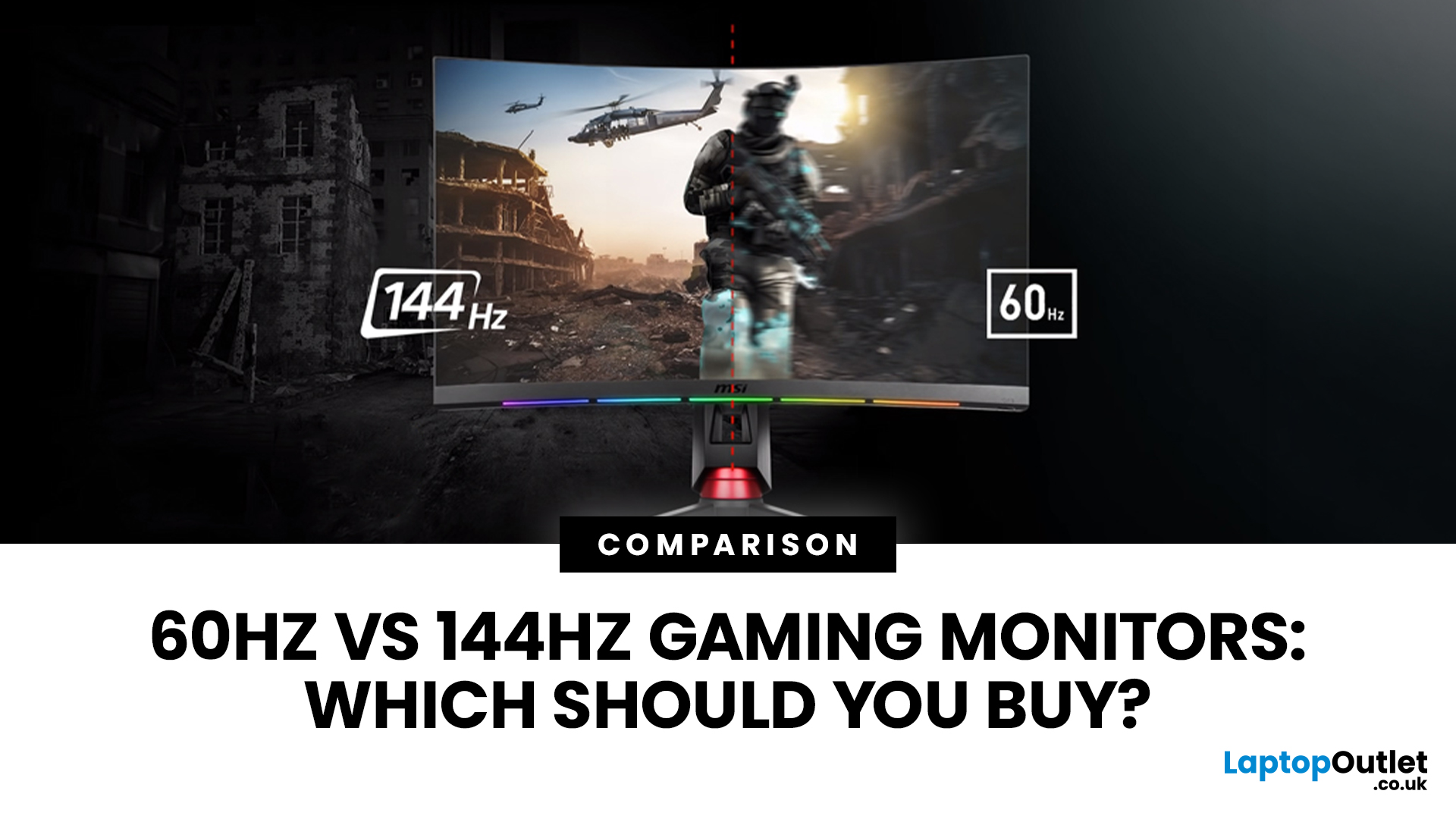
Refresh rate measures how many times the display can update its image every second. A higher refresh rate can make movement appear smoother and can improve responsiveness when your PC is producing enough frames per second.
An HP 144Hz monitor is already a significant step up from a conventional 60Hz display. It is well suited to fast everyday gaming, racing titles, action games and players who want smoother motion without building their entire system around extremely high frame rates.
An HP 240Hz gaming monitor makes more sense for competitive shooters, esports titles and other games where rapid movement and reaction speed are priorities. Laptop Outlet currently lists an HP OMEN 27-inch Full HD IPS model with a 240Hz refresh rate, 1ms response time and AMD FreeSync Premium, illustrating the type of specification aimed at this use case.
HP's current range now goes beyond 240Hz, including a QHD OLED OMEN model rated at 500Hz. However, a faster panel only delivers its full benefit if the rest of your hardware can generate correspondingly high frame rates.
For most gamers, balance matters more than chasing the largest refresh-rate figure.
4. Look at Response Time as Well as Refresh Rate
Refresh rate and response time describe different aspects of monitor performance.
Refresh rate tells you how frequently a new frame can be displayed. Pixel response time describes how quickly pixels can change from one state to another. Slow pixel transitions can contribute to visible trailing or ghosting even when the monitor has a relatively high refresh rate.
Modern gaming IPS displays commonly advertise response times around 1ms under particular settings, while OLED gaming panels can quote much faster pixel-transition figures. HP's OMEN Transcend 32, for example, uses a QD-OLED panel with a specified 0.03ms GtG response time and a 240Hz refresh rate.
Do not choose a screen from the advertised response-time number alone. Panel behaviour, overdrive settings, refresh rate and adaptive sync all contribute to how clear motion looks in practice.
5. Pick the Right Panel Type
The old assumption that gamers should automatically choose TN panels is increasingly outdated. Current gaming displays give buyers strong options across IPS, VA and OLED technologies.
IPS panels offer wide viewing angles, strong colour reproduction and responsive performance. They are a versatile option for gaming, productivity and content creation.
VA panels generally prioritise contrast and deeper blacks. They are commonly used in curved gaming monitors and can work particularly well for atmospheric games, films and darker environments.
OLED and QD-OLED panels can produce exceptionally deep blacks, high contrast and extremely fast pixel response. These qualities make them attractive for both cinematic gaming and high-performance play. Premium OLED screens can cost more, and long-term use involving persistent static elements should be considered when deciding whether OLED suits your usage.
Rather than treating one technology as universally best, select the panel according to the games and other tasks you use most.
6. Check Adaptive Sync and Variable Refresh Rate Support
A monitor refreshes at a fixed maximum rate, while the frame rate produced by a game can change constantly. Variable refresh rate technology helps the display follow those changing frame rates, reducing visible tearing and improving perceived smoothness.
AMD FreeSync and NVIDIA G-SYNC compatibility are common technologies to look for. Support varies by individual monitor, so check the specifications rather than assuming every HP OMEN gaming monitor supports the same standard.
Adaptive sync becomes particularly useful when frame rates fluctuate in demanding games. It can help maintain a smoother experience without requiring the GPU to stay locked to one exact frame-rate target.
7. Make Sure Your PC or Console Can Use the Monitor Properly
The best HP gaming monitor for one computer may be unnecessary for another.
A 240Hz display provides limited value if your PC normally produces 70 or 80 frames per second in the games you play. Likewise, moving from QHD to 4K substantially increases the workload placed on the GPU.
For PC gaming, check the DisplayPort and HDMI capabilities of both your graphics card and monitor. Laptop users should also confirm which refresh rates and resolutions their external display outputs support.
Console gamers should pay particular attention to HDMI capabilities. Modern consoles can target high-refresh 4K output in supported games, so the monitor needs an appropriate HDMI connection to take advantage of it. HP's OMEN 27k, for example, combines a 4K 144Hz panel with HDMI 2.1 and support for 4K console gaming at up to 120 frames per second.
8. Consider Connectivity and Everyday Convenience
Ports are easy to overlook until the monitor is sitting on your desk.
HDMI is important for consoles, laptops and PCs, while DisplayPort is widely used for high-refresh PC gaming. USB-C can make a monitor more flexible when it also needs to connect to a compatible laptop.
Some premium HP displays add USB hubs or KVM functionality, allowing peripherals to be shared between multiple connected systems. This can be particularly useful when one monitor serves both a gaming PC and a work laptop.
Also consider VESA mounting support, headphone connectivity and built-in speakers if they matter to your setup. Do not pay extra for features you are unlikely to use.
9. Check Ergonomics Before Buying
A gaming monitor may stay in front of you for several hours at a time, so stand adjustment matters.
Height adjustment is particularly useful because it allows you to position the display closer to your natural eye level. Tilt, swivel and pivot options can provide additional flexibility, while VESA compatibility makes it possible to use a monitor arm.
Ergonomics should not be separated into multiple buying criteria as the old guide did. The adjustable stand is part of the overall ergonomic package and should be compared alongside screen size, viewing distance and mounting options.
10. Do Not Ignore HDR, Brightness and Colour
HDR can improve the impact of bright highlights, shadows and colour in supported games, but an HDR label alone does not guarantee the same experience across every monitor.
Brightness, contrast, panel technology, local dimming capabilities and colour gamut all affect HDR performance. Entry-level DisplayHDR specifications and premium OLED HDR displays can look substantially different even though both are described as HDR monitors.
Colour coverage also matters if you use your gaming display for photography, video or design. For gaming alone, accurate and vibrant colour is useful, but there is little benefit in prioritising professional colour specifications that your work does not require.
Which HP Gaming Monitor Specifications are Best for Different Games?
If competitive shooters are your priority, look towards a 24-inch to 27-inch Full HD or QHD display with a 240Hz or faster refresh rate and strong motion performance.
For a mixture of multiplayer and single-player gaming, a 27-inch QHD display around 165Hz to 240Hz offers an excellent balance of detail, speed and manageable GPU requirements.
For RPGs, adventure games and visually rich AAA titles, a larger QHD or 4K display can make better use of detailed environments. OLED can add excellent contrast for players who prioritise image quality.
Racing and simulation fans may prefer larger or ultrawide displays, particularly curved screens that provide a broader, more immersive view.
If the same monitor also needs to handle work or creative tasks, prioritise a sharp QHD or 4K panel, comfortable ergonomics and useful connectivity alongside gaming performance.
How to Choose an HP Gaming Monitor Without Overspending
Start with the performance of your gaming PC or console, then choose the resolution you can realistically run. After that, decide what refresh rate benefits your games, followed by screen size and panel type.
A balanced QHD 180Hz monitor can be a better purchase than a 4K 240Hz model if your graphics card cannot maintain high frame rates at 4K. Similarly, a 240Hz Full HD display can make more sense for esports than a slower, higher-resolution screen.
The best HP gaming monitor is therefore the one that complements your hardware and gaming habits rather than simply having the most impressive specification sheet.

Final Thoughts
HP's gaming-monitor range in 2026 covers a much wider performance spectrum than it did a few years ago. Gamers can choose compact Full HD screens, balanced QHD displays, high-refresh competitive monitors, curved ultrawides and premium 4K OLED options. HP's current UK line-up even includes QHD OLED models reaching 500Hz and 4K OLED displays running at 240Hz.
When choosing the best HP gaming monitor, focus first on resolution and refresh rate, then check response behaviour, panel type, adaptive sync, connectivity and ergonomics. Most importantly, match the display to the frame rates your hardware can actually deliver.
If you are still comparing brands, sizes or performance levels, explore our top gaming monitors to find a display that suits your PC, console and preferred style of gaming.

In Case You’re Wondering...
Is a 144Hz HP monitor good for gaming?
Yes. A 144Hz display provides much smoother motion than a traditional 60Hz monitor and remains a strong choice for everyday PC gaming. Competitive players who regularly achieve very high frame rates may benefit more from 240Hz or faster.
Is a 240Hz HP gaming monitor worth it?
A 240Hz monitor is most useful for competitive shooters, esports and other fast-paced games when your PC can generate high frame rates. For slower games or systems that cannot approach 240fps, investing in a higher resolution or better panel may provide a more noticeable improvement.
Is QHD or 4K better for an HP gaming monitor?
QHD provides an excellent balance between image sharpness and GPU demand, particularly on a 27-inch display. 4K delivers finer detail but requires considerably more graphics performance, especially when combined with high refresh rates.
What screen size is best for an HP gaming monitor?
Around 24 inches works well for focused competitive gaming, while 27 inches is a versatile choice for most setups. Larger 31.5-inch and ultrawide displays are better suited to immersive games, simulation titles and multitasking.
What should I look for when I choose an HP gaming monitor?
Check the resolution, refresh rate, response performance, panel type, adaptive sync support and available ports. Then make sure those specifications suit the capabilities of your gaming PC or console rather than choosing purely by the highest numbers.
| Read More: |
| Best Budget-Friendly 4K Monitors for Xbox Series X |
| Best OLED Gaming Monitors to Buy in 2026 |
| HP Monitors 2025: Essential Displays for Business and Productivity |
Related Articles

Last Updated: August 11, 2026
Published: August 13, 2026
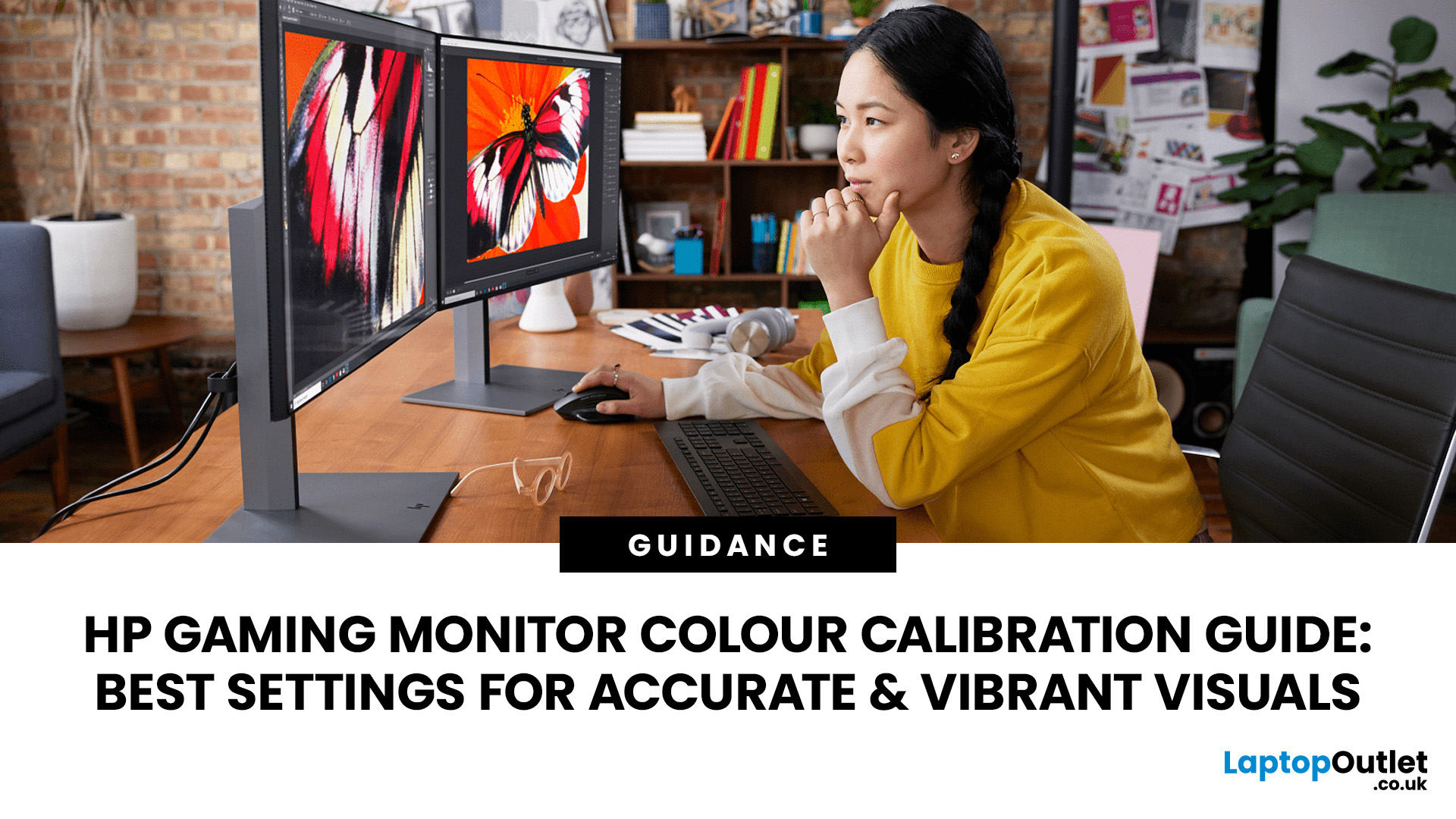
Your HP gaming monitor might have a fast refresh rate, sharp resolution, and solid HDR support, but poor colour settings can still leave games looking washed out, overly dark, or weirdly saturated. That is where monitor calibration makes a noticeable difference.
The key thing to know is that there is no single magic set of values that works for every HP or OMEN monitor. The right monitor settings depend on your exact panel, room lighting and whether you are playing in SDR or HDR.
This HP display calibration guide will show you how to get a more accurate starting point, fine-tune your screen in Windows 11 and fix the most common colour problems without turning everything up to 100.
What Does Monitor Calibration Actually Change?
Monitor calibration adjusts how your screen reproduces brightness and colour so that the image looks balanced rather than artificially enhanced. The main settings you are dealing with are:
- Brightness: Controls how bright the screen appears.
- Contrast: Affects the difference
Published: August 17, 2026
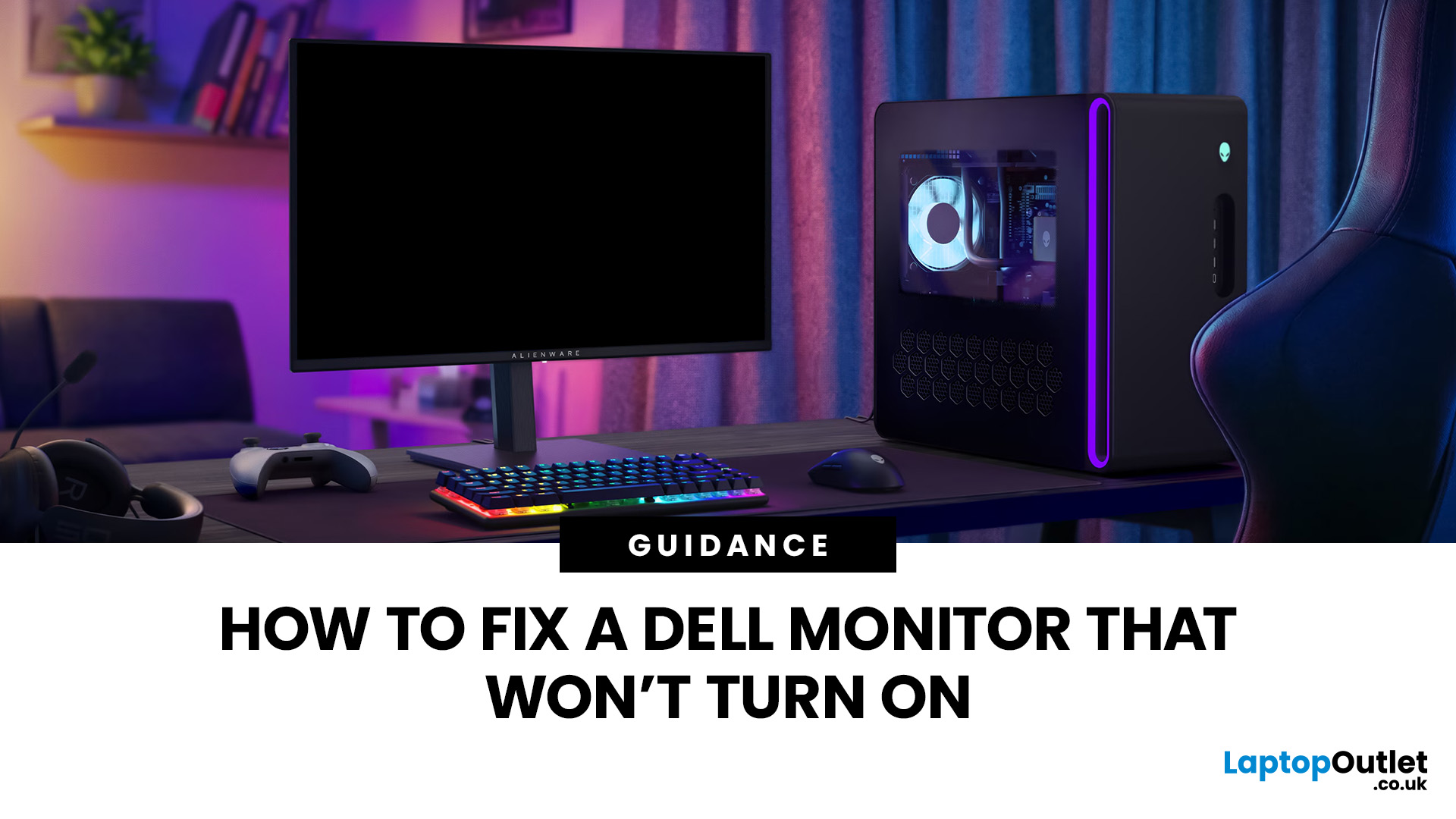
If your Dell monitor won’t turn on, don’t assume the screen is dead straight away. The issue could be as simple as a loose power cable, the wrong input source, or a dodgy HDMI connection.
The key is to identify what your monitor is actually doing. Is there no power light at all? Does the screen stay black even though the power LED is on? Or are you seeing a “No Signal” message?
Let’s work through the checks in the right order so you can find the problem without randomly swapping settings or buying hardware you might not need.
First, Check What Your Dell Monitor is Doing
A Dell monitor not turning on can mean a few different things.
| What You See | What to Check First |
| No power light | Socket, power cable, adapter and monitor power |
| Power light but black screen | Video cable, PC output and monitor diagnostics |
| “No Signal” message | HDMI/DisplayPort connection and input source |
| Screen works briefly then goes blank | PC, graphics connection or display hardware |
Making this distinction matters because a monitor
Last Updated: August 17, 2026
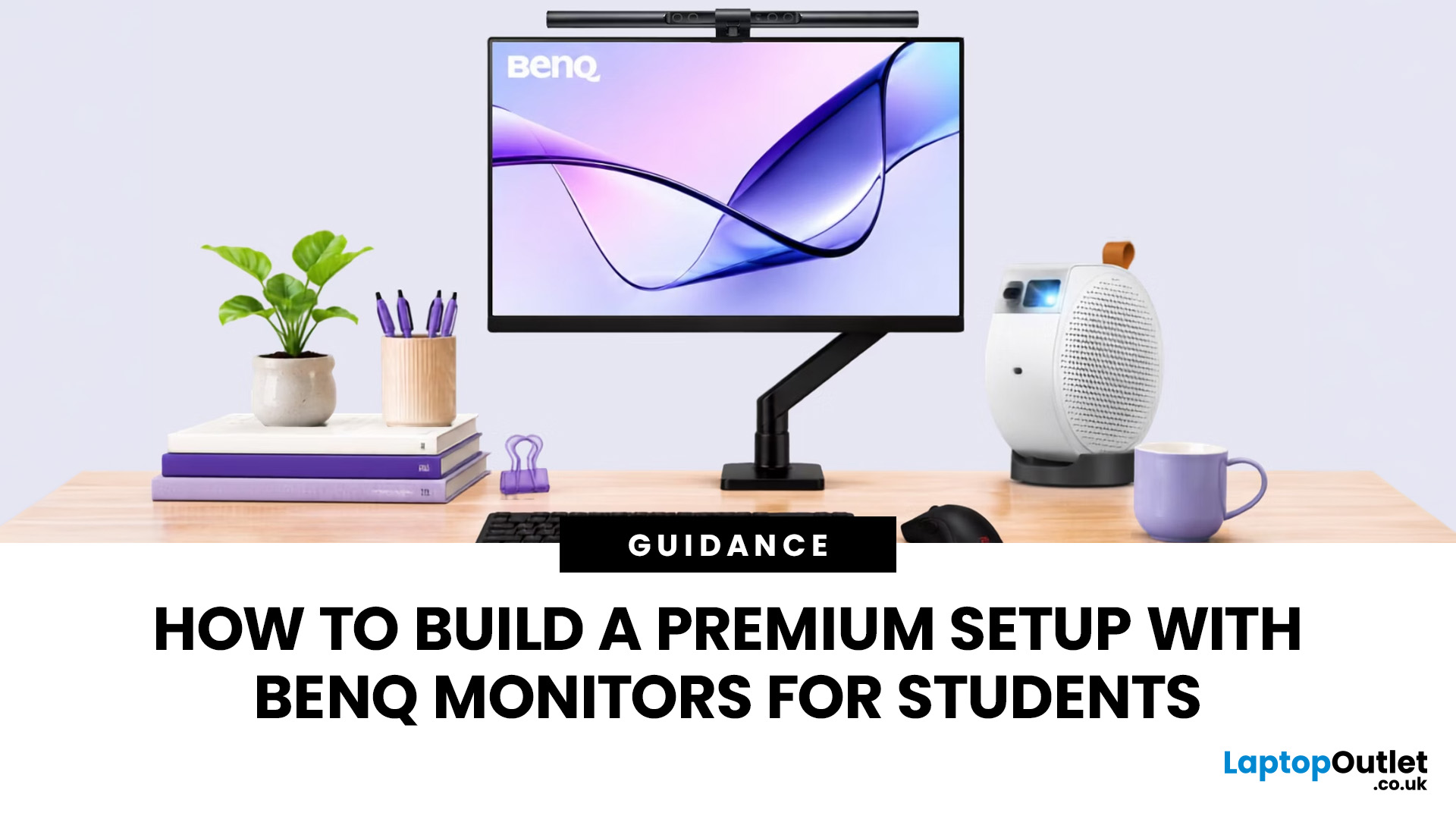
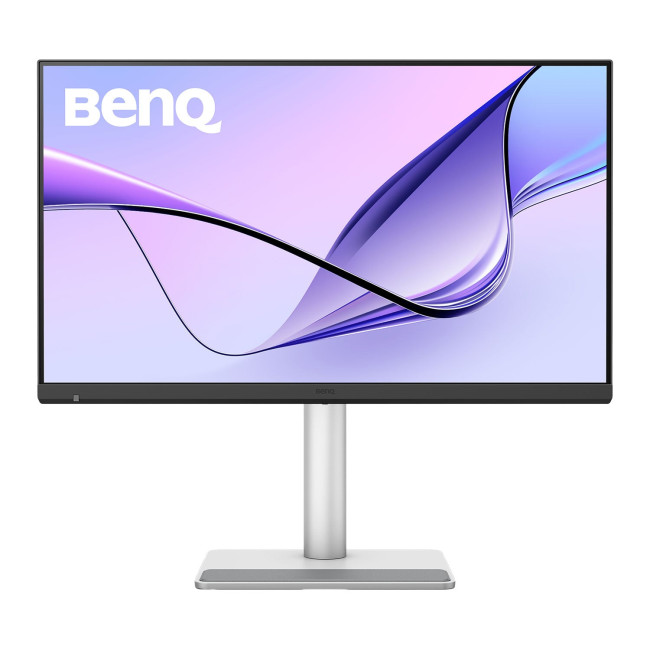
BenQ monitors for students can create a more comfortable and capable workspace for coursework, research, creative projects and downtime. The right display should suit your course, desk space, laptop and daily routine rather than simply offer the highest resolution. For many students, the strongest setup combines clear text, useful screen space, simple connectivity and enough versatility for life beyond studying.
A premium student monitor setup is not defined by one specification. A compact high-resolution screen may work better in university accommodation, while a larger display can make research, timelines and spreadsheets easier to manage. Room lighting, USB-C charging, ergonomics and gaming needs also influence the decision. This guide compares BenQ's Mac-focused MA Series with a faster mixed-use alternative and explains where each approach makes practical sense.
Compare the Best BenQ Monitors for Students in 2026
| Model | Display | Colour and HDR | Laptop Connection | Best Student Use |
|
|
Last Updated: September 03, 2026
Creative work depends on display quality, from colour accuracy to detail clarity.
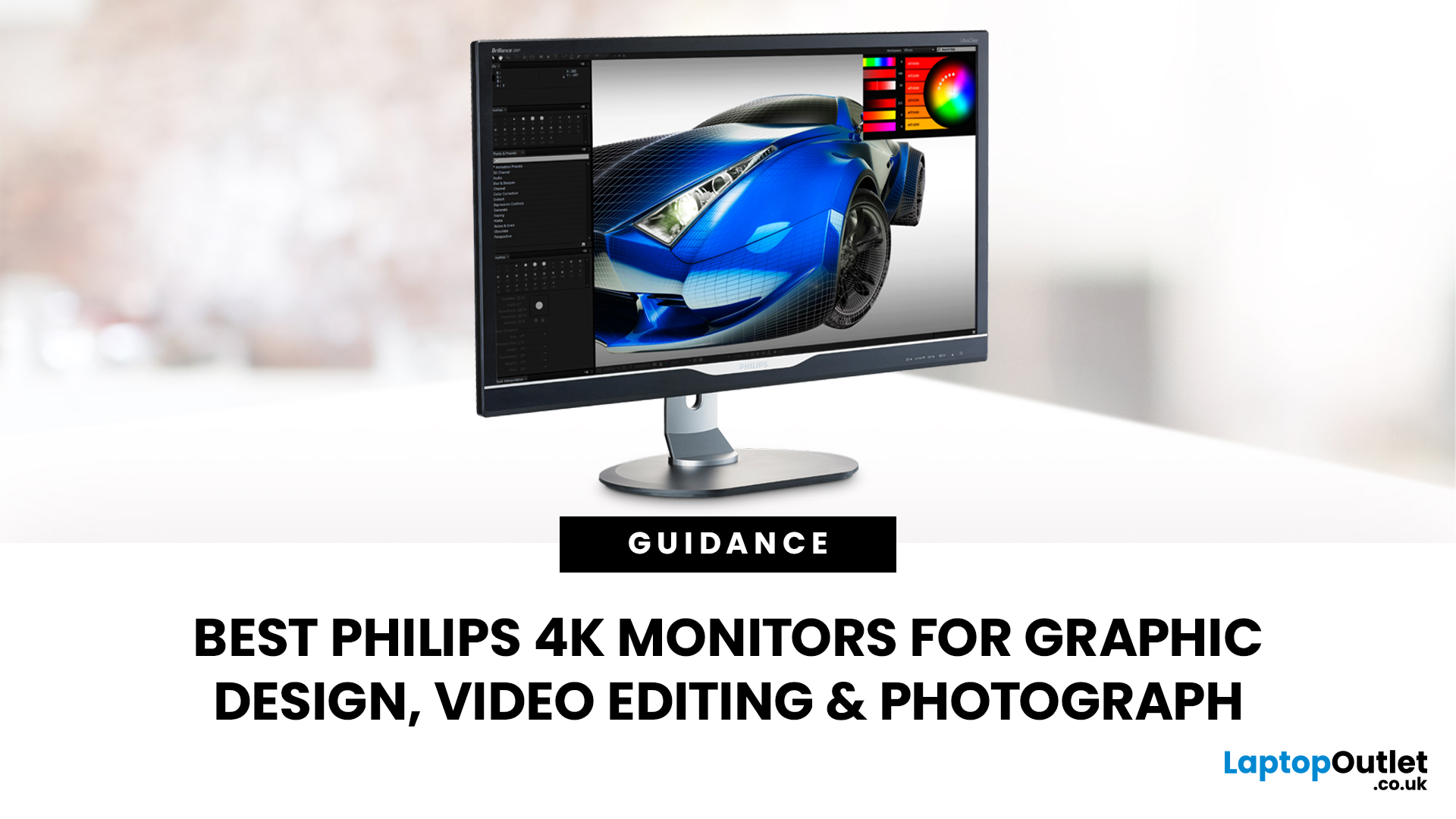
The best Philips 4K monitors for creative work include the 27E1N1800AE for affordable 4K clarity, the 27E1N1900AE for convenient USB-C laptop connectivity and the curved 328E1CA for a larger editing workspace. A 27-inch IPS model suits most designers and photographers, while a 31.5-inch VA display offers stronger contrast and more room for video timelines. Choose according to colour requirements, connectivity, available desk space and your everyday creative workflow needs.
These 4K monitors deliver four times Full HD resolution for sharper visuals and more workspace, but panel type, colour performance and connectivity are just as important.
This guide highlights the best Philips 4K options for design, video editing and photography. It also highlights key considerations so you can compare different computer monitors for designers more effectively.
Best Philips 4K Monitors at a Glance
| Philips Monitor | Best For |
Published: August 17, 2026
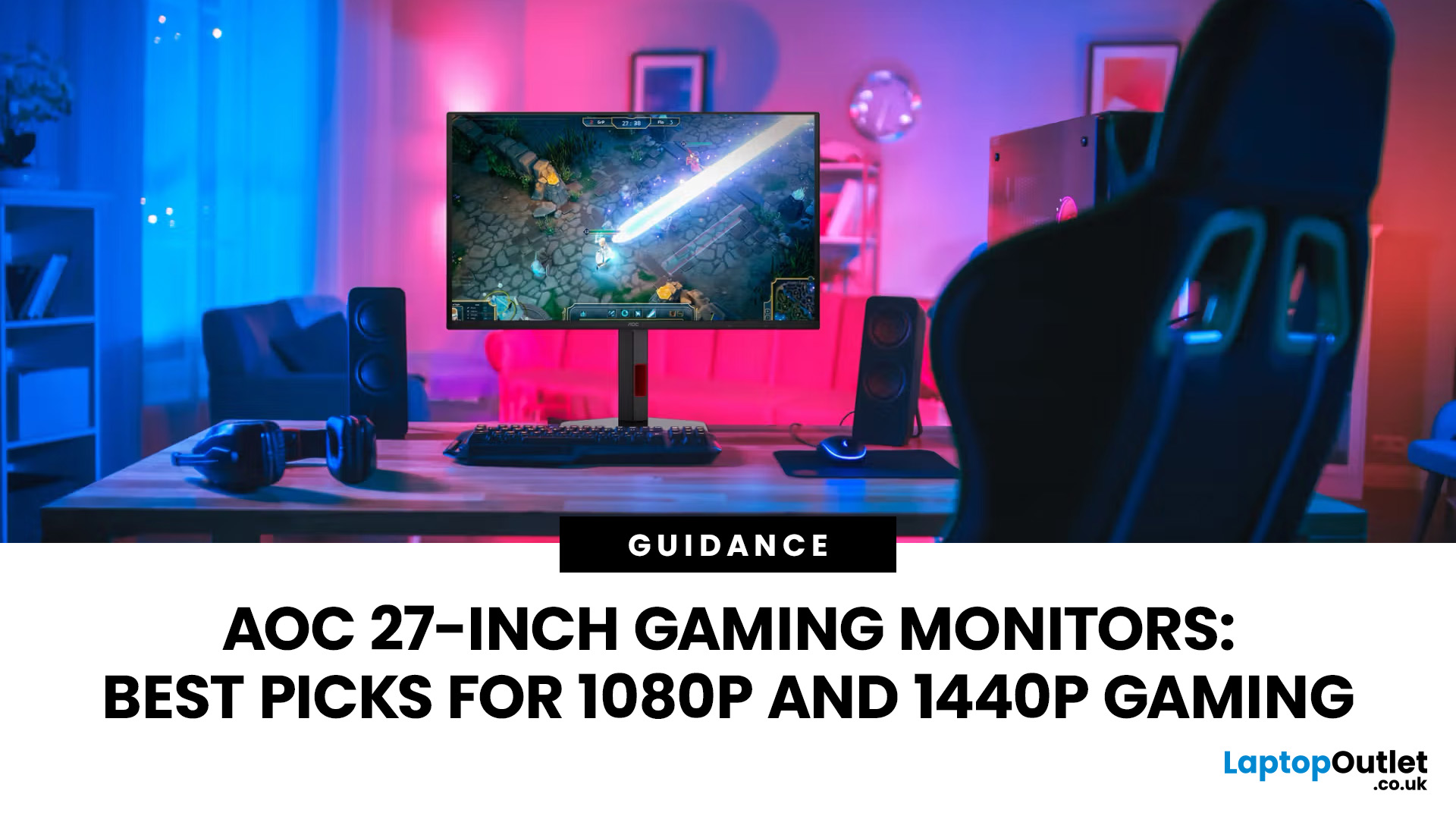
An AOC gaming monitor 27 inch screen gives you plenty of room to play without taking over your whole desk. The key decision is resolution.
The best AOC gaming monitor 27 inch choice for most players is the Q27G42ZE, thanks to its sharp QHD resolution, Fast IPS panel and 240Hz native refresh rate. Choose the C27G4ZXE for competitive 1080p gaming, the Q27G3XMN/BK for stronger HDR, or the AG276UZD for premium 4K QD-OLED visuals. Your ideal model ultimately depends on your GPU, preferred games, target frame rate and available budget, plus your PC or console setup.
Full HD makes high frame rates easier to achieve, while QHD produces a noticeably sharper picture. If your budget and graphics card can go further, 4K QD-OLED delivers another level of detail, colour and contrast.
AOC 27 Inch Gaming Monitors at a Glance
| Model | Resolution | Panel | Refresh Rate | Best For |
| AOC AGON AG276UZD | 3840 × 2160 | QD-OLED | 240Hz | Premium 4K gaming |
| AOC Q27G42ZE | 2560 × 1440 | Fast IPS | 240Hz, 260Hz overclocked | High-refresh QHD |
Published: August 19, 2026
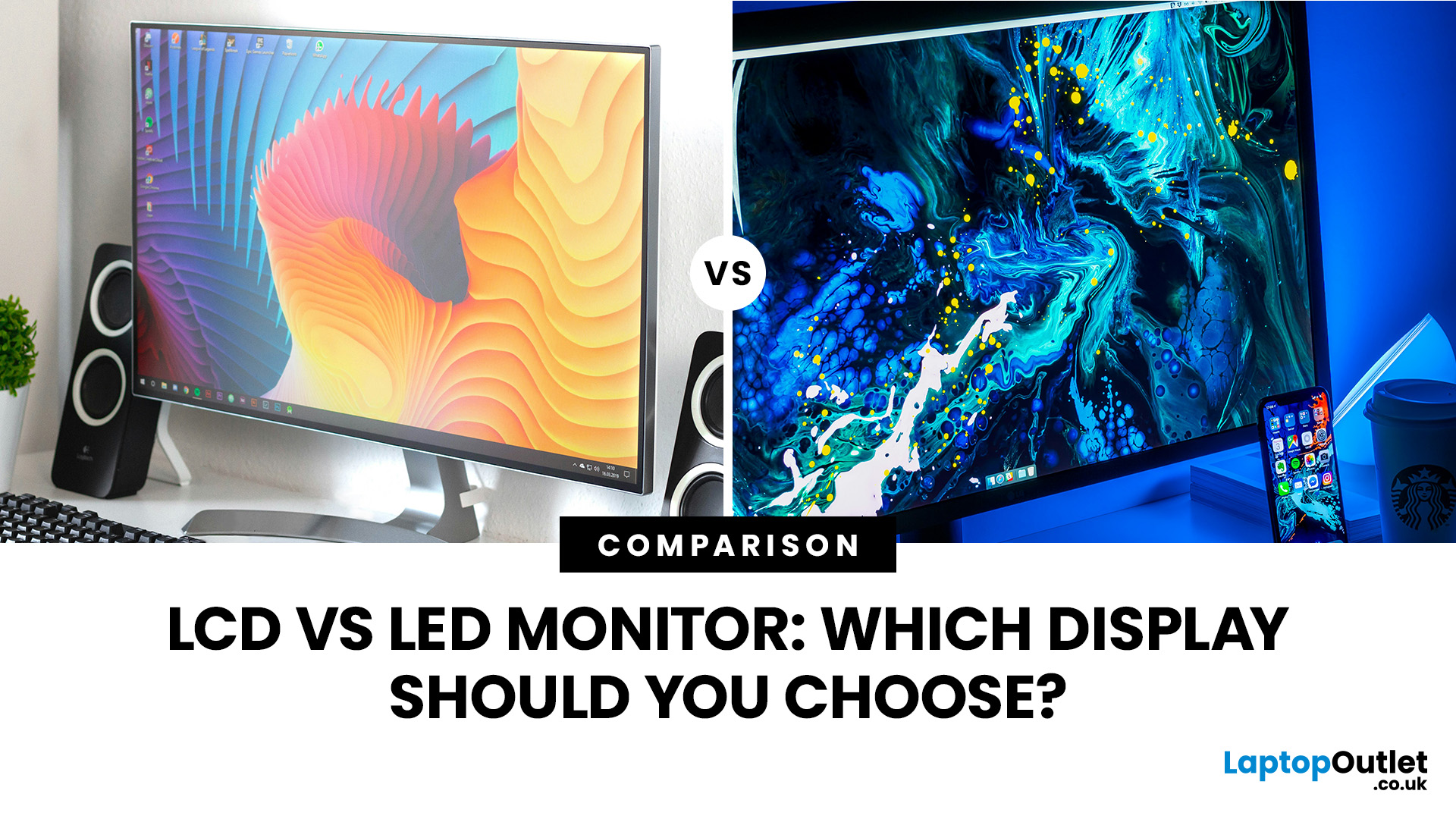
Comparing LCD vs LED monitors? An LED monitor is an LCD that uses energy-efficient LED backlighting, while older LCDs typically use fluorescent CCFL lights.
LED-backlit models are generally slimmer, more efficient and more widely available. However, the LED label alone does not guarantee better colours, smoother gaming or greater eye comfort. Panel type, refresh rate, response time, resolution and brightness all matter too.
LCD vs LED Monitors at a Glance
The main difference between a traditional LCD monitor and an LED monitor is the backlight. A traditional LCD commonly uses CCFL tubes, while an LED monitor uses smaller light-emitting
Last Updated: August 19, 2026
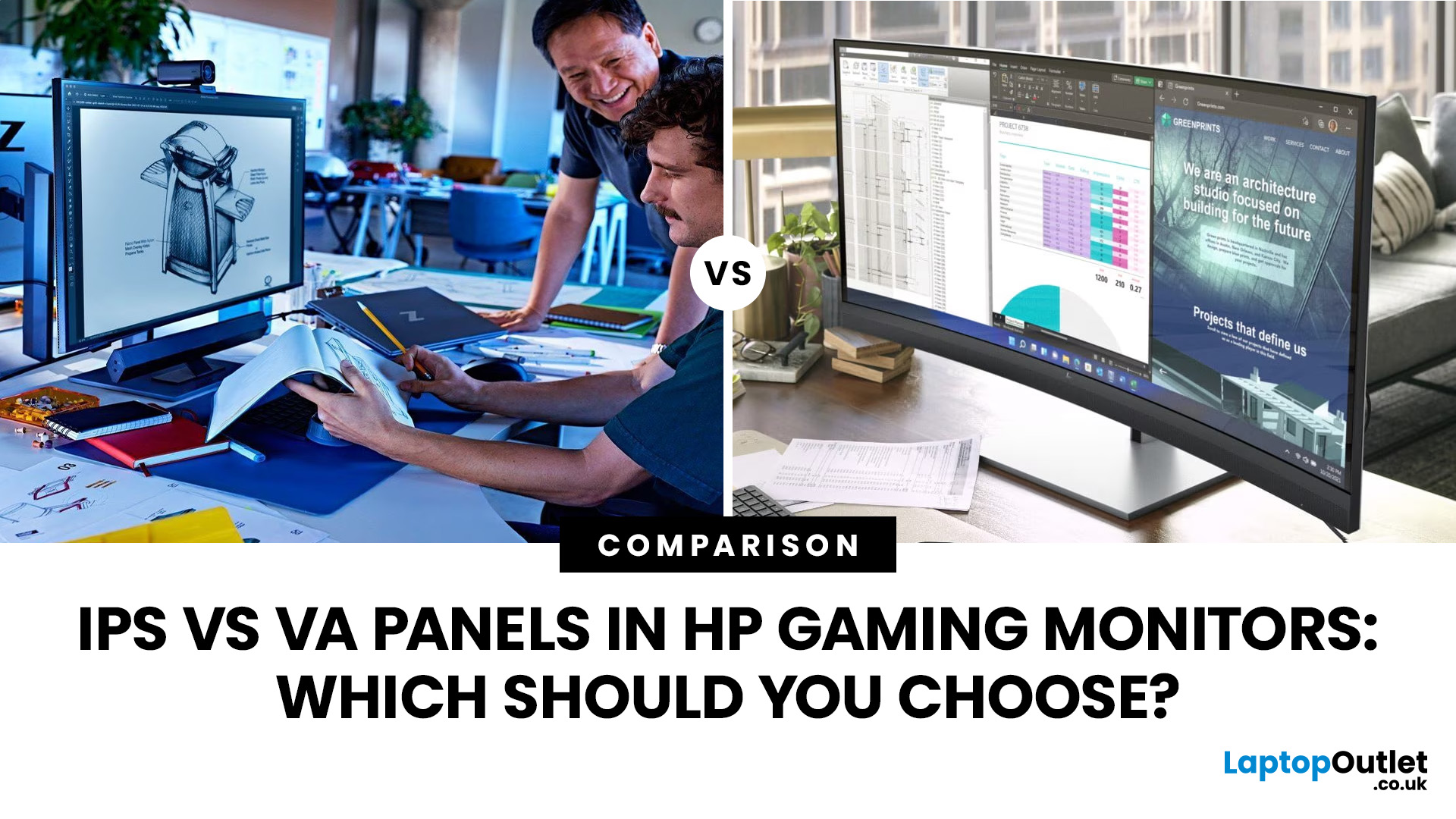
IPS panels are usually the better choice for competitive gaming, wider viewing angles and mixed gaming and creative work. VA panels generally deliver deeper blacks and stronger contrast, making them attractive for immersive games in darker rooms. However, the IPS vs VA panel decision should also consider the monitor’s exact response time, refresh rate, resolution, adaptive sync, and measured performance. Read our complete guide to gaming monitor panels for a full breakdown of IPS vs VA and other display technologies.
IPS vs VA Panels: Quick Comparison
| Feature | IPS Panel | VA Panel |
| Native contrast | Usually lower | Usually higher |
| Black depth | Blacks can appear grey in dark rooms | Deeper blacks in suitable conditions |
| Viewing angles | Wider and more consistent | Narrower, with more off-centre variation |
| Fast-motion clarity | Generally cleaner | Can show dark smearing |
| Colour consistency | Usually strong across the screen | Can change more when viewed off-centre |
| Colour accuracy | Depends on the individual monitor | Depends |
Published: August 24, 2026
Published: August 25, 2026
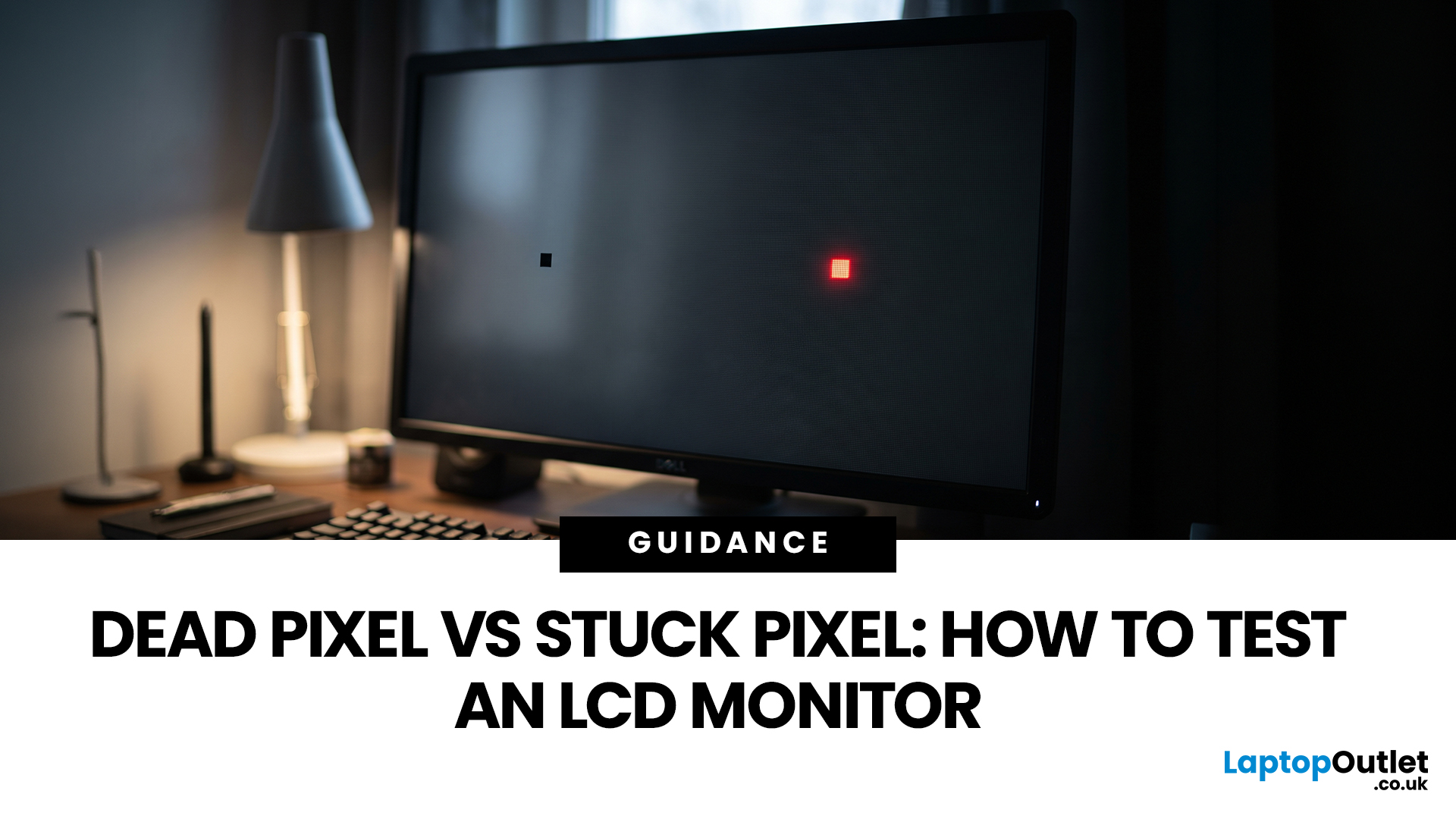
A tiny black, white or coloured dot can be hard to ignore once you notice it on an LCD monitor. The mark may be a pixel fault, a subpixel problem, dust on the panel or an image issue from the connected device.
Understanding dead vs stuck pixel behaviour helps you identify what you are seeing before you try to fix it. This guide explains how the defects differ, what causes them, how to run a safe LCD monitor pixel test, and when repair, return or replacement makes more sense.
How Pixels and Subpixels Work on an LCD Monitor
An LCD screen creates an image from a grid of pixels. A standard colour pixel is normally made from red, green and blue subpixels. By changing how much light each subpixel passes, the display produces different colours.
This structure explains why faults can look different. If all colour components at one position fail to produce the required output, the point may appear black. If only one subpixel remains on or off, the result may look red, green, blue or slightly different

