



Motherboard Wi-Fi vs Wi-Fi Card: Which Is Better for Your PC?
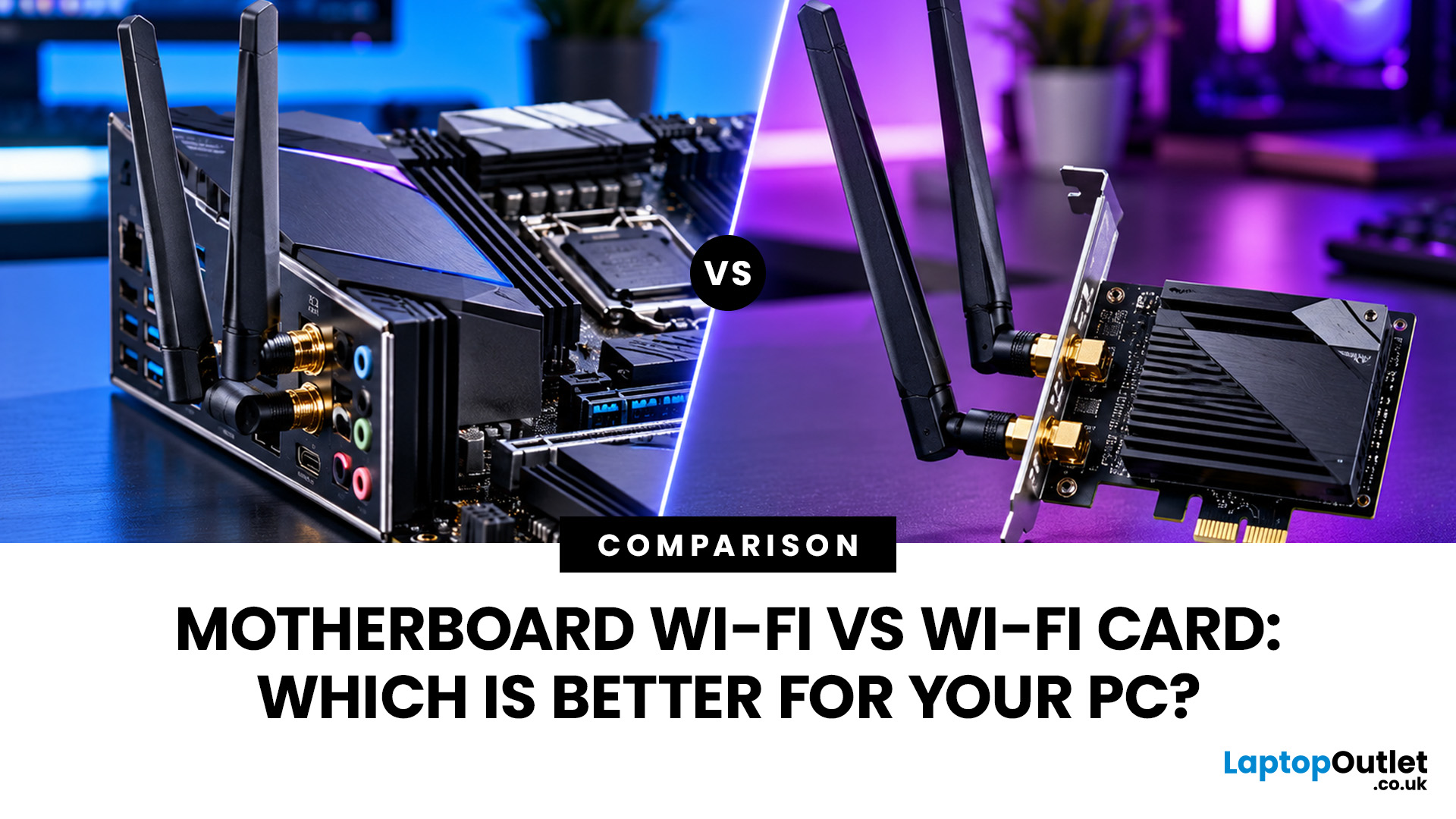
Quick answer:
Motherboard Wi-Fi is generally the more convenient choice for a new PC build, while a separate Wi-Fi card makes more sense when upgrading an existing desktop. Neither is automatically faster. Connection quality depends on the wireless chipset, supported Wi-Fi standard, antennas, router and signal conditions. A USB Wi-Fi adapter is another practical option when you want connectivity without opening your PC.
If you're building a desktop PC, choosing between motherboard Wi-Fi vs Wi-Fi card can affect your budget, available expansion slots and future upgrade options.
A motherboard with built-in Wi-Fi keeps the setup straightforward, while a separate adapter gives you more flexibility to change wireless hardware later. However, paying extra for Wi-Fi 7 won't necessarily improve your connection if your router only supports Wi-Fi 6.
Here's how the options compare and what actually matters before you buy.
What is the difference between motherboard Wi-Fi and a Wi-Fi card?
The main difference is how the wireless hardware connects to your PC. A Wi-Fi motherboard includes the necessary wireless hardware, while a separate adapter adds connectivity through an expansion slot or USB port.
What is built-in motherboard Wi-Fi?
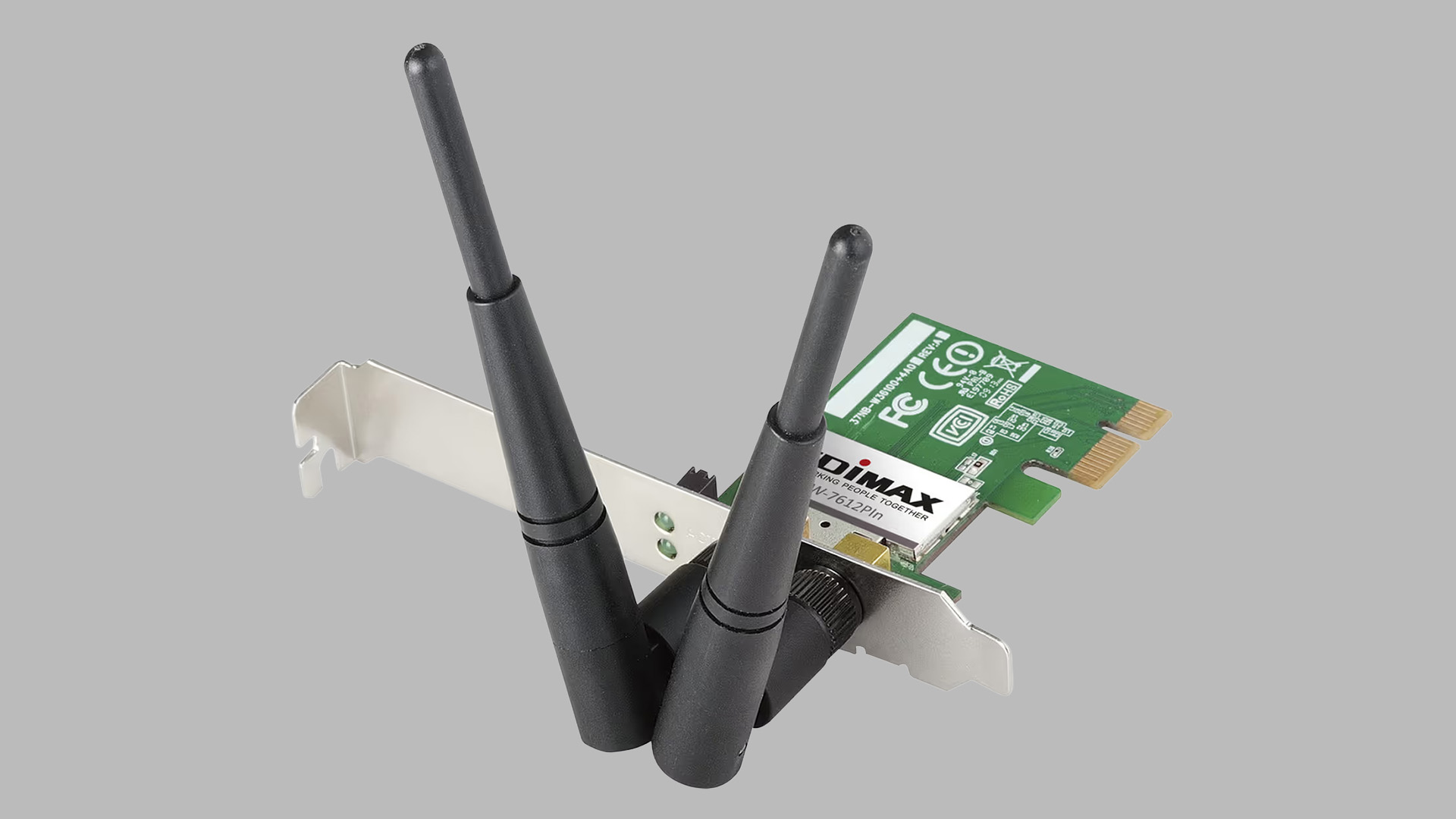
A motherboard with built-in Wi-Fi includes a wireless module or chipset as part of its design. It usually has antenna connectors on the rear panel, allowing you to connect the supplied external antennas.
Depending on the motherboard, the wireless hardware may be integrated or housed in a replaceable module. Many models also include Bluetooth, although you should confirm this in the specifications.
The advantage is convenience. You don't need to purchase or install a separate wireless adapter.
What is a PCIe Wi-Fi card?
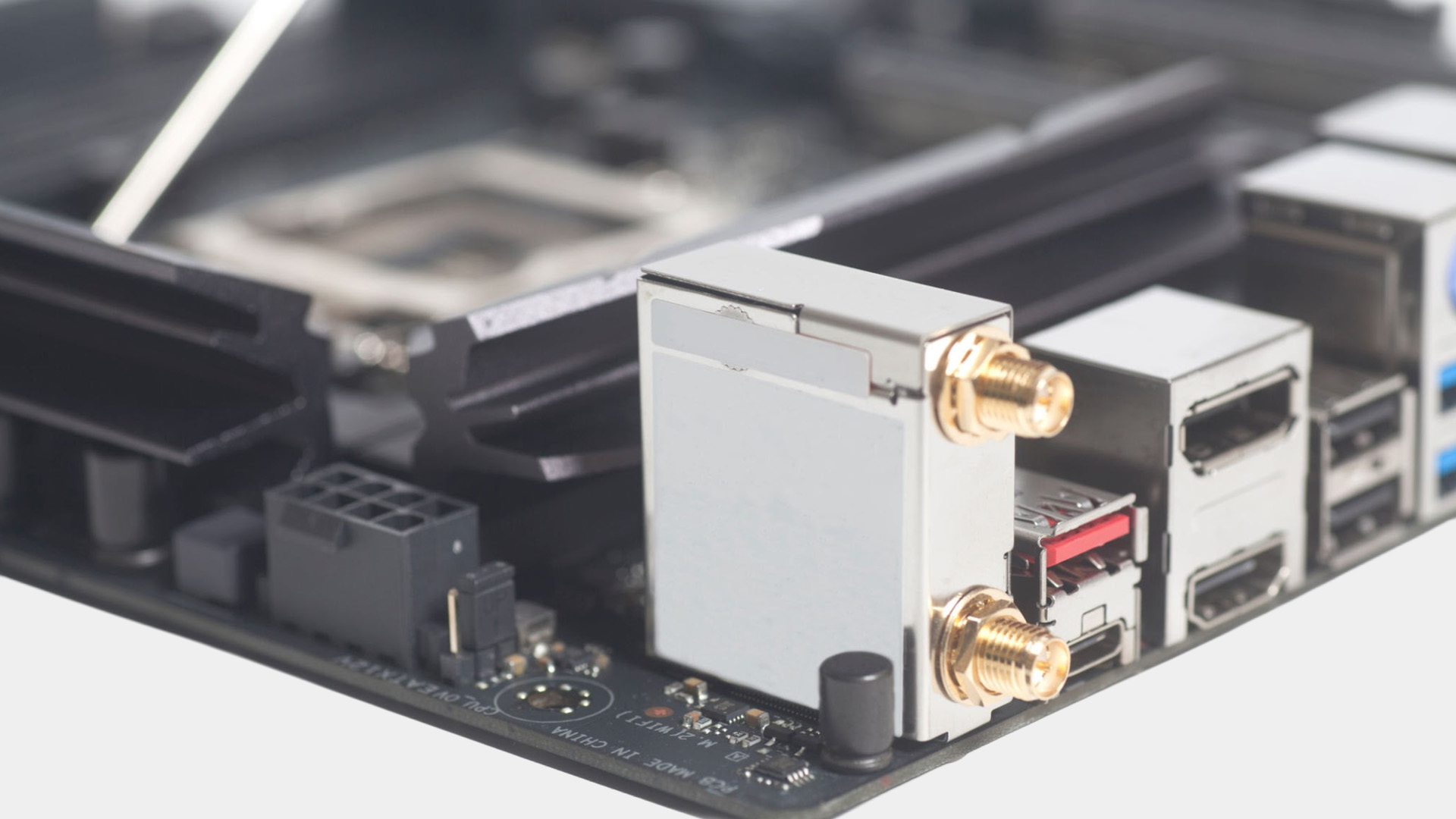
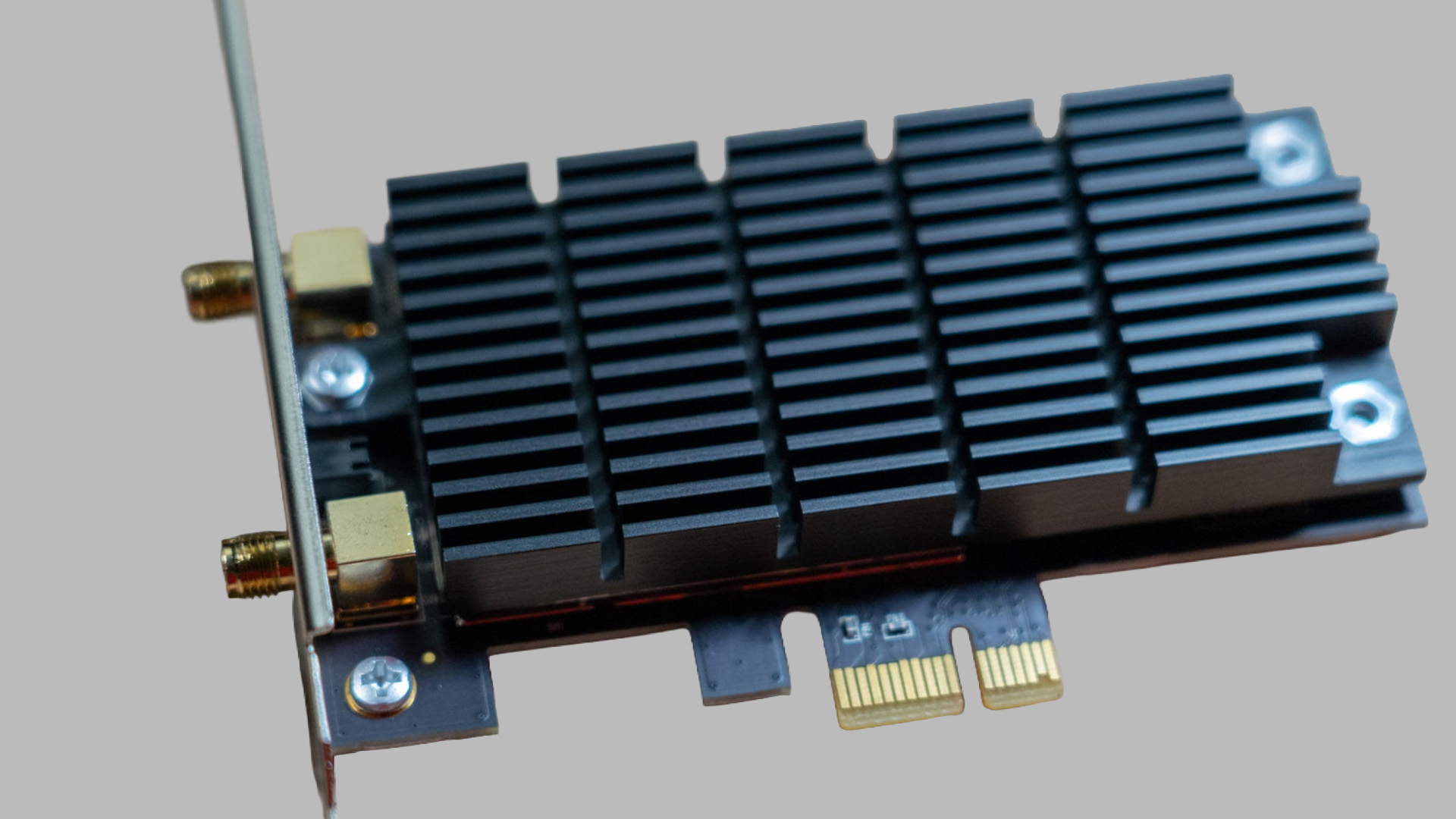
A PCIe Wi-Fi card is an expansion adapter that fits into a compatible PCI Express slot on your motherboard. It adds wireless connectivity to desktop computers without suitable built-in Wi-Fi.
Most modern PCIe wireless adapters include external antennas, and some support Bluetooth through an additional internal USB connection.
They are particularly useful when upgrading a desktop without replacing its motherboard.
Motherboard Wi-Fi vs Wi-Fi card at a glance
|
Feature |
Built-in motherboard Wi-Fi |
PCIe Wi-Fi card |
USB Wi-Fi adapter |
|
Installation |
Included with motherboard |
Requires a compatible PCIe slot |
Connects through USB |
|
Speed |
Depends on wireless hardware |
Depends on wireless hardware |
Depends on adapter and USB interface |
|
Antennas |
Usually external |
Usually external |
Internal or external |
|
Upgrade flexibility |
Varies by motherboard |
Easy to replace |
Easy to replace |
|
Bluetooth |
Often included |
Available on selected models |
Model-dependent |
|
Best suited to |
New PC builds |
Existing desktop upgrades |
Simple connectivity upgrades |
Our advice: Choose the connection method around your PC setup rather than assuming that one type always delivers better wireless performance.
PCIe Wi-Fi card vs motherboard Wi-Fi: Which is faster?
A PCIe Wi-Fi card doesn't automatically outperform built-in motherboard Wi-Fi. If both use comparable wireless chipsets, antenna configurations and standards, they can deliver similar performance under the same network conditions.
The differences become more noticeable when comparing older and newer hardware or changing antenna placement.
1. Wireless speed and supported standards
The wireless chipset determines which Wi-Fi standards, bands and features your PC supports.
For example, a motherboard with Wi-Fi 6E and a PCIe adapter using a comparable Wi-Fi 6E chipset can offer similar wireless capabilities.
However, a newer Wi-Fi 7 PCIe card may provide additional features over older built-in Wi-Fi 5 hardware, provided your router and operating system support them.
Don't confuse advertised wireless link speeds with actual internet performance. Your broadband package, router, interference and network congestion can all limit the speeds you experience.
2. Antenna positioning and signal strength
Antenna placement can matter more than the difference between integrated and separate wireless hardware.
Motherboard Wi-Fi antennas commonly connect to the rear I/O panel. If your PC sits beneath a desk or close to a wall, their position can affect signal reception.
Some PCIe Wi-Fi cards include an antenna base connected by a cable. This lets you position the antennas away from the PC case, potentially improving reception.
A motherboard with a movable antenna base can offer the same advantage.
Expert tip: Before replacing your wireless hardware because of a weak connection, try repositioning the antennas and checking your router's location.
3. Gaming latency and connection stability
For gaming, a stable connection is usually more important than a higher advertised wireless speed.
Both built-in Wi-Fi and PCIe adapters can provide a good gaming experience when the signal is strong and the network isn't congested.
However, neither guarantees lower ping. Your internet connection, router, interference and game-server location also affect latency.
If your desktop is close enough to the router, a wired Ethernet connection is generally the more predictable option for competitive gaming.
For a complete gaming setup, our prebuilt gaming systems include different hardware and connectivity configurations. Check the exact model's Wi-Fi and Ethernet specifications alongside its processor, graphics card and memory.
Motherboard with Wi-Fi vs without: Which offers better value?
Choosing a motherboard with Wi-Fi vs without comes down to whether you need wireless connectivity immediately and how much extra you're paying for it.
Both approaches can make sense, depending on the components you already own and how you connect to the internet.
When should you choose a motherboard with Wi-Fi?
Built-in Wi-Fi is a practical choice when you're building a PC from scratch and expect to use a wireless connection regularly.
You avoid purchasing a separate adapter and keep your PCIe slots available for other components. Many Wi-Fi-enabled motherboards also provide Bluetooth for compatible headphones, controllers and peripherals.
Our PC motherboard range includes Intel and AMD options with different wireless standards, expansion capabilities and form factors.
Compare boards with similar core specifications before deciding how much extra built-in Wi-Fi is worth.
When is a motherboard without Wi-Fi better?
A non-Wi-Fi motherboard can be a sensible choice when you already use Ethernet or have a suitable wireless adapter.
You can also add a PCIe card later if your connectivity needs change.
For example, if two otherwise comparable motherboards differ mainly in wireless connectivity, compare the price difference against the cost of a separate adapter.
The cheaper option isn't necessarily the better deal once you've included the cost of adding Wi-Fi and Bluetooth.
Does motherboard chipset determine Wi-Fi quality?
Not by itself. A motherboard's chipset influences platform connectivity and expansion features, but it doesn't guarantee a particular wireless standard or performance level.
For AMD Ryzen builds, the AM5 motherboard range includes models with different wireless configurations.
A well-equipped mainstream AM5 board may already offer the Wi-Fi connectivity you need without the additional cost of a premium model.
Wi-Fi 6 vs Wi-Fi 7 motherboard: Is upgrading worth it?
Wi-Fi 7 offers newer wireless capabilities, but Wi-Fi 6 and Wi-Fi 6E remain practical choices for many desktop users. The right standard depends on your router, workload and network environment.
Before paying extra for a newer motherboard, check which Wi-Fi features you'll actually be able to use.
Wi-Fi 6 vs Wi-Fi 6E vs Wi-Fi 7
|
Wi-Fi standard |
Supported bands |
Key advantages |
Suitable for |
|
Wi-Fi 6 |
2.4GHz and 5GHz |
Improved efficiency on busy networks |
Everyday use, office work and gaming |
|
Wi-Fi 6E |
2.4GHz, 5GHz and 6GHz |
Additional 6GHz spectrum for compatible networks |
Busy wireless environments and supported 6GHz routers |
|
Wi-Fi 7 |
2.4GHz, 5GHz and 6GHz |
Multi-Link Operation and potentially wider channels |
High-performance networks with compatible equipment |
Wi-Fi 6E adds access to the 6GHz frequency band, which can reduce competition with older devices using 2.4GHz and 5GHz networks.
Wi-Fi 7 introduces further improvements, including Multi-Link Operation (MLO), which allows compatible devices to use multiple wireless links.
It also supports channels up to 320MHz in the 6GHz band, where supported and permitted. However, not every Wi-Fi 7 motherboard supports 320MHz. Some models are limited to 160MHz.
Wi-Fi 6E vs Wi-Fi 7 motherboard: What should you buy?
A Wi-Fi 6E motherboard can be sufficient if you already own a compatible router and mainly use your PC for gaming, streaming, video calls or everyday productivity.
Wi-Fi 7 becomes more attractive if you're building a high-performance network, transferring large files locally or already have a compatible Wi-Fi 7 router.
For Windows PCs, full Wi-Fi 7 support requires Windows 11 version 24H2 or later, alongside compatible hardware and drivers.
UK frequency regulations can also affect which 6GHz features and channel widths are available.
Our advice: Don't pay a substantial premium for Wi-Fi 7 based on its maximum advertised speed alone. Check the motherboard's actual Wi-Fi module specifications and whether your home network can use its features.
When comparing AMD-compatible motherboards, prioritise processor compatibility, memory support and expansion requirements before deciding whether Wi-Fi 6E or Wi-Fi 7 justifies the additional cost.
What should you check before buying a PCIe Wi-Fi card?
A separate wireless adapter can extend the useful life of an existing desktop. However, compatibility involves more than finding an empty expansion slot.
Before ordering, check the following requirements.
1. Available PCIe expansion slots
Most desktop PCIe Wi-Fi cards use a PCIe x1 connection, although the exact interface varies.
Check that your motherboard has a compatible slot available and that a large graphics card or another component doesn't block access.
Also confirm that the adapter's bracket fits your PC case, particularly if you're using a compact or low-profile desktop.
2. Bluetooth connectivity
Many PCIe Wi-Fi cards combine wireless networking with Bluetooth.
On some models, Bluetooth requires a cable connected to an available internal USB header on the motherboard.
If that connection isn't available, the Wi-Fi function may work while Bluetooth remains unavailable.
Check the installation instructions before purchasing.
3. Operating system and driver support
Confirm that the adapter supports your installed version of Windows or another operating system.
Some newer Wi-Fi features require specific Windows updates and compatible drivers.
Download drivers from the manufacturer rather than relying on unverified third-party downloads.
4. Antennas and router compatibility
Look at the adapter's antenna design and whether it supports the wireless bands used by your router.
An external antenna base can be useful if your desktop is positioned under a desk.
Remember that a Wi-Fi 7 adapter cannot provide full Wi-Fi 7 capabilities when connected to a router that only supports older standards.
Motherboard Wi-Fi vs USB Wi-Fi: Which should you choose?
A USB Wi-Fi adapter is the simplest way to add wireless networking to many desktop PCs. It doesn't require a free PCIe slot or access to internal components.
However, convenience doesn't automatically mean better performance.
When is a USB Wi-Fi adapter the better option?
USB adapters are useful when:
- Your motherboard doesn't have built-in Wi-Fi.
- All suitable PCIe slots are occupied.
- You want to avoid opening your desktop case.
- You need a removable adapter for more than one computer.
- You're looking for a straightforward connectivity upgrade.
USB Wi-Fi adapters range from compact devices with internal antennas to larger models with adjustable external antennas.
For example, some Wi-Fi 6 USB adapters use USB 3.0 and external antennas to support faster wireless connections than older basic adapters.
Is USB Wi-Fi slower than motherboard Wi-Fi?
Not necessarily. A capable USB 3.0 Wi-Fi adapter can provide good performance for everyday tasks, streaming and gaming.
However, smaller adapters may have less flexible antenna placement, while some older USB models support lower wireless speeds.
The USB interface can also become a limitation with faster adapters, particularly if you're using an older USB port.
When comparing USB Wi-Fi vs motherboard Wi-Fi, consider the adapter's actual wireless standard, USB requirements and antenna design rather than judging it simply by its connection type.
For a permanent desktop setup, built-in Wi-Fi or a suitable PCIe adapter is often more convenient because it leaves your external USB ports free.
Which Wi-Fi option should you choose for your PC?
The best choice depends on whether you're building a new desktop, upgrading an existing system or simply trying to improve an unreliable connection.
Use the following recommendations to narrow your options.
|
Your situation |
Recommended option |
Why? |
|
Building a new PC that needs wireless connectivity |
Motherboard with Wi-Fi |
Convenient setup without an additional card |
|
Upgrading a desktop without Wi-Fi |
PCIe Wi-Fi card |
Adds wireless connectivity without replacing the motherboard |
|
No suitable PCIe slot available |
USB Wi-Fi adapter |
Doesn't require internal installation |
|
Using a reliable Ethernet connection |
Motherboard without Wi-Fi |
Avoids paying for wireless hardware you may not need |
|
Building around a Wi-Fi 7 router |
Compatible Wi-Fi 7 motherboard or PCIe adapter |
Can use newer features when fully supported |
|
Weak signal despite modern Wi-Fi hardware |
Check antenna positioning and router coverage |
Replacing the adapter may not solve the underlying problem |
For most new builds that need wireless access, a motherboard with built-in Wi-Fi is the straightforward choice.
If your current desktop performs well but lacks newer wireless features, a PCIe adapter is usually a more economical improvement than replacing the entire motherboard.
When should you consider replacing the desktop?
If your PC also struggles with multitasking, demanding software or hardware compatibility, upgrading its wireless connection alone may offer limited long-term value.
Our desktop computer range includes systems for home use, office work and more demanding tasks. Compare the processor, RAM, storage and networking options to find a configuration that meets your requirements.
Find the right motherboard at Laptop Outlet
Choosing a motherboard should start with your processor and overall PC requirements, not simply the wireless standard printed on the box.
At Laptop Outlet, you can compare motherboards across compatible Intel and AMD platforms, including models with built-in Wi-Fi and those designed for wired connectivity.
Planning a new PC build? Shop motherboards at Laptop Outlet and compare CPU support, RAM compatibility, expansion slots and wireless features. Choose a board that gives you the connectivity you need without paying extra for specifications your setup won't use.

Final verdict: Motherboard Wi-Fi or Wi-Fi card?
For most new PC builds, motherboard Wi-Fi is the more convenient option. It provides wireless connectivity without an additional expansion card and often includes Bluetooth.
A PCIe Wi-Fi card is the better choice when your existing desktop needs a wireless upgrade. USB Wi-Fi adapters are useful when you want a simpler installation or don't have a suitable internal slot.
Neither solution is automatically faster or more reliable. Focus on the wireless standard, antenna placement, router compatibility and total cost before deciding.

Frequently asked questions
1. Is motherboard Wi-Fi better than a PCIe Wi-Fi card?
Not necessarily. Both can deliver similar performance when they use comparable wireless chipsets, antennas and standards. Built-in Wi-Fi is convenient for new builds, while PCIe adapters provide more flexibility when upgrading an existing desktop.
2. Can you add Wi-Fi to a motherboard without Wi-Fi?
Yes. You can usually add wireless connectivity using a compatible PCIe Wi-Fi card or USB adapter. Check available expansion slots, operating-system support and antenna requirements before buying. You don't normally need to replace the motherboard.
3. Does a motherboard with Wi-Fi also have Bluetooth?
Many modern Wi-Fi motherboards include Bluetooth, but it isn't guaranteed. Check the exact motherboard specifications for Bluetooth support and version. The presence of Wi-Fi alone doesn't confirm that Bluetooth is available.
4. Does Wi-Fi 7 improve gaming ping over Wi-Fi 6?
Wi-Fi 7 can improve wireless efficiency and latency under suitable network conditions, particularly with compatible routers and Multi-Link Operation. However, it won't automatically reduce gaming ping. Your broadband connection, interference and game-server distance still affect latency.
5. Is a motherboard without Wi-Fi cheaper?
It can be, but prices vary by model and other features. If two otherwise similar boards differ mainly in wireless connectivity, the non-Wi-Fi version may cost less. Compare that saving against the price of a separate Wi-Fi adapter before deciding.
| Read More: |
| Motherboard VRM Explained: Why CPU Power Delivery Really Matters |
Related Articles

Last Updated: December 03, 2025
The motherboard is the central nervous system of your computer. Every component, from the CPU and RAM to the GPU and storage drives, connects to it.
Making the right choice here is crucial. A well-chosen board ensures smooth performance, effortless upgrades, and long-term stability for your entire desktop PC build.
If you’re wondering how to choose the right motherboard to suit your needs, you’ve come to the right place. This comprehensive motherboard buying guide will take you through every essential step to help you lay the best foundation for your next project.
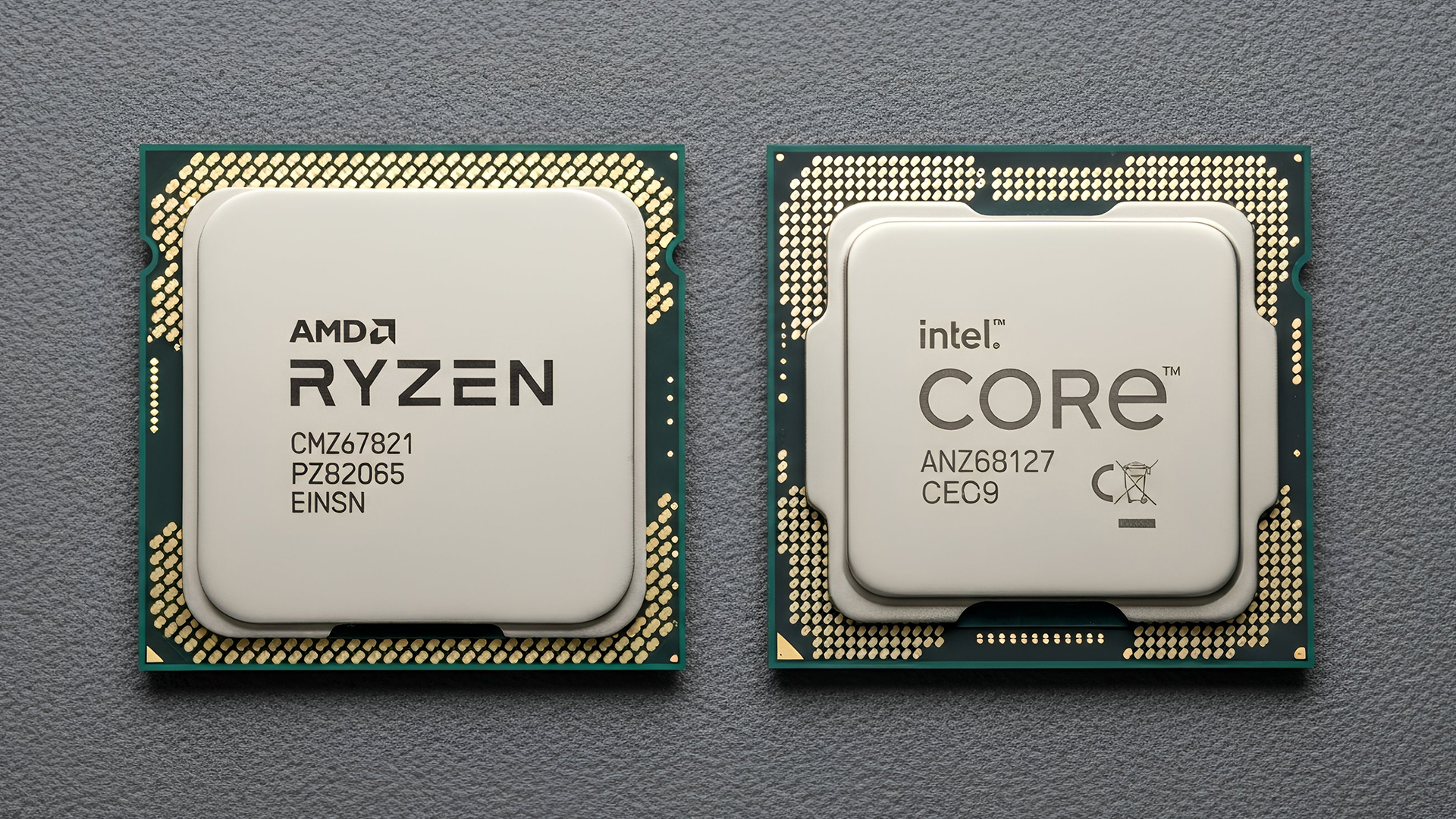
Step 1: CPU Choice Defines the Socket (AMD vs Intel)
The first and most crucial step when selecting a motherboard is choosing your CPU (Central Processing Unit). The processor dictates which socket type and chipset your motherboard must have.
AMD vs Intel Motherboards
- AMD motherboards are known for value and longevity. Platforms like AM5 often maintain compatibility across several CPU generations, allowing for future upgrades

Last Updated: June 05, 2026
If you’re upgrading your gaming rig or building one from scratch in 2025, the motherboard you choose is going to set the tone for your entire PC. Whether you’re aiming for an affordable setup or an ultra-high-end powerhouse, the motherboard is the foundation - determining not just what components you can use today, but how future-ready your system will be.
This guide takes you through the best motherboards for gaming PCs in 2025, handpicked for performance, features, and value. You’ll find AMD and Intel options, from budget boards with modern DDR5 support to premium PCIe 5.0 powerhouses. Every recommendation is researched using up-to-date 2025 benchmarks, market data, and UK availability, ensuring you can make an informed purchase that fits your budget and build goals.
Why the Motherboard Matters in 2025

With the launch of AMD’s Ryzen 9000 and Intel’s 15th-gen “Arrow Lake” CPUs, the motherboard landscape has changed considerably. New chipsets like AMD B650E and Intel Z890 bring cutting-edge

Last Updated: May 06, 2026
year is more than just a fresh calendar; it’s one of the best times of the year to upgrade your PC hardware for less. As retailers clear stock, introduce refreshed product lines, and compete for attention during seasonal sales, motherboard New Year deals 2026 unlock savings that simply aren’t available during regular months. Whether you’re planning a brand-new desktop build, upgrading an ageing system, or finally pairing a powerful CPU with a compatible board, New Year sales make high-end components far more affordable.
New Year Sale on AMD Motherboards
This New Year, AMD motherboard discounts make it easier than ever to build or upgrade your PC with powerful AM5 boards at lowered prices.
1. ASUS TUF GAMING X870E-PLUS WIFI7 ATX AMD Socket AM5 Motherboard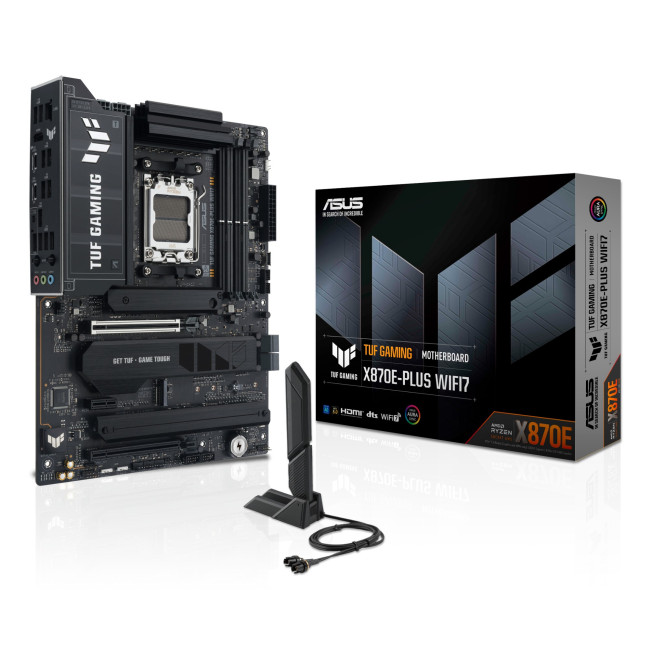
This flagship TUF board typically sits in the upper mid-range price bracket, but New Year Sale pricing often brings it into compelling territory compared to standard retail tags, shaving a noticeable percentage off regular prices.

Last Updated: January 02, 2026
When you start plugging in devices and suddenly run out of USB slots, the first question that comes to mind is a simple one: how many USB ports does my motherboard actually have?
This is something most users never think about until they hit a limitation. Whether you are building a PC, upgrading an old system, or just trying to understand why you need a USB hub, the answer always comes back to your motherboard USB ports.
The tricky part is that the total number of USB ports is not always obvious at first glance. Some are visible on the back of the PC, others are internal, and some are supported but not even active unless you connect the right headers.
This guide breaks everything down in a practical way and helps you discover how to check the total USB ports supported by your motherboard.
Why Motherboard USB Ports Matter More Than You Think
Motherboard USB ports define how many devices your system can handle directly. That includes keyboards, mice, external drives, webcams, printers
Last Updated: January 06, 2026
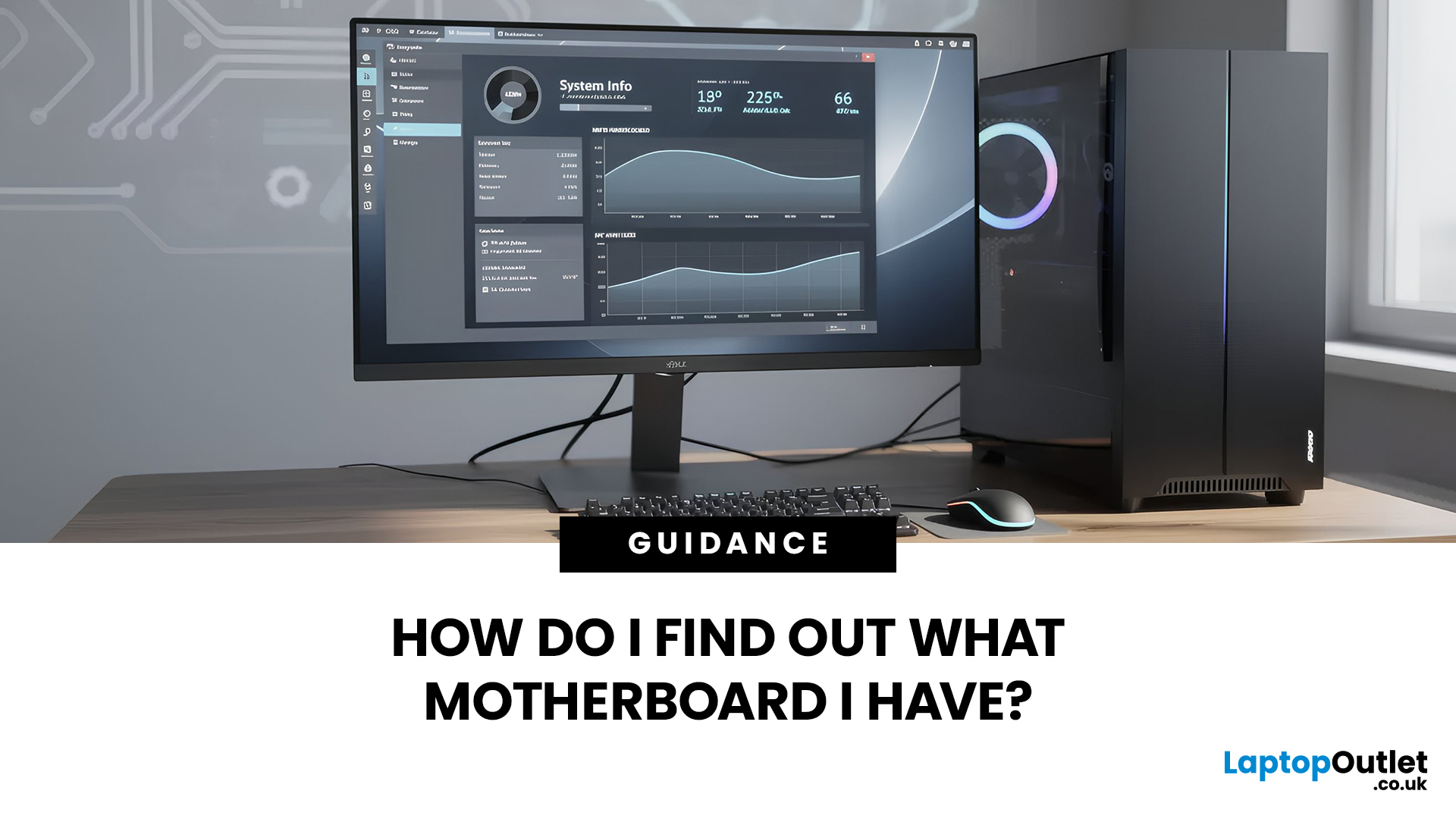
Need to find motherboard model details for an upgrade? Knowing your motherboard (often called the baseboard or system board) helps you pick compatible RAM and storage to download the right drivers. You can usually confirm it easily in minutes using built-in Windows tools, or via BIOS/UEFI if Windows won’t load. It’s especially handy before ordering parts or booking a repair. Learn easy ways to check your motherboard model in Windows or BIOS.
Method 1: Windows System Information (msinfo32)
System Information often shows the clearest result.
- Press Windows + R
- Type msinfo32 and press Enter
- In System Summary, look for:
BaseBoard Manufacturer
- BaseBoard Product (often the motherboard model)
- BaseBoard Version (board revision)
If you’re sharing details with support, use File > Export to save a report.
Method 2: Command Prompt (WMIC)
A fast command-line check:
- Open Start, type Command Prompt, and run it
You’ll typically see the motherboard manufacturer and product/model code. On some OEM laptops
Last Updated: January 06, 2026
Have you ever needed to upgrade your PC, install new RAM or a CPU, or simply troubleshoot hardware - only to realise you don’t actually know what motherboard is inside your computer? It’s a more common situation than you’d think. Whether you’re working on a desktop you assembled years ago, a shop-bought laptop, or helping a mate sort out theirs, knowing how to check your motherboard type quickly and accurately is a vital tech skill.
Ever wondered what motherboard is powering your PC? Good news - finding out is way easier than you might think. No opening your case, no tech wizard required. Using built-in tools on Windows, macOS, and Linux (plus a few handy apps), you can uncover all the details in just minutes.
Why You Might Need to Know Your Motherboard
Before we explore the methods, you might be wondering why this even matters. Here are common reasons:
- Upgrading components: If you want to fit a new CPU or faster RAM, you must know the motherboard’s socket type and supported standards.
Last Updated: September 29, 2026
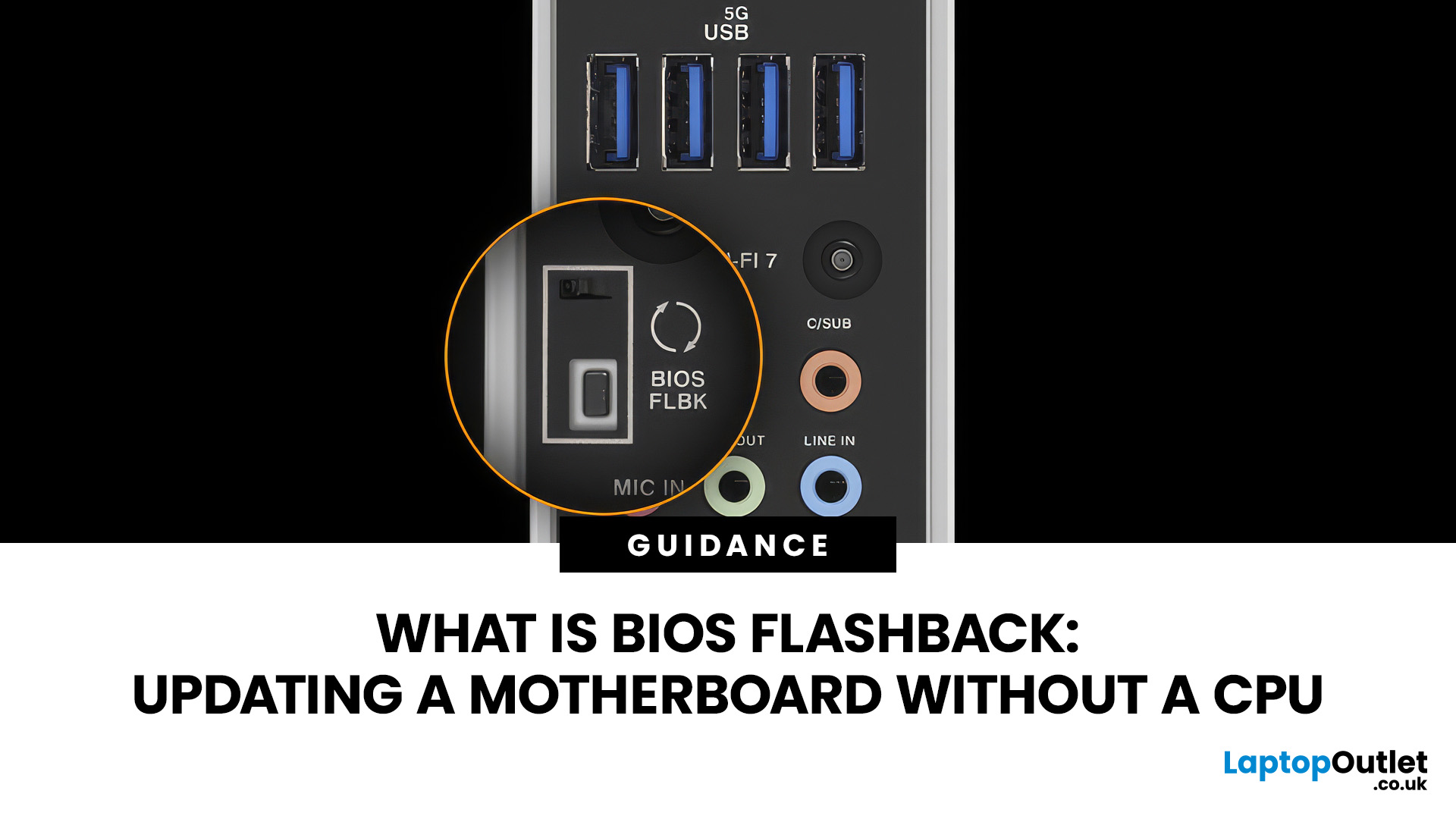
A conventional BIOS update normally requires a working processor so the computer can start, complete POST and enter its UEFI firmware interface. BIOS Flashback changes that on supported motherboards by allowing the firmware to be programmed from a USB drive without completing a normal CPU-driven boot.
That makes BIOS Flashback particularly useful when a motherboard needs newer firmware before it can recognise an otherwise compatible processor. However, it is a motherboard-specific feature rather than a standard function available on every board, and the exact USB, filename, button and power requirements can differ between manufacturers and models.
What Is BIOS Flashback?
BIOS Flashback is a hardware-assisted motherboard feature that can update or restore supported motherboard firmware without relying on a conventional system boot. On compatible boards, the process typically uses a prepared USB drive, motherboard power and a dedicated BIOS Flashback button or equivalent control.
This differs
Published: October 20, 2026
Published: October 22, 2026
Last Updated: October 26, 2026

