



The Best Laptops for Streaming and Watching Films in 2026
Streaming accounted for over 38% of total TV and video consumption globally last year, overtaking traditional viewing for the first time. That means more people are now watching films on laptops, tablets, and personal screens than ever before, not TVs.
But here’s the problem: most laptops aren’t actually built for a good viewing experience.
You can open the same film on two different laptops and get completely different results. On one, colours look rich, scenes feel immersive, and everything flows smoothly. On another, the image feels dull, brightness struggles in daylight, and the whole experience falls flat - even if the specs look similar on paper.
That’s where most buyers get caught out. Terms like “Full HD,” “OLED,” or “high brightness” sound impressive, but they don’t always translate into a better streaming experience. Many people end up choosing based on performance or price, while overlooking what actually matters for watching films.
This guide breaks that down clearly - focusing on what makes a laptop truly good for streaming, so you can choose one that delivers a proper viewing experience, not just decent specs.
What Actually Makes a Laptop Good for Streaming
A good streaming laptop is not about raw power - it’s about how the experience feels when you’re actually watching something. You don’t need the fastest processor or the most expensive machine. What matters is how well the laptop handles visuals, sound, and comfort over time.
Here are the things that actually make a difference.
Display quality is everything
If there’s one thing that defines a good streaming laptop, it’s the screen.
A laptop with a good screen should offer:
- sharp resolution
- strong brightness
- good contrast
- accurate colours
Full HD is the minimum most people should consider, but higher-quality panels like IPS or OLED can make films look noticeably better. Dark scenes feel deeper, colours look more natural, and overall viewing becomes more immersive.
This is why many of the best laptops for media streaming are often the ones with better display technology, not just higher specs.
Resolution matters - but only up to a point
Resolution affects how sharp your content looks, but more isn’t always necessary.
- Full HD (1080p) → good for most users
- QHD / 2K → sharper and more detailed
- 4K → best for large screens and high-quality content
For most people watching Netflix, YouTube, or Prime Video, Full HD or QHD is already enough. A higher resolution only becomes more noticeable on a big screen laptop or when you’re sitting closer to the display.
Brightness and viewing angles are often overlooked
A laptop might look great in a product image but struggle in real use, especially in daylight.
A laptop with great display should:
- stay visible in bright rooms
- not wash out colours
- look consistent from different angles
This is where better panels (like IPS or OLED) outperform basic screens.
Speakers make a bigger difference than you think
Streaming isn’t just visual - sound matters too. Many laptops focus on display quality but compromise on speakers. That’s fine if you always use headphones, but if you don’t, weak audio can ruin the experience.
A good laptop for Netflix or streaming video should have:
- clear dialogue
- decent volume
- balanced sound
It doesn’t need to replace external speakers, but it should be enjoyable on its own.
Battery life affects how and where you watch
If you like watching films in bed, on the sofa, or while travelling, battery life becomes important quickly.
A good streaming laptop should last long enough to:
- watch full-length films
- handle multiple episodes
- avoid constant charging
Performance-heavy laptops often sacrifice battery, so balance matters.
Screen size shapes the experience
Size plays a big role in comfort.
- 13 inch laptops–14 inch laptops→ portable, but less immersive
- 15 inch laptops → best balance
- 16 inches laptop–17 inch laptops → better for movies and shared viewing
If streaming is a priority, a slightly larger screen usually makes a noticeable difference.
Quick summary: what really matters
|
Feature |
Why it matters for streaming |
|
Display quality |
Defines how films actually look |
|
Resolution |
Affects sharpness and detail |
|
Brightness |
Important for real-world viewing |
|
Speakers |
Enhances overall experience |
|
Battery life |
Enables flexible viewing |
|
Screen size |
Impacts immersion and comfort |
At this point, the goal is simple: don’t get distracted by specs that don’t affect your viewing. Focus on what you actually see and hear - that’s what turns a normal laptop into a great streaming one.
Types of Streaming Users (And What You Actually Need)

Not everyone watches content the same way. Some people binge Netflix in bed, others stream while travelling, and some want a full cinematic setup at home. That’s why the best laptop for streaming depends less on specs and more on how you watch.
Here’s how to match your laptop to your streaming style.
Casual streaming (everyday viewing)
If you mainly watch YouTube, Netflix, or Prime Video for short sessions, you don’t need anything overpowered.
What works best:
- 14-inch or 15-inch laptop
- Full HD display
- 8GB–16GB RAM
- decent speakers
- good battery life
This setup is enough for smooth playback and comfortable everyday viewing without overpaying.
Best fit:
- budget-friendly student laptops
- general-use Windows laptops
Binge watcher (long sessions, series, movies)
If you regularly watch full films or binge multiple episodes, comfort becomes more important than anything else.
What to prioritise:
- 15-inch or larger screen
- better display (IPS or OLED if possible)
- stronger battery life
- comfortable viewing angles
- good built-in speakers
This is where a laptop with a great display really matters - especially for darker scenes and long viewing sessions.
Best fit:
- mid-range laptops
- creative laptops with better screens
Travel streaming (on the go)
If you watch content while commuting, flying, or moving around, portability becomes the priority.
What works best:
- 13-inch or 14-inch lightweight laptop
- strong battery life
- decent brightness (for daylight use)
- reliable wireless connectivity
A slightly smaller screen is a fair trade-off for convenience here.
Best fit:
- slim Windows laptops
- Microsoft laptops for students
- lightweight premium laptops
Home cinema setup (maximum viewing experience)
If you treat your laptop like a personal cinema, your priorities shift completely.
What to prioritise:
- 16-inch or larger display
- high resolution (QHD or 4K if possible)
- strong brightness and contrast
- better speakers or external audio support
- HDMI or easy connectivity
This is where a big screen laptop or high-end display makes a noticeable difference.
Best fit:
- top gaming laptops
- high-end creative laptops
Streaming with projector or external display
If you connect your laptop to a projector or TV, the focus changes from screen quality to connectivity and performance.
What to look for:
- HDMI or USB-C display support
- smooth playback performance
- stable wireless connection
- decent storage for offline viewing
In this case, the laptop screen matters less, but output quality and connectivity matter more.
Best fit:
- laptops with strong connectivity
- general laptops category
- performance-focused Windows laptops
Quick match: your use → your laptop
|
Your streaming style |
What you should prioritise |
|
Casual viewing |
Balanced performance, Full HD display |
|
Binge watching |
Larger screen, better display, battery |
|
Travel use |
Portability, battery, brightness |
|
Home cinema |
Big screen, high resolution, better visuals |
|
Projector setup |
Connectivity, smooth playback |
Choosing the best laptop for streaming video becomes much easier when you match it to your actual habits. Once you know your style, you’re not guessing anymore - you’re filtering.
Best Laptops for Streaming and Watching Films in 2026
Now that you know what actually matters - display, size, battery, and real viewing comfort, the next step is choosing the right type of laptop. Instead of listing random models, here are the best laptop categories for streaming, based on how you plan to watch.
Best all-round laptops for streaming
If you want something that handles streaming, work, and everyday use without compromise, a mid-range all-rounder is the safest choice.
What to expect:
- 15-inch display (best balance)
- Full HD or better resolution
- 16GB RAM for smooth multitasking
- solid battery life
- reliable speakers
These laptops are ideal if streaming is part of your routine, not the only use.
Best laptops with the best screens (for cinematic viewing)
If your main goal is visual quality, then the display should be your top priority.
Look for:
- OLED or high-quality IPS panels
- higher resolution (QHD or 4K)
- strong brightness and contrast
- accurate colours
This is where films look noticeably better, especially in dark scenes or high-detail content.
Best fit:
- laptops for designers and artists
- premium display-focused laptops
Best gaming laptops for streaming
Gaming laptops might not sound like the obvious choice, but many of them offer:
- high-quality displays
- powerful hardware
- better refresh rates
- strong brightness
This makes them great for streaming, especially if you also game or want a smoother visual experience.
Best fit:
- top gaming laptops
Best premium laptops for streaming (MacBook & high-end options)
If you want a polished, high-end experience, premium laptops deliver:
- excellent display quality
- strong speakers
- long battery life
- refined build and design
These are ideal if you want something that feels premium every time you use it.
Best fit:
- top-rated MacBook
- premium Windows laptops
Best budget-friendly laptops for streaming
If you are looking for a good streaming laptop without spending too much, you don’t need top-tier specs.
Focus on:
- Full HD display
- decent brightness
- 8GB–16GB RAM
This is enough for Netflix, YouTube, and general streaming without issues.
Best fit:
- budget-friendly student laptops
- entry-level Windows laptops
Best laptops for streaming + productivity (hybrid users)
If you want a laptop that handles both work and streaming comfortably, go for a balanced setup.
What works best:
- 14-inch or 15-inch size
- 16GB RAM
- SSD storage
- good battery life
- solid display quality
These are ideal for users who work during the day and stream in the evening.
Best fit:
- Microsoft laptops for students
- everyday productivity laptops
Best future-ready laptops (AI-driven performance)
If you want something more future-focused, newer AI-driven performance laptops are starting to offer:
- better efficiency
- improved battery management
- smarter performance handling
While not essential for streaming, they can offer a smoother long-term experience.
Best fit:
AI-driven performance laptops
Quick picks by need
|
If you want… |
Go for… |
|
Balanced everyday streaming |
General all-round laptops |
|
Best visual experience |
OLED / high-quality display laptops |
|
Streaming + gaming |
Gaming laptops |
|
Premium feel |
MacBook / high-end laptops |
|
Budget option |
Student / entry-level laptops |
|
Work + streaming |
Productivity-focused laptops |
The goal here isn’t to pick the “most powerful” laptop - it’s to choose one that fits how you actually watch. Once you match the category to your needs, narrowing down to the right model becomes much easier.
Best Laptop Screens for Streaming: What Actually Looks Good
When it comes to streaming, the screen is not just a feature - it is the experience. A laptop can have great performance, but if the display is weak, films will still look flat.
This is where most people make the wrong choice. They see terms like “Full HD” or “4K” and assume that’s enough. In reality, panel type, brightness, and contrast matter just as much as resolution.
IPS vs OLED: what’s the real difference?
Most modern laptops use either IPS or OLED displays, and the difference is noticeable - especially when watching films.
- IPS displays are the most common
- good colour accuracy
- wide viewing angles
- consistent performance for everyday use
- OLED displays are more premium
- deeper blacks
- higher contrast
- more vibrant colours
For streaming, OLED feels more cinematic - especially in dark scenes or night viewing. IPS is still a solid choice, but OLED is where you start noticing a real upgrade in visual quality.
What is the best screen resolution for watching movies on a laptop?
Resolution affects how sharp your content looks, but more is not always necessary.
Full HD (1920×1080)
- still the standard
- works well for most streaming platforms
- best for budget and mid-range laptops
QHD / 2K
- sharper image
- better detail on larger screens
- good middle ground
4K (Ultra HD)
- highest sharpness
- best for large displays and high-quality content
- not always essential on smaller screens
For most users, Full HD or QHD is enough. 4K becomes more useful on big screen laptops or if you want the best possible detail.
Brightness: the underrated factor
Brightness is one of the most overlooked parts of a laptop with a good screen.
A laptop might look great in a dark room but struggle:
- near windows
- in daylight
- in well-lit rooms
For comfortable streaming, especially during the day, higher brightness makes a noticeable difference. It keeps colours visible and prevents the screen from looking washed out.
Colour and contrast: why films look better on some screens
Streaming content is designed with colour and contrast in mind. A laptop with a great display should be able to show:
- deep blacks (important for movies)
- natural skin tones
- balanced highlights and shadows
This is why OLED panels stand out, they handle contrast much better than standard displays.
Screen size + resolution combination matters
It’s not just about resolution alone - it’s about how it pairs with screen size.
- 13–14 inch + Full HD → sharp and efficient
- 15–16 inch + Full HD or QHD → best balance
- 16–17 inch + QHD or 4K → best for immersive viewing
A higher resolution becomes more noticeable as the screen gets bigger.
Quick guide: what screen should you choose?
|
If you want… |
Choose… |
|
Good everyday streaming |
Full HD IPS display |
|
Better colours and contrast |
OLED display |
|
Sharper visuals on larger screens |
QHD or 4K |
|
Daytime viewing comfort |
Higher brightness screen |
|
Cinematic experience |
OLED + larger screen |
The key takeaway is simple: the best laptop screen is not just about resolution, it’s about how everything works together. Panel type, brightness, size, and resolution all combine to create the final viewing experience.
Once you understand this, choosing a good streaming laptop becomes much more straightforward.
Streaming Setup: Getting the Best Experience from Your Laptop
A good laptop is only part of the streaming experience. How and where you use it can make just as much difference as the specs themselves.
This is something most buyers overlook. You might have a laptop with a great display, but if the setup is wrong, poor lighting, weak audio, awkward angles - the experience still falls short.
Here’s how to get the most out of your streaming setup.
Watching in bed or on the sofa
This is how most people actually stream content - relaxed, not at a desk.
What matters most:
- battery life (so you’re not tied to a charger)
- screen size (14–15 inch) for comfort
- good viewing angles
- decent built-in speakers
A slightly larger screen helps here, but going too big can make it uncomfortable to hold or position.
Tip:
If you often watch like this, prioritise comfort and battery over raw performance.
Desk or home setup (casual cinema feel)
If you usually watch at a desk or fixed spot, you can aim for a more immersive setup.
What works best:
- 15–17 inch laptop
- higher resolution display
- better brightness
- external speakers or headphones
This setup gives you a more consistent viewing experience, especially for longer sessions or films.
Using a laptop with a projector
If you plan to use your laptop for a projector, your priorities change completely.
What to look for in a laptop for projector use:
- HDMI or USB-C display output
- smooth playback performance
- stable connectivity
- enough storage for downloaded content
Here, the laptop screen becomes less important - what matters is how well it outputs video to a larger display.
Streaming with external speakers or headphones
Laptop speakers have improved, but they still have limits.
If you care about sound:
- use Bluetooth headphones or speakers
- or connect via 3.5mm audio jack
This can instantly improve:
- dialogue clarity
- bass
- overall immersion
Even a mid-range laptop can feel premium with better audio.
Lighting and environment matter more than you think
A screen that looks great at night might struggle during the day.
To improve your setup:
- avoid direct light hitting the screen
- increase brightness in bright rooms
- use darker environments for better contrast
This is especially important if you don’t have an OLED display.
Internet and streaming quality
Even the best laptop for streaming video won’t help if playback quality is poor.
For smooth streaming:
- use a stable Wi-Fi connection
- avoid network congestion
- download content when needed
This ensures consistent playback without buffering or drops in quality.
Quick setup guide
|
Your setup |
What to focus on |
|
Bed / sofa viewing |
Battery, portability, screen comfort |
|
Desk setup |
Bigger screen, better audio |
|
Projector use |
HDMI/USB-C output, performance |
|
External audio |
Headphones or speakers |
|
Bright environments |
Higher brightness display |
The key idea is simple: the best laptop for streaming is only as good as the way you use it. A few small adjustments - better positioning, audio, or lighting - can make a bigger difference than upgrading specs.
How Much Should You Spend on a Laptop for Streaming?
The good news is you don’t need to spend a fortune to get a great streaming experience. Unlike gaming or heavy creative work, streaming doesn’t require extreme performance, it’s more about the screen, sound, and overall comfort.
The key is knowing where spending more actually improves your experience and where it doesn’t.
Budget laptops (good enough for everyday streaming)
If you’re mainly watching Netflix, YouTube, or casual content, a budget laptop can still do the job well.
What you’ll typically get:
- Full HD display
- basic but usable brightness
- 8GB RAM
- SSD storage
What to expect:
- smooth playback for streaming apps
- decent everyday performance
- simpler display quality
Best fit:
- budget-friendly student laptops
- everyday Windows laptops
This is a good choice if streaming is casual, not your main focus.
Mid-range laptops (best overall value)
For most people, this is the sweet spot. You get noticeably better display quality, smoother performance, and a more comfortable viewing experience.
What you’ll typically get:
- 15-inch display (ideal balance)
- better screen panels (IPS, sometimes OLED)
- 16GB RAM
- improved brightness and colour
What to expect:
- better image quality
- smoother multitasking
- more enjoyable long viewing sessions
Best fit:
- general best laptops category
- productivity + streaming laptops
If you want a good streaming laptop without compromise, this is where you should look.
Premium laptops (best viewing experience)
If streaming quality really matters to you, premium laptops deliver the best experience.
What you’ll typically get:
- OLED or high-end display
- higher resolution (QHD or 4K)
- better speakers
- stronger build quality
What to expect:
- deeper colours and contrast
- sharper visuals
- more immersive experience overall
Best fit:
- top-rated MacBook
- high-end creative laptops
- premium Windows laptops
This is ideal if you want your laptop to feel like a personal cinema.
Where spending more actually helps
It’s not about buying the most expensive laptop, it’s about spending in the right areas.
Worth spending more on:
- display quality (biggest impact)
- screen size (for comfort)
- battery life (for flexibility)
- speaker quality
Not always worth overspending on:
- high-end graphics (unless gaming)
- extreme processing power
- features you won’t use daily
Quick budget guide
|
Budget level |
What you should expect |
|
Entry-level |
Basic streaming, Full HD display, simple setup |
|
Mid-range |
Best balance of display, performance, and comfort |
|
Premium |
Best visuals, better audio, more immersive experience |
The best approach is simple:
Don’t buy the most powerful laptop, buy the one that gives you the best viewing experience for your budget.

Final Thoughts: Choosing the Best Laptop for Streaming
Choosing the best laptop for streaming comes down to one simple idea: focus on the experience, not just the specs.
A great streaming laptop should:
- have a good screen with strong brightness and colour
- feel comfortable for long viewing sessions
- last long enough on battery when you need it
- match how and where you actually watch
For most people, a 15-inch laptop with 16GB RAM, SSD storage, and a quality display is the ideal balance. From there, you can adjust based on your needs, whether that’s portability, a bigger screen, or a more premium display.
If you’re ready to explore options, browsing different categories, from gaming laptops and creative laptops to student-friendly and everyday models, is the easiest way to find the right fit. The best choice isn’t the most expensive one - it’s the one that makes your films look and feel the way they should.

Frequently Asked Questions About Streaming Laptops
What is the best laptop screen for watching movies?
For most users, an IPS display is a solid all-round choice with good colour and viewing angles. If you want a more cinematic experience, OLED screens offer deeper blacks, better contrast, and more vibrant colours - especially noticeable in films and darker scenes.
What is the best screen resolution for watching movies on a laptop?
- Full HD (1080p) → works well for most users
- QHD (2K) → sharper and better for larger screens
- 4K → best for high-end viewing, but not essential for smaller laptops
For most streaming platforms, Full HD or QHD is already more than enough.
Do I need a powerful laptop for streaming?
No - streaming doesn’t require high-end performance.
A laptop with:
- a modern processor
- 8GB–16GB RAM
- SSD storage
is more than enough for smooth playback. Display and audio matter more than raw power here.
Are gaming laptops good for streaming?
Yes, but mainly because they often have better displays and performance.
However, they are usually heavier and less battery-efficient, so they are only worth it if you also plan to game.
Is a big screen laptop better for streaming?
Generally, yes. A 15-inch or larger screen makes films more immersive and easier to watch comfortably. Smaller laptops are more portable but can feel less engaging for longer viewing sessions.
Can I use a laptop for a projector or TV?
Yes - most modern laptops support external displays via HDMI or USB-C.
If you plan to use a projector, make sure your laptop has:
- the right ports
- smooth playback performance
- stable connectivity
| Read More: |
| 10 Reasons UK Shoppers Choose Laptop Outlet Every Time |
| Choosing the Best Storage for Your PC or Laptop in 2025 |
| Refurbished Laptops for Kids: Safe, Affordable, and Durable Options |
Related Articles


Last Updated: March 09, 2026
The MacBook Air M5 landed on 3rd March 2026, and it has instantly become the most talked-about laptop of the year. This is the latest MacBook Air model yet, and it delivers upgrades across nearly every single category. Chip performance, display quality, AI features, battery life, storage, wireless connectivity — all of it improved.
This is not just a minor refresh. It is a well-rounded, thoughtfully improved machine that raises the bar for what a thin and light laptop can do in 2026. Let us go through every major feature, so you can decide whether this is the one worth buying.
Apple M5 Chip: A Meaningful Generational Jump
The Apple M5 chip performance is the centrepiece of this entire upgrade. Built on TSMC's third-generation 3-nanometer process, the M5 brings tangible improvements that users will notice from day one.
Here is a clear breakdown of how the M5 compares to the M4:
| Spec | MacBook Air M4 | MacBook Air M5 |
| CPU | 10-core (4P + 6E) | 10-core (4P + 6E), faster per core |
| GPU | Up to 10-core |
Last Updated: March 19, 2026
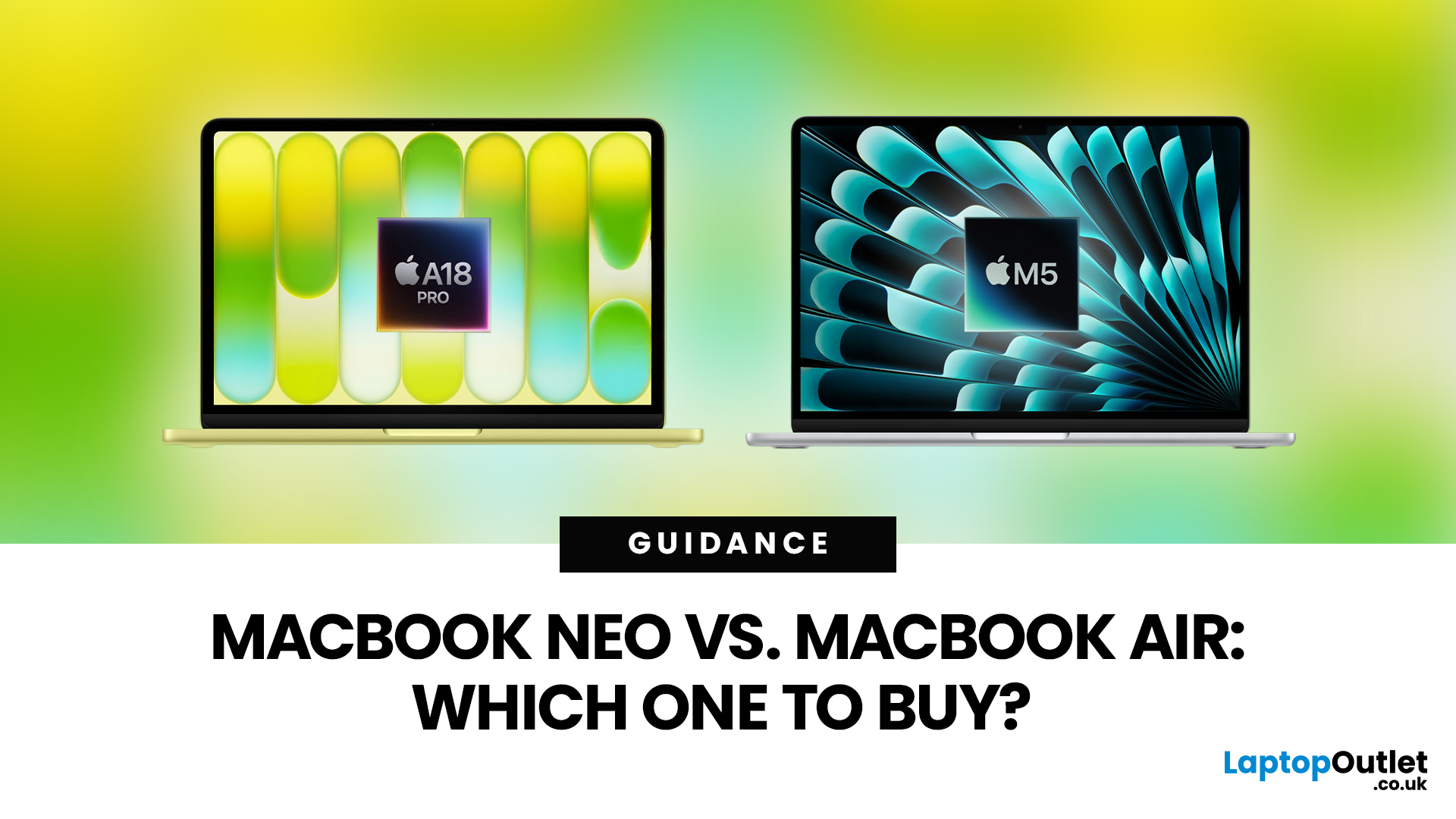
Apple’s 2026 MacBook line-up has a new talking point: MacBook Neo, a genuinely lower-cost Mac designed to bring more people into macOS without asking them to pay MacBook Air money. But the Air hasn’t suddenly become irrelevant. In fact, the newest MacBook Air (M5) is still Apple’s “default” recommendation for most buyers, thanks to stronger performance, more premium extras, and broader long-term headroom.
So, in this MacBook Neo vs MacBook Air guide, we’ll cut through the marketing, look at the real trade-offs (performance, ports, display, battery, and price), and help you choose the right Apple laptop for how you live and work in 2026.
MacBook Neo Overview
The MacBook Neo is Apple’s new entry-level MacBook, positioned below the Air on price. In the UK, Apple lists it from £599. To hit that price, Apple leans on iPhone-class silicon, the Neo is powered by the A18 Pro (the chip family used in iPhone Pro models), paired with 8GB of unified memory and 256GB or 512GB storage.
It also comes
Published: March 05, 2026
AI laptop buying in 2026 is not a trend you have to imagine. It is already changing how people shortlist, compare, and commit to a purchase.
Two shifts are happening at once. The first is behavioural: more people are using AI tools to conduct early research, compress reviews into a few usable insights, and quickly turn a vague requirement into a shortlist. Adyen’s UK retail research finds that 35% of UK consumers use AI to shop, and 56% of those say it influences what they buy.
The second shift is product-led: laptops are now being sold as AI PCs, with new labels and performance claims built around NPUs and TOPS. The problem is that marketing language and real-world value do not always line up. A badge can inflate the price, while the things that make a laptop genuinely pleasant to own are still the basics: screen, keyboard, battery, cooling, ports, and RAM.
So, the practical question in 2026 is not “Should you buy AI?” It is “Where does AI genuinely save time or improve the experience,
Last Updated: April 07, 2026
Buying an AI laptop in 2026 should be a quick decision. You pick a size, set a budget, and choose the “best” chip, right? In reality, the AI label is doing far too much work. Two laptops can sit side by side, both advertised as “AI-powered”, yet behave completely differently once you start writing documents, editing photos, joining video calls, or trying the latest Windows features.
That confusion usually comes down to one thing: people treat “AI laptop” as a single spec, when it’s really a mix of three engines working together.
- CPU: the general performance engine for everything you already do
- GPU: the visual and creative engine, also used for some AI workloads
- NPU: the efficiency engine for AI tasks that are built to run locally
This guide compares the 3 platforms shoppers are most likely to cross-shop when searching for an AI laptop today: Intel Core Ultra 200V (Lunar Lake), AMD Ryzen AI 300 (XDNA 2), and Qualcomm Snapdragon X Elite. We’ll keep it practical, explain the specs, and help
Last Updated: March 09, 2026
If you are comparing MacBook Neo vs Windows laptops, you are really asking one question: should you buy Apple’s cheapest Mac, or get a budget Windows laptop with more ports and more choice?
MacBook Neo is new, starts at £599, and is designed to be a simple, premium-feeling everyday laptop with macOS, long battery life, and strong call quality.
Budget Windows laptops can offer more screen sizes, more ports, and sometimes better upgrade options. But quality is inconsistent in this price range, and that’s where Neo tries to win.
Below is the practical, buyer-focused breakdown.
10-Second Answer Box
Choose MacBook Neo if
- You want the cleanest everyday experience for browsing, school, docs, and calls
- You value build quality and trackpad feel
- You want a laptop that stays fast and quiet for years, without tweaking settings
Choose a budget Windows laptop if
- You want more ports like HDMI and USB-A built in
- You need a bigger screen for the money
- You want the flexibility of Windows software and lots
Last Updated: July 06, 2026
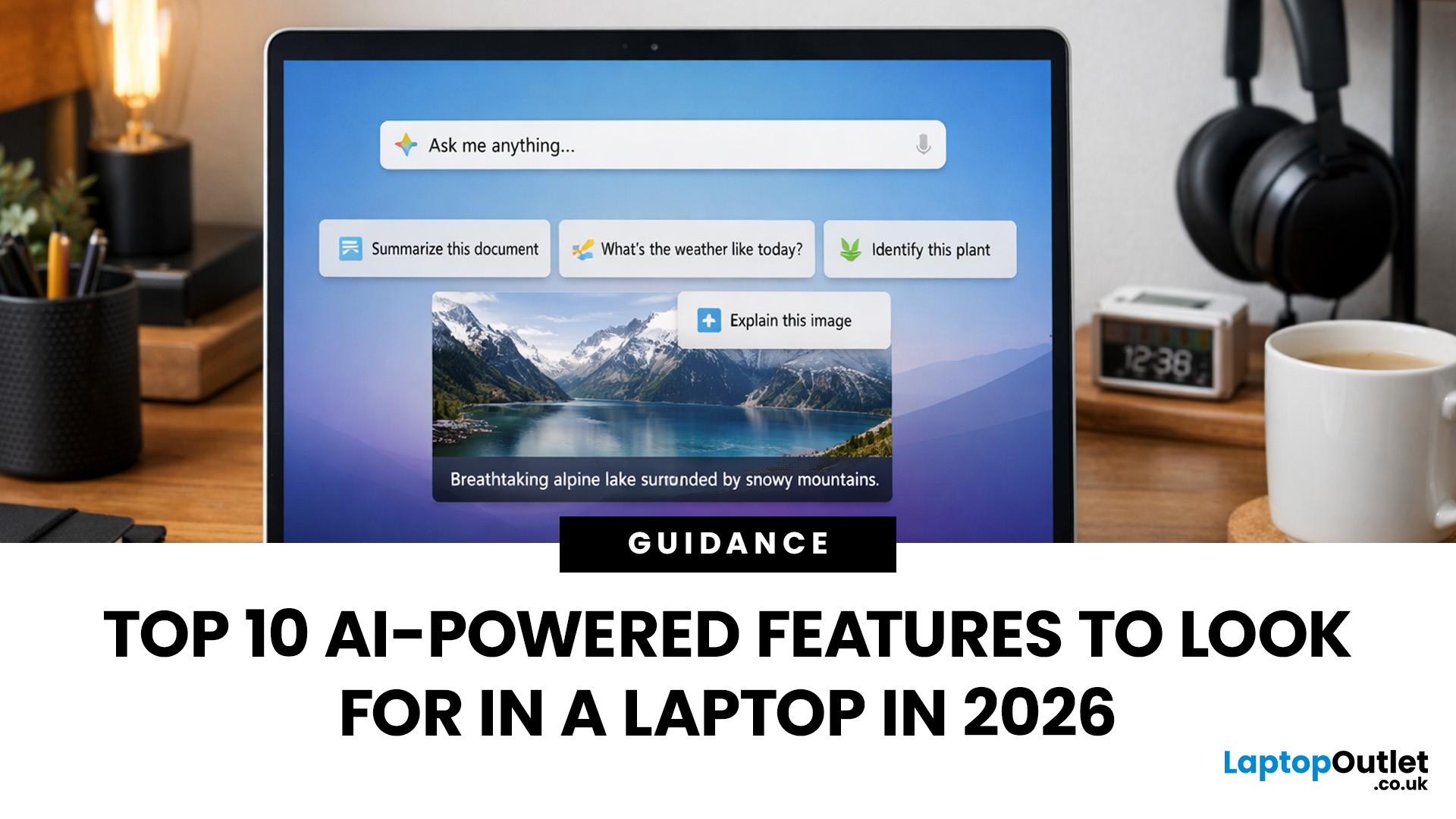
AI-powered laptop features matter in 2026 for one reason: they change the everyday feel of a laptop, not just the spec sheet. The key shift is on-device AI. When tasks like search, captions, camera effects, and quick actions run locally on an NPU, they tend to respond faster, waste less battery, and rely less on a perfect internet connection. That is why “AI-ready” is now a real buying category, not a vague label.
If you are upgrading this year, focus less on hype and more on the features that will save time each week: an NPU you can trust, OS-level AI tools that sit inside your workflow, practical call and meeting upgrades, and enough RAM and storage headroom to keep those features running smoothly for years.
Why AI Laptop Features Matter in 2026
Laptop marketing always finds a new headline, but this cycle is different because it is tied to real platform requirements. Microsoft has separated “regular Windows laptops” from Copilot+ PCs by setting expectations around NPU capability, RAM,
Published: March 10, 2026
If you’re comparing AI vs non-AI laptops in 2026, the most important thing to understand is this: an “AI laptop” is not automatically faster at everything. In everyday tasks like browsing, working with Office documents, email, and file management, a powerful non-AI laptop can feel just as fast as a newer AI model.
Where AI laptops change, the experience is when you stack AI features on top of normal usage, and the laptop stays smooth. That’s the difference buyers actually feel: better battery efficiency under mixed workload, quieter operation, and on-device features that don’t steal as much CPU and GPU time.
This guide works like an AI laptop performance test, using the kind of checks you can actually repeat at home or at work: wake-from-sleep, app launch behaviour, video calls with camera effects enabled, captioning latency, and battery drain under a realistic office day. It will help you decide whether an AI laptop is worth it for your workload, or whether a well-specced non-AI laptop
Last Updated: June 05, 2026
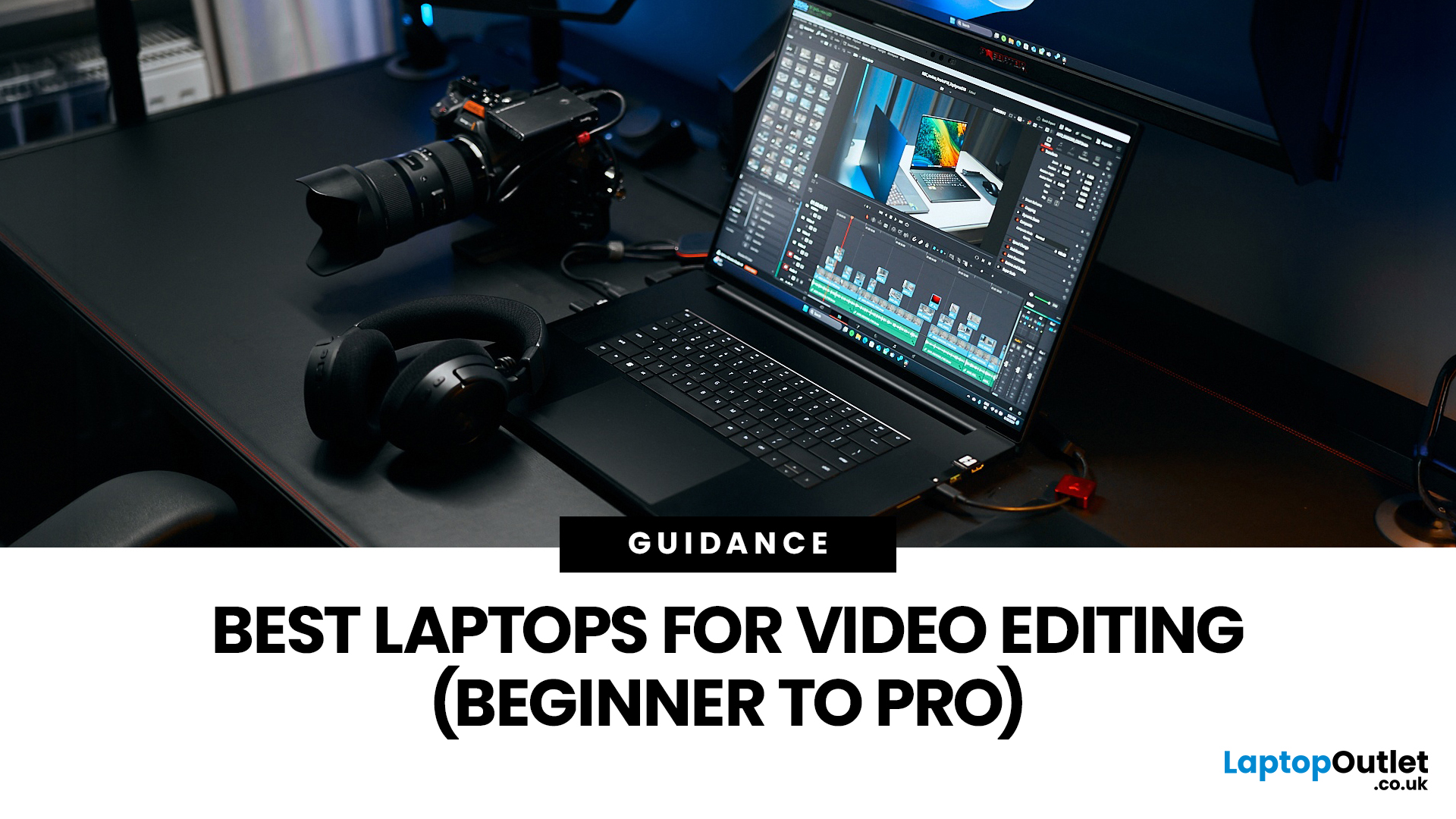
Choosing the right laptops for video editing can feel far more complicated than it should. Some brands focus on AI features; others push gaming specs, and many guides make it sound as though you need a studio-grade machine just to edit a few clips.
In reality, the best laptop depends on the type of editing you do.
A beginner creating YouTube videos, reels, or student projects will not need the same machine as someone working on commercial edits, colour grading in DaVinci Resolve, or handling large 4K client timelines. That is why this guide breaks down the best laptops for video editing by editing level, workflow, and real-world use case.
Whether you need a machine for social content, advanced post-production, or portable editing on the move, these are the options worth considering.
If your creative work also includes Photoshop, Illustrator, or wider Adobe software, it is worth reading our guide to the best laptops for Adobe Creative Cloud apps as well.
What to Look for in Laptops for Video
Last Updated: April 22, 2026
Choosing between Intel and AMD is no longer a simple case of picking the “faster” processor. If you are comparing Intel Core i5 vs Ryzen 5, you are looking at two highly capable mid-range options that power a large share of laptops available in the UK today.
Both deliver strong everyday performance, but they are designed with slightly different priorities. Understanding those differences is what helps you avoid overspending or buying a laptop that does not quite suit how you use it. This guide focuses on real-world use, not just specs, so you can make a confident decision in 2026.
Core i5 vs Ryzen 5: What is the Real Difference?
At a surface level, both processors handle everyday tasks comfortably. The difference comes from how they manage performance behind the scenes.
Intel’s modern Core i5 processors use a hybrid architecture that splits workloads between performance cores and efficiency cores. This allows the system to stay responsive even when multiple processes are running in the
Last Updated: September 22, 2026
Choosing between an Intel Core i3 and Core i5 laptop can be confusing, especially when two laptops with the same processor tier can perform very differently. Your everyday workload, processor generation, power class and overall laptop specification all play a part in deciding which option makes more sense.
Core i3 is generally enough for browsing, Office apps, streaming and lighter study, while Core i5 is better suited to heavier multitasking, creative work, coding and more demanding software. In 2026, however, you should compare the exact processor generation and suffix, such as U, H or HX, rather than choosing a laptop based on the i3 or i5 badge alone.
Intel's laptop range has also evolved beyond the familiar Core i3 and Core i5 names, with newer machines using Intel Core 3, Core 5 and Core Ultra branding. This guide breaks down the differences so you can understand which processor type better matches the way you use your laptop.
Core i3 vs Core i5: What Is the Difference?
Traditionally,

