



WWDC 2026 Announcements: iOS 27, Siri AI, Apple Intelligence and More
Apple's WWDC26 keynote took place on Monday 8 June 2026 at 10am PT (6pm BST), running through to 12 June. The keynote delivered iOS 27, iPadOS 27, macOS Golden Gate 27, watchOS 27, tvOS 27, and visionOS 27, along with the long-awaited overhaul of Siri, now officially called Siri AI, powered by Apple Foundation Models developed in collaboration with Google's Gemini technology.
There were no major hardware announcements. It also marked a historic moment: the final WWDC keynote delivered by Tim Cook as Apple's chief executive.
What Is WWDC26 and When Did It Start?
WWDC stands for Worldwide Developers Conference, and it is Apple's flagship annual event where the company sets out its software roadmap for the year. This year marked the 37th edition, and it was once again a hybrid affair.
|
Keynote Date 8 June 2026 |
Keynote Time 10am PT |
Conference End 12 June 2026 |
Format Hybrid |
How Can You Watch the WWDC26 Keynote From the UK?
The keynote streams for free with no registration required. You can re-watch it in full right now at any of these locations:
- Apple.com (apple.com/apple-events)
- Apple Developer app (available on iPhone, iPad, and Mac)
- Apple TV
- YouTube via the Apple Developer channel
What Was the Format of WWDC26?
As with recent years, Apple held WWDC26 primarily online. Developers worldwide attended all sessions, labs, and workshops at no cost through the Apple Developer website and app. More than 1,000 developers, designers, and students were also invited to watch the keynote in person at Apple Park in Cupertino, California.
Tim Cook's Farewell
WWDC26 carried extra emotional weight as the last developer conference keynote led by Tim Cook, who has helmed Apple since 2011. Cook ended the keynote with a short, personal message to the developer community, expressing his belief that Apple's best days are still ahead. It was a symbolic handoff moment, even though incoming CEO John Ternus was not featured during the presentation itself.
What Did Apple Announce for Siri at WWDC26?
Siri is the single biggest story of WWDC 2026. Apple officially unveiled Siri AI, the most significant overhaul of its voice assistant since the feature launched over a decade ago.
Apple VP Craig Federighi confirmed on stage that the company partnered with Google and the Gemini family of models to co-create the next generation of Apple Foundation Models that power Siri AI.
The new architecture was custom-built in collaboration with Google, with the top-tier cloud model, AFM Cloud Pro, running on Nvidia GPUs in Google's cloud and described as comparable in quality to Gemini Frontier models. Apple was clear that privacy remains central: user data is never stored or shared, not even with Apple, and outside experts can verify that promise at any time.
What Can Siri AI Actually Do?
The new Siri AI is a fundamentally different product to the assistant iPhone users have known for years. Here is what Apple confirmed at the keynote:
- Full chatbot interface: Back-and-forth conversations with conversation history that syncs privately across iPhone, iPad, Mac, Apple Watch, and Vision Pro via iCloud.
- Dedicated Siri app: A standalone app pre-installed on iOS 27, iPadOS 27, and macOS Golden Gate 27, supporting both text and voice input.
- On-screen awareness: Siri can understand what is currently visible on your display and offer contextual suggestions or complete tasks based on what it sees.
- Personal context: Deep integration with Mail, Messages, Calendar, and other apps so Siri can answer questions about your actual life, such as searching messages to find a contact's address or checking upcoming diary events.
- Multimodal input: Siri AI can see and understand text, audio, imagery, and video.
- Web search: Siri can pull real-time information from the web to answer general knowledge questions.
- Camera integration: A new Siri Mode in the Camera app replaces the previous Visual Intelligence branding, letting users point their camera at something and get contextual information, including nutritional information from food, for example.
- Customisable voice: Users can now adjust Siri's pace, expressiveness, and accent.
Third-Party AI Extensions
Apple introduced Siri Extensions, a framework that allows third-party AI assistants to integrate directly with Siri. At launch, users can switch between Siri AI, ChatGPT, Google Gemini, and Anthropic's Claude from within the interface, giving them a choice of AI provider.
What Does the New Siri Interface Look Like?
On iPhone, Siri AI responses appear through the Dynamic Island with a glowing interface. Mac users can type Siri queries directly through Spotlight. Vision Pro users can interact with a floating Siri orb without needing to say "Hey Siri" first.
| Important note for EU users: Apple confirmed that Siri AI will not be available on iPhone or iPad in the European Union when iOS 27 and iPadOS 27 launch, due to requirements under the EU's Digital Markets Act. This also means EU iPhone and iPad users will miss the dedicated Siri app, expanded Visual Intelligence tools, and Siri integration inside the Camera app at launch. Siri AI will, however, be available on supported Macs, Apple Watches, and Vision Pro headsets in the EU. Apple has not provided a timeline for when the features will arrive on iPhone and iPad in the EU. |
What Did Apple Announce for iOS 27?
iOS 27 is the centrepiece of WWDC26. As expected, Apple kept the focus on performance, stability, and AI integration rather than another sweeping visual redesign.
Craig Federighi made a point on stage of confirming that iOS 27 supports every device currently running iOS 26, including the iPhone 11, iPhone 11 Pro, and iPhone 11 Pro Max, going all the way back to 2019. This makes iOS 27 available to more users than any iOS release in the company's history. No iPhones were dropped from the compatibility list.
The full-featured Siri AI experience still requires an iPhone 15 Pro or later, as it relies on Apple Intelligence and the on-device processing power that comes with newer chips.
Confirmed Features in iOS 27
|
Feature |
What Apple Announced |
|
Siri AI |
Full chatbot-style redesign with dedicated app and conversation history, powered by Apple Foundation Models developed with Google |
|
Dynamic Island Siri UI |
Glowing interface when Siri AI is triggered |
|
Camera App (Siri Mode) |
Visual Intelligence rebranded as Siri Mode within the Camera app |
|
Safari Tab Organisation |
Automatic tab grouping and a new Notify Me feature for webpage changes |
|
Passwords App |
One-tap credential updating |
|
Shortcuts |
Describe an automation in plain language and the app builds it |
|
Photos App |
Upgraded Clean Up tool and generative reframing options |
|
Liquid Glass Slider |
An opacity slider to adjust the intensity of the Liquid Glass transparency effect |
|
Performance Improvements |
App launches up to 30% faster, new photos appear up to 70% faster, AirDrop transfers up to 80% faster |
Which Devices Support iOS 27?
iOS 27 is confirmed to support iPhone 11 and all newer models, the same lineup as iOS 26. The full Siri AI experience requires an iPhone 15 Pro or later.
When Will iOS 27 Be Available?
Developer beta 1 launched on 8 June 2026, immediately after the keynote. A public beta is expected in July. The full public release is expected in September 2026.
What Did Apple Announce for macOS at WWDC26?
Apple officially named the next version of macOS: macOS Golden Gate 27, named after the Golden Gate strait in San Francisco. It follows macOS Tahoe 26.
macOS Golden Gate marks a turning point for older Mac owners. It runs exclusively on Apple Silicon, meaning M1 and newer. macOS Tahoe 26 was the final major release to support Intel-based Macs, though Apple says those machines will continue receiving security updates for three more years. macOS Golden Gate is also expected to be the final version with full Rosetta 2 support.
Key Changes in macOS Golden Gate 27
- Siri AI: The same overhaul as iOS 27, including a dedicated Siri app. Users can type Siri requests directly into Spotlight, and the system automatically recognises when a query should go to Siri AI. Apple demonstrated Siri analysing multiple PDF documents at once and generating comparison tables.
- Liquid Glass refinements: A global opacity slider lets users adjust transparency, window corners now have a tighter uniform radius across all apps, sidebars stretch to the edges of the screen to reduce distraction, and sidebar icons regain more colour.
- Unified toolbar: Apps now share a consistent toolbar appearance across macOS.
- AI-powered Safari tab grouping: The new Organise Tabs feature automatically sorts related tabs into logical groups.
- Improved Search and Spotlight: A rebuilt search system indexes Photos, Mail, and files more quickly. Users can type Siri AI requests directly into Spotlight.
- Visual Intelligence on Mac: A keyboard shortcut can capture on-screen content and turn it into an action, such as taking a screenshot of an event schedule and automatically adding dates to Calendar.
- Apple Intelligence in core apps: AI-powered features across Photos, Safari, Passwords, and more.
What Else Did Apple Announce for Other Platforms?
Beyond iOS and macOS, Apple updated every major platform as part of the "27" software cycle. All six operating system betas launched on 8 June.
iPadOS 27
iPadOS 27 receives all the same core improvements as iOS 27, including Siri AI integration via the dedicated Siri app and Spotlight, the Liquid Glass opacity slider, and performance improvements. Apple confirmed that apps on iPad can now launch up to 30% faster through intelligent preloading, and switching between apps is noticeably more responsive. The Organise Tabs feature in Safari is also included.
watchOS 27
watchOS 27 brings Siri AI to supported Apple Watch models, though not all watches qualify due to on-device processing requirements. Older Apple Watch models, including certain Ultra and SE models, will not have access to the headline Siri AI features. For those that do, watchOS 27 also adds cycle tracking improvements, including support for perimenopause and menopause, and Workout Buddy enhancements.
tvOS 27
tvOS 27 is part of Apple's wider platform refresh. Apple did not give tvOS a major standalone showcase during the keynote, with the presentation focused primarily on Siri AI and the larger operating-system updates. Further tvOS details are expected during WWDC26 developer sessions throughout the week.
visionOS 27
visionOS 27 brings Siri AI support to Vision Pro, along with parity with the Apple Intelligence enhancements across other platforms. The Vision Pro implementation of Siri AI is particularly notable, as users can interact with a floating Siri orb without relying entirely on a spoken wake phrase.
|
PLATFORM |
KEY ANNOUNCEMENTS |
FOCUS |
|---|---|---|
|
iOS 27 |
Siri AI, Camera overhaul, performance gains, Liquid Glass slider |
Major |
|
iPadOS 27 |
Same as iOS 27 plus faster app launching |
Major |
|
macOS Golden Gate 27 |
Siri AI, Liquid Glass fixes, Safari AI tabs, Apple Silicon only |
Significant |
|
watchOS 27 |
Siri AI (select models), Workout Buddy, cycle tracking |
Incremental |
|
tvOS 27 |
Platform parity, additional details to follow |
Incremental |
|
visionOS 27 |
Siri AI, performance, Apple Intelligence parity |
Stability Focus |
What About New Features Beyond Siri?
AirPods Custom Equaliser
Apple announced that AirPods users will be able to create custom equaliser profiles through iOS 27. The new controls let users adjust low, mid, and high frequencies to suit their listening preferences, replacing the previous one-size-fits-all approach.
Screen Time and Child Safety
Apple announced a substantial expansion of parental controls and child-safety tools across iPhone, iPad, and Mac:
- Child accounts are mandatory for users under 13 and can remain active until the age of 18, with system-wide safeguards tailored to the child's age.
- Parents can control who their child communicates with via Phone, FaceTime, and Messages.
- A new Ask to Browse feature lets children request permission before visiting a new website in Safari.
- Communication Safety, which already detects nudity in shared images, now extends to gore and violent content.
- Screen Time has been redesigned with more granular time limits by category (games, entertainment, social media) and clearer usage overviews.
- Apple is working with the American Academy of Pediatrics on guidance for families.
App Store Updates
Apple announced several App Store changes:
- Creative Assets allows developers to submit richer images and videos for App Store search results.
- Personalised Collections and App Notes (rolling out in the US in English) recommend apps based on usage interests.
- New Bundles and Suites allow multiple developers to package related apps together, or a single developer to group several apps.
- Expanded subscription support for businesses and schools through StoreKit 2, including group and volume purchases.
- With Intel Mac support dropped in macOS Golden Gate, Mac App Store developers no longer need to submit Intel-compatible app versions.
Was Any Hardware Announced at WWDC26?
No. Apple did not unveil any new Mac, iPhone, iPad, or Apple Vision product during the WWDC 2026 keynote. The event was purely software-focused.
This was not entirely unexpected. Apple had a very active hardware period earlier in 2026, including the AirTag 2, iPhone 17e, iPad Air with M4 chip, M5 MacBook Air, M5 Pro and M5 Max MacBook Pro models, and the Studio Display XDR with mini-LED, among others. Hardware updates for the Mac Studio and Mac mini are expected later in 2026, with supply chain factors pushing those announcements beyond the June conference.
When Will iOS 27, macOS Golden Gate 27 and Other Updates Be Available in the UK?
Apple releases its software updates globally on the same day. Based on the confirmed beta schedule and Apple's historical patterns, here is what to expect:
- 8 June 2026: Developer beta 1 for iOS 27, iPadOS 27, macOS Golden Gate 27, and other platforms
- July 2026: Public betas for all major platforms
- September 2026: Full public release of all "27" software updates
- Autumn 2026 onwards: Siri AI launching initially as a beta in English; EU iPhone and iPad availability of Siri AI subject to separate timeline

WWDC26: A Foundation Laid for the Future
WWDC26 delivered exactly what Apple needed it to: a credible, privacy-first answer to the AI era. Siri AI, built on Apple Foundation Models developed in collaboration with Google's Gemini technology, finally gives Apple an assistant capable of competing with ChatGPT and Google Gemini in a meaningful way.
iOS 27's performance-first approach, with app launches up to 30% faster and no iPhones dropped from the compatibility list, reinforces Apple's long-standing commitment to supporting older devices. macOS Golden Gate draws a clean line under the Intel era and sets the stage for a more focused, Apple Silicon-only future.
For UK users, September 2026 is when the software arrives for everyone. EU users on iPhone and iPad will need to wait a little longer for Siri AI specifically. But the direction is clear, and the foundation has been laid. The next chapter of Apple's AI story starts here.

A Bit More Info...
When was WWDC26?
WWDC26 ran from Monday 8 June to Friday 12 June 2026. The keynote started at 10am PT, which is 6pm BST for UK viewers.
What did Apple announce at WWDC26?
Apple announced iOS 27, iPadOS 27, macOS Golden Gate 27, watchOS 27, tvOS 27, visionOS 27, Siri AI (a Google Gemini-powered assistant overhaul), a custom AirPods equaliser, major child-safety and Screen Time updates, and App Store changes for developers.
Was any hardware announced at WWDC26?
No. Apple focused entirely on software. No new Mac, iPhone, iPad, or Apple Vision product was unveiled.
What is Siri AI?
Siri AI is Apple's new conversational assistant, rebuilt on Apple Foundation Models developed in collaboration with Google. It includes a dedicated standalone app, conversation history synced via iCloud, on-screen awareness, personal context from apps like Mail and Messages, and a new Siri Mode within the Camera app.
What is iOS 27?
iOS 27 is Apple's latest iPhone operating system, announced at WWDC26. It focuses on Siri AI, performance improvements, Camera app changes, and stability. It supports iPhone 11 and all newer models.
What is macOS Golden Gate 27?
macOS Golden Gate 27 is Apple's next major Mac operating system, announced at WWDC26. It brings Siri AI, Liquid Glass readability improvements, AI-powered Safari tab grouping, and runs exclusively on Apple Silicon Macs.
Will Siri AI be available in the EU?
Siri AI will not be available on iPhone or iPad in the EU at launch, due to the Digital Markets Act. It will be available in the EU on supported Macs, Apple Watches, and Vision Pro headsets.
How can I watch the WWDC26 keynote in the UK?
You can watch it on demand for free on Apple.com, the Apple Developer app, Apple TV, or YouTube. No registration is needed.
What was special about this year's WWDC?
WWDC26 was Tim Cook's last keynote as Apple CEO. Cook steps down on 1 September 2026 and will become Executive Chairman, with John Ternus taking over as CEO.
Related Articles


Published: March 04, 2026
Apple’s silicon strategy has reshaped modern computing and the Apple M4 chip is the latest example of how powerful, efficient processors can transform mobile devices. In this article, we explain exactly what the M4 chip is, why it makes the new iPad Air faster, and what this means for everyday users in the UK and beyond.
What Is the Apple M4 Chip?
The Apple M4 chip is the newest generation of Apple silicon designed for tablets and other devices, including the latest iPad Air lineup. It builds on Apple’s previous M-series processors with improvements in CPU performance, graphical power and machine learning capabilities. The M4 integrates multiple central processing cores, a robust graphics unit and a dedicated neural engine into a single, efficient system-on-chip.
Unlike older mobile processors, which may separate components, the M4 combines CPU, GPU, memory controller, neural accelerators and other key functions into a single package. This unified architecture reduces latency and maximises
Last Updated: March 09, 2026
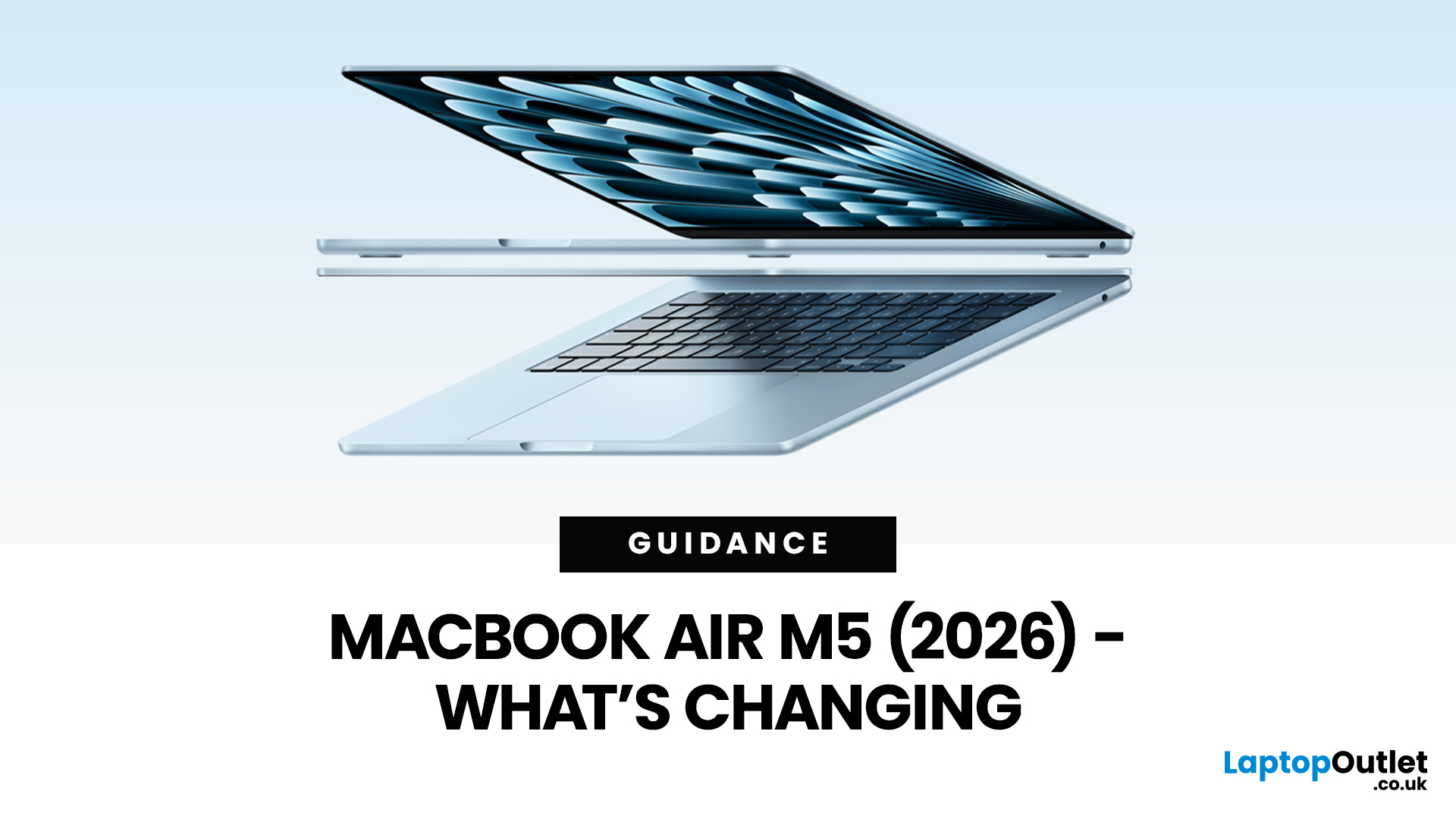
Apple’s MacBook Air refresh for 2026 is official: on 3rd March, 2026, Apple announced the MacBook Air with M5 in 13-inch and 15-inch sizes. The headline isn’t a dramatic redesign, this update is about refining the “already-right” formula: the same thin, fanless aluminium build and the same approachable colour lineup, paired with meaningful under-the-hood upgrades like 512GB base storage, Wi-Fi 7, and a faster SSD.
If your primary focus is MacBook Air M5 design and colours, here’s the most up-to-date, source-backed breakdown of what’s new, what’s unchanged, and how to pick the finish that fits your style (and your tolerance for fingerprints).
MacBook Air M5 design updates at a glance
Apple positions the M5 MacBook Air as a continuation of the current design language: thin, light, durable aluminium, and completely silent because it’s fanless. In other words, no big chassis overhaul this generation.
What’s actually changing in 2026:
- Colours: Apple confirms four finishes: Sky Blue - Midnight
Last Updated: March 19, 2026
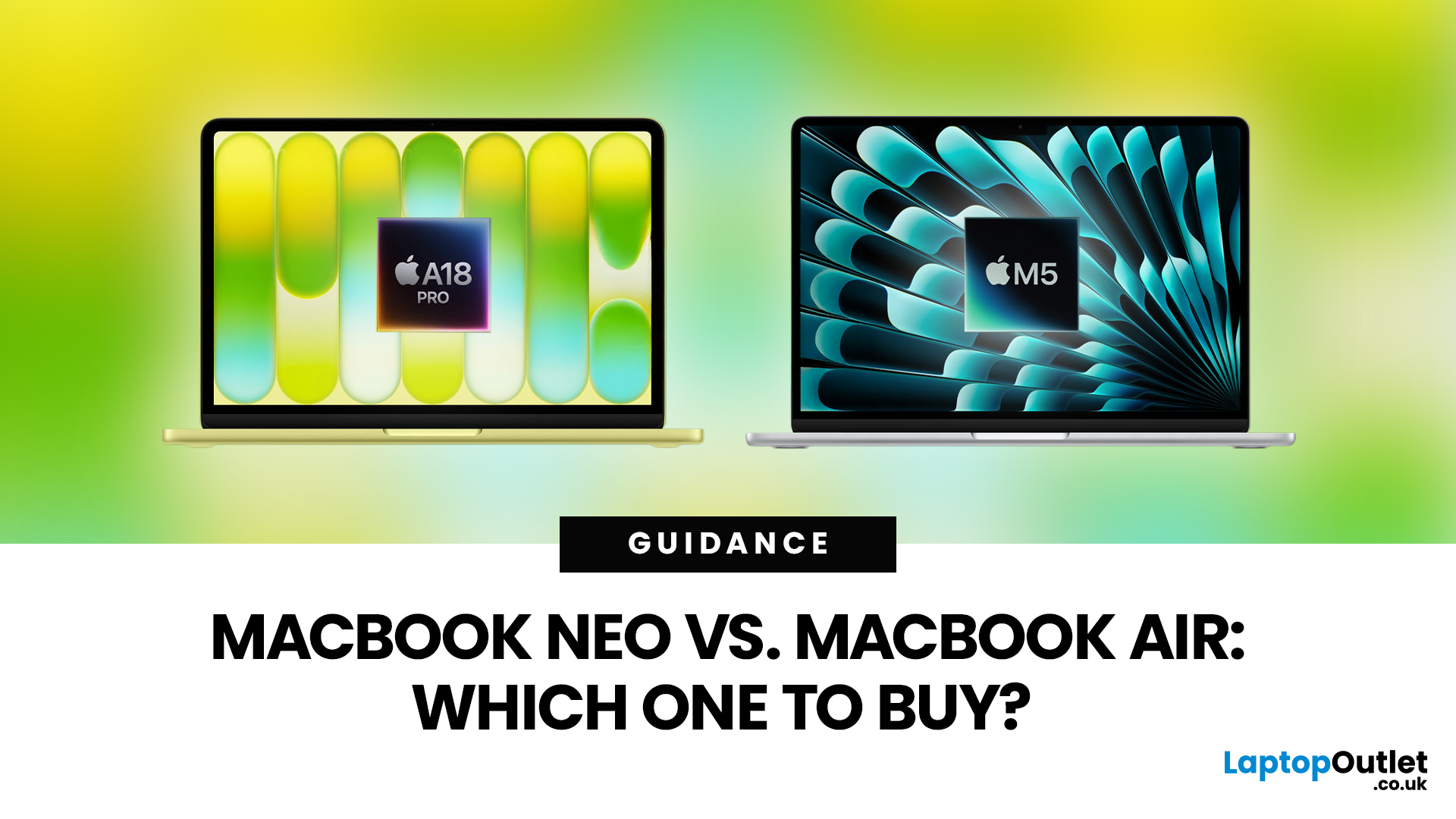
Apple’s 2026 MacBook line-up has a new talking point: MacBook Neo, a genuinely lower-cost Mac designed to bring more people into macOS without asking them to pay MacBook Air money. But the Air hasn’t suddenly become irrelevant. In fact, the newest MacBook Air (M5) is still Apple’s “default” recommendation for most buyers, thanks to stronger performance, more premium extras, and broader long-term headroom.
So, in this MacBook Neo vs MacBook Air guide, we’ll cut through the marketing, look at the real trade-offs (performance, ports, display, battery, and price), and help you choose the right Apple laptop for how you live and work in 2026.
MacBook Neo Overview
The MacBook Neo is Apple’s new entry-level MacBook, positioned below the Air on price. In the UK, Apple lists it from £599. To hit that price, Apple leans on iPhone-class silicon, the Neo is powered by the A18 Pro (the chip family used in iPhone Pro models), paired with 8GB of unified memory and 256GB or 512GB storage.
It also comes

Last Updated: March 09, 2026
After four years without a display refresh, Apple has unveiled a brand-new Apple Studio Display alongside the all-new Studio Display XDR. Announced on 3rd March 2026 and available from 11th March 2026, this latest addition to Apple's display lineup is a serious upgrade for Mac users who demand more from their workspace.
Whether you are a creative professional, a developer, or simply someone who wants a top-tier external monitor, this guide covers everything you need to know.
What Is the Apple Studio Display?
The Apple Studio Display is a 27-inch 5K Retina external monitor designed to pair seamlessly with Apple Silicon MacBooks and select iPad models. It replaces the original 2022 Studio Display with meaningful upgrades across connectivity, camera, audio, and overall performance.
It is not just a monitor. It is an all-in-one productivity hub with a built-in camera, microphone array, and speaker system that rivals dedicated audio equipment.
Apple Studio Display: Key Specs at a Glance
Here

Published: March 10, 2026
If you are comparing Apple Studio Display XDR vs Studio Display in 2026, the main thing to understand is simple: Apple’s monitor lineup is now split into two clearer tiers than before. The Studio Display is the mainstream option for creators, professionals, and general Mac users, while the Studio Display XDR is the higher-end model for people who need stronger HDR, higher brightness, wider colour support, smoother motion, and more specialised reference modes. Apple announced both as part of its current display family in March 2026, with the standard Studio Display starting at £1,499 and the Studio Display XDR starting at £2,999.
That means this is no longer a messy comparison between a regular Apple monitor and an older niche flagship. Apple now sells two current 27-inch 5K displays with the same broad design language, the same camera and speaker system, and the same Thunderbolt 5-based connectivity. The difference is what sits underneath the panel. Studio Display is the better fit for

Published: March 12, 2026
Apple’s new MacBook Air M5 is officially here, and after spending time testing it myself, I can confidently say one thing: it’s fast. Like, open-all-my-tabs, edit-4K, switch-between-apps-without-thinking fast. But benchmarks and real use aren’t always the same thing. So, I ran several tests, used it for everyday work, and compared it with previous Air models to answer the real question: Are the MacBook Air M5 benchmarks strong enough to justify the upgrade?
For UK buyers in particular, this is shaping up to be one of the easiest MacBooks to recommend in 2026. Apple kept the thin, fanless design that people already love, but added the new M5 chip, improved base storage, faster wireless connectivity, and stronger performance across both benchmarks and daily workflows. Let’s break down the numbers and the real-world experience.
MacBook Air M5 Overview
Like iPhone 17e, iPad Air M4, and MacBook M5 Pro and M5 Max, Apple announced the MacBook Air M5 on 3 March 2026, with availability beginning

Published: March 12, 2026
The foldable phone market is growing fast. And 2026 is shaping up to be its most exciting year yet.
Samsung's Galaxy Z Fold 7 is already here, refined and polished after seven generations. Apple's iPhone Fold, set to arrive in autumn 2026, is the most anticipated foldable debut in smartphone history. So, when it comes to iPhone Fold vs Galaxy Z Fold 7, which one is actually worth your money?
This foldable smartphone buying guide covers every major spec, feature, and difference between the two. Whether you are a longtime Samsung user or a loyal iPhone owner eyeing something new, read on.
| Important note: The iPhone Fold has not been officially announced at the time of writing. All iPhone Fold details are based on credible leaks, analyst reports from Ming-Chi Kuo and Mark Gurman (Bloomberg), and supply-chain sources. |
Full Specs at a Glance: Apple iPhone Fold vs Galaxy Z Fold 7
Here is a complete, detailed Galaxy Z Fold 7 specs comparison against the expected iPhone Fold. Every

Published: March 13, 2026
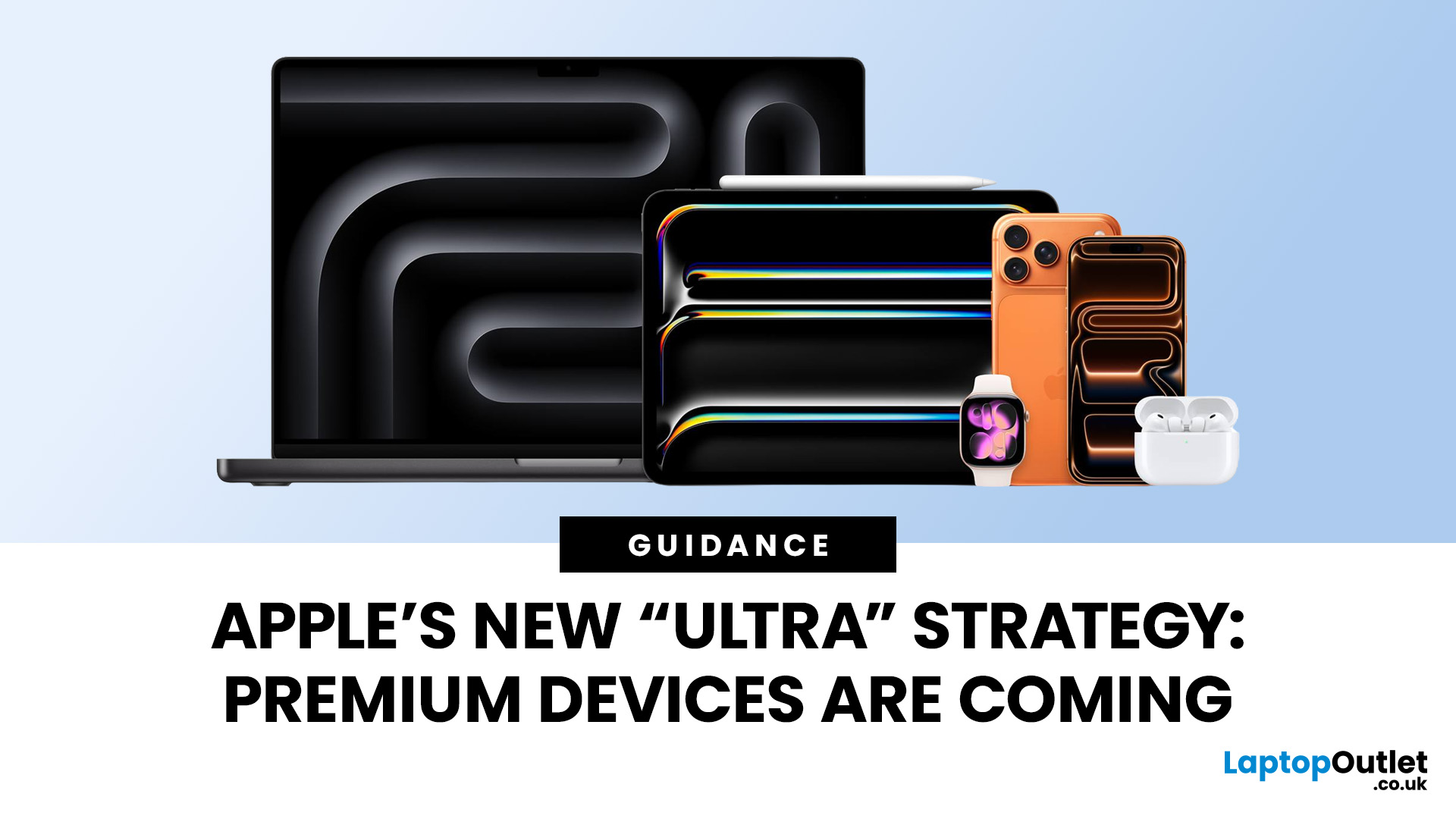
Apple is entering a new era of product strategy. For years, the company has dominated the premium tech market with devices like the iPhone Pro and MacBook Pro. But now Apple appears to be expanding its ecosystem in two directions at once: more affordable devices and ultra-premium hardware.
The recent MacBook Neo release indicates that Apple has a budget-friendly laptop to attract students and first-time Mac users. At the same time, industry reports indicate Apple is building a lineup of Ultra devices that will sit above its current Pro models.
This shift highlights what many analysts now call the Apple Ultra strategy, a long-term plan to stretch Apple’s ecosystem from entry-level devices all the way to cutting-edge luxury hardware. From the MacBook Neo at the affordable end to devices like iPhone Ultra, MacBook Ultra, and AirPods Ultra, Apple’s premium device roadmap is becoming more ambitious than ever.
MacBook Neo: Apple’s New Entry-Level Laptop
The MacBook Neo is expected to become
Published: March 13, 2026
Apple has always been known for premium tech. But now the company is pushing things even further. Reports suggest Apple is introducing a brand-new ultra-premium tier of products, with devices that sit above the current “Pro” lineup.
From the iPhone Ultra and Apple Fold to AirPods Ultra and MacBook Ultra, Apple’s next wave of hardware could redefine what “flagship” means. And with Apple’s 50th anniversary approaching in 2026, the company appears to be preparing some of its most ambitious devices yet.
Apple Ultra Devices Strategy: A New Super-Premium Tier
For years, Apple’s product hierarchy was simple:
- Standard models (iPhone, iPad, MacBook Air)
- Pro devices for professionals
- Occasional high-end models like the Apple Watch Ultra
But Apple is now reportedly creating a new “Ultra” category above Pro, focused on extreme performance, premium materials, and experimental tech. Analysts say Apple is planning Ultra-tier devices across the iPhone, Mac, and AirPods lineup, expanding the concept
Published: March 16, 2026
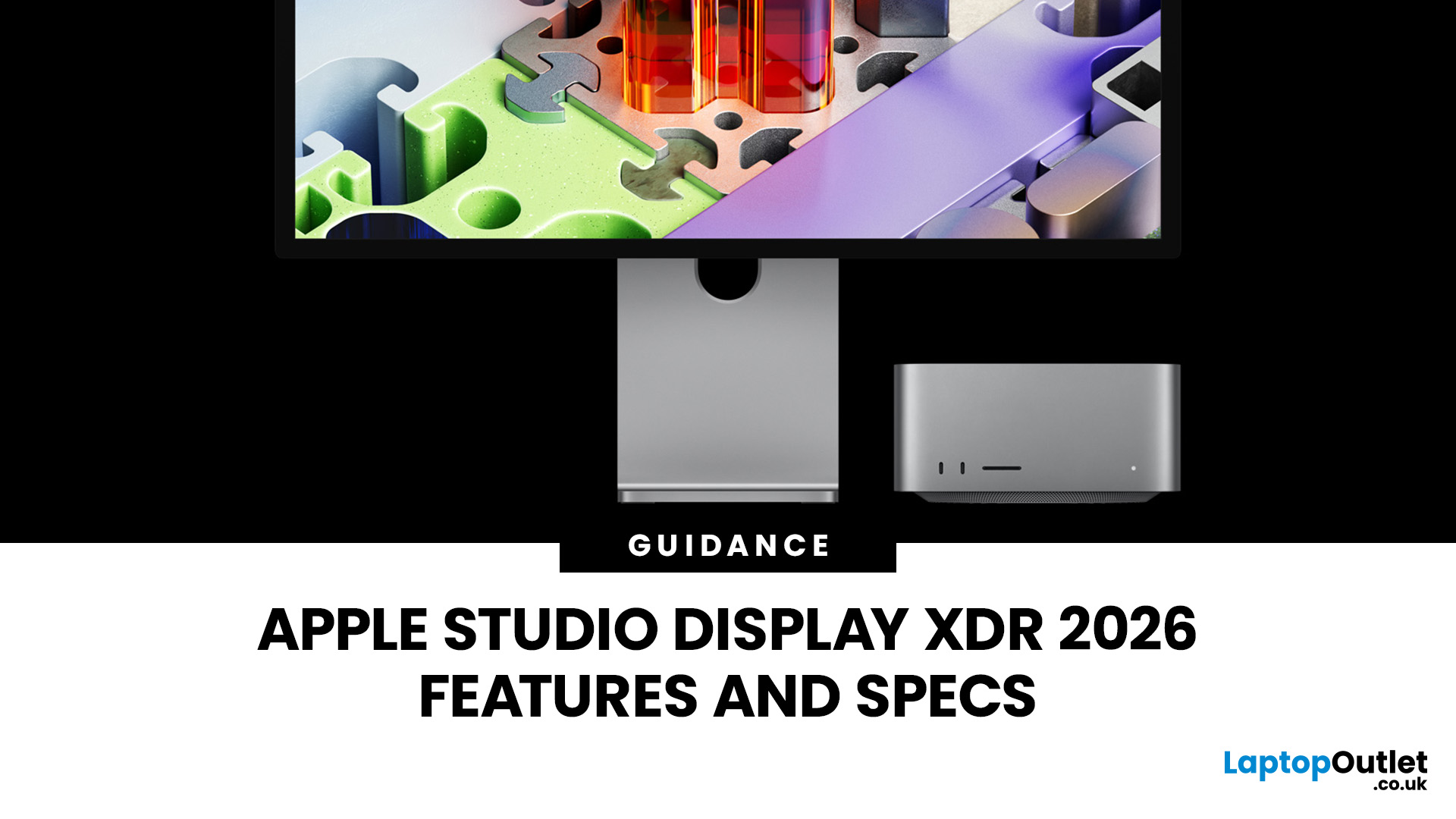
The Apple Studio Display XDR has finally arrived, and it is genuinely something special. Announced on 3rd March 2026 and available from 11th March 2026, this is Apple's answer to professionals who demand the very best from a desktop display.
It replaces the long-discontinued Pro Display XDR and sits at the top of Apple's new two-tier monitor lineup. Whether you are a video editor, 3D artist, or creative professional, this guide covers everything you need to know, from specs and performance to price and who it is actually for.
What Is the Apple Studio Display XDR?
The Apple Studio Display XDR is a 27-inch professional monitor with a 5K Retina XDR panel, mini-LED backlighting, and a 120Hz refresh rate. It is designed for workflows like HDR video editing, 3D rendering, colour grading, and even diagnostic radiology.
It replaces the older Pro Display XDR, which had been Apple's flagship monitor since 2019. The new model is smaller at 27 inches (down from 32 inches)

