



ASUS vs Gigabyte Graphics Card: Which Brand Is Better for Gaming?
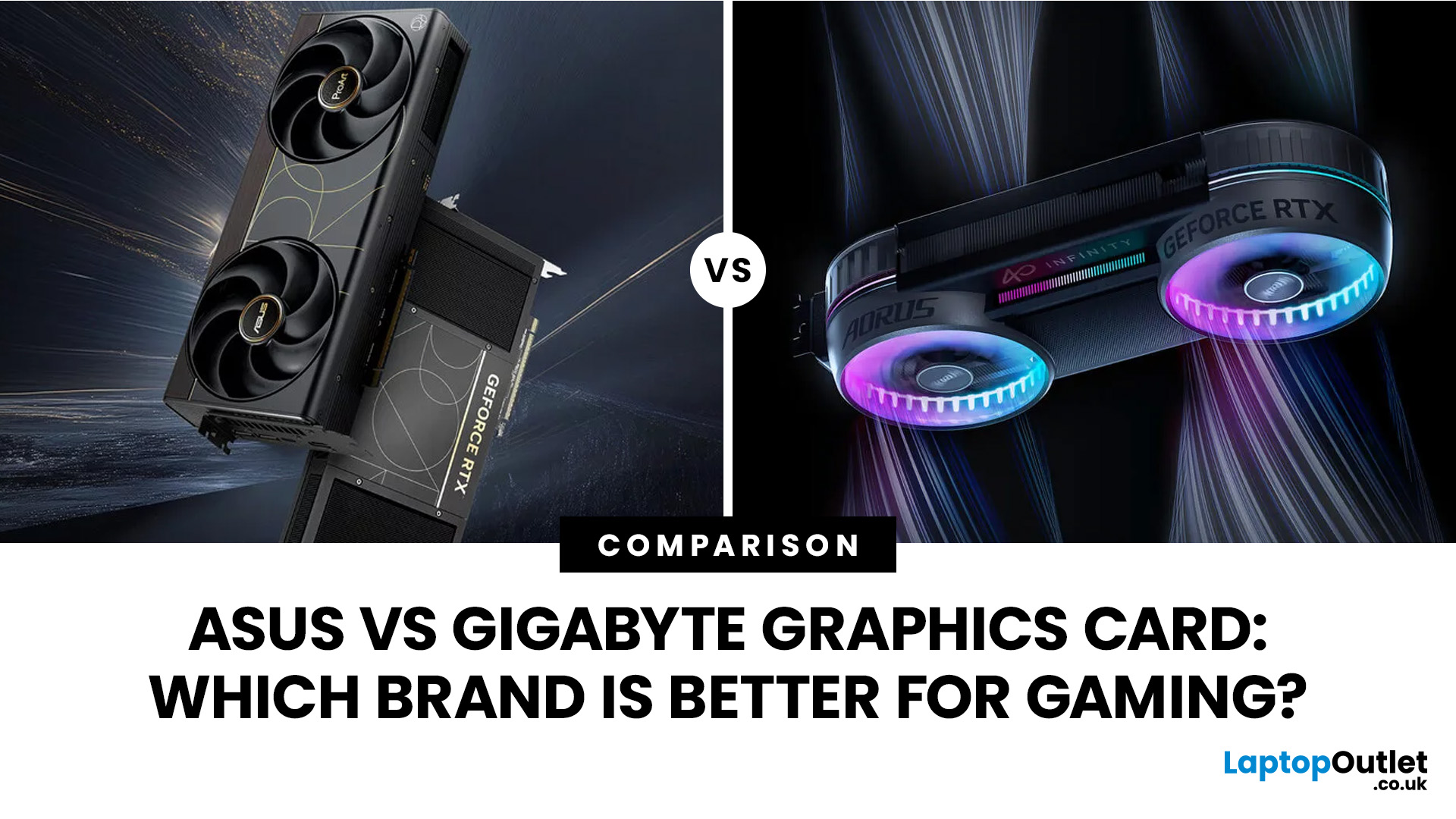
Both ASUS and Gigabyte are among the most trusted graphics card manufacturers available to UK gamers in 2026. In the ASUS vs Gigabyte graphics card comparison, ASUS typically leads on premium cooling, build quality, and software, while Gigabyte offers strong value across its mid-range and budget tiers. The right choice comes down to your budget, performance needs, and preferred feature set.
Choosing between ASUS and Gigabyte for your next graphics card is a decision many UK gamers face when building or upgrading a system. This guide breaks down every relevant factor so you can make an informed decision, whether you're gaming at 1080p, pushing 1440p on a competitive title, or targeting 4K. We also include best graphics card recommendations for different types of gamers.
A Quick Look at Both Brands
Before diving into the ASUS vs Gigabyte graphics card debate, here is a brief introduction to each brand and how they structure their GPU ranges. Knowing this makes it much easier to understand which sub-brand is relevant to your budget and needs.
ASUS
Founded in 1989, ASUS (AsusTek Computer Inc.) is a Taiwanese technology company and one of the most recognisable GPU manufacturers in the UK. It produces cards across four distinct sub-brands targeting different segments of the market.
- ASUS ROG Astral / ROG Strix: Flagship enthusiast tier
- ASUS TUF Gaming: Durability-focused mid-high
- ASUS Dual: Budget to mainstream
- ASUS ProArt: Creator-optimised
Gigabyte
Founded in 1986, Gigabyte Technology is one of the longest-established GPU manufacturers in the industry. Its graphics card lineup is organised into three main tiers, covering everything from budget entry-level cards through to enthusiast-grade hardware.
- Gigabyte AORUS: Flagship enthusiast tier
- Gigabyte Gaming OC: Mainstream performance
- Gigabyte WINDFORCE: Budget to entry-mid
- Gigabyte AERO / EAGLE: Design-focused and mainstream alternatives on selected models
Both brands manufacture cards for NVIDIA's RTX 50 series (Blackwell) and AMD's Radeon RX 9000 series (RDNA 4), so neither is tied to one chip manufacturer.
Gigabyte tends to offer more competitive pricing across its lineup, which makes it popular with value-conscious UK gamers. ASUS is known for its cooling innovations and premium component quality, which generally come at a slightly higher price point.
ASUS vs Gigabyte Graphics Card: Head-to-Head
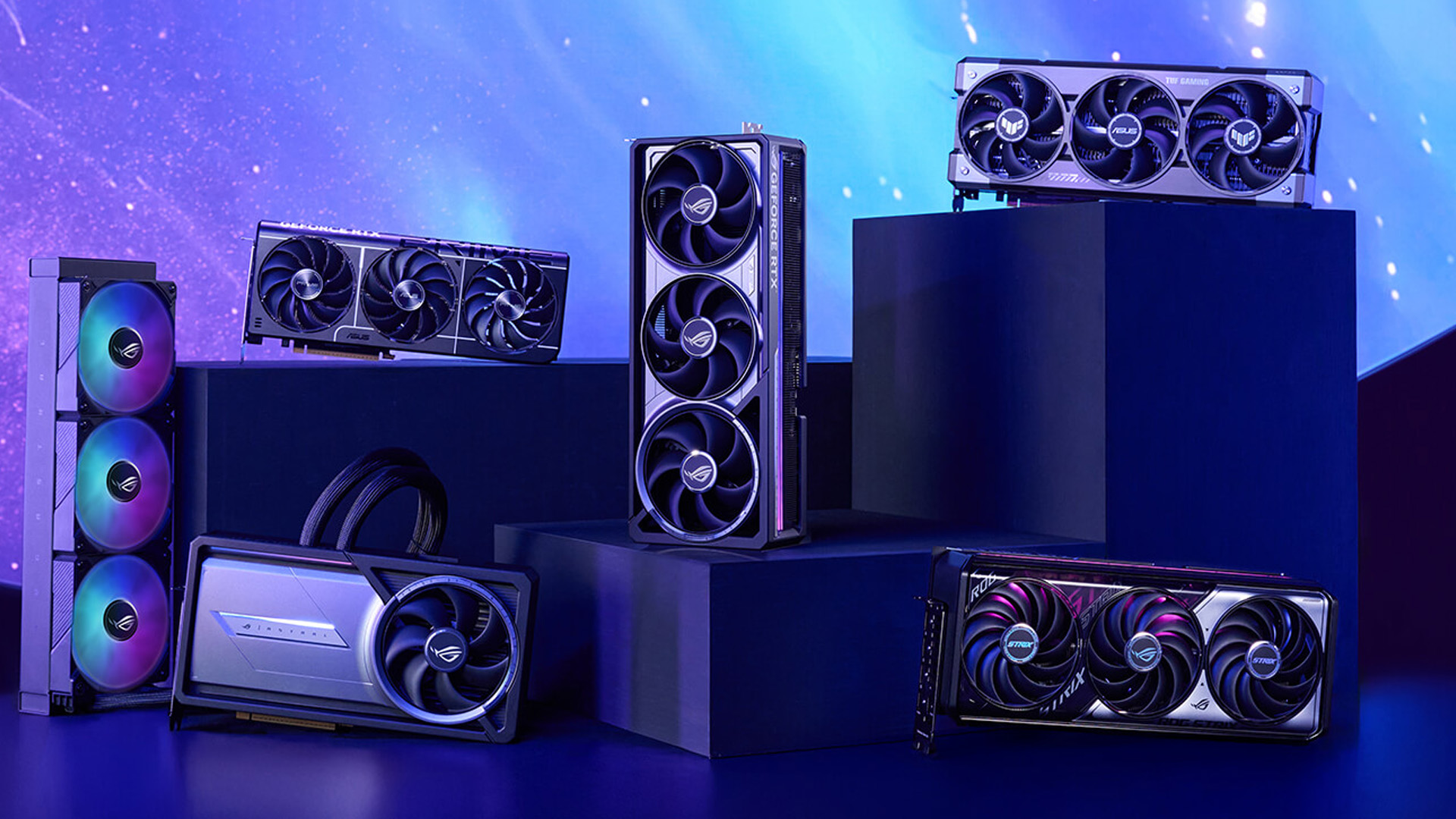
The sections below compare both brands across every meaningful factor for gaming builds. Each section identifies which brand has the edge, where one exists, and explains what that means for real-world use.
Gaming Performance (Near-Identical)
At equivalent GPU tiers, the gaming performance gap between ASUS and Gigabyte cards is typically very small. Both brands use the same GPU silicon from NVIDIA or AMD, meaning any differences in frame rates come from factory overclocks and thermal headroom rather than any fundamental hardware advantage.
ASUS tends to apply slightly more aggressive factory overclocks on its ROG Strix and TUF Gaming models, which can produce marginal gains in brief benchmarks. Under sustained gaming sessions, however, sustained thermal performance matters more, and that is where cooling quality begins to separate the two brands.
In practical terms, you should expect near-identical gaming performance from both at the same price tier. Differences beyond 2-3% are uncommon and largely tied to thermal headroom over longer sessions, not the board partner itself.
Are you after better ray tracing and AI-powered upscaling? It is worth comparing NVIDIA GeForce graphics cards UK options across both brands to find the GPU tier that fits your performance goals and budget.
Cooling Systems and Thermal Performance (ASUS Slight Edge)
Cooling is one of the most meaningful differences between ASUS and Gigabyte, and it varies considerably depending on which sub-brand you are comparing within each range.
ASUS ROG Strix cards use large triple-fan designs with high-static-pressure axial fans and thick aluminium heatsinks, consistently delivering some of the lowest GPU temperatures available in their class. ASUS TUF Gaming cards also perform strongly, with dual or triple-fan configurations depending on the model, though their heatsinks are slightly smaller than ROG Strix on some variants.
The best Gigabyte graphics card at the premium level is the AORUS Master series, which uses Gigabyte's WindForce MAX triple-fan cooling system. In independent thermal testing, AORUS Master cards come close to matching ROG Strix temperatures, making this a genuinely competitive segment. At the mid-range, Gigabyte Gaming OC cards are solid performers but can run a few degrees warmer than ASUS TUF equivalents under sustained load.
A Quick Look at Graphics Card Cooling Comparison
|
ASUS Cooling |
Gigabyte Cooling |
|
ROG Strix: Class-leading triple-fan |
AORUS Master: WindForce MAX, near ROG-Strix level |
|
TUF Gaming: Strong dual/triple-fan |
Gaming OC: Good triple-fan, runs slightly warmer |
|
Dual: Competent for the price |
WINDFORCE: Adequate, budget-tier |
|
0dB fan mode on all premium models |
0dB fan mode on AORUS and Gaming OC |
Wondering what Gigabyte’s WINDFORCE is capable of? Read our in-depth WINDFORCE features, cooling, and performance breakdown before buying.
Build Quality and PCB Design (ASUS Slight Edge)
ASUS has a well-established reputation for high-quality components and reinforced PCBs across its range. The TUF Gaming line is built to MIL-STD-810H military-grade standards, using premium capacitors and MOSFETs designed for long-term reliability. ROG Strix cards go further with die-cast metal shrouds and full-coverage metal backplates.
Gigabyte AORUS cards also feature metal backplates, reinforced PCIe connectors, and strong build materials overall. The PCB quality is high at this tier, and the gap versus ASUS ROG Strix is smaller than it is at lower price points. The Gaming OC range uses decent-quality components, though the overall feel is slightly less premium compared to ASUS TUF at similar price points.
Overall, ASUS holds a noticeable edge in PCB quality and physical construction at most tiers. Gigabyte AORUS does narrow the gap considerably at the high end, which makes it worth considering if you are spending over £900.
Overclocking Potential (ASUS Slight Edge)
Both brands offer solid overclocking headroom on their premium models. ASUS ROG Strix and TUF Gaming cards tend to have more robust power delivery and better thermal headroom, which allows for higher stable overclocks, particularly on NVIDIA's RTX 5000 series Blackwell GPUs.
Gigabyte AORUS Master and Xtreme models also deliver competitive overclocking results, thanks to their multi-phase VRM designs. The Gaming OC series is a reasonable option for light overclocking, though its thermal and power delivery limits become more apparent when pushing frequencies hard over extended sessions.
For those who want to overclock seriously, both ASUS ROG Strix and Gigabyte AORUS Xtreme are the go-to options from their respective brands.
Software and Ecosystem (ASUS Slight Edge)
ASUS uses its GPU Tweak III utility for overclocking, fan control, temperature monitoring, and Aura Sync RGB management. It is generally regarded as one of the more polished GPU companion apps available, with a clean interface and a reliable feature set that covers performance profiles, power targets, and real-time sensor readouts.
Gigabyte uses the AORUS Engine (or Gigabyte Control Center on newer models) to manage equivalent functions. It is a capable tool but receives more variable user reviews, particularly around UI consistency and occasional stability on certain driver versions. For everyday use, both tools do the job, but ASUS has a minor but consistent advantage in software quality.
Both brands' premium models include RGB control software. ASUS Aura Sync integrates broadly across ASUS hardware. Gigabyte's RGB Fusion 2.0 is similarly capable and compatible with most mainstream motherboards.
Noise Levels (ASUS Slight Edge)
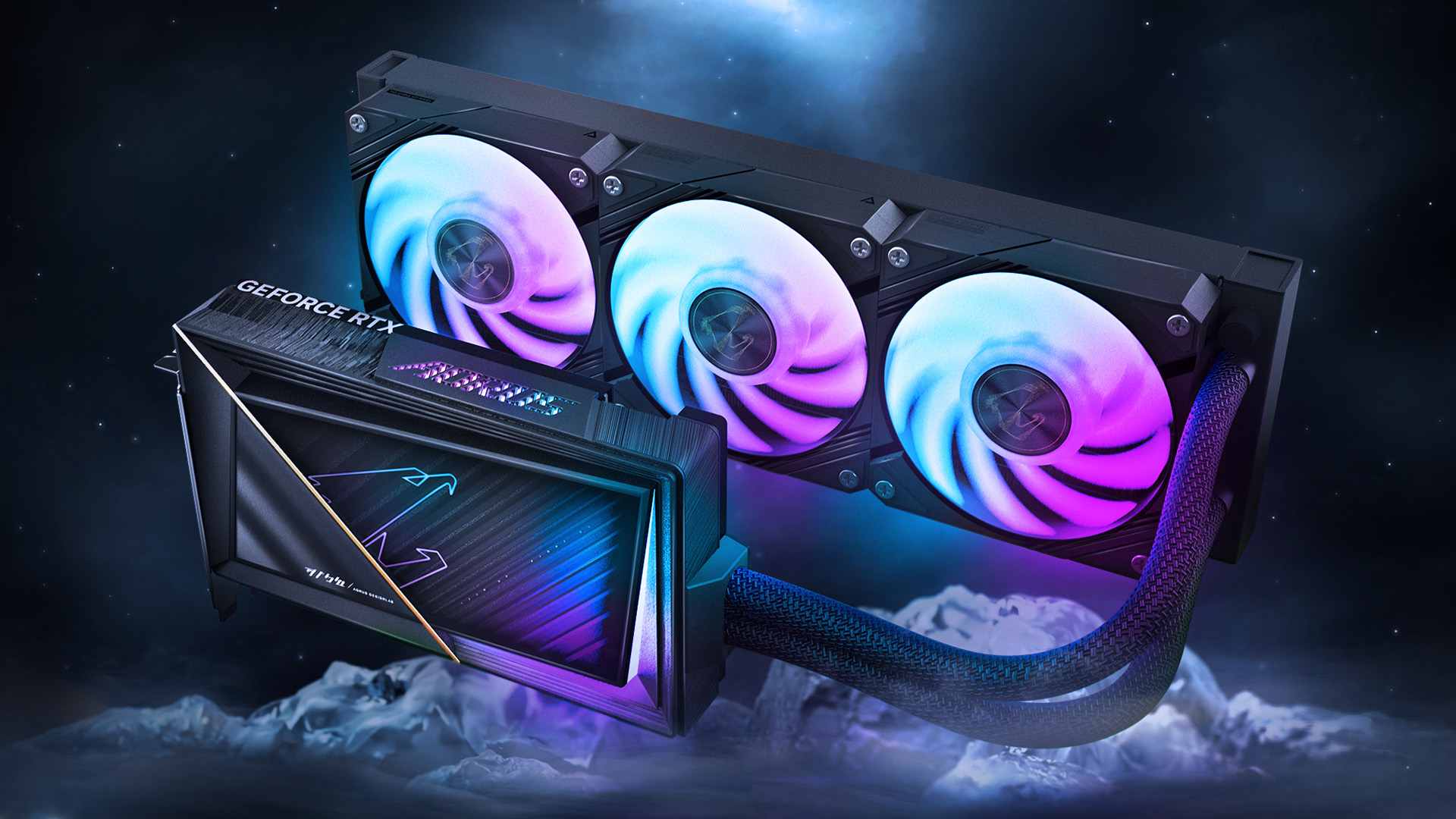
At idle and light loads, the premium cards from both brands are largely silent, as most ROG Strix, TUF Gaming, and AORUS models support a zero-RPM fan mode that keeps fans fully off below a set temperature threshold. Differences become more apparent under sustained gaming loads.
ASUS ROG Strix and TUF Gaming cards consistently rank among the quietest gaming GPUs available, balancing thermal performance and fan acoustics well. Gigabyte AORUS Master is competitive here, though Gigabyte Gaming OC cards can be slightly louder at peak load compared to equivalent ASUS TUF models. WINDFORCE models are generally louder still under load.
If acoustic performance is a priority for your build, ASUS holds a clearer advantage at the mid-range tier. At the flagship level, AORUS Master and ROG Strix are much closer to one another.
Power Consumption and Efficiency (Near-Identical)
GPU power consumption is primarily dictated by the chip itself rather than the board partner. Both ASUS and Gigabyte versions of the same GPU will draw very similar amounts of power under load, so this factor alone should not influence your brand choice.
Factory-overclocked models from either brand may push TDP slightly higher than reference spec. When GPU power consumption matters for your power supply selection or energy usage, always refer to the specific model's published TDP rather than the brand name. ASUS TUF Gaming and ROG Strix cards do feature well-optimised power delivery circuits, but the efficiency difference in practice is marginal.
Warranty and UK After-Sales Support (ASUS Slight Edge)
Both ASUS and Gigabyte provide a standard 3-year warranty on their graphics cards in the UK, which is in line with the wider industry. ASUS processes UK warranty claims through its own service network, and its customer service is generally well-regarded across tech review communities and owner feedback on UK forums.
Gigabyte also provides 3-year cover, though its UK support experience receives more variable feedback compared to ASUS. Some users report longer turnaround times and less consistent communication. If warranty handling and after-sales support matter to you, ASUS has a slight overall edge based on the available feedback from UK buyers.
It is worth noting that purchasing from a reputable UK retailer, like Laptop Outlet, also provides additional statutory protection under the Consumer Rights Act 2015, which applies regardless of which brand you choose.
Price and Value for Money (Gigabyte Advantage)
Gigabyte consistently offers some of the most competitive pricing in the UK GPU market. The Gaming OC range provides strong performance-per-pound, typically sitting £30 to £70 below equivalent ASUS TUF Gaming models at the same performance tier.
ASUS commands a premium across most of its range, but the additional cost tends to reflect better cooling, more polished software, and stronger build quality rather than a higher GPU clock speed alone. At the flagship tier, the price gap between ASUS ROG Strix and Gigabyte AORUS Master narrows considerably, making the AORUS Master an excellent value proposition for those who want near-flagship cooling without the full ROG Strix pricing.
For budget-conscious buyers, Gigabyte WINDFORCE typically undercuts ASUS Dual slightly, though both are reasonable choices at the entry level.
Prices on both brands move often, especially around new GPU launches. Keep an eye on our graphics card deals page for current price drops on ASUS and Gigabyte stock.
ASUS vs Gigabyte: Comparison Table
The table below summarises how each brand and sub-brand stacks up across the key factors for gaming. Use this for a quick reference when deciding which is the better graphics card for you.
|
Factor |
ASUS Astral / ROG Strix |
ASUS TUF Gaming |
Gigabyte AORUS |
Gigabyte Gaming OC |
|
Gaming Performance |
Excellent |
Very Good |
Excellent |
Very Good |
|
Cooling Quality |
Outstanding |
Very Good |
Outstanding |
Good |
|
Build Quality |
Premium |
High |
High |
Good |
|
Companion Software |
GPU Tweak III |
GPU Tweak III |
AORUS Engine |
AORUS Engine |
|
Noise at Load |
Very Quiet |
Quiet |
Quiet |
Moderate |
|
0dB Idle Fan |
Yes |
Yes |
Yes |
Yes (most models) |
|
Overclocking |
Excellent |
Very Good |
Very Good |
Good |
|
UK Warranty |
3 Years |
3 Years |
3 Years |
3 Years |
|
Best For |
Enthusiast builds |
Serious gamers |
Performance seekers |
Value-conscious buyers |
Comparing options across the current generation? Head to our latest dedicated graphics cards page. Compare models from both ASUS and Gigabyte in one place.
NVIDIA or AMD: Which GPU Platform Should You Pick First?
ASUS and Gigabyte both sell NVIDIA GeForce and AMD Radeon graphics cards. So, before comparing ASUS and Gigabyte as brands, it is worth deciding which GPU ecosystem suits your games, software and budget.
|
Gaming Spec |
NVIDIA GeForce Tech |
AMD Radeon Tech |
Verdict for Gamers |
|
Ray tracing |
RT Cores, DLSS 4.5 and Ray Reconstruction help improve lighting, shadows and reflections in supported games. |
RDNA 4 ray tracing accelerators improve Radeon ray tracing compared with older AMD cards. |
NVIDIA has the edge if ray tracing is a priority. AMD is fine if you use ray tracing occasionally. |
|
Upscaling |
DLSS Super Resolution and Frame Generation can increase FPS while keeping image quality strong in supported RTX games. |
FSR 4 and AMD Fluid Motion Frames 2.1 can boost performance on supported Radeon RX 9000-series cards. |
NVIDIA is stronger for supported premium titles. AMD is better when the card costs noticeably less. |
|
Competitive latency |
NVIDIA Reflex reduces system latency in supported esports games, helping controls feel more responsive. |
Radeon Anti-Lag 2 and HYPR-RX reduce input delay and apply performance settings through AMD Software. |
Both are good for esports. Check support for your main games before deciding. |
|
Streaming |
NVENC and NVIDIA Broadcast help with stable streaming, cleaner audio, background effects and efficient encoding. |
AMD’s media engine supports recording, streaming and AV1 encoding on supported Radeon cards. |
NVIDIA is better for regular streaming. AMD is suitable for casual clips and gameplay recording. |
|
Creative work |
NVIDIA Studio, CUDA and strong app support help with video editing, 3D rendering, AI tools and creator workflows. |
Radeon cards handle general editing and creative work well when software is not CUDA-dependent. |
NVIDIA is the safer choice for creators. AMD works if gaming is still the main priority. |
|
Software control |
NVIDIA App and GeForce tools support drivers, game optimisation, recording and RTX features. |
AMD Software: Adrenalin Edition includes tuning, monitoring, recording, HYPR-RX and performance controls. |
AMD offers stronger all-in-one tuning. NVIDIA has the wider gaming and creator ecosystem. |
|
UK value |
NVIDIA cards often cost more, but the premium can be worth it for DLSS, ray tracing, CUDA and streaming tools. |
AMD cards can offer stronger performance-per-pound, especially when RX 9070 or RX 9070 XT models are discounted. |
AMD often wins on value. NVIDIA wins when you will actually use its extra features. |
In simple terms, NVIDIA is the safer pick for ray tracing, DLSS, streaming, AI tools and creator workloads. AMD is the better shout when you want strong standard gaming performance, useful Radeon features and a lower UK price.
Which GPU Should You Buy? Recommendations by Gamer Type
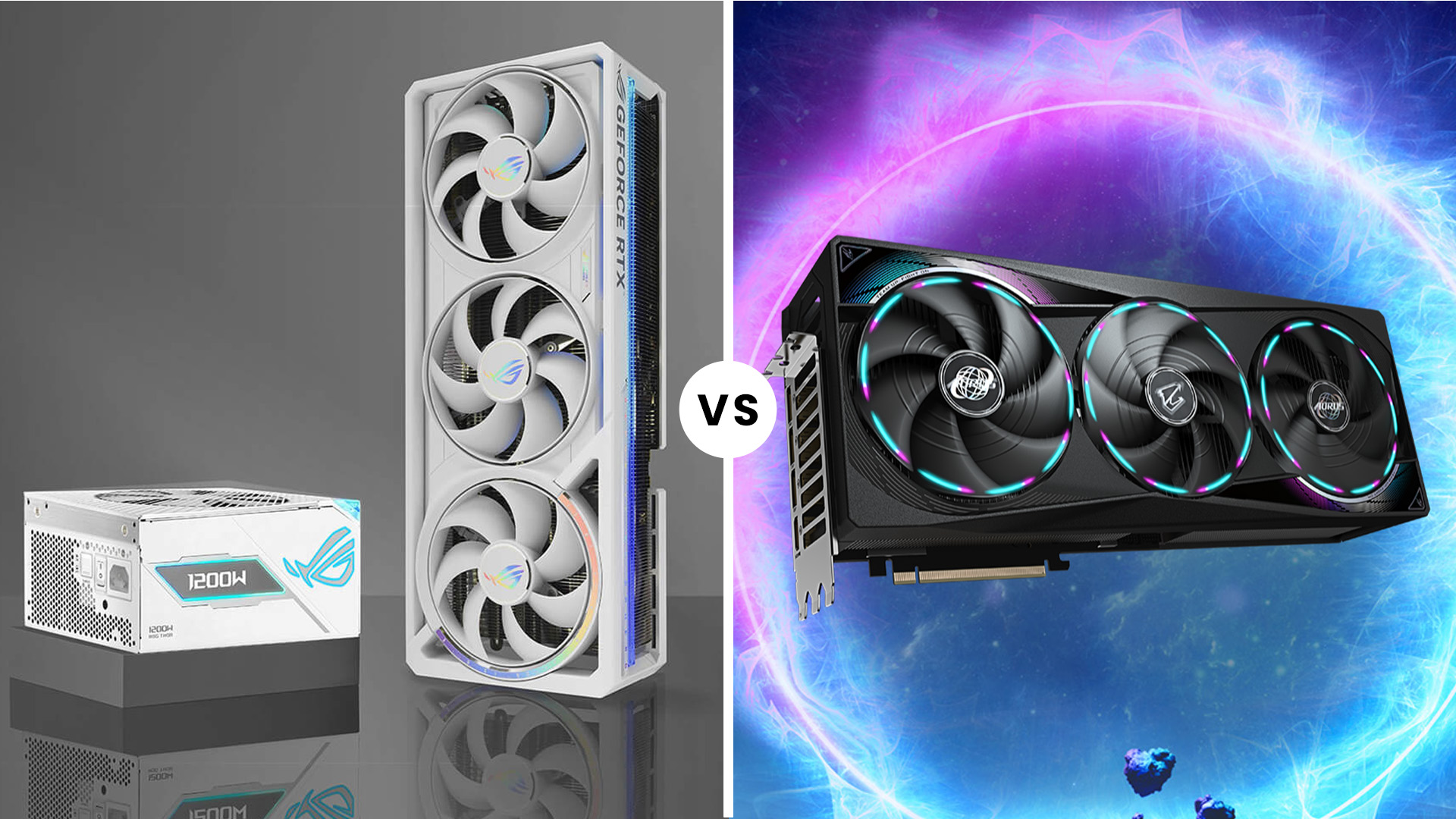
Choosing the right card depends on the type of gaming you do and how much you want to spend. Here are specific recommendations from both brands for four common gamer profiles in the UK, based on current availability and pricing as of mid-2026.
Budget Gamers
At the budget end of the market, Gigabyte offers marginally more competitive pricing. Both brands focus on the RTX 5060 tier here, with the same GPU chip under the hood.
|
Best for buyers who want the lowest sensible price for 1080p gaming. Cooling is adequate for typical gaming sessions. |
Usually slightly pricier, but offers good build quality and dependable cooling for long-term use. |
Wondering if the entry-level RTX 5060 is actually enough for your setup? Check our full breakdown of how the Gigabyte RTX 5060 performs for 1080p and 1440p gaming.
Mid-Range Gamers
The most competitive segment for both brands. The RTX 5070 tier is ideal as a gaming graphics card for PC builds targeting smooth 1440p gameplay.
|
Best ASUS graphics card in mid-range. Offers good build quality, quiet cooling, and sustained 1440p performance. |
Gigabyte Gaming OC RTX 5070 EAGLE Excellent value, often costing less than the equivalent ASUS TUF model while delivering very similar frame rates. |
High-End / 4K Gamers
At this tier, both brands deliver exceptional performance with very little separating them. Finding the best GPU for gaming here comes down to preference on aesthetics and software rather than frame rate differences.
|
Premium build, advanced cooling, quiet operation and a high-end out-of-box experience. |
Gigabyte AORUS Master RTX 5080 Near-flagship thermal performance and premium design, often with stronger value depending on live pricing. |
Gamers + Content Creators
For those who game and create, ASUS has a clear advantage with its ProArt range. For gaming-first creators, both brands offer capable all-rounders.
|
Creator-focused design, quiet fan tuning, compact professional styling and strong support for creative workflows. |
Gigabyte AORUS Master RTX 5080 A strong all-rounder for creators who prioritise gaming but also need rendering, editing and streaming performance. |

So, Which Is Better: ASUS or Gigabyte?
When it comes to the ASUS vs Gigabyte graphics card debate, there is no single correct answer. When picking a gaming graphics card for PC building or upgrading, the GPU tier you choose (RTX 5060 Ti versus RTX 5080, for example) matters far more to your frame rate than whether the shroud says ASUS or Gigabyte.
If you're after the quietest possible cooling, the most polished software experience and don't mind paying slightly more for it, it is worth checking out our range of the best ASUS gaming graphics cards. However, if you want strong performance per pound, the affordable Gigabyte gaming graphics cards are your best bet.
Remember, the best graphics card is the one that fits your gaming needs and budget well.

A Few More Things to Know...
Is ASUS better than Gigabyte for graphics cards?
ASUS edges ahead in cooling, build quality, and software, while Gigabyte offers competitive performance at lower prices. The ASUS vs Gigabyte graphics card gap is smaller than most people expect at comparable tiers.
Do ASUS and Gigabyte GPUs perform the same?
Performance gaps between equivalent models are typically 1 to 3%, driven by factory overclocks rather than hardware differences. Both brands use the same underlying NVIDIA or AMD chips, so core gaming performance is nearly identical.
Which is better: ASUS TUF or Gigabyte Gaming OC?
ASUS TUF Gaming offers better cooling, build quality, and quieter operation. Gigabyte Gaming OC is more affordable and strong on performance-per-pound, though TUF edges ahead on overall component quality and longevity.
Which is better: ASUS ROG Strix or Gigabyte AORUS?
Both offer excellent cooling and performance. ROG Strix is typically pricier and slightly quieter, while AORUS delivers comparable thermals at a lower price. The choice largely comes down to personal preference and budget.
Are Gigabyte graphics cards good for gaming?
Yes, Gigabyte graphics cards are reliable and perform excellently for gaming. The AORUS and Gaming OC ranges are popular UK choices for strong performance and competitive pricing across multiple budget levels.
| Read More: |
| How Do You Install a New Graphics Card |
| How to Upgrade Your Graphics Card Without Buying a New One |
| Best Deals on Graphics Cards in 2026: Top GPUs at Unbeatable Prices |
Related Articles


Last Updated: February 27, 2026
GPU price trends, which historically followed steady consumer demand cycles, were hijacked by a series of unprecedented global crises. These events first pushed the cost of graphics cards to astronomical highs, then plunged them into a sharp decline, before finally settling on a new, structurally higher price baseline.
This analysis examines the economic forces that drove this extraordinary five-year shift. We trace the market from the initial chaos of the supply chain fracture, through the speculative peak driven by cryptocurrency mining, and into the current era dominated by the massive enterprise investment in Artificial Intelligence (AI).
The Initial Storm (2020–Mid 2021): Scarcity and Supply Chain Shock
The sharp inflation in GPU prices did not begin with a single factor but with the convergence of two major, simultaneous economic disruptions: a severe global logistics crisis and a dramatic shift in consumer habits.

The Pandemic’s Logistical Fracture
The start of the COVID-19 pandemic

Last Updated: December 30, 2025
If your current rig is starting to stutter or you are simply ready to jump into the next generation of visual fidelity, there is no better time to act. The New Year graphics card deals are finally here.
Whether you are a competitive esports player, a 4K gaming enthusiast, or a professional video editor, the right GPU is the heart of your system. This year, we are seeing incredible NVIDIA GPU discounts and an extensive AMD Radeon sale New Year event.
In this guide, we will explore the best graphics cards for gaming and work, ensuring you find the perfect match for your monitor and your budget.
Top New Year Graphics Card Deals for 2026
We have hand-picked eight of the most impressive NVIDIA RTX GPUs and AMD Radeon GPUs currently available. Let’s explore the right card for your setup.
1. MSI GeForce RTX 5060 GAMING 8GB OC Graphics Card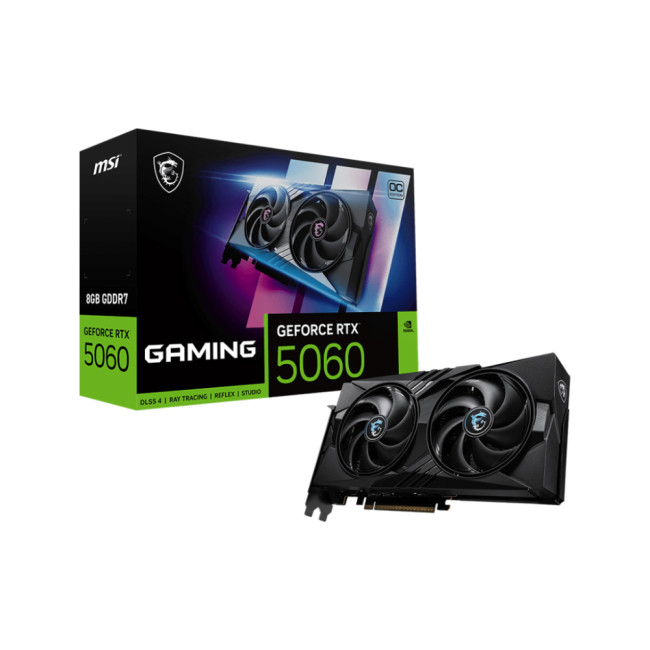
Key Specifications
- GPU: NVIDIA GeForce RTX 5060 (Blackwell Architecture)
- Memory: 8GB GDDR7
- Memory Speed: 28 Gbps
- Memory Interface: 128 bit
- Core

Last Updated: January 14, 2026
From smooth 1080p gameplay to breathtaking 4K visuals, AMD graphics cards put serious gaming power right at your fingertips. You want smooth gameplay, great visuals, and good value for money, without paying more than you need to. That’s exactly where AMD graphics cards come into the picture.
AMD has become one of the most popular choices for gamers in the UK thanks to its strong performance, competitive pricing, and wide range of options for every type of player. Whether you’re after the best AMD graphics cards for high-end gaming, searching for cheap AMD graphics cards to get started, or are curious about the new AMD graphics cards hitting the market, this guide is here to help.
Why AMD Graphics Cards are a Smart Choice for Gamers
AMD has earned a strong reputation among PC gamers by offering powerful GPUs at competitive prices. If you want excellent gaming performance without overspending, AMD often delivers some of the best value on the market.
Great Performance for the Price
One
Last Updated: January 14, 2026
If you’re planning to upgrade your gaming PC or build a new setup from scratch, choosing the right graphics card is one of the most important decisions you’ll make. Whether you’re chasing ultra-high frame rates, immersive 4K visuals, or reliable performance for competitive gaming, MSI has a solution tailored to your needs.
At Laptop Outlet, we stock a wide range of MSI gaming graphics cards, covering both NVIDIA and AMD platforms for you. From legacy favourites to the latest MSI graphics cards, this guide explores performance, key models, driver support, and how MSI compares with other leading brands. If you’re searching for dependable gaming graphics cards that deliver real-world value, you’re in the right place.
MSI NVIDIA Graphics Cards for Gaming
If you prefer NVIDIA-powered GPUs, MSI offers some of the most popular and trusted models on the market. Today’s NVIDIA graphics cards for gaming from MSI are leagues ahead in terms of performance and efficiency. You’ll benefit from features

Last Updated: April 28, 2026
When it comes to high-performance computing, gaming realism, and creative workloads, NVIDIA graphics cards continue to set the benchmark. From immersive gaming experiences to professional-grade rendering and AI acceleration, NVIDIA’s GPUs power some of the most advanced systems on the market today. This guide explores everything you need to know about Nvidia graphics cards.
Understanding NVIDIA Graphics Cards and their Advantages
When performance matters, NVIDIA continues to lead the graphics card market with technology designed for today’s most demanding applications. From immersive gaming worlds to high-speed creative workflows, NVIDIA GeForce graphics cards deliver the power, efficiency, and visual realism modern users expect. Trusted by gamers and professionals alike, NVIDIA GPUs have become the benchmark for smooth gameplay, intelligent upscaling, and advanced rendering. What truly sets NVIDIA graphics cards apart is how each generation evolves. With smarter architecture, improved

Last Updated: April 28, 2026
If you’re looking for the most powerful consumer GPU NVIDIA has ever produced, the RTX 5090 graphics card is designed with you in mind. Whether you’re building a no-compromise gaming PC, upgrading a professional workstation, or simply want the very best from the latest graphics technology, the RTX 5090 sits at the very top of NVIDIA’s graphics cards UK lineup. In this guide, we’ll walk you through everything you need to know as a UK buyer, from the RTX 5090 release date and expected pricing to real-world performance and whether this GPU actually makes sense for how you use your PC.
What Exactly is the RTX 5090 Graphics Card?
The RTX 5090 graphics card is NVIDIA’s flagship GPU, built for users who don’t want to make trade-offs. If you play at 4K, use ultra-wide monitors, or rely on your system for demanding creative work, this is the kind of hardware designed to keep up. As a true RTX 5090 high-end GPU, it’s aimed at:
- Gamers who want maximum frame rates at ultra settings
- Creators working

Published: January 09, 2026
If you’re searching for graphics cards 9060 in the UK, you’re clearly looking for the next sweet spot in gaming and creative performance without overspending. At Laptop Outlet, we know UK gamers and professionals want powerful, reliable graphics cards at genuinely competitive prices, backed by trusted brands and fast delivery. In this guide, we’ll explore graphics cards 9060 deals, discuss how they compare to alternatives, and help you decide whether an AMD-based option, a next-generation NVIDIA alternative, or a trusted gaming brand like ASUS, Gigabyte, or XFX is right for you.
What are Graphics Cards 9060 and Why are they Generating So Much Interest?
The growing interest in graphics cards 9060 comes from demand for mid-to-upper-tier GPUs that deliver excellent performance at a more accessible price point. These cards are widely associated with AMD’s next-generation lineup, including expected models such as the AMD RX 9060 XT graphics card. Gamers and creators are excited because graphics
Last Updated: April 28, 2026
Finding the right graphics card at the right price has become one of the biggest challenges for PC gamers in the UK. With new GPU generations launching and stock levels fluctuating, buyers are looking for hardware that delivers strong performance without stretching their budget. In this guide, we explore everything you need to know about the NVIDIA RTX 5050 GPU, including expected gaming performance, anticipated UK pricing, and where it fits within today’s competitive graphics card market. We’ll also highlight the best alternatives available at Laptop Outlet, ensuring you have plenty of options if stock is limited.
What is the NVIDIA RTX 5050 GPU?
The NVIDIA RTX 5050 GPU is expected to sit at the entry-to-mid-level end of NVIDIA’s next-generation RTX lineup. Designed for gamers who want modern features without the premium price tag, the RTX 5050 PC graphics card is aimed at smooth 1080p gaming and entry-level 1440p performance. As part of NVIDIA’s latest architecture, the RTX 5050 graphics
Last Updated: January 13, 2026
Are you looking to upgrade your PC with cutting-edge performance, reliability, and exceptional gaming visuals? ASUS graphics cards remain one of the most trusted choices in the UK market. We bring you competitive prices, frequent deals, and a wide selection of ASUS GPUs designed for gamers, creators, and professionals alike. From advanced NVIDIA RTX models to efficient AMD Radeon options, ASUS continues to lead the way in innovation, cooling, and long-term durability.
Why Choose ASUS Graphics Cards?
ASUS has built a global reputation for producing premium PC components, and its graphics cards are no exception. Designed with performance, stability, and longevity in mind, ASUS PC graphics cards are trusted by enthusiasts and professionals worldwide.
Proven Engineering and Build Quality
ASUS graphics cards are engineered using high-quality components, reinforced PCBs, and advanced power delivery systems. This ensures consistent performance even under heavy workloads such as 4K gaming, 3D
Published: January 13, 2026
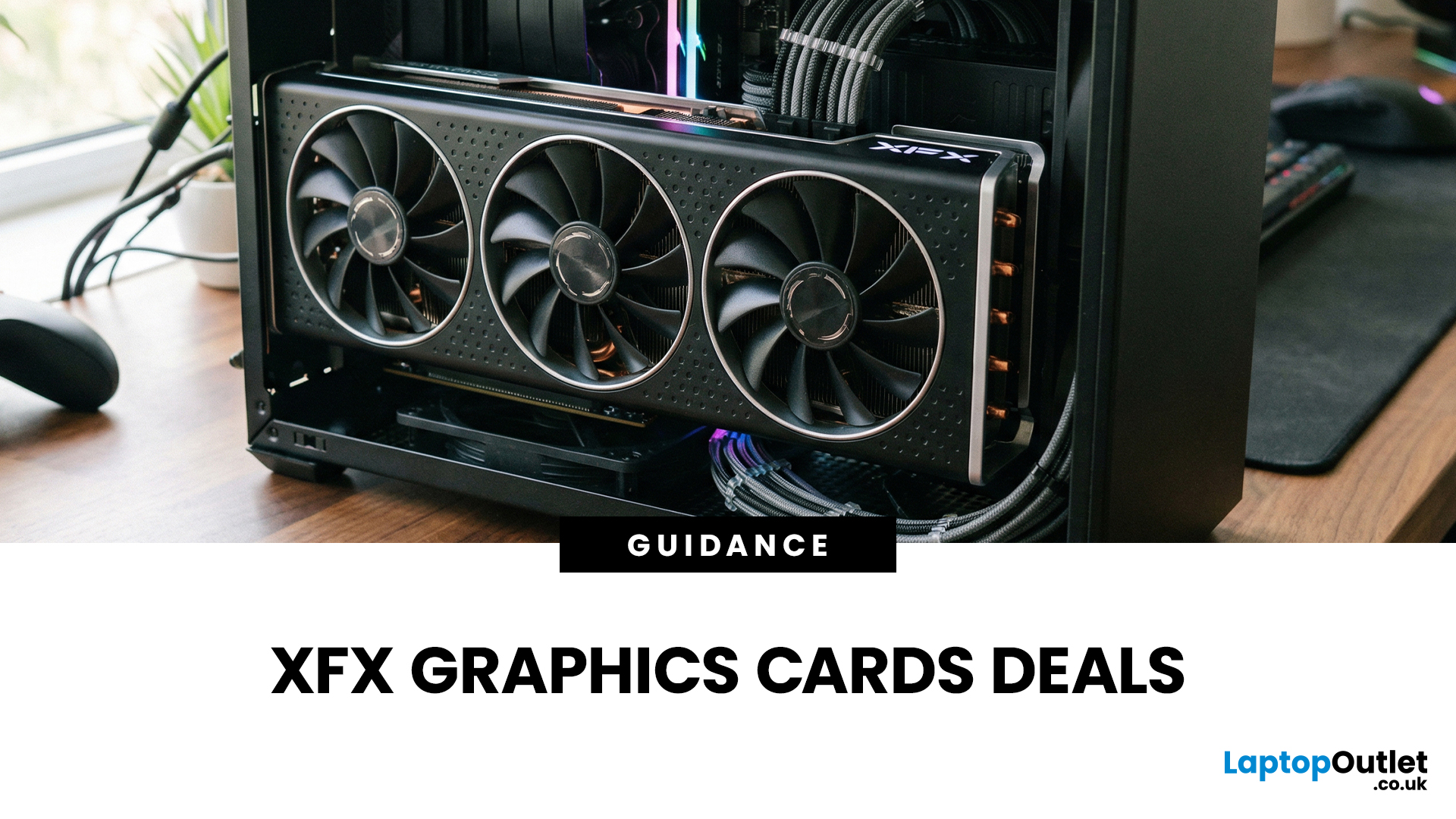
Choosing the right graphics card is one of the most important decisions when building or upgrading a gaming PC, and XFX graphics cards UK gamers trust continue to stand out for performance, reliability and value. As one of AMD’s most established board partners, XFX focuses exclusively on Radeon GPUs, delivering powerful gaming performance at highly competitive prices. We offer a wide range of XFX graphics cards deals, making it easier for you to access cutting-edge AMD technology without overspending. Whether you’re upgrading an older system, building a new gaming rig or searching for better value than current NVIDIA options, XFX delivers a compelling alternative. This guide explores everything you need to know about XFX GPUs, including performance, pricing, comparisons, and how to find the best XFX GPU deals UK buyers can rely on.
Why XFX Graphics Cards Are a Trusted Choice for AMD Gamers
XFX has built a strong reputation by focusing entirely on AMD hardware. Unlike brands that split

