



Are 8-Inch Tablets Still Worth Buying, or Should You Go Bigger?
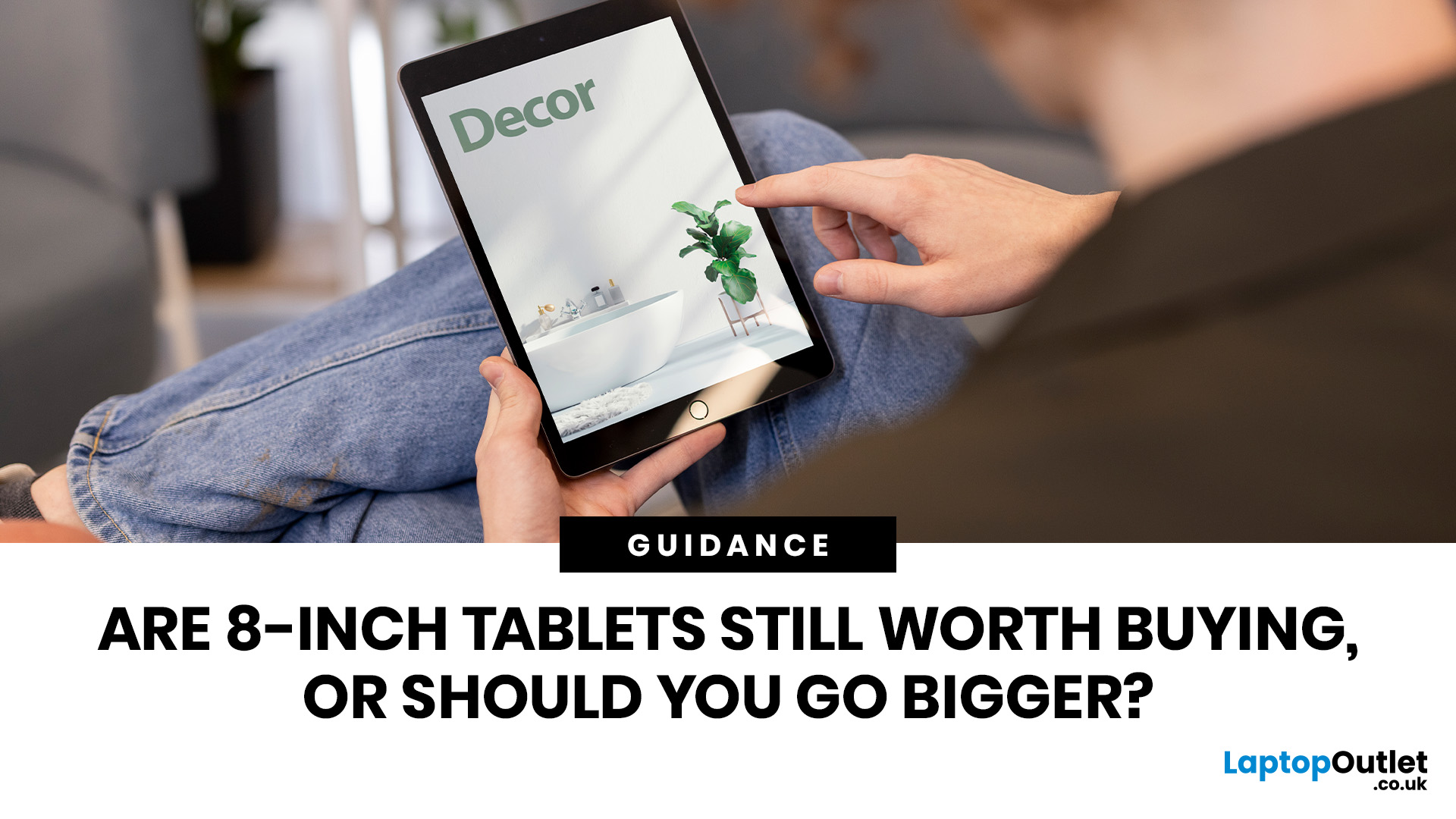
Quick answer: Yes, 8 inch tablets are still worth buying if you want a lightweight, portable tablet for reading, travel, commuting, browsing, streaming or kids’ use. They are easier to carry than 11-inch tablets and more comfortable than phones for longer sessions. However, if you need split-screen multitasking, keyboard work, digital drawing or laptop-style productivity, a larger tablet will usually make more sense.
Tablet screens keep getting bigger, but that does not mean everyone needs a bigger tablet. For some buyers, an 11-inch or 13-inch display is perfect. For others, it is just extra weight in the bag. That is why the question are 8-inch tablets still worth buying is still relevant. Compact tablets sit in a useful middle ground: bigger than your phone, lighter than a full-size tablet and easier to carry every day.
If you mainly want a tablet for reading eBooks, browsing online, watching videos, checking emails, travelling, commuting or keeping the kids entertained, an 8-inch tablet can still be a smart buy. But if you want a tablet for work, multitasking, note-taking with loads of screen space or creative tasks, you may be better going bigger. In this guide, we compare compact tablets with larger tablets, explain where 8-inch tablets still shine and help you decide which size is right for your routine.
Are 8 Inch Tablets Still Worth Buying in 2026?
Yes, 8-inch tablets are still worth buying, but only if you buy one for the right reason. An 8-inch tablet is not supposed to replace your laptop. It is not designed to be your main work machine, your full creative studio or your spreadsheet command centre. Its biggest strength is convenience.
A compact tablet is the device you can keep in your bag, use on the train, read from in bed, hand to a child in the car or take on holiday without feeling like you have packed another laptop. The real question is not whether 8-inch tablets are “better” than larger tablets. The better question is: what do you actually want the tablet to do?
- If your answer is reading, travel, streaming, browsing, and light entertainment, an 8-inch tablet still makes loads of sense.
- If your answer is multitasking, typing, drawing, editing or work, you should probably look at a larger model.
What Are 8-Inch Tablets Best For?
8-inch tablets are best for simple, portable tasks. They are made for everyday convenience rather than heavy productivity.
|
USE CASE |
ARE 8-INCH TABLETS GOOD FOR IT? |
WHY |
|---|---|---|
|
Reading |
Yes |
Easy to hold and better than a phone for eBooks, articles and PDFs |
|
Travel |
Yes |
Lightweight, compact and bag-friendly |
|
Commuting |
Yes |
Easier to use on trains, buses and in cafés |
|
Streaming |
Yes |
Good for solo viewing and casual entertainment |
|
Kids |
Yes |
Smaller size is easier for children to handle |
|
Gaming |
Sometimes |
Good for casual games, less ideal for demanding titles |
|
Work |
Limited |
Fine for emails and notes, not ideal for full productivity |
|
Video calls |
Yes |
Useful for casual calls, online classes and family chats |
This is why compact tablets are still popular with readers, students, parents, commuters, and frequent travellers. They are not the biggest tablets on the shelf, but they are often the easiest ones to live with.
Why People Still Choose 8-Inch Tablets

They are easier to carry every day
The main reason to choose an 8-inch tablet is portability. It is smaller, lighter and easier to fit into a handbag, backpack, work bag or travel pouch. Large tablets are great when you are sitting at a desk. Compact tablets are better when you are moving around.
If portability is your priority, browsing the latest 8-inch tablets is a smart starting point, as this size is built for everyday carry. You can use one on your commute, during lunch breaks, while travelling or while relaxing at home without needing a full desk setup.
They are more comfortable for reading
Reading is one of the strongest reasons to choose a compact tablet. An 8-inch tablet feels closer to a book or e-reader than a large tablet does. It is easier to hold one-handed, easier to use in bed and more comfortable for longer reading sessions. It works well for:
- eBooks
- Web articles
- PDFs
- Recipes
- News apps
- Comics and manga
- Study notes
- Shopping pages
A phone can feel cramped for long reading sessions. A large tablet can feel heavy after a while. An 8-inch tablet sits nicely in the middle.
They work well for travel and commuting
For travel, smaller tablets often beat larger ones simply because they are easier to live with. They take up less bag space, feel lighter in the hand and are easier to use in tight spaces such as train seats, plane tray tables, hotel rooms and waiting areas. A compact tablet is useful for:
- Downloaded films and shows
- eBooks and audiobooks
- Travel documents
- Maps and itineraries
- Emails and messages
- Kids’ entertainment
- Browsing on hotel Wi-Fi
- Video calls while away
This is where portable tablets really make sense. You get enough screen space to enjoy content without carrying something bulky.
They are often more affordable
Many compact Android tablets are more affordable than larger premium tablets. That makes them a good option for casual users, children, family sharing or anyone who wants a second screen without overspending. There are premium compact tablets too, especially models like the iPad mini, but the category also includes budget-friendly choices for simple daily tasks. If you only need a tablet for reading, browsing and streaming, you may not need to pay for a huge display or laptop-style performance.
For details read our guide: Best 8-Inch Tablets for Reading, Travel and Everyday Carry
Where 8-Inch Tablets Fall Short
Compact tablets are useful, but they are not perfect. Their biggest weakness is also their biggest strength: the smaller screen.
|
LIMITATION |
WHY IT MATTERS |
|---|---|
|
Smaller display |
Less room for split-screen apps, large documents and multitasking |
|
Limited productivity |
Not ideal for keyboard-heavy work or laptop-style workflows |
|
Smaller speakers |
Audio may feel less immersive than larger tablets |
|
Less space for drawing |
Artists and note-takers may prefer a bigger canvas |
|
Smaller keyboard experience |
On-screen typing can feel cramped |
|
Not always cheaper |
Premium compact tablets can cost more than budget large tablets |
| Tip: If you want a tablet for serious work, detailed creative tasks or long multitasking sessions, you may feel boxed in by the smaller display. |
Compact Tablet vs Large Tablet: What is the Real Difference?
When comparing a compact tablet vs large tablet, the biggest difference is how and where you use it. A compact tablet is better when you are moving around. A large tablet is better when you are sitting down for longer sessions.
|
FEATURE |
8-INCH TABLET |
11-INCH TABLET OR LARGER |
|---|---|---|
|
Portability |
Excellent |
Good, but bulkier |
|
Reading comfort |
Strong |
Good, but heavier |
|
Streaming |
Good for solo viewing |
Better for films and shared viewing |
|
Multitasking |
Limited |
Much better |
|
Keyboard use |
Not ideal |
Better |
|
Drawing |
Fine for quick notes and sketches |
Better canvas size |
|
Travel |
Excellent |
Less compact |
|
Kids |
Easier to hold |
Better for homework and video |
|
Price |
Often lower |
Wider price range |
|
Everyday carry |
Stronger |
Less convenient |
Think of it this way: an 8-inch tablet is a grab-and-go device. An 11-inch tablet is more of a sit-down-and-do-more device. Neither is automatically better. The right choice depends on your routine.
Small Tablets vs 11 Inch Tablets: Which Size is Better?
When comparing small tablets vs 11 inch tablets, the decision usually comes down to portability versus screen space.
Choose an 8-inch tablet if…
An 8-inch tablet is better if you:
- Want something light and portable
- Mostly read, browse and stream
- Travel or commute often
- Want a tablet for kids
- Prefer one-handed use
- Need a casual device for everyday use
- Do not need keyboard-heavy productivity
This size works especially well if your tablet will live in your bag, by your bed or on the sofa.
Choose an 11-inch tablet if…

An 11-inch tablet is better if you:
- Want more screen space
- Use split-screen apps
- Type with a keyboard case
- Take handwritten notes often
- Watch lots of films
- Use your tablet for study or work
- Want a better canvas for drawing
- Prefer a more laptop-like experience
If you want more screen space for multitasking, studying or keyboard work, 11 Inch tablets may suit you better than a compact model. The simple version:
- Choose 8 inches for portability.
- Choose 11 inches for productivity.
8-Inch Tablets for Travel: Why Compact Still Wins
For travel, compact tablets still make so much sense. A large tablet might give you a better screen for films, but an 8-inch tablet is easier to pack, easier to hold and easier to use in cramped spaces. That matters when you are on a train, plane, coach or sitting in an airport cafe with limited table space. The best compact tablets for travel are useful because they are:
- Light enough to carry all day
- Small enough for hand luggage
- Easy to use one-handed
- Good for offline downloads
- Comfortable for reading
- Handy for maps, bookings and travel documents
- Better than a phone for longer browsing sessions
If you travel often, a cellular model can also be worth considering. It lets you stay connected without relying on public Wi-Fi or draining your phone battery with hotspot mode.
8-Inch Tablets for Reading, Streaming and Everyday Use
Reading
An 8-inch tablet is a strong reading device because it gives you more space than a phone without the extra weight of a large tablet. It works well for eBooks, web articles, news apps, study notes, PDFs, recipes and online shopping. If reading is your main priority, look for a sharp screen, good brightness and a lightweight design.
Streaming
For streaming, an 8-inch tablet is best for solo viewing. It is good for YouTube, Netflix-style apps, catch-up TV, Prime Video, Disney+, TikTok, tutorials and casual entertainment. It will not feel as cinematic as an 11-inch tablet, but it is much easier to hold for longer sessions.
Everyday browsing
For daily use, compact tablets are easy to recommend. They are comfortable for checking emails, browsing websites, online shopping, video calls, recipes, social media, reading reviews and managing simple tasks around the house. They are also useful as a second screen when your phone feels too small but your laptop feels like overkill.
Kids and family use
For children, compact tablets can be a sensible size. They are easier to hold, easier to carry and often more affordable than larger models. If you are buying 8-inch tablets for kids, add a protective case from day one. A sturdy case and screen protector can make a big difference to everyday durability.
Which Buyers Should Still Choose an 8-Inch Tablet?
|
BUYER TYPE |
SHOULD THEY BUY 8-INCH? |
WHY |
|---|---|---|
|
Frequent traveller |
Yes |
Portable and easy to pack |
|
Daily commuter |
Yes |
Easier to use on the move |
|
Reader |
Yes |
Comfortable for ebooks and articles |
|
Child / family use |
Yes |
Smaller and easier to hold |
|
Casual streamer |
Yes |
Good for solo viewing |
|
Student |
Maybe |
Good for notes and reading, less ideal for heavy work |
|
Remote worker |
Usually no |
Bigger screen is better for productivity |
|
Digital artist |
Usually no |
Larger canvas is more practical |
An 8-inch tablet is best for people who want simple convenience. It is not for everyone, but for the right buyer, it is genuinely useful.
Which Buyers Should Go Bigger?
You should go bigger if your tablet will be used for work, study, creative tasks or long sessions of multitasking. A larger tablet makes more sense if you:
- Use split-screen apps often
- Type with a keyboard case
- Edit documents regularly
- Work with spreadsheets
- Draw or design digitally
- Watch lots of films at home
- Use the tablet as a laptop alternative
- Need more room for handwritten notes
- If your tablet will mostly sit on a desk, an 11-inch model probably makes more sense.
- If your tablet will mostly live in your bag, an 8-inch model is easier to recommend.
What Specs Matter Most on an 8-Inch Tablet?
If you decide an 8-inch tablet is right for you, the next step is choosing the right specs. Do not only look at the screen size. A good compact tablet still needs a decent display, processor, storage and battery.
|
SPEC |
WHAT TO LOOK FOR |
WHY IT MATTERS |
|---|---|---|
|
Display |
HD minimum; higher resolution is better |
Improves reading and streaming quality |
|
Weight |
Around 300–370g |
Easier to hold for longer |
|
Battery |
Around 10 hours claimed use or strong mAh capacity |
Better for travel and commuting |
|
Storage |
64GB minimum; 128GB+ for heavier users |
Useful for apps, downloads and media |
|
Processor |
Modern Apple, Snapdragon or MediaTek chip |
Keeps apps smooth |
|
RAM |
4GB minimum for Android where possible |
Helps multitasking |
|
Connectivity |
Wi-Fi, USB-C, Bluetooth; cellular if needed |
Important for travel and daily use |
|
Accessories |
Case and screen protector |
Essential for kids and travel |
If you want a deeper spec-by-spec breakdown, our 8 Inch tablets buying guide explains what to check before buying a compact tablet.
As a quick rule, choose stronger specs if the tablet will be used daily. Choose budget specs only if the tablet is for light browsing, occasional streaming or children’s entertainment.
How We Compare Tablet Sizes

We compare compact and larger tablets based on how people actually use them day to day. That means looking beyond screen size and checking portability, reading comfort, battery suitability, travel use, productivity, accessories and overall value. For an 8-inch tablet, we focus on:
- How easy it is to carry
- How comfortable it is to hold
- Whether the display is clear enough for reading
- Whether the battery suits travel and commuting
- Whether the storage is enough for apps and downloads
- Whether the tablet is good value for its intended use
For larger tablets, we focus more on:
- Multitasking
- Keyboard support
- Screen space
- Creative work
- Streaming comfort
- Productivity
The goal is simple: help you choose the size that fits your real routine, not just the biggest display on paper.
Are 8-Inch Tablets Still Worth Buying?
Yes, 8-inch tablets are still worth buying if you want portability, reading comfort and casual everyday use. They are ideal for travellers, commuters, readers, children and anyone who wants a compact entertainment device. They are easy to carry, comfortable to hold and more useful than a phone for longer reading, browsing and streaming sessions.
However, larger tablets are better if you want productivity, multitasking, keyboard use, digital drawing or a bigger screen for films and work. So the decision is simple:
|
CHOOSE AN 8-INCH TABLET IF |
GO BIGGER IF |
|---|---|
|
You want portability |
You want productivity |
|
You read and travel often |
You work on documents |
|
You want a device for commuting |
You use split-screen apps |
|
You are buying for kids |
You need keyboard support |
|
You want casual streaming |
You want a larger film screen |
|
You want everyday convenience |
You want laptop-style use |
Buy an 8-inch tablet if you want convenience. Go bigger if you want productivity.

Are You Still Wondering?
Are 8 inch tablets still worth buying?
Yes, 8 inch tablets are still worth buying if you want a lightweight device for reading, travel, commuting, streaming and everyday browsing. They are especially useful if portability matters more than screen size.
Is an 8-inch tablet too small?
An 8-inch tablet is not too small for reading, browsing, streaming or casual use. It may feel too small for multitasking, drawing, keyboard work or detailed productivity tasks.
Should I buy an 8-inch or 11-inch tablet?
Choose an 8-inch tablet for portability, travel and reading. Choose an 11-inch tablet if you want more screen space for work, studying, streaming, note-taking or multitasking.
Are 8-inch tablets good for travel?
Yes, 8-inch tablets are excellent for travel because they are light, compact and easy to use on planes, trains, buses and in hotels. They are also useful for offline films, books and travel documents.
Are compact tablets good for kids?
Yes, compact tablets are often good for kids because they are easier to hold and usually more affordable than larger tablets. For children, we recommend adding a protective case and screen protector.
Related Articles


Last Updated: January 21, 2026
Let’s be honest - most of us don’t work (or study, or relax) in just one way anymore. One minute you’re typing notes, the next you’re scrolling, watching something, sketching ideas, or replying to emails from the sofa.
That’s exactly why convertible tablets exist.
Also called 2-in-1 laptops, laptop tablets, or the very literal notebook two-in-one, these devices are designed to adapt to how you use tech throughout the day - not force you into one setup.
But choosing the right 2 in 1 laptop convertible isn’t always straightforward. Some lean more laptop. Some feel more like tablets. And some just… try to do everything and don’t quite nail it.
This guide breaks it all down in a way that actually makes sense.
What Is a Convertible Tablet (And Why Do People Buy Them)?
A convertible tablet is a hybrid device that combines:
- A laptop’s power (keyboard, trackpad, desktop software)
- A tablet’s flexibility (touchscreen, pen input, portability)
Most convertible tablets run Windows, which means you’re

Last Updated: January 21, 2026
There’s a reason people still say “Just get a Surface” when someone asks for a serious Windows tablet.
In a world full of Android slates, experimental hybrids, and ultra-cheap tablets that barely last a year, Microsoft Surface tablets have carved out a very specific reputation:
clean design, proper productivity, and devices that feel like Windows was made for touch - because, well, it was.
In 2026, Surface tablets aren’t trying to chase trends. They’re refining what they already do best: turning tablets into genuinely useful computers that flex between work, study, creativity, and everyday life.
Why Microsoft Surface Tablets Still Set the Standard
When Microsoft launched the first Surface, it wasn’t just another tablet. It was a statement:
Windows doesn’t belong to laptops only.
Fast forward to 2026, and Microsoft Surface 2-in-1 tablets are still the reference point for the entire category. Whether you’re looking at Detachable tablets, Surface 2-in-1 devices, or Windows touchscreen tablets,

Last Updated: January 21, 2026
Windows tablets have quietly become one of the most practical tech buys in the UK, especially if you want proper laptop features without paying laptop money. Whether you’re studying, working remotely, or just need a flexible everyday device, a Windows tablet (or budget 2 in 1 Windows tablet) can often do the job of both a tablet and a laptop.
In this 2026 guide, we’re breaking down the best Windows tablets in the UK by price, under £300, and £500 and explaining what you can realistically expect at each level. No hype, no spec overload, just clear advice to help you spend smart.
Why Choose a Windows Tablet Instead of Android or iPad?

Before diving into budgets, it’s worth understanding why people choose Windows tablets in the first place.
A Windows tablet gives you:
- A full desktop operating system
- Proper file management (folders, drives, downloads)
- Compatibility with Microsoft Office and desktop apps
- Keyboard and mouse support
- Often, a 2-in-1 experience with detachable or foldable keyboards

Last Updated: January 21, 2026
If you’re shopping for a tablet in 2026, you’ve probably hit the same question everyone else has:
Do I need a 4G tablet, or will a Wi-Fi tablet do the job?
With hybrid work, online study, and always-on lifestyles becoming the norm in the UK, tablets aren’t just Netflix machines anymore. They’re work tools, study partners, and portable productivity hubs.
In this guide, we’re breaking down 4G tablets vs Wi-Fi tablets in a way that actually makes sense, no tech jargon overload, no outdated advice. Just real talk, real use cases, and real buying advice for the UK market.
What Actually Is the Difference Between 4G Tablets and Wi-Fi Tablets?

Let’s start simple
What Are Wi-Fi Tablets?
Wi-Fi tablets connect to the internet only when a Wi-Fi network is available, think home broadband, office Wi-Fi, cafés, libraries, or hotspots.
They’re the most common type of tablet and usually the cheapest option.
Best for:
- Home and office use
- Streaming, browsing, and casual gaming
- Students studying mainly at

Last Updated: April 14, 2026
You need a tablet (well… that’s why you’re here), but figuring out which one actually suits you? That’s where things get tricky.
It’s all gone a bit pear-shaped - there are so many Android tablets out there, each packed with features that sound like they need a dictionary to understand (seriously, who casually says “Magnetoresistive Stylus Support”?). And don’t even get started on the prices.
Finding the right tablet with the right specs and a price that makes sense can quickly turn into a headache.
So, let’s make this easy.
We are going to break down exactly what you need to know, what to look for, what to ignore to choose the best Android tablet for your needs, all in simple, no-jargon language (because no one needs a tech lecture just to buy a tablet).
If you already know what you want, you can jump straight to our full range of android tablets and start browsing.
Otherwise, stick with me, by the end of this, you’ll know exactly which tablet deserves your money.
Quick Picks: Best Android
Published: April 13, 2026
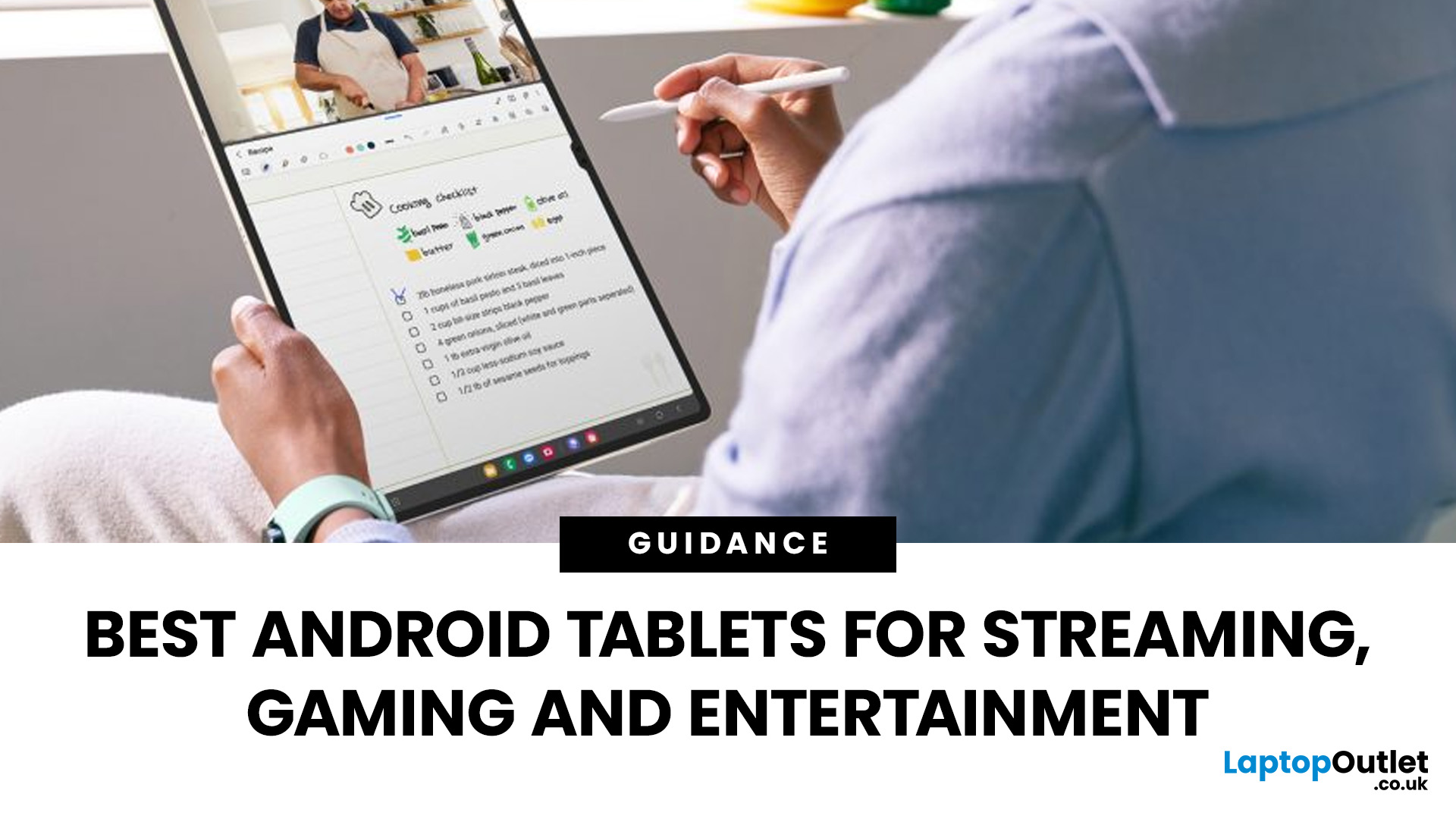
Looking for a tablet that’s built more for watching, playing, and relaxing than working? You’re not alone, Android tablets have quietly become some of the best-value options for streaming and gaming in 2026.
- Big-screen Android tablets are now sharper, louder, and more immersive
- Mid-range processors comfortably handle streaming and casual gaming
- Battery life and audio quality now matter more than raw performance
Streaming, gaming, and genera l entertainment are now the main reasons people pick up tablets again. While flagship devices still exist, most buyers today are leaning toward practical, well-balanced options that deliver strong visuals, solid audio, and long battery life, without pushing into premium pricing.
What actually makes a tablet good for streaming and gaming?
Before jumping into specific models, it helps to understand what separates a good tablet from a great entertainment device.
A strong Android tablet for streaming and gaming isn’t just about specs, it’s about how everything
Last Updated: April 13, 2026
Trying to stay productive these days without the right device? Not happening.
Whether you’re switching between lectures, juggling work tasks, replying to emails, or just trying to organise your day without losing your mind… you need something that can actually keep up.
That’s where Android tablets come in.
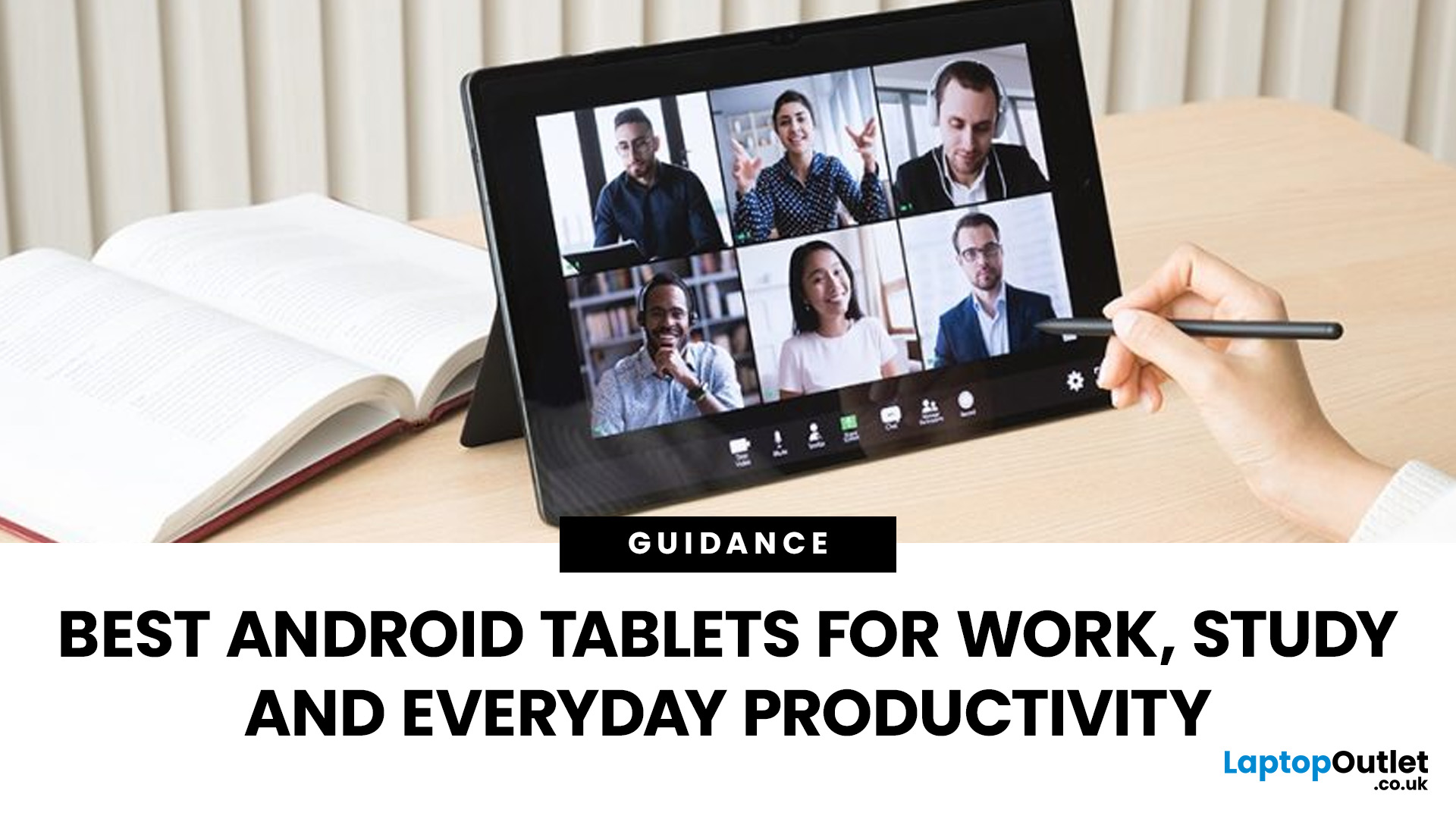
They’re lighter than laptops, more powerful than you’d expect, and way more flexible for everyday productivity - whether you’re a student, a professional, or somewhere in between.
But here’s the catch: not all tablets are built for productivity. Some are great for Netflix… but struggle the moment you open 3 tabs. Others look powerful on paper but don’t deliver where it matters.
So, in this guide, we’re breaking down the best Android tablets for work and study, helping you find the right balance between performance, usability, and value, without overcomplicating things.
Quick Picks: Best Android Tablets for Work and Study (2026)
If you just want the highlights, here’s a quick look at
Published: April 14, 2026
Choosing a tablet sounds easy… until you actually start looking.
Suddenly, it turns into a full-on ecosystem debate. Do you go for the clean, premium Apple experience? Or do you choose the flexibility, variety and better-value world of Android?
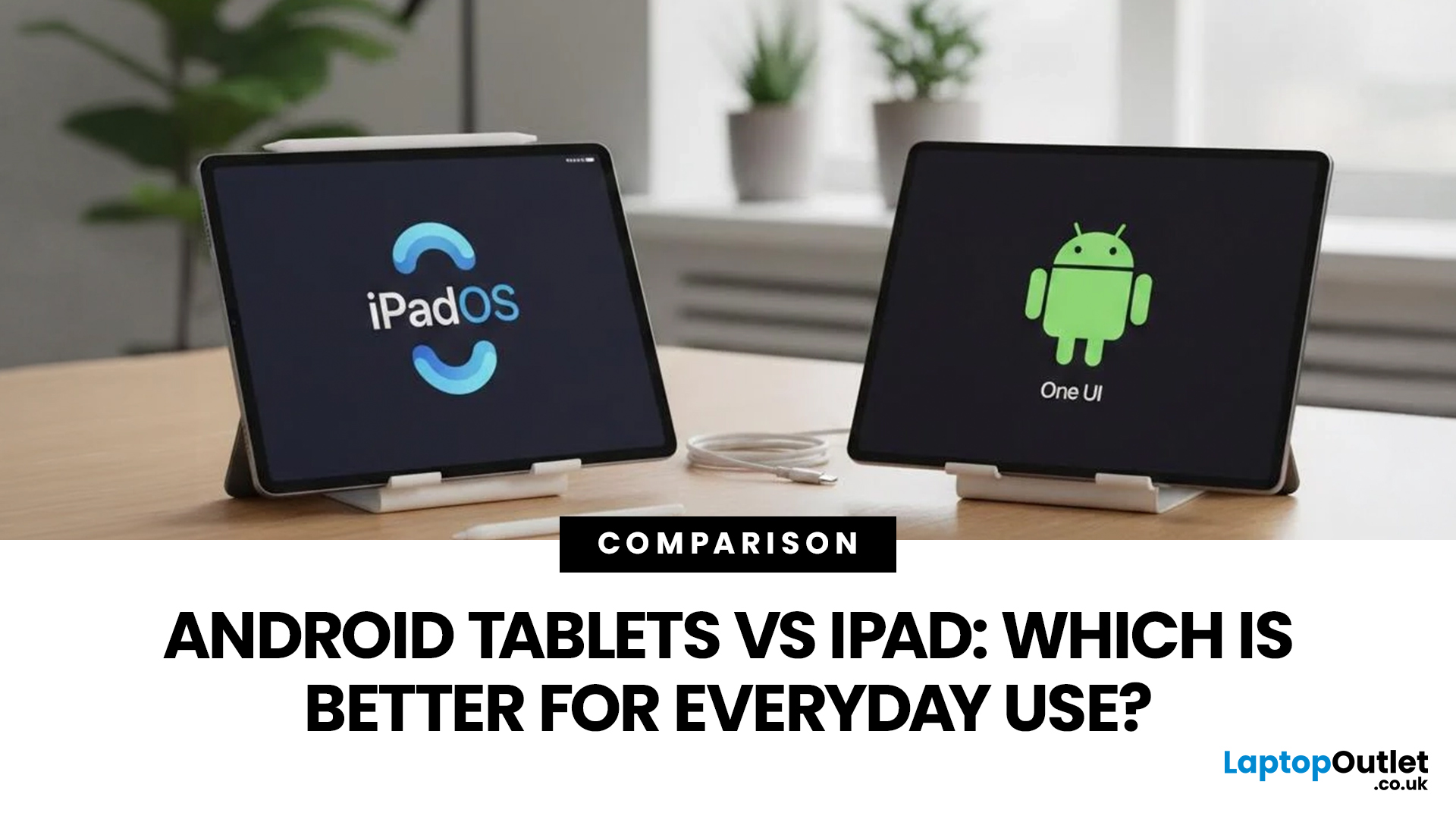
That’s exactly why so many buyers end up stuck between Android tablets vs iPad.
On one side, iPads have the polished reputation, smooth performance and that classic Apple “it just works” appeal. On the other, Android tablets give you more choice, more price points, more freedom and a way easier entry into the tablet world without your bank account crying in the background.
And if you’re an everyday buyer, that choice matters even more.
Because you’re probably not buying a tablet to do one ultra-specific thing. You want something that fits into daily life. Something good for streaming, scrolling, studying, replying to emails, joining video calls, browsing, shopping, taking notes, maybe even getting a bit of work done when needed.
So in this guide,
Last Updated: June 10, 2026
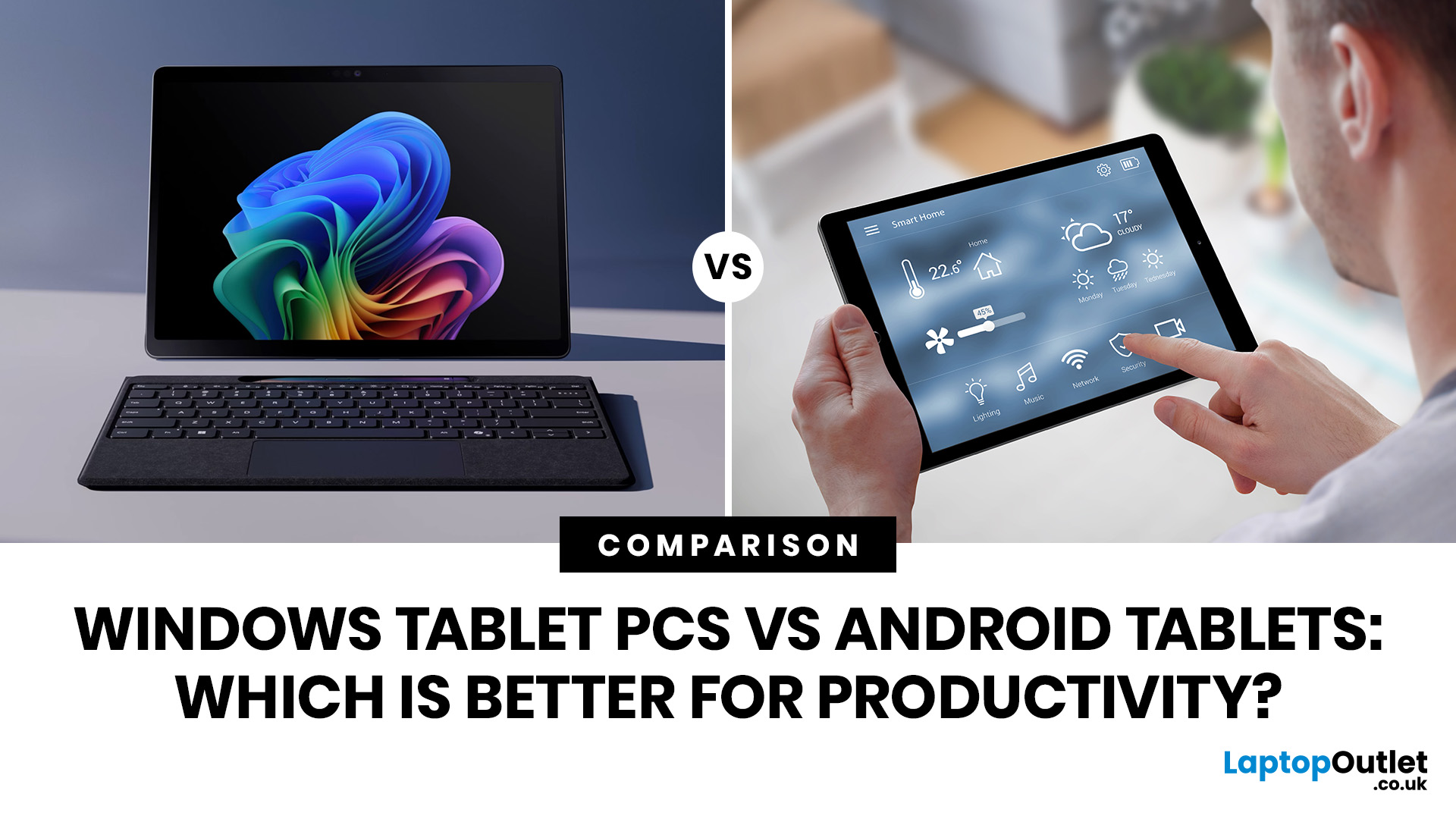
When comparing Windows tablet PCs vs Android tablets, Windows is usually better for productivity-heavy tasks like multitasking, office work and business use, while Android tablets are better for portability, value and lighter everyday productivity.
When comparing Windows tablet PCs vs Android tablets, the best choice depends on how you work. Some users need laptop-style performance for spreadsheets, email, browser tasks and multitasking, while others prefer a portable device for note-taking, research, video calls and everyday flexibility.
That is why the Android vs Windows tablets debate matters. Windows tablets offer a more PC-like experience with stronger multitasking, while Android tablets focus on portability, convenience and app-based productivity.
For buyers in the UK, the best option depends on whether you value desktop-style software, keyboard-led productivity and business features, or a lighter, more affordable system that is easy to carry and simple to use. If you are browsing
Last Updated: April 27, 2026
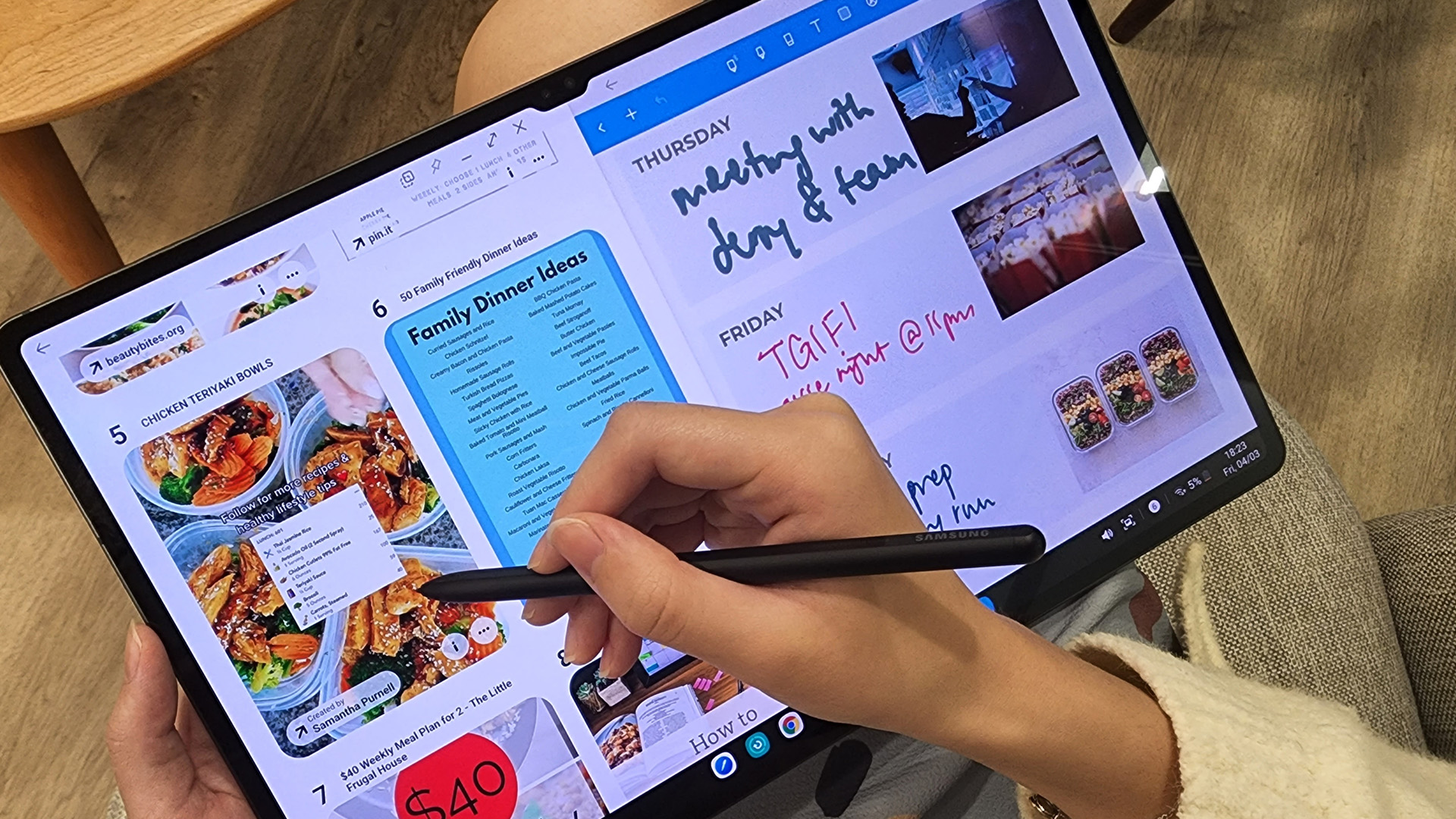
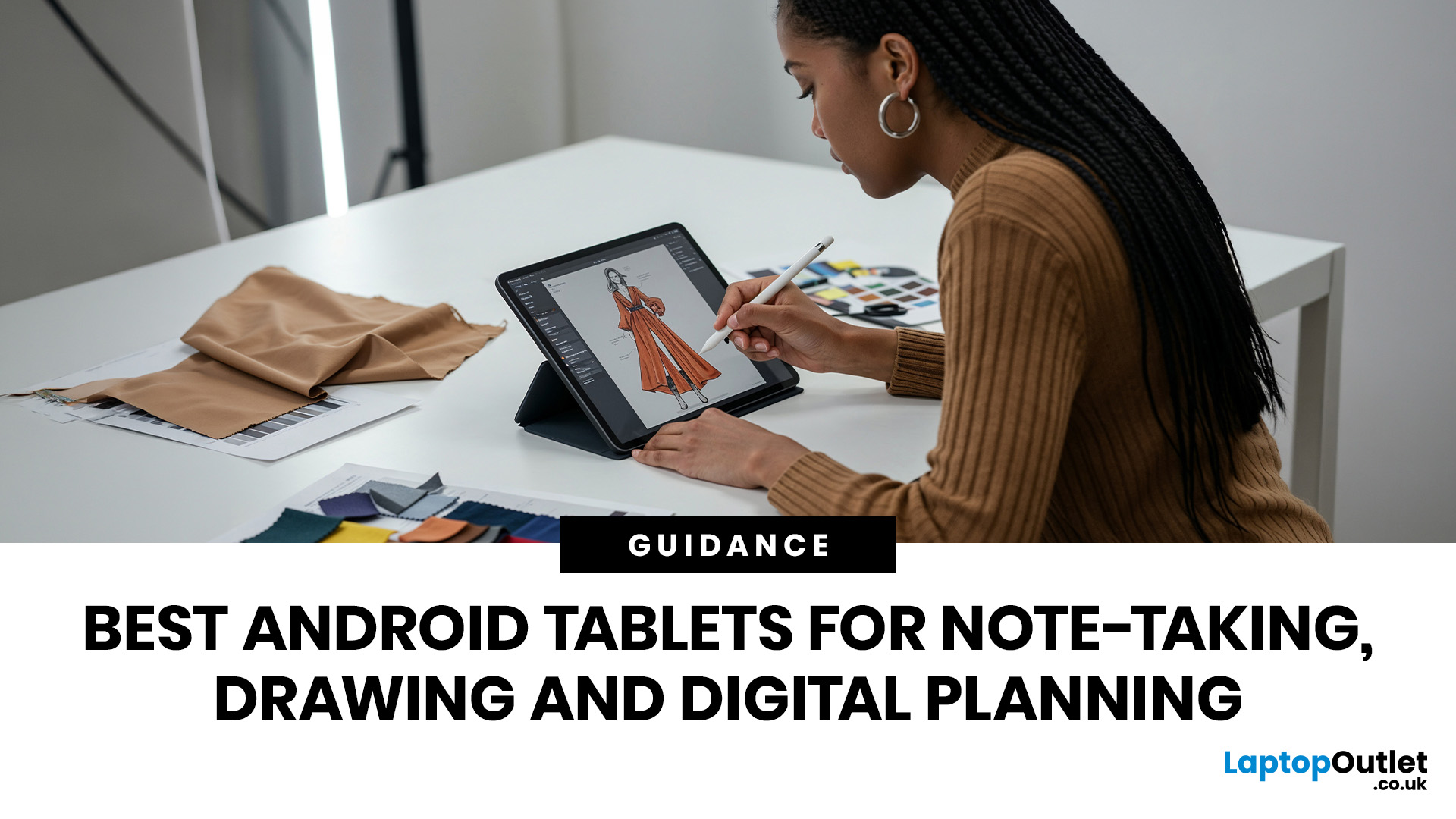
If you are looking for the best Android tablets for note taking and drawing, the key is finding a tablet that feels natural for writing, sketching and digital planning. The best options combine stylus support, a clear display, good portability and enough performance for everyday work, study and creative use.
Not every user needs the same thing. Some want a simple tablet for notes and journaling, while others need a more capable device for drawing, annotating PDFs, and multitasking. That is why choosing among today’s Android tablets with stylus support is really about finding the right fit for your routine.
Android stands out because it offers plenty of choice across features, pricing, and everyday usability. Whether you want a compact planner-friendly device or a more flexible all-rounder, there is a wide range of Android tablets to explore.
Quick answer: what should you look for?
Before going too deep, here is the short version. The best Android tablets for note taking and drawing usually

