



Windows 11 Upgrade Guide: Everything You Need to Know Before Updating
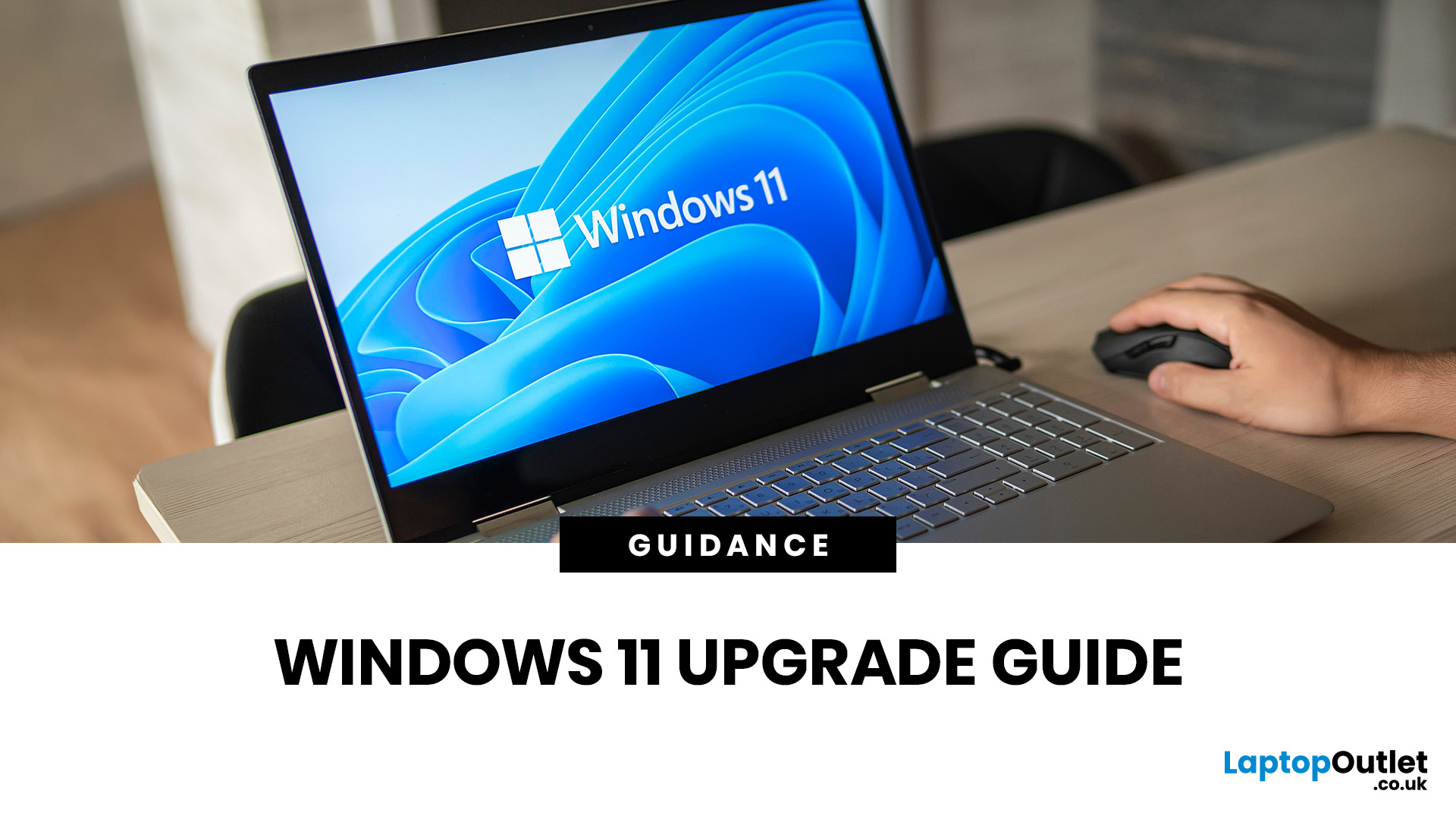
Upgrading to Windows 11 is usually the right move if your laptop is eligible and still running Windows 10. The upgrade remains free for eligible Windows 10 PCs, the standard upgrade path keeps your files, and Windows 10 support ended on 14 October 2025, which makes staying on a supported version of Windows far more important in 2026.
In plain terms, this Windows 11 upgrade guide is about making the move safely. We cover the Windows 11 upgrade process step by step, what to check before you start, how to update to Windows 11 through the right method, what happens to your apps and files, and when replacing the laptop makes more sense than forcing the update. The public Windows 11 download page currently lists version 25H2 as the main public release, while version 26H1 is framed around select new devices rather than a routine in-place upgrade path for existing consumer PCs.
What a Windows 11 Upgrade Actually Means
A Windows 11 upgrade is an in-place move from one Windows version to another, usually from Windows 10 to Windows 11. That is different from a clean install, which starts again from scratch and can wipe the device depending on the setup path you choose.
For most readers, that means the standard upgrade process is less disruptive than a full reinstall. You keep the everyday structure of the PC, rather than rebuilding everything from scratch.
Why Upgrading Matters More In 2026
This is no longer only a feature question. It is also a question of support, security, and reliability. Windows 10 no longer receives free software updates, technical assistance, or security fixes, so staying on it now carries a much clearer trade-off than it did a year ago.
That changes the decision for anyone still putting the move off. If the laptop is eligible, upgrading to Windows 11 is the straightforward choice. If it is not eligible and already feels slow or dated, replacement is often the cleaner long-term answer.
Still weighing up the move? Read our Windows 11 vs Windows 10 guide for a clearer side-by-side look at what changes, what stays familiar, and whether the upgrade is worth it for your laptop.
What to Check Before You Upgrade to Windows 11
Before starting the Windows 11 upgrade process, check 4 things first: compatibility, backup, free storage, and update readiness. That covers most of the avoidable problems people run into before, during, and after installation.
Minimum Requirements
|
Check |
Requirement |
|
Processor |
1 GHz or faster, 2 or more cores, compatible 64-bit processor or SoC |
|
Memory |
4GB RAM or more |
|
Storage |
64GB or more available disk space |
|
Security |
TPM 2.0 |
|
Firmware |
UEFI, Secure Boot capable |
These are the baseline requirements for upgrading to Windows 11 on a supported device.
Use PC Health Check First
PC Health Check is the quickest way to see whether the laptop is actually ready. It gives you a clearer answer than guessing based on age, brand, or processor generation alone, and it is the main readiness check tied into the upgrade guidance. If PC Health Check says your laptop is not ready, our guide on TPM 2.0 and why Windows 11 needs it explains one of the most common upgrade blockers in plain English.
Back Up Before You Start
A normal upgrade is built to keep your files, but backing up first is still the sensible move. Windows Backup can back up installed apps, accounts, Wi-Fi passwords, personalisation settings, language preferences, and other Windows settings, making recovery or device migration much easier if the upgrade does not go exactly as planned.
Make Sure You Have Enough Free Space
Free storage is one of the most overlooked aspects of properly updating to Windows 11. The Installation Assistant needs 9GB of free disk space, and the broader requirements list starts at 64GB of available storage for the operating system.
If PC Health Check shows your current machine is not ready, explore our best Windows 11 laptops instead of forcing an unsupported install.
How to Upgrade to Windows 11 Step by Step
If you are searching for how to upgrade Windows 11 step by step, Windows Update is still the best place to begin. It is the cleanest route, the least manual option, and the one built for routine upgrades on eligible hardware.
Step 1: Open Windows Update
Go to Start > Settings > Update & Security > Windows Update, then choose Check for updates. If Windows 10 still has pending updates, install them first, then restart before checking again.
Step 2: Look for the Windows 11 Offer
If the device is eligible and the rollout is ready for your model, Windows Update will show that Windows 11 is available and offer a Download and Install option. If it does not appear, that can mean the rollout is not ready for your device yet, there is a compatibility hold, or the laptop does not meet the requirements.
Step 3: Start The Upgrade
Choose Download and Install, review the licence terms, and let the files download. This is the core of the Windows 11 update process for most home users.
Step 4: Restart To Finish Installation
When everything is ready, restart the laptop when prompted. The device may restart several times while Windows 11 finishes installing.
Step 5: Sign In and Check the Basics
Once installation finishes, sign in and check that your apps, files, Wi-Fi settings, and backup preferences are still where you expect them to be. That is the final step that makes the Windows 11 upgrade feel complete rather than half-finished.
Which Upgrade Method Should You Use?
The right Windows 11 installation guide depends on the laptop's condition and how much control you want over the process.
|
Method |
Best For |
What To Know |
|
Windows Update |
Most users |
Best for routine upgrades on eligible devices |
|
Installation Assistant |
Eligible x64 PCs where the upgrade is not showing yet |
Needs admin access and 9GB free space |
|
Installation media from within Windows |
Advanced users who want more control |
Can upgrade an existing installation |
|
Bootable media clean install |
Broken systems or full rebuilds |
More disruptive and suited to a true fresh start |
One detail worth keeping in mind is that the Installation Assistant only works on x64 processors, not ARM-based PCs. Installation media also carries a clear warning for unsupported devices: if the hardware does not meet the minimum requirements, the machine will no longer be supported and will not be entitled to receive updates.
If you are taking the clean-install route or making bigger hardware changes, our Windows and Microsoft Office Activation guide is a useful next step once setup is complete.
What Happens to Your Files and Apps During the Upgrade?

In the default Windows 10-to-Windows 11 upgrade path, files and data are automatically moved to the new installation. In the usual media-based upgrade route, the default option is also to keep personal files and apps.
That makes the upgrade much less disruptive than many people expect, but it is still worth treating backup as part of the process rather than a last-minute extra. A routine upgrade is designed to preserve your setup. It is not a guarantee against storage issues, driver conflicts, or unexpected failures.
Can You Go Back to Windows 10 After Upgrading?
Yes, but only for a limited period. In most cases, you have 10 days to revert while keeping the files and data that were moved during the upgrade. After that, going back usually means backing up manually and doing a clean install.
That rollback window is useful if you hit software compatibility issues or simply do not get on with the new setup. It is not something to rely on casually, because apps added, removed, or updated after the upgrade may not behave properly if you revert.
What Are the Main Benefits of Upgrading to Windows 11?
The real benefits of a Windows 11 upgrade are less about flashy claims and more about a better-supported, more modern working environment.
Better Multitasking
Snap makes it easier to organise open windows by dragging them into place or using predefined layouts, a practical upgrade for people who work across multiple apps or on larger screens.
A More Modern Security Baseline
TPM 2.0 and Secure Boot are part of the reason many older machines are left out, and they help explain why Windows 11 draws a harder line on supported hardware.
Easier Continuity Between Devices
Windows Backup now covers far more than just documents. It can carry settings, Wi-Fi details, installed apps, and personalisation choices across devices, which makes both upgrades and full device changes less disruptive.
Better Everyday Phone Integration
Phone Link supports messages, recent photos, calls, notifications, and mobile apps from the PC, which is a genuinely useful everyday feature rather than a niche extra.
What About Windows 11 Performance After Upgrade?
Windows 11 performance after an upgrade depends more on the laptop's quality than on the operating system alone. A healthy SSD-based device that already meets the requirements should usually handle the move well. A borderline machine with limited memory, very little free storage, or poor driver support is far less likely to feel transformed by the upgrade on its own.
That is why the best upgrade advice is not just “install the new version and hope for the best.” It is to look at the full picture: age of the hardware, free space, stability of the existing system, and whether the machine is actually worth investing more time in.
Which Users Benefit Most from Upgrading?
Students And Home Users
Students and home users benefit most when the move is simple: supported software, cleaner multitasking, and a laptop that can keep receiving updates without constant workarounds. If the current machine already meets the requirements and runs well, upgrading is usually worthwhile.
Remote Workers and Office Users
Remote workers get a stronger case for moving because unsupported Windows no longer receives security fixes, and device continuity matters more when your laptop is part of your daily workflow. Backup, sign-in sync, and cross-device features all matter more here than headline design changes.
Creators And Heavier Users
Creators and heavier users should think beyond the operating system. The upgrade itself may go smoothly, but if the machine is already limited by storage, memory, or ageing hardware, Windows 11 alone will not solve the bigger performance issue. That is an inference grounded in the requirement and support guidance.
Older Laptop Owners
Older laptop owners usually face the clearest fork in the road. If the device passes the checks, upgrading keeps it on a supported path. If it fails the checks, replacement is often more practical than stretching unsupported hardware much further.
When Should You Upgrade, Wait, Or Replace?
Upgrade Now If
Upgrade now if the laptop passes PC Health Check, you are still on Windows 10, and you want to stay on a supported version of Windows. That is the clearest use case in 2026.
Wait Briefly If
Wait briefly if the device is eligible, but Windows Update has not offered the upgrade yet, and the current setup is working well. That usually points to rollout timing or a temporary compatibility hold rather than a permanent block.
Replace Instead of Forcing It If
Replace the laptop if it fails the requirements check, requires too many workarounds, or already feels too old to justify the effort. Unsupported installs carry a compatibility risk, offer no support, and lack entitlement to updates, making them a poor long-term solution for most buyers.
What If Your PC is Not Eligible for Windows 11?
Start by checking whether TPM 2.0 or Secure Boot is disabled rather than missing. That is one of the most common reasons a laptop that looks modern enough still fails the check.
If the machine still does not qualify after that, replacement is often the more sensible route. Pushing ahead with installation media on unsupported hardware can leave you with a machine that is outside support and outside the normal update path.
The Practical Next Step Before You Click Upgrade
Run PC Health Check, back up the laptop, install any pending Windows 10 updates, then use Windows Update if Windows 11 is offered. If it is not offered yet and the hardware is eligible, the Installation Assistant is the next logical step on a supported x64 machine.
If the laptop is not eligible, or if it already feels like it is running out of road, the smarter move is to stop treating the operating system as the whole issue. That is the point where a newer machine becomes the cleaner answer.

Should You Upgrade to Windows 11 or Replace Your Laptop?
For most people, the right decision is fairly clear. If your laptop meets the Windows 11 requirements, backing it up, checking it with PC Health Check, and upgrading through Windows Update is the safest way to move onto a supported version of Windows without starting over. The upgrade is still free for eligible Windows 10 PCs, and staying on Windows 10 now means sticking with a version that no longer receives free security updates or technical support.
If your device does not qualify, or it already feels too slow or limited to justify the effort, replacing it is often the more practical long-term answer than forcing an unsupported install. The sensible approach is to look at the bigger picture: upgrade if the laptop is ready, wait briefly if the rollout has not reached you yet, and replace ageing hardware when the operating system is no longer the only weak point.

Common Windows 11 Upgrade Questions
Is the Windows 11 upgrade free?
Yes. Eligible Windows 10 PCs can still upgrade to Windows 11 without paying for the upgrade.
How do I upgrade to Windows 11 step by step?
The easiest route is Settings > Update & Security > Windows Update > Check for updates, then Download and install if Windows 11 is offered.
Can I keep my files when upgrading to Windows 11?
Yes. In the default upgrade experience, files and data move to the new Windows 11 installation.
How do I know if my laptop can run Windows 11?
Run PC Health Check . It is the quickest way to confirm whether the laptop is eligible and, if not, identify where the problem lies.
Do I need TPM 2.0 for Windows 11?
Yes. TPM 2.0 is part of the minimum requirement set for Windows 11.
Can I go back after upgrading?
Yes, usually within 10 days. After that, a normal return requires a clean install.
Should I use Windows Update or Installation Assistant?
Windows Update is the better route for most users. Installation Assistant is more useful when the hardware is eligible but the upgrade has not appeared on a supported x64 PC yet.
What if Windows 11 is not showing in Windows Update?
That usually means one of 3 things: the rollout has not reached the device yet, there is a compatibility hold, or the laptop does not meet the requirements.
| Read More: |
| Windows and Microsoft Office Activation Guide |
| Windows keyboard shortcuts: ultimate guide |
| How to fix Windows 11 update problems |
Related Articles

Last Updated: May 06, 2026
Your Apple AirPods are a brilliant piece of kit, but sometimes the default name – usually something like '[Your Name]'s AirPods' – just doesn't feel personal enough.
Perhaps you have multiple pairs, or maybe you've bought them second-hand and want to shake off the previous owner's tag. Whatever your reason, learning how to rename AirPods is a simple process that helps you personalise your wireless earbuds.
This comprehensive guide will walk you through the simple steps to rename AirPods across all the common platforms.
Renaming Your AirPods on iPhone or iPad (The Easiest Way)
Renaming your AirPods on an iOS or iPadOS device is arguably the simplest method. The change will then update automatically on any other Apple device you own that uses the same Apple ID.
Steps to Rename Your AirPods on iPhone or iPad
- Ensure Connection: Make sure your AirPods are connected to your iPhone or iPad. The quickest way to do this is to open the AirPods case lid near your unlocked device, or place the AirPods

Last Updated: January 21, 2026
For a long time, tablets were seen as secondary devices. Great for Netflix, decent for browsing, but not serious enough for work or study.
That perception is officially outdated.
In 2026, Windows tablets have evolved into some of the most versatile devices you can buy. They’re no longer just tablets that can do work, they’re powerful, flexible computers that happen to be touch-first.
Whether you’re a student, a professional, or someone who wants one device that does everything, this guide breaks down the top Windows tablets in the UK 2026, how they perform in real life, and which models actually make sense to buy right now.
No hype. No spec-sheet dumping. Just clarity.
Why Windows Tablets Matter More Than Ever in 2026

The biggest reason Windows tablets have taken off again is simple: people want flexibility without compromise.
Windows tablets sit in a unique position between laptops and Android tablets. They give you:
- Full desktop software
- Proper multitasking
- Touch and pen support
- Detachable

Last Updated: January 21, 2026
Windows tablets have quietly become one of the most practical tech buys in the UK, especially if you want proper laptop features without paying laptop money. Whether you’re studying, working remotely, or just need a flexible everyday device, a Windows tablet (or budget 2 in 1 Windows tablet) can often do the job of both a tablet and a laptop.
In this 2026 guide, we’re breaking down the best Windows tablets in the UK by price, under £300, and £500 and explaining what you can realistically expect at each level. No hype, no spec overload, just clear advice to help you spend smart.
Why Choose a Windows Tablet Instead of Android or iPad?

Before diving into budgets, it’s worth understanding why people choose Windows tablets in the first place.
A Windows tablet gives you:
- A full desktop operating system
- Proper file management (folders, drives, downloads)
- Compatibility with Microsoft Office and desktop apps
- Keyboard and mouse support
- Often, a 2-in-1 experience with detachable or foldable keyboards
Last Updated: March 09, 2026
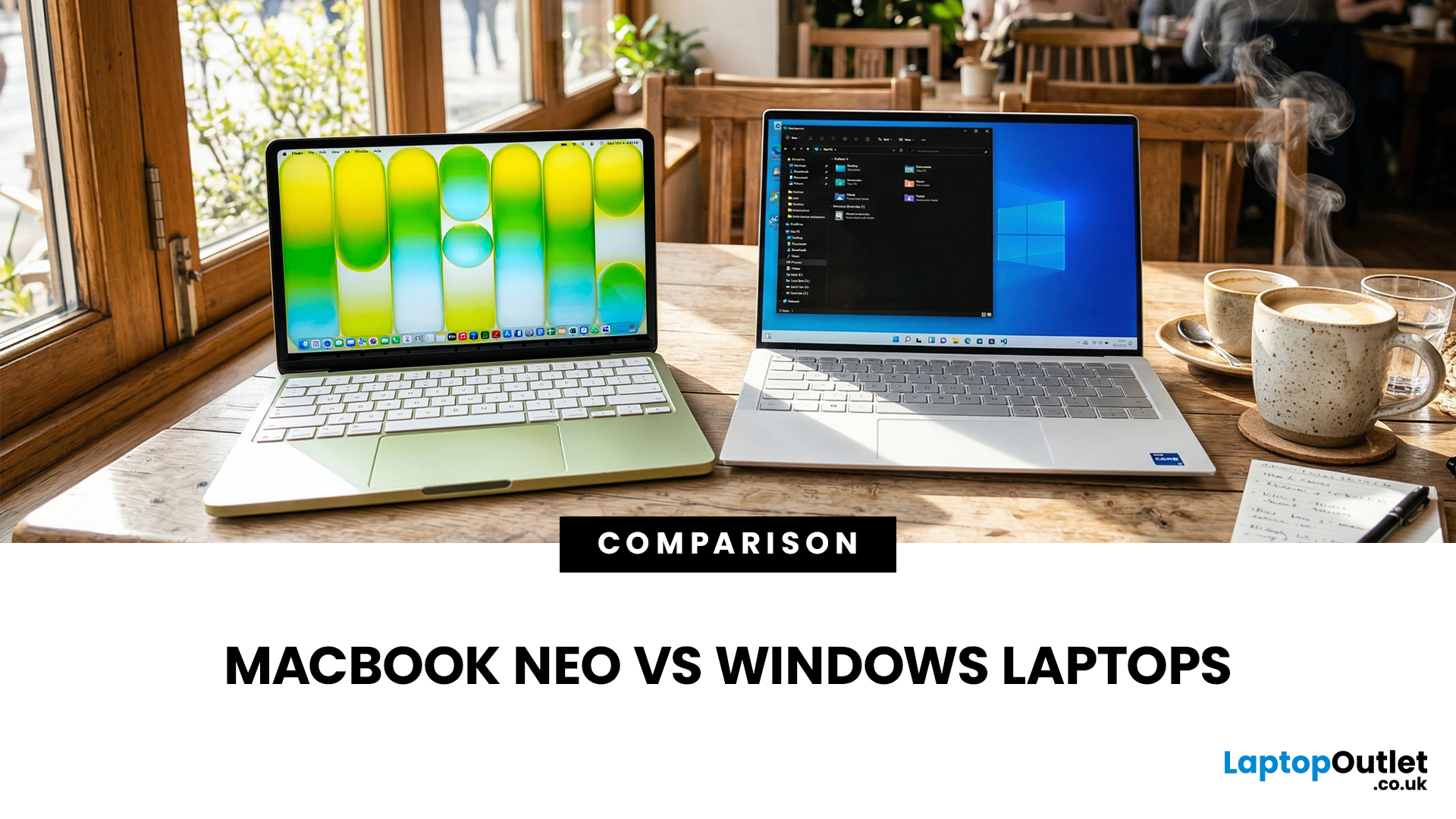
If you are comparing MacBook Neo vs Windows laptops, you are really asking one question: should you buy Apple’s cheapest Mac, or get a budget Windows laptop with more ports and more choice?
MacBook Neo is new, starts at £599, and is designed to be a simple, premium-feeling everyday laptop with macOS, long battery life, and strong call quality.
Budget Windows laptops can offer more screen sizes, more ports, and sometimes better upgrade options. But quality is inconsistent in this price range, and that’s where Neo tries to win.
Below is the practical, buyer-focused breakdown.
10-Second Answer Box
Choose MacBook Neo if
- You want the cleanest everyday experience for browsing, school, docs, and calls
- You value build quality and trackpad feel
- You want a laptop that stays fast and quiet for years, without tweaking settings
Choose a budget Windows laptop if
- You want more ports like HDMI and USB-A built in
- You need a bigger screen for the money
- You want the flexibility of Windows software and lots
Published: March 06, 2026
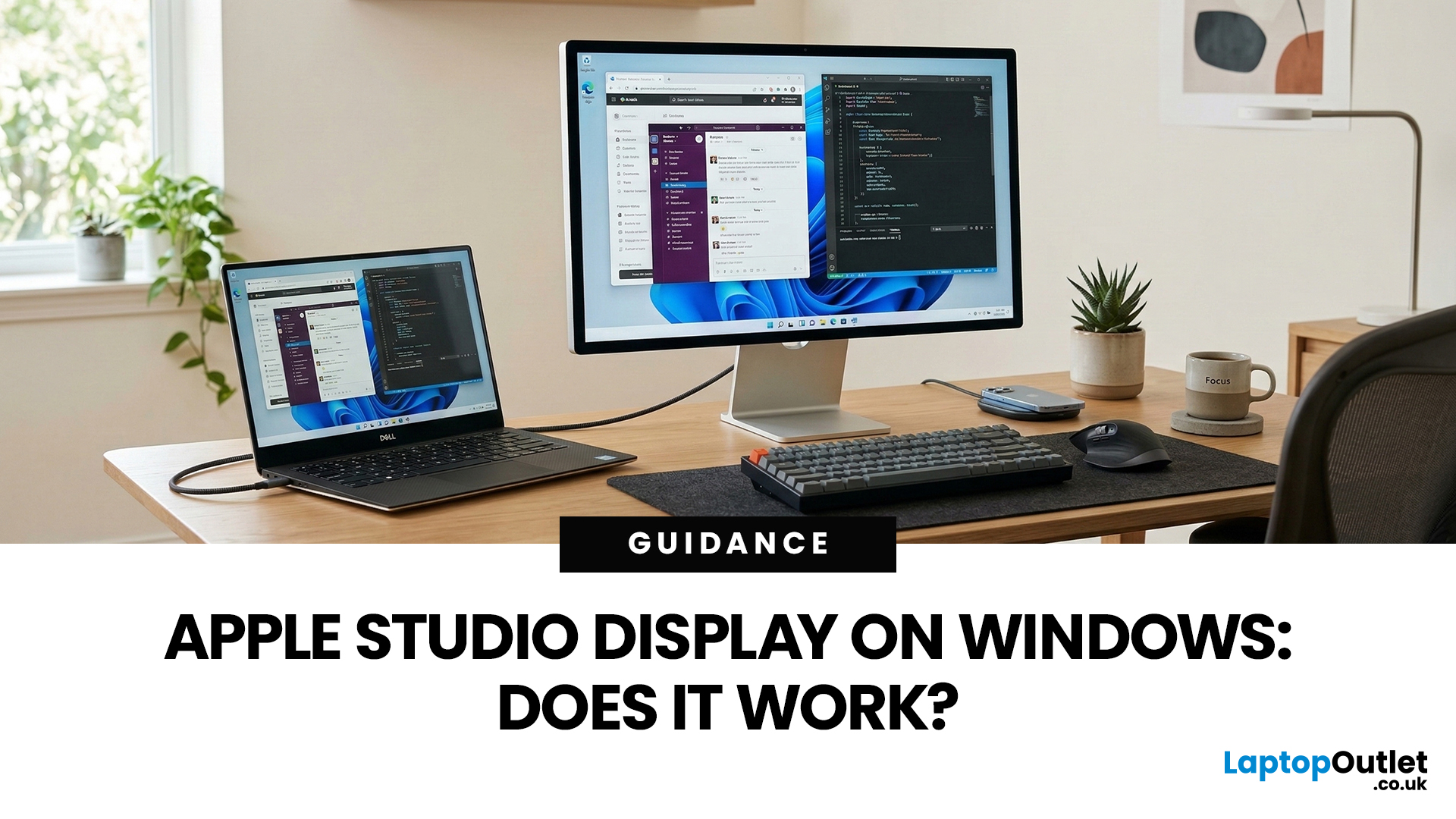
You’ve seen the Apple Studio Display. It’s sleek, stupidly sharp, and it makes your desk look like you’ve got your life together. But you’re on Windows. So, the big question is: Does Apple Studio Display work with Windows PCs? Yes, it can. But you won’t always get the full “Apple magic” experience on Windows.
Apple Studio Display + Windows: What Works vs What Doesn’t
Core Monitor Functions (generally work)
The good news: the basics are solid.
- You’ll get a picture (yep, it’s a monitor)
- Resolution and scaling can be adjusted in Windows settings
- It can act as an audio device (the built-in speakers often show up as an output option)
In other words: for day-to-day “I need a stunning screen”, you’re fine.
Features that May be Limited or Not Supported on Windows
Here’s where the “Apple ecosystem” bit starts showing:
- Center Stage (auto-follow webcam feature): usually not available as intended on Windows
- True Tone (auto colour temperature shifts): Generally not supported
- Firmware updates: typically
Last Updated: July 06, 2026
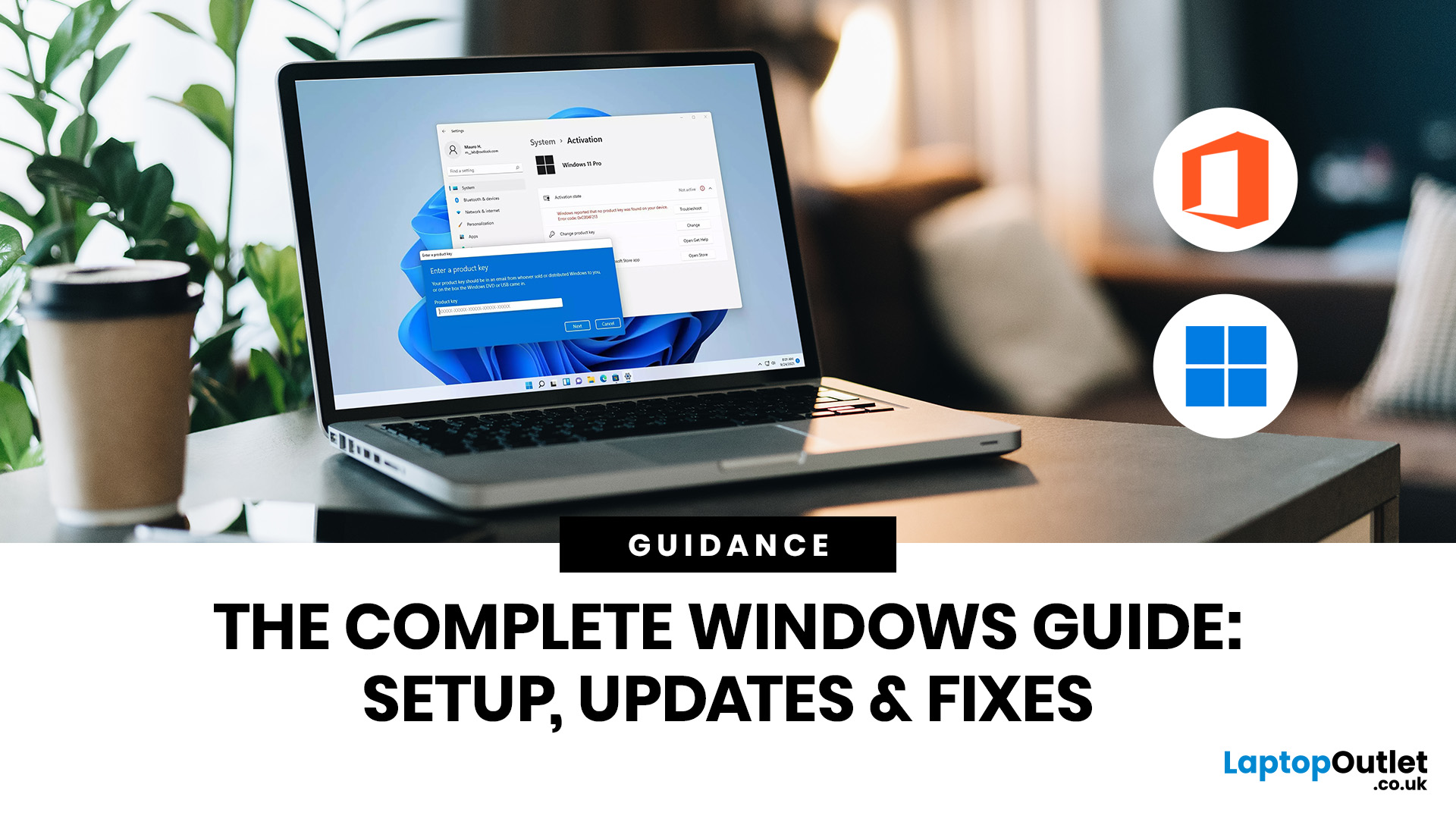
If you need to activate Windows Office key products on a new or existing device, the good news is that the process is usually straightforward once you know which licence you have. Whether you are looking for a Windows activation guide, Microsoft Office activation steps, or a quick fix for an activation error, this guide walks you through it in plain English.
Windows 10 and Windows 11 can be activated with either a 25-character product key or a digital licence, while Microsoft 365 and standalone Office versions are typically activated by signing in with the Microsoft account, or work or school account, linked to the purchase.
What is a Microsoft Activation Key?
A Microsoft activation key is usually a 25-character code used to activate Windows or redeem certain Office purchases. For Windows, activation depends on either a product key or a digital license. For newer Office and Microsoft 365 products, the Microsoft account attached to your purchase often replaces the product key for reinstalling
Last Updated: April 22, 2026
Stop reaching for the mouse every five seconds. Windows keyboard shortcuts are one of the fastest, simplest ways to boost your daily output - whether you're writing reports, navigating spreadsheets, or juggling a dozen open tabs at once.
This complete guide covers every shortcut worth knowing across Windows 10 and Windows 11, from the basics to the more advanced tricks that most people never discover.
Why Keyboard Shortcuts Are Worth Learning
Most people pick up one or two shortcuts by accident and never go any further. Yet the productivity gap between someone who relies on a mouse and someone genuinely fluent in shortcuts is striking - you spend less time clicking, less time searching, and considerably more time actually doing the work.
Here's what mastering shortcuts gives you:
- Speed: Tasks that take three clicks happen in milliseconds
- Concentration: Your hands stay on the keyboard, your eyes on the screen
- Less strain: Reduced repetitive mouse movement means fewer aches over a long
Last Updated: April 23, 2026
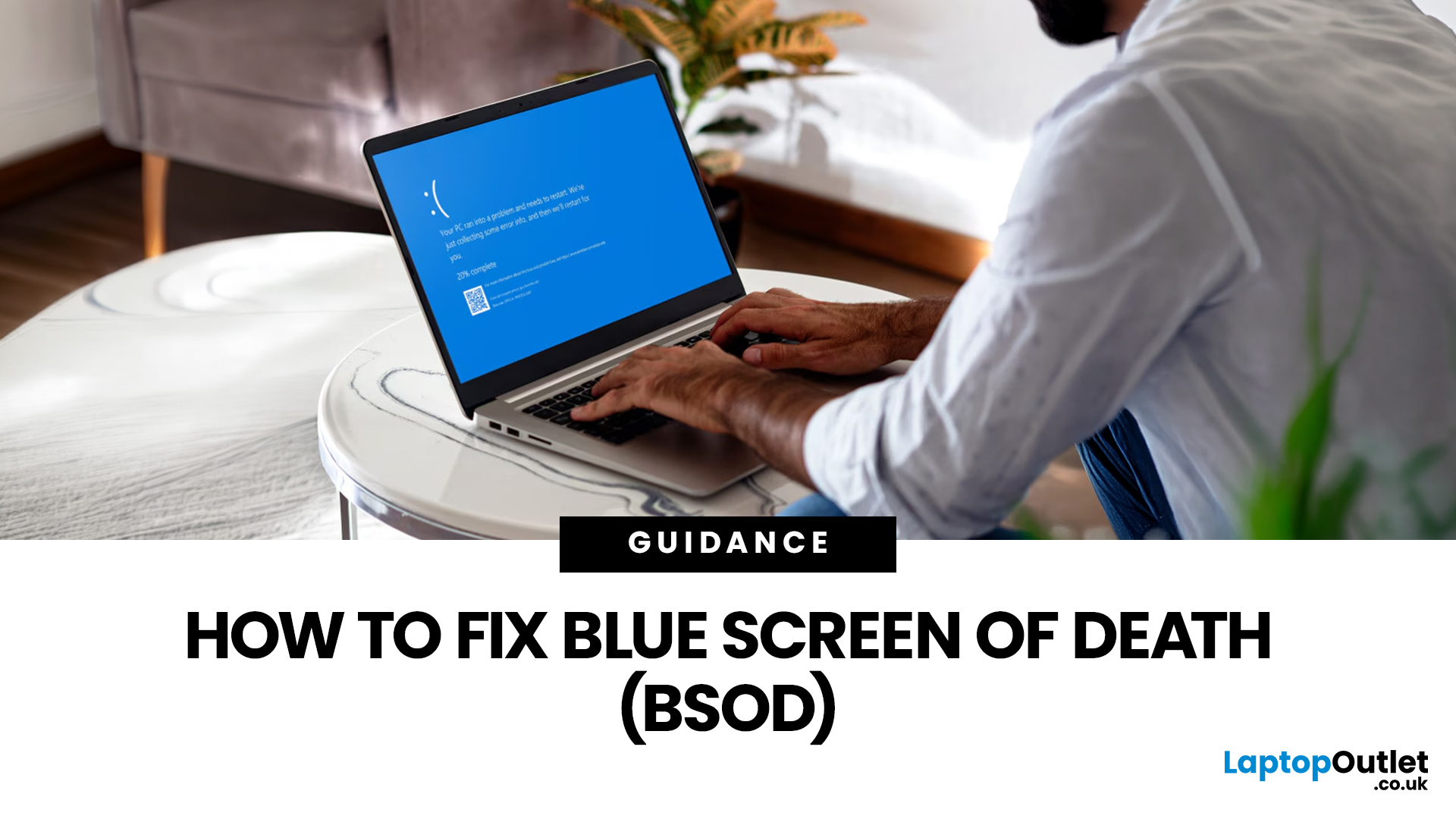
A blue screen of death fix isn't as daunting as it looks. That sudden blue screen and cryptic stop code are Windows' way of flagging a critical system error - and in most cases, it's something you can sort yourself without professional help.
This guide covers every cause, diagnostic method, and practical solution to get your machine running smoothly again.
What Is a Blue Screen of Death?
The blue screen of death (BSOD) is a critical stop error built into Windows. When the operating system encounters a fault it cannot safely recover from, it halts everything, logs the crash, and forces a restart - rather than risking data corruption or further damage. Think of it as a failsafe, not just a fault.
What Does It Look Like?
Depending on your version of Windows and the type of crash, a BSOD may show:
- A stop code identifying the error
- A message explaining that Windows ran into a problem
- A progress indicator while diagnostic information is collected
- Sometimes a QR code or additional troubleshooting
Last Updated: July 06, 2026
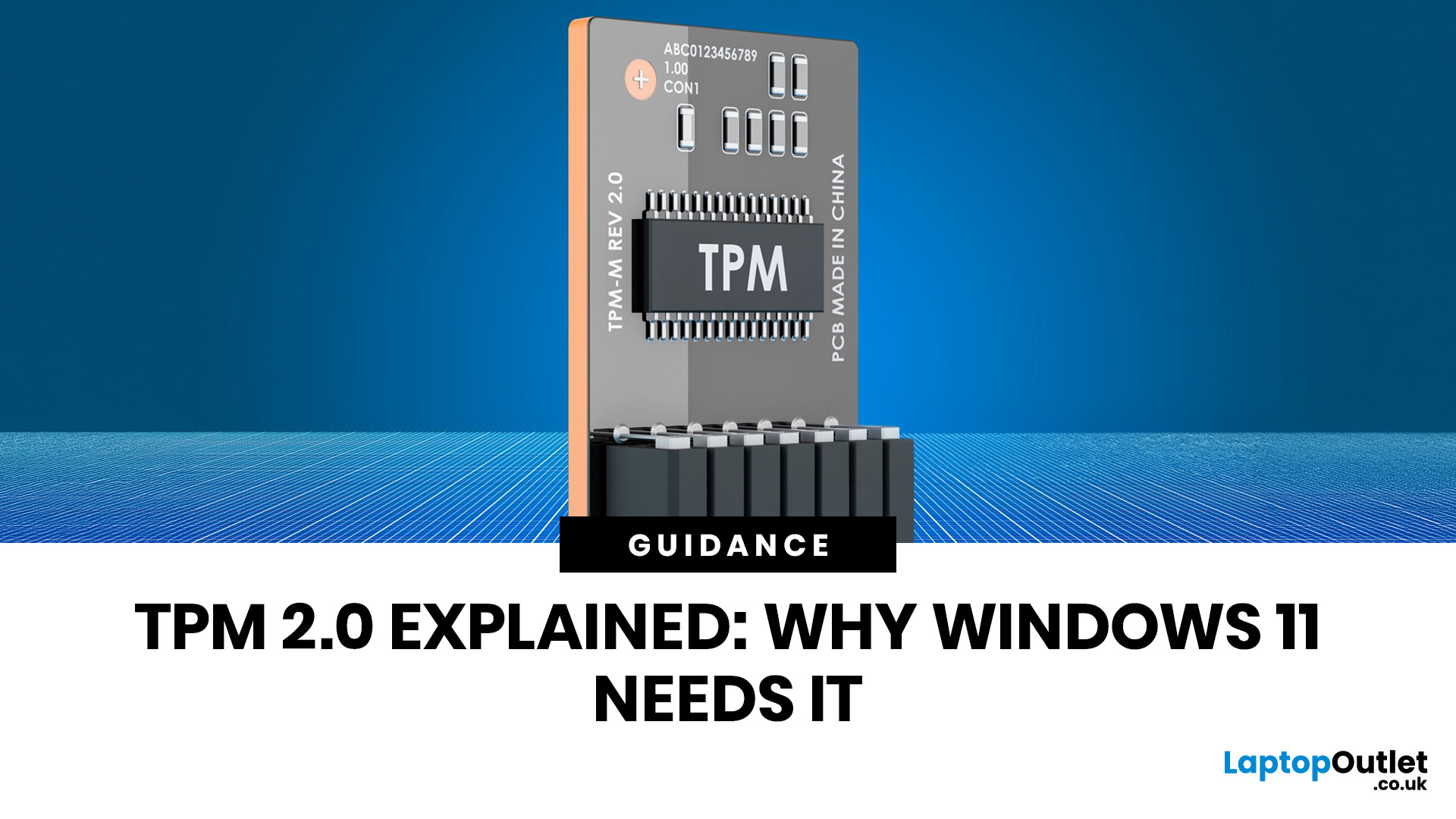
You go to upgrade your PC, everything seems fine, and then Windows 11 drops the digital equivalent of “not you, mate” with a message about TPM 2.0. Suddenly you are searching TPM 2.0 Windows 11, opening BIOS menus you have not touched since the Stone Age, and wondering if your laptop has secretly become ancient overnight. Microsoft’s official Windows 11 minimum requirements still include TPM 2.0, plus UEFI firmware and Secure Boot capability, so this is not some random pop-up glitch. It is part of the platform’s baseline security setup.
If you have been asking what is TPM in computer, do I need TPM for Windows 11, or why this tiny bit of hardware suddenly matters so much, this guide breaks it down in plain English. No jargon soup, no lecture mode, just what TPM is, what it does, why Windows 11 wants it, and what to do if your PC says TPM is missing or disabled.
| Quick answer: TPM 2.0 is a security component built into many modern PCs. It stores cryptographic keys, helps verify system integrity |
Last Updated: July 06, 2026
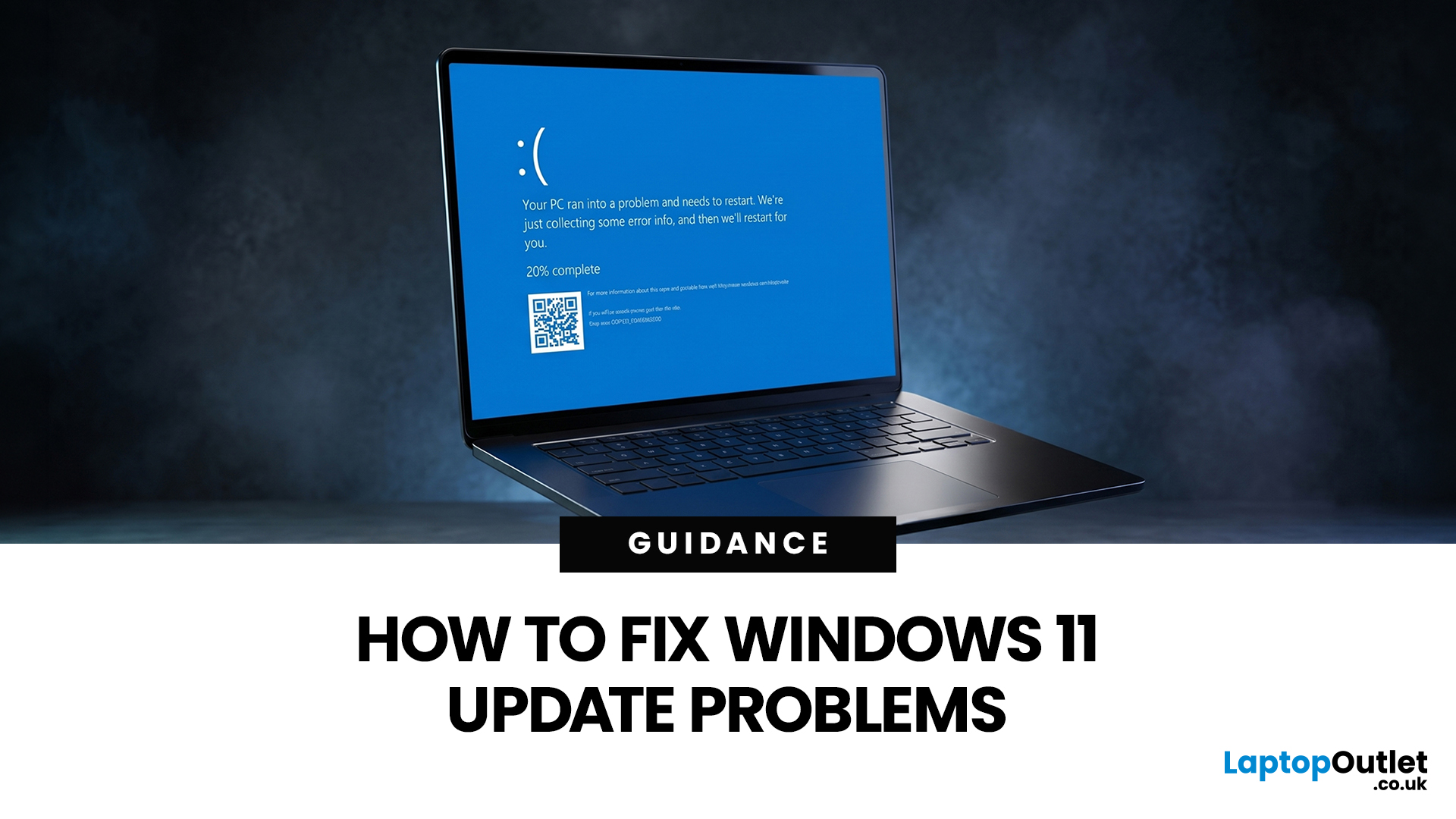
If your PC has decided that today is the day it will freeze at 61%, throw out a random error code, or restart at the worst possible time, you are very much not alone. Windows 11 update issues are one of those annoyingly common problems that can feel dramatic in the moment, but a lot of them are fixable with the right steps.
The good news is that most Windows 11 update problems usually come down to a handful of familiar causes: not enough storage, damaged update files, a disabled service, app conflicts, or a known issue that Microsoft is already tracking. Microsoft’s own support guidance still points users first to the built-in Windows Update troubleshooter and its broader update troubleshooting flow, which is usually the fastest place to start.
Why Windows 11 update fails in the first place
Let’s keep it real: when a Windows 11 update failed message pops up, it does not tell you much. The actual cause is usually one of these:
A Windows 11 update stuck during download or install can be linked

