



VR-Ready Graphics Cards: Best Picks for 2026
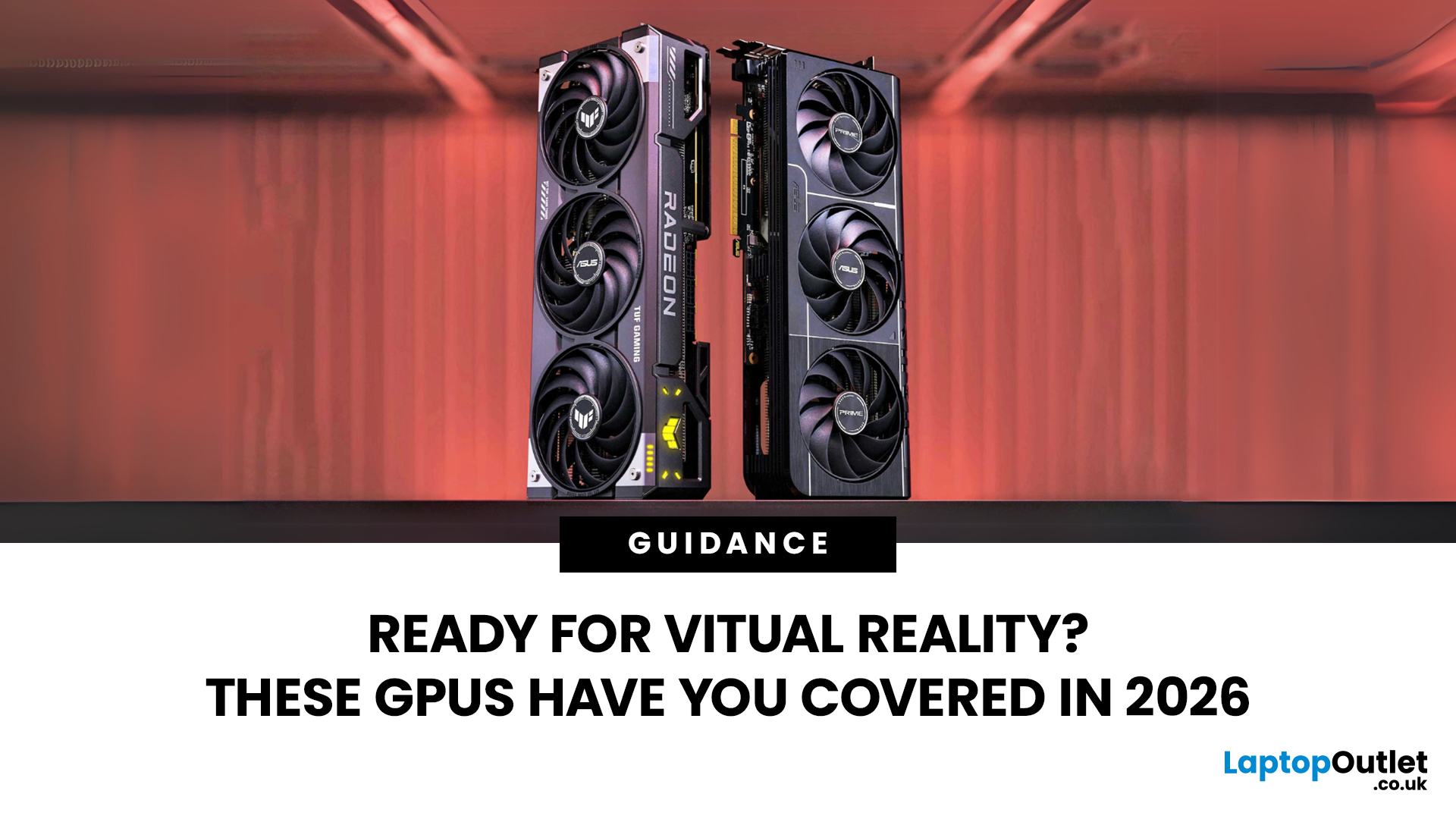
Virtual reality is the way forward when looking for total immersion and enjoying entertainment in another dimension. Whether you're stepping into alien landscapes, racing through hyper-realistic circuits, or exploring entire worlds from your living room, VR takes everything you love about gaming and cranks it up to another level. But to truly make the most of it, your PC needs to be more than just average; it needs serious graphical muscle.
If you plan to upgrade your system for a smoother, sharper, and more responsive VR experience, choosing the best graphics card for virtual reality experiences is key. And with so many options now on the market, narrowing it down can be daunting. That's why we've done the legwork for you.
Unlike standard gaming, virtual reality demands more from your hardware. Take it as running dual high-resolution displays - except one is strapped to your face, and every frame counts. Frame rates need to stay consistently high, latency needs to be minimal, and the visual detail must be rich enough to maintain the illusion. So, if you're after the best card for VR, here's our curated picks of the best VR-ready graphics cards you can buy in 2026.
PowerColor Radeon RX 9070: Built to Dominate the VR Battlefield
If you're after serious firepower for your VR setup in 2026, the PowerColor Radeon RX 9070 Red Devil edition should be top on your list. RX 9070 is one of the most impressive AMD cards for VR we've seen to date, offering premium performance for a reasonable price.
This AMD GPU delivers the power needed for rendering complex VR environments, built on AMD's latest RDNA 4 architecture, featuring 3584 stream processors and clock speeds that hit up to 2700MHz. More importantly, it's paired with 16GB of GDDR6 memory running at a sharp 20 Gbps, with a wide 256-bit memory interface, giving you smooth texture loading and rock-solid frame pacing, even during heavy VR action.
Connectivity is handled beautifully here. With three DisplayPort 2.1 outputs and one HDMI 2.1, it supports the full range of modern headsets, whether you're using a Meta Quest Link setup, a Valve Index, or something more exotic like a Varjo Aero.
Palit RTX 5090 GameRock OC: The Best VR Experience Money Can Buy
There are high-end graphics cards… and then the Palit GeForce RTX 5090 GameRock OC. Caters to those who demand the absolute best and have the setup to back it, this high-end GPU is engineered for nothing less than ultra-premium virtual reality performance.
Backed by NVIDIA's flagship Blackwell chip, 21,760 CUDA cores and a boost clock of 2527 MHz, the Palit GeForce RTX 5090 breeze through whatever you throw at it. Paired with a mammoth 32GB of ultra-fast GDDR7 memory operating at 28 Gbps across a massive 512-bit interface, it's practically built for VR workloads that would leave lesser cards begging for mercy. Even the most demanding games or simulation platforms can be pushed to their highest fidelity, and the frame rate will still stay locked in without a hiccup.
Visual clarity and stability are essential for VR, and that's where the 5090 truly shines. The GameRock edition comes equipped with three DisplayPort 2.1b ports and one HDMI 2.1b, meaning it's ready for the latest generation of high-refresh headsets without needing adapters or workarounds. If you're rocking something like the Pimax Crystal or looking to upgrade to future-ready VR headsets pushing beyond 120Hz per eye, this card has the bandwidth and the architecture to support it.
XFX Speedster RX 7800 XT: Streamlined Power for Smooth VR Sessions
Not every VR setup needs to be driven by the most extravagant, ultra-elite hardware and that's where the XFX Speedster QICK 319 RX 7800 XT finds its sweet spot. In many ways, it's the most grounded, reliable choice on this list—a card that delivers where it matters without trying to grab headlines.
At its heart is AMD's Radeon RX 7800 XT GPU, armed with 16GB of GDDR6 memory clocked at a zippy 19.5 Gbps across a 256-bit interface. It's not just about the numbers; this card performs impressively in practice. From fast-paced titles like Beat Saber and Blade & Sorcery to graphically dense games like Star Wars: Tales from the Galaxy's Edge, it keeps frame rates stable and immersion unbroken. The overclocked mode pushes the core speed up to 2430MHz, ensuring that it doesn't stutter or lag even when scenes get chaotic.
The Speedster QICK 319 also has the kind of cooling setup you'd expect on more premium models. Its triple-fan layout spans a sturdy 2.5-slot design, and while the card is a sizeable 344mm long, it's engineered to run cool and quiet—two things you'll always appreciate during extended VR sessions.
On the connectivity front, the RX 7800 XT keeps things future-ready with three DisplayPort 2.1 ports and one HDMI 2.1. That makes it fully compatible with current and next-gen VR headsets and displays. Whether you're planning on tethering a Meta Quest 3 to your rig or exploring new PCVR headsets later in the year, you'll have the ports to support it.
ASUS GeForce RTX 5070 Prime OC: Mid-Range Muscle with Next-Gen VR Efficiency
If you're after a balanced, newest NVIDIA graphics card that handles VR with finesse, the ASUS GeForce RTX 5070 Prime OC makes an extremely compelling case. It sits perfectly in that sweet spot between mid-range affordability and next-gen readiness, and for many VR enthusiasts, it may just be the most well-rounded option in 2026.
With 6144 CUDA cores under the hood and a boost clock of 2542MHz, this 5070 excels in performance. It's backed by 12GB of lightning-fast GDDR7 memory clocked at 28 Gbps, and a 192-bit interface provides a healthy blend of speed and bandwidth.
ASUS has given this Prime model a clean, no-nonsense design with a robust triple-fan cooling solution that keeps thermals in check. It's quieter than you'd expect, too, thanks to a smart fan curve and minimal coil whine, even under load.
Connectivity is fully geared toward the modern VR setup, offering three DisplayPort 2.1b outputs and one HDMI 2.1b. With native NVIDIA G-SYNC support and full compatibility with DLSS 4 and Frame Generation, you get a responsive, judder-free experience even when pushing demanding visuals.
What to Look for in a VR-Ready GPU?
Let's be honest. Virtual reality is not your average gaming setup. It's more intense, more immersive, and a lot more demanding on your hardware. Unlike traditional gaming components, graphics cards for VR need to meet tighter latency and refresh standards. So, what makes a graphics card ready for VR?
Power That Delivers Consistently
This isn't just about clock speeds or flashy numbers. VR renders two distinct images - one for each eye at high frame rates, often 90Hz or higher. If your GPU can't keep up, you'll feel it immediately. That's where a combination of a strong core, fast memory, and enough VRAM (12GB or more, ideally) comes into play. You want a card running VR titles smoothly, with zero lag or screen tearing to break the illusion.
Ports and Headset Compatibility
It sounds simple, but connection options are often overlooked. The latest VR headsets use DisplayPort 2.1 or HDMI 2.1 to transmit high-resolution images at high refresh rates. If your GPU doesn't support these or doesn't have enough of them, you'll be stuck. The best graphics card should offer a mix of ports that work with your headset and the bandwidth to keep things running smoothly.
Cooling That Keeps Up
When you're spending long hours inside a virtual world, the last thing you want is your GPU overheating. A good VR-ready GPU needs proper thermal management. That usually means triple-fan cooling, intelligent heat dissipation, and designs that stay quiet while still moving serious air. The more stable the card, the more immersive your VR experience will be.
Software and VR Optimisations
For a truly smooth VR experience, you also need strong driver support and software features tailored for virtual reality. The latest NVIDIA RTX 50 Series graphics cards support technologies like DLSS 4, Frame Generation, VRSS or FSR to make a noticeable difference in both image quality and performance. Some GPUs are better optimised for specific platforms like SteamVR or Meta Quest, so it's worth checking compatibility before you buy.
Options for Every Budget
Not everyone wants to drop top-tier money on a GPU, and that's fine. Mid-range cards have come a long way, especially with support from technologies like DLSS and FSR. These tools help boost performance on less powerful hardware, meaning you can still enjoy a strong VR experience without maxing out your budget. The trade-off? You may have to turn down a few settings here and there, but the core experience remains solid.

Wrapping It Up!
So, where does that leave us?
Well, it's simple. If you're serious about virtual reality, your graphics card must be just as serious. Not in the overhyped, marketing kind of way but in the way that actually matters when you are mid-game, completely immersed, and the last thing you want is a stutter, a drop in frames, or a headset that can't keep up with what your eyes are seeing.
The good news? There's a VR-ready graphics card for everyone right now. Whether you're building a top-tier powerhouse to run ultra settings or working with a more sensible budget but still want to get lost in detailed virtual worlds, the options in 2026 have genuinely levelled up.
What's more important is knowing what to prioritise. Get the ports right. Make sure you've got enough VRAM. Consider your cooling requirements. Do not overlook software support because DLSS, FSR, and driver updates can turn a decent card into a VR gem.
You don't need to guess anymore. You've seen what's out there. Now, it's just a matter of picking the one that fits your setup and getting ready to step into something far beyond your monitor.
Because once you've experienced great VR on the right GPU, there's no going back.
Ready to upgrade your graphics card for next-level VR?
Explore the best range of VR-ready graphics cards at Laptop Outlet. From high-end beasts to budget-friendly options that still pack a punch, we have everything you need to build the ultimate virtual reality setup.

VR-Ready Graphics Cards: FAQs
Which graphics cards are VR-ready?
Most mid to high-end graphics cards from AMD and NVIDIA that have been released in the past couple of years are VR-ready. This includes models like the NVIDIA RTX 4070, 4080, 5090, and AMD's RX 7800 XT, RX 7900 XTX, and RX 9070. These GPUs offer the performance, ports, and software compatibility needed to power modern VR headsets smoothly.
How do I know if my GPU is VR-ready?
You can tell your GPU is VR-ready by checking three things: performance, connectivity, and compatibility. If your card can maintain around 90 FPS in VR environments, has a DisplayPort 1.4 or 2.1 (or HDMI 2.1), and is supported by platforms like SteamVR or Meta Quest Link, then it's ready for VR.
Do I need a high-end GPU for VR gaming?
Not necessarily. While top-tier cards like the RTX 5090 or RX 9070 deliver unbeatable VR performance, many mid-range GPUs like the RTX 5070 or RX 7800 XT are more than capable of handling VR titles with impressive smoothness. You may just need to lower a few settings for the most demanding games.
Is AMD or NVIDIA better for VR?
Both AMD and NVIDIA offer excellent VR-ready GPUs. NVIDIA tends to lead in VR software features like DLSS and latency-reducing tech, while AMD often gives you more raw power for the price. It comes down to your preferred VR platform, budget, and whether features like DLSS or FSR are important to your setup.
Can a VR headset run on integrated graphics?
No. Integrated graphics don't have the horsepower required for virtual reality. You'll need a dedicated GPU with enough VRAM and the right ports to connect your headset.
| Read More: |
| What does a graphics card do |
| Best gaming laptops with Nvidia Graphics cards |
| How to find out what graphics card i have |
Related Articles

Last Updated: February 25, 2026
We’ve been deep in the trenches with today’s top-tier GPUs, testing them across real-world gaming sessions, editing timelines, and production rigs. This isn’t just another spec dump. It’s a curated breakdown of what actually matters when you're pushing pixels or chasing frames. Whether you're building for buttery 4K gameplay or need something that won’t choke on a multi-cam 8K edit, we’ve cut through the marketing noise to highlight what each card nails (and where it stumbles). No filler, no fluff, just the kind of insight we’d want before dropping serious cash on a new GPU.
ASUS GeForce RTX 5090 ROG Astral 32GB OC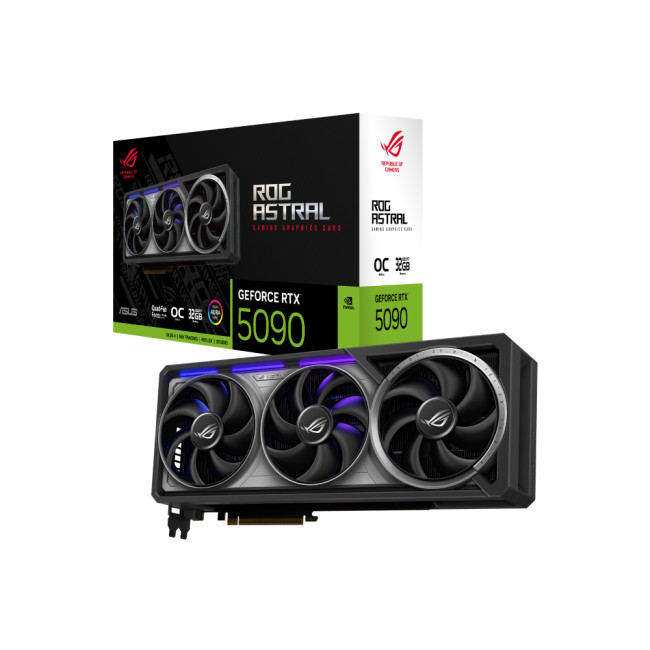
Also Known As:
- ROG STRIX RTX 5090
- NVIDIA GeForce RTX 5090 ROG Astral OC
- The Beast from the Future
Overview & Standout Features
The ASUS RTX 5090 ROG Astral isn’t just a GPU; it’s a flex. This monster packs 32GB of next-gen GDDR7 VRAM, triple axial-tech fans, and more RGB than your setup probably needs (but still wants). ASUS has taken NVIDIA’s flagship and strapped
Last Updated: September 22, 2026
Choosing the right graphics card starts with what you actually want your PC to do. Your monitor resolution and refresh rate, games or software, VRAM requirements, power supply, case space and available budget all matter more than simply buying the newest GPU.
To choose the right graphics card, match the GPU to your monitor resolution, refresh rate, games or software, and budget. Check real-world performance, VRAM, power-supply requirements, physical size, cooling and supported features such as ray tracing and upscaling. For 2026, compare current NVIDIA, AMD and Intel options rather than relying on model names or generation alone when making your choice.
This graphics card buying guide explains how to choose a graphics card for gaming, content creation and everyday GPU-accelerated workloads, while covering the specifications and compatibility checks that matter in 2026.
Quick Graphics Card Buying Checklist
Before comparing individual GPUs, check these seven things:
- Resolution: Are you gaming
Last Updated: February 23, 2026
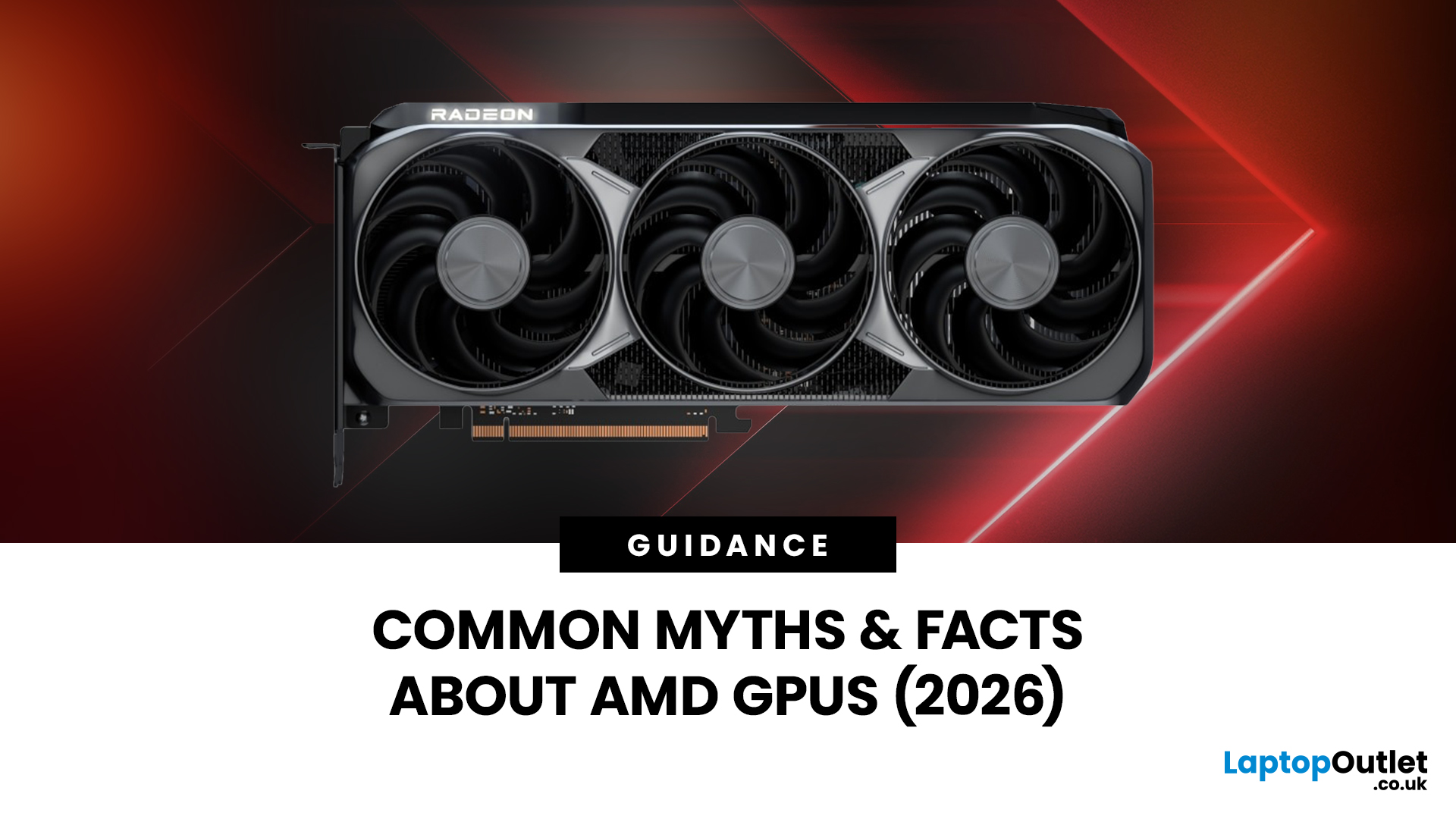
Are you looking to upgrade your gaming rig this year? If so, you have likely encountered the fierce debate between AMD and NVIDIA GPUs. As we move through 2026, the graphics card market is more competitive than ever.
However, old reputations die hard. Many gamers still make buying decisions based on information from five or ten years ago. To help you get the best value for your money, we are busting the biggest misconceptions.
Here are the top 10 myths and facts about AMD graphics cards in 2026.
1. Myth: AMD Drivers are Unstable and Crash Frequently
The Fact: AMD’s software suite is now one of the most stable in the industry.
This is perhaps the oldest myth in the book. Years ago, some users faced "black screen" issues. However, in 2026, the AMD Software: Adrenalin Edition 26.1.1 is a highly polished tool. AMD has moved to a unified driver branch that ensures high stability across both old and new cards.
While no software is perfect, the frequency of "driver timeouts" on modern Radeon

Last Updated: January 14, 2026
From smooth 1080p gameplay to breathtaking 4K visuals, AMD graphics cards put serious gaming power right at your fingertips. You want smooth gameplay, great visuals, and good value for money, without paying more than you need to. That’s exactly where AMD graphics cards come into the picture.
AMD has become one of the most popular choices for gamers in the UK thanks to its strong performance, competitive pricing, and wide range of options for every type of player. Whether you’re after the best AMD graphics cards for high-end gaming, searching for cheap AMD graphics cards to get started, or are curious about the new AMD graphics cards hitting the market, this guide is here to help.
Why AMD Graphics Cards are a Smart Choice for Gamers
AMD has earned a strong reputation among PC gamers by offering powerful GPUs at competitive prices. If you want excellent gaming performance without overspending, AMD often delivers some of the best value on the market.
Great Performance for the Price
One
Last Updated: January 14, 2026
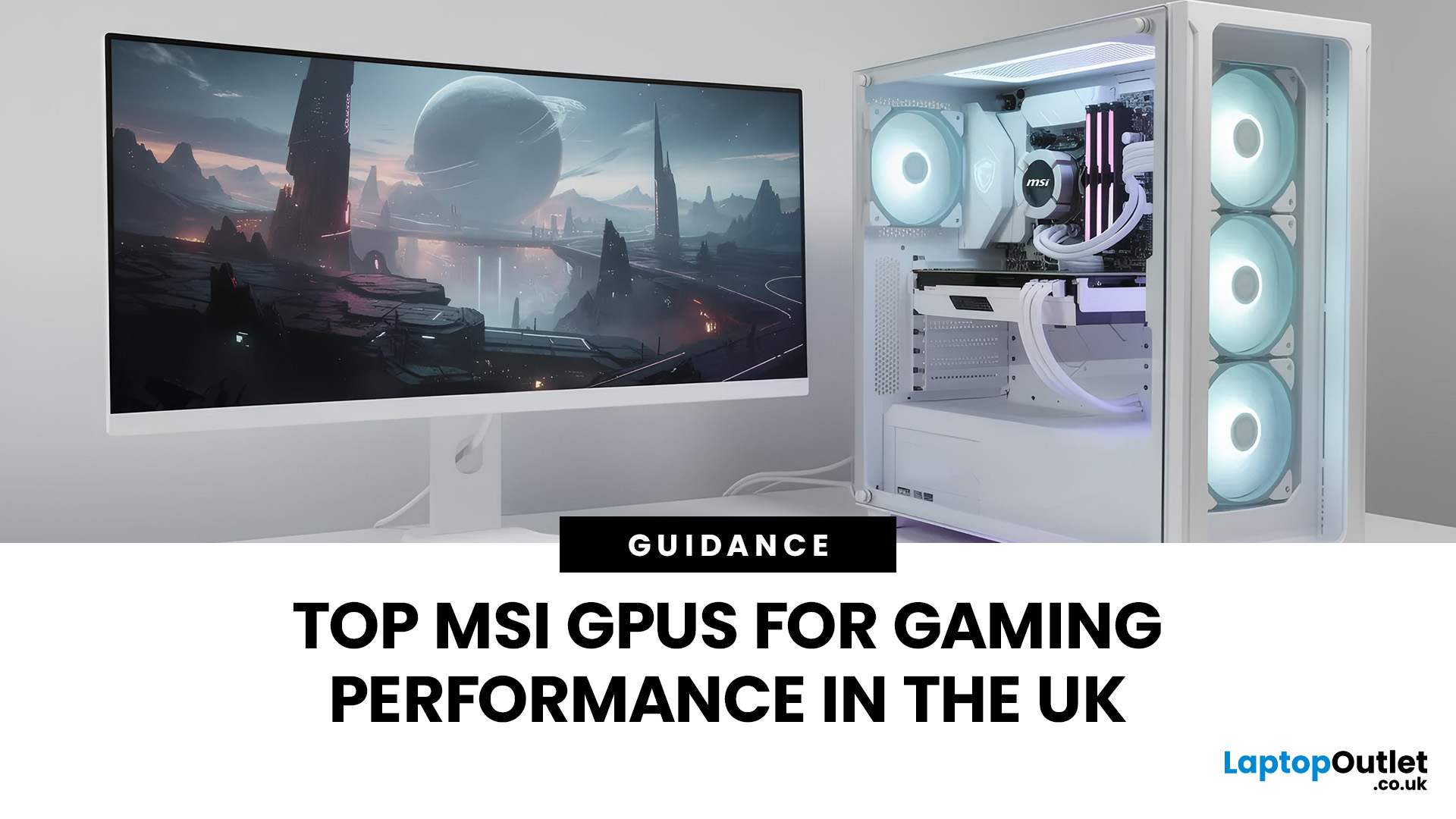
If you’re planning to upgrade your gaming PC or build a new setup from scratch, choosing the right graphics card is one of the most important decisions you’ll make. Whether you’re chasing ultra-high frame rates, immersive 4K visuals, or reliable performance for competitive gaming, MSI has a solution tailored to your needs.
At Laptop Outlet, we stock a wide range of MSI gaming graphics cards, covering both NVIDIA and AMD platforms for you. From legacy favourites to the latest MSI graphics cards, this guide explores performance, key models, driver support, and how MSI compares with other leading brands. If you’re searching for dependable gaming graphics cards that deliver real-world value, you’re in the right place.
MSI NVIDIA Graphics Cards for Gaming
If you prefer NVIDIA-powered GPUs, MSI offers some of the most popular and trusted models on the market. Today’s NVIDIA graphics cards for gaming from MSI are leagues ahead in terms of performance and efficiency. You’ll benefit from features

Last Updated: April 28, 2026
When it comes to high-performance computing, gaming realism, and creative workloads, NVIDIA graphics cards continue to set the benchmark. From immersive gaming experiences to professional-grade rendering and AI acceleration, NVIDIA’s GPUs power some of the most advanced systems on the market today. This guide explores everything you need to know about Nvidia graphics cards.
Understanding NVIDIA Graphics Cards and their Advantages
When performance matters, NVIDIA continues to lead the graphics card market with technology designed for today’s most demanding applications. From immersive gaming worlds to high-speed creative workflows, NVIDIA GeForce graphics cards deliver the power, efficiency, and visual realism modern users expect. Trusted by gamers and professionals alike, NVIDIA GPUs have become the benchmark for smooth gameplay, intelligent upscaling, and advanced rendering. What truly sets NVIDIA graphics cards apart is how each generation evolves. With smarter architecture, improved

Published: January 09, 2026
If you’re searching for graphics cards 9060 in the UK, you’re clearly looking for the next sweet spot in gaming and creative performance without overspending. At Laptop Outlet, we know UK gamers and professionals want powerful, reliable graphics cards at genuinely competitive prices, backed by trusted brands and fast delivery. In this guide, we’ll explore graphics cards 9060 deals, discuss how they compare to alternatives, and help you decide whether an AMD-based option, a next-generation NVIDIA alternative, or a trusted gaming brand like ASUS, Gigabyte, or XFX is right for you.
What are Graphics Cards 9060 and Why are they Generating So Much Interest?
The growing interest in graphics cards 9060 comes from demand for mid-to-upper-tier GPUs that deliver excellent performance at a more accessible price point. These cards are widely associated with AMD’s next-generation lineup, including expected models such as the AMD RX 9060 XT graphics card. Gamers and creators are excited because graphics
Last Updated: April 28, 2026
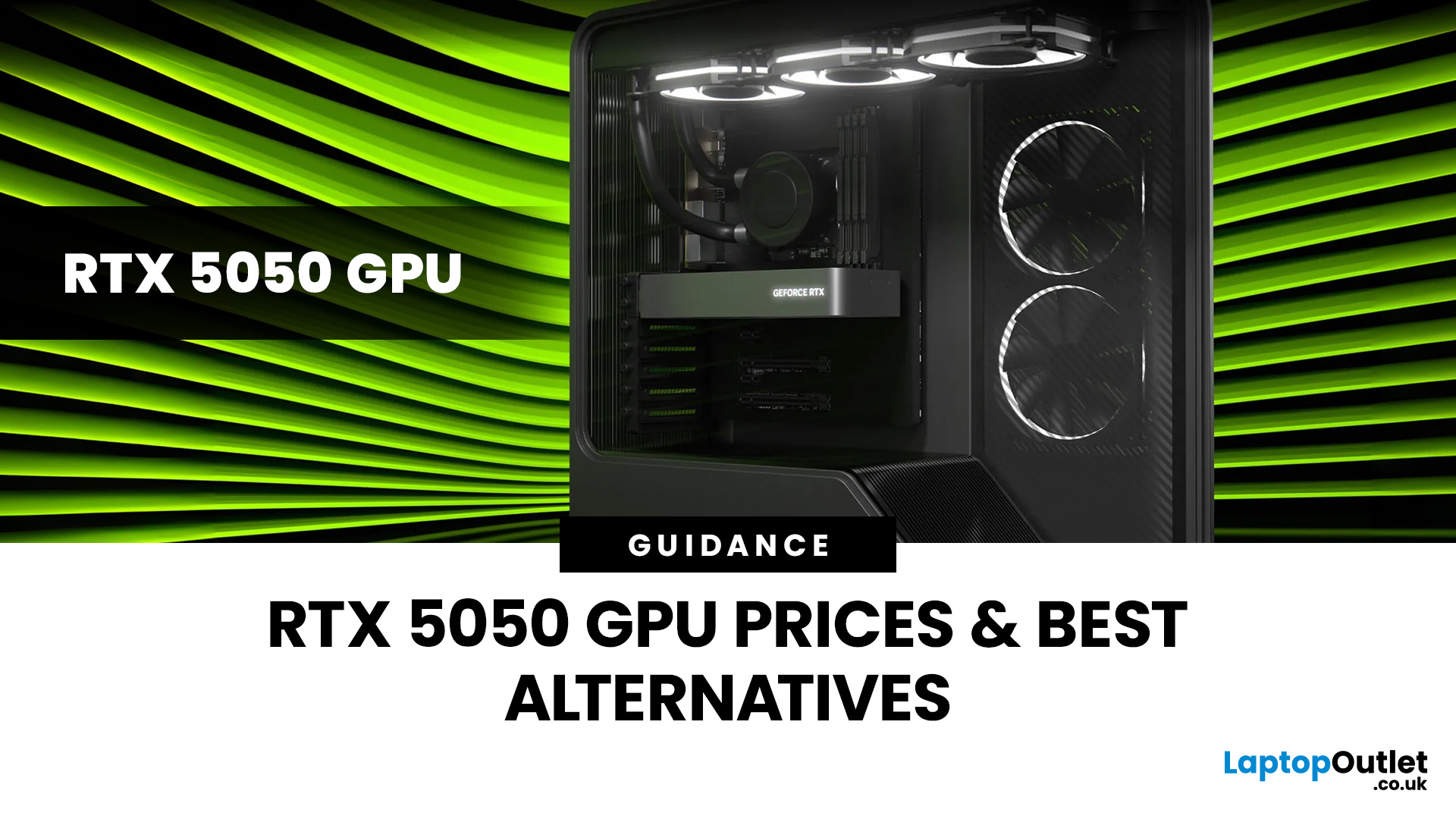
Finding the right graphics card at the right price has become one of the biggest challenges for PC gamers in the UK. With new GPU generations launching and stock levels fluctuating, buyers are looking for hardware that delivers strong performance without stretching their budget. In this guide, we explore everything you need to know about the NVIDIA RTX 5050 GPU, including expected gaming performance, anticipated UK pricing, and where it fits within today’s competitive graphics card market. We’ll also highlight the best alternatives available at Laptop Outlet, ensuring you have plenty of options if stock is limited.
What is the NVIDIA RTX 5050 GPU?
The NVIDIA RTX 5050 GPU is expected to sit at the entry-to-mid-level end of NVIDIA’s next-generation RTX lineup. Designed for gamers who want modern features without the premium price tag, the RTX 5050 PC graphics card is aimed at smooth 1080p gaming and entry-level 1440p performance. As part of NVIDIA’s latest architecture, the RTX 5050 graphics
Last Updated: January 13, 2026
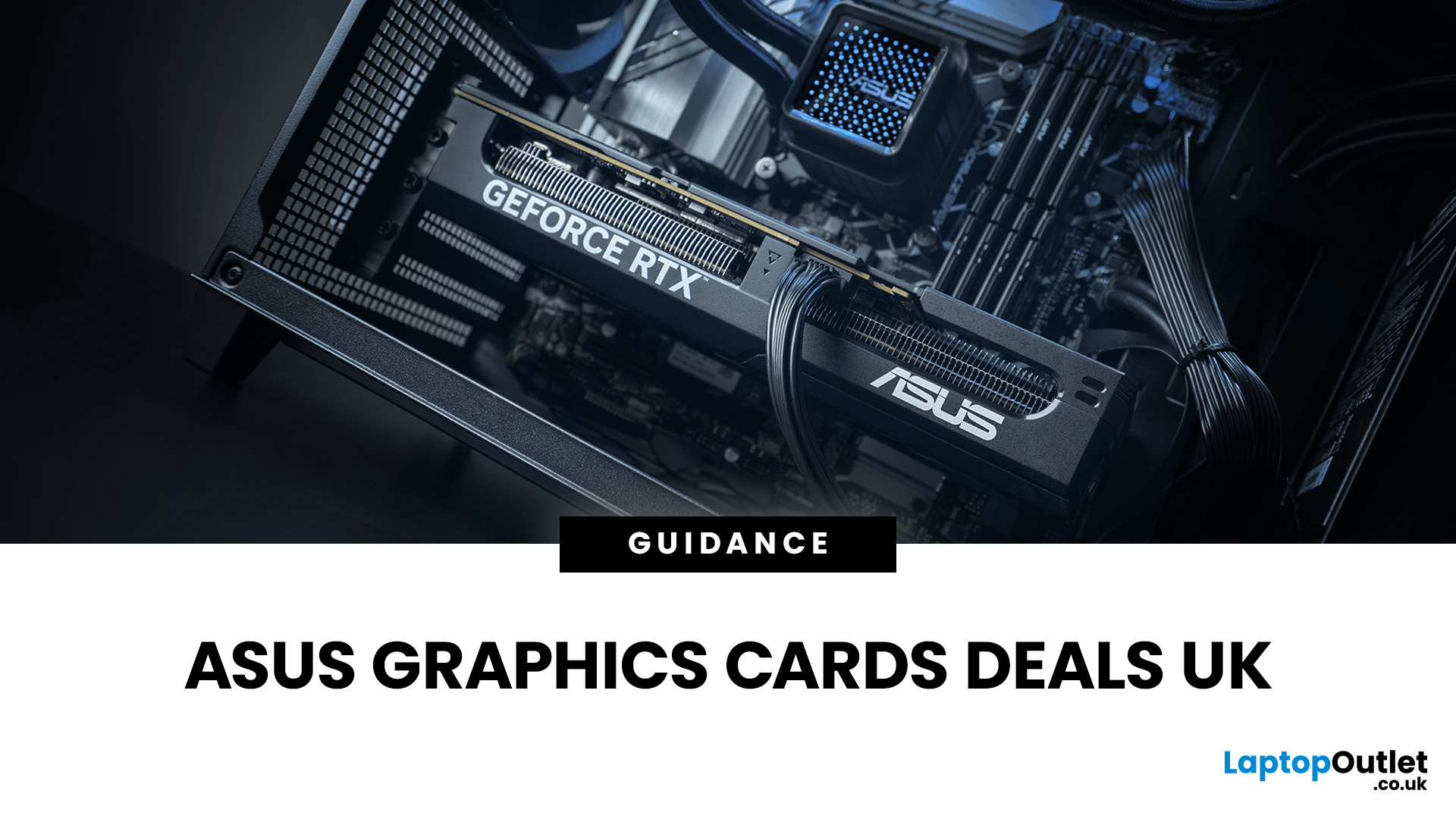
Are you looking to upgrade your PC with cutting-edge performance, reliability, and exceptional gaming visuals? ASUS graphics cards remain one of the most trusted choices in the UK market. We bring you competitive prices, frequent deals, and a wide selection of ASUS GPUs designed for gamers, creators, and professionals alike. From advanced NVIDIA RTX models to efficient AMD Radeon options, ASUS continues to lead the way in innovation, cooling, and long-term durability.
Why Choose ASUS Graphics Cards?
ASUS has built a global reputation for producing premium PC components, and its graphics cards are no exception. Designed with performance, stability, and longevity in mind, ASUS PC graphics cards are trusted by enthusiasts and professionals worldwide.
Proven Engineering and Build Quality
ASUS graphics cards are engineered using high-quality components, reinforced PCBs, and advanced power delivery systems. This ensures consistent performance even under heavy workloads such as 4K gaming, 3D
Published: January 13, 2026
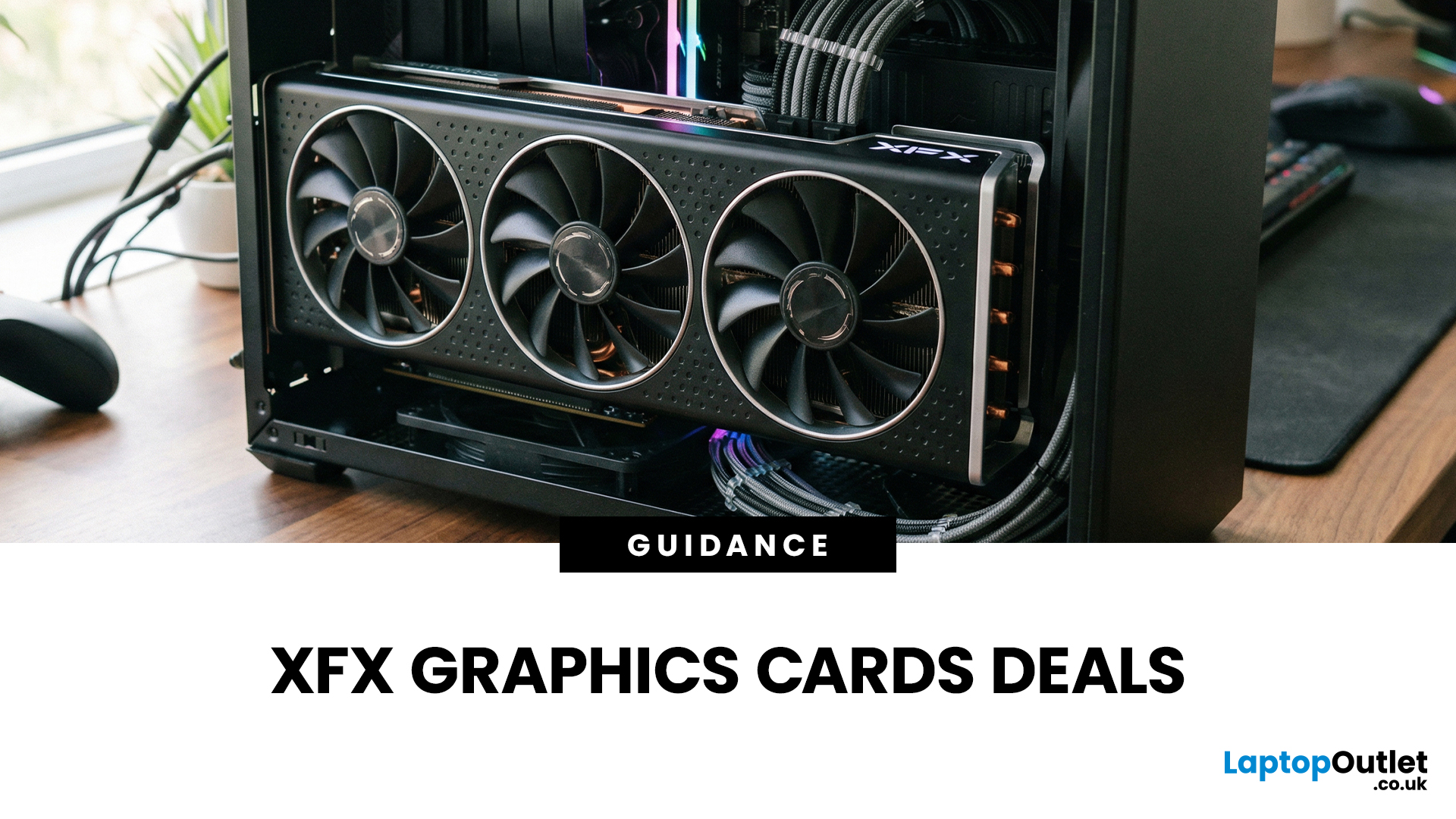
Choosing the right graphics card is one of the most important decisions when building or upgrading a gaming PC, and XFX graphics cards UK gamers trust continue to stand out for performance, reliability and value. As one of AMD’s most established board partners, XFX focuses exclusively on Radeon GPUs, delivering powerful gaming performance at highly competitive prices. We offer a wide range of XFX graphics cards deals, making it easier for you to access cutting-edge AMD technology without overspending. Whether you’re upgrading an older system, building a new gaming rig or searching for better value than current NVIDIA options, XFX delivers a compelling alternative. This guide explores everything you need to know about XFX GPUs, including performance, pricing, comparisons, and how to find the best XFX GPU deals UK buyers can rely on.
Why XFX Graphics Cards Are a Trusted Choice for AMD Gamers
XFX has built a strong reputation by focusing entirely on AMD hardware. Unlike brands that split

