



NVIDIA DLSS 5: AI-Powered Leap in Real-Time Photorealistic Gaming Graphics

NVIDIA DLSS 5 marks a much bigger shift than a routine version update. Rather than focusing mainly on upscaling and frame generation, NVIDIA is positioning DLSS 5 as a real-time neural rendering system that can add photoreal lighting and material detail to game scenes while they are being played. According to NVIDIA’s March 2026 announcement, it is the company’s biggest graphics breakthrough since real-time ray tracing arrived in 2018, with a launch scheduled for fall 2026.
For PC gamers, that matters because the long-running trade-off between image quality and performance may be changing again. Earlier DLSS versions were mainly about making games run faster at high resolutions. DLSS 5 expands that idea into visual interpretation, where AI is used not just to reconstruct pixels, but to enhance lighting response, material realism and scene fidelity in ways NVIDIA says were previously closer to Hollywood VFX than a 16-millisecond game frame.
For UK buyers looking at a gaming laptop or desktop upgrade, this is also commercially relevant right now, even before DLSS 5 ships. NVIDIA says DLSS 5 arrives in fall 2026, while DLSS 4 and DLSS 4.5 are already available in the market, with DLSS 4.5 featuring newer transformer models tied closely to GeForce RTX 50 Series hardware and broader GeForce RTX support, depending on the feature. In plain terms, a system you buy today may shape how ready you are for the next wave of AI rendering.
What is NVIDIA DLSS 5?
NVIDIA DLSS 5 is an AI-driven rendering technology that moves beyond traditional upscaling. According to NVIDIA, it uses a real-time neural rendering model to infuse pixels with more photoreal lighting and material behaviour, helping game scenes appear closer to cinematic VFX while still working within real-time gameplay constraints. This model can interpret complex scene information such as skin, hair, fabric and other materials to produce a more realistic final image.
The technology uses a real-time neural rendering model that works from a frame’s colour and motion data, then enhances the scene with more photoreal lighting and materials. In plain words, it aims to improve how surfaces, lighting, and overall scene realism appear on screen while keeping the image stable during live gameplay. It is also designed to run in real time at up to 4K, which matters because flashy demo visuals mean very little if they do not hold up during actual gameplay.
For gamers, the important point is that DLSS 5 goes beyond the usual “more fps” story. It is trying to integrate AI rendering into the image's look and feel. That is a much bigger shift than a normal upscaling update.
NVIDIA DLSS 5 Key Features
|
Feature |
What It Does |
User Benefit |
|
Real-Time Neural Rendering |
Uses a real-time neural rendering model to enhance each frame with AI-driven visual detail. |
Helps push game visuals beyond traditional reconstruction and closer to cinematic realism. |
|
Photoreal Lighting |
Infuses pixels with more lifelike lighting response in real time. |
Improves scene depth, mood, and realism in supported games. |
|
Photoreal Materials |
Enhances how surfaces such as skin, hair, and fabric appear on screen. |
Creates more convincing material detail and a more natural-looking final image. |
|
Deterministic Frame Output |
Designed to remain consistent and deterministic from frame to frame during gameplay. |
Helps maintain visual stability instead of introducing distracting inconsistency. |
|
Up to 4K Real-Time Processing |
NVIDIA says DLSS 5 can run in real time at up to 4K. |
Supports premium visual fidelity for high-end gaming systems and displays. |
|
Developer Controls |
Includes controls for intensity, colour grading, and masking. |
Gives studios more control over how strongly DLSS 5 affects the final look of a game. |
|
AI-Enhanced Visual Fidelity |
Expands DLSS beyond performance-led reconstruction into scene-level visual enhancement. |
Makes DLSS 5 relevant not just for fps, but also for next-gen visual quality. |
|
RTX Ecosystem Integration |
Sits within NVIDIA’s broader DLSS and RTX rendering ecosystem. |
Fits naturally into the wider stack of ray tracing and AI rendering features on GeForce RTX systems. |
How DLSS 5 Differs from DLSS 4 & DLSS 4.5
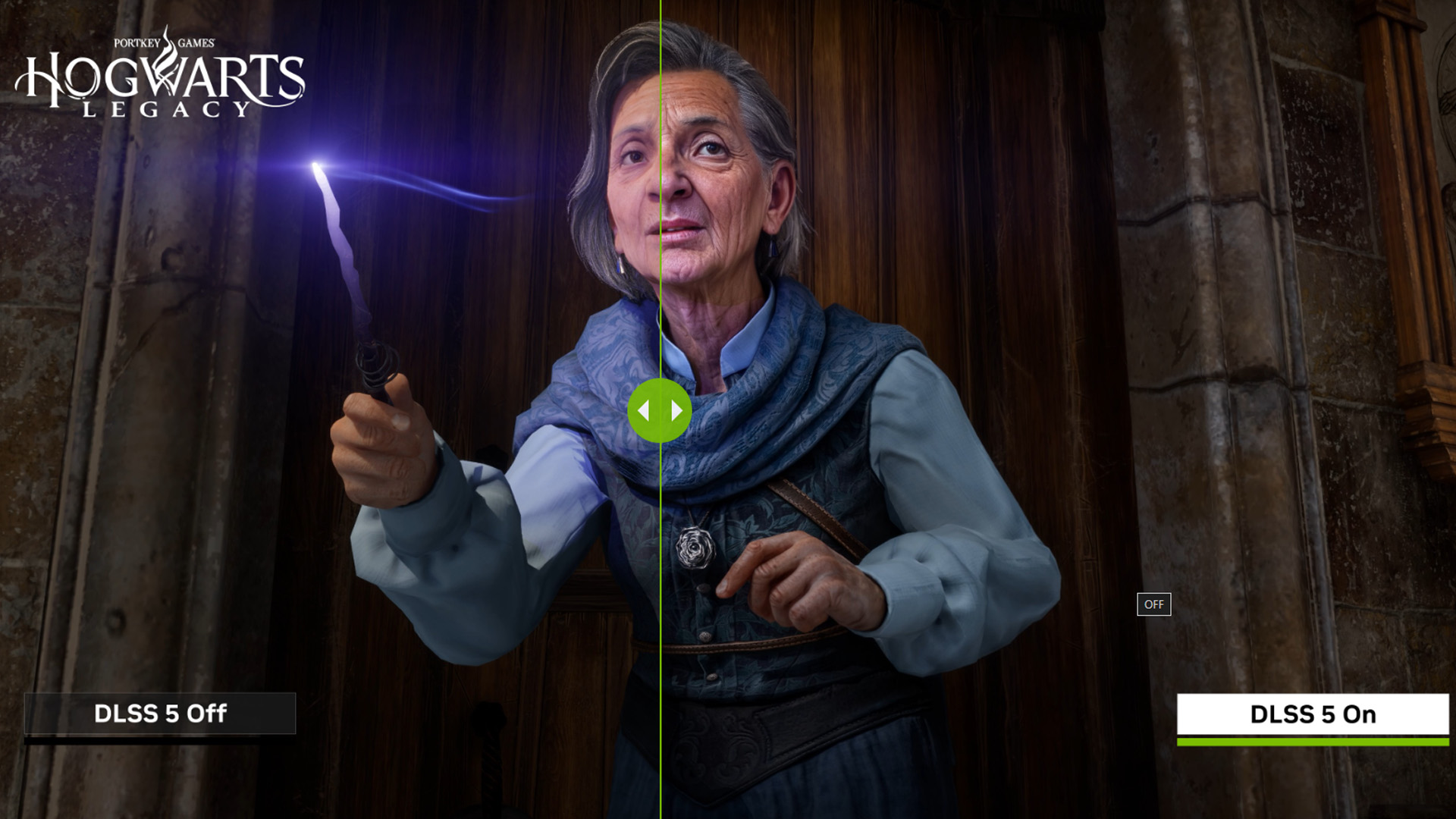
This is where many readers will want clarity, because the naming can make it sound like DLSS 5 is just another routine upgrade. Before looking at DLSS 4.5, it helps to understand how DLSS 5 compares to DLSS 4, which is the version most gamers are familiar with today.
NVIDIA DLSS 4 vs DLSS 5
|
Feature |
DLSS 4 |
DLSS 5 |
|
Main focus |
Performance and image reconstruction |
Visual realism and neural rendering |
|
Core tech |
Frame Generation, Super Resolution, transformer models |
Real-time neural rendering with lighting and material enhancement |
|
Output |
Higher fps and cleaner frames |
More cinematic, photoreal image quality |
|
Visual impact |
Subtle improvements to clarity and smoothness |
More noticeable changes to lighting and materials |
|
Availability |
Available in supported games now |
Expected in fall 2026 |
|
Best for |
Competitive and high-refresh gaming |
Cinematic, visually ambitious AAA games |
On the other hand, DLSS 4.5 is still very much about performance and image quality improvements in the way most gamers already understand.
NVIDIA DLSS 4.5 vs DLSS 5
|
Feature |
DLSS 4.5 |
DLSS 5 |
|
Main goal |
Higher performance and better image reconstruction |
Higher visual realism through neural rendering |
|
Core focus |
Dynamic Multi Frame Generation, 6X MFG, second-gen transformer Super Resolution |
Photoreal lighting and material enhancement in real time |
|
Output style |
Better speed and cleaner reconstructed frames |
More cinematic, AI-enhanced scene appearance |
|
Current status |
Announced and rolling into supported titles in 2026 |
Announced in March 2026, due in fall 2026 |
|
Buyer takeaway |
Strong upgrade for smoother high-refresh gaming |
Potential next-gen leap for visual fidelity if widely adopted |
For a typical gamer, the easiest summary is this:
- DLSS 4 improves performance and smoothness in modern games
- DLSS 4.5 refines that experience with better AI-driven image quality and efficiency
- DLSS 5 aims to push games toward more photoreal, cinematic visuals
When choosing hardware, that timing matters. DLSS 4 and 4.5 are what will shape your current gaming experience, while DLSS 5 is a forward-looking upgrade that depends on future game support and adoption.
Which GPUs Will Support DLSS 5?
DLSS 5 sits within NVIDIA’s wider DLSS and RTX ecosystem, so GeForce RTX GPUs are the key hardware family to watch. The important thing to understand is that NVIDIA has not yet published a full model-by-model DLSS 5 compatibility list, so the clearest way to explain support is to look at how the current DLSS feature stack is already split across RTX generations.
DLSS 5 GPU Support at a Glance
|
GPU Type |
DLSS 5 Support Outlook |
Simple Takeaway |
|
Most likely |
Best choice if you want the strongest support for newer DLSS features |
|
|
RTX 40 Series |
Likely, but may not get every feature |
Still a strong option for high-end gaming and future-ready features |
|
Older RTX GPUs |
May support some features only |
Could work with parts of the DLSS ecosystem, but not necessarily the latest features |
|
Non-RTX GPUs |
Unlikely |
DLSS is built for RTX graphics cards, so these are not the target hardware |
Why DLSS 5 Matters for Real-Time Ray Tracing
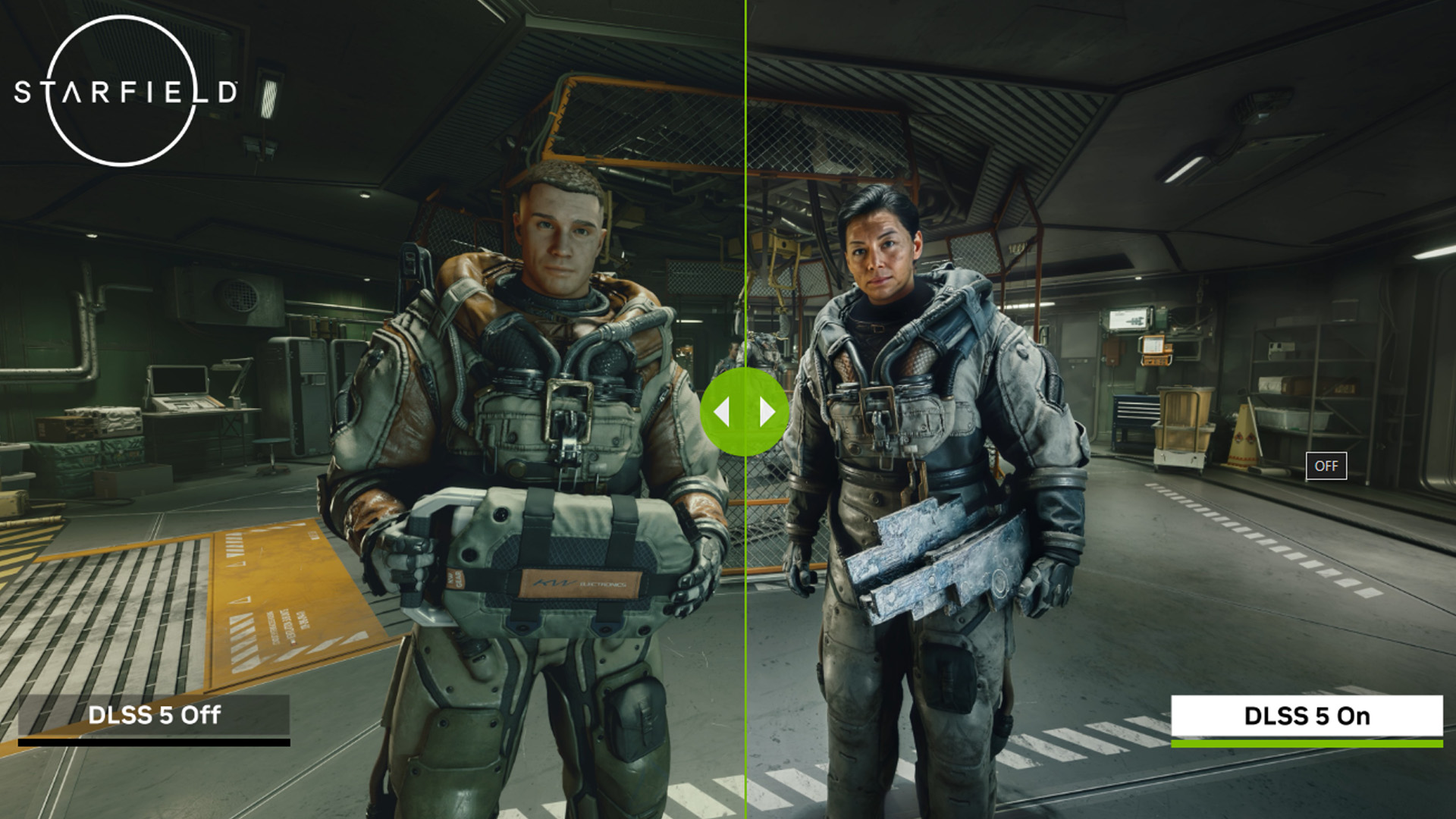
Real-time ray tracing has already made a huge difference to how modern games look. Better reflections, more natural shadows, improved global illumination, and richer scene depth all helped games feel more believable. The downside is obvious: those effects are demanding.
That is why AI rendering has become so important. Technologies like DLSS help offset the performance cost of ambitious graphics settings, especially in demanding AAA titles. NVIDIA’s broader DLSS platform still revolves around that idea, combining performance uplift with cleaner image reconstruction and stronger ray-traced presentation.
DLSS 5 pushes that idea further. Instead of only helping ray tracing run more efficiently, it aims to make the final result look more like high-end rendered content. For gamers, that could mean:
- More convincing lighting in difficult scenes
- Richer-looking materials
- More believable characters and environments
- A stronger sense of depth and atmosphere
That is why real-time ray tracing and DLSS 5 make sense together. One improves how light behaves, while the other aims to improve how that finished scene is presented to your eyes.
Is DLSS 5 a Big Appeal for Everyday Gamers?
The answer is probably yes, at least in the right kind of game.
DLSS 5 is most exciting in titles that already lean into cinematic presentation, advanced lighting, detailed character models, and more realistic materials. In those games, better lighting response and more lifelike surface detail could have a clear visual impact. Open-world RPGs, story-driven action games, and technically ambitious AAA releases are the obvious fit.
Where it may matter less is in competitive titles where responsiveness matters more than visual finesse, or in games with a very stylised art direction that do not benefit from being pushed toward realism. That is part of what makes DLSS 5 interesting. It is not automatically a must-have for every kind of game. It depends on what the game is trying to look like in the first place.
What Games Will Support NVIDIA DLSS 5?
NVIDIA says DLSS 5 will be supported by major publishers and studios, including Bethesda, CAPCOM, Ubisoft, Warner Bros. Games, Tencent, NetEase, NCSOFT and others.
DLSS 5 games list includes:
- Assassin’s Creed Shadows
- Delta Force
- Hogwarts Legacy
- Phantom Blade Zero
- Resident Evil Requiem
- Starfield
- The Elder Scrolls IV: Oblivion Remastered
- Where Winds Meet
The rollout is planned for fall 2026, so this is still a forward-looking feature rather than something buyers can use immediately. Still, launch support should be viewed realistically. With any new rendering technology, real-world results will vary by game engine, art direction and how carefully developers tune the feature.
Is DLSS 5 Just a Gaming Performance Boost?
Not exactly. DLSS 5 still sits inside NVIDIA’s wider AI rendering stack, so performance remains part of the story. But the headline shift is visual fidelity, not pure frame-rate multiplication. NVIDIA describes DLSS 5 as a leap in realism rather than simply a faster way to run at 1440p or 4K.
If your main priority is raw fps, features from DLSS 4 and DLSS 4.5 may remain the more directly relevant talking points for now. NVIDIA’s developer materials say DLSS 4 brought Multi Frame Generation and transformer-based image improvements, while DLSS 4.5 added Dynamic Multi Frame Generation and second-generation transformer Super Resolution. Those are the features most clearly tied to immediate gaming performance boosts, as discussed in current buying guides.
So, the buyer-friendly summary is this: DLSS 4.5 is about getting more performance and cleaner reconstruction from current hardware, while NVIDIA DLSS 5 aims for more convincing photorealistic gaming in the next phase of AI rendering.
The Honest Catch: More Realistic Does Not Always Mean Better
This is where the conversation needs some balance.
On paper, DLSS 5 sounds extremely promising. Better lighting, more realistic materials, smarter AI rendering, and more cinematic scene quality are all appealing ideas. But visual upgrades are never judged purely by technical ambition. They are judged by how they look in real games.
Some early reactions from gaming media have been sceptical, particularly around whether the technology could make certain faces or surfaces look overly processed. That matters because not every game wants the same kind of realism, and not every art style benefits from being pushed in that direction. A game can be technically more realistic and still lose some of its visual identity if the effect is too heavy-handed.
This is why the built-in developer controls matter so much. Studios can adjust intensity, colour grading, and masking, which should help them apply the effect more selectively rather than treating every scene the same way. In theory, that should allow for better artistic restraint. In practice, the results will vary from one game to another.
That is the most honest way to frame it for readers: DLSS 5 looks exciting, but the real test will be how well developers use it.
Should I Wait for DLSS 5 Before Buying an RTX Laptop?
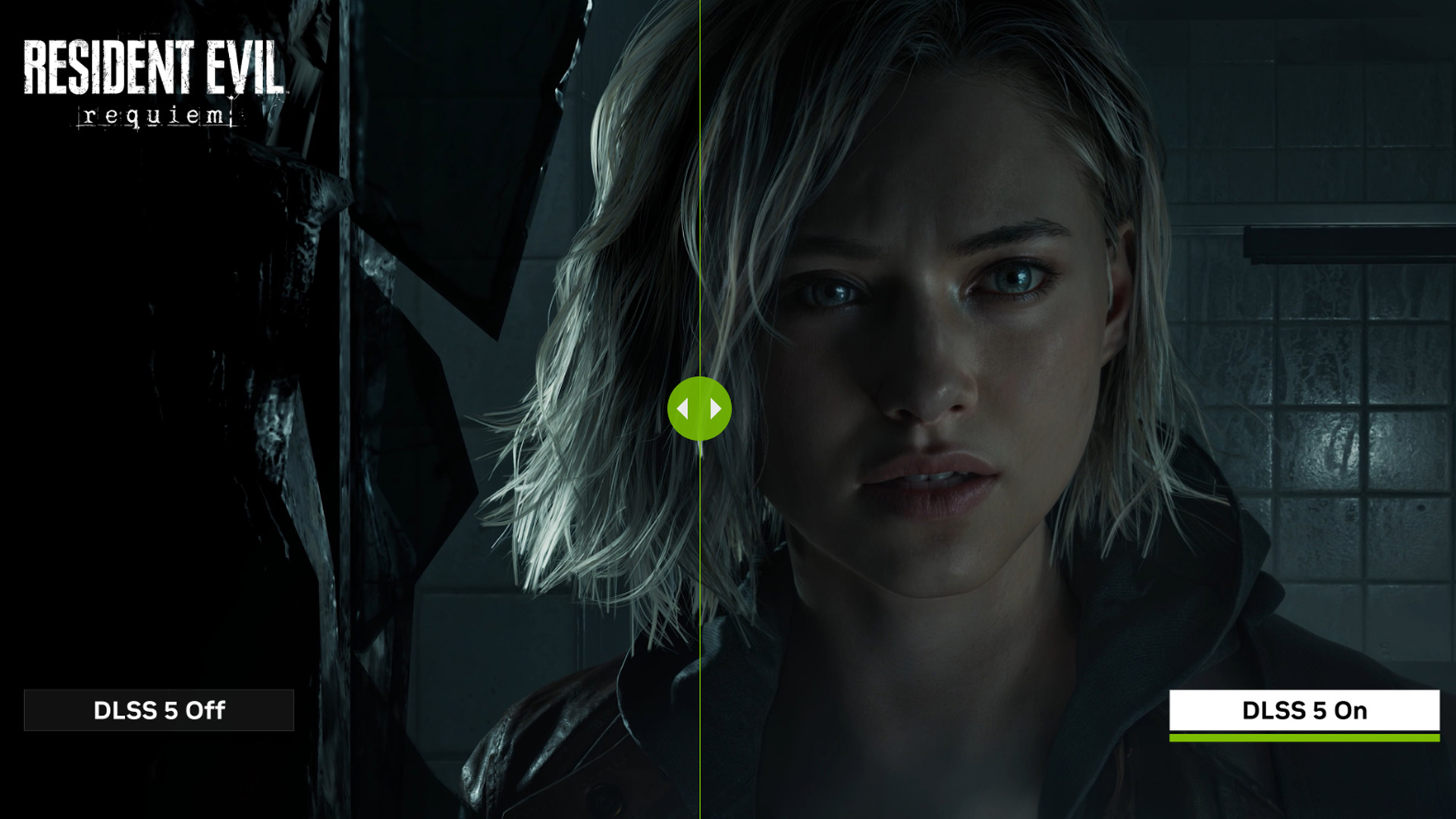
Not usually. If you need a gaming laptop now, waiting specifically for DLSS 5 is probably not the smartest reason to delay a purchase.
The main reason is timing. NVIDIA says DLSS 5 is due in fall 2026, which means it is still a forward-looking feature rather than something buyers can use today. Even once it launches, support will depend on game adoption, developer implementation, and how well individual titles make use of the technology. In other words, the announcement matters, but real-world value will take longer to judge.
For most buyers, the better approach is to focus on the hardware and gaming experience you can actually use now. A well-balanced RTX gaming laptop with a strong GPU, good cooling, a quality display, enough RAM, and fast SSD storage will matter more to everyday gaming than buying around a feature that has not launched yet.
That is especially true because current NVIDIA systems already support features that are more immediately relevant, including DLSS 4 and DLSS 4.5 technologies tied to image reconstruction, frame generation, and broader AI-assisted rendering improvements. Those features affect the gaming experience today in supported titles, while DLSS 5 remains more of a next-step promise.
Where waiting could make sense is if you are:
- Planning a premium purchase later in 2026
- Specifically interested in the newest RTX hardware tier
- More excited by cutting-edge visual fidelity than immediate value
- Happy to wait for clearer game support and independent testing
For everyone else, buying a strong RTX laptop now can still be the right move. DLSS 5 looks important, but it should be viewed as a future-facing bonus rather than the sole deciding factor in whether you buy a gaming laptop today.
DLSS 5 and the Future of Next-Gen Gaming Visuals
The bigger significance of NVIDIA DLSS 5 is strategic. It suggests that the next stage of graphics will not come from brute-force raster gains alone. Instead, game graphics technology is moving toward hybrid rendering, where traditional pipelines, ray tracing and AI models work together to create the final image. NVIDIA has been telegraphing that direction for several generations, and DLSS 5 is its clearest statement yet.
That could reshape how players think about visual upgrades. In the past, “better graphics” often meant more polygons, higher textures or sharper shadows. Going forward, it may increasingly mean better neural understanding of materials, faces, lighting response and scene context. If that sounds closer to film production language than traditional game settings menus, that is exactly the point NVIDIA is trying to make.
Whether gamers embrace that future will depend on execution. If DLSS 5 helps deliver more convincing worlds without flattening a game’s visual identity, it could become a genuine milestone. If it makes too many titles look over-processed or visually generic, the backlash will be justified. At this stage, both outcomes still feel possible.

Is DLSS 5 Worth Paying Attention To?
DLSS 5 looks like one of the most important graphics announcements of the year because it changes the conversation around what DLSS is for.
Earlier versions were mainly about performance, smoothness, and smarter image reconstruction. DLSS 5 moves the focus toward visual realism, with real-time neural rendering designed to improve lighting, materials, and overall scene quality in a more noticeable way.
That does not automatically guarantee a win. The concept is strong, but the final result will depend on how good the implementation is in actual games. Some titles may benefit hugely. Others may need a lighter touch.
For buyers, the takeaway is straightforward. DLSS 5 is an exciting sign of where NVIDIA AI rendering and next-gen gaming visuals are going, but the smartest buying decisions still come down to current hardware quality, real-world gaming performance, and whether a system is well balanced for the games you actually play.
And for the wider gaming market, DLSS 5 is one of the most interesting graphics announcements of 2026 so far. It may help define next-gen gaming visuals. It may also spark a wider debate about how much AI should shape the way games look. Both things can be true at once.
If you’re considering an upgrade, it’s worth comparing current RTX gaming laptops to see what fits your needs today. Laptop Outlet offers a wide range of configurations, making it easier to find a system that balances performance, display quality, and long-term value.

What Gamers Need to Know About DLSS 5
What is NVIDIA DLSS 5?
NVIDIA DLSS 5 is an AI-powered real-time neural rendering technology announced in March 2026. It is designed to improve game visuals with more photoreal lighting and materials while remaining suitable for live gameplay.
Is DLSS 5 available now?
No. DLSS 5 is expected to roll out in fall 2026.
How is DLSS 5 different from DLSS 4.5?
DLSS 4.5 is primarily focused on performance and image reconstruction improvements, including Dynamic Multi-Frame Generation and upgraded transformer models. DLSS 5 goes further by aiming to improve visual realism through neural rendering of lighting and materials.
Does DLSS 5 use AI?
Yes. DLSS 5 uses AI-based neural rendering to improve lighting, materials, and overall scene realism in real time.
Does DLSS 5 replace ray tracing?
No. DLSS 5 does not replace real-time ray tracing. It works alongside NVIDIA’s wider RTX and neural rendering ecosystem to improve how games look.
What will DLSS 5 be available on?
DLSS 5 is expected to be available on GeForce RTX GPUs. Since the DLSS platform relies on RTX Tensor Cores, non-RTX graphics cards are not the intended target hardware.
Will DLSS 5 be on RTX 50 Series?
Yes, the RTX 50 Series is the most likely GPU family to offer the fullest DLSS 5 support, especially as NVIDIA’s newest DLSS features are already focused on newer RTX generations.
Is the RTX 5080 a DLSS 5 GPU?
The RTX 5080 is not DLSS 5 itself, but it is one of the GPUs most likely to support DLSS 5 because it belongs to the RTX 50 Series.
Which GPUs are likely to support DLSS 5?
GeForce RTX GPUs are the expected platform for DLSS 5. RTX 50 Series cards are the safest bet for the strongest support, while older RTX GPUs may only support some features.
Which games will support NVIDIA DLSS 5?
Named titles include Starfield, Assassin’s Creed Shadows, Hogwarts Legacy, Resident Evil Requiem, Delta Force, and Phantom Blade Zero, with more expected over time.
Should UK buyers wait for DLSS 5 before buying a gaming laptop?
Not necessarily. If you want a gaming laptop now, current RTX systems with DLSS 4 or DLSS 4.5 support still make sense. DLSS 5 looks promising, but it is not available yet, and real-world game support will matter more than the announcement alone.
| Read More: |
| What Is NVIDIA DLSS |
| How DLSS 4 & Ray Tracing Impact High-End GPU Performance |
| DLSS 4.5 Explained: What’s New and Why It Matters for Gamers |
Related Articles


Last Updated: September 16, 2026
NVIDIA DLSS is a group of AI-powered graphics technologies designed for GeForce RTX graphics cards. It can raise frame rates, reconstruct higher-resolution images, improve ray-traced visuals and, on newer hardware, generate additional frames or enhance lighting and materials.
For gamers, the main benefit is simple: DLSS can make demanding games easier to run without relying only on raw GPU power. The result can be smoother play at higher resolutions or with settings such as ray tracing enabled, although the benefit depends on the game, graphics card and DLSS feature being used.
What Is NVIDIA DLSS?
DLSS originally stood for Deep Learning Super Sampling. The name started with AI upscaling, but DLSS has grown into a wider suite of neural rendering technologies. NVIDIA's DLSS developer overview now includes Super Resolution, Frame Generation, Multi Frame Generation, Ray Reconstruction and DLAA.
These features use the Tensor Cores inside NVIDIA RTX graphics cards. Tensor Cores are specialised
Published: October 23, 2025
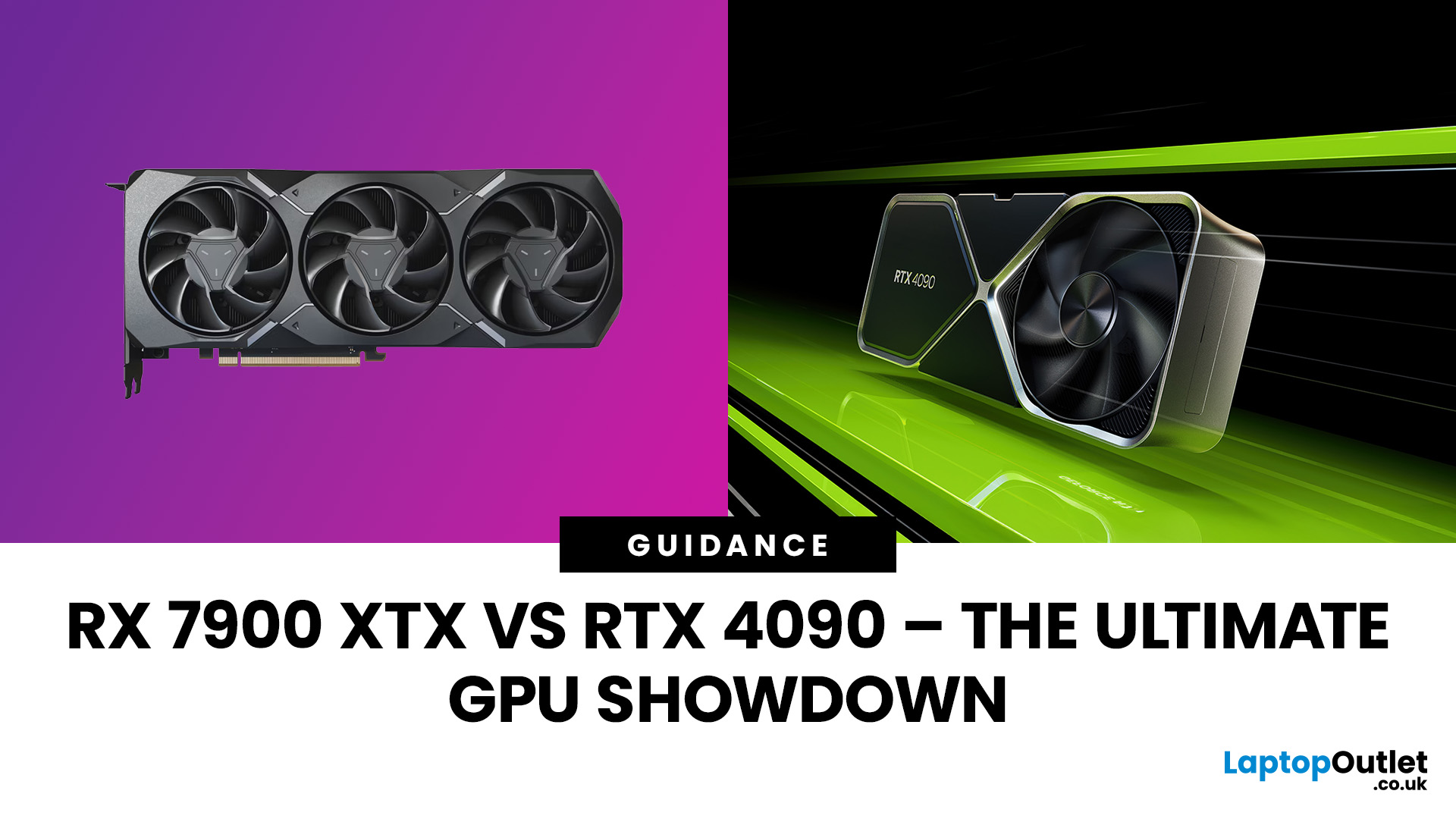
The AMD Radeon RX 7900 XTX and NVIDIA RTX 4090 are 2025’s top-tier GPUs, built for 4K gaming and professional workloads. The RTX 4090 leads in raw power, ray tracing, and AI acceleration, while the RX 7900 XTX challenges it with lower cost and strong raster performance. This isn’t about branding, it’s about what delivers the best performance per pound. In this breakdown, we’ll compare specs, gaming benchmarks, ray tracing, AI workloads, thermals, and overall value to determine which flagship GPU truly dominates.
Specification Overview
Before comparing real-world performance, it’s important to see how these two GPUs differ on paper. The RTX 4090 is built on NVIDIA’s Ada Lovelace architecture, while the RX 7900 XTX uses AMD’s RDNA 3 designs. Both target 4K gaming, but their hardware layouts, power needs, and pricing tell very different stories.
| Specification | AMD Radeon RX 7900 XTX | NVIDIA GeForce RTX 4090 |
| Architecture | RDNA 3 | Ada Lovelace |
| GPU Process | 5 nm + 6 nm (chiplet) | 4 nm monolithic |

Last Updated: April 28, 2026
When it comes to high-performance computing, gaming realism, and creative workloads, NVIDIA graphics cards continue to set the benchmark. From immersive gaming experiences to professional-grade rendering and AI acceleration, NVIDIA’s GPUs power some of the most advanced systems on the market today. This guide explores everything you need to know about Nvidia graphics cards.
Understanding NVIDIA Graphics Cards and their Advantages
When performance matters, NVIDIA continues to lead the graphics card market with technology designed for today’s most demanding applications. From immersive gaming worlds to high-speed creative workflows, NVIDIA GeForce graphics cards deliver the power, efficiency, and visual realism modern users expect. Trusted by gamers and professionals alike, NVIDIA GPUs have become the benchmark for smooth gameplay, intelligent upscaling, and advanced rendering. What truly sets NVIDIA graphics cards apart is how each generation evolves. With smarter architecture, improved

Last Updated: April 28, 2026
If you’re looking for the most powerful consumer GPU NVIDIA has ever produced, the RTX 5090 graphics card is designed with you in mind. Whether you’re building a no-compromise gaming PC, upgrading a professional workstation, or simply want the very best from the latest graphics technology, the RTX 5090 sits at the very top of NVIDIA’s graphics cards UK lineup. In this guide, we’ll walk you through everything you need to know as a UK buyer, from the RTX 5090 release date and expected pricing to real-world performance and whether this GPU actually makes sense for how you use your PC.
What Exactly is the RTX 5090 Graphics Card?
The RTX 5090 graphics card is NVIDIA’s flagship GPU, built for users who don’t want to make trade-offs. If you play at 4K, use ultra-wide monitors, or rely on your system for demanding creative work, this is the kind of hardware designed to keep up. As a true RTX 5090 high-end GPU, it’s aimed at:
- Gamers who want maximum frame rates at ultra settings
- Creators working

Published: January 09, 2026
If you’re searching for graphics cards 9060 in the UK, you’re clearly looking for the next sweet spot in gaming and creative performance without overspending. At Laptop Outlet, we know UK gamers and professionals want powerful, reliable graphics cards at genuinely competitive prices, backed by trusted brands and fast delivery. In this guide, we’ll explore graphics cards 9060 deals, discuss how they compare to alternatives, and help you decide whether an AMD-based option, a next-generation NVIDIA alternative, or a trusted gaming brand like ASUS, Gigabyte, or XFX is right for you.
What are Graphics Cards 9060 and Why are they Generating So Much Interest?
The growing interest in graphics cards 9060 comes from demand for mid-to-upper-tier GPUs that deliver excellent performance at a more accessible price point. These cards are widely associated with AMD’s next-generation lineup, including expected models such as the AMD RX 9060 XT graphics card. Gamers and creators are excited because graphics
Last Updated: April 28, 2026
Finding the right graphics card at the right price has become one of the biggest challenges for PC gamers in the UK. With new GPU generations launching and stock levels fluctuating, buyers are looking for hardware that delivers strong performance without stretching their budget. In this guide, we explore everything you need to know about the NVIDIA RTX 5050 GPU, including expected gaming performance, anticipated UK pricing, and where it fits within today’s competitive graphics card market. We’ll also highlight the best alternatives available at Laptop Outlet, ensuring you have plenty of options if stock is limited.
What is the NVIDIA RTX 5050 GPU?
The NVIDIA RTX 5050 GPU is expected to sit at the entry-to-mid-level end of NVIDIA’s next-generation RTX lineup. Designed for gamers who want modern features without the premium price tag, the RTX 5050 PC graphics card is aimed at smooth 1080p gaming and entry-level 1440p performance. As part of NVIDIA’s latest architecture, the RTX 5050 graphics

Last Updated: January 13, 2026
Are you looking to upgrade your PC with cutting-edge performance, reliability, and exceptional gaming visuals? ASUS graphics cards remain one of the most trusted choices in the UK market. We bring you competitive prices, frequent deals, and a wide selection of ASUS GPUs designed for gamers, creators, and professionals alike. From advanced NVIDIA RTX models to efficient AMD Radeon options, ASUS continues to lead the way in innovation, cooling, and long-term durability.
Why Choose ASUS Graphics Cards?
ASUS has built a global reputation for producing premium PC components, and its graphics cards are no exception. Designed with performance, stability, and longevity in mind, ASUS PC graphics cards are trusted by enthusiasts and professionals worldwide.
Proven Engineering and Build Quality
ASUS graphics cards are engineered using high-quality components, reinforced PCBs, and advanced power delivery systems. This ensures consistent performance even under heavy workloads such as 4K gaming, 3D

Last Updated: January 13, 2026
NVIDIA used CES (Consumer Technology Association)2026 to outline what it believes is the next major shift in computing — a move away from general-purpose processors towards systems designed primarily for artificial intelligence.
Speaking in Las Vegas, CEO Jensen Huang positioned NVIDIA not just as a graphics company, but as a platform provider for what it calls the “AI era”, spanning data centres, gaming PCs, gaming laptops, robotics, autonomous vehicles and cloud services.
Rather than focusing on a single blockbuster product, NVIDIA announcements CES 2026 centred on a broad ecosystem update. Key themes included the next-generation Rubin compute platform, and advances in AI-driven graphics through DLSS 4.5, new RTX AI PCs.
The Rubin Platform: NVIDIA’s Next-Generation AI Architecture

The biggest news for businesses was the Rubin platform. It is the successor to the successful Blackwell architecture. This system is a team of six different chips working together.
NVIDIA designed this platform

Published: January 13, 2026
Choosing the right graphics card is one of the most important decisions when building or upgrading a gaming PC, and XFX graphics cards UK gamers trust continue to stand out for performance, reliability and value. As one of AMD’s most established board partners, XFX focuses exclusively on Radeon GPUs, delivering powerful gaming performance at highly competitive prices. We offer a wide range of XFX graphics cards deals, making it easier for you to access cutting-edge AMD technology without overspending. Whether you’re upgrading an older system, building a new gaming rig or searching for better value than current NVIDIA options, XFX delivers a compelling alternative. This guide explores everything you need to know about XFX GPUs, including performance, pricing, comparisons, and how to find the best XFX GPU deals UK buyers can rely on.
Why XFX Graphics Cards Are a Trusted Choice for AMD Gamers
XFX has built a strong reputation by focusing entirely on AMD hardware. Unlike brands that split

Last Updated: April 28, 2026
When it comes to upgrading your gaming PC or building a reliable high-performance setup, Gigabyte graphics cards are one of the suitable choices for gamers and creators. Known for strong performance, efficient cooling and excellent value, Gigabyte GPUs are designed to handle everything from everyday gaming to demanding creative tasks. Whether you’re aiming for smooth gameplay, detailed visuals or future-ready performance, there’s a Gigabyte graphics card to suit your needs and budget.
What Makes Gigabyte Gaming Graphics Cards Ideal for Modern Gaming?
Modern games demand more from hardware than ever before. Gigabyte has responded with GPUs that deliver high frame rates, detailed visuals and smooth gameplay across popular titles.
Performance that Keeps Up with New Games
From competitive esports titles to AAA blockbusters, Gigabyte gaming graphics cards are built to handle demanding workloads. Features such as ray tracing, DLSS (on NVIDIA models) and high memory bandwidth ensure consistent

