



ASUS Graphics Card Not Detected? 9 Steps for Desktop and Laptop GPUs
Quick Answer
An ASUS GPU can disappear for very different reasons. On a desktop, the fault may involve a graphics card, motherboard indicator, utility profile or hardware connection. On an ASUS gaming laptop, Armoury Crate may deliberately hide the discrete GPU to save power.
This guide follows a diagnostic order, starting with the least disruptive checks. If the problem is not ASUS-specific, use our broader graphics card not working guide for display cables, PCIe seating, PSU checks, temperature problems and cross-system hardware testing.
Key Takeaways
|
Before You Start: Which ASUS GPU Do You Have?
The phrase “ASUS graphics card not detected” can refer to three different setups. Choose the matching route before changing drivers or firmware.
|
Your Setup |
What ASUS Controls |
Start With |
|
ASUS ROG, TUF Gaming, Prime, ProArt or Dual desktop graphics card |
Card firmware, board design and optional GPU Tweak III controls |
Steps 1, 2, 3 and 6 |
|
ASUS ROG or TUF gaming laptop with integrated and discrete graphics |
Armoury Crate GPU Mode, MUX behaviour, ASUS BIOS and model-specific drivers |
Steps 1, 4, 5, 6 and 7 |
|
Desktop with an ASUS motherboard, but a graphics card from any brand |
Q-LED, PCIe initialisation and motherboard UEFI |
Steps 1, 2, 8 and 9 |
Check the exact model on the product label, MyASUS, Windows System Information or the ASUS support page. Similar-looking ROG and TUF systems can have different GPU modes, ports and reset procedures.
Step 1: Record Where the ASUS GPU Disappears
Do not begin by reinstalling everything. First determine which layer can still see the GPU, because that result narrows the fault more quickly.
|
What you find |
What it usually means |
Next step |
|
GPU appears in BIOS and Device Manager, but not in one game or app |
The hardware is detected. The problem is probably application selection, permissions or a utility profile |
Check the app’s graphics setting and GPU Tweak profile |
|
GPU appears as Microsoft Basic Display Adapter |
Windows can see display hardware but is using a generic driver |
Install the correct model-specific or GPU-vendor driver |
|
GPU is hidden or absent after selecting Armoury Crate Eco Mode |
The laptop may be behaving as designed |
Switch to Standard mode for diagnosis |
|
GPU appears in Device Manager with a warning icon |
Windows has detected it, but a driver or hardware status requires attention |
Open Properties and record the exact error code |
|
GPU is absent from Device Manager but present in BIOS |
Windows or the driver layer is the stronger suspect |
Scan for hardware changes, then repair the driver |
|
GPU is absent from both BIOS and Windows |
Software-only fixes are less likely to help |
Restore BIOS defaults, then use the hardware or ASUS support route |
In Device Manager, expand Display adapters, then select Action > Scan for hardware changes. Record the adapter name and any code shown under Properties > General before uninstalling anything.
Microsoft explains that Microsoft Basic Display Adapter is a generic Windows driver used when the manufacturer-specific driver is unavailable or not installed. Its presence is therefore different from a GPU that is missing completely.
Step 2: Check ASUS Indicators Before Changing Software
What does the VGA Q-LED mean?
On supported ASUS motherboards, a VGA Q-LED that remains lit after start-up means the graphics check did not complete normally. ASUS advises checking the add-in card installation and PCIe contacts, then testing another graphics card if necessary.
The light is a diagnostic clue, not a final verdict. A card, slot, cable, power connection or platform problem can interrupt graphics initialisation, so do not order a replacement from the LED alone.
Use the motherboard manual to confirm that the board supports Q-LED and to locate the correct indicator.
Do ASUS graphics card lights or fans prove detection?
No. Lighting or a brief fan movement only shows that some power has reached the board. It does not confirm that the PCIe link, firmware, driver and display path have initialised correctly.
Some modern cards also use zero-decibel fan behaviour, so stationary fans at low temperature may be normal. Treat fan movement and lighting as observations, not pass-or-fail tests.
Use Power Detector+ only on supported models
ASUS states that GPU Tweak III Power Detector+ is limited to ROG Matrix and ROG Astral models. On those supported cards, it can report an anomaly across the 12VHPWR power pins and prompt the user to reseat the cable.
Do not expect this feature on every ASUS card. If the system has visible cable damage, scorching, melting, a burning smell or repeated electrical shutdowns, stop using it and seek professional support.
Step 3: Return GPU Tweak III to a Known Baseline
GPU Tweak III can apply Default, Overclocking, Quiet and Custom modes to NVIDIA and AMD desktop graphics cards. It can also link a saved profile to a particular game or application.
If the ASUS GPU stopped working after tuning, open GPU Tweak III and select Default mode. Disable app-linked or custom profiles, restart Windows and test again before altering drivers.
If a failed overclock produces a black screen, ASUS GPU Tweak III guidance says to power the computer off completely and restart it to restore the normal start-up value. This advice applies to a tuning-related black screen, not every no-display fault.
Use the latest official GPU Tweak III release from the ASUS Download Centre. Do not download repacked utilities from third-party sites, and do not use GPU Tweak III as proof that an ASUS laptop’s internal discrete GPU should always be active.
Step 4: Check Armoury Crate GPU Mode on an ASUS Laptop
On supported ROG and TUF laptops with integrated and discrete graphics, open Armoury Crate > Device > GPU Power Saving > GPU Mode. Menu names can vary by model and software version.
ASUS confirms that Eco Mode can make the discrete graphics card disappear from Device Manager. Switch to Standard for diagnosis, follow any restart prompt, then check Device Manager again.
|
Armoury Crate mode |
Typical purpose |
Diagnostic meaning |
|
Eco |
Uses integrated graphics to reduce power use |
The discrete GPU may be intentionally hidden |
|
Standard |
Hybrid graphics operation on supported models |
Recommended ASUS test mode for detection |
|
Optimised |
Automatically changes behaviour according to power state on supported models |
Results can vary between mains and battery power |
|
Ultimate |
Uses the discrete GPU path through the MUX switch on supported models |
Useful for performance testing, but not available on every laptop |
The options depend on the laptop. ASUS’s Armoury Crate introduction should be read alongside the model manual because not every ROG or TUF device supports every mode.
Step 5: Check MUX, Hybrid Graphics and Display Routing
A MUX switch changes which GPU is connected to the internal display. Hybrid modes allow the integrated GPU to handle light work while the discrete GPU starts for demanding applications.
This means low dedicated-GPU usage at the Windows desktop is not automatically a fault. Test with a known 3D application and use Settings > System > Display > Graphics to check which GPU Windows assigns to that app.
External display ports can also be wired to different GPUs on different laptop models. Check the ASUS manual before assuming that every HDMI, DisplayPort over USB-C or Thunderbolt port should wake the discrete GPU.
Step 6: Check Device Manager and Install the Correct Driver
The right driver source depends on the product. A desktop ASUS graphics card contains an NVIDIA or AMD GPU, while an ASUS laptop may require model-specific packages that work with its firmware and hybrid-graphics controls.
- Open Device Manager > Display adapters and record the device name or error code.
- Select Action > Scan for hardware changes.
- Install all pending Windows updates, then restart.
- For an ASUS laptop, check MyASUS or the exact model’s ASUS support page first.
- For an ASUS desktop graphics card, use the current official NVIDIA or AMD graphics driver. Use ASUS support for card-specific utilities, documentation or firmware.
- Restart and recheck Device Manager before installing additional utilities.
Do not make Display Driver Uninstaller the first step. A normal vendor reinstall or rollback is easier to reverse, while a clean removal is better reserved for a confirmed driver conflict.
What does Device Manager Code 43 mean?
Code 43 means the graphics device reported that it could not operate correctly. Microsoft notes that this can reflect either a hardware problem or a driver or software failure, so the code alone does not identify the failed component.
Record whether Code 43 appeared after an update, tuning change or physical installation. Then test a supported driver and known-default settings before treating it as proof of hardware failure.
Step 7: Perform an ASUS EC or RTC Reset Only When It Applies
An embedded controller, or EC, manages power and other hardware functions in ASUS notebooks, all-in-one PCs and gaming handhelds. An EC or RTC reset can help when the detection problem follows a sleep, charging, power or start-up fault.
This is not the same as resetting a desktop graphics driver or clearing a desktop motherboard’s CMOS. Use the instructions for the exact product category.
ASUS’s EC and RTC reset procedure requires the device to be shut down, external devices removed and the power adapter connected. ASUS documents both 20-second and 40-second power-button designs, so follow the model-specific behaviour rather than guessing.
Step 8: Restore ASUS BIOS Defaults Before Updating Firmware
ASUS recommends restoring BIOS defaults as part of graphics detection troubleshooting. This removes an incorrect primary-display, MUX or platform setting without introducing the additional risk of a firmware update.
After restoring defaults, check whether the GPU appears in BIOS and Windows. If ASUS system firmware still cannot detect the built-in or installed graphics hardware, ASUS advises assessment by an authorised service centre because a hardware fault becomes more likely.
Only update BIOS when the exact ASUS model and a relevant update have been confirmed. Download firmware from the ASUS driver and BIOS support route, maintain stable power, read the model instructions and ensure any BitLocker recovery key is available.
Do not flash graphics card VBIOS from a different model, revision or memory configuration. A similar product name does not make firmware interchangeable.
Step 9: Choose the Correct Support or Hardware Route
Use the result of the previous steps to decide what happens next.
|
Confirmed result |
Best next route |
|
ASUS laptop dGPU returns in Standard mode |
The system was probably in a power-saving GPU mode. Reapply the preferred mode only after confirming normal operation |
|
GPU works in Windows but not one app |
Repair the app profile, Windows graphics assignment or GPU Tweak link |
|
Microsoft Basic Display Adapter changes to the correct GPU after driver installation |
The hardware was detected and the missing manufacturer driver was the main issue |
|
ASUS motherboard VGA Q-LED remains on |
Follow the motherboard manual and general card, slot and power checks |
|
GPU remains absent from BIOS after defaults |
Contact ASUS or the system manufacturer for hardware assessment |
|
Card fails in another compatible PC while another card works in the original PC |
The graphics card itself becomes the stronger suspect |
For an ASUS laptop, use the laptop serial number and model when contacting ASUS. For an ASUS desktop graphics card, record the card part number, serial number, driver version and symptoms. For an ASUS motherboard, record the Q-LED state and BIOS version.
ASUS GPU Detection Recovery Checklist
- I identified whether the ASUS product is the graphics card, laptop or motherboard.
- I recorded where the GPU appears: BIOS, Device Manager, Armoury Crate, GPU Tweak III or an application.
- I switched an ASUS laptop from Eco to Standard mode for diagnosis.
- I checked the exact Device Manager name and error code.
- I restored GPU Tweak III to Default mode after any tuning change.
- I used the correct ASUS, NVIDIA or AMD driver source for the product.
- I followed the correct EC, RTC or BIOS-default procedure for the model.
- I avoided unrelated firmware, aggressive cleaners and repeated random changes.
- I documented the result after each restart.

If Your ASUS Graphics Card Is Still Not Detected
An ASUS graphics card not detected after all nine checks needs a result-based next step, not more random changes. Eco Mode, a generic Windows driver or a GPU Tweak profile can be corrected in software. Persistent absence from BIOS, a VGA Q-LED that survives proper hardware checks or failure in a second compatible PC points more strongly towards hardware assessment.
Keep the model, serial number, BIOS version, driver version and test results ready for support.

Frequently Asked Questions About ASUS GPU Detection
Why is my ASUS graphics card not showing in Device Manager?
An ASUS GPU may be hidden by Armoury Crate Eco Mode, missing its manufacturer driver or failing detection earlier in BIOS. Switch a supported laptop to Standard mode, scan for hardware changes and check BIOS visibility before assuming failure.
Does Armoury Crate Eco Mode disable the NVIDIA GPU?
On supported ASUS laptops, Eco Mode can switch off the discrete GPU for power saving and remove it from Device Manager. Select Standard mode for diagnosis, restart if prompted and confirm the model supports that control.
What does a white VGA Q-LED mean on an ASUS motherboard?
A persistent VGA Q-LED means the motherboard did not complete its graphics start-up check. It can indicate a card, slot or connection problem, but it does not by itself prove that the graphics card is faulty.
Can ASUS GPU Tweak III cause a black screen?
An unstable overclock or custom profile can cause a tuning-related black screen. ASUS advises fully powering off and restarting after a failed overclock, then returning GPU Tweak III to Default mode before further testing.
Why does my ASUS GPU appear as Microsoft Basic Display Adapter?
Windows is using its generic graphics driver instead of the manufacturer-specific one. The hardware is usually visible at some level, so install the correct ASUS laptop package or official NVIDIA or AMD desktop driver.
| Read More: |
| How to Find Out What Graphics Card You Have |
| GPU Fans Not Spinning: Why & How to Fix |
| How Do You Install a New Graphics Card |
Related Articles


Last Updated: February 27, 2026
GPU price trends, which historically followed steady consumer demand cycles, were hijacked by a series of unprecedented global crises. These events first pushed the cost of graphics cards to astronomical highs, then plunged them into a sharp decline, before finally settling on a new, structurally higher price baseline.
This analysis examines the economic forces that drove this extraordinary five-year shift. We trace the market from the initial chaos of the supply chain fracture, through the speculative peak driven by cryptocurrency mining, and into the current era dominated by the massive enterprise investment in Artificial Intelligence (AI).
The Initial Storm (2020–Mid 2021): Scarcity and Supply Chain Shock
The sharp inflation in GPU prices did not begin with a single factor but with the convergence of two major, simultaneous economic disruptions: a severe global logistics crisis and a dramatic shift in consumer habits.

The Pandemic’s Logistical Fracture
The start of the COVID-19 pandemic

Last Updated: December 30, 2025
If your current rig is starting to stutter or you are simply ready to jump into the next generation of visual fidelity, there is no better time to act. The New Year graphics card deals are finally here.
Whether you are a competitive esports player, a 4K gaming enthusiast, or a professional video editor, the right GPU is the heart of your system. This year, we are seeing incredible NVIDIA GPU discounts and an extensive AMD Radeon sale New Year event.
In this guide, we will explore the best graphics cards for gaming and work, ensuring you find the perfect match for your monitor and your budget.
Top New Year Graphics Card Deals for 2026
We have hand-picked eight of the most impressive NVIDIA RTX GPUs and AMD Radeon GPUs currently available. Let’s explore the right card for your setup.
1. MSI GeForce RTX 5060 GAMING 8GB OC Graphics Card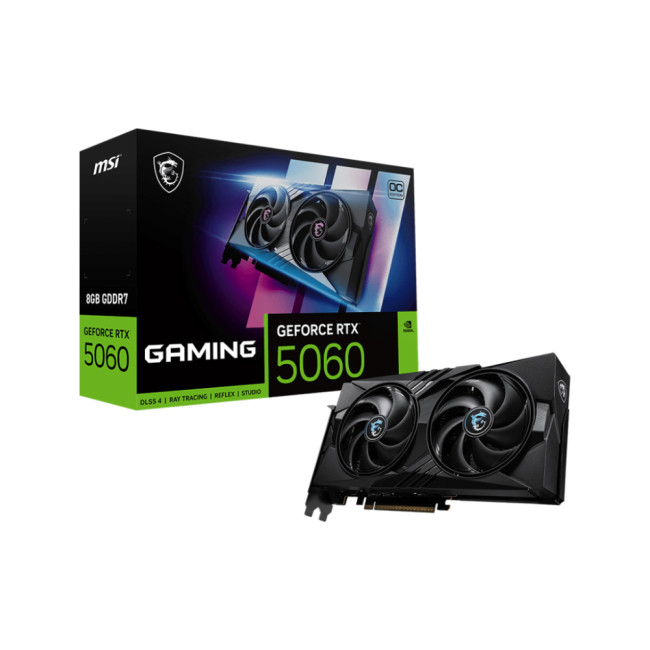
Key Specifications
- GPU: NVIDIA GeForce RTX 5060 (Blackwell Architecture)
- Memory: 8GB GDDR7
- Memory Speed: 28 Gbps
- Memory Interface: 128 bit
- Core

Last Updated: January 14, 2026
From smooth 1080p gameplay to breathtaking 4K visuals, AMD graphics cards put serious gaming power right at your fingertips. You want smooth gameplay, great visuals, and good value for money, without paying more than you need to. That’s exactly where AMD graphics cards come into the picture.
AMD has become one of the most popular choices for gamers in the UK thanks to its strong performance, competitive pricing, and wide range of options for every type of player. Whether you’re after the best AMD graphics cards for high-end gaming, searching for cheap AMD graphics cards to get started, or are curious about the new AMD graphics cards hitting the market, this guide is here to help.
Why AMD Graphics Cards are a Smart Choice for Gamers
AMD has earned a strong reputation among PC gamers by offering powerful GPUs at competitive prices. If you want excellent gaming performance without overspending, AMD often delivers some of the best value on the market.
Great Performance for the Price
One
Last Updated: January 14, 2026
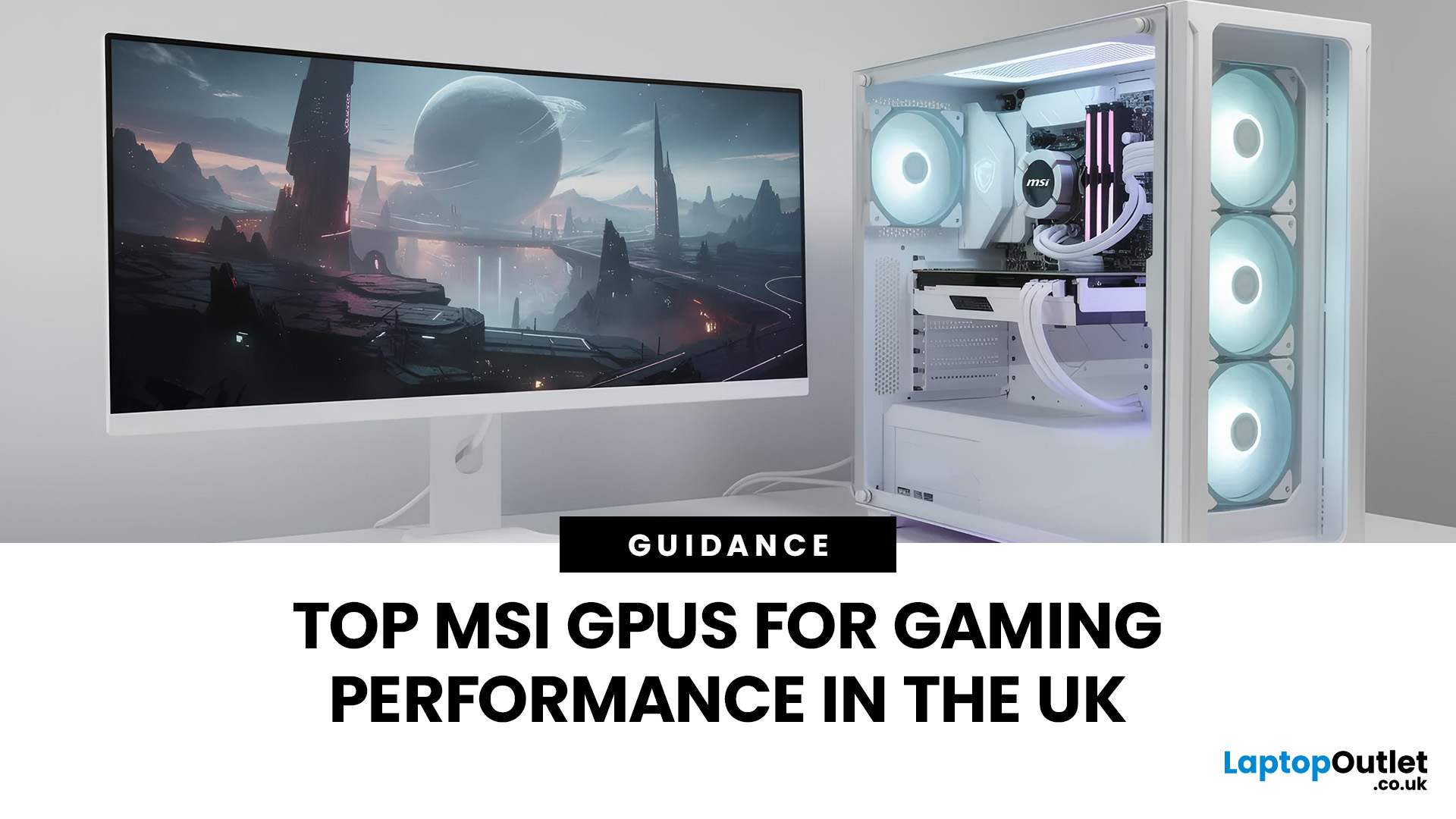
If you’re planning to upgrade your gaming PC or build a new setup from scratch, choosing the right graphics card is one of the most important decisions you’ll make. Whether you’re chasing ultra-high frame rates, immersive 4K visuals, or reliable performance for competitive gaming, MSI has a solution tailored to your needs.
At Laptop Outlet, we stock a wide range of MSI gaming graphics cards, covering both NVIDIA and AMD platforms for you. From legacy favourites to the latest MSI graphics cards, this guide explores performance, key models, driver support, and how MSI compares with other leading brands. If you’re searching for dependable gaming graphics cards that deliver real-world value, you’re in the right place.
MSI NVIDIA Graphics Cards for Gaming
If you prefer NVIDIA-powered GPUs, MSI offers some of the most popular and trusted models on the market. Today’s NVIDIA graphics cards for gaming from MSI are leagues ahead in terms of performance and efficiency. You’ll benefit from features

Last Updated: April 28, 2026
When it comes to high-performance computing, gaming realism, and creative workloads, NVIDIA graphics cards continue to set the benchmark. From immersive gaming experiences to professional-grade rendering and AI acceleration, NVIDIA’s GPUs power some of the most advanced systems on the market today. This guide explores everything you need to know about Nvidia graphics cards.
Understanding NVIDIA Graphics Cards and their Advantages
When performance matters, NVIDIA continues to lead the graphics card market with technology designed for today’s most demanding applications. From immersive gaming worlds to high-speed creative workflows, NVIDIA GeForce graphics cards deliver the power, efficiency, and visual realism modern users expect. Trusted by gamers and professionals alike, NVIDIA GPUs have become the benchmark for smooth gameplay, intelligent upscaling, and advanced rendering. What truly sets NVIDIA graphics cards apart is how each generation evolves. With smarter architecture, improved

Last Updated: April 28, 2026
If you’re looking for the most powerful consumer GPU NVIDIA has ever produced, the RTX 5090 graphics card is designed with you in mind. Whether you’re building a no-compromise gaming PC, upgrading a professional workstation, or simply want the very best from the latest graphics technology, the RTX 5090 sits at the very top of NVIDIA’s graphics cards UK lineup. In this guide, we’ll walk you through everything you need to know as a UK buyer, from the RTX 5090 release date and expected pricing to real-world performance and whether this GPU actually makes sense for how you use your PC.
What Exactly is the RTX 5090 Graphics Card?
The RTX 5090 graphics card is NVIDIA’s flagship GPU, built for users who don’t want to make trade-offs. If you play at 4K, use ultra-wide monitors, or rely on your system for demanding creative work, this is the kind of hardware designed to keep up. As a true RTX 5090 high-end GPU, it’s aimed at:
- Gamers who want maximum frame rates at ultra settings
- Creators working

Published: January 09, 2026
If you’re searching for graphics cards 9060 in the UK, you’re clearly looking for the next sweet spot in gaming and creative performance without overspending. At Laptop Outlet, we know UK gamers and professionals want powerful, reliable graphics cards at genuinely competitive prices, backed by trusted brands and fast delivery. In this guide, we’ll explore graphics cards 9060 deals, discuss how they compare to alternatives, and help you decide whether an AMD-based option, a next-generation NVIDIA alternative, or a trusted gaming brand like ASUS, Gigabyte, or XFX is right for you.
What are Graphics Cards 9060 and Why are they Generating So Much Interest?
The growing interest in graphics cards 9060 comes from demand for mid-to-upper-tier GPUs that deliver excellent performance at a more accessible price point. These cards are widely associated with AMD’s next-generation lineup, including expected models such as the AMD RX 9060 XT graphics card. Gamers and creators are excited because graphics
Last Updated: April 28, 2026
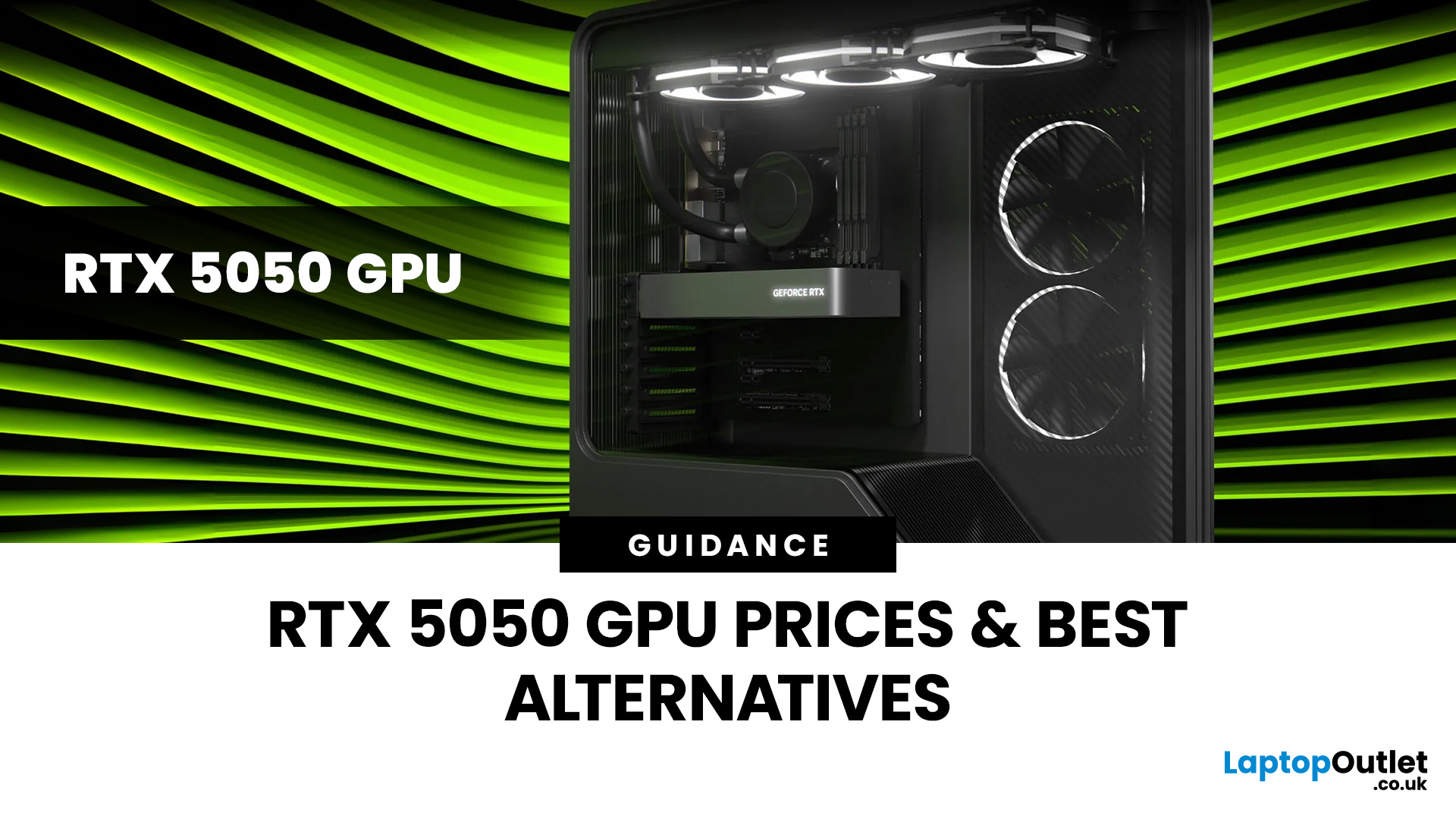
Finding the right graphics card at the right price has become one of the biggest challenges for PC gamers in the UK. With new GPU generations launching and stock levels fluctuating, buyers are looking for hardware that delivers strong performance without stretching their budget. In this guide, we explore everything you need to know about the NVIDIA RTX 5050 GPU, including expected gaming performance, anticipated UK pricing, and where it fits within today’s competitive graphics card market. We’ll also highlight the best alternatives available at Laptop Outlet, ensuring you have plenty of options if stock is limited.
What is the NVIDIA RTX 5050 GPU?
The NVIDIA RTX 5050 GPU is expected to sit at the entry-to-mid-level end of NVIDIA’s next-generation RTX lineup. Designed for gamers who want modern features without the premium price tag, the RTX 5050 PC graphics card is aimed at smooth 1080p gaming and entry-level 1440p performance. As part of NVIDIA’s latest architecture, the RTX 5050 graphics
Last Updated: January 13, 2026
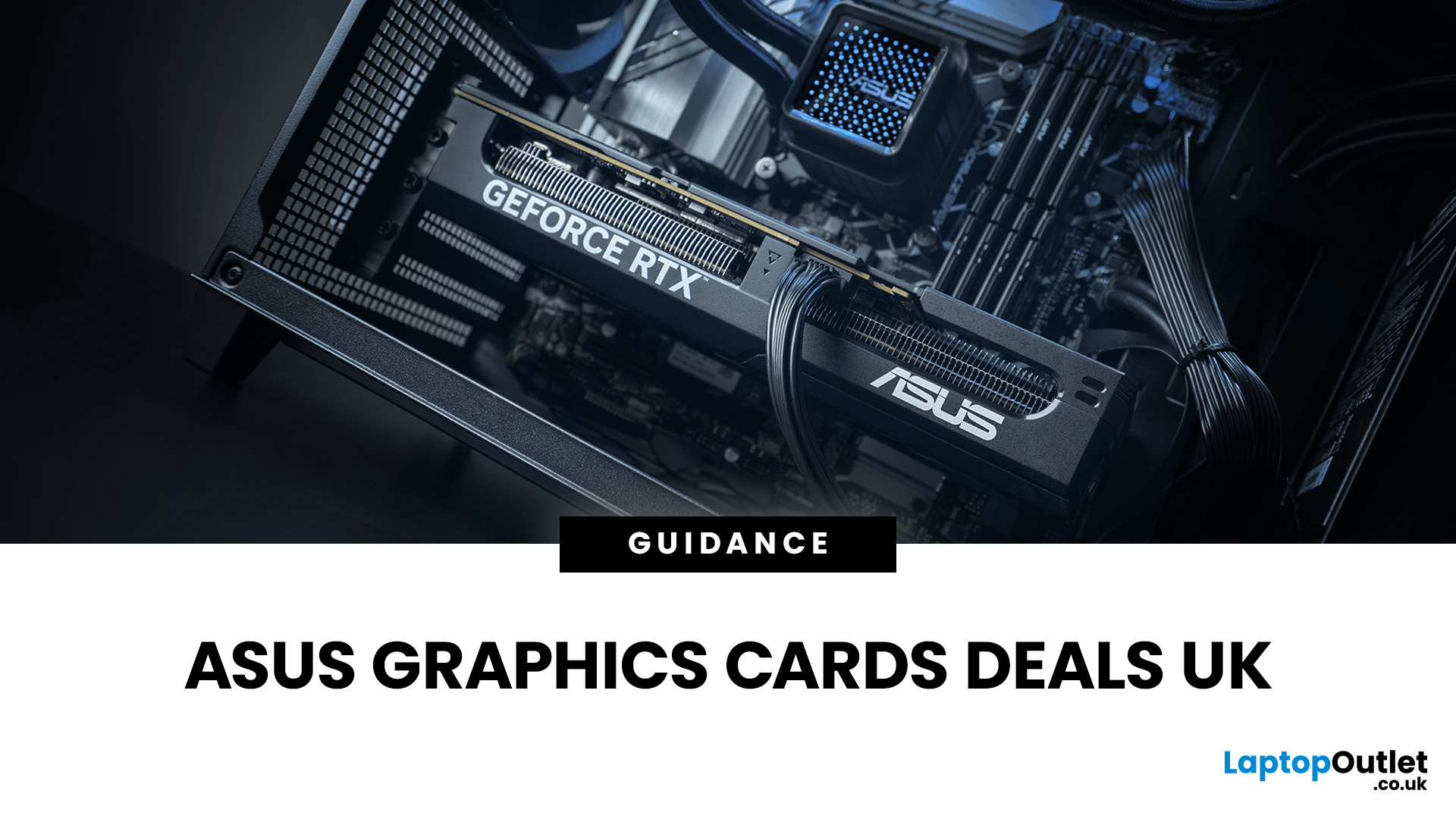
Are you looking to upgrade your PC with cutting-edge performance, reliability, and exceptional gaming visuals? ASUS graphics cards remain one of the most trusted choices in the UK market. We bring you competitive prices, frequent deals, and a wide selection of ASUS GPUs designed for gamers, creators, and professionals alike. From advanced NVIDIA RTX models to efficient AMD Radeon options, ASUS continues to lead the way in innovation, cooling, and long-term durability.
Why Choose ASUS Graphics Cards?
ASUS has built a global reputation for producing premium PC components, and its graphics cards are no exception. Designed with performance, stability, and longevity in mind, ASUS PC graphics cards are trusted by enthusiasts and professionals worldwide.
Proven Engineering and Build Quality
ASUS graphics cards are engineered using high-quality components, reinforced PCBs, and advanced power delivery systems. This ensures consistent performance even under heavy workloads such as 4K gaming, 3D
Published: January 13, 2026
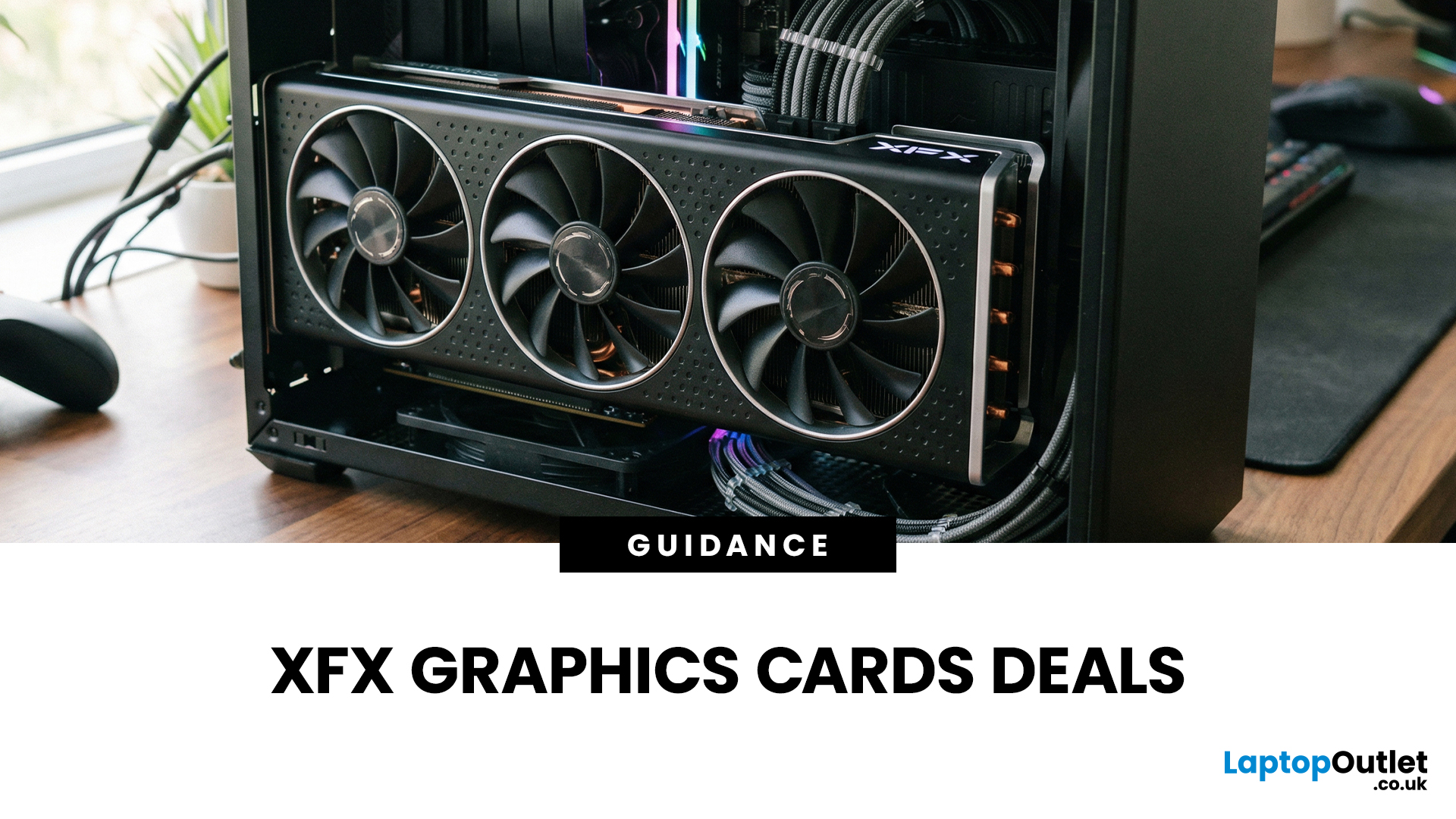
Choosing the right graphics card is one of the most important decisions when building or upgrading a gaming PC, and XFX graphics cards UK gamers trust continue to stand out for performance, reliability and value. As one of AMD’s most established board partners, XFX focuses exclusively on Radeon GPUs, delivering powerful gaming performance at highly competitive prices. We offer a wide range of XFX graphics cards deals, making it easier for you to access cutting-edge AMD technology without overspending. Whether you’re upgrading an older system, building a new gaming rig or searching for better value than current NVIDIA options, XFX delivers a compelling alternative. This guide explores everything you need to know about XFX GPUs, including performance, pricing, comparisons, and how to find the best XFX GPU deals UK buyers can rely on.
Why XFX Graphics Cards Are a Trusted Choice for AMD Gamers
XFX has built a strong reputation by focusing entirely on AMD hardware. Unlike brands that split

