



AOC Monitor Settings for Gaming
The best AOC monitor settings for gaming are the panel's native resolution, the highest supported refresh rate for that resolution, Low Input Lag switched on, Adaptive-Sync enabled when the frame rate varies, gamma close to 2.2 and Overdrive set to Medium as a safe starting point. Brightness is not a universal number: it should suit your room, the game and whether you are using SDR or HDR.
Exact menu names and available controls vary between AOC models. Latest AOC displays in the market can run at 180Hz, 260Hz, 300Hz+, 400Hz+ and beyond, while some dual-mode models offer one resolution and refresh-rate combination for visual detail and another for speed.
If you’ve got your AOC gaming monitor and are ready for a rigorous gaming session, you need to overview your settings beforehand. We have listed down every step on how you can set your AOC monitor on the best gaming setting.
If you’ve got your AOC gaming monitor and are ready for a rigorous gaming session, you need to overview your settings beforehand. We have listed down every step on how you can set your AOC monitor on the best gaming setting.
Best AOC Monitor Settings - Quick Steps
|
Setting |
Recommended starting point |
When to adjust it |
|
Brightness |
No universal number; match it to the room |
Lower it in a dark room, raise it in bright daylight and let HDR mode manage peak luminance when HDR content is active. Do not use 100 as a default. |
|
Contrast |
Factory default, often around 50 |
Change it only if bright detail clips or dark detail is crushed. |
|
Shadow Control |
Neutral or factory default |
Raise it slightly in competitive shooters to reveal dark areas; reduce it if blacks look grey and flat. |
|
Game Colour |
Neutral or factory default, often 10 on a 0-20 scale |
Increase carefully for more saturation; reduce it if skin tones, grass or HUD colours look unnatural. |
|
Gamma |
2.2 |
Try a lighter gamma for a bright competitive image or a darker option for cinematic play, if your model provides it. |
|
Overdrive |
Medium |
Try Strong only at high refresh rates if there are no bright or dark trails. Use Boost selectively, not as a universal setting. |
|
Low Input Lag |
On |
Leave it on for gaming unless another required feature makes the control unavailable. |
|
Adaptive-Sync |
On when frame rate varies |
Disable standard Adaptive-Sync only when a non-synchronised MBR mode requires it or when running a tested fixed-refresh competitive setup. |
|
Refresh rate |
Highest supported at the chosen resolution |
Confirm the rate in Windows and the GPU control panel. The maximum can depend on the port, cable, colour depth and selected resolution. |
|
Resolution |
Native resolution |
Use a lower resolution only for extra performance or a supported dual-resolution/high-refresh mode. |
These values are starting points rather than a universal calibration. Panel type, firmware, ambient light, graphics card performance and personal preference all affect the best result.
Before Changing Your AOC Gaming Monitor Settings
Start from a known baseline so that one old profile does not affect another. Open the monitor's on-screen display (OSD), note the current values and reset the picture mode if the image already looks heavily altered. If your model supports AOC G-Menu, you can make compatible changes in Windows and save separate profiles without repeatedly using the monitor buttons.
Check 3 details before tuning the image:
- Model and manual: AOC menu ranges are not identical. Some monitors use Overdrive options such as Off, Weak, Medium, Strong and Boost, while newer models may use speed labels such as Normal, Fast or Extreme.
- SDR or HDR: HDR can lock brightness, gamma, Shadow Control, Game Colour or MBR because the monitor is following its HDR processing. Tune SDR and HDR separately.
- Connection: DisplayPort and HDMI capabilities vary by model. The correct port, cable and GPU output are essential for the maximum resolution, refresh rate and Adaptive-Sync range.
1. Set the Native Resolution and Highest Supported Refresh Rate
Keep this first step before changing colour, response time or game modes. Start from a known baseline so an old profile does not affect the result. Open the monitor's on-screen display (OSD), record the current values and reset the picture mode if the image already looks heavily altered.
Then check the resolution and refresh rate in Windows 11:
- Right-click the desktop and select Display settings.
- Choose the correct AOC monitor if more than one display is connected.
- Open Advanced display to see the current resolution, refresh rate and variable refresh rate support.
- Select the panel's native resolution, then choose the highest refresh rate supported at that resolution.
- Confirm the same resolution and refresh rate in the AMD or NVIDIA control panel.
Do not assume that 144Hz or 240Hz is the limit. Some current AOC monitors operate at 180Hz or 260Hz, while dedicated esports models can exceed 300Hz or 400Hz. Dual-mode monitors can switch between combinations such as 4K at 160Hz for detail and Full HD at 320Hz for speed. Other models use a different pairing, so the correct rule is always highest supported refresh rate at your chosen resolution.
A monitor advertised with an overclocked maximum may require you to enable that rate in its OSD before it appears in Windows. If the highest option is missing or unstable:
- Select the monitor's native resolution first.
- Use the recommended DisplayPort or HDMI connection for that mode.
- Update the graphics driver and, if available, the monitor driver.
- Check whether an overclock or dual-frame option must be enabled in the OSD.
- Test the highest rate in a game before treating the setup as stable.
2. Adjust Brightness, Contrast, Gamma and Colour
Brightness Should Match the Room
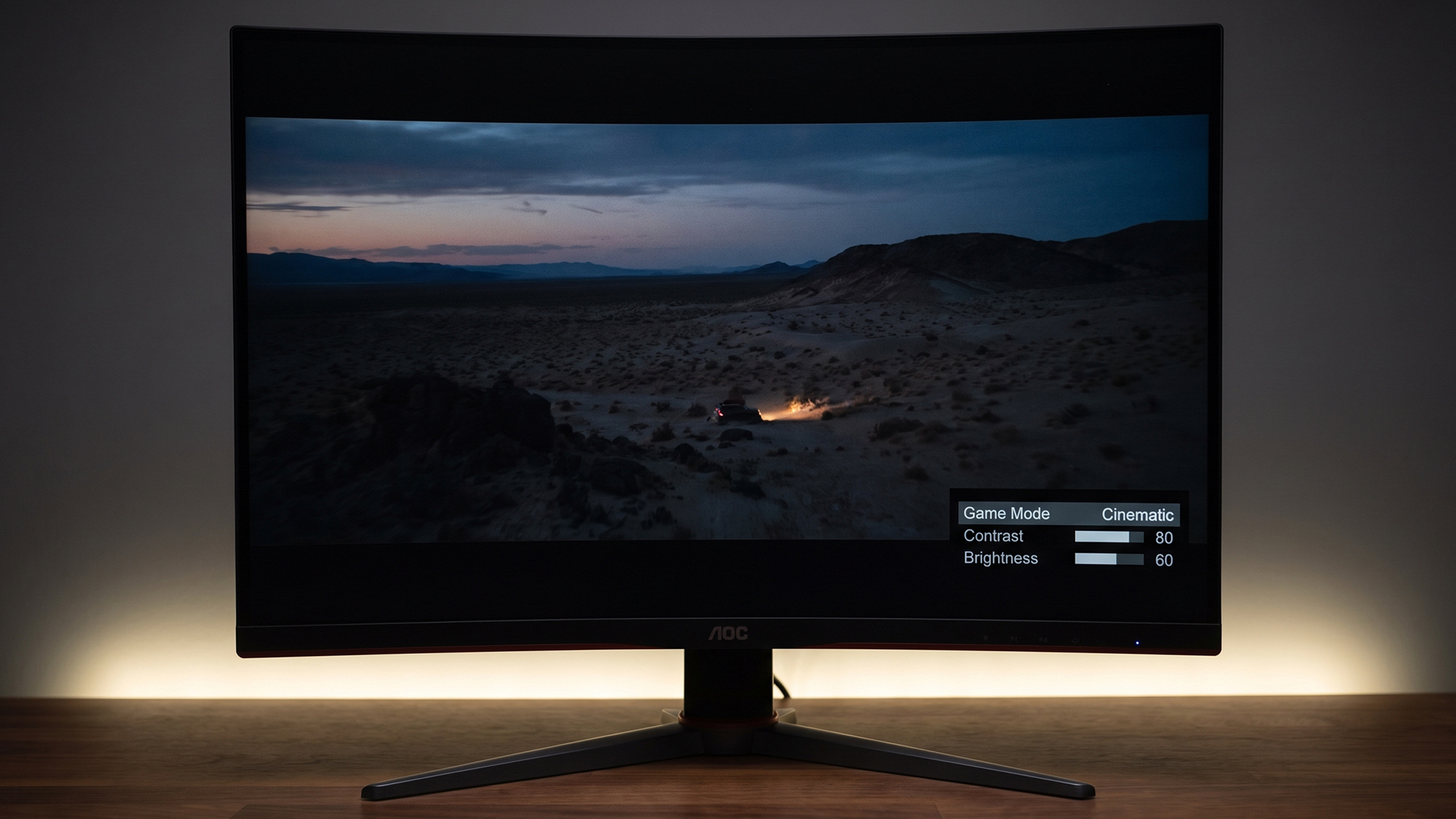
Brightness 100 is not a suitable universal recommendation. In a dark room, maximum brightness can make black areas look washed out and may be uncomfortable over a long session. In a bright room, a higher level may be necessary to keep shadow and interface detail visible.
Begin at the factory setting and adjust until white menus look clear without appearing dazzling. If the OSD uses a 0-100 scale, many people will land somewhere in the middle for SDR, but the correct value depends on the monitor's actual luminance and the light around you. HDR is different: enable HDR only for supported content and expect the monitor to control or lock some luminance settings.
Keep Contrast Near the Default
Contrast controls the difference between bright and dark tones. The factory value, often around 50 on AOC models, is normally the safest place to begin. Raising it too far can erase highlight detail; reducing it too much makes the picture look flat. Use an in-game calibration pattern and stop when bright clouds, snow or white interface elements still retain detail.
Start With Gamma 2.2
Gamma 2.2 is a reliable baseline for PC gaming. A lighter gamma can reveal more shadow detail in a bright competitive setup, while a darker setting can add depth to an RPG in a controlled room. Do not compensate for an excessively dark game by pushing several controls at once. Adjust in-game brightness first, then make one monitor change and compare.
Use Shadow Control and Game Colour Carefully
AOC Shadow Control changes dark-area visibility without simply lifting the whole image. Leave it at its neutral or default level for a balanced picture, then raise it by a small step for Counter-Strike 2, Call of Duty or another game where opponents can disappear into dark corners. Excessive Shadow Control turns blacks grey and reduces contrast.
Game Colour adjusts colour saturation. A neutral value is best for natural-looking games and creative work. A modest increase can make team colours or environments easier to distinguish, but a high value can hide subtle colour detail. Some models use a 0-20 range with 10 as the neutral point; others use a different range, so check the OSD rather than copying a number blindly.
3. Choose the Right AOC Overdrive Setting
Overdrive accelerates pixel transitions to reduce visible ghosting. The fastest label is not automatically the best AOC Overdrive setting: excessive acceleration can create inverse ghosting, also called overshoot, which appears as bright or dark halos behind moving objects.
Off
Use Off for troubleshooting or if every active Overdrive level creates obvious overshoot. It may also suit very low refresh rates, but motion can look softer because pixel transitions are not accelerated.
Weak
Weak applies gentle response-time compensation. It is useful at lower refresh rates, for slower games or when Medium creates trails on a particular panel. Some models call this setting Low or Fast instead.
Medium
Medium is the best general starting point for most AOC gaming monitors. It usually improves motion clarity without the stronger artefacts that can appear at the highest setting. Recheck it after changing refresh rate because an Overdrive level that looks clean at 180Hz may behave differently at 60Hz or 120Hz.
Strong
Strong can work well at a high refresh rate when the panel remains clean in motion. Test it in dark and bright scenes. If moving edges develop pale coronas, coloured trails or dark smears, return to Medium.
Boost
Boost is intended for the fastest response on supported models, but it can reduce brightness and may require Adaptive-Sync to be switched off. Some AOC manuals make Boost available only above a minimum refresh rate. Use it for a tested competitive setup with a high, steady frame rate; avoid treating it as the default for every game.
Current AOC models do not all use the same five labels, so match the principle rather than the name: select the fastest mode that reduces ghosting without introducing visible overshoot.
4. Should AOC Low Input Lag Be on for Gaming?
Yes. Set Low Input Lag to On for gaming when the option is available. It reduces the amount of monitor processing or frame buffering between the graphics card's output and the image appearing on screen. The improvement matters most in competitive shooters, rhythm games and racing titles where fast input feedback is important.
The option may be greyed out or absent in some modes. This can happen because a preset, HDR mode or another feature controls the processing path, or because low-lag behaviour is already automatic at the selected refresh rate. Do not assume the monitor is faulty; check the model manual and test with a standard SDR game profile.
5. Configure Adaptive-Sync, FreeSync or G-SYNC Compatible Mode
Adaptive-Sync matches the monitor's refresh timing to the graphics card's frame delivery. AMD markets compatible implementations as FreeSync, while NVIDIA can use supported displays in G-SYNC or G-SYNC Compatible mode. Enable the monitor's Adaptive-Sync option first, then confirm the feature in AMD Software: Adrenalin Edition or the NVIDIA Control Panel.
Turn Adaptive-Sync on when:
- The frame rate moves up and down during gameplay.
- You notice screen tearing or judder.
- You play visually demanding games that do not stay at the monitor's maximum refresh rate.
- You want smoother frame delivery without forcing a fixed refresh-rate workflow.
For most gaming, Adaptive-Sync and Low Input Lag can remain on together. If frame rate frequently exceeds the variable refresh range, use the game's frame limiter or the GPU driver's frame-rate control and test a cap just below the monitor's maximum. V-Sync behaviour above and below the VRR range varies by game and driver, so judge the result with the frame-rate counter and a repeatable scene.
Standard Motion Blur Reduction often cannot operate at the same time as Adaptive-Sync. On models with MBR Sync, however, AOC allows synchronised blur reduction and variable refresh to work together. Availability is model-specific.
6. Use Motion Blur Reduction (MBR) When It Helps
AOC Motion Blur Reduction, or MBR, uses controlled backlight strobing to make moving objects appear sharper. It can help when tracking opponents during fast camera movement in Counter-Strike 2, Call of Duty, Valorant and similar competitive games.
MBR is most useful when the PC can deliver a high and steady frame rate close to the chosen refresh rate. It is not automatically better for every setup because:
- The image usually becomes dimmer as the strobe level increases.
- Some players notice flicker or eye fatigue.
- Unstable frame delivery can create duplicated-looking edges rather than clean motion.
- Traditional MBR may require Adaptive-Sync to be off.
- HDR and certain picture modes can disable or lock the control.
Start with a low or middle MBR value, keep the refresh rate high and test it during rapid side-to-side motion. Increase it only if motion becomes clearer without making the image uncomfortably dark. Choose MBR Sync instead of standard MBR when your model supports it and you want variable refresh at the same time.
For RPGs, open-world exploration and casual play, Adaptive-Sync with MBR off is normally the more comfortable and consistent choice.
Best AOC Monitor Settings by Game Type
Competitive FPS: Counter-Strike 2 and Call of Duty
|
RPG and Open-World Games
|
Racing Games
|
Casual and Mixed Gaming
|
Using AOC G-Menu and the On-Screen Display
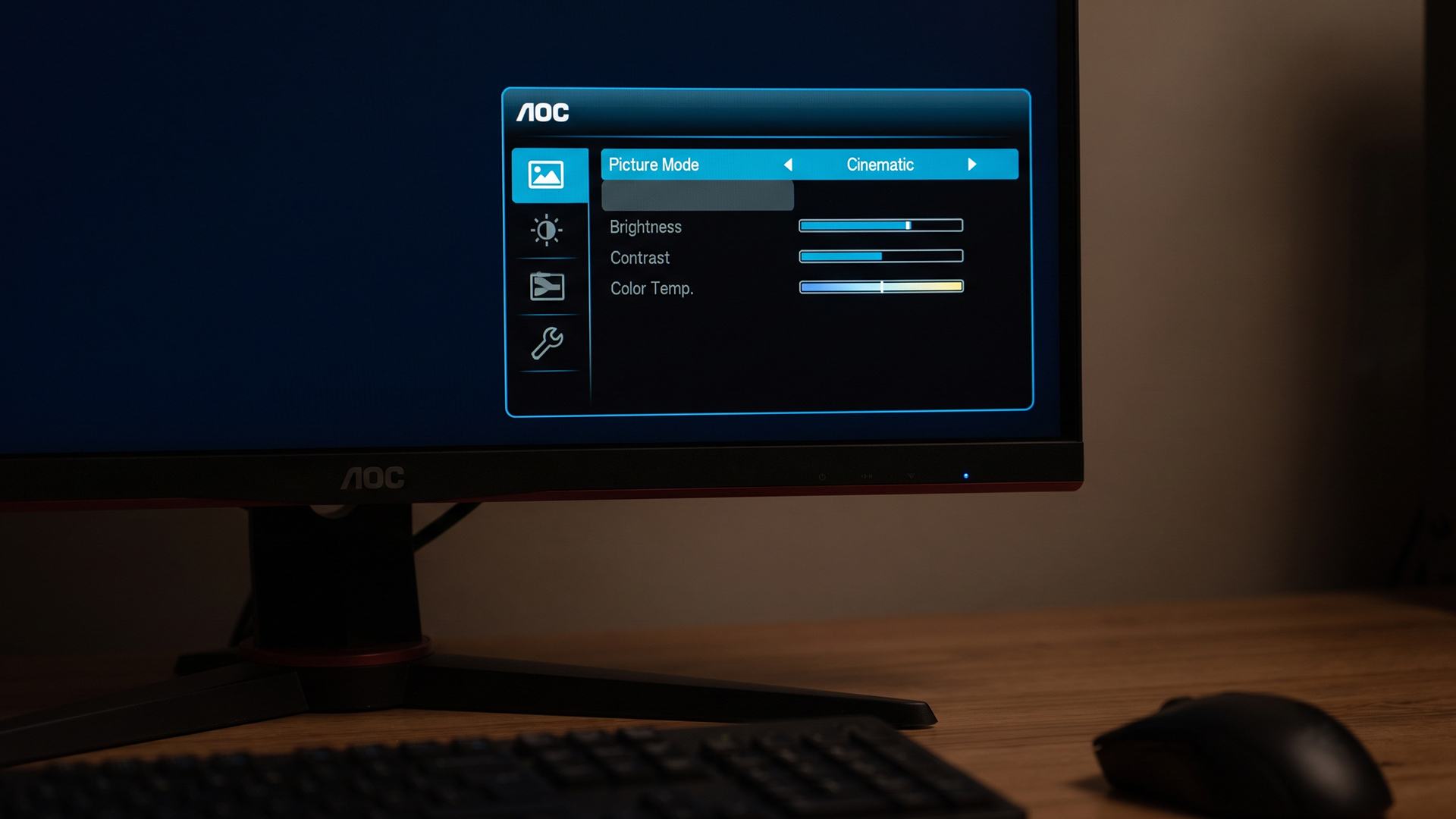
The physical OSD gives access to the monitor's built-in controls. AOC G-Menu provides a Windows interface for compatible models, making it easier to change modes and create shortcuts. Download the version listed for your model from AOC's support or product page, because software support and available controls can differ.
Use one saved profile for competitive games and another for RPG or everyday use. Avoid changing Shadow Control, gamma, brightness, HDR and in-game calibration simultaneously. Make one adjustment at a time, test a familiar scene and save the result only when the improvement is repeatable.
Built-in FPS, Racing and RTS modes are quick starting points, not guaranteed calibrations. They may change several controls at once and can make the image more vivid or brighter than necessary. A custom Gamer profile gives you more predictable control.
Troubleshooting Common AOC Gaming Settings
The Monitor Is Stuck at 60Hz!
Confirm the selected AOC display under Windows Advanced display, then choose the highest available rate. If it is still missing, check the resolution, cable, GPU port, OSD overclock or dual-mode setting and graphics driver. Some refresh rates are available only through a specific connection or at a lower resolution.
Overdrive Creates Bright or Dark Trails!
This is overshoot or inverse ghosting. Reduce Overdrive from Boost or Strong to Medium, then test again at the refresh rates you actually use. One setting may not be ideal across an entire Adaptive-Sync range.
MBR or Boost Makes the Screen Darker!
This is expected on many models because the backlight is being strobed or response processing has changed. Lower the MBR level, use a non-Boost Overdrive mode or return to Adaptive-Sync with MBR off if brightness and comfort matter more.
Adaptive-Sync, MBR or Other Options Are Greyed Out!
Check whether HDR, sRGB, an automatic game mode, MBR, MBR Sync or Adaptive-Sync is already active. Some features are mutually exclusive and some picture modes lock manual controls. Reset to a standard SDR Gamer profile, enable one feature at a time and consult the model manual.
HDR Looks Washed Out!
Use HDR only with HDR games or video and complete the in-game HDR calibration. Desktop SDR content can look different while Windows HDR is enabled. If a game does not support HDR well, turn HDR off and use a balanced SDR profile rather than forcing brightness to 100.
AOC Gaming Settings Checklist
- Reset an over-edited profile or record the current settings.
- Select the panel's native resolution.
- Choose the highest supported refresh rate for that resolution.
- Confirm the correct DisplayPort or HDMI connection.
- Set brightness for the room and keep contrast near its default.
- Start at gamma 2.2 with neutral Shadow Control and Game Colour.
- Set Overdrive to Medium and check for ghosting or overshoot.
- Turn Low Input Lag on.
- Enable Adaptive-Sync when frame rate varies.
- Use MBR only when the frame rate is high and stable, or MBR Sync when supported.

Final Thoughts
The best AOC monitor settings are a balanced baseline, not a single set of copied numbers. Use native resolution, select the highest supported refresh rate, turn on Low Input Lag and begin with Medium Overdrive. Keep Adaptive-Sync enabled for variable frame rates, and reserve MBR or Boost for competitive testing where motion clarity is worth the brightness and compatibility trade-offs.
Most importantly, set brightness for your room and treat Shadow Control, Game Colour and gamma as small corrections. That approach produces a clearer, more responsive picture without trading one visible problem for another.

Frequently Asked Questions
What Are the Best AOC Monitor Settings for Gaming?
Use the native resolution, the highest supported refresh rate, Low Input Lag on, Adaptive-Sync on for variable frame rates, gamma around 2.2 and Overdrive on Medium. Leave Shadow Control and Game Colour near neutral, then set brightness for the room instead of using 100 automatically.
What Should AOC Shadow Control Be Set To?
Start with the default Shadow Control setting. Increase it slightly if details or opponents are difficult to see in dark areas, but reduce it if blacks begin to look grey or the image loses contrast. The available values vary between AOC models.
What Is the Best AOC Game Colour Setting?
The default or neutral Game Colour setting is the best starting point. Increase it gradually if colours look muted, or lower it if the picture appears oversaturated. Check skin tones, grass and familiar game environments when judging the result.
Should AOC Overdrive Be Set to Strong?
Only if Strong improves motion without causing inverse ghosting. Medium is the safer general starting point. Test Strong at the refresh rate you use, and reduce it if moving objects develop bright, dark or coloured halos.
Should Low Input Lag Be On or Off on an AOC Monitor?
Low Input Lag should normally be on for gaming because it reduces display processing delay. If the option is unavailable, another mode may control it or low-lag behaviour may already be automatic; check the manual for the exact model.
Should Adaptive-Sync Be Enabled for Gaming?
Enable Adaptive-Sync when frame rate varies or you notice tearing and stutter. Standard MBR may require it to be off, while AOC models with MBR Sync can support blur reduction and variable refresh together.
What Does MBR Do on an AOC Monitor?
Motion Blur Reduction strobes the backlight to improve clarity during fast movement. It works best with a high, stable frame rate but can reduce brightness, cause visible flicker for some users and conflict with Adaptive-Sync on models without MBR Sync.
Why Is My AOC Monitor Only Showing 60Hz?
The usual causes are the selected Windows refresh rate, an unsuitable cable or port, a resolution that does not support the advertised maximum, a disabled OSD overclock or dual-mode setting, or an outdated graphics driver.
How Do I Reset My AOC Monitor Settings?
Open the monitor’s on-screen display and look for Reset or Factory Reset under the Setup or Extra menu. Record any custom settings beforehand because resetting the monitor restores its picture and gaming controls to their original values.
Do I Need AOC G-Menu to Change Monitor Settings?
No. You can adjust the monitor’s core settings through its physical controls and on-screen display. AOC G-Menu is an optional application for compatible models that makes it easier to manage settings and saved profiles through Windows.
What Is the Best Gamma Setting for an AOC Gaming Monitor?
Gamma 2.2 is the most reliable starting point for gaming and general use. A lighter gamma can reveal more detail in dark competitive games, while a darker setting may suit cinematic games in a dim room. Use the game’s built-in brightness calibration before making large gamma changes.
| Read More: |
| AOC Monitors Explained: Key Series and Best Uses in 2026 |
| Best AOC Gaming Monitors by Budget: 1080p, 1440p and 4K Picks |
| AOC AGON PRO 1,000Hz Gaming Monitors: Who Actually Needs One? |
Related Articles

Last Updated: September 02, 2026
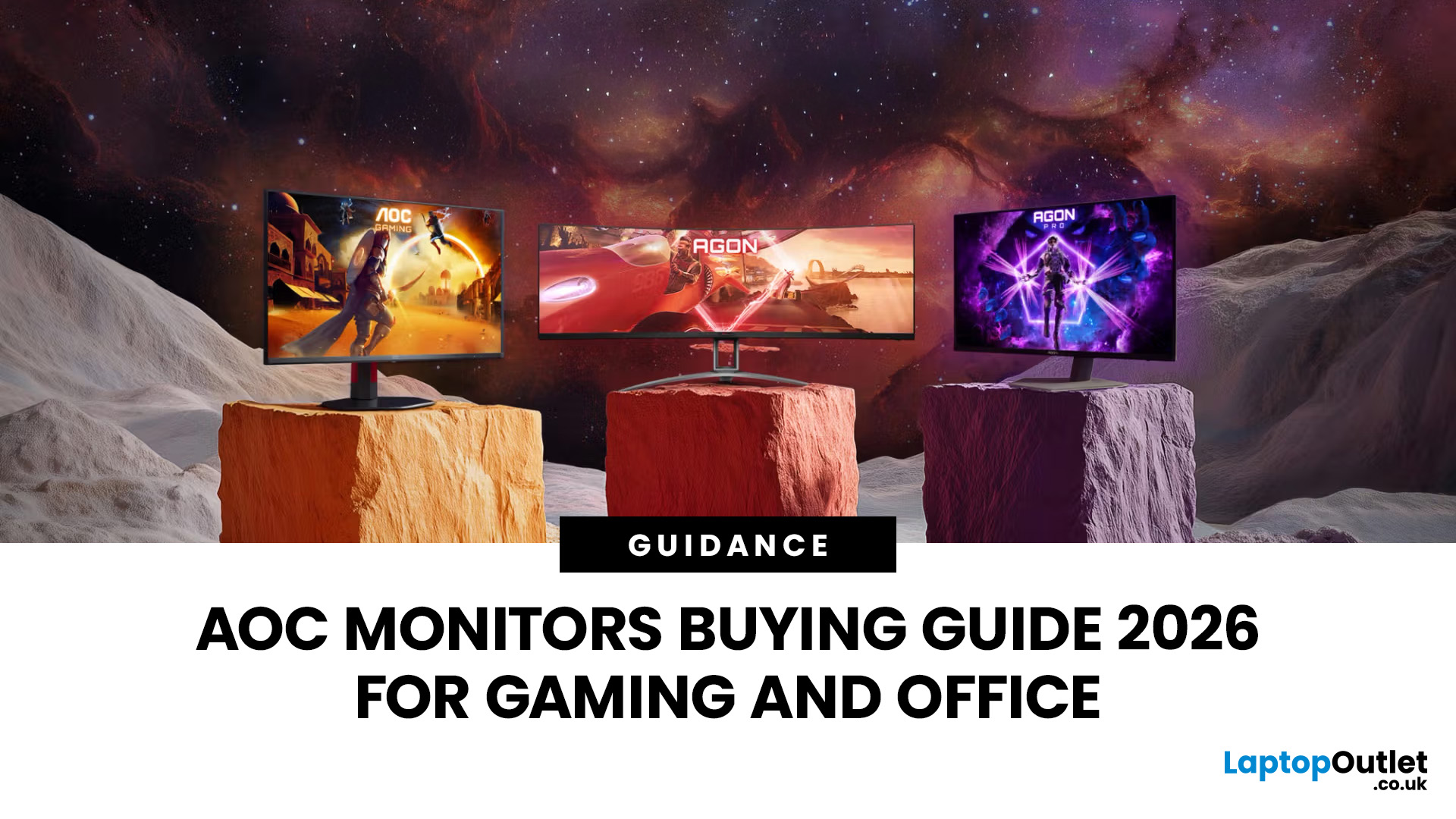
Choosing the right monitor can completely change the way you play, work, or create in 2026. Whether you’re looking for razor-sharp visuals for competitive gaming or a clear, comfortable screen for long workdays, AOC monitors for office and gaming stand out as one of the most versatile options on the UK market. Known for balancing affordability with high-end performance, AOC has become a go-to brand for gamers, students, and professionals alike.
From lightning-fast AOC gaming monitors to ergonomically designed AOC office monitors, the range is packed with options for every need and budget. Whether you want a sleek widescreen display, a powerful 4K setup, or a cost-friendly Full HD panel, there’s an AOC model for you.
Ready to level up? Let’s explore the best AOC monitors in 2026 and find the one that matches your setup.
Why Choose AOC Monitors in 2026?
- Affordable performance: Great value, even for budget AOC monitors.
- Gaming-first design: Fast refresh rates and ultra-low response times.
Last Updated: September 24, 2026
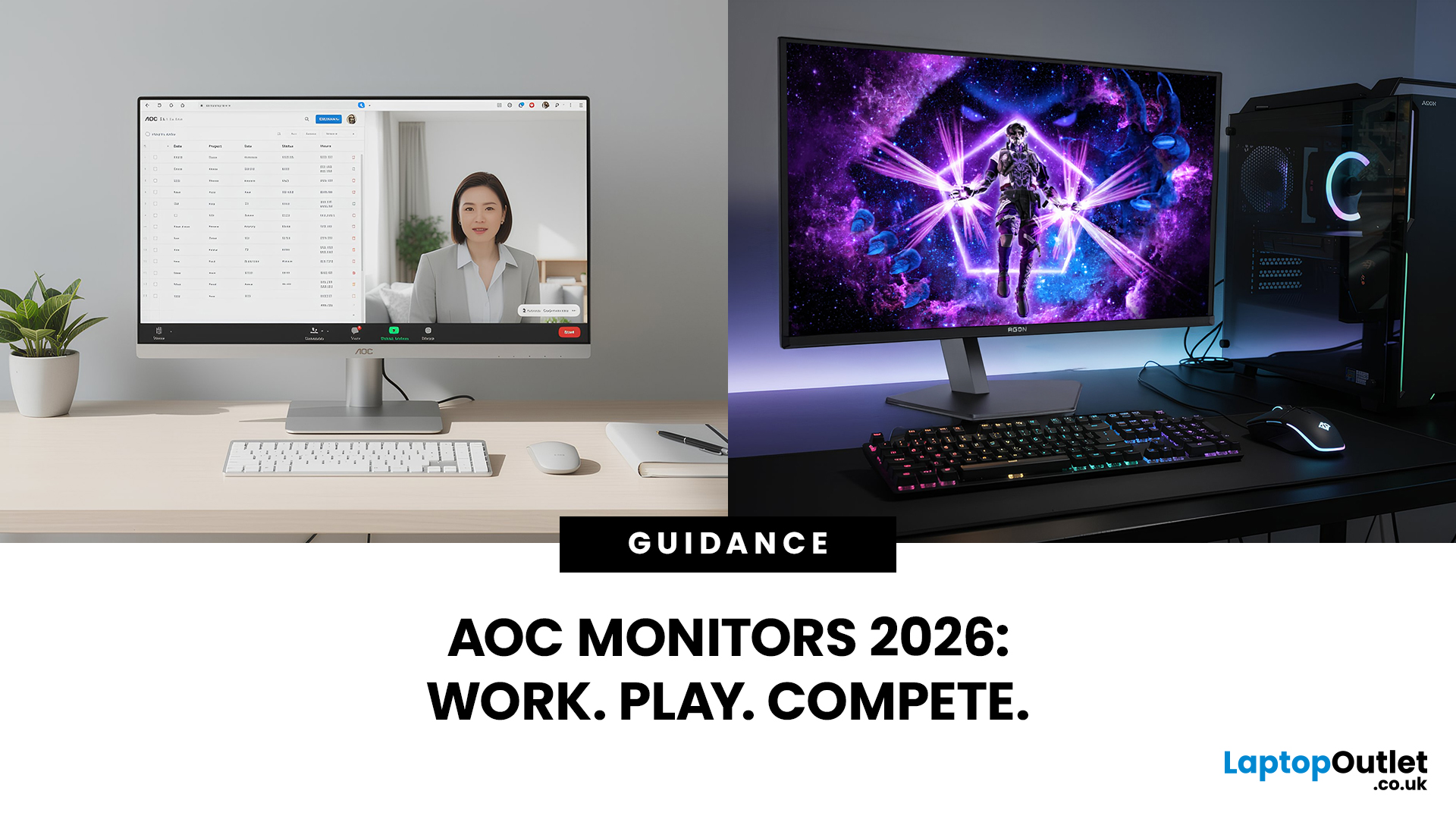
AOC monitors have quietly become one of the biggest go-to choices in 2026, whether you’re building a clean home office setup, upgrading your gaming station, or just wanting a solid screen that doesn’t destroy your budget. The brand covers everything from simple everyday displays to seriously high-performance esports-level monitors under AGON PRO. In this guide, we’ll break down the full AOC monitor family, explain what each series is actually made for, and help you figure out which models fit your lifestyle best: work, study, gaming, or all three. If you’re looking for value, comfort, and modern features, AOC is definitely worth knowing.
Meet the AOC Monitor Family: AOC, AOC Gaming, AGON & AGON PRO
AOC isn’t just one type of monitor; it’s more like a full lineup of screen “personalities,” each built for different people and setups. In 2026, AOC monitors cover everything from budget-friendly everyday displays to elite esports-level gaming machines.
The main difference comes down to performance,

Last Updated: August 28, 2026
Working from home and studying online have become the norm in 2026, which means your monitor is no longer just a screen, it is where you spend hours reading, writing, video calling and multitasking. A good home office display needs to deliver sharp text, comfortable viewing and reliable eye-care features without costing a fortune.
That is why AOC has become one of the most popular brands for affordable productivity setups. Whether you need a cheap AOC 27 inch monitor for essays and coursework or a larger QHD screen for full-time remote work, there are plenty of options designed for comfort and clarity.
In this guide, we break down the best AOC monitor for home office and study, including budget picks, eye-care displays and refurbished bargains.
What Makes a Good Home Office Monitor?
Choosing the best AOC monitor for home office use starts with understanding what actually improves comfort and productivity. Unlike gaming displays, office monitors are about clarity, screen space and reducing
Published: February 25, 2026
The global gaming monitor market is projected to surpass 25 million units annually, driven by demand for higher refresh rates, lower response times, and immersive panel technology. Refresh rates have climbed from the standard 60Hz to 240Hz, 360Hz and even 500Hz models designed for competitive esports. As performance expectations rise, so does the confusion around product tiers.
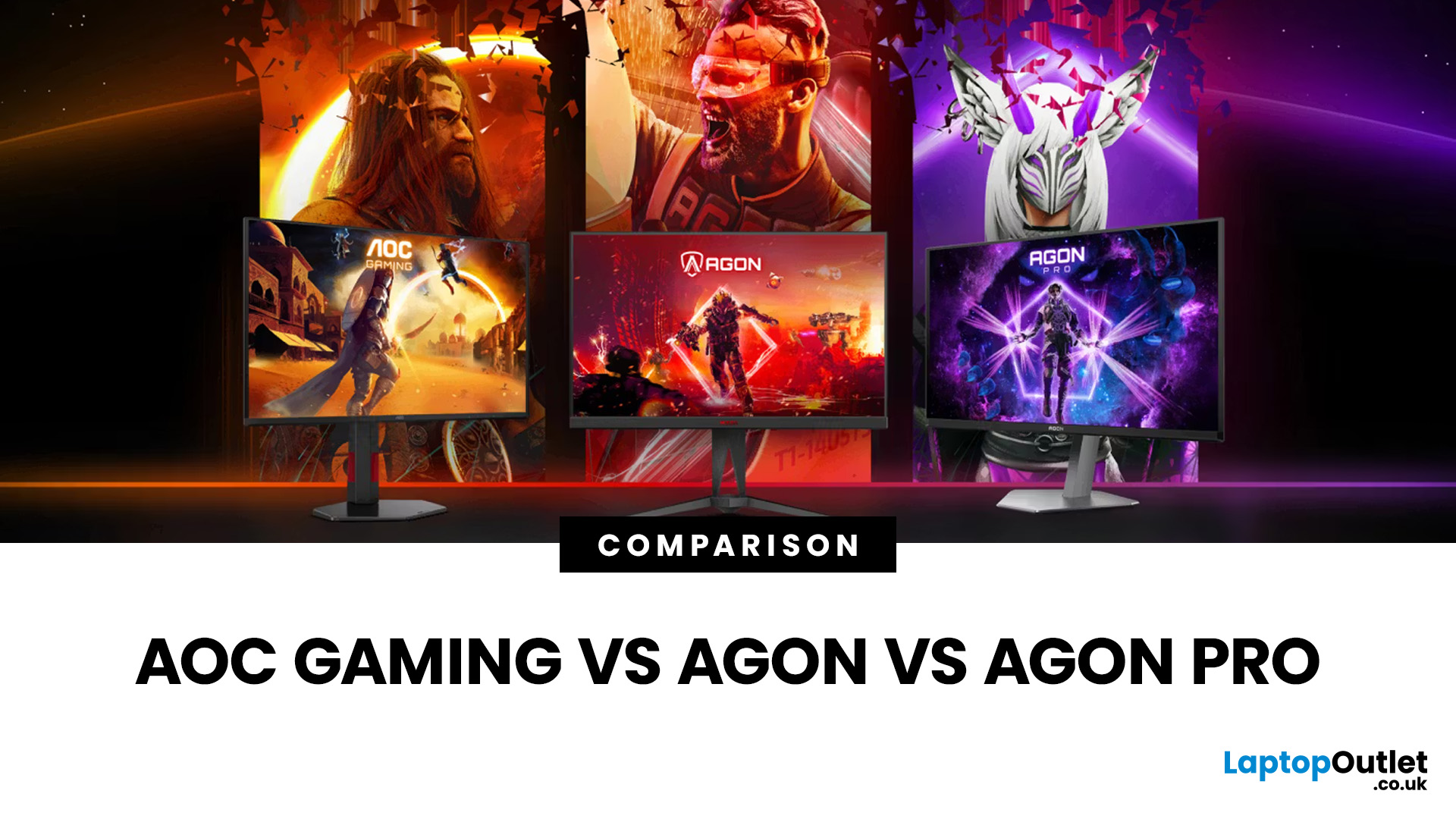
That is especially true when comparing AOC Gaming vs AGON vs AGON PRO. Each series targets a different type of player, from casual console users to tournament level competitors. Understanding the real differences in features, performance and pricing is the key to choosing the best AOC gaming series for your setup.
Quick Overview of AOC Gaming, AGON and AGON PRO
AOC structures its gaming monitors into three clear tiers; each designed for a different level of performance and budget.
AOC Gaming sits at the entry and mid-range level. These monitors focus on strong refresh rates, solid panel quality and competitive
Last Updated: August 28, 2026
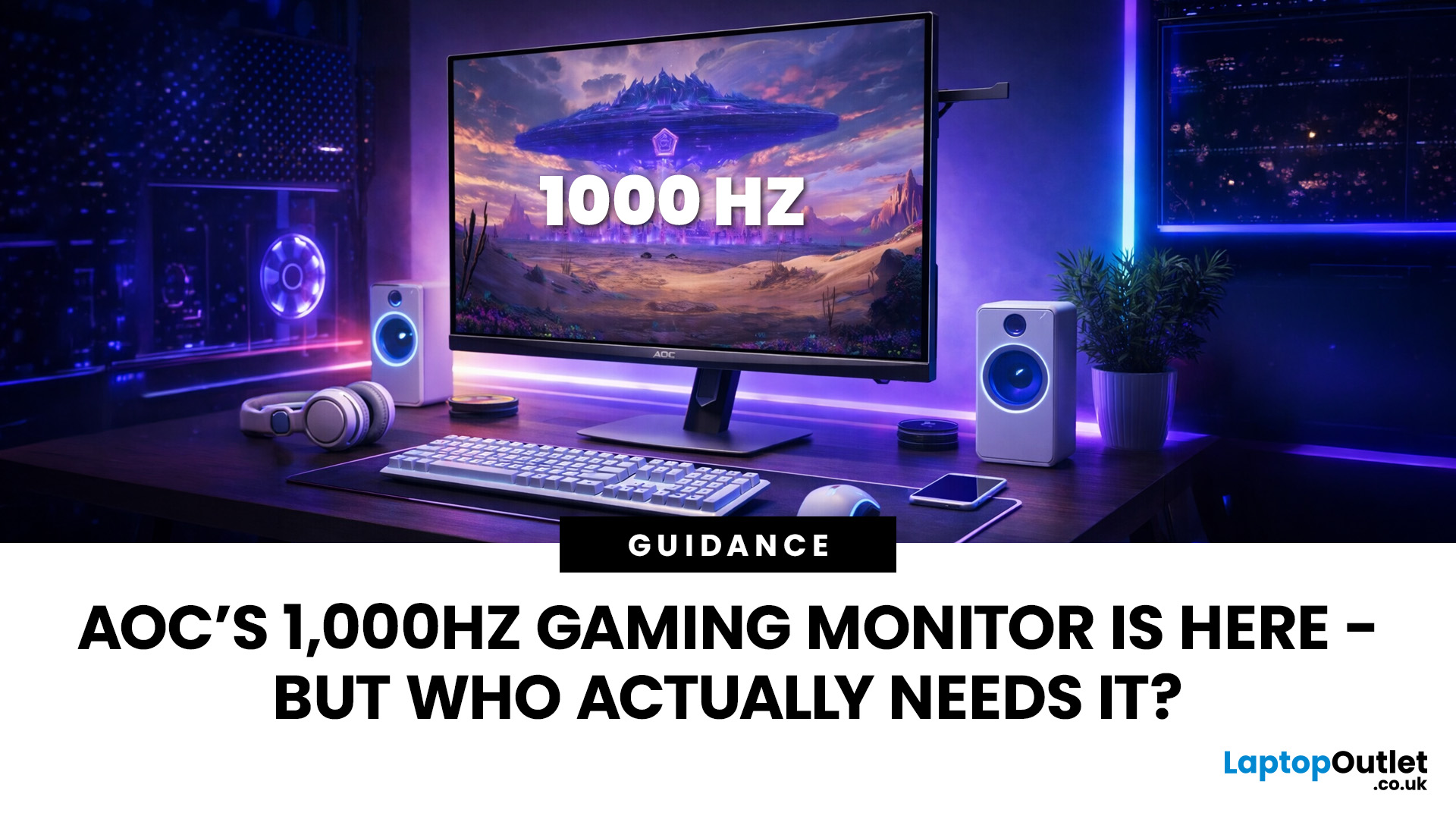
Gaming monitors have moved from 144Hz to 240Hz, then 360Hz and 500Hz in just a few years. Now AOC is pushing even further with its new AOC 1000Hz gaming monitor, the AGON PRO AGP277QK. At 1000Hz, the screen refreshes 1000 times per second, cutting frame time to just 1 millisecond. That is half the frame time of 500Hz and one quarter of 240Hz.
AOC’s new dual-mode 1000Hz monitor can switch between 500Hz at QHD and 1000Hz at a lower resolution, targeting elite competitive players. But who actually benefits from refresh rates this extreme, and should most gamers even consider waiting for it?
What AOC’s 1,000Hz Dual-Mode Monitors Actually Are
The AOC 1000Hz gaming monitor, known as the AOC AGON PRO AGP277QK, is part of a new wave of next-gen AOC AGON PRO monitors focused purely on competitive performance. It introduces a dual-mode 1000Hz monitor design, meaning it can operate at two different refresh rate and resolution combinations.
In its standard mode, the panel runs at QHD resolution with
Last Updated: August 28, 2026
Choosing the right gaming monitor depends on factors like refresh rate, resolution, panel type, response time, and HDR support.
AOC offers gaming monitors across every budget, making it hard to know which one is right for you.
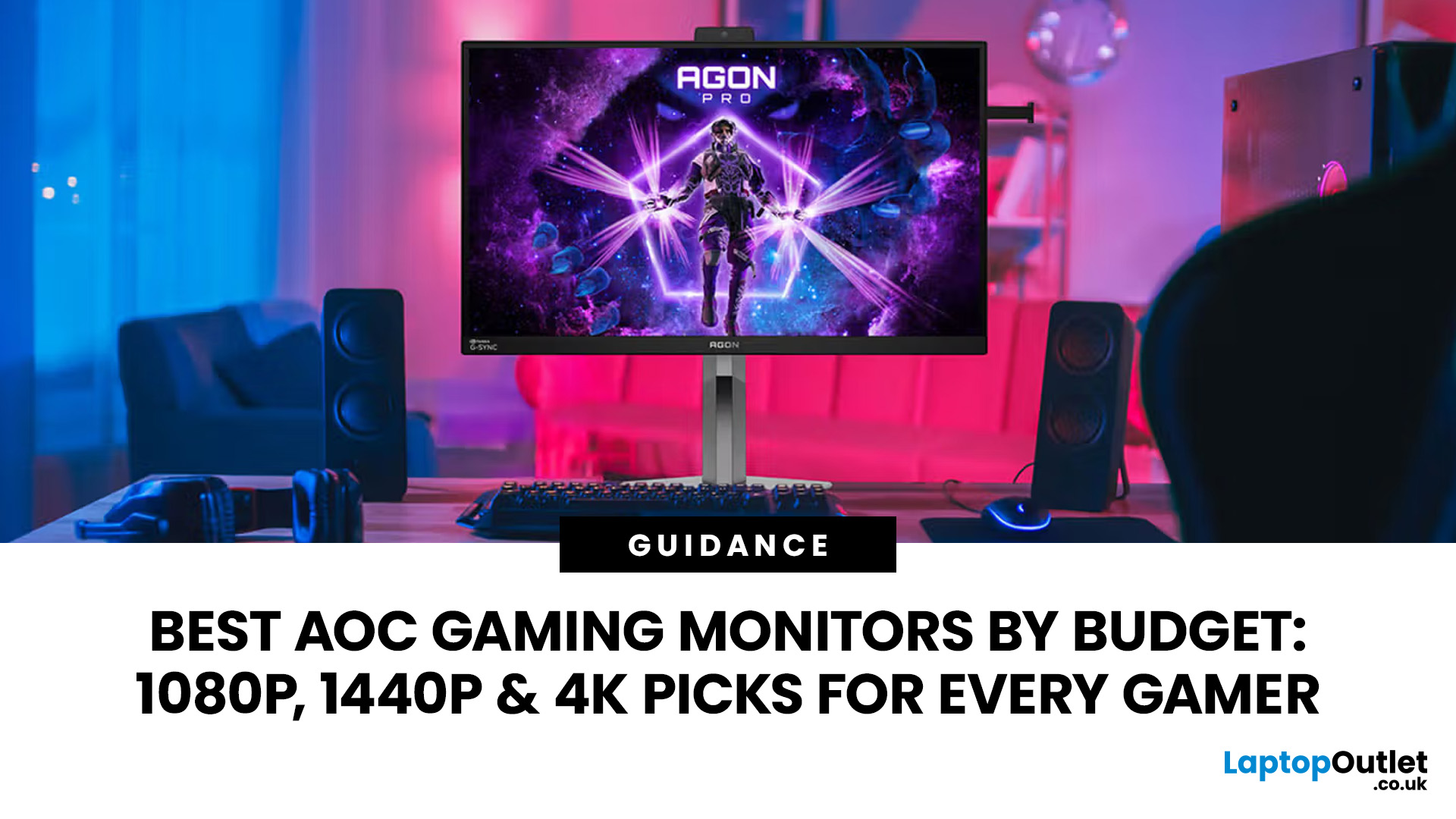
This guide highlights the best AOC gaming monitors by budget and helps you choose between 1080p, 1440p, and 4K options based on your gaming needs.
How to Choose an AOC Gaming Monitor for Your Budget
Before looking at specific recommendations, it's important to understand what you're paying for.
Resolution Matters More Than Most Gamers
Last Updated: August 28, 2026
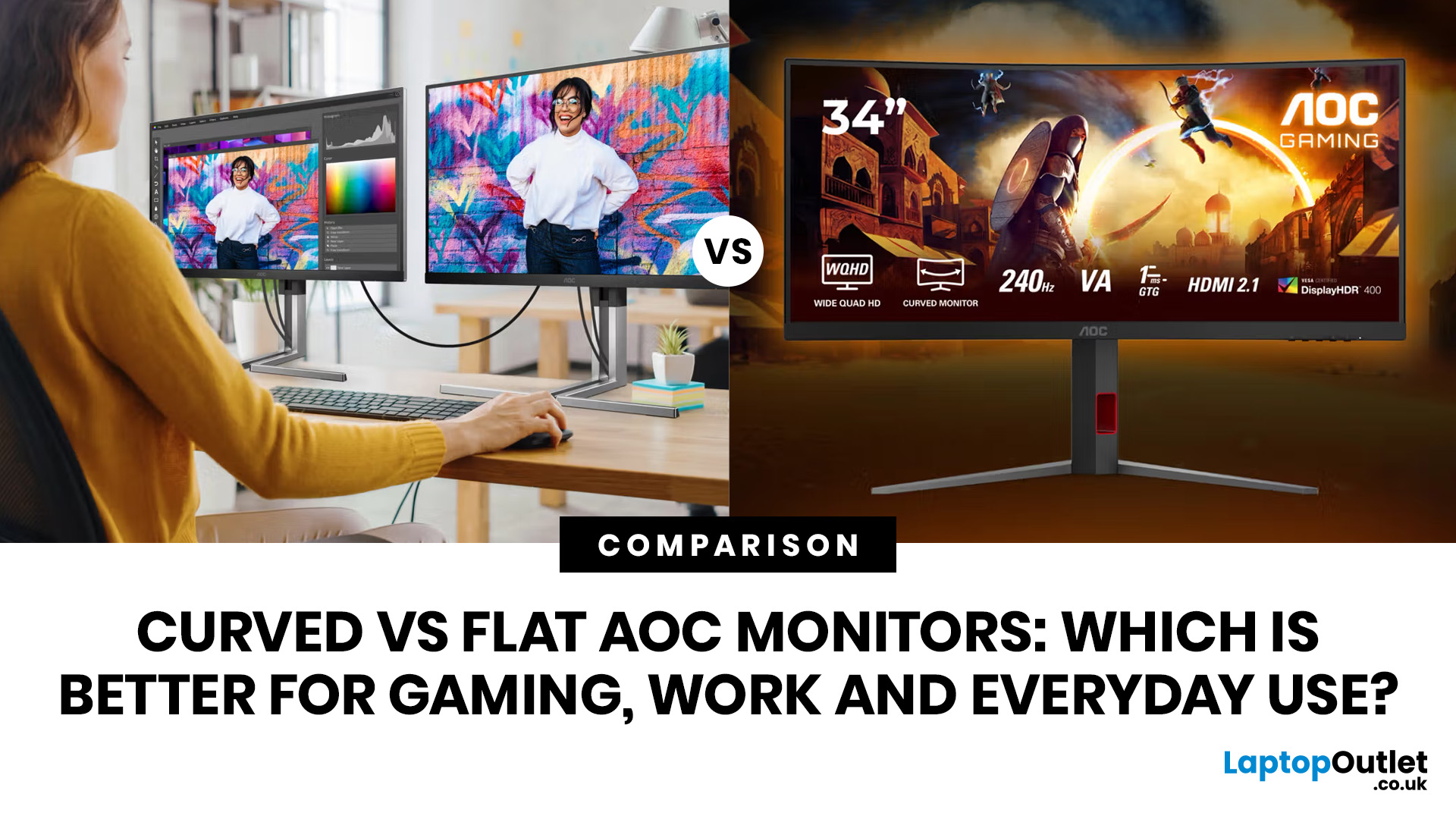
If you are comparing curved vs flat AOC monitors, the right choice depends less on trends and more on how you actually use your screen every day.
For gaming and entertainment, a curved display often feels more immersive, especially in racing games, open-world titles and films. For work, study and general day-to-day use, a flat screen is usually the more practical option because it is easier to position, easier to pair in dual-screen setups and often better suited to documents, spreadsheets and precision-focused tasks.
So, are curved monitors better? Not always. A curved model can be a great upgrade for the right person, but flat screens still make more sense for many buyers.
Here is the simplest way to think about it:
| Use case | Usually the better choice | Why |
| Immersive gaming | Curved | Feels more engaging and cinematic |
| Esports and fast competitive play | Depends | Refresh rate matters more than screen shape |
| Office work and spreadsheets | Flat | Cleaner lines, easier multi-window working |
| Study and everyday |
Last Updated: September 03, 2026
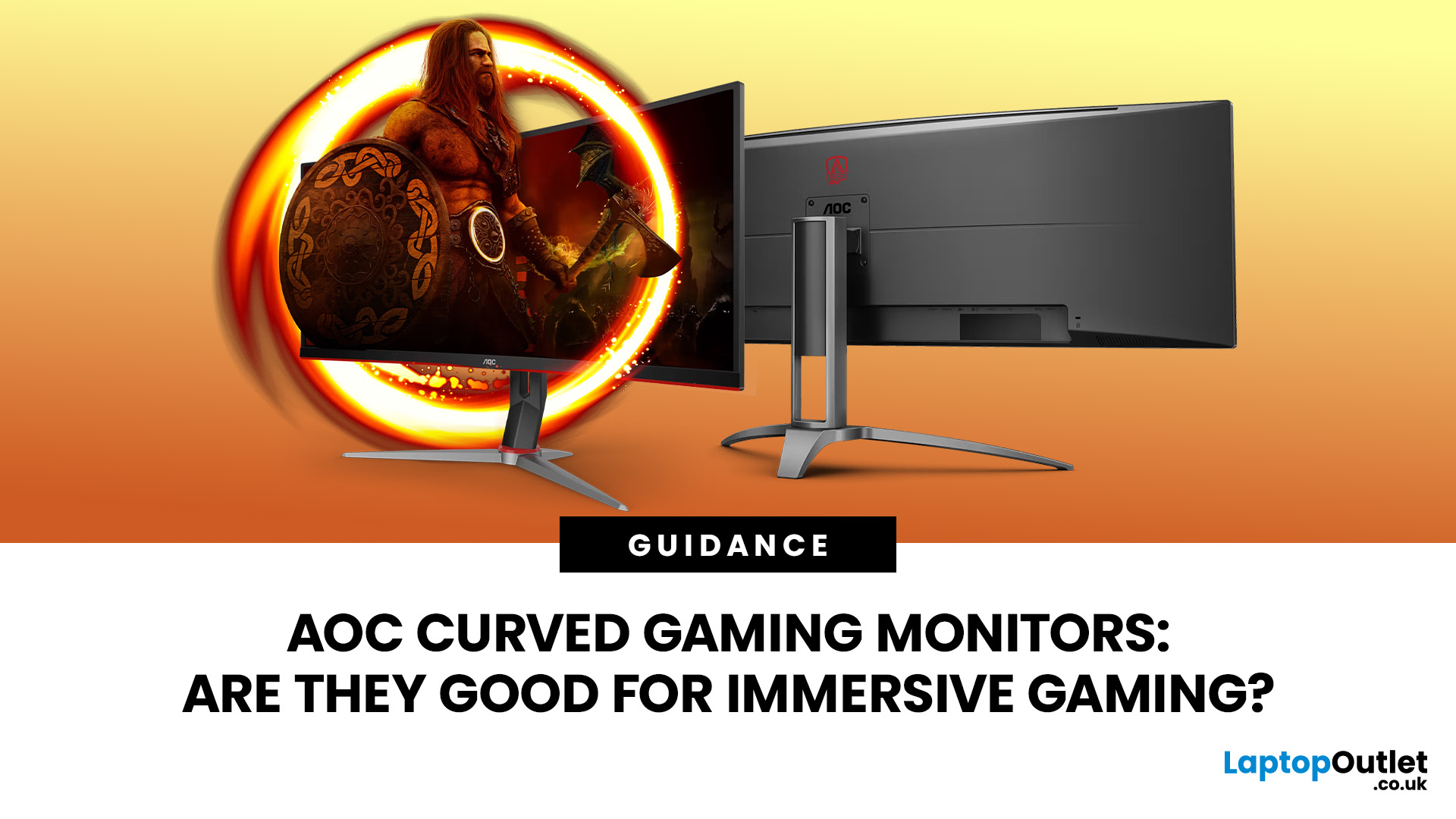
An AOC curved gaming monitor can be a strong choice for immersive gaming, especially if you play racing, simulation, RPG, open-world or cinematic single-player games. The curved screen helps draw more of the display into your natural field of view, which can make gameplay feel more engaging on larger panels. For many PC gamers, the sweet spot is a 27-inch or 32-inch high-resolution QHD monitors. For maximum immersion, an AOC 34 curved gaming monitor or another ultrawide curved gaming monitor can offer a wider, more cinematic view.
Are AOC Curved Gaming Monitors Good for Immersive Gaming?
Yes, AOC curved gaming monitors can be good for immersive gaming, but the experience depends on three things:
- Screen size
- Resolution
- Refresh rate
A curved display is most effective when the screen is large enough for the curve to matter. On a 24-inch screen, the curve may feel subtle. On a 32-inch or 34-inch screen, it becomes much more noticeable because the edges of the panel sit further into your peripheral
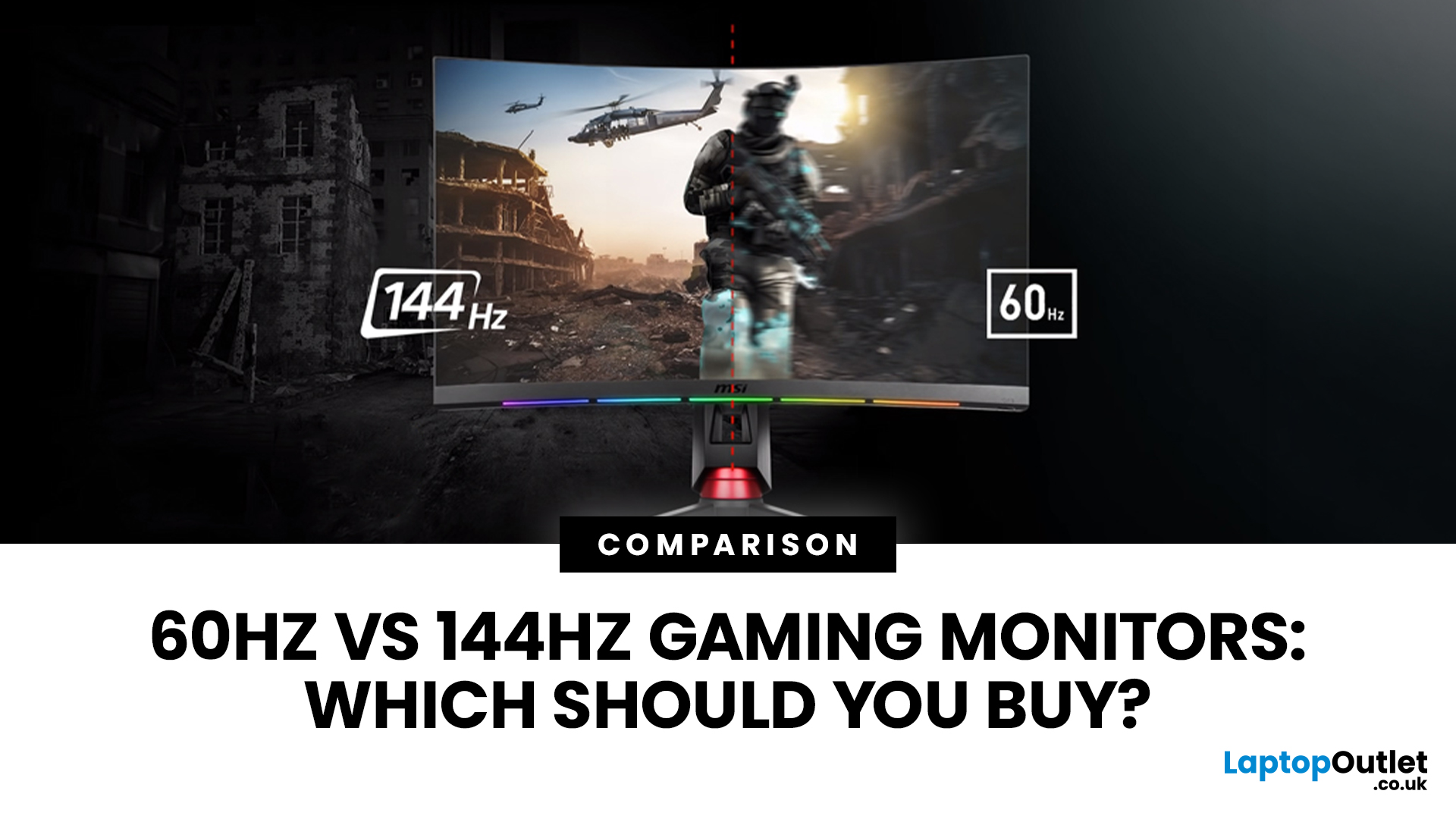
Last Updated: August 11, 2026
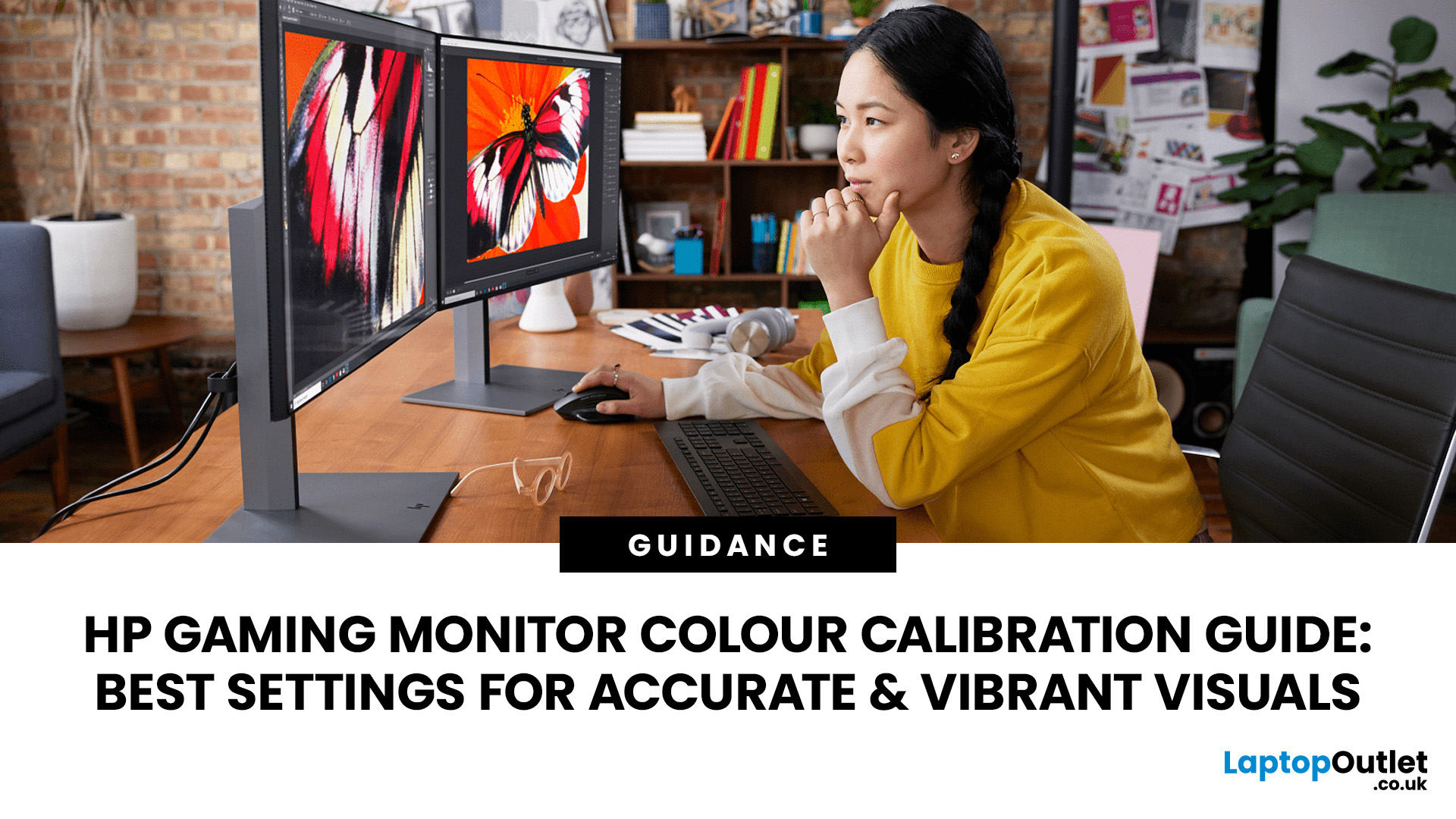
Published: August 13, 2026
Your HP gaming monitor might have a fast refresh rate, sharp resolution, and solid HDR support, but poor colour settings can still leave games looking washed out, overly dark, or weirdly saturated. That is where monitor calibration makes a noticeable difference.
The key thing to know is that there is no single magic set of values that works for every HP or OMEN monitor. The right monitor settings depend on your exact panel, room lighting and whether you are playing in SDR or HDR.
This HP display calibration guide will show you how to get a more accurate starting point, fine-tune your screen in Windows 11 and fix the most common colour problems without turning everything up to 100.
What Does Monitor Calibration Actually Change?
Monitor calibration adjusts how your screen reproduces brightness and colour so that the image looks balanced rather than artificially enhanced. The main settings you are dealing with are:
- Brightness: Controls how bright the screen appears.
- Contrast: Affects the difference

