



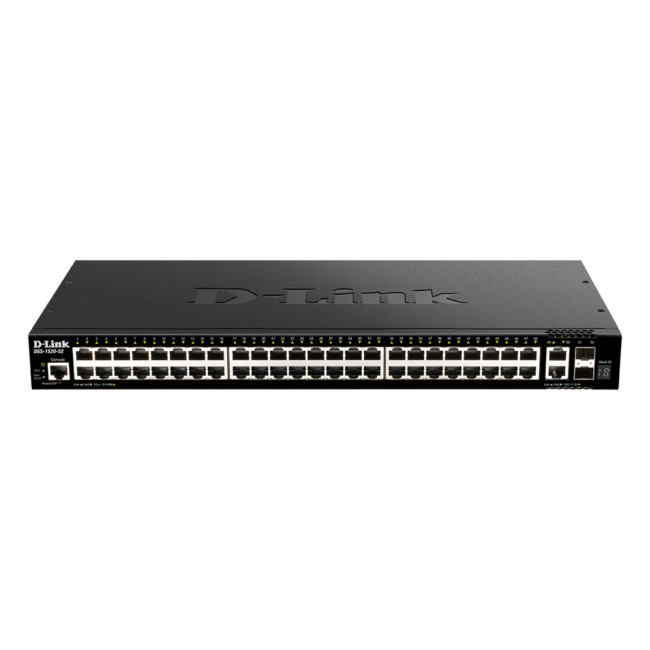
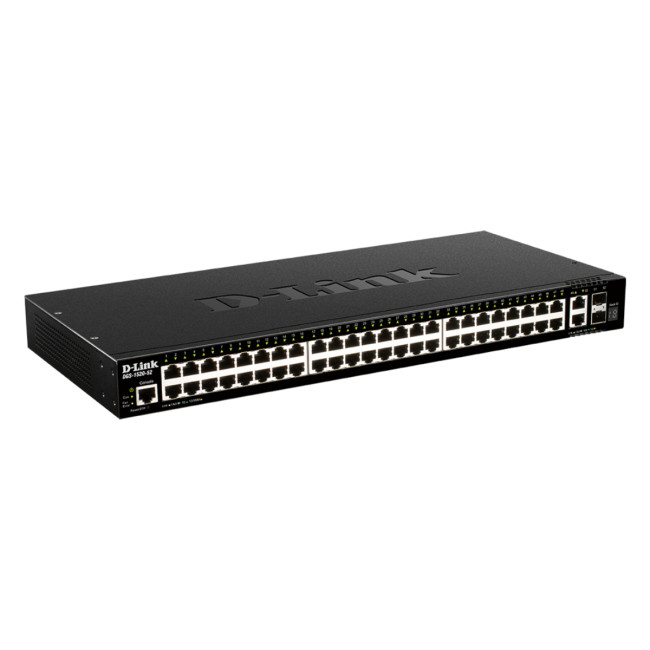
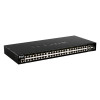
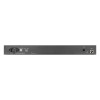
New Open Box D-Link DGS-1520-52 52-Port Gigabit Layer 3 Stackable Smart Managed Switch

Secure Payment

Free UK Shipping

Easy Return
SKU: DGS-1520-52-OB




Stackable Smart Gigabit
Stack up to eight switches for high-density Gigabit aggregation
Zero Touch
Provisioning
Effortless
multi-site deployment
Flexible Stacking
or Uplink
10 GB
Base-T and/or SFP+ (fiber) ports for stacking or uplink
High Capacity
Up to 188
Gbps switching capacity per switch
PoE Capable
Up to 370
W PoE output per switch
Power Redundancy
Connect
with DPS-520 for power redundancy (non-PoE models)
Advanced
Manageability
Supports
dynamic routing and selective Q-in-Q tagging
High Availability
The
DGS-1520 Series brings reliable, yet affordable, Gigabit connectivity
with four 10-Gigabit ports (two 10G Base-T and two 10G SFP+) for
high-speed uplink or stacking. Boost your network performance, simplify
your network infrastructure, improve bandwidth and reduce cabling
complexity.
Zero Touch
Provisioning
Zero Touch
provisioning is perfect for multi-site network expansions. Simply
preconfigure your network settings in a centralized location, then
install the DGS-1520 switches for effortless deployments.
Multi-Gigabit
Support
Multi-Gigabit
ports on the DGS-1520 Series switch (PoE models only) support 100 MB / 1
GB / 2.5 GB speeds to maximize various device capabilities, such as
Wi-Fi 6 (802.11ax) access points, which can often exceed single Gigabit
speeds.
Powerful Stacking
Capability
Stack up
to eight DGS-1520 switches with a total of 80 GB stacking bandwidth
using hybrid mode (copper and/or fiber), increasing flexibility,
scalability, and cost effectiveness for SMBs.
Minimize Outages
with Power Redundancy
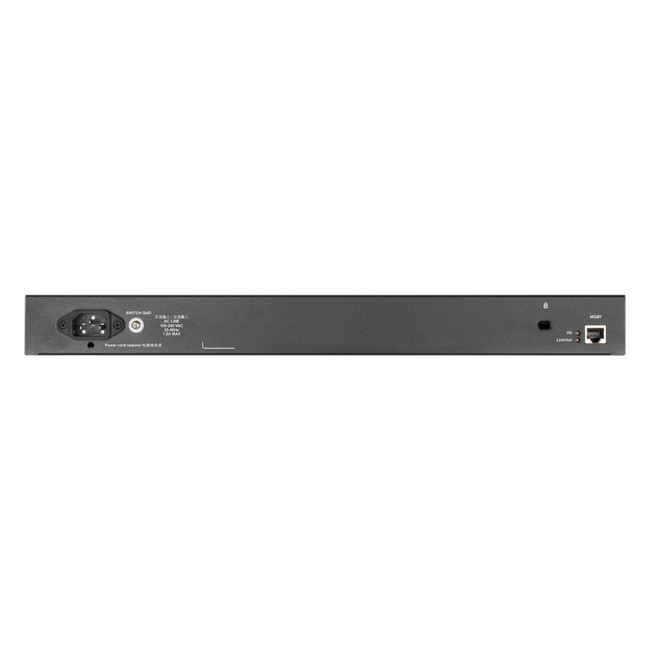
For a more
resilient network infrastructure, connect up to four DGS-1520 switches
(non-PoE models only) with the DPS-520 PoE redundant power supply system
through the management port and actively back-up four devices to
significantly reduce power redundancy costs.
Low Network
Latency, High PoE Budget
High
Gigabit-port density with up to 188 GB total switching capacity, and up
to 30 W per port with 370 W total PoE budget to power your PoE-enabled
devices.
Link Network Assistant
Built upon a highly-intuitive user interface, the D-Link Network Assistant (DNA) simplifies device configuration using the D-Link Discovery Protocol, auto-detecting supported devices and displaying them for port-level configurations.
| Condition | |||||||||||
|---|---|---|---|---|---|---|---|---|---|---|---|
| Condition | New Open Box | ||||||||||
| Product Identifiers | |||||||||||
| Sku | DGS-1520-52-OB | ||||||||||
| MPN | DGS-1520-52-OB | ||||||||||
| EAN | 0790069454783 | ||||||||||
| Type | Switch | ||||||||||
| Brand | D-Link | ||||||||||
| Model | DGS-1520-52 | ||||||||||
| General | |||||||||||
| Weight | 100 | ||||||||||
| Warranty | 1 Year | ||||||||||
| Colour | Black | ||||||||||
| Item Weight | 2.78 kg | ||||||||||
| Dimensions | 441 x 207.4 x 44 mm | ||||||||||
| Switch Operating Temperature | -5 - 50 °C | ||||||||||
| Switch Storage Humidity | 5 - 95% | ||||||||||
| Switch Certification | CE Class A, FCC Class A, IC Class A, RCM Class A, VCCI Class A, BSMI Class A | ||||||||||
| Other Specifications | |||||||||||
| Warranty | 1 Year | ||||||||||
| Colour | Black | ||||||||||
| Model Information | |||||||||||
| Brand | D-Link | ||||||||||
| Model | DGS-1520-52 | ||||||||||
| Most Suitable For | Managed Network | ||||||||||
Loading...