



Black Friday is here! Get an extra £10 off when you spend £200 with code: BF10LO. T&Cs apply*
ASUS Chromebook vs ASUS Vivobook: Which is Better for Everyday Use?
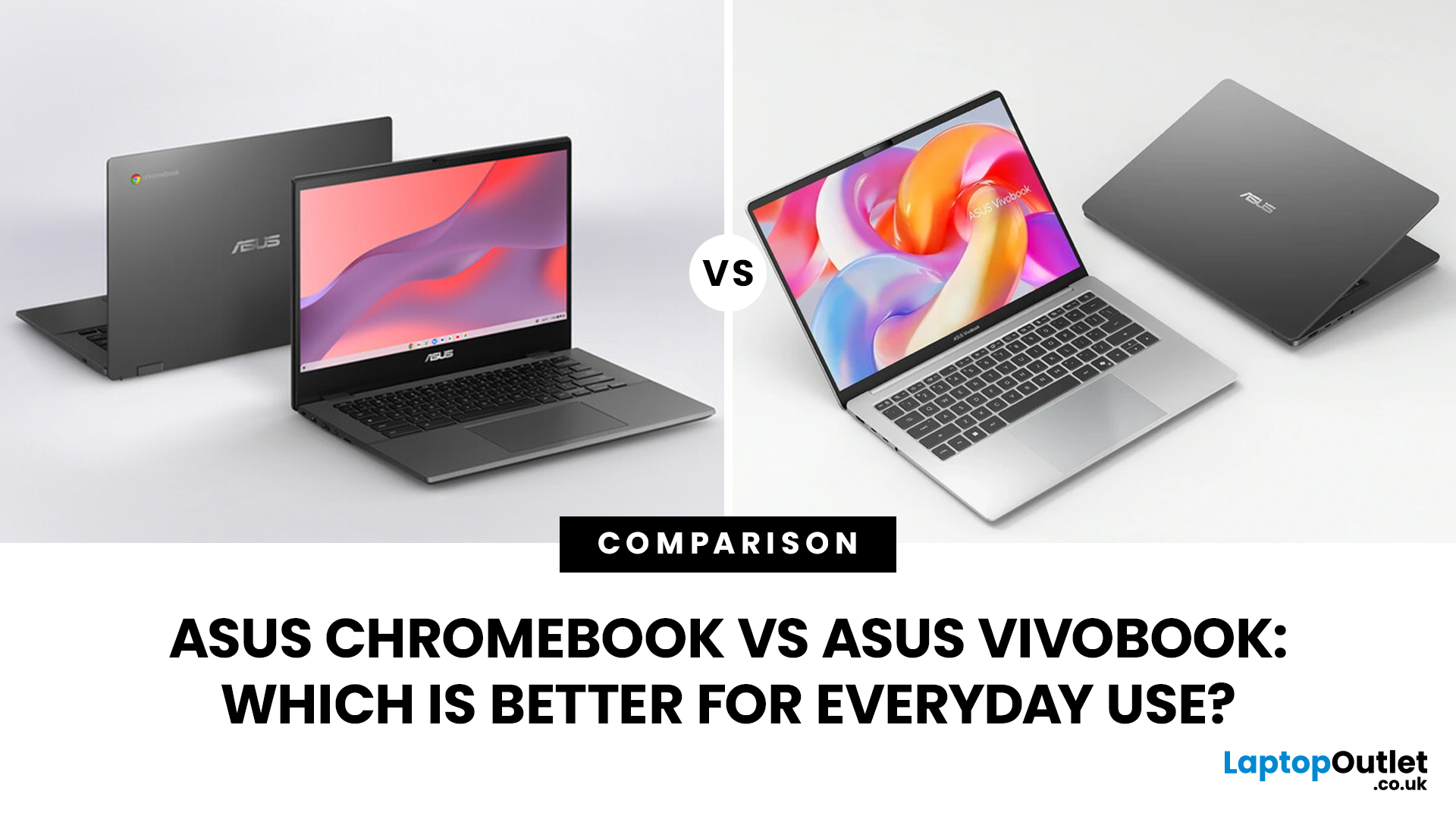
An ASUS Chromebook is a practical choice for browsing, studying, streaming, and cloud-based work, while an ASUS Vivobook offers greater flexibility for Windows applications, multitasking and locally stored files. Both ranges include models for everyday computing, but the right choice depends on your software requirements, budget, and how you use your laptop.
So, which is better for you: ASUS Chromebook or ASUS Vivobook?
The main difference is the operating system. Chromebooks run Google's ChromeOS, whereas Vivobooks generally use Windows 11. This affects the applications you can install, the way you manage your files and the tasks your device can comfortably handle.
Let's look at each range, its strengths and limitations, and which option suits different users.
ASUS Chromebook vs ASUS Vivobook: Key Differences
|
Feature |
ASUS Chromebook |
ASUS Vivobook |
|
Operating system |
ChromeOS |
Generally Windows 11 |
|
Main purpose |
Browsing, cloud-based work, study |
Productivity, entertainment, creative work |
|
Processors |
Intel, MediaTek and other supported chips |
Intel Core, Core Ultra, AMD Ryzen, Snapdragon |
|
RAM |
Commonly 4GB–16GB, depending on model |
Commonly 8GB–32GB and higher on selected models |
|
Storage |
Often eMMC, UFS or SSD with cloud integration |
Usually SSD storage |
|
Software support |
Web apps, supported Android and Linux apps |
Windows desktop apps and web applications |
|
Microsoft Office |
Microsoft 365 web applications |
Full desktop Microsoft 365 applications |
|
Gaming |
Browser, Android and cloud gaming |
Wider native PC gaming compatibility |
|
Best suited to |
Students, families and browser-first users |
Students, professionals, multitaskers and creators |
Both ASUS laptop families offer different screen sizes, touchscreen options and wireless connectivity. However, specifications vary considerably between individual configurations.
ASUS Chromebook: Simple Computing for Everyday Tasks
An ASUS Chromebook is designed around ChromeOS, Google's lightweight operating system. Instead of relying heavily on traditional desktop software, ChromeOS integrates Google Workspace, cloud storage, and browser-based applications into a straightforward computing experience. That doesn't mean Chromebooks only work online. You can download supported apps, store files locally and prepare documents for offline access.
For School Pupils and Students Using Google Workspace
If your school uses Google Classroom, Docs, Sheets and Drive, an ASUS Chromebook can handle most everyday coursework without complicated software installation. It's suitable for online lessons, writing assignments, research, presentations and educational websites. Smaller devices are easier to carry between classrooms, while a 14-inch or 15.6-inch display offers more room for reading documents and working across browser tabs.
Our Advice: Before buying a Chromebook for university, check your course's required applications. Engineering, architecture, programming and other specialised subjects may depend on Windows-only software.
For Families and Everyday Home Users
Not everyone needs a powerful processor or extensive local storage. If you mainly check emails, watch YouTube, browse websites, manage household documents and make video calls, ChromeOS can handle these activities efficiently.
Its built-in security features include Verified Boot, application sandboxing and automatic operating-system updates.
The relatively straightforward interface also makes Chromebooks appealing for shared family devices and people who prefer simpler computer maintenance.

For Remote Workers Using Cloud Applications
An ASUS Chromebook can also suit professionals whose daily applications operate entirely through a browser. For example, if you use Google Workspace, web-based CRM platforms, online project management tools, and virtual meetings, you may not need Windows desktop software. However, certain business environments rely on proprietary applications, device-management policies, or specialist hardware. Check those requirements with your employer before choosing ChromeOS for professional work.
ASUS Chromebook Plus: Is It Worth Choosing?
Chromebook Plus is Google's higher-specification Chromebook category, not a separate operating system.
Eligible models meet a defined hardware baseline, including at least 8GB RAM and 128GB storage, alongside supported processors, displays and webcams.
They also provide access to additional productivity and AI-powered features, with availability depending on the device, region and software.
A Chromebook Plus is worth considering if you regularly handle multiple browser windows, video meetings and cloud-based workflows. However, it still runs ChromeOS. A stronger processor does not make unsupported Windows programs compatible.
What are the Limitations of ASUS Chromebooks?
The main compromise is software availability.
Although ChromeOS supports many web applications and selected Android apps, it cannot natively install conventional Windows desktop programs.
Gaming options also differ. Browser titles, Android games and supported cloud-gaming services are available, but most Windows PC games are not directly compatible.
Another important consideration is software support. Google provides 10 years of automatic updates for supported Chromebook platforms, measured from their platform release rather than your purchase date. Older devices can have different extended-update conditions.
If you're buying a refurbished Chromebook, check its remaining update period before ordering.
ASUS Vivobook: Flexible Windows Laptops for Different Users
The ASUS Vivobook range is built for people who want a conventional laptop experience with broader software compatibility.
Current models include Intel Core and Core Ultra processors, AMD Ryzen and Ryzen AI chips, and Qualcomm Snapdragon platforms.
Vivobook laptops also span different designs, from straightforward 15.6-inch notebooks to compact OLED devices and larger productivity-focused machines.
Here's how selected configurations from our range suit different users.
For Students and Everyday Users: ASUS Vivobook 15 X1504VA
The ASUS Vivobook 15 X1504VA-BQ2890W offers an Intel Core 5 120U processor, 8GB RAM and 512GB SSD.
Its 15.6-inch Full HD IPS display provides comfortable viewing space for documents, online classes and entertainment.
It's a sensible Windows option for school assignments, basic office work, browsing and everyday applications.
However, if you regularly run numerous programs or large spreadsheets, we'd recommend considering a 16GB configuration for additional multitasking headroom.

For Commuters and Office Professionals: ASUS Vivobook 14
The ASUS Vivobook 14 X1407AA-LY001W is worth considering if portability matters.
It combines an Intel Core Ultra 5 325 processor, 16GB RAM, 512GB SSD and a 14-inch WUXGA IPS display.
Its approximately 1.46kg weight makes it easier to carry between home, university and the office than many larger-screen alternatives.
For users who prefer OLED visuals, the ASUS Vivobook S14 M3407GA-SF015W offers a Ryzen AI 7 445 processor, 16GB RAM, 1TB SSD and a 14-inch OLED panel.
The OLED display delivers deep blacks and strong contrast, making it appealing for media consumption and visual work.
Both models offer more conventional Windows software flexibility than an ASUS Chromebook.
For Heavy Multitasking and Creative Work: ASUS Vivobook S16
If your workflow includes large spreadsheets, extensive browser sessions, presentations and creative applications, memory capacity becomes particularly important.
The ASUS Vivobook S16 M3607GA-SH004W combines an AMD Ryzen AI 7 445 processor, 32GB RAM, a 1TB SSD and a 16-inch WUXGA OLED display.
The additional RAM provides useful headroom for working across multiple applications, while its larger panel offers more space for detailed documents and visual content.
It's suitable for productivity, moderate photo editing and compatible AI-assisted workflows.
However, its integrated Radeon graphics are not a substitute for a powerful dedicated GPU when handling demanding 3D rendering or high-end gaming.
For Home Entertainment and Larger Displays: ASUS Vivobook 18
If your laptop spends most of its time on a desk, screen space may matter more than portability.
The ASUS Vivobook 18 M1807GA-S8012W offers an 18-inch WUXGA display, AMD Ryzen AI 5 430 processor, 16GB RAM and 1TB SSD.
Its larger screen gives you more room for working with documents side by side, watching films and handling everyday home computing.
It can also appeal to users who prefer a spacious built-in display without relying on an external monitor.
The trade-off is its physical size, which makes it less convenient for frequent commuting.
For Users Interested in Windows on Arm: ASUS Vivobook S16
The ASUS Vivobook S16 S3607NA-SH002W takes a different approach with a Qualcomm Snapdragon X2 Elite processor, 16GB RAM, 1TB SSD and a 16-inch OLED display.
It runs Windows 11 on Arm and is designed for modern productivity with energy-efficient processing and supported AI features.
It's an interesting option for users who prioritise modern Windows functionality, wireless connectivity and a portable design.
However, Windows on Arm has compatibility considerations. Although many applications run natively or through emulation, some games, drivers and specialist programs may not be supported.
Before purchasing, check the compatibility of any software or peripherals you cannot work without.
ChromeOS vs Windows 11: Which Operating System Is Better?
Your choice should start with the applications you need rather than the hardware specifications alone.
Microsoft 365 and Professional Software
You can access Word, Excel, PowerPoint, Outlook and other Microsoft 365 applications through a web browser on a Chromebook.
However, the Windows desktop versions cannot be installed on ChromeOS. If your work involves advanced Excel macros, particular Office add-ins, desktop accounting software or specialised business applications, a compatible Windows Vivobook is generally the safer choice.

Storage and Working Without Internet
Chromebooks integrate closely with Google Drive, but they aren't completely dependent on an internet connection.
Google Docs, Sheets and Slides files can be made available offline, allowing you to continue working and synchronise changes later.
Vivobooks generally offer greater flexibility for installing desktop software and keeping large collections of files locally.
If you regularly work in places with unreliable connectivity, consider which applications you need offline before making your decision.
Gaming and Content Creation
For browser-based games, casual entertainment and cloud gaming, an ASUS Chromebook may be sufficient.
An ASUS Vivobook gives you access to a broader range of Windows games, editing programs and creative utilities.
However, most mainstream Vivobooks use integrated graphics, so demanding modern games may require reduced graphical settings or more powerful hardware. For serious gaming, a dedicated ASUS gaming laptop is usually more appropriate.
ASUS Chromebook or Vivobook: Which Should Different Users Choose?
|
User |
Recommended Range |
Main Reason |
|
Primary or secondary school pupil |
Chromebook |
Google Classroom, browsing and cloud-based study |
|
University student |
Vivobook or Chromebook |
Depends on course software |
|
Remote worker |
Vivobook |
Broader desktop application compatibility |
|
Google Workspace user |
Chromebook |
Straightforward browser-based productivity |
|
Home entertainment user |
Either |
Both support streaming and browsing |
|
Frequent traveller |
Either |
Weight and battery depend on configuration |
|
Designer or photo editor |
Vivobook |
Greater choice of desktop creative applications |
|
PC gamer |
Suitable Windows Vivobook or dedicated gaming laptop |
Wider native game support |
Expert Tip: Make a list of the applications you use every week. If they all work in ChromeOS, a Chromebook may cover your needs. If even one essential program requires Windows, prioritise a compatible Vivobook.
For additional help assessing processors, memory and storage, read our laptop specifications guide.
What Should You Check Before Buying?
Regardless of which ASUS family you prefer, there are a few practical checks worth making.
- RAM: 8GB can handle lighter everyday workloads, while 16GB offers more room for multitasking. Consider 32GB for demanding applications.
- Storage: Check whether you need local SSD capacity or mainly use cloud files.
- Display: Choose a screen size that's comfortable for your work and practical to carry.
- Battery: Look at battery capacity and independent runtime information rather than assuming one operating system always lasts longer.
- Connectivity: Check USB-C functionality, HDMI, Wi-Fi and support for your existing peripherals.
- Software: Confirm compatibility with your required programs, including Windows on Arm considerations where applicable.
- Long-term support: Check ChromeOS update eligibility, Windows hardware support and whether RAM or storage can be upgraded.
If you're also deciding between ASUS's mainstream and premium Windows ranges, our Vivobook vs Zenbook guide explains where each series fits.

Conclusion
Choose an ASUS Chromebook if your routine centres on web browsing, Google Workspace, online classes and straightforward everyday computing. It offers a simpler environment without requiring the wider software capabilities of Windows.
Choose an ASUS Vivobook if you need Windows applications, more flexibility with local files or stronger hardware options for productivity and creative work. The range also offers greater variety in screen sizes, memory capacities and processor configurations.
At Laptop Outlet, we offer both ASUS laptop families for different requirements. Browse our ASUS laptops , check individual product specifications and availability, and choose the model that fits your everyday tasks.

Is ASUS Chromebook better than ASUS Vivobook for students?
An ASUS Chromebook suits students using Google Classroom, online research and browser-based tools. A Vivobook is generally preferable when coursework requires Windows desktop applications, specialised educational software or more demanding local processing.
Can an ASUS Chromebook run Microsoft Office?
Yes. You can use Word, Excel and PowerPoint through Microsoft 365 for the web. However, the full Windows desktop applications cannot be installed on ChromeOS, and certain advanced features require desktop software.
Can you use an ASUS Chromebook without Wi-Fi?
Yes. You can work with files prepared for offline access and use compatible offline applications. However, cloud services, websites and some software features still require an internet connection.
Is ASUS Vivobook good for gaming?
Some Vivobooks handle casual gaming and less demanding titles, depending on their processor and graphics hardware. For modern AAA games at higher settings, a dedicated gaming laptop is generally more suitable.
Does ASUS Vivobook have better battery life than Chromebook?
Not necessarily. Battery endurance depends on processor efficiency, display technology, battery capacity and workload. Some Chromebooks offer strong unplugged runtime, but modern Windows Vivobooks can also be highly efficient.
Is Chromebook Plus better than a regular Chromebook?
Chromebook Plus models meet higher minimum hardware requirements and include additional features. They're worth considering for heavier browser multitasking, regular video meetings and supported AI tools, although standard Chromebooks remain capable of basic everyday tasks.
| Read More: |
| How to Choose the Right Refurbished ASUS Laptop |
| LG vs ASUS Laptops: Comparing Performance & Innovation |
| Lenovo vs ASUS Laptops: Which Brand Should You Choose? |
Related Articles

Last Updated: September 09, 2026
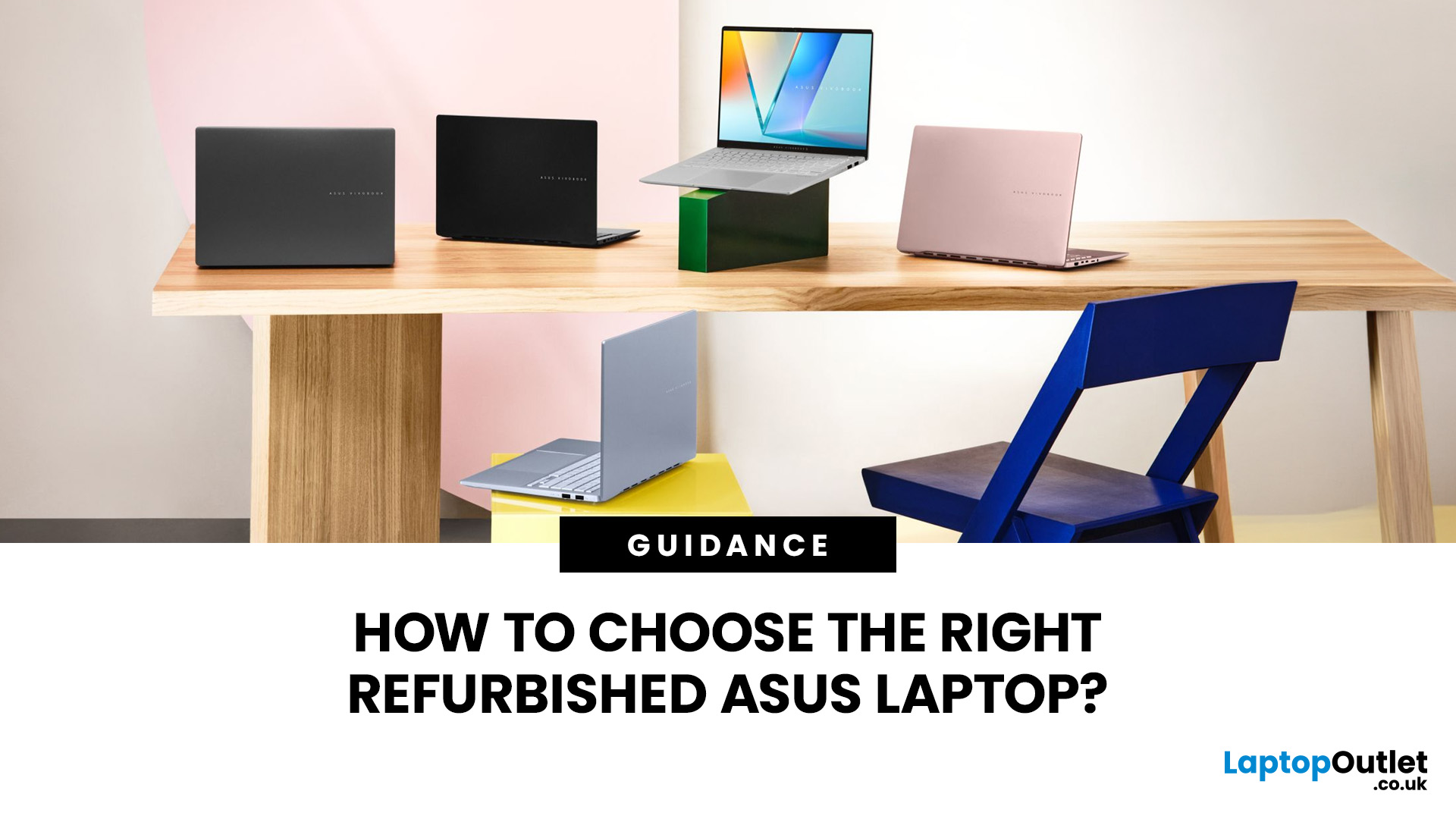
Refurbished ASUS laptops span everyday computing, business, creative work, gaming, and ChromeOS, with models from several hardware generations often available at the same time. Two laptops from the same Vivobook or Zenbook family can therefore differ significantly in processor, memory, display, battery condition, and upgradeability. This guide covers the key specifications and checks that matter, including performance, battery health, condition grading, ports, and software support.
Start With the Workload
Before comparing individual laptops, decide what you expect the device to handle. This immediately rules out specifications that are either insufficient or unnecessary.
- Everyday use and study: Web browsing, Microsoft Office, streaming, video calls, and coursework generally do not require a dedicated graphics card. Prioritise a responsive processor, sufficient memory, SSD storage, and good battery condition.
- Business and remote work: Look for enough memory for multitasking, practical connectivity
Last Updated: April 02, 2026
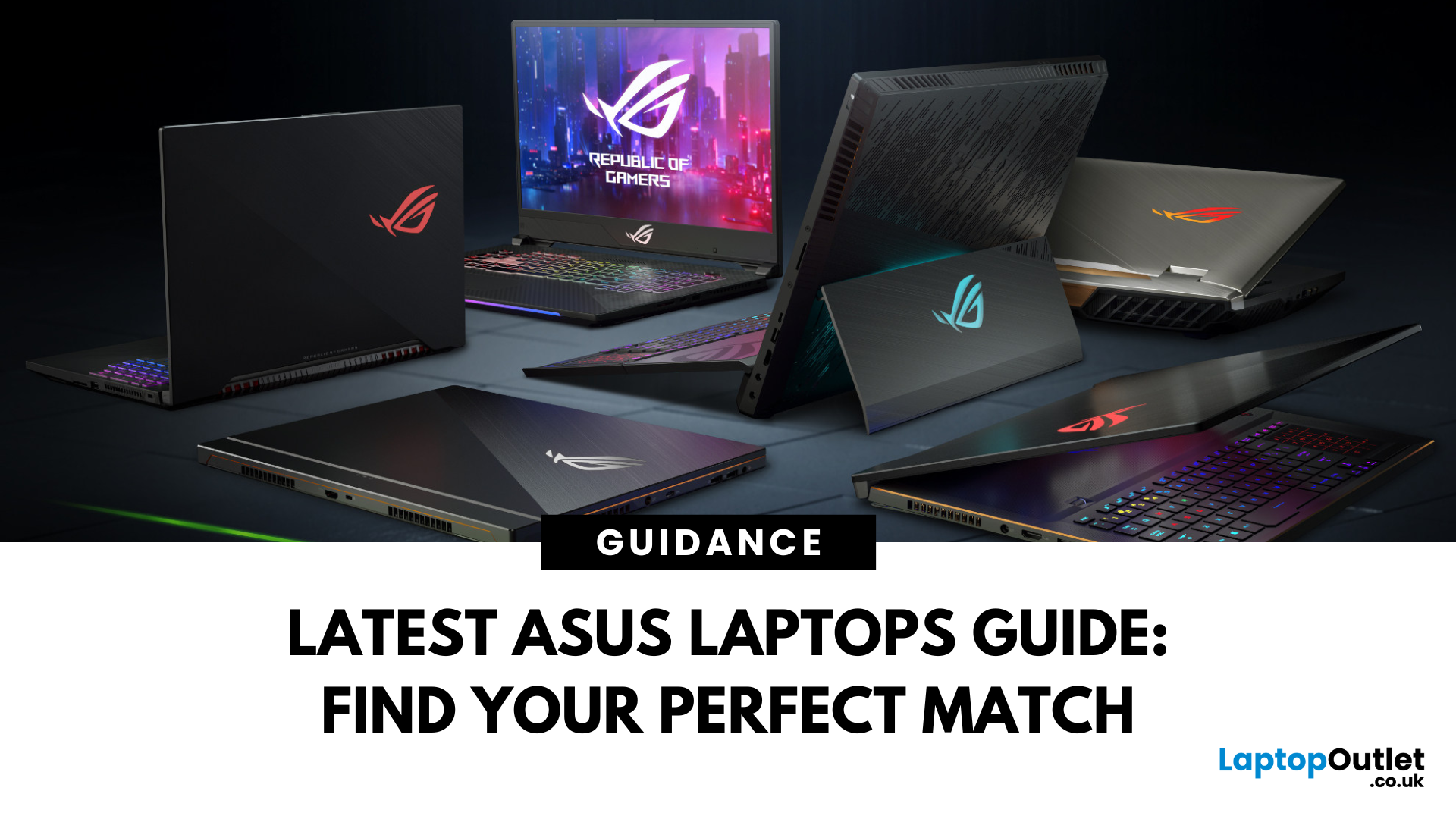
Choosing the right laptop in 2025 is not easy. The market is full of options, and many buyers in the UK struggle to find a device that balances performance, price, and long-term value. This is where ASUS laptops stand out. With a strong reputation for design, reliability, and innovation, ASUS has become a top choice for students, professionals, gamers, and creative users across the UK.
In this latest ASUS Laptops guide, we will take you through every detail you need to know before making a purchase. From ASUS laptop features to a full breakdown of ASUS laptop models, we explain which series works best for your usage.
Whether you are searching for the best ASUS laptops 2025 for gaming, business, or everyday work, this guide has you covered. By the end, you will be able to confidently choose the right laptop for your needs.
Introduction to ASUS Laptops: Innovation, Performance, and Market Presence
Founded in 1989, ASUS has grown from a small hardware manufacturer into one of the most respected
Last Updated: April 02, 2026
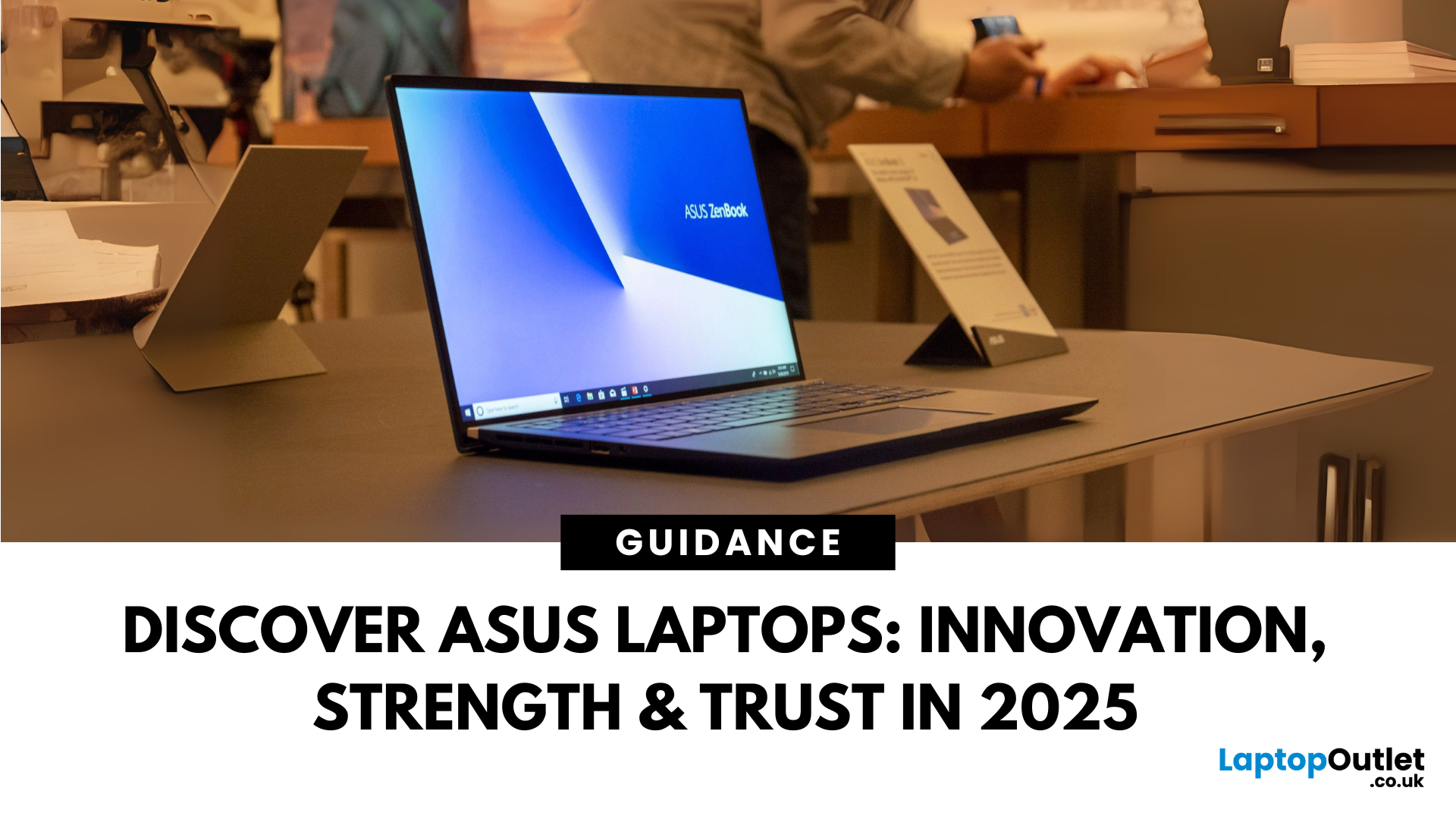
Choosing the right laptop in 2025 can feel like a challenge. With numerous options available in the UK market, it’s easy to get lost in specifications, designs, and price tags. Yet, one brand continues to shine above the rest: ASUS.
From its beginnings in 1989, ASUS has grown into one of the most trusted laptop names worldwide, and its success in the UK is no exception. The brand’s strength lies in its ability to combine innovation, performance, and affordability, making technology accessible for all.
Every user finds a place in the ASUS story. Students rely on the Chromebook by ASUS for simplicity and value. Professionals turn to the sleek ZenBook lineup or reliable ExpertBook business laptops. Gamers embrace the power of ROG laptops and durable TUF series laptops, while creatives choose the ProArt devices for demanding projects.
This blog introduces ASUS laptops, exploring their history, brand strength, innovations, market position, and diverse series.
ASUS History
Founded in 1989 in

Last Updated: September 08, 2026
A laptop can be a study companion, workhorse, creative studio, or gaming rig, so the right choice depends on far more than the logo on the lid. ASUS, Lenovo, HP, Dell, Samsung, LG, and Razer each excel in different areas. ASUS stands out for its broad 2026 range, from portable Zenbooks and everyday Vivobooks to business ExpertBooks, ProArt creator systems, and TUF Gaming and ROG machines. This comparison shows where ASUS fits, and which brand may suit your needs best.
ASUS Laptop Line-up Explained
Before comparing a reliable ASUS laptop with other brands, it helps to understand what ASUS's main families are designed to do.
| ASUS Family | Primarily Suited to | What to Expect |
| Vivobook | Students, home users, everyday work | Broad price range, conventional laptops and Flip models |
| Zenbook | Mobile professionals and premium buyers | Thin designs, OLED options and premium materials |
| ExpertBook | Businesses and organisations | Security, management features, durability and support options |
| ProArt | Creators and visual |
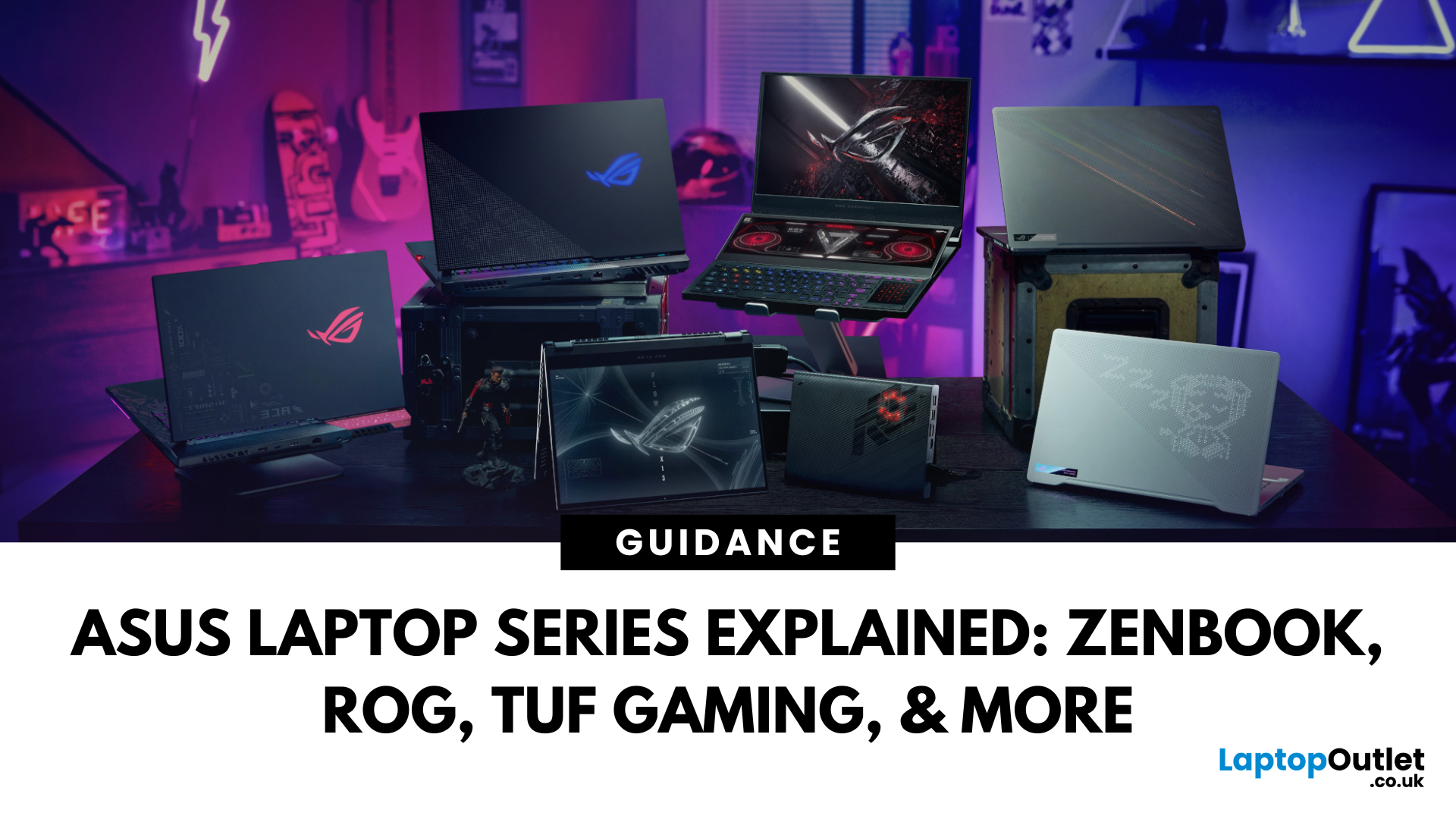
Last Updated: July 02, 2026
Choosing the right laptop in 2025 can feel like a challenge. With endless options in the UK market, different brands, specifications, and price points, it’s easy to feel overwhelmed. This is where ASUS makes the decision simpler. Over the years, ASUS has built a reputation as one of the most trusted technology brands by offering laptops that combine performance, reliability, and affordability.
Think about the wide variety of users today: a student who needs a lightweight laptop for lectures, a business professional who spends hours travelling, a gamer chasing the ultimate performance, or a creative tackling demanding design projects. Each has unique needs, but ASUS has carefully designed a laptop series for all of them.
In this ASUS laptop Series explained blog, we’ll explore the full 2025 lineup: ZenBook, VivoBook, ROG, TUF Gaming, ExpertBook, Chromebook, and ProArt StudioBook, so you can confidently choose the ASUS laptop that fits your life.
A Quick Overview of the ASUS Laptop Series
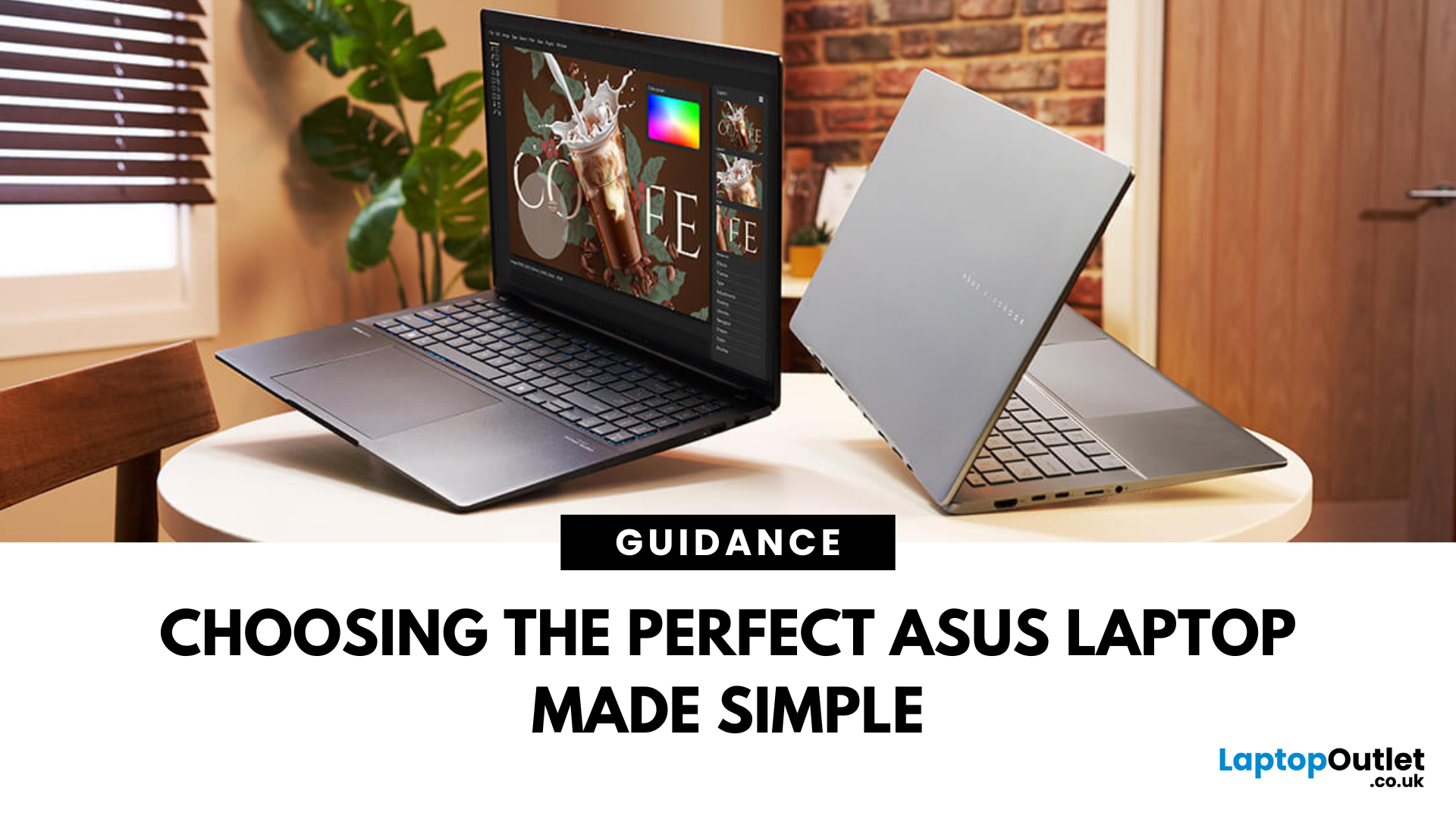
Last Updated: September 09, 2025
Choosing the right ASUS laptop in the UK can be confusing. ASUS has a wide range of laptops, and each is designed for different needs. Some are perfect for students who want a lightweight device for lectures and assignments. Others are built for business professionals who need strong performance and security features. If you are into gaming, ASUS has powerful models with dedicated graphics. For creative work like video editing or design, ASUS also offers laptops with high-quality displays and fast processors.
This ASUS laptop buying guide will explain the main series, their key features, and the type of users they suit best. We will also highlight some of the latest ASUS laptops available in the UK, including refurbished options that offer excellent value. By the end, you will be able to choose the right ASUS laptop for business or your other needs.
Why ASUS Laptops Stand Out
ASUS has built a strong reputation in the laptop market and continues to be a trusted brand for students, professionals,
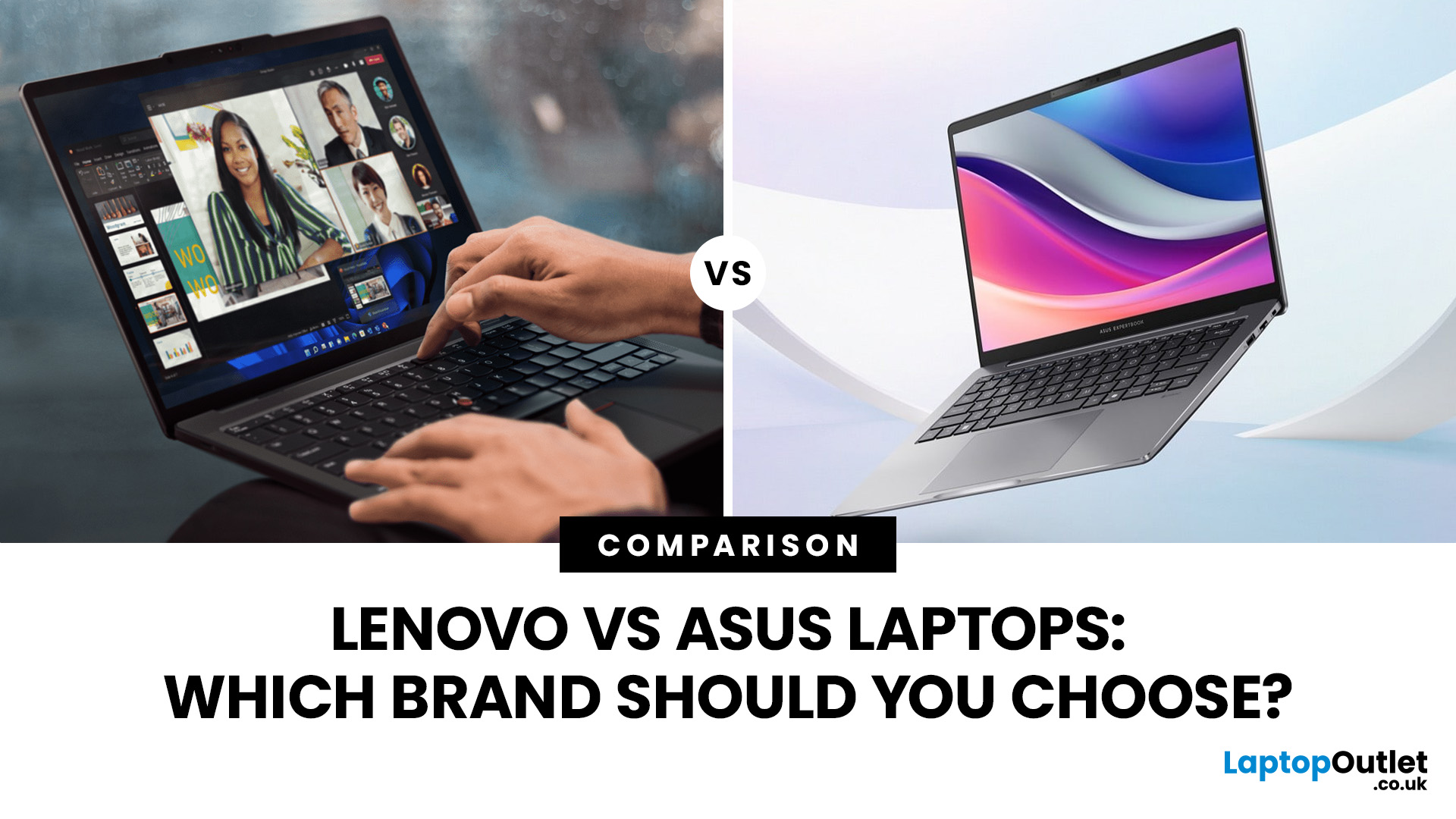
Last Updated: September 08, 2026
Lenovo and ASUS both cover everything from everyday laptops to premium business machines and high-performance gaming systems, but their strengths are not identical. Lenovo stands out through ThinkPad, Yoga, IdeaPad and Legion, while ASUS counters with Zenbook, Vivobook, ExpertBook, TUF Gaming and ROG. This Lenovo vs ASUS laptops comparison looks at processors, RAM, storage, displays, battery life, upgradeability and gaming hardware to help you see which brand fits your needs in 2026.
Lenovo vs ASUS: Quick Comparison
| Area | Lenovo | ASUS |
| Everyday laptops | IdeaPad | Vivobook |
| Premium thin-and-light | Yoga | Zenbook |
| Business | ThinkPad | ExpertBook |
| Gaming | Legion / LOQ | ROG / TUF Gaming |
| Current processors | Intel Core Ultra, AMD Ryzen AI, Snapdragon options | Intel Core Ultra, AMD Ryzen AI, Snapdragon options |
| Memory | Soldered or upgradeable depending on model | Soldered or upgradeable depending on model |
| Displays | IPS, OLED, touch and high-refresh options | IPS, OLED, touch, Mini LED and high-refresh options |
| Main strength |
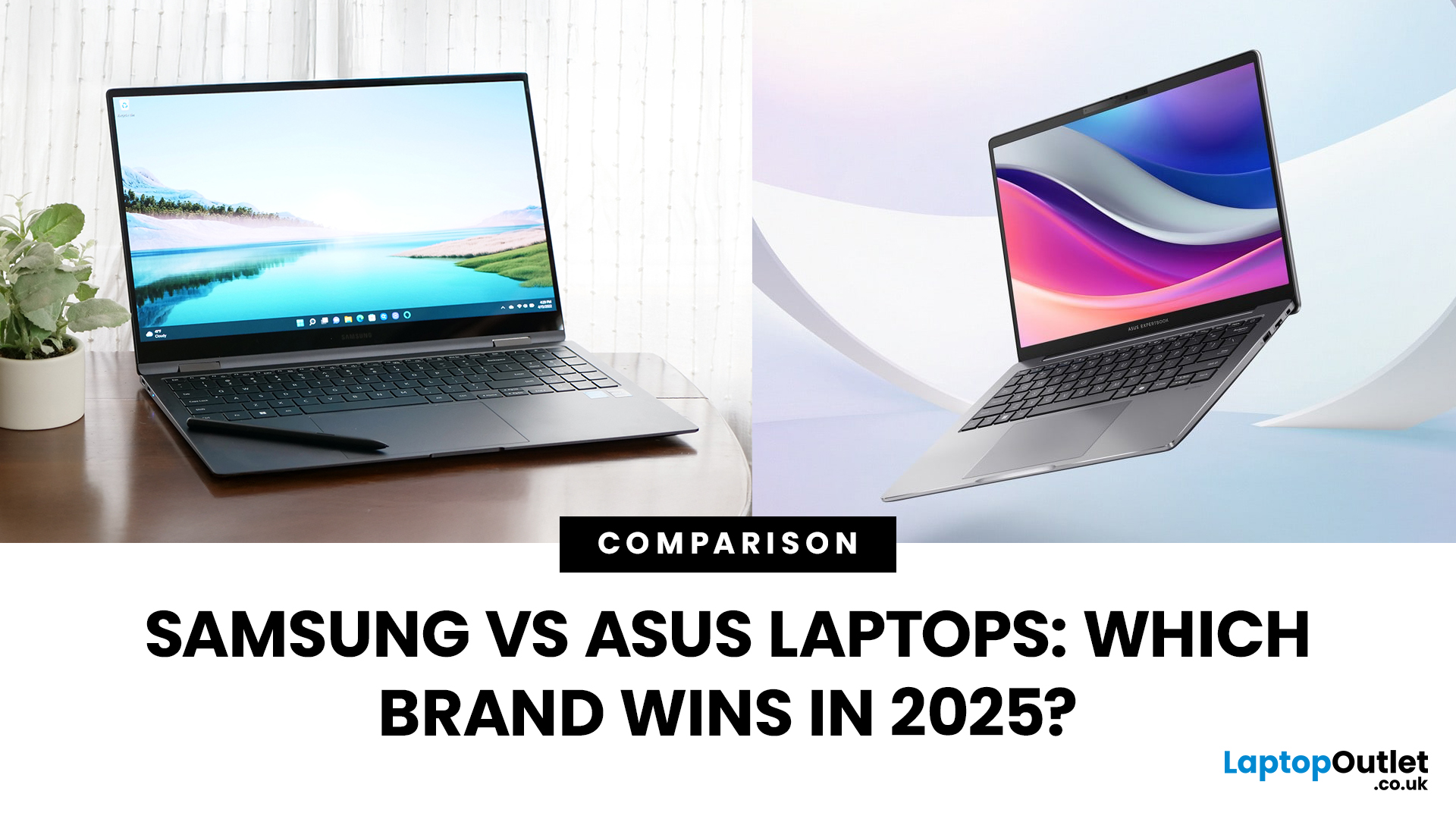
Last Updated: September 08, 2026
Samsung and ASUS take noticeably different approaches to laptops in 2026. Samsung concentrates its Windows range around the Galaxy Book6 family, combining slim designs with Galaxy device integration, while ASUS spreads its options across Vivobook, Zenbook, ExpertBook, ProArt, TUF Gaming, and ROG. This Samsung vs ASUS laptops comparison looks at processors, RAM, storage, displays, battery life, connected features, and graphics to help you decide which approach suits you.
Samsung vs ASUS: Key Differences at a Glance
| Area | Samsung | ASUS |
| Everyday | Galaxy Book6 | Vivobook |
| Premium | Galaxy Book6 Pro | Zenbook |
| High performance | Galaxy Book6 Ultra | ProArt / ROG |
| Business | Galaxy Book6 / Pro | ExpertBook |
| Processors | Mainly Intel Core/Core Ultra | Intel Core Ultra, AMD Ryzen AI, Snapdragon |
| Displays | IPS and Dynamic AMOLED 2X | IPS, OLED, Mini LED, dual OLED |
| Dedicated graphics | Up to RTX 5070 on Book6 Ultra | Broad RTX range through ProArt, TUF and ROG |
| Key advantage | Galaxy ecosystem | Wider hardware and form-factor choice |

Last Updated: September 09, 2026
LG and ASUS now overlap far more than their reputations suggest. LG gram still specialises in exceptionally light laptops, but its latest range adds OLED displays, Intel Core Ultra and AMD Ryzen AI processors, Copilot+ features, and improved connectivity. ASUS stretches much further, from portable Zenbooks and everyday Vivobooks to creator-focused ProArt and powerful ROG gaming machines.
This LG vs ASUS laptops comparison looks at performance, RAM, storage, displays, battery life, AI features and graphics so you can see which approach suits you.
Which LG and ASUS Range Fits Your Needs?
LG's current family includes gram Book, gram, gram Pro, and gram Pro 2-in-1. The focus remains thin-and-light computing, but the latest gram Pro hardware is considerably more capable than the “light office laptop” label suggests.
The current 16-inch gram Pro, for example, combines a 3K OLED screen, Intel Core Ultra processor, LPDDR5X memory and a 77Wh battery while weighing just 1.199kg.
ASUS separates different
Last Updated: October 08, 2025
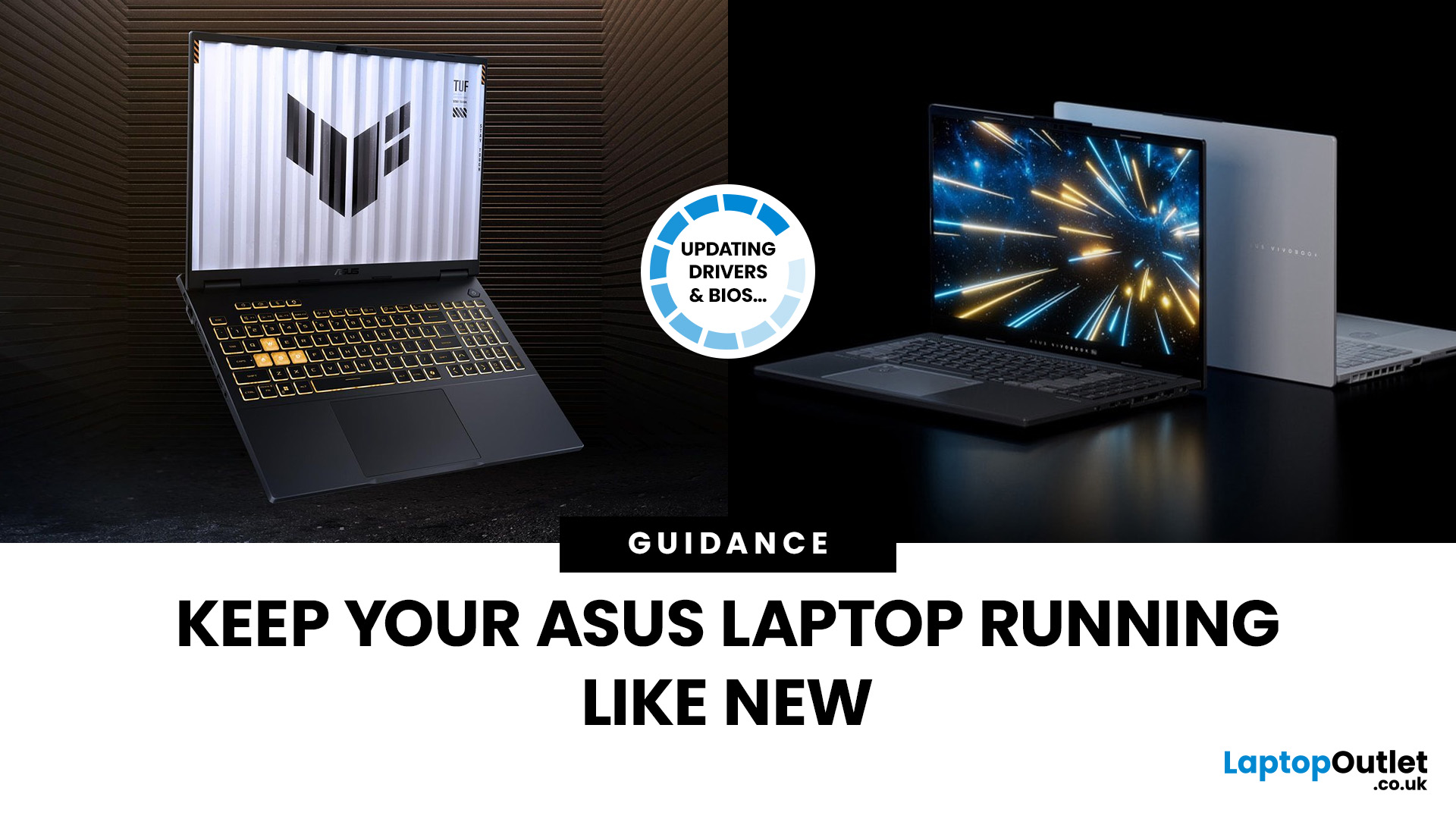
If you’ve ever owned an ASUS laptop - whether it’s a VivoBook for uni work, a TUF machine for gaming, or a Zephyrus for serious creative projects - you’ll know that things don’t always run perfectly forever. Over time, you might notice your battery draining faster, your fans spinning louder, or a game stuttering that used to run smoothly. Nine times out of ten, that’s down to drivers or firmware needing an update.
Updating drivers and the BIOS isn’t glamorous, but it’s one of the most effective ways to keep your ASUS laptop running at its best. The latest drivers squash bugs, improve compatibility with Windows 11, and even unlock new features. A BIOS update can go further still, ironing out stability issues, boosting performance, and extending hardware lifespan.
The good news? ASUS gives you proper tools like MyASUS, Armoury Crate, EZ Flash, and WinFlash, which make updates far less intimidating than they sound. Whether you’re rocking an ASUS VivoBook, TU F, or Zephyrus, this walkthrough

